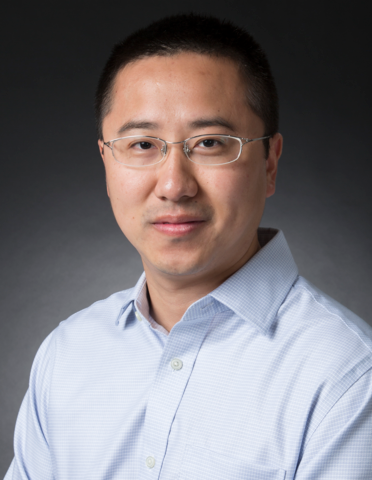
Nashid Shahriar is an Assistant Professor in the Department of Computer Science at the University of Regina, Faculty of Science. His research addresses resource allocation challenges in next-generation networks including 5G, elastic optical networks, cloud infrastructures, and IoT systems. He holds a Ph.D. in Computer Science from the University of Waterloo, an M.Sc. from Bangladesh University of Engineering and Technology (BUET), and a B.Sc. from BUET. His work leverages optimization, machine learning, and AI for network management. Recent publications focus on 5G network slicing, intrusion detection, and NFV security. Research emphasizes practical AI-driven solutions for telecommunications and cloud systems.
Dr. Ian Spooner is a Professor in the Department of Earth and Environmental Science at Acadia University, where he has worked for 31 years. His research focuses on environmental change, surface water-groundwater interactions, and contamination assessment across eastern Canada. Ph.D. in Geoscience (University of Calgary, 1994) M.Sc. in Geology (Queen's University, 1988) B.Sc. (Honours) in Geology (Queen's University, 1984) His scholarly work spans three decades, with recent publications highlighting mercury contamination in seabird soils, sediment dewatering techniques, and paleolimnological tools for pollution assessment. He has developed tidypaleo , an R package for visualizing environmental archives. Key research trends include industrial pollution impacts on coastal ecosystems, long-term contamination records in lake sediments, and geological responses to climate change. His work bridges field studies with computational methods for environmental data analysis. Distinguished Service Award (Atlantic Geoscience Society) 2020 Acadia Faculty Award for Excellence in Teaching 2022 Donald Stanley Award (Canadian Society for Civil Engineering) As Manager of the Morton Centre and coordinator of the M.Sc. Applied Geomatics program, he leads collaborative projects in Nova Scotia, Newfoundland, and British Columbia. Funding sources include NSERC grants and industry partnerships.
Raja Ghosh is a Professor in the Department of Chemical Engineering at McMaster University's Faculty of Engineering. His research focuses on bioengineering and polymer materials, with specialization in membrane technology for biopharmaceutical applications. He is actively involved in the Health & Bio-innovation research cluster and teaches courses such as CHEM ENG 3BM3: Bioseparations Engineering and CHEM ENG 782: Biopharmaceuticals . Research Interests include membrane chromatography device design, bioseparations process development, membrane bioreactors for enzymatic and protein applications, and therapeutic protein stabilization. His work addresses scalable purification methods for monoclonal antibodies, PEGylated proteins, and viral vectors. Recent Publications highlight innovations in cuboid chromatography design, pH-modulated ion-exchange systems, and SARS-CoV-2 spike protein purification. He employs computational fluid dynamics (CFD) simulations to optimize device performance and reduce pressure drops in bioseparation processes. Contact Information : Email: rghosh@mcmaster.ca Office: JHE A408 Phone: 905-525-9140 ext. 27415
Yuu Ono is an Associate Professor in the Department of Biomedical Engineering at Carleton University. He holds a Ph.D. from Tohoku University, Japan, and is a registered Professional Engineer (P.Eng.). His work focuses on biomedical ultrasound technology, wearable sensors, and medical imaging applications. He is affiliated with the Ottawa-Carleton Institute for Biomedical Engineering (OCIBME), Ottawa-Carleton Institute for Electrical and Computer Engineering (OCIECE), and the IEEE Ottawa Engineering in Medicine and Biology Society (EMBS). Research interests include sensors development, biomedical monitoring/diagnosis, tissue characterization, and ultrasonic imaging methods. His lab, the Biomedical Ultrasound Lab, explores innovations in wearable ultrasound for real-time clinical applications such as lung sliding detection, cardiovascular monitoring, and musculoskeletal assessment. Teaching responsibilities include courses like Image Processing for Medical Applications, Medical Imaging Modalities, and Biomedical Engineering Seminars. His recent publications emphasize wearable sensor integration, automated segmentation algorithms, and ultrasound-based diagnostics for conditions like pneumothorax and carotid artery analysis. No scientific awards are explicitly listed in the provided text. Research focuses on advancing medical sensor technology with emphasis on clinical translation and real-world applications.
Dr. Jun Cao is a Professor in the Department of Mechanical, Industrial and Mechatronics Engineering at Toronto Metropolitan University. His research focuses on computational fluid dynamics with applications in tornado dynamics, immersed boundary methods, and mesh adaptivity. His work aims to predict building damage patterns from tornadoes through advanced computer simulations. His computational models investigate tornado wind effects on structures, developing tools to understand damage severity variations. Published research includes IB-LBM frameworks for tornado simulation and hybrid adaptive methods for viscous flow modeling. He teaches courses including Advanced Fluid Mechanics, Basic Thermodynamics, and Thermodynamics and Fluids. Professor Cao obtained his PhD from University of Paris 6 (1995) and BSc from Nanjing University of Aeronautics and Astronautics (1989). His tornado dynamics research combines mathematics with practical engineering applications to improve building resilience.
Nicholas Vlachopoulos is a Professor of Civil Engineering at the Royal Military College of Canada (RMC) with cross-appointments at Queen's University's Department of Geological Science and Geological Engineering and School of Environmental Studies. He holds a PhD (2009) from Queen's University and B/A.Sc/M.A.Sc degrees from RMC. His research focuses on geotechnical engineering, geomechanics, and environmental engineering, emphasizing physical testing, field observations, and analytical techniques to advance engineering practices. Key roles include Research Director of the GeoEngineering Centre, CEO of Geologos Inc., and Director of RMC's Green Team addressing environmental challenges in military facilities. Education: PhD in Geological/Geotechnical Engineering - Queen's University (2009) M.A.Sc in Civil Engineering - Royal Military College (1995) B.A.Sc in Civil Engineering - Royal Military College Research Interests: Geotechnical Engineering (rock mechanics, tunneling) Environmental remediation in defense facilities Structural health monitoring using fiber optics Rock bolt and ground support systems Military infrastructure resilience Professional Contributions: Founder of Geologos Inc., specializing in geotechnical solutions Recipient of DND Innovation Award for environmental solutions Teaching excellence awards (2018) Supervised award-winning graduate students (2017-2021) Lab/Team Leadership: RMC Green Team: Environmental engineering solutions for Canadian Forces bases GeoEngineering Centre: Interdisciplinary geotechnical research
Fady Alajaji is a Professor of Mathematics and Engineering at Queen's University, with a cross-appointment in the Department of Electrical and Computer Engineering. He holds a B.E. from the American University of Beirut, and M.Sc. and Ph.D. from the University of Maryland, College Park. His research focuses on information theory, coding for communication networks, probability models (e.g., Polya urns, contagion processes), and applications of information theory to machine learning (e.g., generative adversarial networks, data privacy). He has served as Associate Editor for the IEEE Transactions on Information Theory and has received awards for research and teaching. His work spans theoretical foundations (e.g., Shannon limits) and practical coding techniques for wireless systems. Education: B.E. (1988), M.Sc. (1990), Ph.D. (1994) in Electrical Engineering from the University of Maryland. Roles: Professor of Mathematics and Engineering, Cross-appointment in Electrical and Computer Engineering. Research Interests: Information theory, coding for communication networks, stochastic processes (network epidemics, Polya urn models), machine learning applications (information bottleneck, GANs), and data privacy. Recent work includes optimal signaling schemes for sensor networks, privacy-aware estimation, and curing models for contagion networks. Publications: Over 100 journal/conference papers, including foundational work on joint source-channel coding, hybrid digital-analog coding, and theoretical bounds for communication systems. Recent trends focus on information-theoretic machine learning and network science. Awards: Premier's Research Excellence Award (2001), Golden Apple Teaching Award (2015). Grants/Advising: Supervised postdoctoral fellow Jian-Jia Weng. Active in conference organization and editorial roles. Labs/Teams: Member of the Mathematics and Engineering Communications and Information Theory Group at Queen's University.
Dr. Carina Rebello is an Assistant Professor in the Department of Physics at Toronto Metropolitan University. She holds adjunct roles at Purdue University and has expertise in Physics Education Research (PER), STEM education, and educational technologies. Her work emphasizes curriculum development, evidence-based reasoning, and pedagogical strategies. Education: PhD in Learning, Teaching, & Curriculum (Science Education), University of Missouri (2012) MSc in Physics, Ball State University (2007) BSc (Honors) in Physics, Kansas State University (2005) Her research focuses on improving science education through innovative pedagogy, including the use of natural language processing, hybrid lab designs, and argumentation frameworks. She has contributed to the Handbook of Research on STEM Education and presented at IEEE and AAPT conferences. Awards: College of Science Outstanding Teacher Award (Purdue University, 2018–2019) SPIRA Award for Undergraduate Teaching (Purdue University, 2019) Professional Affiliations: Canadian Association of Physics (CAP) European Science Education Research Association (ESERA) National Association for Research in Science Teaching (NARST) American Association of Physics Teachers (AAPT) Her work bridges physics education with interdisciplinary STEM initiatives, emphasizing teacher training and the integration of technology in learning environments.
Amir Hamed Majedi is a Professor at the University of Waterloo , cross-appointed to the Departments of Physics and Astronomy and Applied Mathematics . He leads the Integrated Quantum Optoelectronics Lab (IQOL) under the Waterloo Institute for Nanotechnology. Research Interests : Quantum photonics Superconducting optoelectronics Graphene photonics THz photonic devices Nano-electrophotonics Quantum information technology Article Trends : His publications focus on quantum electrodynamics in superconducting and graphene structures, covering single-photon detectors, nonlinear optical effects, THz amplification, and microwave-photonics integration. Keywords include Quantum Physics , Nanotechnology , Photonics , and Superconductivity . Teaching : Courses taught in recent years include ECE 106 - Electricity and Magnetism , ECE 375 - Electromagnetic Fields and Waves , and advanced topics in Quantum Electronics and Photonics (ECE 677, QIC 885). Education : Doctorate in Electrical and Computer Engineering (2001, University of Waterloo) Master's in Electromagnetic Waves and Photonic (1996, Amirkabir University of Technology) Bachelor's in Telecommunications (1994, Khaje-Nasir Toosi University of Technology)
Matthew Brehmer is an Assistant Professor at the University of Waterloo, specializing in Human-Computer Interaction (HCI) and data visualization. His research focuses on ubiquitous information experiences, exploring innovative ways to communicate and collaborate around data through multimodal interfaces and interactive visualizations. He holds a PhD from the University of British Columbia (2016), an MSc (2011), and a BComp from Queen's University (2009). His research interests emphasize multimodal communication , data storytelling , and collaboration platforms . Notable themes include gesture-aware augmented reality video presentations, semantic alignment of text and visual data, and adaptive visualization systems for enterprise environments. He leads efforts in designing tools like RemixTape and VisConductor to enhance data-driven narratives and remote collaboration. Recent work trends highlight advancements in dynamic data presentation , context-aware visualization , and cross-platform integration . His projects address challenges in making data accessible and interactive across diverse user contexts, from mobile devices to enterprise systems. Matthew’s contributions span over 50 peer-reviewed articles, with a focus on IEEE VIS workshops and ACM venues. He actively engages with industry through collaborations on tools like QualDash for healthcare and Charticulator for bespoke chart design.
Dr. Magdy Salama is a Professor in the Department of Electrical and Computer Engineering at the University of Waterloo, with dual professional engineering registrations in Ontario and Egypt. His research focuses on power systems, smart grid technologies, renewable energy integration, and medical imaging. He holds over 460 publications, including 215 journal articles, and has developed specialized labs in areas like Power Quality and Ultrasound Imaging. Recognized in the 1991 National Encyclopedia of Egyptian Scientists, he also teaches courses such as ECE 192, 390, and 462, emphasizing engineering economics and design. Education: PhD, Electrical Engineering, University of Waterloo (1977) MSc, Electrical Engineering, Cairo University (1973) BSc, Electrical Engineering, Cairo University (1971) Research Interests: Power quality and distribution system automation Smart grid and renewable energy analysis Medical image processing (e.g., sleep staging, neuromodulation) Electric energy storage and fault detection Asset management and risk analysis Labs & Innovation: He leads labs in Power Quality, Electric Vehicle Power Electronics, Ultrasound Imaging, and Sleep Staging. His patents include high-voltage power supplies for automotive and aerospace applications. Awards: Listed in the 1991 National Encyclopedia for Distinguished Egyptian Men of Science . Teaching & Grants: Recently taught courses like Distribution System Engineering (ECE 6606PD) and Electric Safety Design (ECE 6616PD). His work spans academic-industrial partnerships, though specific grants are not detailed in the text.
Dr. En-Hui Yang is University Professor in Electrical and Computer Engineering at the University of Waterloo and founding Director of the Leitch-University of Waterloo Multimedia Communications Lab. A world-renowned expert in information theory, he co-developed the Yang-Kieffer algorithm for lossless compression and invented soft decision quantization technology used in smartphones and web browsers. His research spans multimedia compression, digital communications, and deep learning. Education: Ph.D. Electrical Engineering, University of Southern California (1996) Ph.D. Probability and Statistics, Nankai University (1991) B.Sc. Applied Mathematics, HuaQiao University (1986) His transformative work in data compression has impacted millions globally through technologies accelerating data transmission efficiency. Articles focus on optimization of video/image compression standards (HEVC/H.264), channel coding theorems, and novel compression algorithms. Scientific Awards: IEEE Eric E. Sumner Award (2021) Canada Research Chair - Tier 1 (2010, 2017) Fellow of the Royal Society of Canada (2009)
Dave Tompkins is an Associate Professor in the David R. Cheriton School of Computer Science at the University of Waterloo. He holds a PhD in Computer Science and a MASc in Electrical Engineering from the University of British Columbia, along with a BESc and BSc from Western University. His primary research focuses on Stochastic Local Search (SLS) algorithms for the Satisfiability Problem (SAT) and MAX-SAT. Research Interests: His work spans Stochastic Local Search Algorithms SAT and MAX-SAT problem solving Dynamic Local Search techniques Heuristic algorithm design and optimization Data compression and image coding Genetic algorithms and game theory Scientific Awards: He has received Best Paper Award (2006, CCAI) Best Poster Awards (2003, ASI; 1999, ASI) Gold and Silver Medals in SAT Competitions (2004) Incomplete Solver Track Awards (2012, MAX-SAT) Projects: He is known for developing the UBCSAT framework and the Captain Jack SAT solver. He has also contributed to standards like JBIG2 and JPEG-2000.
Yue Hu is an Assistant Professor at the University of Waterloo, affiliated with the Faculty of Engineering. His research focuses on Human-Robot Interaction (HRI), assistive robotics, and control systems with a particular emphasis on safety, adaptability, and user experience. Key areas include robot emotional expressions, physical interaction safety, and real-time systems for social robots. He leads the Active and Interactive Robotics Lab , developing solutions for mobility assistance, teleoperation systems, and cybersecurity in robotics. His work integrates biomechanical modeling, computer vision, and machine learning to create robots that better understand and adapt to human needs. Notable projects include real-time pose estimation for mobility support, encrypted network traffic analysis for robot security, and personality shaping in social robots. He emphasizes ethical design and human factors in robotics, conducting studies on refugee education and unanticipated robot actions. Yue Hu holds a full-time faculty position and collaborates with industry and academic partners to advance assistive technologies and interactive systems. His research bridges theoretical foundations with practical applications, aiming to improve quality of life through innovative robotic solutions.
Bin Li is an Associate Professor and Associate Chair of Actuarial Science in the Department of Statistics and Actuarial Science at the University of Waterloo. He holds a PhD in Applied Mathematical and Computational Sciences (2013, University of Iowa), and master's and bachelor's degrees in Computational Mathematics from Xi’an Jiaotong University (2008 and 2005, respectively). His research focuses on quantum optics and optical engineering, particularly in developing robust laser-driven systems for quantum light sources, solid-state emitters, and trapped ion quantum computing. He has pioneered techniques like Notch-filtered Adiabatic Rapid Passage (NARP) and advanced femtosecond pulse engineering for high-performance quantum systems. His work bridges theoretical quantum physics with experimental optical innovations. Research interests include: Optical driving schemes for quantum emitters Adiabatic inversion and rapid passage methodologies Individual ion addressing in quantum simulators Spin dynamics in 2D perovskite materials Publications span 2018–2025, emphasizing advancements in quantum engineering, ultrafast optics, and atomic-scale systems. While no scientific awards are explicitly listed, his impactful contributions to quantum technologies suggest active recognition in the field. Advising and grants: No specific advisees or grants are documented in the provided texts, though his research activities imply involvement in graduate supervision and funding programs.