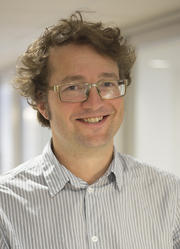
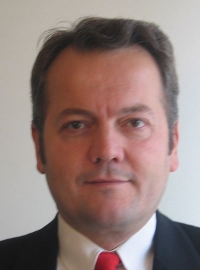
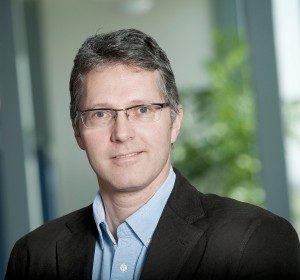
Engin Kirda is a researcher at the Department of Distributed Systems , Vienna University of Technology . His work focuses on Network Security , Malware Detection , and Web Security , with a particular emphasis on Malware Analysis , XSS Prevention , and Botnet Detection . He has led and contributed to projects such as WOMBAT , SECoverer , and SysSec , funded by entities like the Austrian Research Promotion Agency (FFG) and the European Commission . Research Areas : Network Security, Malware Analysis, Web Application Vulnerabilities Key Projects : WOMBAT (2008–2011), SECoverer (2008–2011), SysSec (2010–2014) His publications highlight advancements in automated malware analysis , phishing detection , and web spam mitigation . He has mentored students in topics including Android security , CSV Attack Prevention , and Malware Threat Landscapes .
Dr. Benedikt Lorch is a researcher currently affiliated with the Security and Privacy Lab at the University of Innsbruck, Austria. His professional journey includes roles as a Postdoctoral Fellow (2023–2024) and Research Assistant (2022–2023) at the same institution, preceded by research and academic roles at Friedrich-Alexander-Universität Erlangen-Nürnberg (FAU), Germany, including a Ph.D. in Computer Science (2018–2023) focused on cybercrime and forensic computing. He has also held visiting researcher positions at Dartmouth College (USA) and Imperial College London (UK). His research interests center on steganography, steganalysis, multimedia forensics, and machine learning applications in digital security. Notable work includes analyzing JPEG image directionality for security implications, improving steganalysis techniques using leaked cover thumbnails, and developing reliable machine learning models for forensic image analysis. His contributions address challenges in digital forensics, such as detecting image tampering, authenticating multimedia content, and enhancing degraded license plate recognition. Key academic awards include the ASQF award for outstanding studies (2019) and a DAAD scholarship for international research (2017). His work spans projects like UNCOVER and emphasizes compliance with regulations like the Artificial Intelligence Act in forensic analysis. Beyond technical contributions, Lorch has explored medical imaging applications, including motion artifact detection in MRI and heart rate estimation using wearable sensors. His research trends reflect a focus on leveraging probabilistic methods and deep learning to enhance forensic reliability, with a particular emphasis on JPEG-based steganalysis and digital image security. Collaborations with institutions like the Pattern Recognition Lab and Biomedical Image Analysis Group highlight interdisciplinary engagement in computer science and medical imaging.
Ricardo Baeza-Yates serves as Director of Research at the Institute for Experiential AI at Northeastern University's Silicon Valley campus. He also maintains part-time professor positions at Universitat Pompeu Fabra in Barcelona and Universidad de Chile in Santiago. Previously, he was VP of Research at Yahoo Labs (2006-2016) and CTO of NTENT, a semantic search technology company. His academic career spans over three decades with significant contributions to both industry research and academia. Dr. Baeza-Yates earned his Ph.D. in Computer Science from the University of Waterloo, Canada, in 1989. His academic journey includes professorships at Universidad de Chile (1989-2004), ICREA Professor at Universitat Pompeu Fabra (2004-2005), and ongoing part-time appointments at both institutions since 2004 and 2006 respectively. His research spans algorithms, information retrieval, web search and mining, data science, with increasing emphasis on responsible AI and ethical considerations in technology. He is particularly renowned for his work on bias in search systems, algorithmic fairness, and the societal impacts of AI. His expertise uniquely bridges technical aspects of search and data mining with ethical and societal implications, making him a leading voice in the responsible AI movement globally. His recent scholarly output demonstrates a strong focus on bias detection, fairness metrics, responsible technology development, and the societal impacts of algorithms. The work spans technical machine learning and information retrieval while increasingly addressing ethical and social dimensions across diverse application areas from finance to healthcare to social media. Dr. Baeza-Yates has received numerous prestigious awards throughout his distinguished career: 2019 Corresponding Member of the Brazilian Academy of Sciences 2019 Award Salvà i Campillo to the Person of the Year 2018 National Research Award for applied research and technology transfer 2012 ASIS&T Best Information Science Book Award for Modern Information Retrieval 2011 IEEE Fellow for contributions to computer science development 2009 ACM Fellow for contributions to information retrieval algorithms 2002 Corresponding member Chilean Academy of Sciences As an educator and mentor, Dr. Baeza-Yates has advised numerous students throughout his academic career at multiple institutions. His textbook 'Modern Information Retrieval' has become a standard reference in the field, influencing generations of computer scientists. He has secured significant research funding through his leadership roles at Yahoo Labs and academic grants, demonstrating his ability to bridge theoretical research with practical applications. Dr. Baeza-Yates is actively involved with the DATA Lab at Northeastern University's Khoury College of Computer Sciences and previously founded the Web Science and Social Computing Research Group at Universitat Pompeu Fabra. He serves on multiple high-impact advisory boards including the Global AI Ethics Consortium, Global Partnership on AI, and IADB's fAIr LAC Initiative for Latin America and the Caribbean, reflecting his global influence in shaping responsible AI practices.
Petter E. Bjørstad is a Professor of Computer Science and Mathematics at the University of Bergen, Norway, where he has served as Head of the Department of Informatics since 2010. Previously, he was Director of the Bergen Center for Computational Science (2000-2010) and Professor in both the Department of Mathematics (2006-2010) and Department of Informatics (1985-2005). He also held a position as Professor of Mathematics at the University of Minnesota during 1996-1997 on unpaid leave from Bergen. Dr. Bjørstad earned his PhD in Computer Science from Stanford University in 1980, following which he completed a postdoctoral fellowship at the Courant Institute of Mathematical Sciences at New York University. Before entering academia, he worked as a Principal Engineer at Det Norske Veritas from 1981-1985. Dr. Bjørstad's research focuses on numerical analysis and high-performance computing, with particular expertise in domain decomposition methods, parallel algorithms for elliptic partial differential equations, and scientific computing. His work bridges theoretical mathematics with practical computational challenges, especially in industrial applications. He has led significant research projects including 'Multiscale Domain Decomposition: Algorithms and Analysis' (2010-2014), funded by the Research Council of Norway and the University of Bergen. His publication record demonstrates consistent contributions to the field of numerical methods and parallel computing over several decades. The research trends show a strong focus on developing efficient algorithms for solving partial differential equations through domain decomposition techniques, with applications spanning structural analysis, reservoir simulation, semiconductor device modeling, and other industrial contexts. His work increasingly emphasizes practical implementation on modern parallel architectures including SIMD and MIMD systems. Large number of research grants from Norway and the European Union Dr. Bjørstad has been actively involved in mentoring students and collaborating with industry through projects like the Europort effort, where industrial codes were ported to parallel computing platforms. His laboratory for parallel computing (Parallab) has been instrumental in advancing practical applications of high-performance computing since its establishment in 1985 with Europe's first 64-processor Intel hypercube. The lab has evolved to include multiple MIMD machines including an Intel Paragon, Parsytec GC/Power-Plus, and DEC α-cluster. As Head of the Department of Informatics, Dr. Bjørstad leads one of Norway's premier computing research units with expertise spanning theoretical computer science, numerical methods, and practical applications in various scientific domains. His leadership has helped establish Bergen as a significant center for computational science in Europe.
Paola Bovolenta is a Research Professor at the Spanish National Research Council (CSIC) - Universidad Autónoma de Madrid (UAM), with international recognition in Developmental Neurobiology. She has held leadership roles including Chair of the Tissue and Organ Homeostasis Program (2019–present) and former Chair of the Development and Differentiation Department (2012–2019). Her research spans: Mechanisms of visual axon sorting at the chiasm Morphogen signaling in eye development Neuroinflammation in Alzheimer's disease ADAM10-SFRP1 interactions in neurodegeneration Interdisciplinary approaches to life sciences Recent publications highlight her work on zebrafish models for optic cup morphogenesis, neuroinflammatory crosstalk in Alzheimer's, and synthetic biology applications. Awards include EMBO membership (2012), two Fundaluce Awards (2009, 2012), and ERC Scientific Council membership (2017). She has mentored 21 PhD students (4 ongoing) and 20 postdocs, with active involvement in European research policy through the ERC Open Science Working Group and UE Core Group on Reform of Research Assessment.
Manfred Broy is a full Professor of Computer Sciences at the Technische Universität München (TUM), succeeding Prof. F.L. Bauer in 1989. He founded and served as Dean of the Faculty of Mathematics and Computer Sciences at Universität Passau (1983) and later established the Faculty of Computer Science at TUM (1992). His career spans key roles in academia, including research-assistant positions (1976-1983) and leadership in shaping institutions. Education: Diploma in Mathematics (1976), Ph.D. in Natural Sciences (1980, award-winning thesis), and Habilitation (1982) from TUM. His research focuses on Software & Systems Engineering, emphasizing critical embedded systems, mobility, context-awareness, and industrial-scale software methodologies. Foundational work involves theorem proving techniques to formalize software engineering principles. Broy has received prestigious honors including the Gottfried Wilhelm Leibniz Prize (1994), Federal Cross of Merit (1996), Max-Planck-Fellowship (2006), and the Konrad-Zuse-Medaille (2007). He holds memberships in major academies like Leopoldina (2003) and acatech (2006).
Dr. Regino Criado is Full Professor of Applied Mathematics at Rey Juan Carlos University (URJC), where he has held academic positions since June 2000. He currently serves as Academic Director of the Data, Complex Networks and Cybersecurity Sciences Institute (since March 2017) and was elected to the Academia Europaea in May 2023. His career spans European research projects (ESPRIT II/III) and interdisciplinary collaborations at the intersection of mathematics, computer science, and cybersecurity. His research focuses on Complex Networks , including hyper-networks, multiplex networks, and mesoscale structures, with applications to cybersecurity, intentional risk management, and synchronization phenomena. Key innovations include: A game theory-based intentional risk model integrating accessibility, anonymity, and value metrics Hybrid network mining algorithms for credit card fraud detection PageRank extensions to multiplex networks Framework for discrete resilience analysis in technological systems His work on the 2014 Physics Reports monograph The structure and dynamics of multilayer networks (3,500+ citations) established foundational concepts in multilayer network theory. Current research explores linguistic pattern analysis through multilayer hypergraphs for automatic text summarization. Member of Academia Europaea (2023) Chaos Journal Best Paper Award (2011) Academic Entrepeneurs Prize (2002) EUROPA-1992 Prize (1992) As director of the DCNC Institute (2017-present) and BBVA-URJC Chair (2017-2018), he has led major academic-industry collaborations. His 180+ publications (6,500+ citations) demonstrate sustained impact across network science, applied mathematics, and cybersecurity.
Cem Ersoy is a Professor at Bogazici University 's Department of Computer Engineering, with a career spanning over 30 years. He has held visiting positions at the University of Trento, Italy, and previously served as Department Head at Bogazici University multiple times. Education : Ph.D. in Electrical Engineering (Polytechnic University, 1992), M.S. in Electrical Engineering (Bogazici University, 1986), B.S. in Electrical Engineering (Bogazici University, 1984) His research focuses on computer networks , pervasive computing , edge computing , and wireless networks . Recent work highlights AI integration in air computing, stress monitoring with wearables, and edge network optimization. Articles span applications of multi-agent DRL, probabilistic tracking, and network slicing. Scientific awards : Elected to the Academy of Sciences of Turkey (2022) Bogazici University Research Excellence Awards (Junior 2007, Senior 2014) He has supervised 24 PhD and 58 MS theses. As principal investigator, he led 35 funded research projects by agencies such as the EU, TUBITAK, and Bogazici University Research Fund. His Google Scholar profile shows 11,856 citations, h-index 43, and i10-index 130.
Javier Esparza is a Professor at the Technische Universität München, holding the Chair of Foundations of Software Reliability and Theoretical Computer Science since 2007. Prior to this, he held chairs at the University of Stuttgart (2003-2007) and the University of Edinburgh (2001-2003), along with academic positions dating back to 1990. Education: M.S. in Theoretical Physics (1987, University of Zaragoza), Ph.D. in Computer Science (1990, University of Zaragoza), and Habilitation in Computer Science (1994, University of Hildesheim). His research focuses on formal verification, distributed systems, and software reliability, particularly through algorithms for software model checking, logic and automata theory, and analysis of probabilistic systems. His work has been supported by numerous grants from the German Research Council (DFG), British Engineering and Physical Sciences Research Council (EPSRC), and the Humboldt Foundation. Scientific Awards: Doctor honoris causa from Masaryk University (2009), TeachInf Awards for best Bachelor and Master courses (2009, 2010), TU München Diploma for excellent teaching (2011), Member of Academia Europaea (2011), and Dissertation Prize from the University of Zaragoza (1990). Esparza has supervised over 15 PhD students, including Dr. Stefan Schwoon, Dr. Claus Schröter, and Dr. Michael Luttenberger, and collaborated on research projects with institutions across Europe and the UK.
Fantz Ursel is a Professor and academic leader in plasma physics, holding dual roles as Division Head of ITER Technology & Diagnostics at the Max-Planck Institute for Plasma Physics (IPP) and Head of the Experimental Plasma Physics Group at the University of Augsburg's Institute for Physics. His research focuses on fusion energy, plasma technology, and advanced diagnostics for negative ion sources critical to ITER and DEMO projects. He has pioneered developments in radio-frequency-driven plasma sources and Cs-free alternatives for negative ion production. Education and career milestones include a PhD in low-temperature plasma physics from the University of Stuttgart (1996), followed by research roles at Stuttgart and IPP. He has held visiting professorships at NIFS, Japan (2006), and serves on international committees such as the DFG Grants Committee and EUROfusion’s Heating and Current Drive Project Board. His research interests span plasma diagnostics, beam extraction optimization, and plasma modeling, with notable contributions to plasma surface interactions and fusion technology. Awards include the Erwin Schrödinger Prize (2006) and the International Symposium Award (2014) for innovations in negative ion physics. He is an active contributor to fusion initiatives through roles in the German Physical Society (DPG) and the European Physics Society (EPS). Ursel’s work integrates experimental and computational approaches, including 3D PIC simulations and code benchmarking (e.g., NINJA, ONIX). His publications address challenges in plasma expansion dynamics, beam characterization, and ITER-compatible technologies.
Karol Grela is a Full Professor at the Faculty of Chemistry, University of Warsaw, and heads the Organometallic Synthesis Laboratory at the Biological and Chemical Research Centre. He is also affiliated with the Institute of Organic Chemistry, Polish Academy of Sciences. His career spans roles as Visiting Professor at the National University of Singapore and leadership in major grants like the NCN MAESTRO and FNP TEAM-TECH programs. Education: Master: Warsaw University of Technology PhD: Institute of Organic Chemistry, Polish Academy of Sciences Habilitation: 2003, University of Warsaw Grela's research focuses on olefin metathesis , with innovations in catalyst design through Ru···O chelates, onium-tags, and chelated systems. His work has industrial applications in pharmaceuticals (e.g., HCV protease inhibitor BILN 2061) and green chemistry (e.g., water-based and ethyl lactate solvent systems). Scientific Awards 1998: Foundation for Polish Science Fellowship 1999: Alexander von Humboldt Fellowship 2003: Polish Academy of Sciences Włodzimierz Kołos Prize 2007: Maria Curie & Wilhelm Klemm Lectureship 2008: Mistrz Professorship 2010: Prime Minister Prize for Scientific Achievement 2014: Foundation for Polish Science Prize 2015: French-Polish Prize (Société Chimique de France) 2016: Kostanecki Medal 2017: Wojciech Świętosławski Prize 2018: Chemistry Europe Fellow He has co-authored >198 papers and patents, with recent work on catalyst immobilization in MOFs and industrial partnerships (Boehringer-Ingelheim, Evonik, Umicore). His lab actively recruits for PhD/PostDoc roles in projects like 'Unorthodox concepts in olefin metathesis' (NCN MAESTRO) and 'Macrocyclisation of Unbiased Dienes' (NCN OPUS).
Dag Trygve Truslew Haug is a Professor of Linguistics and Greek/Latin at the University of Oslo, affiliated with the Faculty of Humanities and the Department of Classics. He holds concurrent roles as a Professor of Linguistics and has served as a Visiting Professor at the University of Oxford. His academic journey includes degrees from the University of Oslo: Cand. mag. (1996), Cand. phil. (1998), and Dr.art. (2001) in Ancient Greek linguistics. Haug’s research focuses on corpus linguistics, syntactic theory, formal semantics, and Indo-European languages, with significant contributions to computational linguistics and historical linguistics. He leads projects like the DAMOS database for Mycenaean studies and the PROIEL treebank for early Indo-European texts. His awards include membership in the Norwegian Academy of Science and Letters (2016) and the HM King of Norway's Gold Medal for Young Scholars (2002). Haug is actively involved in teaching Greek, Latin, and comparative Indo-European linguistics, and serves on curriculum committees for these disciplines. His research groups include Digital Humanities, Grammar and Meaning, and Language Change. Key areas of innovation involve integrating formal semantics with dependency grammar and developing computational tools for analyzing ancient languages.
Adnan Ibrahimbegovic is Professor 'Classe Exceptionnelle 2' (highest possible professor rank in France) at Université de Technologie de Compiègne – Alliance Sorbonne Université, where he holds the Chair for Computational Mechanics. Elected to the Academy of Europe in 2022, he also serves as a Senior Member of the Institut Universitaire de France since 2015. His educational background includes: 1997: Habilitation for supervising research in Mechanics, University Pierre & Marie Curie, Paris, France 1989: PhD in Computational Mechanics, University of California at Berkeley, USA 1984: MSc in Structural Mechanics and Engineering, University of Zagreb, Croatia (ex-Yugoslavia) Professor Ibrahimbegovic's research spans structural mechanics, computational mechanics, and solid mechanics. His career has focused on membrane finite elements with drills for connecting structure and continuum FE models (his 1990 IJNME paper became the main reference in the field), finite rotations geometrically exact structure mechanics models (with top papers collecting over 1000 citations), inelastic constitutive models for brittle and ductile fracture, and code-coupling for multiphysics-multiscale problems. His work has evolved through three distinct phases: 1989-1999 consolidation, 1999-2014 leadership, and 2014 onward innovation. His research has had significant industrial impact through collaborations with major French nuclear industry entities (EDF, CEA, IRSN) and government institutes for nuclear safety (IRSN), with applications in structural durability quantification. He maintains extensive international partnerships across Germany, Finland, Brazil, Mexico, Korea, and Switzerland. Notable honors include: Senior Member Chair of Institut Universitaire de France (2020, 2015) IACM Fellow Award (2006) Humboldt Research Award (2005) Academy Member of Sciences and Arts of Bosnia and Herzegovina (2019) Multiple international professorships across five continents Throughout his career, Professor Ibrahimbegovic has demonstrated exceptional research leadership, directing teams of 35-45 researchers at institutions like Ecole Normale Supérieure de Cachan. His work bridges theoretical mechanics with practical engineering applications, particularly in nuclear safety where structural integrity and durability are critical. He currently leads the Mechanics-Mathematics platform at UTC with 35 researchers and interdisciplinary innovation projects.
Kim Guldstrand Larsen is a Full Professor in Computer Science at Aalborg University, Denmark, a position he has held since 1993. He serves as director of CISS, the Centre for Embedded Software Systems, a national center of excellence bridging industry and research since 2002, and holds leadership roles in multiple international research initiatives. His academic credentials include a Cand.Scient. in Mathematics and Computer Science from Aalborg University (1982) and a PhD in Computer Science from Edinburgh University, Scotland (1986). His career includes visiting professorships at institutions including Uppsala University, École Normale Supérieure in Cachan, and University of Twente. Professor Larsen's research centers on modeling, verification, and performance analysis of real-time and embedded systems, with foundational contributions to concurrency theory and model checking. Since 1995, he has led development of UPPAAL, a widely adopted verification tool, and co-founded UP4ALL International. His work spans theoretical foundations to practical applications in cyber-physical systems. His publication portfolio exceeds 200 peer-reviewed papers and 12 software tools, with his research showing consistent focus on formal methods for real-time systems evolving toward quantitative analysis and cyber-physical applications, as evidenced by his H-index of 58 (highest in Denmark for Computer Science). Honorary Doctor (Honoris causa), Uppsala University (1999) Danish Citation Laureates Award (2005) Thomson Scientific award as most cited Danish Computer Scientist (1990-2004) Ridder af Dannebrog (Knight of the Order of the Dannebrog) (2007) Honorary Doctor (Honoris causa), Ecole Normal Superieure De Cachan, Paris (2007) Professor Larsen currently supervises 7 PhD and 7 post-doc students, having previously guided over 20 PhD and 12 post-doc researchers to completion. His significant research funding includes leadership of the DaNES project, VKR Center of Excellence MT-LAB, national ICT Innovation Network InfinIT, and the Danish-Chinese Basic Research Center IDEA4CPS. He leads the Modeling and Validation Cluster within the EU/IST Network of Excellence ARTIST Design and directs multiple research centers focused on embedded software systems, maintaining active roles in editorial boards, conference steering committees, and national research councils.
Janusz S. Lipkowski is a distinguished Professor at the Institute of Physical Chemistry of the Polish Academy of Sciences in Warsaw, Poland, since 1990. He holds a Ph.D. (1972) and habilitation (1983) from the same institute. His research spans Physical Chemistry, Supramolecular Science, and Chemical Crystallography, with a focus on coordination polymers, chiral separations, and molecular modeling. Lipkowski has been honored with numerous awards, including membership in the Polish Academy of Sciences (since 1998), Honorary Doctorates from Russian and Moldovan institutions, and Fellowship in the World Innovation Foundation. He is actively involved in international scientific societies such as the American Chemical Society and European Crystallographic Association. His scientific contributions include over 305 journal papers and 450 conference communications. Key areas of exploration involve structural analysis of coordination complexes, supramolecular assemblies, and applications in materials science. Lipkowski's work often bridges theoretical modeling and experimental crystallography, addressing both fundamental and applied challenges in chemistry. Academic roles include chairmanship of the Polish Academy's Chemistry Committee (2007) and presidency of Societas Scientiarum Varsoviensis. His research has led to advancements in clathrate formation studies, spin-crossover materials, and novel synthetic routes for alumoxanes. Despite extensive publications, his advising and grant activities are not explicitly detailed in available records.