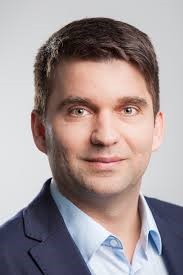
Romain Raveaux is an Associate Professor at the LIFAT Computer Science Laboratory, University of Tours, affiliated with Polytech Tours. His research focuses on Image Analysis, Machine Learning, Structural Pattern Recognition, Graph Matching, Graph Neural Networks, Discrete Optimization, Reinforcement Learning, and Transfer Learning . Email: romain.raveaux@gmail.com , romain.raveaux@laposte.net Address: 64 av. Jean Portalis, Tours, France, 37200 Phone: +33 (0)2 47 36 14 27 Research Interests Graph Matching and Neural Networks Discrete Optimization for Pattern Recognition Transfer Learning in Graph-Based Models Historical Document Analysis Scientific Trends His recent work bridges Graph Neural Networks with Mixed-Integer Programming , focusing on Image Semantic Segmentation and Graph Cycle Detection . Earlier studies emphasize Genetic Algorithms for graph classification and Graph Edit Distance optimization in pattern recognition.
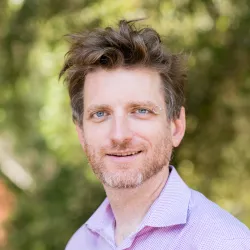
David Strang is a Professor in the Department of Sociology at Cornell University's College of Arts and Sciences . His research focuses on innovation and diffusion in political, organizational, and scientific domains, with recent projects analyzing the evolution of research articles, social movements' influence on policy, and computational models of management practice adoption. Research Interests Political Sociology & Social Movements Organizations & Economic Sociology Models and Methods for Dynamic Processes Sociology of Science Email: ds20@cornell.edu His publications span sociological theory, computational modeling, and empirical studies of diffusion processes. Articles reflect trends in peer review analysis, management fashion cycles, and cross-cultural institutional adoption. Key collaborations include works with Kyle Siler and Robert J. David. David Strang's methodological expertise includes agent-based modeling and textual analysis. He has edited volumes like The Oxford Handbook of Management Ideas and authored books such as Learning by Example: Imitation and Innovation at a Global Bank . His work has appeared in Administrative Science Quarterly , American Journal of Sociology , and Sociological Theory .
Manuel Wimmer is a Full Professor and Head of the Department of Business Informatics – Software Engineering at Johannes Kepler University Linz, Austria. He also serves as the Program Director for the Business Informatics master's program since 2019. His academic leadership extends to representing JKU Linz in the AutomationML society and leading significant research initiatives. Dr. Wimmer received his Ph.D. and Habilitation from TU Wien. His academic journey includes: Research associate at the University of Malaga, Spain Visiting professor at the University of Marburg, Germany Visiting professor at TU Munich, Germany Assistant professor at the Business Informatics Group (BIG), TU Wien, Austria Professor Wimmer's research focuses on Model-Driven Software Engineering and its applications, particularly in the emerging field of Digital Twins . His work bridges theoretical foundations with practical industrial applications, with special emphasis on model transformations, runtime modeling, and the integration of artificial intelligence techniques into model-driven approaches. More recently, he has been exploring the intersection of model-driven engineering with quantum computing, investigating how modeling principles can be applied to quantum software development. His recent publications reveal a strong trend toward Digital Twin engineering, with approximately 40% of his 2023-2025 publications focusing on various aspects of Digital Twin technology. Another significant strand of his work involves the application of AI and machine learning techniques to enhance model-driven engineering processes. The emergence of quantum software engineering as a research direction is also notable in his most recent publications, demonstrating his ability to identify and explore cutting-edge research frontiers. From 2017-2023, Professor Wimmer led the Christian Doppler Laboratory on Model-Integrated Smart Production (CDL-MINT), where he developed engineering approaches for digital twins. He is also the co-author of the influential book "Model-driven Software Engineering in Practice" (2nd edition, 2017). Professor Wimmer is actively involved in the organization of major scientific events including the IEEE International Conference on Quantum Software (QSW) and the International Conference on Engineering Digital Twins (EDTconf), demonstrating his leadership in these emerging research communities. His research has practical applications across various domains including smart cities, industrial automation, tunneling/construction, and quantum computing. The MATISSE project represents a significant multi-partner effort to develop a framework for federated digital twins of industrial systems.
Audrey Fu is an Associate Professor of Family Medicine and Public Health Sciences and of Molecular Medicine and Genetics at Wayne State University School of Medicine, located at Scott Hall, 540 E. Canfield Street, Detroit, MI 48201. Her interdisciplinary work bridges computational methods with biomedical applications, particularly in genomics and medical imaging fields. Her educational background includes a PhD from the University of Washington (2008), followed by postdoctoral training at the University of Chicago (2008-2014) and a Visiting Postdoctoral Scholar position at Stanford University (2014-2015). This strong foundation in statistics and computational biology has enabled her to develop innovative approaches to complex biomedical data analysis. Dr. Fu specializes in developing statistical methods and algorithms for analyzing high-dimensional biomedical data, with particular expertise in causal network inference using Mendelian randomization, deep learning for single-cell RNA-sequencing data, and methods for identifying disease-relevant cell types through integration of genomic data. Her research group actively practices open science, distributing open-source software packages in R and Python through GitHub and CRAN. Her publication record reveals a clear progression from fundamental statistical methodology development toward increasingly translational biomedical applications. While her earlier work focused on DNA methylation patterns, statistical inference of gene expression noise, and Bayesian clustering methods, her recent publications demonstrate expansion into medical imaging analysis, particularly in space medicine applications and neurological conditions like Chiari malformation. This evolution shows her ability to adapt statistical frameworks to address diverse biomedical challenges. NIH Pathway to Independence Award (K99/R00; 2014-2019) International Society for Bayesian Analysis Travel Award (2010) Dorothy and Leon Gilford Fellowship, Department of Statistics, University of Washington (2003) Dr. Fu is currently accepting new M.S. students for 2025-2026 but not new Ph.D. students. Her NIH K99/R00 award indicates successful transition from postdoctoral research to independent investigator status. Her lab develops multiple open-source software packages including MethylHMM, MRPC, LATE, and rolypoly, reflecting her commitment to making computational tools accessible to the broader research community. Her collaborative work spans multiple institutions and disciplines, from basic molecular biology to clinical applications in ophthalmology and neurosurgery.
Alessandra Ponte is a full professor at the École d’architecture of Université de Montréal. She has held teaching positions at Princeton University, Cornell University, Pratt Institute, ETH Zurich, and Istituto Universitario di Architettura di Venezia. Her research focuses on architecture's relationship with environment, mapping, and information systems, particularly in extreme landscapes and post-industrial contexts. Collaborated on CCA exhibitions: Environnement Total: Montréal 1965-1975 (2009) and God & Co: François Dallegret, Beyond the Bubble (2011-2014) Authored The House of Light and Entropy (2014) and Architecture et Information 2.0 series (2017-2020) Led research projects: Mining infrastructures in Québec (2014-2016), Architecture and Information 2.0 (2017-present), and Claiming the Planet: Post-Industrial Design Experiences (2020-2022) Her current work examines machine-generated spatial representations through drones, autonomous vehicles, and AI mapping systems. This research challenges traditional horizon-based aesthetics and explores non-human territorialization processes. Publications analyze how digital technologies reshape architectural practice and environmental understanding. She has contributed to journals like Landscript , Annals of Architectural Research , and New Geographies . Her students' research includes topics like Tunisian urban modernization, architectural branding, and digital mapping systems. She co-edited the book God & Co: François Dallegret, Beyond the Bubble (2011-2014).
Benjamin Mako Hill is an Associate Professor in the Department of Communication at the University of Washington, with adjunct roles in Human-Centered Design & Engineering, Computer Science & Engineering, and the Information School. He is also a Faculty Associate at Harvard’s Berkman Klein Center and a Fellow at Princeton’s Center for Information Technology Policy (2023–2024). His research focuses on online communities, peer production (e.g., Wikipedia, Linux), and how technology design influences social outcomes. He holds a PhD from MIT in Management and Media Arts & Science. Education: PhD (2013) and MS (2007) from MIT, BA (2003) from Hampshire College. Awards include the Dordick Award for Best Dissertation (2013) and multiple best paper honors at CHI and CSCW conferences. Research interests span digital public goods, collaborative knowledge systems, and socio-technical dynamics. His work has been supported by grants from the National Science Foundation (e.g., $549,959 CAREER grant for digital knowledge commons research) and the Alfred P. Sloan Foundation. Publications span journals like Proceedings of the ACM on Human-Computer Interaction and Journal of Computer-Mediated Communication , with over 50 peer-reviewed articles. He co-founded the Community Data Science Collective and leads projects on open source sustainability, governance of digital communities, and computational social science.
Professor Martin Clayton is a leading scholar in Ethnomusicology at Durham University's Department of Music. He holds a BA in Music/Hindi (SOAS, 1988) and a PhD in Ethnomusicology (SOAS, 1993). His work focuses on Hindustani classical music, rhythmic analysis, and embodied musical interaction. He has directed major research projects like the EU-funded EnTimeMent and AHRC-funded 'Interpersonal Entrainment in Music Performance.' Clayton is a Fellow of the British Academy (2020) and former editor of the British Journal of Ethnomusicology. His research explores cross-cultural musicology, computational analysis of performance, and rhythmic entrainment across global traditions. Education: Bachelor of Arts in Music and Hindi (SOAS, University of London, 1988) Doctor of Philosophy in Ethnomusicology (SOAS, University of London, 1993) Research Interests: Clayton’s work bridges ethnomusicology with computational methods, focusing on rhythmic structures in Indian classical music, embodied performance practices, and cross-cultural musical interactions. His studies analyze gesture-sound relationships, temporal frameworks in rag performance, and the social dimensions of musical entrainment. Recent projects integrate machine learning and computer vision to classify ragas and analyze performer movements in ensemble contexts. Publications Overview: His 15+ years of research span theoretical works (e.g., Time in Indian Music , 2000), edited volumes (e.g., Experience and Meaning in Music Performance , 2013), and interdisciplinary studies combining ethnography with computational analysis. Recent work emphasizes multimodal data collection to study synchronization in global music traditions, including Japanese gagaku and Indian khyal. Awards: British Academy Fellowship (2020), Leverhulme Trust Major Research Fellowship Advising & Grants: Supervised doctoral students focusing on Indian music, global guitar practices, and embodied music interaction. He led a £1.2M AHRC grant (2016–2018) on interpersonal entrainment and co-investigated projects on Khyal music and South Asian cultural networks. Labs/Teams: Collaborates with interdisciplinary teams on projects like the Interpersonal Entrainment in Music Performance (IEMP) initiative, developing tools such as the movementsync R package for synchrony analysis. Active in global music research networks, including ESEM and the British Forum for Ethnomusicology.
Grace Yi is a Professor at the University of Western Ontario and holds a Tier I Canada Research Chair in Data Science. She is affiliated with the Departments of Statistical and Actuarial Sciences and Computer Science. Her research focuses on statistical methodology addressing challenges in measurement error, causal inference, missing data, and machine learning. Yi has authored influential works, including the monograph Statistical Analysis with Measurement Error or Misclassification and co-edited Handbook of Measurement Error Models . She has served as Co-Editor-in-Chief of The Electronic Journal of Statistics and President of the Statistical Society of Canada. Her accolades include the CRM-SSC Prize (2010), Fellowships from the IMS and ASA, and leadership roles in professional societies. Education: Ph.D. in Statistics (University of Toronto, 2000), M.A. in Statistics (York University, 1996), M.Sc. and B.Sc. in Mathematics (Sichuan University, China). Research Interests: Measurement error models, causal inference, high-dimensional data analysis, statistical machine learning. Yi’s work bridges theoretical advancements and practical applications, particularly in handling noisy data across disciplines like epidemiology and public health. Her recent studies include analysis of COVID-19 data dynamics and quarantine strategies. She has supervised numerous students and contributed to software development, including R packages like augSIMEX and swgee .
Betti Marenko is a transdisciplinary theorist and academic currently serving as Reader in Design and Techno-Digital Futures at Central Saint Martins, University of the Arts London, where she also leads Contextual Studies for Product and Industrial Design. She simultaneously holds the position of WRHI Specially Appointed Professor at Tokyo Institute of Technology, Department of Transdisciplinary Science and Engineering. Her educational background includes a PhD and MA in Sociology from the University of East London, and a BA (Hons) from Universita di Urbino, Italy. She is fluent in Italian, with full professional proficiency. Marenko's research spans process philosophies, design studies, and critical technologies, with a particular focus on algorithmic culture, digital uncertainty, and future studies. Her work investigates the relationships between design, society, and culture, and their role in shaping futures through transdisciplinary approaches that bridge philosophy, design, and technology critique. She develops speculative and pragmatic interventions that mobilize design practice to address contemporary challenges. Her publication record reveals consistent engagement with themes of techno-animism, hybrid ecologies, and the implications of planetary computation. Recent work shows increasing focus on uncertainty frameworks, the politics of algorithmic systems, and the development of alternative methodologies for engaging with technological futures. Her research demonstrates a trajectory from earlier work on body modification to contemporary concerns with digital materiality and speculative design. As Principal Investigator for the Erasmus+ project FUEL4Design [Future Education and Literacy for Designers], she develops curriculum innovation tools for teaching futures to designers. She is currently completing a monograph titled 'The Power of Maybes. Between Prediction and Potential in Algorithmic Culture,' which examines how algorithmic governmentality shapes knowledge-production and modes of existence. Marenko serves as Associate Editor of the journal Design and Culture and has co-edited significant volumes including 'Designing Smart Objects in Everyday Life' (Bloomsbury 2021) and 'Deleuze and Design' (Edinburgh University Press 2015), which established new theoretical frameworks for design practice and research.
Dr. Jamie Caine is a Senior Lecturer in Information Systems & Business Modelling at the School of Computing and Digital Technologies, part of the College of Business, Technology and Engineering at Sheffield Hallam University. His work bridges academic research with industry practice in digital transformation strategy, focusing on strategic alignment between business and IT. He holds a PhD in strategic management digital technology alignment, alongside PGCE and BSc qualifications. His research explores digital capabilities, strategy execution, and ontology-driven models to close the strategy-implementation gap. Key projects include digital maturity assessments for global standard bodies and cloud strategy architectures for Bayer. He teaches modules like IT Strategy, Business Architecture, and Cloud Technologies at both undergraduate and postgraduate levels. Industry contributions include leading digital transformation projects across 170+ countries and designing corporate training programs. He is a sought-after speaker on Industry 4.0, leadership, and personal development, with active involvement in East African digital capacity-building initiatives. Previously served as a Group Scout Leader to foster youth leadership. Editorial roles include Measuring Ontologies in Value seeking Environments (MOVE). Research outputs span CEUR Workshop Proceedings, Springer journals, and edited volumes, with a focus on strategy ontologies and digital transformation frameworks.
Akila de Silva is an Assistant Professor of Computer Science at San Francisco State University (SFSU). He holds a PhD from UC Santa Cruz (advised by Prof. Alex Pang and James Davis) and an MS from Columbia University. His research focuses on artificial intelligence, machine learning, computer vision, and applied AI for environmental monitoring. Key projects include RipViz/RipScout systems for real-time rip current detection using ML and UAVs, and citizen science platforms like SmartCS for creating no-code mobile apps. Education: PhD in Computer Science & Engineering (UCSC), MS in Computer Science (Columbia). Grants include a NOAA-funded coastal observation system (2025-26) and an ethical generative AI in CS education initiative (2025-26). Notable award: Michael Richman Award (2024-25). Research emphasizes interdisciplinary applications: coastal safety via AI-driven monitoring, STEM education through citizen science tools, and improving data quality in facial recognition systems. Active reviewer for IEEE Visualization, CVPR, and other top conferences. Lab opportunities available for motivated students.
Benjamin Raichel is an Associate Professor in the Department of Computer Science at the University of Texas at Dallas, affiliated with the Erik Jonsson School of Engineering and Computer Science. His research focuses on computational geometry and geometric approximation algorithms, with contributions to areas such as Voronoi diagrams, Fréchet distance, clustering, and algorithmic efficiency. Dr. Raichel holds a PhD from the University of Illinois Urbana-Champaign under the supervision of Sariel Har-Peled. He currently teaches Computational Geometry (CS 6319) and has advised multiple PhD students, including Md. Billal Hossain and Jonathan James Perry. His work is supported by NSF grants such as 'Shape Matching in a Messy World Using Fréchet Distance' and 'Metric Violation Distance: Hardness and Approximation.' He is a member of the Algorithms and Theory Group at UT Dallas.
Raymond Siemens is a Distinguished Professor in the Faculty of Humanities at the University of Victoria, with a cross-appointment in Computer Science. He holds a PhD from the University of British Columbia (1997) and is a Fellow of the Royal Society of Canada (2022). His work bridges Renaissance literature, digital humanities, and computational methods, focusing on early Tudor poetry, scholarly editing, and interdisciplinary collaboration. He directs the Electronic Textual Cultures Lab (ETCL), the Implementing New Knowledge Environments (INKE) project, and founded the Digital Humanities Summer Institute (DHSI), which has trained thousands globally. Education: BA (Waterloo), MA (Alberta), PhD (UBC) Research interests include the Devonshire Manuscript and Henry VIII Manuscript, open scholarship, and social editions. He has led major initiatives funded by SSHRC ($2.5M for INKE), the Canada Research Chairs program, and international bodies. Awards include the Alliance of Digital Humanities Organisations' Antonio Zampolli Prize (2014) and the U Victoria Humanities Award (2009). Roles: Chair of MLA Committee on Scholarly Editions, Vice-President of the Canadian Federation for Humanities and Social Sciences, and SSHRC Council member. He oversees the Electronic Textual Cultures Lab and collaborates with global institutions, including King's College London and the University of Newcastle. His work emphasizes open access and transformative scholarly practices, reflected in projects like Early Modern Literary Studies and Doing More Digital Humanities .
Professor Pablo Brescia is a faculty member in the Department of World Languages at the University of South Florida. He holds a B.A. in Philosophy and Spanish from the University of California, Santa Barbara (cum laude), and a Ph.D. in Hispanic Languages and Literatures from UCSB (2000). His expertise spans Latin American literature, film, and cultural studies, with a focus on authors like Borges, Cortázar, and Sor Juana Inés de la Cruz. He has authored books such as Borges. Cinco especulaciones (2015) and edited volumes like Cortázar sampleado (2014). His creative works include short story collections under his own name and hybrid texts under the pseudonym Harry Bimer. His research interests include narrative theory, microfiction, and the intersection of sports and culture. He has received the 2013 Status of Latinos' USF Faculty Award and the 2010 Jamie Bishop Memorial Award for his contributions to fantastic literature studies. Brescia also writes a cultural column El alma por el pie for sub-urbano (Miami) and has published widely on topics ranging from Maradona's cultural legacy to the aesthetics of minimalism in literature. His recent scholarship explores themes such as technological ethics in film ( Sleep Dealer analysis), Kafkaesque elements in Juan José Arreola's work, and the reception history of Sor Juana Inés de la Cruz. He maintains an active publishing record with over 100 academic articles and creative works since the early 2000s.
Professor Burak Erman is a distinguished academic currently serving as a Professor of Science and Engineering at Koç University. He holds a Ph.D. from Istanbul Technical University (1974) and has held faculty positions at Robert College School of Engineering (1969–1971), Boğaziçi University (1971–1998), and Sabancı University (1998–2002). His research focuses on applying statistical mechanics to predict protein function, drug design, and protein-drug interactions. Erman has authored over 200 scientific papers, two books, and two edited volumes. Affiliations: Turkish Academy of Sciences, TÜBİTAK Science Board, and editorial boards of Computational Polymer Science and Polymer Gels and Networks . Collaborations: Max-Planck Institute, ESPCI Paris, and Cincinnati University. His research interests include protein dynamics, entropy changes in mutations, and computational methods for drug design. Key contributions include the Gaussian Network Model for protein behavior analysis and studies on KRAS mutations in cancer. Erman has received prestigious awards like the 2007 American Chemical Society Whitby Award. Awards: 1991 Simavi Science Award, 1991 TÜBİTAK Science Award, 2007 ACS Whitby Award. Labs/Teams: Erman Research Group focuses on protein dynamics and computational biology. Grants and advising details are not explicitly mentioned, but his extensive publications and collaborations highlight significant contributions to interdisciplinary research in biophysics and molecular biology.