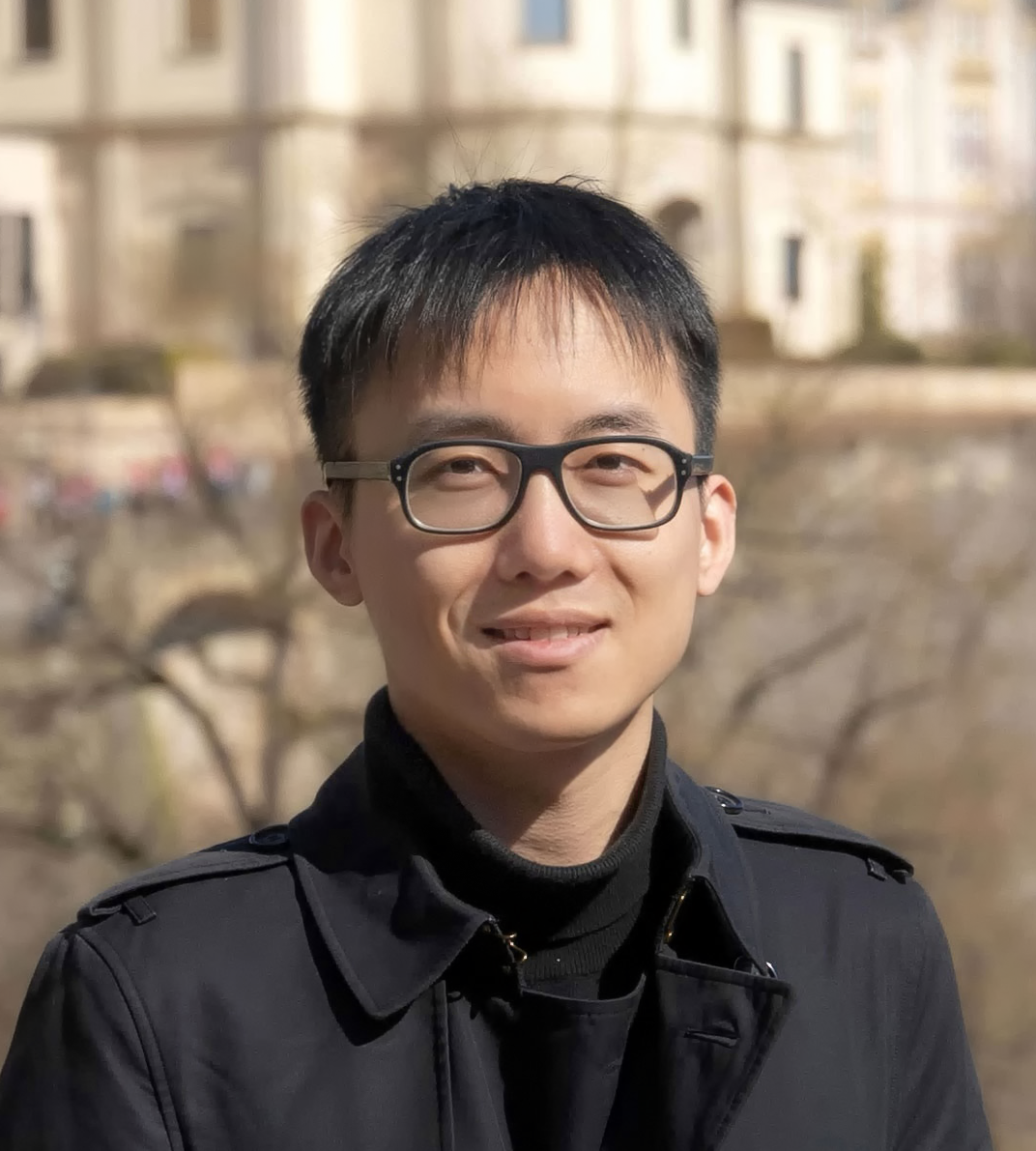
Xingang Pan is an Assistant Professor in the College of Computing and Data Science at Nanyang Technological University (NTU), leading the MMLab@NTU. His research focuses on generative AI and visual content creation, particularly in generative models, 3D vision, computer graphics, and computer vision. Prior to NTU, he was a postdoc at the Max Planck Institute for Informatics and earned his Ph.D. from the Chinese University of Hong Kong (2021) and B.Sc. from Tsinghua University (2016). His work emphasizes generative intelligence, exploring long-term world simulation, diffusion models, and multi-scale 3D generation. Notable contributions include WORLDMEM (2025), Alias-free Latent Diffusion (2025), and SAR3D (2025). His research has been published in top venues like CVPR, ICCV, and SIGGRAPH. Xingang Pan oversees the MMLab@NTU, which actively recruits students globally without nationality constraints. The lab’s projects include GAN2Shape (unsupervised 3D reconstruction from 2D GANs) and LN3Diff (scalable 3D generation).
Alex Wong is an Assistant Professor of Computer Science at Yale University, specializing in computer vision, robotics, and medical imaging. His research focuses on sensor fusion, unsupervised learning, 3D vision, robust perception under adverse conditions, and medical image analysis. He holds degrees from the University of California, Los Angeles (UCLA), including a B.S., M.S., and Ph.D. in Computer Science. Wong’s work bridges theoretical advances with practical applications, particularly in depth estimation, autonomous systems, and medical diagnostics. He has received prestigious awards such as the NeurIPS Outstanding Student Paper Award (2011) and the ICRA Best Paper Award in Robot Vision (2019). His research often addresses challenges in unstructured environments, emphasizing robustness and adaptability. Recent projects include developing novel frameworks for unsupervised depth completion, adversarial robustness in vision systems, and multimodal fusion techniques. His contributions span conferences like CVPR, ICCV, and ICRA, with a strong focus on advancing AI for real-world applications in healthcare and robotics. Education: B.S., Computer Science, UCLA M.S., Computer Science, UCLA Ph.D., Computer Science, UCLA Awards: NeurIPS Outstanding Student Paper Award (2011) ICRA Best Paper Award in Robot Vision (2019) His lab at Yale Engineering focuses on AI-driven solutions for perception challenges, collaborating across disciplines to advance medical imaging and autonomous systems. Current efforts explore generative models, continual learning, and vision-language integration for robust scene understanding.
Christopher Potts is Professor and Chair of Linguistics at Stanford University, with a courtesy appointment as Professor of Computer Science. He serves as Director Emeritus of the Stanford Center for the Study of Language and Information (CSLI) and leads the Pragmatic Enrichment & Contextual Interface Lab. His work bridges theoretical linguistics and computational approaches to language understanding. Education: B.A. in Linguistics from New York University (1999) Ph.D. in Linguistics from University of California, Santa Cruz (2003) Potts' research focuses on how computational methods can illuminate linguistic phenomena, particularly in the areas of semantics, pragmatics, and sentiment analysis. His work explores how emotion is expressed in language and how linguistic production and interpretation are influenced by context. He has made significant contributions to understanding conventional implicatures, sentiment analysis frameworks, and the application of neural networks to linguistic problems. His recent work has increasingly focused on the interpretability of large language models and the development of frameworks like DSPy for building reliable AI systems. An analysis of Potts' recent publications reveals a strong trend toward the intersection of linguistic theory and practical AI applications. His work spans theoretical linguistics (e.g., compositionality, preposing constructions), neural network interpretability, and practical NLP systems (e.g., ColBERT, DSPy). The research demonstrates consistent focus on making language models more transparent, controllable, and linguistically informed, with particular attention to how context shapes meaning. Scientific Awards: Best Paper Award at 2024 ACL for 'Mission: Impossible Language Models' Outstanding Paper Award at 2024 ACL for 'CausalGym' ACL Test of Time Award 2023 Dean's Award for Distinguished Teaching (2015-2016) Best New Data Set or Resource Award at 2015 EMNLP Potts has secured numerous research grants as PI or Co-PI from major organizations including Google, Amazon, NSF, Office of Naval Research, and Stanford's HAI institute. His current projects focus on evaluation of retrieval-augmented generation systems, LLM-mediated communication in organizations, interpretability techniques for language models, and frameworks like DSPy for building next-generation AI systems. He has mentored numerous researchers who have gone on to make significant contributions in NLP and computational linguistics. As Director of CSLI (2013-2020) and current Chair of Linguistics at Stanford, Potts has played a key leadership role in shaping interdisciplinary research at the intersection of language, computation, and cognition. His Pragmatic Enrichment & Contextual Interface Lab continues to be a hub for innovative research combining formal linguistic theory with cutting-edge computational methods.
Kevin D. Ashley is a Professor of Law at the University of Pittsburgh School of Law. He is also a senior scientist at the Learning Research and Development Center and an adjunct professor of computer science at the University of Pittsburgh. His interdisciplinary work bridges artificial intelligence, legal analytics, and ethical reasoning. JD, Harvard Law School M.A. and PhD, University of Massachusetts BA, Princeton University His research focuses on computational modeling of legal reasoning , AI and ethics , legal text analytics , and case-based reasoning . He has pioneered AI applications for legal decision support, automated argumentation, and bias detection in legal corpora. Recent publications include studies on large language models in legal annotation, argument mining, and empirical legal analysis. His work has been supported by multiple National Science Foundation grants, emphasizing fairness in AI and access to justice. 2022 Codex Prize for Computational Law 2015 University of Massachusetts Outstanding Achievement Award 2002 AAAI Fellow for AI in Law contributions 2000 Chancellor’s Distinguished Research Award A former President of the International Association for Artificial Intelligence and Law, Ashley has held visiting roles at the University of Bologna, Stanford CodeX, and IBM Watson Research Center. He co-edits the journal Artificial Intelligence and Law and teaches courses on applied legal analytics.
Prof. Olga Sorkine Hornung is a Full Professor of Computer Science at ETH Zürich, leading the Interactive Geometry Lab. She holds a BSc and PhD from Tel Aviv University (2000 and 2006) and conducted postdoctoral research at Technical University Berlin. Her research focuses on computer graphics, geometric modeling, and geometry processing, with applications in shape editing, digital fabrication, and animation. She has received numerous accolades, including the ACM Fellowship (2020), ERC Consolidator Grant (2020), and the Golden Owl Teaching Award (2021). Her work bridges theoretical foundations and practical algorithms, addressing challenges in parameterization, surface compression, and interactive design tools. Her research interests span: Computer Graphics & Visualization Geometric Modeling & Processing 3D Content Creation & Digital Fabrication Garment Design & Simulation Human Motion Analysis & Animation Awards and grants include: 2024: Best Paper Honorable Mention (EUROGRAPHICS) 2023: Member of Swiss Academy of Engineering Sciences (SATW) 2020: ERC Consolidator Grant 2017: Rössler Prize (ETH Zurich) Her lab focuses on developing novel methods for interactive geometry processing, with recent advancements in garment modeling (e.g., AIpparel, Rags2Riches) and motion retargeting systems like WalkTheDog. She actively collaborates on interdisciplinary projects, including biomedical applications and sustainable fashion technology.
Eytan Adar is a Professor of Information and Computer Science at the University of Michigan, holding dual appointments in the School of Information and the College of Engineering's Electrical Engineering and Computer Science department. His work sits at the intersection of human-computer interaction and artificial intelligence, focusing on large-scale systems analysis and novel interface design. Adar's research spans multiple domains including social media analysis (Twitter, Reddit), academic citation networks, meme propagation, information extraction, and political networks. His methodological expertise includes data mining, data visualization, and graph-based network analysis. His work often operates at internet scale, examining language, creativity, social network dynamics, and text production. His recent publications reveal a strong focus on AI-human collaboration, with particular attention to generative AI interfaces, visualization techniques for complex data, and ethical considerations in AI systems. His work shows a consistent pattern of bridging theoretical insights with practical system implementations. Best Paper Award at ProtoAI: Model-Informed Prototyping for AI-Powered Interfaces, IUI'21 Honorable Mention Award at CHI'24 for feminist interaction techniques research Best Paper Award at ICWSM'18 for Wikipedia language edition analysis Best Paper Award at ICML 2016 Workshop for neural language model visualization Best Student Paper at WSDM'09 for web dynamics research Best of CHI at CHI 2008 for web revisitation patterns analysis Adar has advised numerous PhD students who have gone on to prominent positions at organizations including Google, Apple, RAND, Northwestern University, and Stanford. His research is generously supported by the NSF, IARPA, NIH, the Education Department, and major technology companies including Adobe, Microsoft, Facebook, Google, and Yahoo. He is also a founder of the International Conference on Web and Social Media (ICWSM) and has served as Co-General Chair for WSDM and Co-Program Chair for UIST.
WANG Ye is an Associate Professor in the Department of Computer Science at the School of Computing, National University of Singapore (NUS). He holds a PhD in Information Technology from Tampere University of Technology, Finland, and has been a tenured faculty member at NUS since 2002, following his industry research role at Nokia Research Center. He is the director of the Sound and Music Computing Lab at NUS, leading cutting-edge research in AI-driven music and health technologies. PhD, Information Technology, Tampere University of Technology, Finland (2002) MSc, Telecommunications, Braunschweig University of Technology, Germany (1993) BSc, Telecommunications, South China University of Technology, China (1983) His research is centered on Sound and Music Computing for Human Health and Potential (SMC4HHP) , with a focus on eHealth, eLearning, mobile/wearable computing, and music information retrieval. His work spans AI for stroke rehabilitation, language learning through singing, singing voice synthesis, and automatic music transcription. He has pioneered systems like SLIONS (language learning via karaoke), CocoLyricist (AI co-creation for stroke recovery), and SinTechSVS (expressive singing voice synthesis). The latest articles highlight a strong trend in AI-driven music and health technologies , particularly in controllable lyric generation, singing voice synthesis, automatic pronunciation assessment, and multimodal music transcription. The research increasingly integrates large language models, explainable AI, fairness, and real-world deployment, reflecting a shift from theoretical exploration to practical, human-centered applications in healthcare and education. Dr. Wang has received numerous scientific honors, including: Best Paper Awards at ACM MM, ISMIR, IEEE ISM, and CHI First Prize, Asia Pacific Assistive, Rehabilitative, and Therapeutic Technologies Challenge (2015) Faculty Teaching Excellence Award, NUS School of Computing (2024) Top Paper Award, ACM Multimedia 2022 AI in Medicine Collaborative Grant for CocoLyricist project He has supervised over 11 PhD and 20 MComp students and is currently guiding six PhD candidates. His grants come from MOE, NRF, A*STAR, Nokia, and Smule. He has served as General Chair of ISMIR2017 and TPC Co-Chair of ICOT2017, and is on the editorial boards of IEEE Transactions on Multimedia and Journal of New Music Research. He has also developed and taught the first course on Sound and Music Computing in Singapore. Dr. Wang leads the Sound and Music Computing Lab (SMC Lab) , a multidisciplinary team exploring the synergy of music computing, AI, mobile technology, and cloud systems for health and education. The lab actively collaborates with medical institutions such as NUS Yong Loo Lin School of Medicine, Singapore General Hospital, and Harvard Medical School, and is currently working on projects in AI-supported language learning, stroke rehabilitation, and intelligent music interfaces.
Shane G. Henderson is the Charles W. Lake, Jr. Professor in Productivity at Cornell University's School of Operations Research and Information Engineering (ORIE). His research focuses on the intersection of optimization and simulation, with applications to complex systems such as bike-sharing networks, medical scheduling, and ambulance deployment. He emphasizes practical societal relevance, addressing challenges in healthcare, transportation, and parallel computing environments. Education: B.Sc. (Mathematics), University of Auckland (1992) M.S. (Statistics), Stanford University (1995) Ph.D. (Operations Research), Stanford University (1997) Research Interests: Structured simulation optimization, parallel computing applications, applied probability, and case-driven problem-solving. Recent work includes MRI scheduling, radiation treatment planning, and land/air ambulance systems. He advocates for methodologies that leverage convexity or quasi-convexity to enhance algorithmic efficiency and robustness. Awards and Recognition: 2016 Tau Beta Pi Professor of the Year 2014 Sonny Yau '72 Excellence in Teaching Award 2011 Hess Research & Education Award NSF CAREER Award (1999) Teaching & Service: Courses in probability, simulation, and mathematical modeling using case-based learning. Served on award committees for INFORMS Nicholson Prize, Pierskalla Prize, and Impact Prize. Organized major conferences including the 2009 INFORMS Applied Probability Society conference and multiple Winter Simulation Conferences. Currently co-edits simulation-optimization testbeds for experimental comparisons. Labs & Collaborations: Active in Cornell's collaborative research environment, focusing on interdisciplinary projects with industry partners like Motivate (bike-sharing systems). Engaged in advancing methodologies for complex systems through data-driven approaches.
Alexis Battle is an Associate Professor at Johns Hopkins University with appointments in Biomedical Engineering , Computer Science , and Genetic Medicine (secondary). She directs the Malone Center for Engineering in Healthcare and serves as Deputy Director of the Data Science and AI Institute . Educated at Stanford University (PhD in Computer Science, 2013), Battle transitioned to academia after leadership roles at Google. Research Focus: Battle’s work bridges genomics and machine learning , emphasizing the impact of genetic variation on human health. Her lab develops tools like Watershed to predict functional effects of rare variants, aiming to enhance rare disease diagnosis. Key themes include non-coding DNA analysis , personalized genomics , and systems biology , with applications in cardiovascular disease and neurodegenerative disorders . Publications & Awards: Over 60 peer-reviewed articles in journals like Nature , Science , and Genome Biology , with recent emphasis on single-cell transcriptomics , multiomics integration , and telomere biology . Recipient of the President’s Frontier Award (2022), Microsoft Investigator Fellowship (2019), and Searle Scholar (2016). Scientific Awards: 2022 President’s Frontier Award 2019 Microsoft Investigator Fellowship 2019 Johns Hopkins Discovery Award 2017 Johns Hopkins Catalyst Award 2016 Searle Scholar Advising & Funding: Mentors 11 PhD students, 3 undergraduates, and postdoctoral fellows. Her research is funded by NIH, Searle Scholars, and institutional grants. The Battle Lab collaborates on projects like the GTEx Consortium , focusing on gene regulation and clinical genomics .
Timothy M. Hospedales is a Professor of Artificial Intelligence at the Institute of Perception, Action and Behaviour within the School of Informatics at the University of Edinburgh . He also serves as VP AI and Head of Samsung AI Research Centre Europe . His research focuses on efficient and robust AI , emphasizing meta-learning , lifelong transfer-learning , and domain adaptation in both probabilistic and deep learning frameworks. Applications span computer vision , vision and language , reinforcement learning for robotics , and finance . Professor at University of Edinburgh (2020–present) ELLIS Fellow (2021) Head of Samsung AI Research Europe (2020–present) Founding Director of Applied Machine Learning Lab at QMUL (2012–2016) His work includes pioneering contributions to meta-learning , few-shot learning , and self-supervised methods , with notable awards such as the Best Paper Prize at ICML AutoML 2018 and Best Student Paper at ICPR 2018 . He has co-authored 15+ recent papers on topics like Vision-Language Models , Medical AI Fairness , and Diffusion Model Optimization . He served as Program Co-Chair for BMVC 2018 and AAAI 2022 , and authored a book on Visual Adaptation in the Deep Learning Era (2022). Co-Chair, BMVC 2018 Guest Editor, IET CV Special Issue (2016) Keynote Speaker at TASK-CV Workshop (ECCV 2016) Special Issue on Fewer Labels (IEEE PAMI 2020) His leadership extends to organizing workshops like the Learning-to-Learn Workshop at ICLR 2021 , Meta-Learning Workshop at NeurIPS 2020 , and Domain Generalisation Workshop at ICLR 2023 . Current projects include Meta-Omnium (CVPR 2023) for general-purpose meta-learning and MetaAudio (ICANN 2022) for few-shot audio classification benchmarks.
Professor Carlo Harvey is a creative technologist at the School of Digital Arts (SODA), Manchester Metropolitan University. His interdisciplinary research merges games , machine learning , virtual production , and cultural heritage reinterpretation . He leads industry collaborations with entities like Jaguar Land Rover and Epic Games, focusing on AI-driven interactive audio, real-time visualization, and accessibility solutions. Award-winning projects : TIGA, Innovate UK, and Epic Games MegaGrant for Accession Industry partnerships : Automotive sector, cultural institutions His research spans human-computer interaction , multisensory virtual environments , and acoustic-visual cross-modal perception . Recent publications address robotic simulations, motion alignment, and haptic feedback systems. Scientific recognition : TIGA Award, Innovate UK Funding, Epic Games MegaGrant Advocacy : Digital inclusion, creative collaboration, social impact of technology
Giuseppe Ateniese is a Professor and Eminent Scholar in Cybersecurity at George Mason University, affiliated with the Department of Computer Science and Cyber Security Engineering. Formerly, he held the Farber Endowed Chair and chaired the Department of Computer Science at Stevens Institute of Technology. His research focuses on cloud security, applied cryptography, blockchain technology, and AI-driven cybersecurity solutions. He has received prestigious awards including the NSF CAREER Award and Google/IBM Faculty Awards. AIFurther, he teaches courses on blockchains, cryptography fundamentals, and cryptofinance. His work includes pioneering contributions to rewritable blockchains, password cracking via AI (e.g., PassGAN), and secure decentralized systems. Education: PhD in Computer Science, University of Genoa (2000) Laurea (M.Sc.), University of Salerno (1995) Master of Engineering (Honoris Causa), Stevens Institute of Technology (2020) Research Interests: Ateniese’s work bridges theoretical and applied cryptography, with emphasis on blockchain scalability, privacy-preserving machine learning, and secure data storage. He has developed foundational techniques like proxy re-cryptography and accountable storage systems. His recent efforts address AI’s dual role as both a cybersecurity tool and threat vector, including AI-based password cracking and defense strategies against LLM-driven attacks. Awards: NSF CAREER Award (for privacy/security research) Google Faculty Research Award (cloud security) IBM Faculty Award IEEE CISTC Technical Recognition Award Teaching & Labs: He teaches advanced courses on blockchains (CS695), cryptography fundamentals (CYSE/ECE476), and introductory cryptography (CS487/587). His research team focuses on cryptographic protocols, decentralized systems, and AI-security intersections. Collaborations include projects with Accenture on editable blockchain prototypes and NSF-funded work on password security.
Srijan Kumar is an Assistant Professor in the School of Computational Science and Engineering at Georgia Institute of Technology's College of Computing. His research focuses on data science, AI for security, and online safety, addressing challenges in detecting malicious users, misinformation, and enhancing AI robustness. His work has been deployed in platforms like Flipkart and Wikipedia, and recognized through awards such as the NSF CAREER and Forbes 30 Under 30. Education: B.Tech from Indian Institute of Technology, Kharagpur Ph.D. in Computer Science from University of Maryland, College Park Postdoctoral training at Stanford University Research Interests: Multi-modal/multi-lingual detection of harmful content and users Adversarial robustness of AI models Graph and network analysis for early detection Responsible recommender systems Awards & Grants: NSF CAREER Award (2023) Kavli Fellow (2022) Facebook/Adobe Faculty Awards NSF Convergence Accelerator Phase II grant ($5M) Advising & Labs: Leads the CLAWS Lab, advising over 20 students. Active in mentoring through conferences and NSF-funded projects.
Jan Jokisch is a Researcher and PhD student at the Max Planck Institute for Empirical Aesthetics in Frankfurt am Main, Germany, affiliated with the Heisenberg research group. His academic background includes a Master's in Comparative Literature from Johannes Gutenberg University Mainz and the University of Massachusetts Amherst, and a Bachelor's in Comparative Literature and Philosophy from Mainz. He has lectured in German language and literature at Argentine universities and served as a translator for the DEFA Film Library. His research focuses on drama history, quantitative and digital literary studies, and methodologies in the humanities, with current collaboration on the DFG-funded 'Forager Folklore Database (FFDB)' project. Education highlights include a thesis on 'Epistemological Horror in Literature' (2021) and a BA thesis reinterpreting Shklovsky's literary theory through Heidegger's phenomenology (2018). Jokisch has been recognized with DAAD scholarships (2019, 2021) and the Gutenberg Lehrkolleg Award (2018). He has authored and edited conference proceedings, including works on distant reading methodologies and interdisciplinary language studies. His academic work bridges computational analysis with traditional humanities, emphasizing the role of technology in literary research. Collaborations and editorial roles reflect his commitment to fostering international student scholarship and innovative research practices.
Najim Dehak is an Associate Professor in the Department of Electrical and Computer Engineering at Johns Hopkins University, part of the Whiting School of Engineering. His research focuses on machine learning applied to speech processing, audio classification, and health applications. He is renowned for developing the I-vector representation for speaker recognition, introduced in 2008 during a workshop at Johns Hopkins’ Center for Language and Speech Processing. Prior to this role, he was a research scientist at MIT’s Computer Science and Artificial Intelligence Laboratory. Dehak holds a PhD from the School of Advanced Technology in Montreal (2009). He is a Senior Member of IEEE and contributes to the IEEE Speech and Language Technical Committee. His work bridges AI, healthcare, and signal processing, with notable contributions to neurodegenerative disease detection via speech and handwriting analysis. Research interests include adversarial attacks on speech systems, multimodal biomarker discovery, and robust speech processing across demographics. His lab’s tools, like the Hermespeech Recorder, enable scalable data collection for clinical and research applications. Education: PhD in Advanced Technology (2009), Montreal Affiliations: Johns Hopkins University, IEEE Labs/Teams: Center for Language and Speech Processing (CLSP) His recent work explores AI’s role in aging research, including Alzheimer’s and Parkinson’s disease detection through speech, eye tracking, and handwriting analysis. Ongoing projects address fairness in speaker verification and robustness against adversarial attacks in ASR systems.