Timothy Drysdale is Professor and Chair in Technology Enhanced Science Education at the University of Edinburgh, where he directs the Remote Laboratories group and serves as Director of Strategic Digital Education. His practable.io platform revolutionizes laboratory education through aesthetically-designed remote experiments installed in campus foyers, saving physical space while enhancing accessibility. Research develops novel remote labs based on experiments likened to "science museum exhibits," integrating real-time equipment access via web interfaces. Additional work explores orbital angular momentum in radio communications. His £3M openEngineering Laboratory project received multiple honors including the Queen's Anniversary Prize and THE Digital Innovation Award. Global Online Laboratories Consortium Award (2024, 2018) Queen's Anniversary Prize (2024) Jisc Digital Transformation Award (2023) Guardian Teaching Excellence Award (2018) Teaches across undergraduate engineering programs and supervises doctoral projects in digital education innovation. Advocates for assessment transformation and generative AI integration in education.
Dr. Minh-Son Pham is a Senior Lecturer in Materials at Imperial College London, specializing in additive manufacturing and materials design. He obtained his Doctor of Science from ETH Zurich and leads research on metal 3D printing, material degradation, and meta-materials. His research investigates microstructure-property relationships in additively manufactured alloys, particularly nickel superalloys and high-entropy alloys. Recent work explores damage-tolerant architected materials inspired by crystal microstructures, with applications in aerospace and biomedicine. Publications demonstrate consistent focus on process-microstructure-property relationships in additive manufacturing, combining experimental characterization with computational modeling. Research spans fundamental materials science to industrial applications with aerospace and medical device partners. Awards include the 2024 TMS Young Innovator Award. He teaches fracture mechanics and additive manufacturing courses while coordinating international exchange programs. Current projects involve industrial collaborations on alloy design for 3D printing and meta-material development.
Yingtao Liu is an Associate Professor and holds the Benjamin H. Perkinson Chair & William H. Barkow Presidential Professor at the University of Oklahoma's Aerospace & Mechanical Engineering Department. He specializes in advanced composites, multifunctional materials, intelligent sensors, structural health monitoring, and biomedical applications of shape memory polymers. His research integrates additive manufacturing, nanotechnology, and material science to develop innovative materials and devices. Education: Ph.D., Mechanical Engineering, Arizona State University (2012) M.S., Mechatronics Engineering, Harbin Institute of Technology (2006) B.S., Mechanical Engineering, Harbin Institute of Technology (2004) Research Interests: Development of smart materials with sensing and adaptive capabilities Nondestructive testing and structural health monitoring 3D printing of advanced composites and polymers Biomedical devices for intracranial aneurysm treatment Defect analysis in additive manufacturing processes Recent Contributions: Recent publications focus on shape memory polymers, defect analysis in metal additive manufacturing, and advanced composites for biomedical and structural applications. His work bridges materials science, mechanical engineering, and AI-driven characterization techniques. Awards: Best Paper Award, ASME IMECE 2018 OU VPR Faculty Investment Program Award (2015) Journal of Aerospace Engineering Best Paper Award (2012) Teaching & Outreach: Teaches courses in statics, solid mechanics, and structural health monitoring. Engages in educational initiatives integrating 3D printing and advanced materials into undergraduate curricula.
Prof. Joseph Robson holds the RAEng-DSTL Chair in Alloys for Extreme Environments and is a Professor of Physical Metallurgy at the University of Manchester. His research focuses on microstructural evolution in industrial alloys, particularly aluminum, magnesium, and zirconium, using advanced modeling techniques like Calphad-based thermodynamic and kinetic models. He leads the Light Alloy Processing group and collaborates with institutions like the Henry Royce Institute. Key projects include optimizing microstructures for aerospace, automotive, and nuclear applications through processes like friction stir welding and thermomechanical treatment. Education: BSc in Natural Sciences (Cambridge, 1993), PhD in Metallurgy (Cambridge, 1996). Professional memberships include the Institute of Materials, Minerals and Mining (Fellow, Light Metals Division board member). Research interests span dynamic precipitation behavior, irradiation effects on zirconium alloys, and magnesium alloy strengthening. He has pioneered studies on discontinuous precipitation and its impact on material properties. Awards include the Hume Rothery Award (2015), Grunfeld Medal (2011), and Champion H. Matthewson Award (2017). Advising and grants: Leads major projects like LightForm (EPSRC) and NEWAM (innovative manufacturing). His work addresses challenges in alloy design for extreme environments, with a focus on sustainable materials and advanced processing techniques. Labs/Teams: Active in the Materials Performance Centre and collaborates with industry partners such as Magnesium Elektron and Westinghouse on nuclear materials research.
Prof. Dr. Armando Walter Colombo is a Professor at the Department of Technology, Electrical Engineering and Informatics at the University of Applied Sciences Emden/Leer. He leads the Institute I2AR as Scientific Director and coordinates the DAAD/DAHZ Binational Master in Industrial Informatics with the Universidad Tecnológica Nacional-FRRe in Argentina. His research focuses on Cyber-Physical Systems (CPS), Industrial Digitalization, Industry 4.0, and Smart Manufacturing. Key areas include asset administration shells, IoT integration, and sustainable industrial automation. He holds IEEE Fellow status and is a Distinguished Lecturer for the IEEE Systems Council. He has pioneered educational frameworks like T-CHAT and contributed to standards alignment (RAMI4.0, IEEE Industrial Agents). Recent publications emphasize Industry 4.0 compliance, digital twins, and AI in logistics. Responsibilities: DAAD Master Coordinator, Institute I2AR Director, and International Relations Officer. Awards: IEEE Fellow, Distinguished Lecturer (IEEE Systems Council). Grants & Partnerships: DAAD-funded binational programs, EU-funded PERFoRM projects. His work bridges academia and industry through platforms like the ICPS-based Digital Factory Lab, addressing SME digitalization and sustainable automation.
Thomas J. Santner is a Professor in the Department of Statistics at Ohio State University. His research focuses on experimental design, particularly in integrating computer simulations with physical experiments. He co-authored influential books including *The Design and Analysis of Computer Experiments* (Springer, 2019) and *The Design and Analysis of Experiments for Statistical Selection, Screening, and Multiple Comparisons* (Wiley, 1995). His work bridges statistics and engineering, addressing challenges in prosthesis design, biomedical systems, and industrial processes. Notably, he collaborates with the Hospital for Special Surgery on bone-implant systems and biomaterials research. Education: Ph.D., Purdue University, 1973. Research interests include: Computer experiments and hybrid simulation-physical experimentation Statistical selection and screening methodologies Applications in biomedical engineering and manufacturing optimization Uncertainty quantification in finite element models Recent work emphasizes optimizing complex systems through calibrated simulators, with applications in injection molding processes and joint replacement design. His articles demonstrate methodological contributions to design efficiency, sensitivity analysis, and multiobjective optimization. Prior roles include former Director of the Department of Statistics' Consulting Service and former Department Chair at Ohio State University.
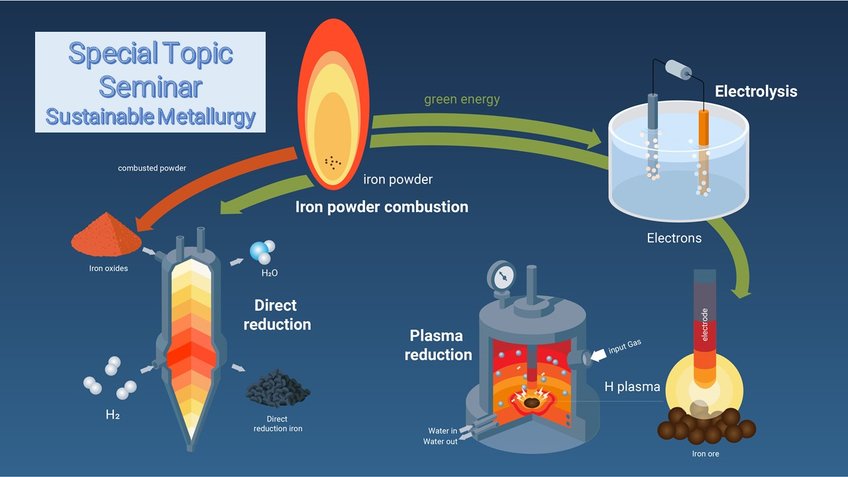
Prof. Wangzhong Mu is a Senior Lecturer (Docent) in the Department of Materials Science and Engineering at KTH Royal Institute of Technology, Stockholm. His research focuses on sustainable metallurgy, microstructure physics, and alloy design. He leads the thermo-physical property analysis section in the Hultgren Lab and is affiliated with Digital Futures at KTH. Educations: PhD in Materials Science, KTH Royal Institute of Technology (2015) MSc/Bachelor's in Materials Science, Northeastern University, China Research Interests: Inclusion engineering and microstructure-property correlations in steels High-entropy alloy design using digital tools (AI/thermodynamic modeling) In-situ characterization via confocal microscopy and multiscale analysis Recycling-oriented steel production and CO2 reduction strategies Grants/Projects (selected): SSF Strategic Mobility Grant (2023-2024): Clean steel for sustainable future VINNOVA Mobility Grant (2022-2024): Hydrogen-based metallurgy STINT Project (2022-2023): Inclusion engineering for green steel EIT RawMaterials (ENDUREIT, 2019-2021): Durable steels at intermediate temperatures Labs/Teams: Hultgren Lab (materials characterization), Digital Futures (AI-driven metallurgy), and international collaborations with Hanyang University (South Korea), IIT Bombay (India), and Tohoku University (Japan).
Prof. Grzegorz J. Nalepa holds the position of Full Professor at the Faculty of Physics, Astronomy, and Applied Computer Science, Jagiellonian University, Poland. He leads the Jagiellonian Human-Centered Artificial Intelligence Lab and is involved in international projects such as the CHISTERA XPM initiative on explainable AI in predictive maintenance. His academic journey includes a PhD (2004), habilitation (2012), and a philosophy MA (2012). Research focuses on AI, affective computing, context-aware systems, and explainable AI (XAI). He has authored over 200 papers, two monographs, and edited volumes. Key projects include the BIRAFFE2 dataset for emotion-based personalization and the GEIST team's semantic wiki tools. Holds leadership roles in conferences (e.g., ECAI 2023) and serves on editorial boards of journals like Sensors and Intelligent Sensors Section . Awards include the 2018 Outstanding Monograph Prize and multiple AGH-UST Rector's Prizes for scientific achievements. Advises PhD and master students, supervising 36 MSc theses. Active in professional organizations like the Polish Alliance for AI and the IEEE Computational Collective Intelligence TC. His contributions span industrial collaborations, software tools (e.g., InXAI, LUX, KnAC), and international research networks.
Sean Goodhart is a semi-retired academic supporting teaching at Coventry University and providing process control consulting. A Chartered Engineer and Fellow of the Institution of Engineering and Technology, he holds a PhD in 'Industrial Applications of Self Tuning Control' and a BEng in Computer and Control Systems from Coventry University. His expertise spans process optimization, advanced control systems, and automation across energy and manufacturing sectors. Education: Doctorate in Process Control (1991), Coventry Polytechnic BEng in Computer and Control Systems (1988), Coventry Polytechnic Research Interests: Industrial automation, advanced process control (APC), optimization in refining/chemicals, sustainable control systems, and training engineers in control methodologies. His work aligns with UN SDG 4 (Quality Education) through contributions to academic programs. Awards: IEE Younger Engineers Achievement Medal (1999) BP Downstream Technical Service Award (2012) Consulting & Mentorship: Advised BP’s Optimization Engineer School, co-chaired UK automation training partnerships, and mentored engineers toward chartered status. His global consulting spans energy, petrochemical, and manufacturing sectors. Labs/Teams: Led control projects at BP’s Innovation & Engineering team, co-founded Applied Manufacturing Technologies (AMT), and contributed to AspenTech’s services division. Active in professional groups like the IET’s Automation Professional Group.
Kristofer Reyes is an Associate Professor in the Department of Materials Design and Innovation at the University at Buffalo (School of Engineering and Applied Sciences). His research focuses on computational and statistical methods applied to materials science, particularly in developing machine learning frameworks for small-data regimes. He leads the Computational and Statistical Material Science (CSMS) Lab, which emphasizes Bayesian models, reinforcement learning, and fusion of physics-based knowledge. Education: PhD in Applied and Interdisciplinary Mathematics, University of Michigan, 2013 BS in Computer Science and Mathematics, Purdue University, 2004 Research Interests: Reyes' work bridges computation, mathematics, and materials science. Key areas include: - Autonomous experimentation systems (e.g., self-driving fluidic labs) - Bayesian optimization and decision-making under uncertainty - Machine learning for nanomaterials synthesis (e.g., perovskite nanocrystals) - Integration of physics-informed models in AI workflows - High-cost experimental design optimization Recent Achievements: SMARTDOPE paper awarded 'Best in Advanced 2023' Developed AlphaFlow for autonomous chemical synthesis Pioneered 'self-driving labs' for materials discovery Labs & Teams: CSMS Lab (134 Bell Hall) focuses on problem-fluent models for materials research. Current projects include quantum circuit optimization, bio-chemical pathway modeling, and sustainable nanomanufacturing. Collaborates with industry and national labs on AI-driven materials development.
Dr. Nariman Sepehri is a Professor in the Department of Mechanical Engineering at the Price Faculty of Engineering, University of Manitoba, Canada. He has held significant administrative roles including Department Associate Head (Graduate Studies), Associate Dean of Engineering (Undergraduate Programs), and Acting Dean of Engineering. His research focuses on fluid power systems, robotics, and control with applications in rehabilitation and heavy machinery. Education: Post-Doctorate, Electrical & Computer Engineering, University of British Columbia, Canada (Tele-Robotics, Mechatronics) PhD, Mechanical Engineering, University of British Columbia, Canada (Control, Fluid Power Systems, Robotics) MSc, Mechanical Engineering, University of British Columbia, Canada (Computer-Aided Manufacturing Planning) BSc, Mechanical Engineering, Sharif University of Technology, Iran (Machine Design) Dr. Sepehri's research interests span Fluid Power Systems and Technology , Robotics and Teleoperation , Control Systems , Condition Monitoring , and Mechatronics of Rehabilitation Devices . His work integrates advanced control theory with practical applications in hydraulic and pneumatic systems, aiming to improve energy efficiency and reliability in robotics, manufacturing, aerospace, and healthcare. Notably, he has developed innovative rehabilitation devices using game-based interfaces for stroke and cerebral palsy patients. His recent publications (2022-2025) demonstrate a strong trend towards energy-efficient hydraulic systems, fault detection using machine learning, and the development of soft robotic actuators for rehabilitation. Key areas include electro-hydrostatic actuators, pump-controlled circuits, and the application of advanced algorithms for condition monitoring and control. Scientific Awards: Dean of Engineering’s Award for Superior Academic Performance University of Manitoba Rh Award for outstanding contributions to scholarships and research in Applied Sciences Fellow of the Canadian Academy of Engineering (CAE) Fellow of the American Society of Mechanical Engineers (ASME) Fellow of the Canadian Society for Mechanical Engineering (CSME) Dr. Sepehri has supervised over 100 graduate and postdoctoral students, contributing significantly to the field of fluid power and robotics. His research has been supported by major grants from the Natural Sciences and Engineering Research Council of Canada (NSERC) and other sources, enabling the establishment of the Fluid Power Research Laboratory. This lab features state-of-the-art equipment including a human-robot-in-the-loop simulator and hardware-in-the-loop test facilities for condition monitoring. The Fluid Power Research Laboratory at the University of Manitoba, under Dr. Sepehri's leadership, is a hub for innovation in fluid power technology. The lab collaborates internationally with researchers in USA, Brazil, China, Hungary, Romania, Denmark, Sweden and France, and has developed interdisciplinary projects bridging engineering with healthcare applications.
Danijela Tadić is a Professor at the Department of Production Engineering, Faculty of Engineering, University of Kragujevac, Serbia. Her primary research focuses on decision-making models under uncertainty, manufacturing process optimization, failure mode analysis, and sustainable recycling technologies in the automotive and industrial sectors. She holds a leadership role in the Faculty of Engineering, contributing to academic governance and curriculum development. Her scientific work integrates fuzzy logic systems, multi-criteria decision-making (MCDM), and optimization algorithms to address complex engineering challenges. Notable areas include risk management in supply chains, quality improvement in manufacturing processes, and environmental impact assessment of recycling equipment. She has collaborated on projects evaluating organizational resilience, strategic failure management, and resource planning in SMEs. Prof. Tadić’s publications emphasize practical industrial applications, such as PFMEA integration with fuzzy decision tools, cloud platform selection frameworks, and electric vehicle evaluation models. Her work bridges theoretical advancements in fuzzy set theory with real-world manufacturing and environmental sustainability problems. She actively participates in academic and professional networks, contributing to conferences and journals in production engineering and industrial systems. Her expertise spans project lifecycle management, lean manufacturing, and the evaluation of recycling technologies for end-of-life vehicles (ELVs).
Dr. Jiling Feng is a Senior Lecturer in Mechanical Engineering at Manchester Metropolitan University, specializing in fluid mechanics applied to cardiovascular systems and biomedical engineering. Her research focuses on arterial waveform analysis, stent design, and material science for vascular disease treatment, supported by over £1.1 million in grants from EPSRC, UKRI, and Royal Society. She holds a BEng, MSc, PhD, and is a Chartered Engineer (CEng) and Fellow of the Higher Education Academy (FHEA). Education: BEng, MSc, PhD Professional Memberships: IMechE, IEEE, British Atherosclerosis Society Research interests include computational modeling of cardiovascular mechanics, fluid-structure interaction in arteries, and biomaterials for medical devices. She has authored over 40 peer-reviewed articles in top journals like Biomechanics and Modelling in Mechanobiology and serves on editorial boards for Mathematics and Frontiers in Biophysics . Recent projects include a KTP collaboration with Krohne (£235,000) and a Royal Society grant with Beijing University of Technology (£11,600). She supervises PhD and MSc projects on plaque mechanics and arterial waveforms. Labs/Teams: Active in vascular mechanics research groups, collaborating with vascular surgeons and industry partners.
Andrés Suárez García is an Assistant Professor at the University of Vigo's Department of Systems and Automation Engineering. His teaching includes courses on Systems and Control Engineering, Industrial Computing, Robotics, and Automation Fundamentals. He has consistently taught across multiple academic years from 2014/2015 to 2024/2025, covering disciplines like structural mechanics, fluid dynamics, and manufacturing quality control. His research focuses on interdisciplinary engineering applications, emphasizing automation, robotics, additive manufacturing, and energy systems. Notable projects include optimizing 3D printing parameters, analyzing lithium-ion battery health using machine learning, and developing IoT-based educational platforms. He also explores naval and military engineering challenges, such as energy storage for submarines and structural design for space exploration vehicles. Over 20+ supervised final-year projects highlight his mentorship in cutting-edge technologies like piezoelectric energy harvesting, supercapacitor integration in military vessels, and AI-driven anomaly detection in maritime routes. His work bridges theoretical engineering principles with practical applications in defense, environmental monitoring, and sustainable infrastructure.
Jiong Tang is a Pratt & Whitney Chair Professor in Design and Manufacturing at the University of Connecticut , where he also serves as Co-Director of the Management and Engineering for Manufacturing Program . He received his B.S. and M.S. in Applied Mechanics from Fudan University, China (1989 and 1992), and his Ph.D. in Mechanical Engineering from Pennsylvania State University (2001). Prior to joining UConn, he worked at the GE Research Center as a research engineer. Research Interests : System dynamics, control theory, smart materials, vibration suppression, uncertainty propagation, computational intelligence, and multi-physics system modeling. Current Projects : Digital twin development for aerospace materials, physics-informed machine learning in manufacturing, adaptive metasurface design, and optimization of cooperative robotics. Methodological Focus : Combines Bayesian deep learning , Gaussian process metamodeling , transformer-based architectures , and multi-fidelity data fusion for industrial applications. His work emphasizes smart sensing , electromechanical integration , and uncertainty-robust inverse analysis . Collaboration : Research funded by federal agencies and industrial partners , with particular emphasis on aerospace and manufacturing technologies. His recent publications highlight generative adversarial networks for defect detection , piezoelectric metamaterials , and physics-guided neural network architectures across mechanical, structural, and composite systems.