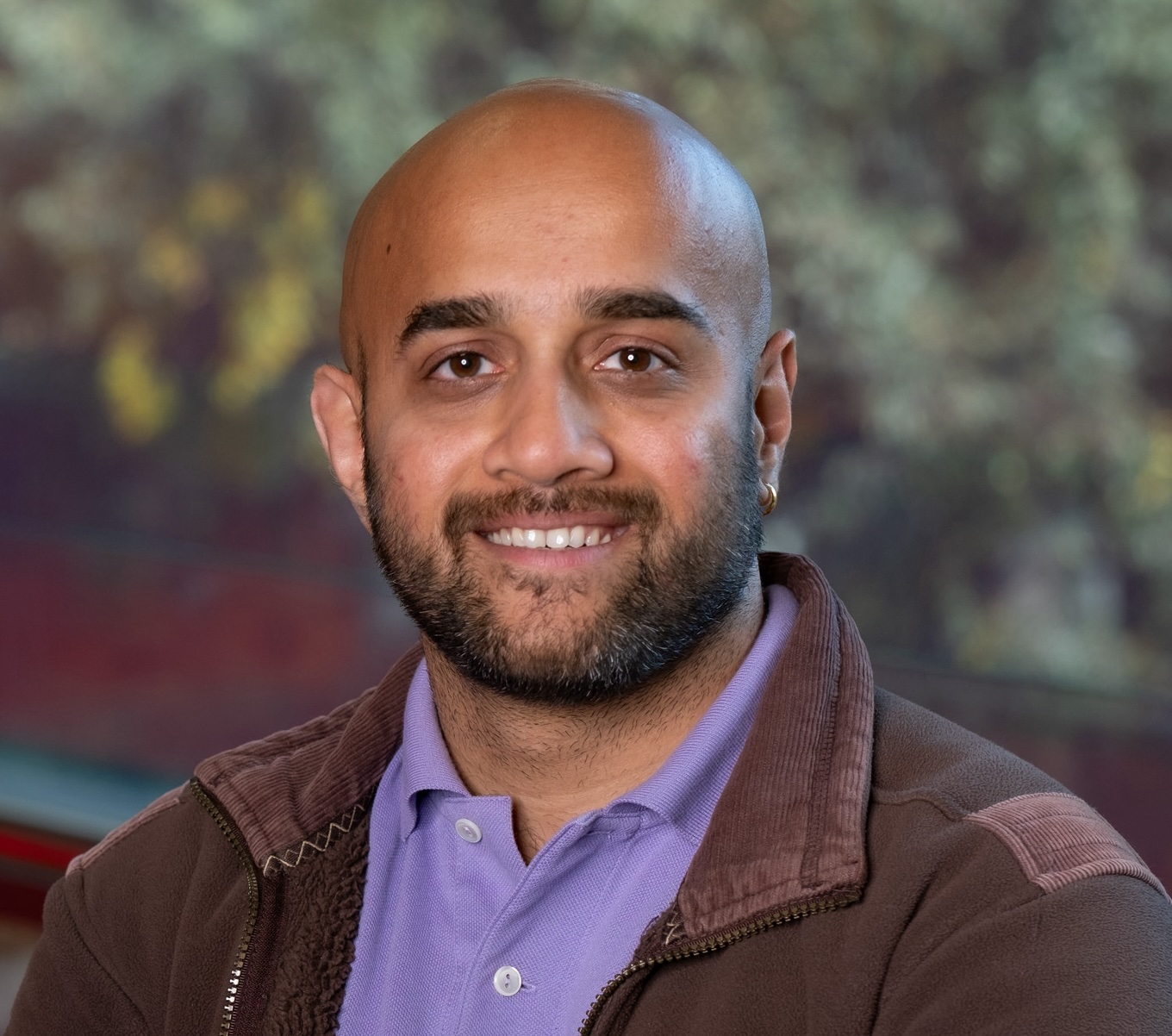
Halil Ali is a Lecturer in Data Science (Education Focused) at the School of Computing Technologies, RMIT University. His research spans privacy-preserving machine learning, blockchain technologies, and cybersecurity. Key research areas include federated learning , quantum-enhanced AI , secure biometrics , edge unlearning , and privacy in healthcare data . His recent publications focus on resilient AI systems , blockchain applications , and ethical data handling in emerging technologies. His work demonstrates expertise in integrating machine learning with blockchain security across domains like IoT, smart grids, and metaverse healthcare. He contributes to practical frameworks for zero-trust architectures , lightweight consensus protocols , and quantum-classical hybrid models .
Erniel Bayhon Barrios is a Professor at the Malaysia School of Business, Monash University. Formerly a professor at the University of the Philippines Diliman and a visiting scholar at Karlstad University (Sweden) and the Asian Development Bank Institute (Japan). He holds a PhD in Statistics (1990) from the University of the Philippines Diliman. His research focuses on computational statistics, nonparametric methods, data science, and computational econometrics, with applications in spatiotemporal modeling, time series, and financial markets. He has contributed to high-dimensional data analysis, volatility modeling, and robust statistical techniques. Key projects include the National Mental Health Survey and Well-Being (2019–2021) and building a data-driven organization for the Habib Group (2025–2026). He is an elected member of the International Statistical Institute (2012), associate editor of Communications in Statistical Applications and Methods , and served on the board of the International Association of Statistical Computing (2022–2025). He advises PhD students on topics like stochastic frontier models, data assignment in big data, and high-frequency time series analysis. His work aligns with UN Sustainable Development Goals related to education and economic growth.
Ben Sparkes is a Research Fellow at the University of Adelaide's Faculty of Sciences, Engineering and Technology, affiliated with the School of Physics, Chemistry and Earth Sciences and the Institute for Photonics and Advanced Sensing. His work focuses on quantum technology development for next-generation computing and secure communications. Educational background: PhD in Physics, Australian National University (2013) Research interests span quantum information storage/manipulation, cold atom electron/ion sources for ultra-fast biological imaging, and sub-nanometer fabrication. Current DECRA-funded work develops fibre-based quantum networks for secure communications infrastructure. Key recognitions: McKenzie Fellowship for novel electron source development ARC DECRA Fellowship for quantum network research 2018 SA Tall Poppy Award for science outreach leadership Dr. Sparkes leads ARC-funded quantum technology projects and supervises graduate students. He actively participates in public engagement through the Amazing University of Adelaide Laser Radio program and presented at the 2019 Research Tuesday seminar on quantum mechanics' societal impact. He contributes to the Precision Measurement Group's mission of advancing quantum sensing technologies through interdisciplinary collaboration with South Australia's Department for Industry and Skills.
Massimo Piccardi is a Professor of Natural Language Processing (NLP), Computer Vision, and Machine Learning at the University of Technology Sydney (UTS) , where he has been since 2002. He currently serves as the Head of the School of Electrical and Data Engineering and leads the Big Data Analytics program at the Global Big Data Technologies Centre. His research focuses on advancing NLP, machine learning applications in healthcare, and cybersecurity in IoT systems. He has authored over 200 journal papers and conference proceedings, secured significant ARC and CRC grants, and holds the IEEE Computer Society Distinguished Contributor Award (2022). Education & Professional Roles: Joined UTS in 2002, progressing from Associate Professor (2002–2007) to Professor (2008–present). Serves as Associate Editor for IEEE Transactions on Big Data and Editor for Artificial Intelligence in Medicine. Active in professional societies including IEEE, ACL, and ALTA (President, 2023–2024). Research Interests: Core areas include NLP (translation, summarization, adversarial attacks), healthcare informatics (clinical NLP, health service analysis), and cybersecurity (IoT security, privacy-preserving systems). Cross-cutting themes include generative models, cross-lingual systems, and ethical AI. Grants & Projects: Principal Investigator on ARC Discovery/Linkage projects and CRC grants. Recent projects include controllable machine translation (Amazon), privacy-preserving digital agriculture, and STEM innovation (ASTRID project with NBN Co). Labs & Collaborations: Leads the UTS Global Big Data Technologies Centre, collaborating on projects like adversarial NLP attacks, medical machine translation, and secure IoT frameworks.
Professor Ernest Foo is a distinguished academic at Griffith University's School of Information and Communication Technology, specializing in cybersecurity with a focus on industrial control systems and cryptographic protocols. With over 15 years of experience in computer networking, he has established himself as a leading expert in SCADA security and smart grid cybersecurity. His research has significant practical applications in critical infrastructure protection, and he has developed hands-on security training programs that have trained professionals from major Australian utilities and government agencies. Professor Foo's educational background includes: Bachelor of Engineering with Honours in Electronic and Computer Engineering from University of Queensland Doctor of Philosophy from Queensland University of Technology Professor Foo's research interests center around secure cryptographic protocols with specific applications in industrial control system security and cyber physical systems. His work spans SCADA security, smart grid protection, wireless sensor network security, and post-quantum cryptography. He has made significant contributions to understanding vulnerabilities in industrial protocols like Modbus and DNP3, and has pioneered the application of process mining and data mining techniques for attack detection in critical infrastructure systems. His research bridges theoretical security concepts with practical implementations in real-world industrial environments. Professor Foo's recent publications demonstrate a clear trajectory toward increasingly sophisticated security frameworks for critical infrastructure. His work shows a progression from foundational SCADA security research to advanced applications of artificial intelligence, machine learning, and formal methods in cybersecurity. A notable trend is the integration of zero trust principles with industrial control systems, alongside growing emphasis on post-quantum cryptographic solutions. His publications span high-impact journals and conferences in cybersecurity, with increasing focus on anomaly detection in cyber-physical systems and the application of graph-based machine learning techniques to network security challenges. Professor Foo's notable scientific achievements include: Best paper award at the 2nd International Cyber Resilience Conference for "Gap analysis of Intrusion Detection in Smart Grids" Professor Foo has secured significant research funding including an ARC Linkage grant with Powerlink Queensland focused on cyber security for electricity sub-stations. He currently leads multiple research projects including Westpac Micro-Credentials in Financial Crime Investigation, Digital Banking Micro-credentials with ANZ, and research on quantum-safe cryptography. As a dedicated educator, he serves as Program Director for multiple cybersecurity programs including the Master of Cyber Security, and has supervised numerous doctoral and masters students. His Cyber Security: Industrial Control System course, conducted annually from 2013-2018, featured innovative hands-on training with real-world participants from major Australian utilities. Professor Foo has been instrumental in establishing the SCADA security research laboratory with multiple vendor system miniatures running industrial PLCs. His work bridges theoretical security concepts with practical implementations, making significant contributions to the security of industrial control systems and critical infrastructure worldwide.
Prof Christina Lim is a Professor at the Department of Electrical and Electronic Engineering, University of Melbourne, Australia. She serves as the Associate Dean of Research for the Faculty of Engineering and Information Technology (FEIT) and manages the Tucker Lab. Previously, she held roles as Research Group Leader of the Electronics and Photonics System group and Deputy Head of Department (Teaching and Operations) Education: PhD and Bachelors from University of Melbourne Research Interests: Radio-over-Fibre, Optical Wireless Communications, Microwave Photonics, Augmented Reality Displays, Reservoir Computing, Optical Crosshaul Networks Recent publications demonstrate expertise in optical waveguide design for AR, underwater optical wireless communications, photonic switching, and network optimization. Her projects focus on next-generation wireless infrastructure, including Photonics Computing Enabled Ultra-Broadband Wireless Communications (2024-2027, $598k ARC grant) and Additive Manufacturing of Optical Elements (2025). She has secured significant funding, including ARC Discovery Projects and Future Fellowships. Scientific Honors IEEE Fellow (2022) Optica Fellow (2018) ARC Future Fellow (2009-2013) ARC Australian Research Fellow (2004-2008) Professional Service Vice-President of Conferences, IEEE Photonics Society Deputy Editor, IEEE/Optica Journal of Lightwave Technology ARC College of Experts (2014-2016)
Professor Sarath Kodagoda is a leading academic and researcher in robotics and mechatronics at the University of Technology Sydney (UTS), where he serves as Acting Director of the UTS Robotics Institute. He specializes in sensor fusion, data processing, and machine learning, with a focus on robotic solutions for infrastructure inspection and assistive technologies. His work includes developing the Robotic Remote Lab teaching facilities and founding the iPipes lab for wastewater infrastructure research. Affiliations: UTS Robotics Institute, Faculty of Engineering & IT Leadership Roles: President of the Australian Robotics & Automation Association, Ambassador for NSW Smart Sensing Network His research interests span robotics, sensor networks, and infrastructure robotics, with notable contributions to pipeline inspection and tactile sensing. He has published over 170 papers, attracted $6M+ in grants, and supervised 12 PhD students now working at Amazon, Google, and ABB. Awards include the UTS Medal for Teaching & Research Integration and multiple national/international innovation awards. Recent work emphasizes robotic systems for wastewater infrastructure, assistive robotics for vision-impaired individuals, and advanced sensor technologies. His articles highlight innovations in tactile sensing skins, 3D object detection (e.g., CaLiJD, LMIINet), and pipeline defect detection (PIPE-CovNet+). Grants: Contracts with Amplitel, NBN Co Ltd, and ARC Linkage Projects Labs/Teams: UTS Robotics Institute, iPipes Lab
Associate Professor Joyce Nip is a member of the University of Sydney's Discipline of Media and Communications and Department of Chinese Studies. Her research focuses on media dynamics in Chinese societies, particularly the political and social implications of digital platforms like social media. She has held visiting roles at the University of Hong Kong and the University of Maryland, and received the 2020 Taiwan Fellowship. Education and Professional Background: Joyce has over 20 years of experience in journalism, teaching, and research. She was a Fulbright Scholar at the University of Maryland (2004–2005) and has held academic roles in Hong Kong before joining the University of Sydney in 2010. Research Interests: Her work spans journalism studies, civic media use, and diasporic Chinese communities. Current projects include studies on online public opinion in Greater China and China’s external news communication strategies. Grants and Awards: Joyce has secured grants from the Chiang Ching-Kuo Foundation for projects on Chinese social media and public opinion. Her 2020 Taiwan Fellowship reflects her expertise in cross-strait communication. Teaching and Supervision: She teaches courses on Chinese media in global contexts and supervises research on topics like Taiwanese public communication and diasporic media. Past students include Liang Xia (PhD) and Weiwei Xu (PhD). Labs and Collaborations: Joyce contributes to the Sydney Southeast Asia Centre and serves on editorial boards for Asian Journal of Communication , Digital Journalism , and Journalism Practice .
Dr. Aditya Joshi is a Senior Lecturer in the School of Computer Science & Engineering at the University of New South Wales (UNSW). He specializes in Natural Language Processing (NLP), with a focus on sarcasm detection, dialectal NLP, and ethical AI applications in public health and cybersecurity. He joined UNSW in 2023 following industry roles at SEEK, Notiv, and Fractal Analytics, where he developed NLP systems for recommendation engines and meeting analytics. His research has garnered over 3,000 citations (h-index 26) and secured $3.1M in grants, including Defence Trailblazer and Google exploreCSR awards. Education: Joint PhD (2018) from IIT Bombay (India) and Monash University (Australia); MTech in CSE (2011) from IIT Bombay. Research Interests: Making NLP models robust for non-native English speakers and the LGBTI+ community, algorithmic enhancements to transformers, and applications in public health, cybersecurity, and societal issues. His work spans epidemic intelligence (collaborations with EPIWATCH and IFCYBER), cybersecurity tools like AuditNet, and inclusive AI initiatives such as queer-inclusive workshops funded by Google. He designed UNSW's new NLP course (COMP6713) and co-authored a Wiley textbook on NLP. Notable grants include the A$1.4M 'Comprehensive Defence Data Platform' (Lead CI) and A$92K Google exploreCSR grant for benchmarking dialectal sentiment. His awards include the Best PhD Thesis from IITB-Monash and Best Paper accolades at FAccT 2023 and MoMM 2020. He supervises projects on kernel-based attention reformulation, prompt-based sarcasm detection, and multilingual small-scale LLMs. His service roles include Executive Committee Member at ALTA and arXiv moderator for computational linguistics.
Robert Wellington serves as Associate Professor and Director of the Centre for Art History & Art Theory at the School of Art & Design, Australian National University (ANU), within the College of Arts & Social Sciences. His academic leadership focuses on advancing art historical research and public engagement through institutional initiatives. His research spans Art History, Early Modern European Art (particularly Louis XIV's France), Museum Studies, Public Humanities, and Cultural Heritage. Wellington investigates transcultural object exchange, royal iconography, and identity construction through material culture, with emphasis on Versailles, medals, and marginalia. His work bridges historical scholarship with contemporary public humanities applications in museums and digital archives. Analysis of his 2020-2024 publications reveals concentrated exploration of Louis XIV's cultural legacy, Versailles' global impact, and the evolving role of humanities institutions. He pioneers digital critical editions while examining how objects shape identity across cultural boundaries, consistently connecting historical practices to modern museum and archival challenges. No scientific awards were documented in the provided materials. As Centre Director, Wellington oversees research programs and institutional partnerships, though specific student advisees and grant details remain unlisted in available sources. His leadership facilitates interdisciplinary projects including the Jean-Benjamin de Laborde digital edition initiative. The Centre for Art History & Art Theory functions as a research hub under Wellington's direction, driving public humanities innovation through the ANU's Art & Design Seminar Series, Visiting Artist Program, and collaborative projects with national collections. Current initiatives focus on digital heritage and community-engaged scholarship within the School of Art & Design framework.
Professor Amin Abbosh is a faculty member at the School of Electrical Engineering and Computer Science, University of Queensland. His research focuses on Medical Microwave Imaging and Millimeter-wave Engineering, with contributions to advanced imaging systems, antenna design, and communication technologies. He leads projects in electromagnetic medical sensing, including portable brain scanners and wearable diagnostic systems. His work integrates applied electromagnetics with AI-driven algorithms, addressing challenges in stroke detection, liver health monitoring, and deep vein thrombosis diagnosis. With over 16 patents and collaborations across biomedical and engineering domains, his research bridges clinical needs with cutting-edge electromagnetic techniques. Key projects include the development of low-cost healthcare monitoring systems and reconfigurable antennas for satellite communications. Research interests span medical imaging systems, antenna array design, and signal processing for healthcare applications. His team innovates in areas like phased arrays, dielectric property analysis, and non-invasive diagnostics. Recent advancements include synthetic microwave focusing techniques and self-supervised deep learning models for clutter removal in imaging. Publications highlight contributions in IEEE journals and conferences, emphasizing clinical applications and device prototyping. Collaborations with institutions like the University of Queensland’s medical faculty and industry partners ensure practical implementation of his research.
Dr. Amin Sakzad is an Associate Professor in the Department of Software Systems & Cybersecurity at Monash University's Faculty of Information Technology. His research focuses on lattice-based cryptography, wireless communications, and post-quantum security protocols. He holds a PhD in Applied Mathematics from Amirkabir University of Technology (2011) and has held academic roles at Carleton University and Monash since 2012. Dr. Sakzad’s expertise spans lattice coding theory, MIMO systems, and privacy-preserving technologies for genomic databases and blockchain applications. He leads multiple ARC-funded projects, including work on secure databases (SRDBMS) and post-quantum cryptographic primitives for FinTech and energy sectors. His research has been recognized through awards such as the FIT Dean’s Award for Teaching Excellence (2021). Key collaborations include projects on blockchain security (CollinStar Lab), genomic data privacy, and energy market cybersecurity. His work addresses UN SDGs through contributions to quality education (SDG 4) and industry innovation (SDG 9). Recent publications highlight advancements in lattice-based cryptography (e.g., CRYSTALS-Kyber variants), privacy-preserving energy trading, and secure blockchain protocols like FPPW watchtower systems. His research bridges theoretical cryptography with practical implementations in embedded systems and 5G telecommunications. Grants: 16 active/completed projects including $1.2M in ARC funding Advising: Supervising PhD projects on lattice applications in post-quantum crypto and blockchain Labs: Core member of Monash’s Software Defined Telecommunications (SDT) Lab and CollinStar Lab
James Manning is a Lecturer in Digital Design at RMIT University's School of Design. His research focuses on game design, digital media, and cultural memory, exploring topics such as game preservation, livestreaming practices, and the intersection of play and technology. He is particularly interested in 'anarchaeological' approaches to defunct games and the documentation of everyday play practices. His teaching interests include game studies, interactive media, animation aesthetics, and design methodology. He actively supervises research in strategies for reflective shortform game design and has contributed to projects like the Astrosurf interactive dome experience. Key research themes include media archaeology, esports culture, and the sociocultural dimensions of digital games. His work bridges theoretical frameworks with empirical studies, examining how digital platforms shape media consumption and cultural production.
Aggelos Kiayias FRSE is Chair in Cyber Security and Privacy and Director of the Blockchain Technology Laboratory at the University of Edinburgh. He is also Chief Scientist at blockchain technology company Input Output. His academic work spans over two decades with more than 200 publications in cryptography, blockchain, and security. Dr. Kiayias received his Ph.D. from the City University of New York and was an undergraduate at the University of Athens Mathematics department. His research focuses on computer security, privacy, applied cryptography, and foundations of cryptography with particular emphasis on blockchain technologies, distributed systems, e-voting, secure multiparty protocols, and identity management. His recent work demonstrates continued innovation across multiple dimensions of blockchain technology, with publications spanning theoretical foundations, practical implementations, economic modeling, and privacy-preserving techniques. The research output shows strong emphasis on security analysis, consensus protocols, transaction processing, and economic incentives within decentralized systems. His work bridges theoretical cryptography with real-world blockchain applications. Among his notable recognitions are an ERC Starting Grant, Marie Curie fellowship, NSF Career Award, Fulbright Fellowship, election as Fellow of the Royal Society of Edinburgh in 2021, and the BCS Lovelace Medal in 2024. He has served as program chair for major conferences including the Cryptographers' Track of RSA (2011), Financial Cryptography (2017), Real World Crypto Symposium (2020), and Public-Key Cryptography Conference (2020), and as general chair of Eurocrypt 2013. Professor Kiayias has supervised over 20 PhD students, many of whom have gone on to academic positions at institutions including Imperial College, Stanford University, Royal Holloway University London, University of Glasgow, University of Sydney, and Virginia Commonwealth University. His current advisees include Yu Shen, Amirreza Sarencheh, and Christina Ovezik with expected graduations between 2025-2026. He leads the Blockchain Technology Laboratory at the University of Edinburgh and is involved in several major blockchain research projects including Panoramix and Fentec. His research has received significant funding from the European Union (Horizon 2020, ERC), UK research councils (EPSRC), US agencies (NSF, DHS, NIST), and Greek research bodies.
Scientia Professor Robert Kohn is a distinguished academic at the University of New South Wales, holding a position in the School of Economics within the UNSW Business School. With a career spanning several decades, Professor Kohn has established himself as a leading expert in statistical methodology and econometric modeling. His research has significantly contributed to Bayesian statistics and computational methods for complex data analysis. Professor Kohn's research focuses on advanced statistical methodologies including Bayesian methodology, variable selection and model averaging, nonparametric regression models, time series modeling, multivariate Gaussian and non-Gaussian regression, and Markov chain Monte Carlo simulation algorithms. His work bridges theoretical statistics with practical applications across economics, finance, and cognitive science. His research demonstrates a consistent trajectory toward developing more efficient computational methods for complex statistical models, with recent work emphasizing variational Bayesian methods, particle filtering techniques, and applications to time series analysis. Analysis of his recent publications (2022-2025) reveals a strong focus on advancing computational statistical methods, particularly in Bayesian inference for complex models. His work shows increasing integration of machine learning techniques with traditional statistical methods, especially in handling high-dimensional data and complex time series structures. Professor Kohn has made significant contributions to variational inference methods, particle-based computational techniques, and applications to financial time series and cognitive modeling. Professor Kohn has maintained an exceptionally productive research career with continuous publication output since the 1970s, demonstrating remarkable longevity and adaptability in his research focus as statistical methodologies have evolved. His work shows strong international collaboration, particularly with researchers in Australia, the United States, and Europe, reflecting his standing in the global statistical community.