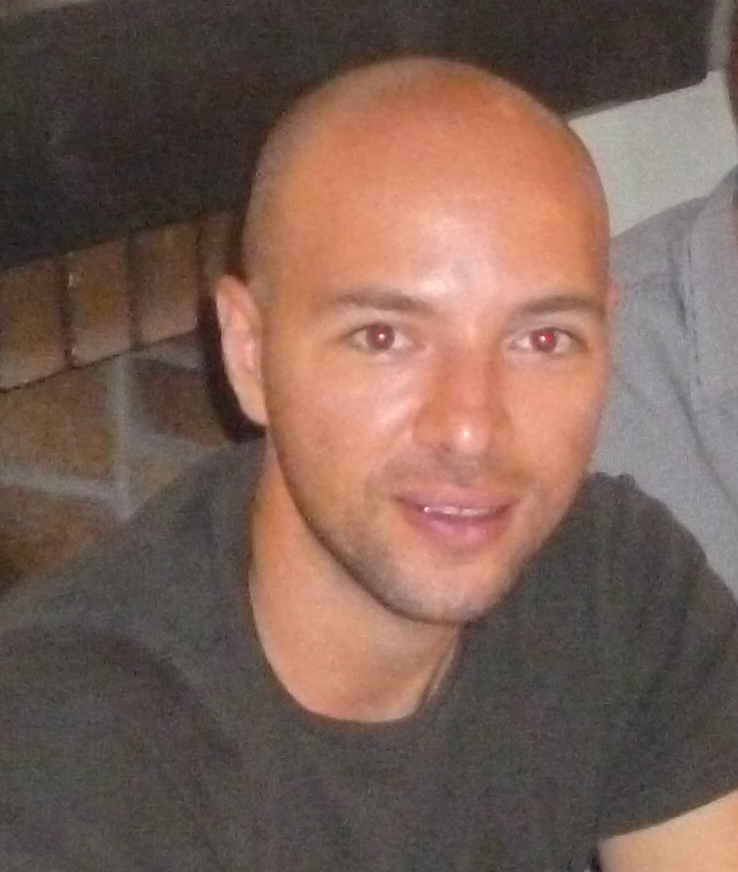
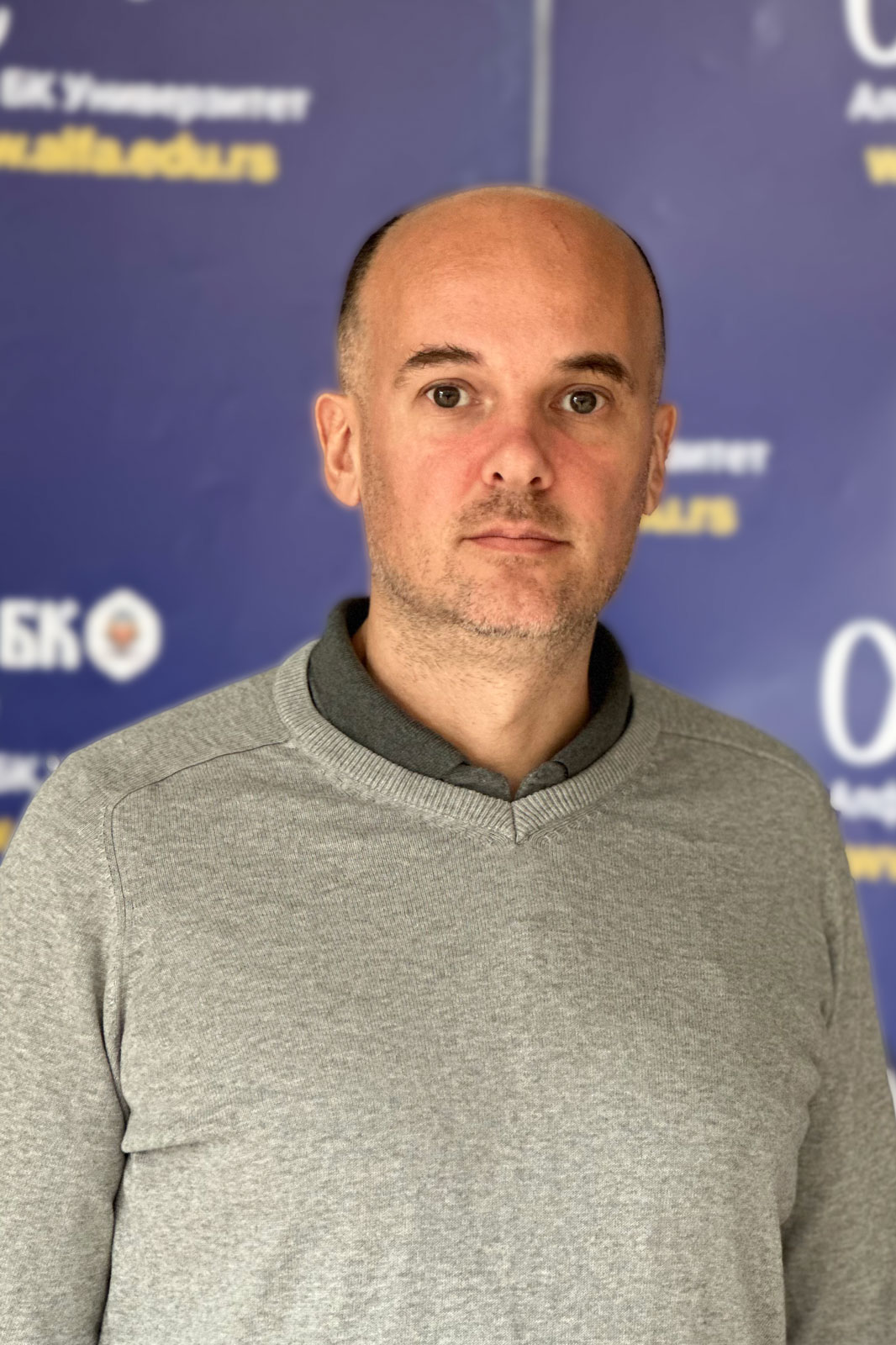
Mladen Janjić is a Lecturer at the Department of Information Technologies , Faculty of Technical Sciences in Čačak, University of Kragujevac. With a career spanning over a decade at the institution, he has taught subjects such as Web Technologies, E-Business, Software Engineering, and Data Protection. His research focuses on Computer Systems , Data Protection , and Applied Mathematics in Computer Science , with significant contributions to educational data analysis and algorithmic methods in multi-criteria decision making. Education : BSc (2005) and MSc (2010) in Electrical Engineering from Faculty of Technical Sciences, Čačak. Research Trends : His work bridges data science , educational technology , and operations research , particularly in analyzing student performance and optimizing decision models. Scientific Awards : Gold Medal at Eco-Foto 2011 Bronze Medal at 7th International Salon Ecological Truth 2012 FIAP Commendation at Help for Flooded Paracin 2014 Projects : He has contributed to IT requalification programs under the UNDP's "Serbia on Your Fingertips" initiative and curriculum development projects for web technologies and e-business courses.
Marija Nikolić, M.Sc., is a Lecturer at the Department of Information Technologies, Faculty of Technical Sciences in Čačak, University of Kragujevac. With expertise in Information Technologies and Systems, she has significantly contributed to educational technology, e-learning, and multimedia systems in pedagogy. Her research focuses on enhancing knowledge acquisition through blended learning methodologies, integrating digital tools into educational processes, and optimizing information subsystems for quality management. She has led projects like "ENGLIT" (2018–2019), which aimed to develop students' digital competencies, and participates in the Erasmus+ initiative "AEQUALIS4TCLF" (2024–2028) addressing skills gaps in European industries. Marija's publications span international journals and conferences, emphasizing areas such as smart education environments, AI-driven personalized learning, and business process modeling for information systems. She also contributes to textbook development and serves as a researcher in institutions like the Computer Science Laboratory at her faculty.
Lidija Paunović is an Assistant Professor at the Department of Social Sciences and Humanities, Faculty of Technical Sciences Čačak, University of Kragujevac. She is currently pursuing a doctoral degree in the E-Business module at the Faculty of Organizational Sciences, University of Belgrade. Her research focuses on E-Business, Information Systems, and Digital Marketing. Education: MSc in Production and Information Management (2010), University of Kragujevac Awards: 3× Faculty Top Student, Young Talent Fund (2008/09), Ministry of Education Scholarships (2010/11-2012/13) Her recent publications explore Smart Education implementation frameworks, Open-Source Circuit Design tools, and Digitalization standards. She teaches courses in E-Business, Internet Marketing, and Information Technology. Scientific awards include: Faculty of Technical Sciences Top Student (2006-2010) Young Talent Fund Scholarship (2008/09) Ministry of Education Doctoral Scholarships (2010/11-2012/13)
Mihajlo Tatović is an Assistant Professor at the Faculty of Technical Sciences in Čačak , part of the University of Kragujevac . His academic career spans teaching and research in Electronics and Electrical Engineering . Education: BSc in Electrical and Computer Engineering, module Power Engineering (2013), University of Kragujevac MSc in Electrical and Computer Engineering, module Power Engineering (2015), University of Kragujevac PhD studies in progress at the Faculty of Technical Sciences in Čačak (2015–present) His research interests focus on Arduino-based systems , sensor development for environmental monitoring, power electronics , and automation . He has contributed to projects involving remote meteorological data measurement and magnetomechanical torque sensors. Recent publications highlight his work in embedded systems (2016, M24), magnetic field visualization (2019, M30), and Arduino applications in environmental monitoring (2015, M60). These studies reflect his expertise in IoT , data acquisition , and computational physics . Scientific recognition: Awarded the prestigious Aleksandar Avramović award for top graduating student in 2013/2014 Best paper award at the 59th ETRAN Conference (2015) He participates in curriculum development projects like SDPKET (2019–2020), focusing on enhancing digital competencies and entrepreneurship in electronics and telecommunications education.
Marko Šućurović is an Assistant Professor at the Department of Electrical Power Engineering, Faculty of Technical Sciences in Čačak, University of Kragujevac, Serbia. His expertise spans electrical power engineering with a focus on electrical machines, motor drives, and energy efficiency. He teaches multiple courses including Electrical Installations and Lighting, Electric Motor Drives, and Distribution Networks, while actively contributing to research and development projects in his field. Education: Undergraduate studies in Electrical Power Engineering at Faculty of Technical Sciences in Čačak (2007-2011), average grade 8.82 Master's degree in Electrical and Computer Engineering, module Electrical Power Engineering (2011-2012), thesis: "Measurement and visualization of the rotating magnetic field of the stator of a three-phase and two-phase asynchronous motor" Currently pursuing PhD at Faculty of Electronics in Niš, Department of Electrical Engineering and Computer Science Šućurović's research focuses on Electrical Power Engineering , with particular emphasis on electrical machines and drives , energy efficiency , and electrical installations . His work bridges theoretical concepts with practical applications through educational laboratory setups. He has developed specialized tools for visualizing electromagnetic phenomena and has contributed significantly to understanding thermal effects in electrical systems, cable engineering, and renewable energy integration. His research often combines experimental work with analytical modeling to address real-world engineering challenges. His recent publications (2020-2025) demonstrate a strong focus on energy efficiency , educational methodologies in electrical engineering, and advanced analysis of electrical systems . A significant portion of his work addresses practical implementation challenges in power systems, with increasing attention to renewable energy integration. His research shows a clear progression from fundamental electrical machine analysis toward more complex system-level energy efficiency solutions and innovative educational approaches. Projects: Researcher on project TR33016 "Research, development and implementation of programs and measures for energy efficiency of electric drives" Participant in Erasmus+ Proof-of-Concept project "Torque sensor based on magnetomechanical effect in commercial steel" (TorqSens) Implementation of project "Introduction of laboratory exercises and information technologies in teaching electrical installations and lighting" Šućurović has developed several educational laboratory setups, including systems for measuring photovoltaic-thermal panel characteristics, educational pump systems with pressure and flow regulation capabilities, and equipment for testing low-voltage electrical installations. His work emphasizes practical, hands-on learning approaches in electrical engineering education.
Јasmina Vesić Vasović is a Full Professor at the Department of Industrial Management, Faculty of Technical Sciences Čačak, University of Kragujevac (Serbia). She earned her B.Sc. (1998), M.Sc. (2003), and Ph.D. (2006) in Industrial Engineering and Engineering Management. Research Interests: Her work spans Industrial Engineering , Operations Research , Multi-criteria Decision Making , Lean Manufacturing , and Product Management . She focuses on optimizing industrial processes, decision frameworks, and educational methodologies. Teaching: She instructs courses including Industrial Management , Project Management , Operations Research , and Advanced Product Management across bachelor, master, and doctoral programs. Publications: Her 15 most recent articles (2017–2025) emphasize MCDM applications , fuzzy logic , lean optimization , and industrial innovation , with a trend toward Industry 4.0/5.0 technologies and educational enhancements. Awards & Students: No awards or supervised students are mentioned.
Dr. Maјa Radović is an Assistant Professor in the Department of Information Technologies at the Faculty of Technical Sciences Čačak, University of Kragujevac, Serbia. She has been working at this institution since September 2008, specializing in Information Technologies and Systems. She was born on May 4, 1980 in Čačak, Serbia. She completed her elementary education at Buk Karadžić Elementary School and attended the Social and Linguistics Department at Grammar School in Čačak, graduating in 1999. She enrolled at the Faculty of Technology in Čačak in 2003, majoring in Technology and Informatics, and graduated on February 18, 2008, with an impressive grade point average of 9.44 and a perfect score of 10 on her diploma thesis. She earned her doctoral degree on October 17, 2024, with a thesis titled 'Ontology-guided student testing in e-learning' from the Faculty of Electronics in Niš, in the field of Computing and Informatics. Dr. Radović's research spans several interconnected areas in information technology and education. Her primary focus is on electronic learning systems, where she investigates the application of virtual environments like Sloodle for course delivery and assessment. She has made significant contributions to ontology-driven learning assessment, particularly in medical education. Her work also extends to database systems, multimedia applications, and the use of 3D technologies in educational contexts. She has been instrumental in developing e-learning curricula and assessment methodologies that enhance educational outcomes. Her recent publications demonstrate a clear trajectory toward integrating advanced technologies like ontologies, 3D printing, and virtual environments into educational frameworks. She has increasingly focused on assessment methodologies in e-learning, particularly using Script Concordance Tests and ontology-driven approaches. Her work bridges computer science, educational technology, and medical education, creating innovative solutions for complex teaching challenges. She has received notable recognition for her academic excellence, including the prestigious 'Dr. Milivoje Urošević' Foundation Award for being the best graduate student in the 2007/2008 academic year. Dr. Radović has been actively involved in numerous significant research projects. She participated in international TEMPUS projects focused on e-Learning curriculum development. She contributed to the WUS MSDP project 'MSc in eLearning: e-moderating Module' and the international TEMPUS project 'Enhancing the quality of distance learning at Western Balkan higher education institutions' (DL@WEB). She was also involved in the Ministry of Science and Technological Development project 'Application of Biomedical Engineering in Preclinical and Clinical Practice.' More recently, she participated in United Nations Development Program (UNDP) initiatives titled 'Serbia on Your Fingertips – Digital Transformation for Development,' focusing on IT requalification programs. Her work extends to laboratory settings where she applies her research in practical educational contexts, particularly in computer science laboratories and virtual learning environments.
Aleksandar Kartelj is an Associate professor at the Department for Computer Science, Faculty of Mathematics, University of Belgrade. He has been working at the Faculty of Mathematics since 2008, starting as a Teaching assistant, then becoming Assistant professor (2015-2023), and currently Associate professor (since October 2023). He also serves as a Guest professor at the Faculty of Natural Science and Mathematics, University of Banjaluka since 2018. Education: B.Sc. in Computer Science from Faculty of Mathematics, University of Belgrade (2005-2008, GPA 9.94/10.00) M.Sc. in Computer Science from Faculty of Mathematics, University of Belgrade (2008-2010, GPA 9.92/10.00) PhD in Computer Science from Faculty of Mathematics, University of Belgrade (2010-2014, GPA 10.00/10.00) M.Sc. in Quantitative Finance from Faculty of Economics, University of Belgrade (2010-present) Aleksandar Kartelj's research primarily focuses on optimization and data mining. He is a member of the "Modelling and optimization group" at the Faculty of Mathematics. His work involves designing exact and non-exact optimization techniques such as integer (linear) programming models, branch & bound, beam search, variable neighborhood search, and genetic algorithms. These techniques are applied to solve NP-hard problems in computational biology, transportation, logistics, social networks, and for improving machine learning algorithms. His recent publications (2021-2025) span diverse areas including symbolic regression, constrained longest common subsequence problems, graph protection algorithms, Roman domination in graphs, and applications in computational biology and epidemiology. His work frequently appears in high-impact journals such as Journal of Big Data, Expert Systems with Applications, and Knowledge-Based Systems, with many publications classified as M21a (Q1). Scientific Awards: Best paper award at the 2023 Second Serbian International Conference on Applied Artificial Intelligence (SICAAI) for "Integrating Top-level Constraints into a Symbolic Regression Search Algorithm" Aleksandar Kartelj has been involved in several research projects, including being a Research member on the project "Mathematical Models and Optimization Methods for Large-Scale Systems" (2011-2020) and a Research leader on the project "Combinatorial optimization for cancer progression inference and comparison" (2019-present). He has also developed numerous software applications for various organizations including the UN FAO, International Monetary Fund, and several private companies. He has been actively involved in teaching, serving as a Computer science teacher at Computer Gymnasium and Mathematical Grammar School in Belgrade, in addition to his university teaching responsibilities.
Mladen Nikolić is an Associate Professor at the Faculty of Mathematics, University of Belgrade, specializing in machine learning and automated reasoning. He actively contributes to the Machine Learning and Applications Group (MLA@MATF) and the Automated Reasoning GrOup (ARGO) . His research spans earthquake damage assessment , deep learning object tracking , LLM integration with tabular data , and astronomical data analysis . Recent work focuses on the RELAR Project for rapid earthquake loss assessment, CNN architectures for structural damage classification, and novel approaches to incorporating large language model priors into machine learning systems. His publications demonstrate strong interdisciplinary applications connecting computer science with seismology, transportation engineering, and astrophysics. Developed frameworks for earthquake loss assessment and recovery Advanced deep learning filters for non-linear motion tracking Integrated LLMs with tabular data processing systems Contributed to LSST astronomical data challenges Nikolić maintains active research collaborations through MLA@MATF and ARGO groups, with publications spanning machine learning theory, automated reasoning systems, and practical applications across multiple scientific domains. His work shows increasing focus on real-world deployment of AI systems for disaster response and scientific data analysis.
Stevan Jokic serves as an Assistant Professor at Alfa BK University's Faculty of Mathematics and Computer Sciences in Belgrade, Serbia, teaching computer science subjects while actively contributing to research and international projects. Education: Doctorate in Computer Science and Electrical Engineering, Faculty of Technical Sciences (FTN), Novi Sad (2013) Bachelor's in Telecommunications, Faculty of Technical Sciences (FTN), Novi Sad (2007) His research integrates Computer Science with healthcare innovation, specializing in mobile biometric monitoring systems. The flagship "ECG for Everybody" project demonstrates his focus on accessible cardiac diagnostics through telecommunications infrastructure. His work bridges Electrical Engineering principles with practical Biomedical Engineering applications, particularly in real-time vascular health assessment. Dr. Jokic has secured participation in multiple domestic and international research initiatives, though specific grant details remain undisclosed. His project portfolio emphasizes technology transfer from academic research to public health solutions. The "ECG for Everybody" initiative represents his primary team-based effort, developing portable cardiovascular monitoring systems that leverage mobile networks for remote diagnostics in underserved communities.
Zorica Branković is a Serbian academic affiliated with the University of Belgrade, serving as Scientific Advisor and Director of the Center for Green Technologies at the Institute for Multidisciplinary Research since 2016. She holds a Doctor of Technical Sciences degree in chemical technology. Doctor of Technical Sciences, University of Belgrade (2000) MSc in Materials Science, University of Belgrade (1996) BSc in Technology and Metallurgy, University of Belgrade (1991) Her research focuses on advanced materials engineering, including electroceramics for sensors and energy applications, nanostructured materials for renewable energy systems, photocatalytic processes, and biopolymer technologies. She has pioneered studies in multiferroic ceramics and semiconductor oxides. Recent publications highlight her work in gas sensing technologies, computational modeling of doped ceramics, and nanostructured materials for energy conversion. Key areas include ferroelectric/magnetic coupling in oxides, dye-sensitized solar cells, and ZnO-based nanomaterials. Award from Ministry of Science and Environmental Protection of Serbia (2002, 2003) She has participated in numerous international projects spanning Serbia, Slovenia, Germany, Croatia, and Brazil, including EU-funded initiatives. Her editorial roles include editing conference abstracts and reviewing for journals like Journal of Materials Science and Ceramics International .
Maria Vesna Nikolić serves as Scientific Advisor at the University of Belgrade's Institute for Multidisciplinary Research (IMSI), where she has been Head of the Department of Materials Science since 2020. Previously holding roles as Senior Scientific Advisor (2007-2012) and Research Associate (1991-2007), she also chaired IMSI's Scientific Council from 2013-2020. Her work bridges fundamental materials research with industrial applications through the Center for Green Technologies. Education: PhD in Materials Science (2003, University of Belgrade) Master of Electrical Engineering, Architecture and Organization of Computer Systems (1996, University of Belgrade) BSc in Computer Engineering and Informatics (1990, University of Belgrade) Nikolić's research centers on nanomaterials synthesis and functional characterization, with emphasis on electrospun nanofibers for sensor applications. Her expertise spans ferrite-based magnetic materials , thick-film technologies , and nanocomposites for humidity/temperature sensing. Recent work explores antibacterial iron manganite particles and metal oxide nanoparticles for food packaging safety, demonstrating translational impact across food science and environmental monitoring. Analysis of her 2018-2021 publications reveals dominant themes in nanofiber-based sensing (70% of output) and functional oxide materials (100% coverage), with growing emphasis on food safety applications since 2020. Her methodology consistently combines advanced characterization techniques (SEM/EDS, AFM, XRD) with electrospinning and impedance spectroscopy. Scientific Awards: Scholarship holder of the Republic Foundation for Scientific and Artistic Youth (1989-1991) Nikolić has secured substantial research funding through Serbian government projects including III45007 (0-3D nanostructures for electronics/renewable energy, 2011-2019) and III45014 (lithium-ion batteries, 2011-2019). She leads international collaborations such as MagnetoPIM (Austria, 2008-2010) developing powder injection molding for magnetic components. As Associate Editor of Science of Sintering (2006-2010) and frequent Horizon 2020 reviewer, she shapes materials science discourse globally. Her laboratory at IMSI's Department of Materials Science operates the Center for Green Technologies, focusing on sustainable materials processing. Current work investigates triad synthesis-structure-properties relationships in ferrite systems, with emerging projects on magnetic spinel nanoparticles for biomedical applications.
Sanja Antić, PhD , is an Associate Professor in the Department of Electrical Engineering at the Faculty of Technical Sciences Čačak , University of Kragujevac , Serbia. She has been a faculty member since 2001, teaching a broad range of control-systems and electrical-engineering courses. Education PhD in Electrical Engineering, Faculty of Electrical Engineering, University of Belgrade (2016) Dissertation: “Application of Model-Based Failure Detection Methods in Electro-Mechanical Systems” MSc in System Control, Faculty of Technical Sciences Čačak (2009) Thesis: “Simulation and Realization of Voltage-Current Control of a DC Micro Motor” Dipl. Ing. in Industrial Power Engineering, Faculty of Technical Sciences Čačak (2000) Thesis: “Application of Fuzzy Logic in Estimating the Dynamic Model of a DC Motor” Research Interests Her research centres on model-based fault detection and isolation (FDI) for electromechanical systems, with particular emphasis on permanent-magnet DC motors and their associated power-electronic amplifiers. She develops structured and directional residual techniques combined with parameter-estimation algorithms to detect actuator, sensor and multiplicative faults. Additional interests include energy-efficient electric drives , digital control systems , torque-ripple reduction in induction motor drives , and the creation of remote and virtual laboratories for engineering education. Scientific Awards & Recognition “Vuk Karadžić” diploma for exceptional academic performance (primary & secondary school) Top graduate of the 1999/2000 academic year, Faculty of Technical Sciences Čačak Projects & Funding Principal Investigator, Serbian Ministry of Education project “Modernisation of three compulsory courses in Electrical Machines 2, Automatic Control and Electric Drives” (2020-2021) Team member, TEMPUS project “Building Network of Remote Labs for strengthening university-secondary vocational schools collaboration” (2013-2016) Participated in national technological-development projects on energy efficiency of electric motor drives (2011-2014) and prototype development of a 4-axis CNC welding machine (2011-2012) Teaching & Educational Contributions Dr Antić has designed and delivered courses in Automatic Control , Digital Control Systems , Control of Electromotive Drives , Fundamentals of Electrical Engineering and Electric Drives . She co-authored three textbooks and numerous workbooks and practicums that integrate remote-experiment platforms, thereby fostering hands-on learning aligned with Industry 4.0 concepts.
Mladen Janjić is a Lecturer at the Department of Information Technologies, Faculty of Technical Sciences Čačak, University of Kragujevac. He holds a BSc (2005) and MSc (2010) in Electrical Engineering from the same institution, with an MSc thesis focusing on mathematical models of synchronous generators. His research interests span Computer Systems, Data Protection, Applied Mathematics in Computer Science, and E-Learning methodologies. He has published extensively in international journals and conferences, contributing to fields like educational analytics, cloud-based CRM systems, and multi-criteria decision-making. Teaching roles include serving as a Teaching Assistant (2013-2019) and Lecturer (2021-present) for courses such as Web Technologies, Electronic Business, Data Security, and Programming. He has also led projects on IT requalification (e.g., Java and JavaScript training programs) and educational process improvements funded by the Serbian Ministry of Education. Janjić is a recognized photographer with over 70 exhibitions under FIAP and FSS patronage, earning distinctions like F1 (FSS) and AFIAP (FIAP). His academic awards include medals from prestigious photographic salons and contributions to technical education through editorial roles in journals like Serbian Journal of Electrical Engineering .
Lidiјa Paunović is a Lecturer at the Faculty of Technical Sciences Čačak, University of Kragujevac, within the Department of Social Sciences and Humanities. Her research focuses on Electronic Business, E-commerce, and Digital Marketing. She holds a Bachelor's degree in Production and Information Engineering Management (2009/2010) and is pursuing a PhD in Information Systems and Quantitative Management at the University of Belgrade. Her academic career includes scholarships from the Ministry of Youth and Sports (2008/2009) and the Ministry of Education, Science, and Technological Development (2010–2013). She teaches courses such as E-Business, Internet Marketing, and Quality Management. Her research spans smart education frameworks, supply chain management, and educational technology efficacy. Recent work addresses challenges in implementing smart education systems and optimizing digital marketing campaigns. Education: B.Sc. in Production and Information Engineering Management (2009/2010) Doctoral Program: Information Systems and Quantitative Management at University of Belgrade Her publications emphasize E-Business applications, digital transformation in education and governance, and cloud computing. Key areas include supply chain efficiency, educational technology adoption, and e-government systems. She has contributed to international conferences in Serbia, Montenegro, Bulgaria, and Slovenia.