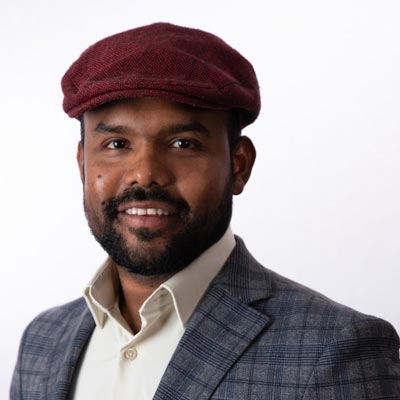
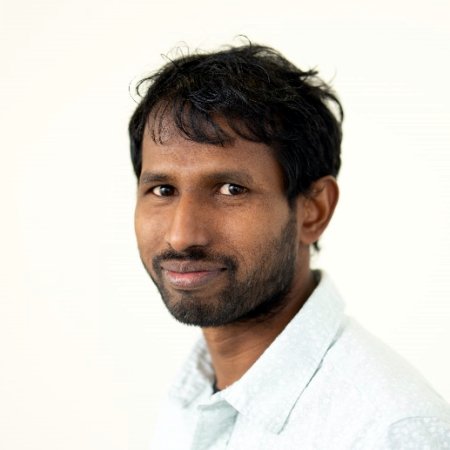
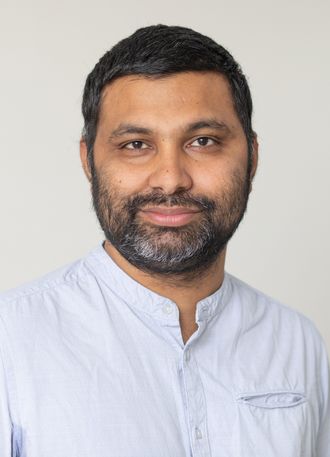
Dharanidhar Dang serves as Assistant Professor in the Department of Computer Engineering at the College of AI, Cyber and Computing, The University of Texas at San Antonio (UTSA), where he advances hardware-centric artificial intelligence solutions through photonic and memristor technologies. Education Ph.D., Texas A&M University His research program bridges hardware innovation and biomedical applications, with primary focus on photonic computing architectures for real-time AI acceleration and memristor-based neuromorphic systems. He investigates critical challenges in hardware reliability (particularly degradation in memristor crossbars), energy efficiency in photonic accelerators, and co-design methodologies that optimize both algorithms and physical implementations. His biomedical work applies machine learning to macrophage biology, identifying predictive signatures for inflammatory diseases through computational immunology approaches. Analysis of his 2020-2025 publications reveals three dominant research trajectories: 1) Silicon photonic accelerators (P-ReTI, P-ReTiNA, SOFTONIC) targeting real-time and energy-efficient AI, 2) Memristor reliability frameworks addressing aging effects in deep learning hardware, and 3) Translational biomedical applications where machine learning deciphers macrophage behavior in inflammatory bowel disease and preterm infant lung conditions. This tripartite focus demonstrates exceptional versatility across hardware engineering and life sciences.
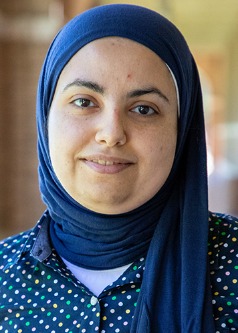
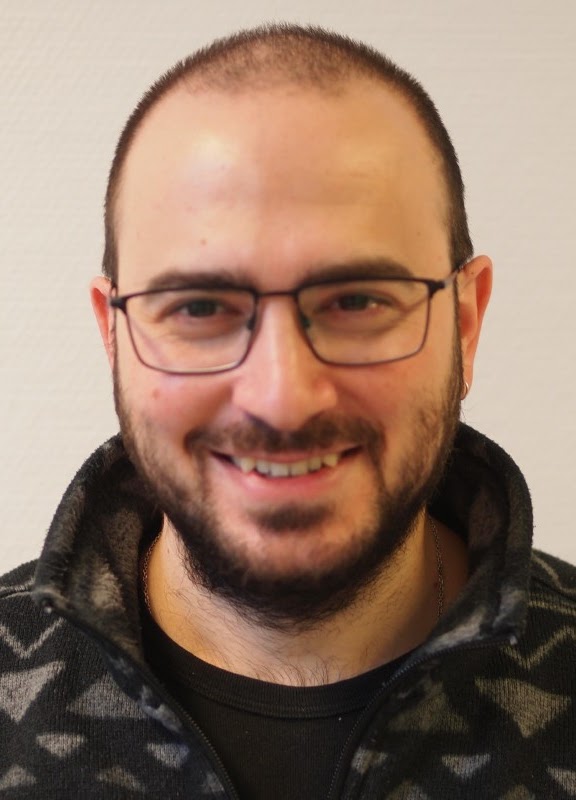
Tara Salman is an Assistant Professor in the Department of Computer Science at Texas Tech University , focusing on distributed systems, blockchain technology, and security/privacy in next-generation networking applications. Her research bridges scalable distributed systems, AI, and security to address challenges in healthcare and financial systems. Research Interests: Distributed, intelligent, and secure networking applications Blockchains and scalable distributed systems Distributed artificial intelligence Security and privacy techniques Publication Trends: Recent work emphasizes federated learning, blockchain security, multi-cloud environments, and quantum blockchain applications. Her research combines machine learning, deep learning, and distributed consensus mechanisms to enhance security in heterogeneous networks.
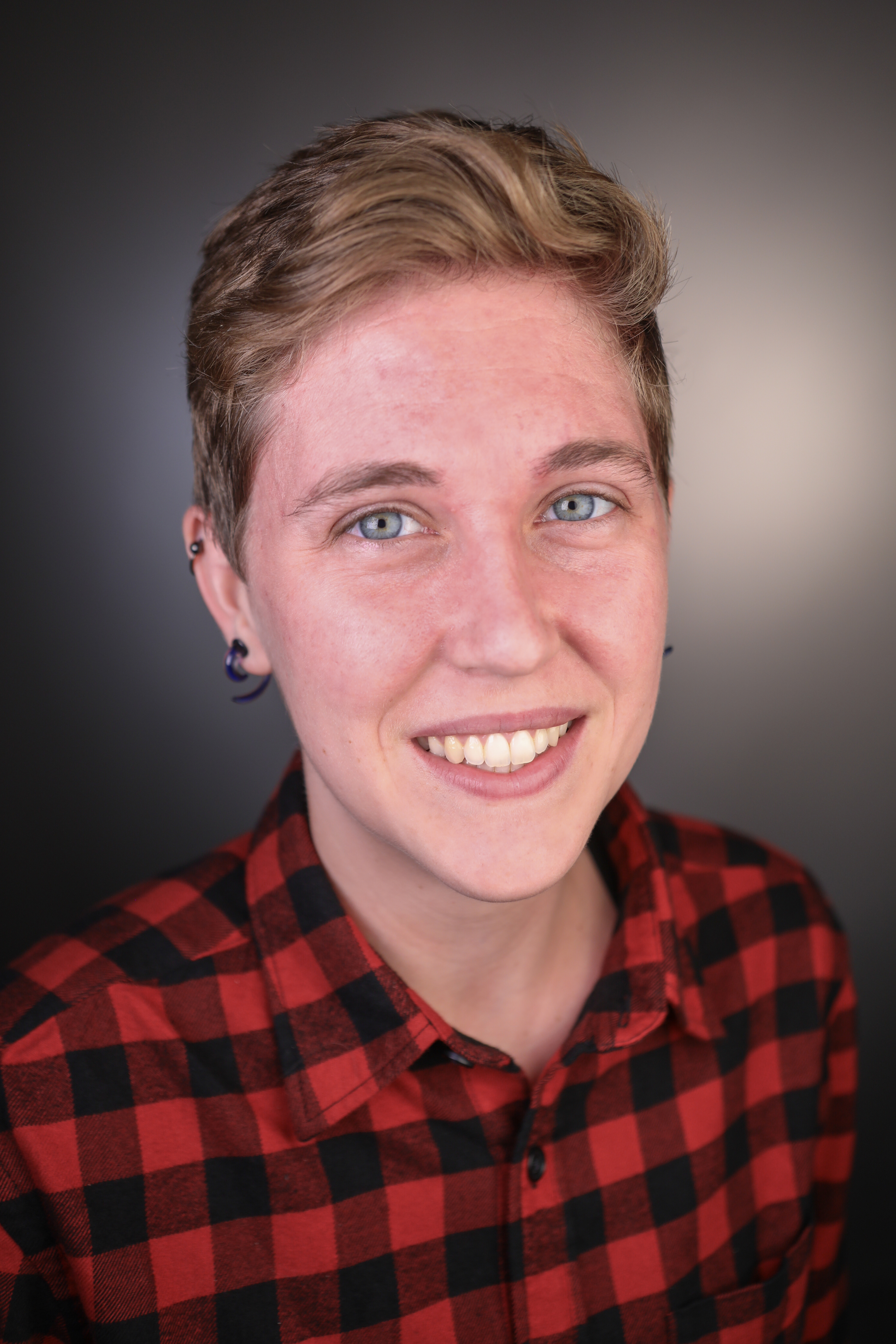
Xiao Wang is a research assistant and PhD student in the Cyber-Physical Systems Group at the Technical University of Munich since 2019. She holds a Master of Science in Mechanical Engineering from the same university (2018) and a Bachelor of Engineering in Vehicle Engineering from Tongji University, China. Her research focuses on Motion Planning for Autonomous Vehicles , Formal Methods , and Safe Reinforcement Learning . She has supervised multiple theses exploring topics like constrained RL, online verification, imitation learning, and safety falsification for autonomous systems. Her teaching roles include exercises and practical courses on Artificial Intelligence and Motion Planning for Autonomous Vehicles since 2018. Her publications (2020–2023) span journals like Transactions on Machine Learning Research and conferences such as ITSC and FISITA , addressing challenges in safe RL, control barrier functions, and naturalistic traffic rule violations. She has also contributed to integrating the Apollo framework with the CommonRoad motion planning environment. Key research areas: Safe Reinforcement Learning, Motion Planning, Formal Verification, Autonomous Driving, Control Barrier Functions, Trajectory Prediction
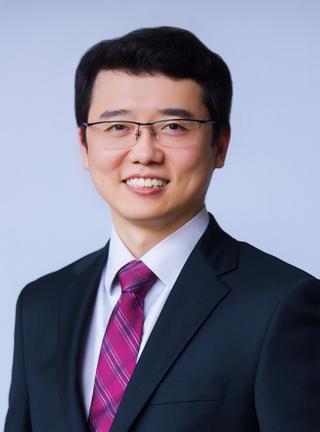
Professor Jan Černocký serves as Head of Department at the Department of Computer Graphics and Multimedia (DCGM) within the Faculty of Information Technology at Brno University of Technology (FIT VUT). With a professional email cernocky@fit.vut.cz and office L221.2, he maintains an active research profile with numerous publications spanning over 20 years in the field of speech processing and recognition. His work is well-documented through multiple research identifiers including ORCID iD 0000-0002-8800-0210, Scopus Author ID 6604040821, and Researcher ID M-7494-2019. Professor Černocký's research interests focus primarily on advanced speech processing technologies, with particular emphasis on speech recognition, speaker verification, language identification, and multimodal systems. His work demonstrates a strong trajectory from traditional speech processing techniques toward modern deep learning approaches, especially in self-supervised learning for speech applications. Recent publications show his leadership in developing benchmarks like TS-SUPERB for target speech processing and innovative methods for speaker verification using transformer models. His research group at BUT has made significant contributions to multi-channel speech processing, target speech extraction, and speaker diarization systems. The analysis of Professor Černocký's recent publications (2023-2025) reveals several key trends in his research direction. There's a clear shift toward self-supervised learning approaches for speech processing, with numerous papers exploring how pre-trained models can be adapted for speaker verification, target speech extraction, and multi-channel processing. His work increasingly incorporates transformer architectures and attention mechanisms, reflecting the broader trends in speech processing research. The 2024 publications particularly highlight work on multimodal analysis (BESST dataset for stress detection) and practical applications of speech technology for social inclusion. Throughout his career, Professor Černocký has maintained strong collaborative relationships with researchers across Europe and internationally, evidenced by his extensive publication record with co-authors from multiple institutions. His leadership role as Head of Department at DCGM places him at the center of speech processing research at Brno University of Technology, where his team continues to produce cutting-edge research in speech technology.
Holly McIlwee Golecki serves as a Teaching Assistant Professor in the Department of Bioengineering at the University of Illinois Urbana-Champaign . With advanced degrees in Materials Science and Engineering (BS, MS - Drexel University) and a PhD in Engineering Sciences from Harvard University, she specializes in Soft Robotics , Mechanics of Biomaterials , and Engineering Education . Education: BS, Materials Science and Engineering, Drexel University MS, Materials Science and Engineering, Drexel University PhD, Engineering Sciences, Harvard University Her research focuses on soft robotics education and medical device design , with particular emphasis on making human-centered design accessible through hands-on prototyping and interdisciplinary collaboration . She maintains active research groups that explore biomaterials in robotic systems , soft robotics education , and innovative engineering pedagogy . Recent publications highlight her work in soft robotics education with applications in pressure ulcer prevention , biofabrication , and soft underwater robotics . The ASEE and Soft Robotics journals feature her team's research on soft robotics curriculum development and medical device innovation . Scientific Awards: NSF funding as co-PI for Southern and Central Illinois Louis Stokes Alliance for Minority Participation Jump Arches Program funding for active wheelchair seat cushion development Clare Booth Luce Scholar Program mentorship Innovate & Iterate Prototyping Microgrant recipient As an advisor, Golecki mentors students in soft robotics , medical device design , and bioengineering education , with former students like Omolola Okesanjo and Cornell Horne pursuing graduate studies at Carnegie Mellon and UIUC. She co-organizes professional development workshops and maintains active collaborations with Conor Walsh's Harvard Biodesign Lab and Sandia National Labs .
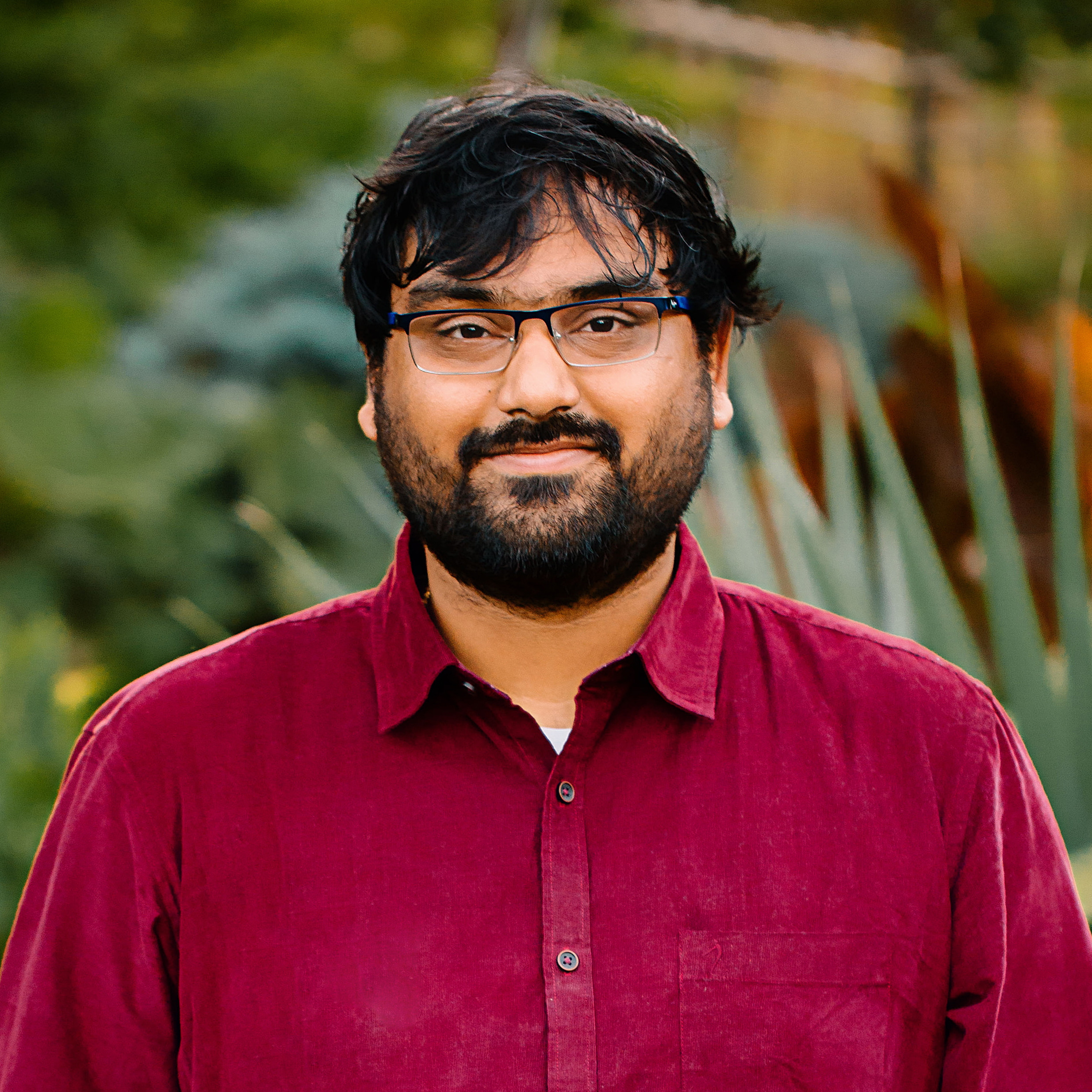
Sathyanarayanan N. Aakur is an Assistant Professor in the Department of Computer Science and Software Engineering at Auburn University's College of Engineering. Previously, he was an Assistant Professor in the Department of Computer Science at Oklahoma State University. He is an IEEE Senior Member and has received the prestigious NSF CAREER award for his research on multi-modal event understanding. Dr. Aakur received his PhD from the University of South Florida, where he worked with Dr. Sudeep Sarkar in the Computer Vision and Pattern Recognition Group. He also holds a Master's degree in Management Information Systems from the Muma College of Business at the University of South Florida and an undergraduate degree in Electronics and Communication Engineering from Velammal Engineering College, Anna University, India. His research focuses on the intersection of computer vision, natural language processing, and psychology, with the goal of building intelligent agents that understand the visual world beyond simple recognition or captioning. His work encompasses self-supervised predictive learning for video event segmentation, commonsense reasoning to ground perception and prior knowledge, and generative modeling for building knowledge systems. Much of his group's current work focuses on analyzing, modeling, and synthesizing complex video scenes, with applications in agriculture and animal diagnostics. His recent publications demonstrate a strong focus on open-world visual understanding, neurosymbolic reasoning, and multimodal learning. His work spans from fundamental computer vision problems like egocentric action recognition and scene graph generation to applied research in agricultural technology and biomedical informatics. He has successfully published at top-tier conferences including CVPR, ICCV, ECCV, and WACV, as well as in high-impact journals like IEEE TPAMI. NSF CAREER Award (2022) IEEE Senior Member (2024) Dr. Aakur serves as Area Chair for major conferences including CVPR, WACV, ICML, and NeurIPS, and as Associate Editor for Pattern Recognition journal. He has successfully mentored numerous students who have published at top venues in computer vision and machine learning. His research group has received funding from sources including the NSF and USDA for projects related to multimodal time series classification and stress detection in precision agriculture. The lab maintains active collaborations with institutions including the University of South Florida and Florida State University.
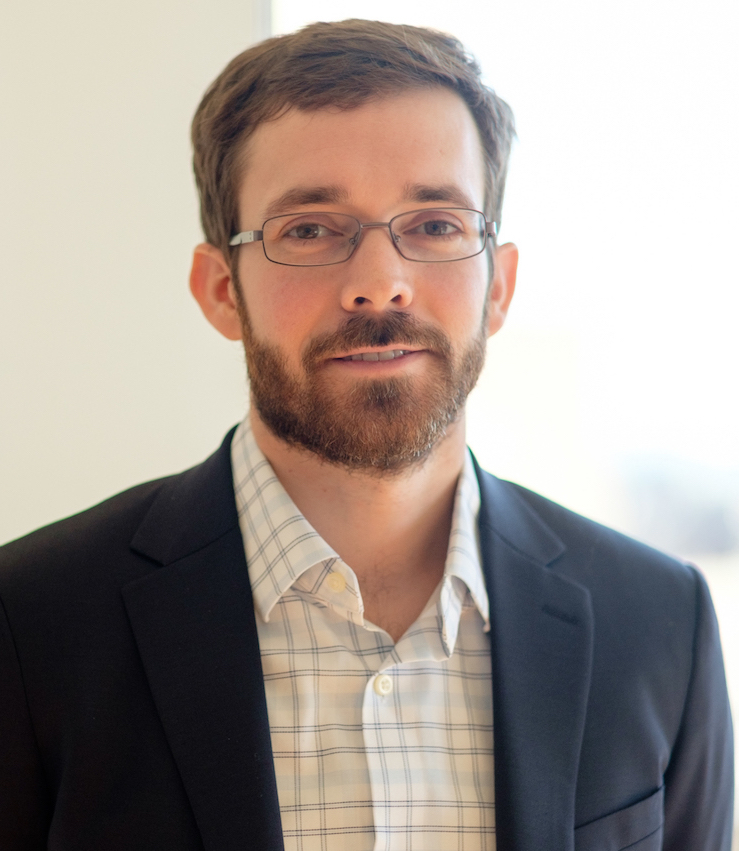
William Hobbs is the Lois and Mel Tukman Assistant Professor in the Department of Psychology at Cornell University , affiliated with the College of Human Ecology. His research intersects politics and health , focusing on social spillover effects of government actions and adaptation to life changes through computational social science methods. Teaches Data Science for Social Scientists I & II (HD/Psych 2930/2940) Co-teaches graduate course Text and Networks in Social Science Research (HD/Soc/Info 6610, Govt 6619) Research strengths include causal inference , representative sampling , and machine learning applications for small training sets. His work has been featured in The Atlantic , Science Magazine , and other major outlets. Current Data Science Lab projects analyze: Political polarization in social media Health behavior networks Government policy feedback Content moderation systems Lab hires Cornell undergraduates with R/Python experience for data management tasks through HD 4010 research credit.
Dr. Ramaraj Ayyappan is an Assistant Professor in the Department of Chemistry at the Indian Institute of Science Education and Research (IISER), Thiruvananthapuram, appointed in August 2022. His research focuses on organometallic chemistry, specifically designing catalysts using first-row transition metals for sustainable applications including CO 2 hydrogenation and bond activation. His academic background includes: B.Sc Chemistry from Gandhigram Rural University, Chinnalapatti, Tamil Nadu Integrated Ph.D. from Indian Institute of Science (IISc), Bangalore (Thesis advisor: Prof Balaji R. Jagirdar) Postdoctoral research at LCC-CNRS, Toulouse, France Postdoctoral research at University of South Wales, Pontypridd, UK Dr. Ayyappan's research centers on developing phosphine and carbene-based multifunctional ligands to tailor transition-metal complexes (Mn, Fe, Co, Ni, Cu, Ru, Ir, Rh) for catalytic applications. His group emphasizes earth-abundant first-row 3d metals for sustainable chemistry, overcoming challenges like labile metal-ligand bonds to achieve CO 2 activation, hydrogenation, and coupling reactions. Current projects focus on CO 2 and P 4 activation using tailored metal complexes. Analysis of his 11 publications (2014-2024) reveals consistent innovation in organometallic catalysis, with recent work (2022-2024) increasingly addressing sustainable CO 2 functionalization and dinitrogen activation. His research demonstrates strategic ligand design to enable challenging transformations with abundant metals, reflecting a strong commitment to green chemistry solutions. Dr. Ayyappan actively mentors students, currently supervising JRF Deepthy Devassy (SERB-SRG project), BS-MS students Aswin Das (SERB project JRF), Shwetha Jayarajan, and Fiza Fathima S, alongside interns from CHRIST University and other institutions. His group secured SERB funding and hosted the Inspire Fellow Anjali Suku. In early 2025, his students Deepthy, Fiza, and Shwetha won the best poster award at FSCHEM 25 symposium for their hydrogenation catalyst research. The research laboratory features Schlenk lines, glove boxes, medium-pressure reaction systems (5-10 bar), Fischer-Porter and Parr hydrogenation apparatus, and comprehensive analytical capabilities (NMR, IR, X-ray, HRMS, GC-MS). Strict safety protocols govern handling of hazardous chemicals and gases (H 2 , CO 2 , NH 3 ), with mandatory training in waste disposal, emergency procedures, and instrument maintenance.
Dr. Shabnam Sadeghi Esfahlani is an Associate Professor in Robotics at the School of Engineering and the Built Environment, Anglia Ruskin University , where she serves as Deputy Leader of the BORI research group and leads the Automation & Robotics MSc program. Her interdisciplinary expertise spans mechatronics, artificial intelligence, virtual reality, and serious games , with a focus on applications for rehabilitation, medical training, and autonomous systems . As a Chartered Engineer and Senior Fellow of the Higher Education Academy , she has secured significant funding from Innovate UK, Horizon 2020, and GCRF , with grants exceeding £3 million. Education PhD in Mechanical Engineering, Anglia Ruskin University BSc (First Class) in Statistics & Mathematical Science, Shahid Beheshty University Her research integrates AI with robotics for societal impact, exemplified by the open-source SROBO ground robot and projects like Rehabgame and the Assistive Feeding Robot . She has published over 45 peer-reviewed articles and contributes to academic communities as a journal guest editor and conference organizer . Key collaborations include IET, IMechE, and the Nuffield Foundation as a mentor for young students. Scientific Awards & Recognitions: Chartered Engineer (CEng), Engineering Council UK Senior Fellow (SFHEA), Higher Education Academy Student-Voted 'Made a Difference Award' (2018) Post-Graduate Certificate in Higher Education
Georgios Arvanitidis is an Associate Professor at the Technical University of Denmark (DTU) in the Department of Applied Mathematics and Computer Science, specifically within the Section for Cognitive Systems (CogSys). He has established himself as a leading researcher in geometric machine learning, focusing on the application of differential geometry principles to enhance machine learning models. His work bridges theoretical mathematics with practical applications in artificial intelligence, with particular emphasis on understanding the geometric structure of data manifolds and latent spaces. Dr. Arvanitidis completed his educational journey with a Bachelor's degree from the Department of Informatics at the Aristotle University of Thessaloniki, followed by a Master's degree in Computer Science from Saarland University supported by the Max Planck Institute for Informatics. He earned his PhD at DTU's Cognitive Systems section under the supervision of Søren Hauberg, with additional research experience at Philipp Hennig's Probabilistic Numerics group. Prior to his current position as associate professor, he was a PostDoc at the Max Planck Institute for Intelligent Systems working with Bernhard Schölkopf. Dr. Arvanitidis's research primarily focuses on differential geometry in machine learning , where he explores how geometric structures can enhance representation learning and statistical modeling. His work in generative models investigates how learning the geometry of data manifolds can improve deep learning architectures. In the domain of deep learning theory , he examines why deep learning models generalize effectively on unseen data, with particular attention to the curvature properties of loss landscapes. His research in approximate Bayesian inference applies geometric principles to improve uncertainty quantification in neural networks. Through his innovative approaches, Dr. Arvanitidis has established himself as a leading researcher in geometric machine learning, contributing to both theoretical foundations and practical applications across various domains including robotics and life sciences. The publication trends of Dr. Arvanitidis reveal a consistent and evolving focus on geometric approaches to machine learning problems. His recent work (2023-2025) demonstrates increasing sophistication in applying Riemannian geometry to deep learning architectures, with particular emphasis on latent space geometry, optimization on manifolds, and geometric interpretations of neural network behavior. A notable pattern is the progression from foundational work on geometric representations to more applied research in areas like robotics and causal inference. His publications span top-tier conferences including NeurIPS, ICML, ICLR, and AISTATS, reflecting the high impact of his research. The interdisciplinary nature of his work is evident in collaborations across mathematics, computer science, and robotics domains, with recent papers addressing challenges in multimodal sampling, safety guarantees for dynamical systems, and counterfactual explanations. Dr. Arvanitidis has received several notable scientific awards and recognitions: Sapere Aude starting grant from the Independent Research Fund Denmark (DFF) GADL funding i-Rase, Pathfinder, and EIC (European Innovation Council) funding Best reviewer award for NeurIPS 2019 Best reviewer award for NeurIPS 2018 Best student paper award at Robotics: Science and Systems (R:SS) 2021 Dr. Arvanitidis actively mentors PhD students and researchers, currently supervising Alejandro Valverde, Johanna Gegenfurtner, and Albert Kjøller Jacobsen. He has previously co-supervised Alison Pouplin's PhD and worked with research assistant Georgios Pantis. His group receives substantial funding through multiple prestigious grants including the Sapere Aude starting grant from the Independent Research Fund Denmark, as well as European Innovation Council funding. He has been instrumental in creating opportunities for students interested in geometric machine learning, offering BSc and MSc thesis projects focused on generative models, deep learning theory, and optimization techniques. Dr. Arvanitidis also contributes significantly to the academic community as a reviewer for top conferences including ICLR and TMLR, and as an area chair for NeurIPS, ICML, AISTATS, and UAI. He co-organized the Machine Learning Summer School 2020 in Tübingen, further demonstrating his commitment to education and community building. Dr. Arvanitidis leads a vibrant research group focused on geometric machine learning within the Cognitive Systems section at DTU. His team includes multiple PhD students working on cutting-edge research at the intersection of differential geometry and artificial intelligence. The group has developed notable software tools, including the "geometric_ml" GitHub repository with over 70 stars, which contains implementations for applying Riemannian geometry in machine learning. His research has practical applications in robotics, where geometric approaches enable more robust motion planning, as evidenced by his work on "Reactive Motion Generation on Learned Riemannian Manifolds" which received a best student paper award. Additionally, his methodologies have found applications in life sciences, as mentioned in his 2022 AISTATS paper. The collaborative nature of his work is evident through extensive partnerships with researchers at institutions including the Max Planck Institute for Intelligent Systems, University of Cambridge, and various European universities. His recent news items indicate active engagement with the academic community through talks, conference presentations, and ongoing supervision of new PhD students joining his group.
Isaac Lage is an Assistant Professor of Computer Science at Colby College since July 2023, specializing in interactive optimization methods for sociotechnical machine learning applications. Their work bridges technical rigor with societal impact, emphasizing accessibility in educational settings and algorithmic accountability. Harvard University PhD in Computer Science (NSF GRFP Fellow) Microsoft Research Intern (Adaptive Systems and Interaction Group) Research Software Engineer at MIT/NYU with David Sontag Research focuses on interpretable machine learning , human-AI collaboration , and healthcare equity analysis . Current projects explore sociotechnical implications of computing systems through EHR data patterns , fairness in predictive models , and user-driven interpretability frameworks . Recent publications show trends in explainable AI (2020-2022), with subfields including clinical decision support , policy summarization , and uncertainty communication . Key themes: healthcare disparities , robust interpretability , and human-in-the-loop learning . Scientific Awards: NSF GRFP Fellowship NeurIPS Spotlight Presentation (2018) AAAI HCOMP Honorable Mention (2019) As a Pedagogy Fellow at Harvard SEAS (2022-23), they contributed to curriculum design for CS 152 and CS 231 at Colby. Also earned a Teaching Certificate from Harvard's Derek Bok Center (Spring 2023).
Dr. Weitao Wang serves as an Assistant Professor in the Department of Otolaryngology at the University of Rochester School of Medicine and Dentistry. Board-certified in both Otolaryngology-Head and Neck Surgery and Facial Plastic and Reconstructive Surgery, he practices clinically at UR Medicine and the Wilmot Cancer Institute in Rochester, NY, specializing in complex head and neck reconstruction and facial plastic procedures. Medical Degree: University of Virginia School of Medicine Residency: Otolaryngology-Head and Neck Surgery, University of Rochester Medical Center (2015-2019) Fellowship: Facial Plastic and Reconstructive Surgery, The Institute for Rehabilitation and Research (2019-2020) His research focuses on advancing head and neck reconstruction through tissue engineering (particularly bone/cartilage grafting) and optimizing surgical education via point-of-view video technology. Clinical investigations prioritize patient-reported outcomes in facial plastic surgery to enhance functional recovery and satisfaction metrics. Current work bridges engineering solutions with complex defect reconstruction. Recent publications (2020-2025) demonstrate concentrated expertise in microvascular free tissue transfer, virtual surgical planning for craniofacial defects, and innovative skull base/orbital reconstruction techniques. His work consistently addresses oncologic safety while improving functional outcomes in head and neck cancer patients, with increasing emphasis on cost-effective surgical training methodologies. Robert Joynt Kindness Award 2021 Leslie Bernstein Resident Research Grant: Optimizing bone allograft in craniofacial defect reconstruction Wallace K. Dyer Clinical Investigation Grant: Cost-effective surgeon POV video in otolaryngology training Dr. Wang secures competitive funding from the American Academy of Facial Plastic and Reconstructive Surgery to advance surgical education and reconstruction techniques. His clinical mentorship emphasizes multidisciplinary collaboration, particularly in head and neck oncology cases where tumor resection requires immediate reconstruction. Current projects integrate virtual planning with intraoperative navigation to optimize complex defect repair. He operates within the Facial Plastic and Reconstructive Surgery division at the University of Rochester, collaborating with Wilmot Cancer Institute's head and neck oncology team. His practice incorporates virtual surgical planning technology and microvascular reconstruction expertise, with active participation in multidisciplinary tumor boards for complex craniofacial cases.
Shah Nawaz is an Assistant Professor at the Institute of Computational Perception , Johannes Kepler University Linz. His research focuses on multimodal systems, deep learning applications in healthcare, and cross-modal learning frameworks. He leads projects addressing challenges like missing modalities in machine learning, face-voice association, and medical image analysis. Key research interests include machine learning for medical diagnostics (e.g., breast cancer detection, skin lesion segmentation), speech recognition, and adaptive neural network architectures. He has contributed to frameworks like Chameleon for robust multimodal learning and the FAME challenge for face-voice association in multilingual environments. Publications emphasize practical applications, such as bilingual healthcare chatbots for pregnant women and light-weight speech recognition models for resource-constrained systems. His work bridges theoretical advancements and real-world deployment in healthcare and security domains. Shaw Nawaz actively participates in academic communities through workshops like DaQuaMRec@RecSys2025 and has developed open-source frameworks for image restoration and multimodal fusion. His lab focuses on scalable solutions for multimodal data challenges in both technical and clinical contexts.
Bradley Hayes is an Associate Professor in the Department of Computer Science at the University of Colorado Boulder, affiliated with the College of Engineering and Applied Science. He leads the Collaborative AI and Robotics (CAIRO) Lab, focusing on creating autonomous robots that collaborate effectively with humans through advances in explainable AI, machine learning, and human-robot interaction. His prior research includes foundational work at MIT's Interactive Robotics Group and Yale's Social Robotics Lab. Research interests span Explainable AI, Learning from Demonstration, Hierarchical Reinforcement Learning, Computer Vision, Natural Language Processing, and Cognitive Science. His work emphasizes making human-robot teams more efficient and safe through innovations like emotionally expressive robotic motion, socially aware navigation, and AR-based collaboration tools. Key contributions include techniques for robust robotic exploration, generative occupancy mapping, and systems for improving human trust through predictable robot behavior. His work has been applied to teleoperation training, surgical assistance, and space exploration scenarios. Grants and partnerships support development of assistive robotic canes and AR interfaces for collaborative tasks. Lab activities emphasize translating theoretical advancements into practical systems through close collaboration between researchers, engineers, and end-users. Education efforts include developing foundational robotics curricula addressing autonomy, perception, and control systems.
Nikitas Karanikolas serves as Professor in the Department of Informatics and Computer Engineering at the University of West Attica since March 2018, following a distinguished career progression from Assistant Professor (2004) to Associate Professor (2010) and Professor (2014) at the Technological Educational Institute of Athens. His professional trajectory includes significant roles as Systems Head of TEI Athens Library (1996-1997) and Chief of Informatics at Aretaieio University Hospital (1997-2004), alongside leadership positions in the Greek Computer Society as Board Member (2004-2006) and Secretary General (2006-2008). His academic foundation includes: Bachelor's in Statistics and Informatics from Athens University of Economics and Business (1988) PhD in Applied Informatics from Athens University of Economics and Business (1994) with thesis "Technological and Linguistic approaches in Natural Language Understanding" Dr. Karanikolas maintains an exceptionally broad research portfolio spanning Natural Language Processing , Computational Linguistics , Medical Informatics , and Green Energy systems. His work consistently bridges theoretical computational frameworks with practical healthcare applications, particularly evident in recent dementia care technologies and Greek language processing systems. The interdisciplinary nature of his research connects computational phonology with medical diagnostics and e-government applications. Analysis of his 15 most recent publications reveals a pronounced shift toward AI-driven healthcare solutions (particularly dementia patient monitoring), multilingual NLP systems (Greek and Polish), and urban safety applications . His work demonstrates consistent methodology development in ontological representations and multimodal fusion techniques, with increasing emphasis on real-world clinical and governmental implementations since 2023. No scientific awards were documented in the source materials. With 16 journal papers, 68 conference publications, and six authoritative Greek university textbooks, Dr. Karanikolas maintains an active research trajectory. His advising capacity is evidenced through extensive publication mentorship, particularly in medical informatics and NLP projects. While specific grant details are unavailable, his hospital information system implementations and textbook authorship suggest successful research funding acquisition. Current research activities focus on multimodal aggression prediction systems for dementia care, Greek language ontological frameworks, and urban navigation safety applications, primarily conducted through the University of West Attica's informatics infrastructure.