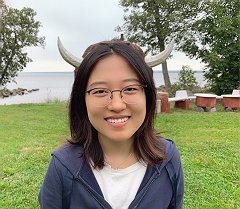
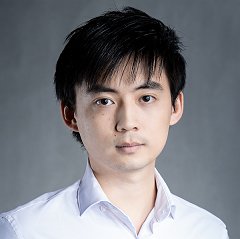
Mengshan Xu is an Assistant Professor of Applied Econometrics at the University of Mannheim's Department of Economics since August 2021. His academic journey includes an M.Sc. from Humboldt University of Berlin (2015) and a Ph.D. from the London School of Economics and Political Science (2021). Education: M.Sc., Humboldt University of Berlin (2015) Ph.D., London School of Economics and Political Science (2021) His research focuses on Econometrics, Semi-nonparametric Econometrics, and Statistical Learning. Despite his primary affiliation with economics, his recent publications suggest interdisciplinary work spanning Artificial Intelligence, Robotics, and Computer Vision , including human-aware navigation frameworks, attention mechanisms for LLMs, and skeleton-based action recognition systems. Article trends reveal expertise in vision-and-language navigation , anomaly detection , and multi-modal learning , blending econometric theory with computational methods. Notable subfields include dynamic human interactions, deep invertible networks, and hypergraph transformers. His professional contact details include a direct email ( mengshan.xu@uni-mannheim.de ) and office location in Mannheim. No scientific awards or student advisement details are publicly listed in the provided materials.
Jana Jung is a Scientific Associate and Research Assistant at the University of Mannheim, affiliated with the Business School's Information Systems department. Since 2025, she has been a PhD candidate, focusing on data science and text analytics. Her academic background includes an M.Sc. in Data Science (2022) and a B.Sc. in Psychology (2018) from the University of Mannheim, with a study abroad experience at the University of St. Andrews in 2020. She teaches Master's-level courses including Text Analytics (Exercise) , Seminar Data Science I (Methods) , and Seminar Data Science II (Empirical Studies) . Her research interests align with data science methodologies, empirical studies, and interdisciplinary applications of text analytics in psychology and information systems.
Adnan Akhunzada is a prolific researcher with extensive contributions to computer science, particularly in artificial intelligence, cybersecurity, and internet of things. His work spans deep learning architectures, software defined networks, and security frameworks for emerging technologies. Research Interests include: Deep learning for micro-expression and image analysis Quantum control systems with reinforcement learning AI-based phishing and malware detection Federated learning for drone services Cryptographic protocols for UAV communications Publication Trends show expertise in: Hybrid neural network architectures Cybersecurity for industrial IoT Privacy-preserving crowdsourcing Sign language recognition datasets 5G-assisted cognitive communication
Tanyasha Yearwood is a Professor in the Department of English Philology at the University of Göttingen's Faculty of Humanities. She holds an active teaching position with responsibilities spanning both the Department of English Philology and the Department of Romance Philology, teaching courses related to language teaching methodology, intercultural learning, and critical cultural awareness. Her primary research interests focus on Computer-Assisted Language Learning (CALL), Blended Learning approaches, and practical implementation of production-oriented learning and teaching methodologies. Yearwood's work particularly emphasizes the integration of technology in language classrooms, with special attention to creating learner-centered environments rather than technology-focused ones. She has extensively explored Activity Theory as a framework for understanding classroom dynamics in technology-enhanced language learning. Her publication record reveals a consistent trajectory in CALL research, with particular focus on how technology can be normalized in classroom settings to serve as complementary rather than central elements in language learning. Her work spans theoretical frameworks like Activity Theory to practical classroom implementations, especially in resource-constrained environments like single-computer classrooms. The evolution of her research shows increasing attention to cultural dimensions of language learning, particularly intercultural competence and critical cultural awareness. Yearwood maintains an active presence in international academic conferences, regularly presenting at major venues including EUROCALL, IATEFL, and specialized CALL conferences. Her teaching portfolio demonstrates comprehensive coverage of language teacher education across multiple semesters, with consistent offerings in research methods for language teaching and practical application of theoretical concepts.
Fang Zhao serves as Junior Research Group Leader of the Multimedia group at FernUniversität Hagen's Center of Advanced Technology Assisted Learning and Predictive Analytics (CATALPA) since April 2021. As a cognitive and educational psychologist, she conducts interdisciplinary research on multimedia learning and multitasking within this university-funded research center, collaborating with partners across psychological and educational domains. Her academic credentials include a 2024 Habilitation from FernUniversität Hagen, a Ph.D. in Psychology from University of Koblenz Landau (2012-2015), an M.A. in Linguistics and Translation Studies from Durham University, U.K. (2010-2012), and a B.A. in Linguistics and English Language from Henan University, China (2006-2010). Dr. Zhao's research examines how individuals process multimedia information through text-picture integration, interactive simulations, and video-based instruction, with particular focus on exploration-exploitation dynamics in learning environments. Her sequence learning investigations extend to multitasking scenarios involving basic sequences, timing patterns, and complex hierarchical structures like Origami folding. This work bridges cognitive theory with practical educational technology applications through rigorous experimental methodologies. Recent publication analysis reveals consistent emphasis on optimizing visual representations for data comparison, measuring cognitive load in online learning, and evaluating guidance structures in asynchronous courses. Her research demonstrates that while interactive elements are generally preferred by learners, their educational benefits remain context-dependent with significant individual differences in effectiveness. Leading the Multimedia junior research group at CATALPA, Dr. Zhao directs investigations into how interactive and multimedia components influence learning processes across diverse student populations. The team operates within an interdisciplinary framework that integrates psychological theory with technological innovation to develop predictive analytics for learning enhancement.
Dr. Jakub Kuzilek is a researcher at the Institute of Computer Science, Faculty of Mathematics and Natural Sciences, Humboldt University of Berlin. He is a member of the "Didaktik der Informatik / Informatik und Gesellschaft" (Computer Science Education | Computer Science and Society) research group, also affiliated with the Educational Technology Lab at the German Research Center for Artificial Intelligence. He joined the CSES research group in January 2020 after previously working at the Faculty of Mechanical Engineering, CTU in Prague, and completing a 4-year research stay at the Open University. Dr. Kuzilek completed his Ph.D. in Biomedical Signal Processing using Blind Source Separation methods. His academic journey transitioned from biomedical signal processing to educational data mining when Professor Zdenek Zdrahal from the Knowledge Media Institute (Open University) invited him to work on data mining of student data in the OU Analyze project. Dr. Kuzilek's primary research interests focus on the intersection of machine learning and education. His work centers on Educational Data Mining (EDM) and Learning Analytics (LA), with particular emphasis on explainable AI applications in educational settings. He investigates student behavior in online learning systems, develops predictive models for student success, and explores methods for providing actionable feedback to learners. His research bridges the gap between signal processing techniques from his earlier work and modern educational technology applications, with a strong focus on practical implementations that can directly benefit students and educators. Analysis of Dr. Kuzilek's recent publications (2021-2024) reveals a clear focus on advancing Learning Analytics and Educational Data Mining. His work consistently explores how machine learning can be applied to understand and improve educational outcomes, with particular attention to explainability of predictive models. Key research threads include student success prediction using behavioral data, algorithmic approaches to student grouping, automated feedback generation, and the use of self-assessments in higher education. His methodological approach combines rigorous statistical analysis with practical educational applications, often using real-world educational datasets to validate his findings. Best paper award for "An Automatic Method for Holter ECG Denoising Using ICA" (2011) Second place in CINC Challenge 2011 for "Simple Scoring System for ECG Signal Quality Assessment on Android Platform" (2011) Dr. Kuzilek actively mentors students at various levels, supervising numerous bachelor's and master's theses on topics related to Learning Analytics, Educational Data Mining, and machine learning applications in education. His grant portfolio demonstrates sustained research activity, including leadership roles on projects funded by the Czech Science Foundation, University Development Foundation, and BMBF. His current research focuses on AI-supported personalization in vocational training and implementing AI-based feedback systems in higher education institutions. As a core member of the Computer Science Education | Computer Science and Society research group at Humboldt University, Dr. Kuzilek collaborates with colleagues including Prof. Dr. Niels Pinkwart and other researchers to advance the field of educational technology. His work bridges theoretical research in machine learning with practical applications in real educational settings, contributing to both academic knowledge and tangible educational improvements.
Amiangshu Bosu is a tenured Associate Professor in the Department of Computer Science at Wayne State University's College of Engineering. Previously, he served as a tenure-track Assistant Professor at Southern Illinois University Carbondale from 2016-2018. His academic journey includes completing his Ph.D. at the University of Alabama in 2015 under Professor Jeffrey Carver, followed by postdoctoral research with Dr. Danfeng Yao at Virginia Tech. His educational background reflects a strong foundation in software engineering research, with his doctoral work focusing on empirical approaches to software development practices. This foundation has enabled his current research trajectory examining human aspects of software engineering. Bosu's research program centers on empirical software engineering with particular emphasis on code review dynamics, toxicity detection in developer communications, and diversity issues in open source communities. His work bridges technical analysis with social science perspectives, investigating how communication patterns affect participation, especially regarding gender dynamics in OSS projects. Recent work increasingly incorporates natural language processing and machine learning techniques to build tools like ToxiCR for automated toxicity detection in code reviews. Analysis of his publication record reveals a clear evolution toward examining social dynamics in software development, with growing emphasis on gender bias, toxicity, and diversity issues. His research consistently applies empirical methods to understand real-world developer experiences while developing practical tools to improve code review processes and community health. His scientific recognition includes the prestigious NSF CAREER award (2024), NSF CRII award (2019), and Wayne State University's College of Engineering Research Excellence award (2025). He maintains senior membership status in both ACM and IEEE, reflecting his standing in the computing community. NSF CRII award (2019) NSF CAREER award (2024) College of Engineering Research Excellence award (2025) Senior Member of ACM Senior Member of IEEE Bosu actively contributes to the software engineering research community through service on program committees for major conferences including ICSE, ASE, ESEC/FSE, and ESEM. His GitHub presence (amiangshu.me) demonstrates active engagement with research tools and datasets, particularly those related to code review analysis and toxicity detection. While specific lab structure isn't detailed in the provided materials, his research group appears focused on empirical studies of software development practices with strong connections to industry through collaborations on projects like Chromium OS security analysis.
Domenico Bianculli is an Associate Professor and Chief Scientist 2 at the Interdisciplinary Centre for Security, Reliability and Trust (SnT) at the University of Luxembourg. He leads the Software Verification and Validation (SVV) research group and is affiliated with the Department of Computer Science in the Faculty of Science, Technology and Medicine (FSTM). Additionally, he serves as the deputy study program director for the Master in Space Technologies and Business. Dr. Bianculli earned his PhD from the University of Lugano (Switzerland) under Carlo Ghezzi, with a dissertation titled "Open-world software: Specification, Verification, and Beyond." He also holds a MSc in Computing Systems Engineering and a BSc in Computer Engineering from Politecnico di Milano (Italy). His research focuses on the specification, verification and validation of software systems, particularly evolvable software systems. His work spans trace checking and run-time verification of temporal properties, modeling access control policies, program analysis for security, incremental verification techniques, and verification of service-oriented systems. Dr. Bianculli bridges theoretical foundations with practical applications in cyber-physical systems, financial technology, and regulatory compliance. His recent publications reveal a strong trend toward applying machine learning to software engineering challenges, particularly in log analysis, anomaly detection, and automated compliance checking. He has made significant contributions to verifying cyber-physical systems through techniques for stress testing control loops and trace diagnostics for signal-based temporal properties. His work increasingly addresses financial technology challenges, with papers focusing on automated regulatory compliance related to GDPR and financial regulations. ACM SIGSOFT Distinguished Paper Award for "Efficient large-scale trace checking using MapReduce" (ICSE 2016) Nomination for the best paper award for "SMT-based checking of SOLOIST over sparse traces" (FASE 2014) Dr. Bianculli leads multiple significant research projects including KITS24/19067232 "SnT-R2S" funded by FNR Luxembourg, LOGODOR "Automated Log Smell Detection and Removal" funded by FNR's CORE scheme, and several financial regulation projects including AFRICA, ICCOFIDO, and RUMOFA. His research has been supported by national funding agencies and industry partnerships with CSSF Luxembourg, HITEC Luxembourg, BGL BNP Paribas, and LuxSpace. As head of the SVV research group at SnT, Dr. Bianculli oversees a team developing advanced techniques for software specification, verification, and validation. His group works on theoretical foundations and practical applications, with current projects addressing challenges in cyber-physical systems, financial technology, and regulatory compliance. The group maintains strong collaborations with industry partners in the financial sector and space technology domains.
Professor Günter Barczik serves as a Full Professor at the University of Applied Sciences Erfurt within the Faculty of Architecture and Urban Planning, holding the Professorship for Design, Digital Representation Theory and Computational Design. He has been in this position since September 2011 and previously served as an Assistant Professor at Brandenburg University of Technology Cottbus-Senftenberg from October 2004 to October 2010. His office is located at Schlüterstraße 1, Room 414, and he also serves as the Equal Opportunities Officer for the institution. Barczik's research interests center on computational approaches to architectural design, with particular focus on digital representation theory, immersive technologies, and the application of algebraic geometry in architectural contexts. His work explores how mathematical concepts can expand architectural vocabulary and how new technologies can transform traditional design processes. He investigates the intersection of computational tools with creative thinking, sustainable architecture practices, and visual communication methods. Analysis of Barczik's publication history reveals a consistent trajectory exploring the integration of computational methods with architectural design. His work demonstrates a progression from fundamental explorations of algebraic surfaces in architecture (2009-2012) toward more applied investigations of immersive technologies, team dynamics in design processes, and the evolving relationship between designers and digital tools. A recurring theme throughout his research is the examination of how computational techniques can enhance traditional design thinking while addressing contemporary challenges in urban planning and architectural representation. With 22 publications accumulating 5,886 reads and 65 citations, Barczik has established himself as a significant contributor to computational design discourse. His work connects architecture with mathematics, computer science, and interdisciplinary team dynamics, reflecting a holistic approach to design education and practice. His research demonstrates consistent engagement with both theoretical frameworks and practical applications of computational design methods in architectural education and professional practice.
Dr. Marcus Nenninger is a Privatdozent (Private Lecturer) specializing in Classical Archaeology at the Martin Luther University of Halle-Wittenberg, affiliated with the Faculty of Philosophy I and the Seminar for Classical Archaeology. His academic career spans over three decades at this institution, progressing from research assistant to habilitation and private lecturer status. His primary research interests encompass cults and religion in Roman provinces, ancient environmental history (particularly forest management), ancient seafaring, underwater archaeology, and sculpture studies in Central Germany. Nenninger has made significant contributions to archaeological database systems and digital humanities projects, including administration of network infrastructure at the Robertinum and development of online presentations for both the Institute of Classical Studies (1996-2004) and the Centre for Archaeology and Cultural History of the Mediterranean (2002-2013). Nenninger's scholarly output demonstrates consistent focus on Roman provincial studies, particularly regarding religious practices in Moesia Inferior and environmental management in Roman territories. His publications span from technical analyses of ancient wire production to comprehensive studies of forest management in Roman provinces, reflecting interdisciplinary approach bridging archaeology, environmental history, and numismatics. His monograph "The Romans and the Forest" established foundational work in ancient environmental history. As co-editor of the Schriften zur archäologischen Numismatik (SARN) series with Horst Seilheimer, Nenninger has contributed to advancing numismatic scholarship, particularly regarding early silver coinage in Western Asia Minor. His professional memberships include INMediAK (Institute for New Media in Archaeology and Art) and DEGUWA (German Society for the Promotion of Underwater Archaeology), highlighting his technical and specialized archaeological interests.
Dr. Preetha Chatterjee is an Assistant Professor in the Department of Computer Science at Drexel University's College of Engineering, where she leads the SOftware Engineering and Analytics Research (SOAR) Lab. Her academic career spans software engineering research, teaching, and service, with a focus on improving developer productivity through advanced analytics and tools. Dr. Chatterjee earned her M.S. and Ph.D. in Computer Science from the University of Delaware, advised by Dr. Lori Pollock, following 5+ years of industry experience as a Software Engineer. Her educational background bridges practical industry experience with rigorous academic training. Her research focuses on Software Engineering with emphasis on developing tools, knowledge sources, and strategies to support software maintenance and improve developer productivity. She incorporates evidence from mining software repositories, conducting empirical studies, and adapting state-of-the-art techniques from Natural Language Processing and Machine Learning. Her current research directions include LLM-assisted software development and maintenance, developer collaboration in distributed software teams, and knowledge extraction from large-scale software artifacts. She has made significant contributions to emotion mining in developer communications, toxicity detection in open source projects, and trust dynamics in GitHub pull requests. Dr. Chatterjee's publications demonstrate a clear progression from foundational work on mining developer chat communications and code snippets toward more sophisticated applications of machine learning and large language models in software engineering contexts. Her recent work increasingly focuses on the intersection of software engineering with social aspects like emotions, trust, and toxicity in developer interactions. Distinguished Reviewer Award at FSE 2023 Drexel CCI Research Excellence Award (awarded to her lab member Ramtin Ehsani) Drexel CS Leadership Award (awarded to her lab member Amirali Sajadi) Dr. Chatterjee has advised numerous students at various levels, including Ph.D., M.S., and undergraduate researchers. Her SOAR Lab currently includes Ph.D. students Ramtin Ehsani and Amirali Sajadi, who have received significant recognition for their work. She has served on multiple program committees for major software engineering conferences including ICSE, FSE, ASE, and MSR, and has held leadership roles such as Tutorials Co-chair for MSR 2025 and Journal-first Co-Chair for ICPC 2024. She co-leads the Drexel Programming Systems Seminar and has been an editorial board member for the Journal of Systems and Software. The SOAR Lab focuses on innovative research at the intersection of software engineering, machine learning, and natural language processing. The lab has produced influential datasets like DISCO (Discord Chat Conversations for Software Engineering Research) and comprehensive annotated datasets of GitHub issue threads. Current projects include improving LLM-assisted bug resolution, security assessment of LLM-generated code, emotion mining from software engineering communication, and information extraction from developer chat conversations.
Jie Liu is a Researcher at the Institute of Software, Chinese Academy of Sciences and a Professor and Doctoral Supervisor at University of Chinese Academy of Sciences. He is also a Member of the Youth Innovation Promotion Association of the Chinese Academy of Sciences and an Executive Committee Member of the System Software Committee of the CCF Computer Society. His research is conducted within the Software Engineering Technology R&D Center. Dr. Liu received his Ph.D. from the University of Science and Technology of China in 2011 and his B.A. from the same institution in 2004. He has progressed through the ranks at the Institute of Software, CAS, starting as an Assistant Research Fellow (2011-2014), then Associate Research Fellow (2014-2024), and currently as a Researcher (since 2024). His research spans Big Data Intelligent Analysis Models and Systems at the intersection of AI, Software Engineering, and System Software. Specifically, his work covers three main areas: Big Data and Machine Learning Systems (statistics and AI algorithm model libraries, data quantitative analysis tools, LLM reasoning optimization, Earth Big Data); Intelligent Software Engineering (code model constraint decoding, data science agents, system log analysis agents); and Knowledge-Enhanced Intelligent Model Construction (knowledge extraction, knowledge graphs, domain AI model design). His research has resulted in innovative approaches to handling complex data analysis challenges across multiple domains. Dr. Liu's research has produced significant outcomes including EarthDataMiner, which supports SDG indicator calculations and won the 2024 Beijing Municipal Science and Technology Progress First Prize. His work on RISC-V software migration technology has been integrated into the Ruiqian tool (https://rvpt.top/), demonstrating practical applications of his research in emerging computing architectures. Beijing Science and Technology Progress Award, First Prize, 2024 2023 Surveying and Mapping Science and Technology Award, Special Prize, 2023 DASFAA Best Paper Runner-up, Second Prize, 2013 Dr. Liu has successfully guided numerous graduate students who have secured positions at major technology companies including Alibaba, ByteDance, Southern Power Grid, and Agricultural Bank of China. He has secured funding through multiple National Natural Science Foundation projects, National Key R&D Program projects, and over ten other research initiatives. His research collaborations span industry leaders like Huawei, JD.com, and TravelSky, as well as academic institutions within the Chinese Academy of Sciences. He teaches graduate courses such as 'Machine Learning Systems' and 'Cloud Computing and Big Data Technology' at University of Chinese Academy of Sciences, and has established a research group focused on developing innovative solutions at the intersection of AI and software engineering with real-world applications in earth sciences, healthcare, and intelligent systems.
Xiaoning Du is a Senior Lecturer (equivalent to U.S. Associate Professor) at the Department of Software Systems and Cybersecurity within the Faculty of Information Technology at Monash University, Australia. She was promoted to this position effective July 1, 2025, having previously served as a Lecturer (Assistant Professor) since joining Monash in February 2021. Her research bridges the gap between theory and practical applications of program analysis and formal methods in evaluating traditional and AI-assisted software systems. Dr. Du's educational background includes: PhD from Nanyang Technological University (2020) Bachelor's degree from Fudan University (2014) Dr. Du specializes in software engineering, artificial intelligence, and cybersecurity , with particular focus on SE4AI (Software Engineering for AI), software analysis and testing . Her research has made significant contributions to the security and quality assurance of intelligent software systems, especially intelligent software engineering tools. She is best known for her work on Devign , BigCodeBench , DeepStellar , and SimPy , which have advanced the fields of code generation, program analysis, and AI security. Her approach consistently bridges theoretical foundations with practical applications to improve software quality and security. Dr. Du's recent publications demonstrate a strong focus on the intersection of software engineering and AI, particularly examining how large language models interact with source code. Her work addresses critical challenges in code generation efficiency, security vulnerabilities in AI-assisted development, and fairness in AI systems. She has made significant contributions to benchmarking frameworks like BigCodeBench and has pioneered research on watermarking techniques to protect code datasets from misuse by neural code completion models. Dr. Du has received numerous prestigious awards and recognitions: 2024 Google Research Scholar Award in Software Engineering ACM SIGSOFT Distinguished Paper Award (ISSTA'24) ICLR Oral presentation (2025) 2024 FIT Dean's Early Career Researcher of the Year Award Multiple FIT ECR Seed Grants (2021-2023) Dr. Du actively mentors PhD students, with notable successes including Terry (2024-2025 IBM PhD Fellowship Award recipient) and Zhensu (2024 Bytedance Scholarship Award recipient). She is currently seeking self-motivated PhD students with strong programming skills and relevant research experience, offering full scholarship support. Her research has been supported by multiple grants including the Google Research Scholar Program award and several FIT ECR Seed Grants that have enabled her team to pursue innovative research in software security and AI-assisted development. Dr. Du leads a research group focused on intelligent software systems security and quality assurance. Her team has developed several influential tools and benchmarks including Devign, BigCodeBench, DeepStellar, and SimPy. These resources have become important assets for researchers and practitioners working at the intersection of software engineering and artificial intelligence, particularly in the areas of code generation, program analysis, and security testing of AI systems.
Pinjia He is an Assistant Professor and Presidential Young Fellow at The Chinese University of Hong Kong, Shenzhen's School of Data Science. He is also recognized as a national-level young talent in China. His academic journey includes a postdoctoral position at ETH Zurich's Department of Computer Science under Prof. Zhendong Su, a Ph.D. in Computer Science and Engineering from The Chinese University of Hong Kong supervised by Prof. Michael R. Lyu, and a B.E. in Computer Science and Technology from South China University of Technology. Ph.D. in Computer Science and Engineering, The Chinese University of Hong Kong Postdoctoral Scholar, ETH Zurich B.E. in Computer Science and Technology, South China University of Technology Dr. He's research spans software engineering, natural language processing, and systems, with particular focus on (1) AI for SE (e.g., LLM for code, AIOps), (2) SE for AI (e.g., LLM safety), and (3) software testing. He is renowned for his work on robust NLP systems and software log analysis. His research has been published at top venues including ICSE, FSE, ASE, ISSTA, ICLR, and OSDI. His publication trends show a consistent focus on log analysis systems, with recent work shifting toward LLM applications in software engineering and safety evaluation of conversational AI systems. His research demonstrates strong industry impact with tools downloaded over 60,000 times by more than 450 organizations. Most Influential Paper Award (ISSRE) IEEE Open Software Services Award Dr. He actively contributes to the academic community as Social Media Co-Chair for FSE 2025, Associate Editor of TOSEM, and serves on program committees for major conferences including FSE 2025, ICSE 2025, ISSTA 2025, and ASE 2024. His GitHub repositories (logparser, loglizer, loghub) have garnered over 5,000 stars and significant industry recognition including from IBM. While specific grant information isn't detailed in the provided text, his extensive publication record and tool development suggest substantial research funding. His work has been cited over 5,000 times according to Google Scholar, and his open-source tools have been widely adopted in both academia and industry. His current research focuses on advancing the intersection of software engineering and artificial intelligence, particularly in leveraging LLMs for software development tasks while ensuring their safety and reliability.
Dr. Sallam Abualhaija serves as a Researcher at the Interdisciplinary Centre for Security, Reliability, and Trust (SnT) at the University of Luxembourg, where she applies cutting-edge AI technologies to software engineering challenges with emphasis on requirements engineering and regulatory compliance. Her work bridges academic research and industry applications through extensive collaboration with corporate partners. She earned her PhD in Computer Science from Hamburg University of Technology (Germany) in 2016, establishing her expertise in computational approaches to software requirements. Her research centers on leveraging natural language processing and large language models for regulatory compliance, particularly GDPR implementation in software systems. Key focus areas include automated compliance checking of privacy policies, data processing agreements, and financial regulations through techniques like question-answering systems and ambiguity resolution. This work directly addresses the critical need for trustworthy AI systems that adhere to legal frameworks while improving software development efficiency. Analysis of her recent publications reveals a strong trend toward practical tool development (e.g., CompAi) and multi-solution studies for GDPR compliance across mobile applications, financial services, and general software systems. Her research consistently integrates industry collaboration, with growing emphasis on LLM-driven approaches since 2023. Dr. Abualhaija actively contributes to the academic community through program committee roles at ASE, ICSE, and RE conferences, and as co-organizer of workshops including MO2RE (Multi-Disciplinary Requirements Engineering) and FinanSE. She has chaired tutorials on replication in NLP for requirements engineering and AI applications in regulatory compliance, demonstrating commitment to knowledge transfer and community building. As a core member of SnT, she contributes to Luxembourg's leading research hub for security, reliability, and trust in ICT systems. Her work aligns with SnT's mission through projects that develop verifiable, privacy-preserving technologies with real-world regulatory impact, particularly in European data protection contexts.