Mohit Mendiratta is a PhD student in Computer Science at the Universität des Saarlandes and a Researcher at the Max-Planck-Institut für Informatik, Germany. He is part of the Visual Computing and Artificial Intelligence department (Department 6) under the Graphics, Vision & Video group led by Prof. Dr. Christian Theobalt. His research focuses on advancing computer vision, machine learning, and computer graphics, particularly in areas like 3D human avatars, text-driven editing, and video semantic segmentation. Education includes a Master's in Visual Computing from Universität des Saarlandes (2018–2021) and an undergraduate degree in Electronics and Electrical Engineering from KIIT, Bhubaneswar, India (2013–2017). He has held roles such as Research Assistant at the Max Planck Institute and Fraunhofer Institute, and industry experience as an Associate Software Engineer at Zentron Labs. His research interests span developing novel techniques for photorealistic 3D avatars, text-based editing systems, and zero-shot semantic segmentation using diffusion models. He collaborates on projects like AvatarStudio and TEDRA, advancing applications in virtual reality and human-computer interaction. Mohit contributes to the Saarbrücken Research Center for Visual Computing and is affiliated with the International Max Planck Research School on Trustworthy Computing. His work bridges theory and practical applications in AI-driven visual computing.
Haoyi Xiong is an active academic researcher in artificial intelligence, machine learning, and data science, with extensive publications in top-tier journals and conferences including IEEE TPAMI, NeurIPS, ICML, KDD, and AAAI. His work spans explainable AI, graph neural networks, diffusion models, remote sensing, and large language models. Research Interests: Explainable AI (XAI) and model interpretability Graph Neural Networks and contrastive learning Diffusion models and generative AI Medical and remote sensing image analysis Large language models and autonomous agents Learning to rank and web search His recent publications (2023–2025) show a strong trend toward self-supervised learning , model robustness , and integration of LLMs with structured data and knowledge graphs . He frequently collaborates with researchers from major tech and academic institutions. Scientific Awards: No explicit awards mentioned in the provided text. Advising and Grants: While no direct mention of students or grants, his role as a senior author on numerous papers suggests he advises graduate students and likely leads funded research projects in machine learning and AI. His work on frameworks like COLTR , GS2P , and MUSCLE indicates leadership in developing scalable AI systems. Labs and Teams: Though not explicitly stated, his frequent collaboration with Jiang Bian, Dejing Dou, and Dawei Yin suggests affiliation with a well-established AI research lab or industry-academia partnership focused on data mining, intelligent systems, and large-scale learning.
Lisa Zehnter is a Researcher at the Center for Civil Society Research within the WZB Berlin Social Science Center, where she contributes to the Manifesto Project—an international initiative analyzing election manifestos from over 60 countries to map party positions and preferences. Her role centers on political communication research using computational text analysis methodologies. Her academic background includes: Doctorate in Populist Political Communication, Humboldt University Berlin Master's Degree in Social Sciences, Humboldt University Berlin Bachelor's Degree in German Literature and Social Sciences, Humboldt University Berlin (with a semester abroad at the University of Gothenburg) Zehnter specializes in the intersection of populism, political discourse, and computational social science. Her work employs advanced text analysis to dissect election manifestos and political communication strategies, particularly examining populist rhetoric, gender-fair language usage, and crisis responses like the pandemic. She develops hybrid methodologies combining manual and automated coding to enhance analytical precision in large-scale textual datasets. Her 2021-2025 publications reveal a concentrated focus on German politics—especially the Alternative for Germany (AfD) party—and cross-national manifesto analysis through the Manifesto Project. Key trends include methodological innovations in text analysis, scrutiny of populist communication during crises, and longitudinal studies of party positioning in European democracies. No scientific awards were documented in the source material. No information regarding student advising or research grants was provided in the available text. She actively participates in the Manifesto Project (MARPOR), the Observatory of Political Texts in European Democracies (OPTED), and a collaborative initiative on hybrid text analysis coding techniques, working within international research teams to advance political text analysis frameworks.
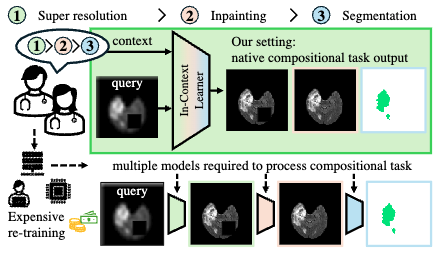
Prof. Dr. Erik Rodner is a faculty member at the University of Applied Sciences Berlin (HTW Berlin), where he serves as a Professor for Machine Learning and Data Science. He also contributes to the School of Engineering Sciences - Technology and Life. His research spans computer vision, machine learning, and biomedical applications, with a focus on learning with limited data, robust visual recognition models, and medical image analysis. He has developed innovative methods for medical diagnostics, industrial classification, and anomaly detection. Recent publications (2025-2016) highlight his expertise in visual in-context learning, semi-weakly segmentation, and active learning frameworks. He has collaborated with institutions such as ZEISS Group, Friedrich Schiller University Jena, and UC Berkeley. Scientific Awards: Award for Excellent Teaching (2023)
Sandra Hajek is a researcher at the Department of Romance Philology, University of Göttingen. She works under the chair of Prof. Dr. Guido Mensching and serves as a scientific assistant in the editorial team of the Zeitschrift für französische Sprache und Literatur (ZFSL) . Current research focuses on: Sprachgeographie/Geolinguistik Dialektometrie Sprachgeschichte Varietätenlinguistik Sprachkontakt Romanische Sprachen in hebräischer Graphie Her publications include monographs on Campanian dialect variation and collaborative studies on Hebrew-scripted Romance glosses. Recent work centers on Judeo-French linguistic traditions, medieval botanical terminology, and dialectometrical analyses of Sardinian and Old Occitan elements. Contact: shajek1@gwdg.de
Allison Sullivan is an Assistant Professor of Computer Science at the University of Texas at Arlington (UTA), where she also serves as the Undergraduate Software Engineering Program Director. She is a member of the Software Engineering Research Center (SERC) at UTA and serves as faculty advisor for UTA's Society of Women Engineers (SWE) club. Dr. Sullivan received her PhD in Software Verification, Validation and Testing (SVVAT) from the University of Texas at Austin in 2017 under Sarfraz Khurshid. Her educational background includes: PhD in Software Verification, Validation and Testing, University of Texas at Austin (2017) M.S. in Software Engineering, University of Texas at Austin (2014) B.S. in Software Engineering, University of Texas at Dallas (2012) Dr. Sullivan's research focuses on two primary areas: Automated Software Engineering : Test/Oracle Generation, Automated Bug Localization and Repair, Mutation Testing, and Regression Testing Formal Methods and Programming Languages : Abstractions, Finite Model Finders, Program Synthesis, and SAT/SMT Solvers She leads the SCOPE lab which focuses on 'showing the correctness of all program executions' and has published extensively on Alloy modeling language applications. Her recent publications demonstrate a strong focus on applying formal methods to software engineering problems, with a growing emphasis on the intersection of large language models and software development practices. Her work spans theoretical foundations, tool development, and empirical studies of how developers use modeling languages. Her scientific achievements have been recognized with: NSF CAREER Award (2024) UTA CSE department Rising Star Research Award (2024) UTA College of Engineering Outstanding Early Career Faculty Award (2025) NSF grant for building an educational tool for software modeling ($400k) Dr. Sullivan has successfully advised two PhD students to completion: Dr. Ana Jovanovic (defended November 2024) and Dr. Anahita Samadi (defended February 2025). She actively mentors undergraduate researchers and has secured significant research funding including the NSF CAREER grant. Her service includes committee roles for major conferences including ASE, ISSRE, and FormaliSE. She leads the SCOPE lab at UTA, which brings together graduate and undergraduate researchers to develop techniques for improving software verification and validation, with particular emphasis on making formal methods more accessible to practitioners.
Fabian Wöbbeking is an Assistant Professor at the Martin Luther University Halle-Wittenberg and leads the Data Science in Financial Economics research group at the Leibniz Institute for Economic Research Halle (IWH) . His roles include analyzing unstructured datasets using Data Science methods to generate economic indicators, with a focus on financial intermediation, systemic risk, and machine learning applications in finance. He also contributes to macroprudential policy research and correlation stress testing frameworks. Education : Studied at the Frankfurt School of Finance & Management; earned a PhD at Goethe University Frankfurt. Wöbbeking’s research bridges Data Science and Financial Economics, emphasizing machine learning for financial analytics, risk modeling, and language-based information asymmetry. His work includes measuring non-answers in earnings calls, correlation stress testing, and cryptocurrency volatility dynamics. His recent publications highlight interdisciplinary approaches to financial markets. Key trends include leveraging NLP for corporate disclosures, Bayesian methods for risk factor modeling, and blockchain analytics for volatility indices. These works demonstrate cross-domain applicability of Data Science techniques. At IWH, he collaborates with teams like the Financial Markets department, contributing to European Real Estate Index (EREI) development and macroprudential policy analysis. His projects integrate economic theory with computational methods to address systemic risks and market inefficiencies.
Shin Yoo is a tenured Full Professor in the School of Computing at Korea Advanced Institute of Science and Technology (KAIST), where he leads the Computational Intelligence for Software Engineering (COINSE) research group. He received his PhD from King's College London in 2009 under the supervision of Prof. Mark Harman. Currently, he serves as the General Chair for ASE 2025, which will be held in Seoul, Korea. Professor Yoo earned his PhD in Computer Science from King's College London (2009), following an MSc in Software Engineering with Distinction from the same institution (2006). His academic journey includes positions as Tenured Associate Professor (2021-2025), Associate Professor (2018-2021), and Assistant Professor (2015-2018) at KAIST, as well as Lecturer and Research Associate positions at University College London and King's College London. His research focuses on the intersection of software engineering and artificial intelligence, particularly in search-based software engineering, software testing, automated debugging, SE4AI (Software Engineering for AI), and AI4SE (AI for Software Engineering). Professor Yoo's work bridges theoretical foundations with practical applications, developing innovative techniques for fault localization, test case generation, and debugging using machine learning and genetic programming approaches. His research has significant implications for improving software reliability and development efficiency in both traditional software systems and AI-powered applications. Professor Yoo's recent publications demonstrate a clear trend toward leveraging large language models and deep learning techniques for software engineering tasks. His work spans fault localization, automated debugging, GUI testing, and program analysis, with increasing focus on the challenges and opportunities presented by AI systems. His research shows a consistent evolution from traditional search-based software engineering to AI/ML-enhanced approaches, reflecting the broader trends in the field. ACM SIGEVO HUMIES Silver Medal (2017) for human competitive application of genetic programming to fault localization research IEEE TCSE Most Influential Paper Award (ICST 2024) for work on mutation-based fault localization Professor Yoo has supervised five PhD students to completion, with his former students now holding positions as assistant professors, post-doctoral researchers, and software engineers at institutions including Kyoungpook National University, Max-Planck Institute Security & Privacy, Università della Svizzera Italiana, Roku Korea, and NUS. He currently serves as an associate editor for the Journal of Empirical Software Engineering and ACM Transactions on Software Engineering and Methodology, and has held significant leadership roles in major software engineering conferences including Program Co-chair for SSBSE (2014), ICST (2018), and ICSE NIER track (2020), General Chair for SSBSE (2022), and Testing & Analysis Area Chair for ICSE (2024). As leader of the Computational Intelligence for Software Engineering (COINSE) group at KAIST, Professor Yoo directs research that combines computational intelligence techniques with software engineering challenges. The group focuses on developing novel approaches to software testing, debugging, and analysis using search-based and AI-driven methods. Their work spans both theoretical foundations and practical implementations, with strong connections to industry challenges and applications.
Roles & Affiliations: Dagmar Gromann is an Associate Professor for Terminology Science and Translation Technology at the University of Vienna's Centre for Translation Studies. Previously, she served as a Research Associate at TU Dresden's International Center for Computational Logic (ICCL) and held postdoctoral roles in Barcelona within the ESSENCE Marie Curie Training Network. She completed her PhD at the University of Vienna under Prof. Gerhard Budin, focusing on ontology-terminology integration. Education: PhD in Computer Science and Linguistics, University of Vienna (2015) Postdoctoral Research, Artificial Intelligence Research Institute (IIIA), Barcelona (2015–2017) Research Assistant, Vienna University of Economics and Business (until 2015) Research Interests: Her work bridges computational linguistics, cognitive science, and terminology science. Key areas include: Ontology learning and neurosymbolic AI Image schemas in natural language processing Machine translation ethics and genderfair language Multilingual knowledge extraction and linked data Terminology modeling and semantic web applications Publications & Awards: Over 60 peer-reviewed papers in journals such as Future Generation Computer Systems and Journal of Lexicography . Notable awards include the Best Paper Award at MuC 2021 (GenderFairMT team) and the ISWC 2019 Best PC Award. Her research has pioneered methods for extracting embodied cognition concepts like image schemas from text. Grants & Leadership: PI of the European Language Grid (ELG) pilot project Text2TCS, member of the COST Action NexusLinguarum, and organizer of conferences like LDK 2023. Editorial board roles include the Semantic Web Journal and Applied Ontology . Labs & Teams: Former member of TU Dresden's ICCL and currently part of the University of Vienna’s translation technology initiatives. Active in interdisciplinary collaborations spanning computational linguistics, AI ethics, and multilingual systems.
Dr. Anand Mishra is an Assistant Professor and Student Advisor at the Department of Cultural and Religious History within Heidelberg University's South Asian Institute. He joined the university in 2009 and specializes in ancient Indian knowledge systems, particularly Sanskrit grammar and ritual studies. His research includes formal modeling of Pāṇinian grammar and investigations into medieval Hindu traditions. Education : Mathematics from IIT Kanpur, Computational Linguistics & Classical Indology from Heidelberg University His publications explore interdisciplinary connections between Sanskrit studies, computer science, and comparative religious analysis. Key works include "Modeling the Pāṇinian System of Sanskrit Grammar" (2019) and contributions to the "Ritual Dynamics" research program. His research interests intersect with Heidelberg University's Flagship Initiative Transforming Cultural Heritage. He teaches courses on Indian philosophy, Sanskrit grammar, and digital editing of Indic texts. Current projects engage with transcultural knowledge dynamics and historical epistemology in South Asian contexts.
Sophia Hunger is an Assistant Professor of Computational Social Science at the University of Bremen and a visiting scholar at the Center for Civil Society Research (WZB Berlin Social Science Center). She completed her doctorate at the European University Institute in 2020 and remains associated with WZB as a guest researcher. Research Focus : Protest movements, political polarization, immigration policy, and computational methods like quantitative text analysis and automated event extraction. Projects : MOTRA (radicalization monitoring) and PolCon (political conflict in Europe). Publications : Appeared in Political Science Research and Methods , European Political Science Review , and Swiss Political Science Review . Media Engagement : Contributed expert opinions to ARD , El País , France24 , and Süddeutsche Zeitung . Teaching : Co-taught courses on protest politics at Free University of Berlin and conducted workshops on text-as-data approaches at institutions like the European University Institute and WZB. Methodological Innovation : Developed semi-automated protest event data systems and dictionaries to track immigration-related discourse and polarization trends.
Prof. Dr. Tristan Weddigen serves as Director of the Bibliotheca Hertziana – Max Planck Institute for Art History in Rome since 2017. He is also a full Professor of the History of Early Modern Art at the University of Zurich since 2009, following academic roles at TU Berlin (PhD 2002), University of Bern (Lecturer 2008), and University of Lausanne (Assistant Professor). Research Priorities include: Rome Contemporary : Re-evaluating Rome's role in 20th-21st century art via digital methods. Materiality and Mediality : Intermedial analysis of art's physical and theoretical dimensions. Italy in a Global Context : Decolonial studies of fascist cultural heritage and Latin American-Italian artistic connections. Transnational History of Art History : Critical editions of Heinrich Wölfflin's Collected Works (co-edited with Oskar Bätschmann, Joris van Gastel). Digital Visual Studies : Leading the DH Lab's integration of Art History and Computer Science. Publications focus on critical editions of foundational art historical texts, including: Italien und das deutsche Formgefühl (2024) – Analyzing Italo-German art contrasts. Renaissance und Barock (2023) – Reassessing Baroque architectural analysis. Die Jugendwerke des Michelangelo (2020) – Formalist studies of early works. Prolegomena zu einer Psychologie der Architektur (2020) – Psychological impact of architectural forms. Salomon Geßner (2020) – Enlightenment-era interdisciplinary research. The Department's methodological innovation extends to #ScienceForUkraine initiatives and collaborations with institutions in Zurich, Rome, and global partners. Research seminars (e.g., on mimesis, eco-criticism, and Southern discomfort) reflect interdisciplinary engagement.
Raffi Khatchadourian is an Associate Professor in the Department of Computer Science at Hunter College and the Graduate Center of the City University of New York (CUNY). His research focuses on techniques for automated software evolution, particularly automated refactoring and source code recommendation systems, with the goal of easing the burden associated with evolving large and complex software through automated tools. He also conducts research on the automated analysis of Object-Oriented programs. Ph.D., Computer Science & Engineering, Ohio State University (2011) MS, Computer Science & Engineering, Ohio State University (2010) BS, Computer Science, Monmouth University (2004) Khatchadourian's research spans multiple areas of software engineering and programming languages, with particular emphasis on automated software evolution techniques. His work addresses critical challenges in refactoring legacy systems to modern language constructs, optimizing parallel processing in Java 8 streams, and addressing technical debt in machine learning systems. His recent research has expanded into deep learning program transformation, where he develops techniques to convert imperative deep learning code to more efficient graph execution models while ensuring safety. His approach combines static analysis, program transformation, and empirical validation to create practical tools that developers can integrate into their workflows. Analysis of Khatchadourian's recent publications reveals a strong focus on bridging the gap between theoretical program analysis and practical software engineering challenges. His work increasingly intersects with machine learning systems, examining both how to improve ML code through refactoring and how to ensure safety in deep learning frameworks. The research demonstrates consistent evolution from foundational work on Java language features toward more complex systems involving concurrency, deep learning, and automated program transformation. Distinguished Paper Award at SCAM '18 for work on Java 8 stream optimization EAPLS Best Paper Award at FASE '20 for study on Java 8 stream usage EAPLS Distinguished Paper Award at FASE '25 for Deep Learning refactoring work Best Paper Award nominee at IJCAI '24 for AI safety framework Khatchadourian actively mentors graduate and undergraduate students, with several advisees going on to successful academic and industry positions. His former Ph.D. student Tatiana Castro Vélez accepted a tenure-track Assistant Professor position at the University of Puerto Rico. He has supervised numerous master's theses and undergraduate research projects, often resulting in co-authored publications at top software engineering venues. His research has been supported by various grants, though specific funding details are not prominently featured in the available information. Through his work on tools like Fraglight for aspect-oriented programming and Hybridize Functions for deep learning refactoring, Khatchadourian has established a research group focused on practical program analysis and transformation. His lab develops Eclipse plugins and other IDE-integrated tools that help developers with automated refactoring, bug detection, and code optimization. The group maintains active collaborations with researchers at other institutions and contributes to open-source projects on GitHub.
Jonathan Leake is an Assistant Professor in the Department of Combinatorics and Optimization at the University of Waterloo. His research lies at the intersection of combinatorics, optimization, and theoretical computer science, with a focus on log-concave and Lorentzian polynomials and their applications in discrete and continuous settings. Assistant Professor, University of Waterloo (2022–present) Dirichlet Postdoctoral Fellow, TU Berlin (2020–2022) Postdoctoral Fellow, Institut Mittag-Leffler, Stockholm (Spring 2020) Postdoctoral Fellow, KTH, Stockholm (Fall 2019) James H. Simons Fellow, Simons Institute, UC Berkeley (Spring 2019) His research explores the deep connections between algebraic structures and combinatorial phenomena, particularly through polynomial capacity and Lorentzian polynomials. He applies these tools to problems in optimization, sampling, and representation theory. His work often involves developing new algebraic and analytic techniques to tackle longstanding conjectures and algorithmic challenges. The recent publications highlight a consistent focus on Lorentzian polynomials, capacity bounds, and their applications in combinatorics, optimization, and theoretical computer science. Key themes include matroid theory, log-concavity, sampling algorithms, volume approximation, and connections to Lie theory and representation theory. The research spans both theoretical developments and algorithmic applications, often in collaboration with leading researchers in the field. Dirichlet Postdoctoral Fellowship, TU Berlin Postdoc Fellowship in Algebraic and Enumerative Combinatorics, Institut Mittag-Leffler James H. Simons Fellowship, Simons Institute, UC Berkeley Jonathan Leake has advised or collaborated with several researchers, though formal advisees are not listed in the provided text. His work has been supported by prestigious fellowships and collaborations with institutions such as the Simons Institute and TU Berlin. He has taught courses including CO 250: Introduction to Optimization, MATH 239: Introduction to Combinatorics, and CO 739: Lorentzian Polynomials at the University of Waterloo and TU Berlin. While specific lab or research group names are not mentioned, Leake's collaborative work with researchers like Petter Brändén, Nisheeth Vishnoi, and Leonid Gurvits suggests active participation in research teams focused on algebraic combinatorics, optimization, and theoretical computer science. His publicly shared code for sampling from HCIZ densities and verifying positivity in Lie-theoretic contexts indicates an active computational research component.
Prof. Yu-Seop Kim is a Professor at the School of Software, Hallym University, Chuncheon-si, Republic of Korea. He holds a B.Eng. in Computer Science from Sogang University (1992), and M.Eng. (1994) and D.Eng. (2000) in Computer Engineering from Seoul National University. His academic work is centered on the integration of artificial intelligence with biomedical applications. B.Eng., Department of Computer Science, Sogang University, 1992 M.Eng., Computer Engineering, Seoul National University, 1994 D.Eng., Computer Engineering, Seoul National University, 2000 His research interests lie at the intersection of bioinformatics, computational intelligence, natural language processing, and deep learning , with a strong emphasis on medical applications. He actively explores how AI can assist in clinical diagnostics and healthcare documentation. The recent trend in his publications demonstrates a focus on AI-driven medical image analysis and automated clinical text generation . His work leverages convolutional neural networks and language models to interpret brain CT scans, detect aortic dissection, and augment medical reports for cerebrovascular diseases. These efforts reflect a consistent effort to bridge machine learning with real-world clinical challenges. While no scientific awards are listed in the provided text, his collaborative research output suggests active engagement in academic and clinical partnerships. Prof. Kim has advised multiple researchers and co-authored numerous publications, particularly in journals like Applied Sciences and Journal of Clinical Medicine . Although specific grant information is not mentioned, his research likely involves funding for AI in healthcare. He collaborates with colleagues such as Byoung-Doo Oh, Chulho Kim, and Bitnarae Kim, indicating a multidisciplinary team approach. His work appears to be conducted within a research group or lab focused on AI for medical imaging and language processing , potentially involving students and clinical collaborators from affiliated institutions like Chuncheon Sacred Heart Hospital. This environment supports translational research from algorithm development to clinical validation.