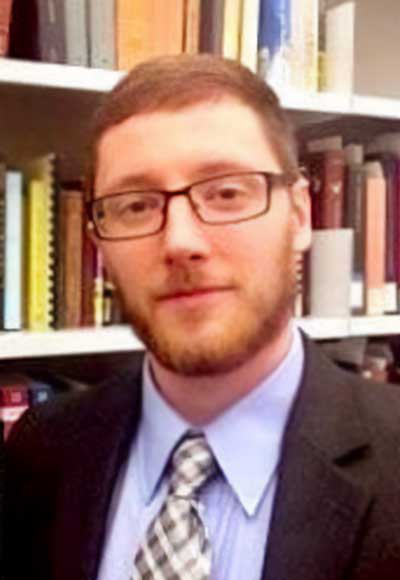
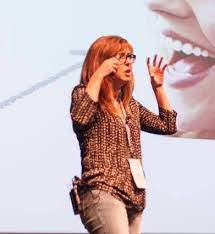
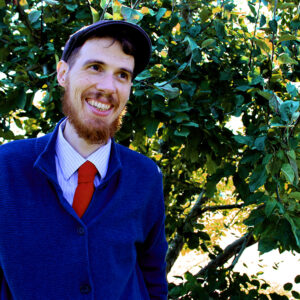
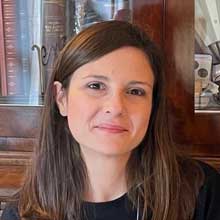
Joshua Smith is an Assistant Professor of Classics at Johns Hopkins University, specializing in ancient scholarship and reading practices within Greek literature. He holds a PhD in Classics from the University of Wisconsin-Madison (2013) and has taught at institutions including the University of Chicago and Cornell College before joining Hopkins in 2015. His research integrates digital humanities methods with traditional philology, focusing on Homeric citation in ancient commentaries and poetic traditions like shield abandonment (rhipsaspia). Secondary interests include ancient medicine and lyric poetry. Publications include co-authored works such as The Hippocrates Code (2016) and articles on Archilochus’ poetic traditions. His current projects explore intertextual Homeric analysis through digital tools. Smith’s work bridges classical philology with modern analytical frameworks, emphasizing interdisciplinary approaches to textual criticism. No scientific awards are explicitly listed in the provided materials. His advising and grant activities are not detailed here, though his research collaborations suggest involvement in funded projects related to digital humanities and ancient text analysis. No lab affiliations are mentioned, though his work likely intersects with computational linguistics or digital antiquity initiatives.
Sonia Liboria Maria Alessandra is an Adjunct Professor at the Department of Humanities, University of Catania, and teaches at the Special Teaching Structure in Ragusa. She holds a degree in Modern Foreign Languages and Literatures (University of Catania, 1991) and Modern Literatures (University of Catania, 1997), the latter earning her the Leonardo Sciascia degree prize. Graduate of University of Catania (1991, 1997) Collaborates with Instituto Cervantes as DELE examiner Peer reviewer for Cuadernos de Lingüística Hispánica Her research focuses span: Spanish as a second language instruction ICT integration in pedagogy Intercultural communication frameworks Translation theory and practice Literary text analysis Language assessment methodologies Recent publications emphasize gamification in language classrooms, cinematic intercultural competence, and fashion terminology acquisition. Scientific awards include the prestigious Leonardo Sciascia degree prize. She conducts seminars on: Spanish language education ICT application in linguistics Translation of literary works Intercultural mediation
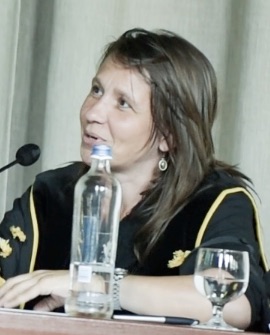
Lieve Macken is Associate Professor at Ghent University's Department of Translation, Interpreting and Communication within the Faculty of Arts and Philosophy. With 28 years of experience in language technology, she leads research in machine translation, natural language processing, and translation technology applications. Her work bridges academic research and practical implementation through the Language and Translation Technology Team (LT3). Dr. Macken's research focuses on machine translation evaluation, human-machine interaction in translation workflows, literary translation with MT, and educational applications of translation technology. Her work spans multiple dimensions including quality assessment metrics, eye-tracking studies of translation processes, syntactic difficulty prediction, and specialized applications for asylum seekers and language learners. She has pioneered research on translationese in machine translation output and developed methodologies for assessing translation quality through both process and product metrics. Her recent publications reveal a strong trend toward examining the intersection of large language models with traditional machine translation systems, particularly in literary contexts. She investigates how different translation workflows impact textual characteristics, reading effort, and translator productivity. A significant portion of her recent work addresses social applications of translation technology, particularly through the MaTIAS project serving asylum seekers, and educational applications through projects like WiLMa and IVESS. Guest editor of Special Issue 'Advances in Computer-Aided Translation Technology' in Informatics journal (2019) Extensive experience as reviewer/referee for journals, conferences, and research projects External examiner for seven PhD candidates Dr. Macken has supervised numerous PhD projects including Joke Daems' work on translation robots, Arda Tezcan's research on MT quality estimation, and Bram Vanroy's study of syntactic difficulties in translation. She currently supervises the Horizon Europe Marie Sklodovska Curie Fellowship of Paola Ruffo and multiple PhD projects including Margot Fonteyne's WiLMa project and Jasper Degraeuwe's IVESS project. Her research is funded through diverse channels including Horizon Europe, BOF UGent, FWO, and AMIF grants. She coordinates the postgraduate program Computer-Assisted Language Mediation and co-coordinates the European Master's in Technology for Translation and Interpreting (EM-TTI), teaching courses in Computer-Assisted Translation, Machine Translation, and Dissertation. As coordinator of the Language and Translation Technology Team (LT3), Dr. Macken leads a vibrant research group that regularly presents at major conferences including MT Summit, EAMT, and ICTIC. The team's work spans theoretical research in translation technology and practical implementations addressing real-world challenges in scholarly communication, language education, and social integration.
Dr. Eşref İnan is an Assistant Professor at Bingöl University's Department of Arabic Translation and Interpreting within the Faculty of Arts and Sciences. He holds a PhD in Arabic Language and Rhetoric from Yüzüncü Yıl University (2020) and has extensive experience in religious and education sectors (1997-2022). His research focuses on Quranic language analysis, Arabic rhetoric, and translation studies. He teaches advanced Arabic grammar, classical prose, and Quranic storytelling techniques. Education: Dicle University (BA Education, 2004), Yüzüncü Yıl University (MA Tafsir, 2015; PhD Arabic Rhetoric, 2020) Research interests include Quranic narrative structures, Arabic linguistic concepts, and computational methods in religious text analysis. Authored 7 books and contributed 2 book chapters on Quranic linguistics and educational topics. Presented 16+ papers at international conferences on topics like Quranic language dynamics and interdisciplinary approaches to religious texts. Awards: Three 'Teşekkür Belgesi' certificates from education directorates (2007, 2010, 2018) Active in academic service as a referee for ŞARKİYAT journal and maintains advanced proficiency in Arabic (86.25 score). Current courses include Nahiv (Arabic grammar) and classical Arabic prose analysis at undergraduate and graduate levels.
Elke Teich is a Professor of English Linguistics and Translation Studies at Saarland University, where she leads the Department of Linguistics and Language Technology. She serves as spokesperson for the Collaborative Research Center SFB 1102 Information Density and Linguistic Encoding , funded by the DFG, and heads the Saarbrücken CLARIN-D Center. Her work bridges computational linguistics, corpus analysis, and translation studies, with a strong focus on diachronic and register-based language variation. Education and Affiliations: Professor, Saarland University Spokesperson, SFB 1102 (DFG-funded) Head, CLARIN-D Saarbrücken Former member, Cluster of Excellence Multimodal Computing and Interaction Previous affiliations: TU Darmstadt, University of Sydney, ISI Los Angeles Research Interests: Elke Teich's research centers on language variation and change in scientific English, using computational models and information-theoretic measures like surprisal, entropy, and relative entropy. She investigates how communicative concerns shape linguistic encoding, particularly in translation and historical texts. Her work combines corpus linguistics, NLP, and cognitive perspectives under the framework of rational communication. Publication Trends: Her recent publications focus on diachronic analysis of scientific writing using the Royal Society Corpus, probabilistic modeling of translationese, and infrastructure development for language resources (e.g., Text+, CLARIN-D). There is a strong emphasis on interdisciplinary methods, combining data mining, syntactic annotation, and information theory to explore linguistic evolution. Scientific Awards: No awards explicitly mentioned in the text. Advising and Grants: Elke Teich leads a research group at Saarland University and supervises students in the Bachelor's program Language Science and Master's program Translation Science and Technology . She has secured significant funding through the DFG SFB 1102 and participates in national research data infrastructure initiatives like NFDI Text+. Her team includes research assistants and collaborators such as Stefan Fischer, Jörg Knappen, and Tom S. Juzek. Labs and Teams: Her research group is part of the Department of Language Science and Technology and is actively involved in the CLARIN-D consortium. The team develops and maintains corpora like the Royal Society Corpus and EuroParl-UdS, and works on tools for annotation, metadata generation, and text mining.
Michela Tonti is a researcher specializing in French linguistics at the University of Bergamo, with extensive expertise in corpus linguistics, computer-assisted discourse analysis, and legal terminology. Her academic journey includes a PhD in Translation, Interpreting, and Intercultural Studies from the University of Bologna (2019), where she focused on brand names in everyday discourse. Her research interests span multiple interconnected domains including corpus linguistics, computer-assisted discourse analysis, rhetoric and metaphor-based argumentation, referential semantics, commercial onomastics, and terminology studies with particular emphasis on neonymy in European law, accounting, and gender equality. Since 2020, she has expanded her work into neural translation through significant European projects. Tonti's publication record demonstrates consistent evolution from traditional linguistic analysis toward cutting-edge AI applications in language processing. Her recent work (2023-2025) shows increasing focus on the intersection of artificial intelligence and inclusive language practices, particularly examining how systems like ChatGPT handle intralingual translation for gender-inclusive writing and legal terminology standardization across European languages. Winner of the 2019 SUSLLF prize for her monograph 'Le nom de marque dans le discours au quotidien: prisme lexiculturall et linguistique' Recipient of research funding through European and national projects focusing on multilingual AI systems As project coordinator for the Italian and French language groups of the Empowering Multilingual Inclusive Communication (E-MIMIC) initiative, Tonti leads cross-institutional collaboration between the University of Bergamo, University of Bologna, and Polytechnic University of Turin. Her work bridges theoretical linguistics with practical AI applications, particularly in developing expert-annotated datasets for inclusive communication systems. She maintains active research partnerships with multiple Italian universities through the PRIN 2022 project framework.
Mònica Rius Piniés is a Senior Lecturer in the Section of Arabic Studies at the University of Barcelona, where she serves as director of the ADHUC Research Centre for Theory, Gender, and Sexuality and holder of the UNESCO Chair Women, Development and Cultures. She coordinates the consolidated research group Women's Creation and Thought (2021 SGR 01097) and contributes to the International Research Network World Gender. Education: Not explicitly detailed Affiliations: University of Barcelona, ADHUC, UNESCO Chair, World Gender Network Her research spans gender studies, cultural analysis, postcolonial literature, and historical science. Key areas include: Arab women's writing in diaspora contexts Qibla orientation and medieval Islamic astronomy Postcolonial translation dynamics Science-religion intersections in Western Islam Cultural memory in Andalusian science Technology-enhanced Arabic language pedagogy Recent publications examine: 2021: Translation politics in Mediterranean Maghrebi-Spanish literary exchange 2020: Scientific legacy of Muslim Iberia 2018: Utopian frameworks in exile literature 2014: Architectural astronomy in Morocco 2012: Arab identity in film and feminism 2009: Medieval Islamic knowledge circulation
Dr. Liting Zhou is an Assistant Professor at Dublin City University's School of Computing, specializing in multimedia retrieval and information systems. She completed her PhD in Computer Science at DCU under Dr. Cathal Gurrin's supervision, focusing on multimedia analysis. Her research develops algorithms for video understanding, multimodal learning, and lifelog retrieval applied to education, healthcare, and personal informatics domains. Key research areas include: Cross-modal video-text matching and retrieval Lifelog question answering systems Multimodal fusion techniques User-friendly retrieval interfaces She serves as reviewer for top conferences/journals and has chaired sessions at MMM (2023-2024) and ECIR (2023).
Pilar Alderete Diez is an Assistant Professor at the University of Galway since 2006, affiliated with the Anderson Centre for Translation Research and Practice. She holds a BA in English Philology from the University of Valladolid, Spain, and later returned there to earn her PhD in Language Teaching and Learning (2013). She also holds an MA in Spanish with a focus on translation from the University of Galway and a Postgraduate Certificate in Teaching and Learning in Higher Education (2022). University of Valladolid: BA English Philology (Spain) University of Galway: MA Spanish (Translation focus) University of Valladolid: Ph.D. Language Teaching and Learning (2013) Postgraduate Certificate in Higher Education Teaching (2022) Her research focuses on two interconnected areas: Spanish language pedagogy and children’s identity formation through translated texts . She explores how cultural politics manifest in fantasy literature like Harry Potter, investigates censorship in children’s books such as Manolito Gafotas, and develops poetry-based strategies to address homophobic bullying in language classrooms. Her work also examines technology’s role in promoting autonomous language learning and the challenges of humor translation in cross-cultural contexts. Her recent publications (2019-2023) reflect sustained engagement with translation ethics, pedagogical innovation in language education, and the sociocultural dimensions of literary works. She has contributed to digital language learning platforms like PAISAGE, an audiovisual portal for Irish/Spanish language learners. As part of the Anderson Centre, she collaborates with researchers and practitioners in translation studies. Her professional narrative emphasizes bridging academic research with practical teaching tools, particularly in university settings where time constraints challenge effective language instruction.
Dr. Albert Nowacki serves as an Assistant Professor in the Department of Russian, Ukrainian and Belarusian Literature at the John Paul II Catholic University of Lublin within the Faculty of Humanities. His academic career spans over two decades with significant contributions to Ukrainian literary studies, Polish-Ukrainian cultural relations, and the analysis of national identity formation in Eastern Europe. He maintains active scholarly engagement through numerous publications, conference presentations, and editorial responsibilities. Specializes in 20th century Ukrainian literature Focuses on Mykola Khvylovy's literary contributions Examines Ukrainian identity in post-Maidan and wartime contexts Investigates Polish-Ukrainian literary connections Contributes to translation studies methodology Nowacki's research trajectory demonstrates consistent focus on Ukrainian literary modernism, particularly the works of Mykola Khvylovy, while increasingly addressing contemporary issues arising from the Russian-Ukrainian conflict. His recent publications analyze refugee experiences, identity transformations in Donbas, and the cultural impact of war. His scholarly approach bridges literary analysis with sociopolitical commentary, offering valuable insights into how literature reflects and shapes national consciousness during periods of crisis. The interdisciplinary nature of his work connects literary studies with migration studies, trauma theory, and cultural diplomacy. His scholarly output reveals evolving thematic focus from historical literary analysis toward urgent contemporary issues. While maintaining his expertise in Ukrainian modernism, his recent work increasingly addresses the Russian-Ukrainian war's cultural dimensions, refugee experiences, and identity transformations. This evolution reflects both personal scholarly development and response to geopolitical realities affecting Eastern Europe. Medal srebrny 'Za Długoletnią Służbę' (2024) Medal Komisji Edukacji Narodowej (2022) Nagroda zespołowa III stopnia (2019, 2023) Nagroda indywidualna III stopnia (2020) Nagroda indywidualna IV stopnia (2011) Dr. Nowacki actively contributes to academic community through editorial work as Secretary of the editorial board for TEKA Komisji Polsko-Ukraińskich Związków Kulturowych. He organizes international conferences addressing Polish-Ukrainian cultural relations and has participated in numerous research projects, including EU-funded initiatives like Erasmus+ and PWP. His international collaborations extend to academic institutions in Ukraine, particularly through textbook development projects for Ukrainian minority schools in Poland. He has also served as a reviewer for research grant competitions at Wrocław University. As Secretary of the Commission of Polish-Ukrainian Cultural Associations of the Lublin Branch of the Polish Academy of Sciences, Nowacki plays a significant role in fostering academic collaboration between Polish and Ukrainian scholars. His involvement in organizing international conferences and editorial work demonstrates strong institutional engagement within the academic community focused on Eastern European studies.
Douglas Luman is an Assistant Professor of Computer Science at Allegheny College, where he integrates computational methods with poetic and artistic practice. He is affiliated with the Department of Computer Science within the College of Liberal Arts and Sciences. Luman is also a co-founder of the book arts press Container, art director at Stillhouse Press, and head researcher at appliedpoetics.org, a digital platform for experimental writing tools. MFA, George Mason University BS, Bradley University His research lies at the intersection of computer science and the humanities, focusing on computational poetics, materiality of language, and the ideological undercurrents in architectural and political texts. He explores how algorithmic constraints, procedural generation, and digital tools can reshape creative decision-making and poetic expression. His work interrogates how fascist rhetoric persists in contemporary language and design, particularly through projects like Rationalism , a computational mistranslation of mid-20th century fascist architectural writing. His recent publications include Rationalism (2021) and The F Text (2017), along with excerpts such as "A Theory of Ruin Value" and "PREFAB," which demonstrate his use of computational methods to deconstruct and reframe historical and ideological texts. These works reflect a consistent engagement with themes of constraint, materiality, political memory, and the transformative power of language through digital mediation. Luman has not been explicitly mentioned as receiving formal scientific awards, but his publications and interviews in literary and digital humanities circles indicate scholarly and artistic recognition. His teaching includes courses such as Computational Constraint and Art Direction, reflecting his interdisciplinary approach. As an active faculty member, he advises students and leads research initiatives through appliedpoetics.org, where he develops software tools that support writers in exploring constrained creativity. His work exemplifies the growing field of digital humanities, where code becomes a medium for literary and cultural critique. He is involved in multiple creative and research teams, including the editorial and design team at Stillhouse Press and the collaborative project Container. His future work is likely to continue exploring the convergence of artificial intelligence, poetic practice, and ideological analysis, particularly in how digital tools can surface hidden patterns in language and power structures.
Agnese Macchiarelli is a Contract Lecturer at Ca' Foscari University of Venice's Department of Humanities. Her academic work bridges medieval studies and digital humanities, with a focus on textual criticism, manuscript studies, and the digital preservation of historical texts. She maintains office hours during lecture periods and coordinates via email. Education: PhD in Italian Studies, Ca' Foscari University of Venice (2017-2021) Master's in Italian Studies and Linguistic Sciences, University of Bologna (2013-2015) Bachelor's in Italian Studies, Sapienza University of Rome (2009-2013) Classical High School Diploma, Santa Teresa di Gesù, Rome (2003-2008) Research Focus: Macchiarelli specializes in medieval Italian literature, Dominican theological texts, and digital scholarly editing. Her work frequently examines 14th-century authors like Iacopo Passavanti and Dante, employing both traditional philological methods and digital tools like treebanking and text encoding. She maintains particular expertise in the digital representation of sacred historical texts. Professional Activities: Scientific Fellow at Bergische Universität Wuppertal and VeDPH (2023-2026) for the DFG/FWF project History as a Visual Concept: Peter of Poitiers' Compendium Historiae Research Grant: Legacy of Thomas Aquinas Treebank Project (2021-2022) Teaching Assistant in Medieval/Romance Philology (since 2021) Affiliated with Venice Centre for Digital and Public Humanities (VeDPH) since 2021 Research stay at École des Hautes Études en Sciences Sociales, Paris (2019-2020)
Vesela Dancheva-Bogdanova serves as Assistant Professor in the Department of Cinema, Advertising and Show Business at New Bulgarian University. An acclaimed animated film director and producer, her internationally recognized work has screened at over 90 festivals worldwide, earning multiple awards including the Bulgarian Film Academy's Best Animated Film honor for both 'Anna Blume' (2009) and 'Traveling Country' (2016). Her educational background includes: Cum Laude graduation from Willem de Kooning Art Academy, Rotterdam Animation specialization at School of Visual Arts, New York Master of Arts from National Academy of Arts in Sofia (2018) Dancheva-Bogdanova's research integrates experimental animation techniques with social commentary and literary adaptation. Her creative practice explores human relationships, political structures, and abstract concepts through innovative visual storytelling, bridging commercial advertising and artistic expression in contemporary animation. Her 15-year filmography reveals evolving technical mastery and thematic depth, with recent works like 'Trace' (2022) demonstrating sophisticated digital techniques while maintaining focus on societal critique. The body of work consistently engages with feminist perspectives, environmental issues, and cultural identity through both narrative and abstract forms. Key scientific recognition includes: Best Animated Film of 2009 (Bulgarian Film Academy) Best Animated Film of 2016 (Bulgarian Film Academy) As co-founder of Kompot Kolektiv production company, she leads international co-productions supported by entities like Robert Bosch Fund and Bulgarian National Film Center. Her academic contributions include developing the 'Animation in Advertising' curriculum while serving on juries for prestigious animation festivals. Professional leadership extends through membership in the Animation Guild of the Bulgarian Film Directors Association and representation of Bulgaria in the European Animation Association (EAA).
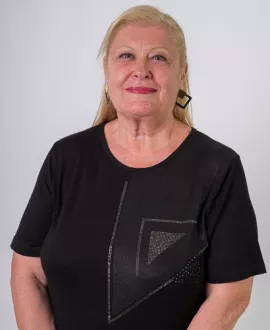
Gülsev Pakkan is a Professor in the Department of English Language Education at TED University, Turkey. With over 30 years of academic experience, he focuses on English language education , teaching methods , materials development , and 21st-century skills in language learning. He teaches courses like Approaches in English Language Teaching , Materials Development , and supervises Master’s and Ph.D. theses . Research Interests : English language education, materials development, teacher training, intercultural competence, educational evaluation, and 21st-century skills in EFL contexts. Publication Trends : His 15 most recent articles span intercultural competence (2024), mobile-assisted language learning (2023), EFL teaching methods (2023), 21st-century skills awareness (2020), curriculum evaluation (2014), and foundational works on translation studies (2000) and language materials (1997).
Zaida Bartolomé Díaz is an Assistant Professor in the Department of Modern Philology, Translation and Interpretation at the University of Las Palmas de Gran Canaria, specializing in lexicography and corpus linguistics with a focus on French architectural terminology. She actively contributes to research groups GIR IATEXT (Linguistic Variation and Change) and the Institute for Textual Analysis and Applications (IU). Her educational credentials include: Doctorate in Philology (2022), University of Las Palmas de Gran Canaria Dr. Bartolomé Díaz's research centers on lexicographic methodology and corpus-based analysis , particularly examining architectural vocabulary evolution in French through historical dictionaries (e.g., 1762 Academy Dictionary), contemporary usage patterns, and metaphorical expressions. She develops bilingual French-Spanish lexicons using computational tools like Sketch Engine and explores AI applications for domain-specific terminology. Her 2020-2024 publications reveal consistent methodological innovation, combining corpus linguistics with digital lexicography to analyze discrepancies between official terminology recommendations and real-world language use. Key thematic threads include architectural metaphor systems, historical lexical change, and interoperable resource design for specialized translation. Dr. Bartolomé Díaz has supervised three 2024 undergraduate theses covering advertising discourse (YSL perfumes), cross-linguistic slang phenomena (verlan/vesre/back slang), and literary representations of modernity, reflecting her expertise in French sociolinguistics and discourse analysis. She maintains active research within GIR IATEXT and the Institute for Textual Analysis and Applications, focusing on corpus-driven studies of linguistic variation and lexicographic resource development for specialized domains.