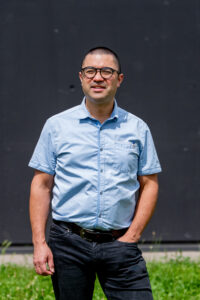
Chao Liu is a Research Scientist at CNRS (French National Center for Scientific Research) since 2008, affiliated with the DEXTER team and the Department of Robotics, LIRMM at University of Montpellier, France. He earned his Ph.D. in Electrical & Electronic Engineering from Nanyang Technological University, Singapore (2006). Current research focuses on surgical robotics , haptics , teleoperation , and nonlinear control theory with applications in computer vision. His work addresses challenges in robotic-assisted telesurgery, including: Stable and transparent human-robot interaction through wave variable compensators and passivity filters Physiological motion compensation using spatio-temporal LSTM and dual Kalman filters EMG-based motion recognition for surgical skill assessment 3D soft-tissue reconstruction with stereo-endoscopes and deep learning Dr. Liu leads European and French projects like: TS2RT (CNRS-funded): Safer teleoperation with motion compensation ROBACUS (ANR-funded): Needle positioning with MPC control HaTUMoCo (CNRS-funded): Haptic teleoperation with uncertainty handling ARAKNES (EU-funded): Microrobotic systems for endoluminal surgery Scientific honors include Senior Member of IEEE and Member of Sigma Xi . He supervises Ph.D. and Master's students working on topics such as concentric tube robot optimization, haptic teleoperation, and EMG-based force estimation. Dr. Liu serves on IEEE Technical Committees for Telerobotics and Haptics , and as Technical Editor of IEEE/ASME Transactions on Mechatronics.
Christine ABDALLA MIKHAEIL is an Assistant Professor in the Department of Management of Information Systems at IÉSEG School of Management in France. She holds dual Ph.D. degrees in Business Administration with a focus on Information Technology from the University of Paris Dauphine (France) and Georgia State University (USA), alongside advanced degrees in Business Consulting and Administration from Paris Dauphine. Her research focuses on collective action dynamics in social media, cybersecurity and privacy challenges, artificial intelligence applications, and disinformation propagation. Recent work explores the adoption of privacy-enhancing technologies (PETs), paradoxes in hybrid work visibility, and data adequacy in qualitative IS research. She has published in leading journals such as Information Systems Journal and Information and Organization . Her articles reflect a strong emphasis on understanding socio-technical systems through interdisciplinary lenses, combining behavioral theories with digital technology analysis. No specific awards or grant details are mentioned in her profile. She currently advises no formally listed students.
David Daney is a Senior Researcher (Directeur de recherche) at Inria and HDR-qualified academic, currently serving as Head of Science for the Inria Center at the University of Bordeaux since July 2024. He is the team leader of the Auctus research group, focusing on robotics, cobotics, and human-robot interaction. He is affiliated with Inria and the École Nationale Supérieure de Cognitique (ENSC) at the University of Bordeaux, within the College of Engineering and the Department of Robotics. His research interests include Robotics, Cobotics, Human-Robot Interaction, Human Posture Analysis, Cable-driven Robots, Parameters Identification, Calibration, Interval Analysis, and Haptic Guidance. His work bridges theoretical robotics with industrial applications, particularly in aerospace, automotive, and sustainable agriculture. He has led and participated in numerous industrial collaborations with Airbus, Stellantis, Solvay, AKKA, and Farm3. His recent publications (2023–2025) demonstrate a strong focus on human-robot physical interaction, including real-time capacity estimation (Pycapacity), haptic guidance, model predictive control for dynamic environments, and musculoskeletal modeling for collaborative robotics. These works appear in top-tier journals such as IEEE Transactions on Robotics, Journal of Biomechanical Engineering, and Robotics and Autonomous Systems. HDR (Habilitation à Diriger des Recherches) Principal Investigator of ANR Pacbot Head of Science for Inria Center at University of Bordeaux Erdös number = 3 David Daney supervises multiple PhD students, including Alicia Barsacq, Ahmed-Manaf Dahmani, and Alexis Boulay. He has been principal investigator in several research projects such as LiChIE and ANR Pacbot, focusing on satellite production and human-robot collaboration. He also leads the SHAARE associate team with KAIST’s IRiS lab, advancing shared haptic control. His team develops tools for teleoperation, ergonomic analysis, and robot calibration, with applications in industrial and assistive robotics. He leads the Auctus team at Inria, which develops control and analysis techniques for human-robot physical interaction. The team collaborates with KAIST (SHAARE), ONERA, Pprime Institute, and industrial partners. The MOVER project studies human motor variability for ergonomics, and the Farm3 collaboration explores teleoperated vertical farming robotics.
Karim ZKIK is an Associate Professor of Cyber Security and Information Systems at ESAIP Graduate School of Engineering, Angers, France. Previously, he served as an Assistant Professor at the International University of Rabat (UIR), Morocco. His roles include Educational Manager of the Cyber Security track, Head of the Cybersecurity Innovation Hub, and committee member for ABET certification and curriculum design. He actively contributes to academic service, organizing conferences such as the International Conference on Cryptology, Coding Theory, and Cyber Security (I4CS 2022), and serves as a Guest Editor for Computers and Industrial Engineering . His research focuses on cybersecurity for connected systems, blockchain technologies, AI-driven security solutions, and cyber resilience in industrial control systems. Recent work explores integrating blockchain and machine learning for threat detection, secure IoT networks, and supply chain resilience. Key contributions include frameworks for cyber resilience in retail and airlines, blockchain-based crowdfunding security, and SDN-based attack mitigation. ZKIK holds a Habilitation (2024) and PhD in Cyber Security from Université d’Angers and Mohamed V University, Rabat. He holds over 20 certifications from EC-Council, IBM, and Cisco. His work bridges theoretical research and industry applications, addressing challenges in smart environments, industrial systems, and sustainable supply chains.
Anna Korba is an Assistant Professor at École Polytechnique, specifically affiliated with ENSAE/CREST in the Statistics Department since September 2020. She is also a co-administrator of the Master Data Science program at École Polytechnique. Her academic journey has positioned her as a leading researcher in machine learning, with particular expertise in kernel methods, optimal transport, and statistical optimization. Dr. Korba received her PhD from Telecom ParisTech in 2018 under the supervision of Prof. Stephan Clémençon. Prior to her current position, she was a postdoctoral researcher at University College London's Gatsby Computational Neuroscience Unit working with Arthur Gretton from December 2018 to August 2020. Her academic foundation includes a Master's degree in Machine Learning and Computer Vision (MVA) from ENS Cachan and ENSAE in 2015. Anna Korba's research primarily focuses on machine learning with emphasis on kernel methods, optimal transport, optimization, particle systems, and preference learning. Her work bridges theoretical statistics with practical machine learning applications, particularly in developing novel sampling and optimization methods. She has made significant contributions to understanding Wasserstein gradient flows, density ratio estimation, and variational inference techniques. Her publication record demonstrates a strong trajectory in top-tier machine learning conferences including ICML, NeurIPS, AISTATS, and ICLR. Her research shows a clear evolution from foundational work on ranking and preference learning during her PhD to more recent contributions in Wasserstein-based optimization, sampling methods, and deep probabilistic modeling. The interdisciplinary nature of her work connects statistics, optimization theory, and practical machine learning applications. Top 10% Oral Presentation at AISTATS 2022 Top 15% Long Oral Presentation at ICML 2021 She actively mentors PhD students and postdoctoral researchers, currently advising seven PhD candidates and having successfully guided several alumni to prestigious positions. Dr. Korba also contributes to the academic community through her role in administering the Master Data Science program and collaborating with researchers across institutions worldwide. As part of the CREST research center, Dr. Korba works within a vibrant team of researchers focused on statistics, machine learning, and their applications to economic and social sciences. Her research group includes current PhD students and postdocs working on various aspects of her research interests, creating a dynamic environment for advancing the field of statistical machine learning.
Nicolas RAGOT is an Associate Professor at CESI, affiliated with the Engineering and Numerical Tools department. He teaches Digital and embedded electronics, Microcontroller programming, System control, and Sensors at the Bachelor and Master levels. His research focuses on Environment perception for robotics and Computer vision, particularly in unconventional applications. He leads or collaborates on major research programs including ROJUNACO (2023–2025), FUSION (2023–2027), OASIS (2022–2024), and COLIBRY (2021–2024), all addressing robotics, digital twins, and industrial automation. He co-supervises PhD students Y. Feddoul, S. Ouarab, and S. Choudhary. His work spans smart mobility, assistive technologies, and energy-efficient systems. He is a member of the Secure Electronic Transactions (TES) competitiveness cluster's expert committee. Education: PhD in Computer Vision (University of Rouen, 2009), Master in Electrical Engineering (University of Paris XI, 2003), Engineering diploma (ESIGELEC, 1999). Research interests emphasize robot perception, human-robot collaboration, and extended reality integration. His publications span object detection, SLAM algorithms, and smart wheelchair systems. Current projects emphasize industrial robotics, digital twins, and real-time 3D reconstruction. Advising and grants include leadership roles in multiple research programs and co-supervision of three PhDs. His lab work focuses on Engineering and Numerical Tools, with contributions to CESI LINEACT's collaborative robotics initiatives.
Adeel AHMAD is an active Associate Professor (Maître de Conférences) conducting cutting-edge research at the intersection of artificial intelligence, industrial applications, and business process management. His academic work demonstrates strong interdisciplinary connections between computer science, industrial engineering, and business informatics. Dr. AHMAD's research interests span Explainable Artificial Intelligence (XAI), Industrial Machine Learning, Business Process Management, Ontology-Based Reasoning, and Logistics Optimization. His work focuses on developing practical AI solutions for industrial contexts, particularly in Industry 4.0 environments where human-AI collaboration is essential. He has made significant contributions to meta-learning approaches for automated algorithm selection and configuration, with particular emphasis on making these systems transparent and interpretable for domain experts. His publication record shows a clear trajectory toward integrating explainability into industrial AI systems, with recent work focusing on conversational recommendation systems for cyber-physical environments. The research demonstrates consistent evolution from foundational work in business process analysis toward sophisticated AI applications in industrial settings. Active research leadership in Explainable AI for industrial applications Significant contributions to meta-learning frameworks for automated machine learning Interdisciplinary approach bridging computer science, industrial engineering, and business processes Strong publication record in top-tier conferences and journals Dr. AHMAD demonstrates strong collaborative research patterns, frequently working with colleagues including Mourad Bouneffa, Moncef Garouani, and other researchers in the French academic community. His work shows particular relevance to manufacturing, logistics, and cyber-physical systems where AI must work alongside human domain experts.
Zakaria BABUTSIDZE is a Professor of Economics at SKEMA Business School in France, where he has been teaching since 2011, progressing from Assistant Professor to Associate Professor and finally to full Professor in 2021. His academic affiliations also include positions at Côte d'Azur University, Sciences Po Paris (where he serves as an Economist at OFCE since 2011), and previous visiting positions at institutions including Griffith University, North Carolina State University, and Maastricht University. His research interests span behavioral and environmental economics, with a particular focus on consumer decision-making in digital contexts, green consumer behavior, social networks, and agent-based modeling of economic phenomena. BABUTSIDZE has made significant contributions to understanding how digital environments shape consumer interactions, environmental attitudes, and trust formation. His recent publications demonstrate a strong trend toward interdisciplinary research combining economics with psychology, computer science, and environmental studies. His work frequently employs experimental methods, both laboratory and field-based, to examine consumer behavior in digital environments, the impact of social networks on market dynamics, and the relationship between media consumption and environmental attitudes. SMBG special prize for innovation 2015 (awarded to MSc Digital Business in capacity of Academic Director) The Best Young Scholar Paper Award 2011 (DIME final conference / DIME network of Excellence) The Outstanding PhD Paper Award 2009 (European Meeting on Applied Evolutionary Economics) As an academic advisor, BABUTSIDZE has supervised multiple doctoral students at SKEMA Business School and Université Côte d'Azur. His research has been supported by numerous grants from Université Côte d'Azur, the Sloan Foundation, and other institutions. He is also actively involved in conference organization and serves as a reviewer for numerous prestigious economics and interdisciplinary journals.
Sidonie Christophe is a Senior Researcher (Directrice de Recherche, DR1) at UMR LASTIG, a joint research unit of Université Gustave Eiffel, IGN-ENSG, and EIVP. She serves as co-director of the LASTIG laboratory and leads research in geovisualization, map design, and interactive spatial data exploration. She also holds a part-time advisory role (60%) at the French Ministry of Higher Education and Research in the domain of digital technology, environment, climate, and sustainable urban development. PhD in Geographic Information Sciences Senior Researcher, DR1, MTECT Co-Director, LASTIG Laboratory (since 2021) Former Team Leader, GEOVIS (Geovisualization, Interaction, and Immersion) Advisor, Environment and Urban Climate, French Ministry of Higher Education & Research Her research centers on innovative methods for 2D/3D and nD geospatial data visualization, with a focus on enabling spatio-temporal understanding through visual and non-visual spatial thinking. Her work integrates principles from geographic information science, human-computer interaction, and computer graphics. Key areas include urban climate visualization, tactile and augmented reality for accessibility, expressive cartographic rendering, and cognitive aspects of map design. She investigates how aesthetic and semiotic choices impact map comprehension and utility. The 15 most recent publications reflect a strong trend in interactive and accessible geovisualization, particularly for urban and environmental applications. Topics include neural map style transfer, 3D urban climate analysis, tactile maps for the visually impaired, augmented reality in geography, and visual analytics for crisis and climate data. There is a consistent emphasis on user-centered design, interdisciplinary integration, and the development of tools for decision-making under uncertainty. Scientific Recognition and Service: Invited speaker at major conferences (IEEEVIS, AGILE, ICC, CPGIS) Co-organizer of international workshops (e.g., GeoVIS, ISPRS AR/VR sessions) Leader of national research projects (ANR ORACLES, ANR ACTIVmap, ANR ECOCIM) Recipient of international mobility grants (AMICI I-SITE FUTURE) Contributor to national glossaries and research strategy (e.g., French photogrammetry glossary) Advising and Grants: Sidonie Christophe actively supervises PhD students and postdoctoral researchers, including Markie Jiang, Maria-Jesus Lobo, and Alexandre Mielniczek. She leads or participates in multiple funded research projects such as ANR ORACLES (marine flooding visualization), ANR ACTIVmap (tactile 3D maps), and ANR ECOCIM (eco-design of city information models). Her advisory role at the MESR involves shaping national research strategy in digital and environmental sciences. Labs and Research Teams: She is a core member of the GEOVIS team (Geovisualization, Interaction, and Immersion) at LASTIG and previously served as its leader. As co-director of LASTIG, she plays a central role in the leadership and strategic direction of the entire laboratory, which comprises over 100 researchers across four teams: ACTE, GEOVIS, MEIG, and STRUDEL.
Frédéric Tran Minh is a Lecturer at Esisar – Grenoble INP-UGA and a PhD student affiliated with the CTSYS team at LCIS laboratory. His career spans academic teaching, software development, and research in formal verification for education. PhD in progress on proof assistants for teaching mathematics Former software engineer in computer-assisted surgery (8 years) Member of the APPAM ANR project Develops the Yalep proof assistant environment Research focus: Integration of Lean theorem prover and mechanized proofs into undergraduate mathematics pedagogy, emphasizing interactive learning and web-based accessibility. Teaching areas: Algebra, Analysis, C Programming, and automata theory, with innovative use of proof assistants in curricula.
Overview ASSILA Ahlem is a Researcher-Lecturer at CESI, specializing in Human-Machine Interaction (HMI), Augmented Reality (AR), and Virtual Reality (VR). She holds a PhD in Computer Science from Université de Valenciennes (2016) and a postdoctoral position at Institut Image ARTS ET METIERS PARISTECH (2017). Her research focuses on usability evaluation, digital twin technology, and BIM-integrated XR systems. She has supervised multiple engineering and master’s projects, including AR application development for network management. Research Contributions Developed frameworks for integrating subjective/objective usability metrics using ISO standards Proposed maturity models for BIM-based AR/VR systems Explored digital twin applications in manufacturing and construction industries Education & Responsibilities Teaches computer science at all engineering levels (L1-M2) at CESI Reims, including algorithmics, HMI design, and project-based learning. Served as pilot for engineering program cycles (2017–2020). Active in organizing international conferences (e.g., HCI 2020, Flexible Automation 2018) and peer review for journals like IJISE and IEEE VR. Awards & Recognition No specific awards listed, but recognized for contributions to HCI and industry-relevant research. Advising & Grants Supervised over 10 student projects including PFEs and internships. Actively participates in jury panels for engineering thesis defenses and academic promotions across multiple institutions. Labs & Collaborations Member of the CESI Chair for Industry and Services of Tomorrow, focusing on technology integration in construction and manufacturing sectors.
Sao Mai Nguyen is an Enseignante-Chercheuse (Lecturer-Researcher) at ENSTA Paris, affiliated with the Unité d'Informatique et d'Ingénierie des Systèmes (U2IS). Her research bridges robotics, artificial intelligence, and cognitive science, focusing on cognitive developmental robotics, intrinsic motivation in learning, and human-robot interaction. She explores how robots can adapt to social and physical environments, particularly in physical rehabilitation and smart home applications. Research Interests: Nguyen’s work integrates machine learning, robotic embodiment, child psychology, and neuroscience. Key areas include human-robot interaction, assistive robotics for chronic low back pain rehabilitation, activity recognition in smart homes using IoT sensors, and intrinsic motivation-driven learning frameworks. Recent Contributions: Her 2024 HDR thesis on reinforcement and imitation learning for sequential tasks underscores her expertise in strategic learning systems. Recent publications address bio-inspired robotics models, hierarchical reinforcement learning, and benchmark environments like 'Open the Chests' for activity recognition. Collaborations include projects like the R-COOL randomized trial for robot-coached physical exercises. Labs & Teams: She contributes to the U2IS lab, advancing interdisciplinary research in AI and robotics. Her work spans experimental platforms for sensorimotor learning and healthcare robotics applications.
Vinkle Srivastav is a Research Scientist (Chargé de recherche R&D) at the CAMMA group, a collaborative research team between IHU Strasbourg and the University of Strasbourg, where he focuses on advancing surgical data science through novel computer vision and machine learning approaches. His work bridges the gap between clinical practice and artificial intelligence, developing methods for surgical video analysis, 3D medical imaging, and surgical workflow understanding. Education PhD in Computer Science (2018-2021) from University of Strasbourg, France. Thesis: "Unsupervised Domain Adaptation Approaches for Person Localization in the Operating Rooms." Master of Science in Computer Science (2014-2017) from Indian Institute of Technology, Delhi, India. Thesis: "Computerized evaluation of neurosurgery skills using image processing and computer vision techniques." Bachelor of Technology in Electronics and Communication (2007-2011) from Punjab Technical University, Jalandhar, India. Research Interests Vinkle's research spans surgical data science, with particular focus on multi-modal learning approaches for surgical computer vision. His work addresses fundamental challenges in medical AI including domain adaptation, self-supervised learning, and privacy preservation in clinical environments. He develops methods for 3D medical image analysis, multi-view human pose estimation in operating rooms, and surgical activity recognition. His recent work emphasizes multi-modal pretraining frameworks that leverage both visual and textual information to improve surgical workflow understanding. He also investigates scientific simulation techniques, particularly for therapeutic ultrasound applications, where physics-aware deep learning models can accelerate computational processes while maintaining accuracy. Publication Trends Vinkle's recent publications demonstrate a strong trajectory toward multi-modal surgical AI systems that integrate vision, language, and physics-based modeling. His work increasingly focuses on few-shot and zero-shot adaptation techniques to address the data scarcity problem in surgical AI. The publications reveal a progression from basic pose estimation to holistic surgical scene understanding, incorporating team communication analysis and surgical safety protocols. Scientific Awards IPCAI 2024 Best paper award (co-author) IPCAI 2019 Runner-up award in the bench-to-bedside category (co-author) Joint winner for the best paper award in the machine learning for CAI track, IPCAI 2025 Advising and Grants Vinkle actively mentors multiple PhD students and research interns at various levels, supervising thesis work on topics including large-scale multi-modality learning, holistic surgical scene analysis, and self-supervised video representation learning. He serves as Co-PI on two ITI-HealthTech projects: one focused on multi-modality learning for 3D medical imaging (2023), and another on physics-aware deep-learning approaches for therapeutic ultrasound simulation (2024). Laboratories and Teams Vinkle is a key member of the CAMMA research group at IHU Strasbourg, a collaborative team focused on computer-assisted medical modeling and analytics. He co-organizes the Surgical Data Science Summer School, an interdisciplinary program that brings together clinicians and computer scientists to develop AI-driven solutions with clinical impact. His work involves close collaboration with surgical teams at University Hospitals of Strasbourg and international partners including Johns Hopkins University and Technical University of Munich.
Iza Marfisi is a Professor at the University of Le Mans where she became a University Professor in 2024 and was appointed Head of the IEIAH (Computer Environments for Human Learning) team in 2025. She works within the Claude Chappe Institute of Computer Science, focusing on developing educational technologies that empower teachers to create their own digital learning tools. Her research bridges computer science and educational theory to enhance teaching practices through accessible technology solutions, with particular emphasis on making advanced tools usable for non-technical educators. Marfisi's research spans Educational Technology, Serious Games for Education, Mobile Learning, and Extended Reality (XR), with a consistent focus on teacher-centered design. She develops "no-code" authoring tools enabling educators to create custom digital learning experiences deployable across various hardware platforms. Her work specifically targets situated learning with mobile devices, human-computer interactions for learning, and educational applications of mixed and extended reality. This approach democratizes access to advanced educational technologies by removing technical barriers for teachers. Analysis of her recent publications reveals a clear evolution from foundational mobile learning frameworks toward increasingly sophisticated integration of mixed reality and artificial intelligence in educational contexts. Her 2024-2025 work shows particular emphasis on generative AI for educational activity design, immersive pharmacology learning, and collaborative frameworks that connect multiple learning technologies. The publications consistently emphasize practical teacher needs, with many studies conducted in authentic educational settings rather than controlled laboratory environments. Marfisi actively supervises doctoral research across multiple dimensions of educational technology. Her current advisees explore artificial intelligence for mixed reality activity creation, mixed reality for professional training, free software approaches to serious games, and innovative interaction techniques for collaborative learning. Previous students have investigated mixed reality for fraction learning, educational game indexing systems, and mobile educational game design models. Her supervision portfolio demonstrates both depth in specific technical areas and breadth across the educational technology landscape. As Head of the IEIAH team at LIUM since 2025, Marfisi leads a research group focused on computer environments for human learning. She also serves on the Board of Directors for both the Serious Game Society and the IKIGAI association (Games for citizens), and was elected Deputy Director of Research at the Claude Chappe Institute of Computer Science since 2018. Her leadership extends to communications management for the IEIAH team and participation in the LIUM Laboratory Council (2022-2024), demonstrating significant institutional impact beyond her direct research contributions.
Massou Luc is a full-time Professor at the University of Lorraine , affiliated with the Crem research unit and the Pixel team . He focuses on digital technology in education, particularly its sociotechnical analysis, professional practices, and educational applications. His work spans higher education, digital humanities, and international collaborations. Research Interests : Luc Massou investigates the use and non-use of digital tools in professional contexts, hybrid learning environments, open educational resources (OER), and digital inclusion. He emphasizes interdisciplinary frameworks, connecting information science, pedagogy, and sociotechnical systems. Recent Article Trends : 2025–2023: Hybrid learning models and typologies 2024–2022: Open education, African health communication websites 2021: Collaborative interfaces, language learning, and globalization impacts Scientific Roles : Co-manager of the Communication collection (University of Lorraine Publishing House, 2024–) Scientific advisor to the French Directorate for Higher Education (2020–) Co-founder of TiceMed and H2PTM conference series Projects : Contributor to CAP-CONTROVERSES (public engagement in environmental debates) Advisor in the FAM-WEST project on West Syndrome families Involved in European Erasmus+ and ANR-funded initiatives Teaching Leadership : Head of Master's in Audiovisual, Interactive Digital Media and Games (2021–2024) Responsible for work-study programs in digital media (2023–) Co-design of courses on digital project creation (2018–2024) Collaborations : Active in French and international research networks, including the GIS Éducation et Formation Grand Est and the European Communication Research and Education Association . He serves as an expert for journals like International Journal of Technologies in Higher Education and Terminal .