Hulya Yalcin is an Assistant Professor in the Department of Mechanical Engineering at Istanbul Technical University. Her research focuses on artificial intelligence applications in robotics, computer vision, and precision agriculture. She leads projects in musculoskeletal modeling, plant phenology monitoring, and assistive technologies for elderly care. Her work contributes to UN Sustainable Development Goals related to innovation, health, and sustainable agriculture. Key projects include using deep learning for crop yield estimation and developing exergaming systems to improve elderly health. She has authored 52 research outputs and secured funding for initiatives like AISENSE (EU-funded exergames) and plant classification via computer vision. Publications span robotics control, medical engineering, and agricultural informatics. Notable contributions include knee orthosis gait learning via deep reinforcement learning and low-resource Turkish speech recognition improvements. As Principal Investigator, she manages projects on plant classification using CNNs, drone-based depth mapping, and multimodal assisted living systems. Her research bridges AI with practical applications in healthcare, agriculture, and robotics.
İnönü Korkmaz is an Associate Professor in the Department of Translation and Interpreting at the Faculty of Letters, Trakya University, Turkey. She has served as a lecturer since 2009, achieving Assistant Professor rank in 2016 and Associate Professor in 2021. Her career focuses on translation pedagogy and technological integration in translation workflows. Her academic credentials include a Bachelor's (1999) and Master's (2009) in English Language Teaching from Trakya University, followed by a Doctorate in Translation Studies from Istanbul University (2016). Dr. Korkmaz's research centers on Computer-Assisted Translation tools, translator training methodologies, and cultural transfer challenges. She investigates functional approaches in technical translation, particularly user manuals, while examining psychological factors affecting translation students' autonomy and competence development. Analysis of her 2013-2018 publications reveals consistent emphasis on SDL Trados Studio applications, EMT framework implementation in curriculum design, and cross-disciplinary studies comparing translation students with nursing cohorts. Her work bridges technological, pedagogical, and cultural dimensions of contemporary translation practice. No scientific awards were documented in the source material.
Emre Ugur is an Associate Professor in the Department of Computer Engineering at Bogazici University, where he serves as the head of the Cognition, Learning and Robotics (CoLoRs) laboratory. His research focuses on bridging the gap between continuous sensorimotor experiences and discrete symbolic representations in robotics. Funded by major international sources including the European Commission's Horizon 2020 program and TUBITAK, his work has significant implications for cognitive robotics and autonomous systems. Education: PhD in Computer Engineering from Middle East Technical University (METU, Turkey) Ugur's research interests center on cognitive and developmental approaches to robotics, with particular emphasis on neuro-symbolic integration, affordance learning, and symbol emergence. His work explores how robots can autonomously develop high-level cognitive capabilities through continuous interaction with their environment, similar to human cognitive development. His approach combines machine learning, cognitive science, and robotics to create systems that can learn, predict, and reason about their actions. His recent publications reveal a strong trajectory toward neuro-symbolic robotics, where he develops methods for extracting discrete symbolic representations from continuous sensorimotor experiences. This work enables robots to perform complex planning and reasoning tasks while maintaining connection to physical reality. There is also significant focus on social robotics, particularly in human-robot interaction, social navigation, and embodied cognition. Scientific Awards: The Young Scientist Award by the Science Academy (BAGEP) The Excellence in Teaching Award by the Faculty of Engineering (2023) As Principal Investigator of major projects including INVERSE (EU Horizon 2025), DEEPPLAN (TUBITAK), and previously DEEPSYM and IMAGINE, Ugur has established a robust research program that bridges theoretical advances with practical applications. He has supervised numerous PhD and Master's students who have made significant contributions to the field. His leadership extends to organizing major workshops at top robotics conferences including IROS, RSS, and ICRA. At the Cognition, Learning and Robotics (CoLoRs) lab, Ugur leads research on cognitive robotics, developmental robotics, and neuro-symbolic AI. The lab explores fundamental questions about how robots can develop understanding of their actions, learn from interaction, and form abstract representations necessary for high-level cognition. Current projects focus on symbolic reasoning, prediction, and planning in robotic systems.
Dr. Lecturer Cengiz GÜNDÜZALP is a Turkish academic at Kafkas University's Kazım Karabekir Technical Sciences Vocational School , Department of Computer Technologies since 2012. Promoted to Assistant Professor in 2022, their work focuses on educational technology integration in STEM fields, particularly through Web 2.0 tools , interactive video , and artificial intelligence applications. Current roles: Assistant Professor (2022-), Lecturer (2012-2022) Institutional committees: Education and Ethics Commission (2023-), Academic Unit Quality Committee (2020-2021) Research interests include metacognitive skill development , digital game-based learning , and technology proficiency in teacher training. Their 15 most recent articles (2015-2025) examine: Augmented reality gamification in science education AI adoption frameworks for STEM teachers Interactive video effectiveness in web-based courses Project/resource-based teaching methods Robotics integration in education Collaboration network includes: Hüseyin Ateş (Kırşehir Ahi Evran University) Yüksel Göktaş (Atatürk University) Ezgi Pelin Yıldız (Kafkas University) Academic metrics: 36 publications, 89 citations, h-index 5 (YÖKSIS); Google Scholar: 162 citations, h-index 7.
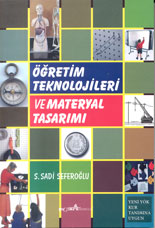
Dr. Süleyman Sadi SEFEROGLU is a Professor at Hacettepe University's Faculty of Education, Department of Computer Education and Educational Technologies in Ankara, Turkey. With an extensive publication record spanning over two decades, he has established himself as a leading scholar in educational technology and digital transformation in education. His research interests focus on educational technology, computer education, instructional technologies, digital transformation in education, information and communication technologies, digital literacy and citizenship, technology policy, and artificial intelligence applications in education. His work bridges theoretical frameworks with practical applications in educational settings. Professor SEFEROGLU's recent publications (2022-2025) demonstrate a strong focus on contemporary challenges including digital addiction, AI in education, teacher technostress, digital risk behaviors, and the evolving landscape of educational technology. His research shows a clear trajectory toward understanding the psychological, social, and pedagogical implications of digital transformation in education. He has been actively involved in numerous international conferences as both presenter and invited speaker, reflecting his standing in the educational technology community. His work has increasingly addressed the intersection of emerging technologies like artificial intelligence with educational practice. Professor SEFEROGLU has supervised thesis and dissertation work, though specific student names are not detailed in the available information. His professional activities include participation in accreditation processes and educational policy discussions, particularly regarding Turkey's educational technology initiatives.
Mustafa Taha Koçyiğit serves as an Assistant Professor at Boğaziçi University, specializing in artificial intelligence and computer vision research. His academic role focuses on advancing deep learning methodologies within the university's engineering or computer science framework. His research interests encompass deep learning, self-supervised learning, efficient training of deep learning and large language models, computer vision, and language-grounded vision systems. He develops computationally and data-efficient techniques to enhance AI model training and deployment across diverse applications. Analysis of his 2020-2025 publications reveals consistent emphasis on training efficiency: accelerating self-supervised learning, optimizing computer vision methods, and applying deep learning to industrial defect detection. His work bridges theoretical advancements with practical aerospace and manufacturing solutions. No scientific awards are documented in the source material. Information regarding student advising, grant funding, laboratory facilities, or research teams remains unavailable.
Meltem Aksoy is an Associate Professor at the Department of Architecture, Istanbul Technical University. Her academic work spans urbanization processes, social housing practices, and digital design technologies, with a particular focus on user participation and ecological sustainability in the built environment. Current affiliation: Department of Architecture, Istanbul Technical University Research themes: Composite cities, informal settlements, parametric design, ambient intelligence Her research explores: Intersections of digital technologies and spatial perception Methodologies for participatory social housing Computational approaches to architectural decision-making Temporal-spatial dynamics in contemporary urbanization Recent publications demonstrate trends in: AI-assisted design negotiation frameworks Fuzzy logic applications in architectural performance Critical analyses of composite urban structures Evolution of home-street relationships She has supervised 33 graduate theses spanning topics from: Architectural essay films Political space narratives Smart facade technologies Urban data representation
Mustafa Reşit TAVUS is a Lecturer at Kaman Vocational School, Department of Computer Technologies, Kırşehir Ahi Evran University. He has held full-time academic positions since 2018, previously serving as a Research Assistant at Gümüşhane University (2013-2015) and Ondokuz Mayıs University (2015-2018). Master's Degree: Computer Engineering, Ondokuz Mayıs University (2013-2016) Bachelor's Degree: Computer Education and Instructional Technologies, Ahi Evran University (2011-2013) His research focuses on computational methods in spectroscopy, signal processing for biomedical applications, and machine learning in agriculture and media. Recent work includes EPR spectra analysis using image processing and UAV-based plant counting via k-NN classifiers. Trends in his publications highlight interdisciplinary applications of machine learning, algorithm development for spectral and signal analysis, and integration of computational techniques in medical diagnostics and agricultural monitoring. He has collaborated with researchers such as Bünyamin Karabulut, Yunus Çelik, and Erdal Kılıç.
İbrahim Rıza Hallaç is an Assistant Professor at RAFET KAYIŞ FACULTY OF ENGINEERING, Department of Computer Engineering. He holds a PhD (2021), Master's (2014), and Bachelor's (2011) in Computer Engineering from Firat University, with doctoral research on social media analysis using deep learning methods under advisor Galip Aydın. His research focuses on: Artificial Intelligence and language models Machine learning for distributed systems Big data analytics and cloud computing Natural language processing applications Social media sentiment analysis Radar-based object detection systems His publications (2015-2024) demonstrate consistent focus on machine learning applications across diverse domains including social network analysis, distributed computing, Turkish NLP, and sensor data processing. Recent works emphasize radar-based multi-target detection (2024), credit scoring models (2023), and wind speed estimation (2023), reflecting expertise in scaling AI solutions for real-world problems. He has led four national R&D projects: Deep Learning-Based Face Recognition Authorization System (2017-2019) DEĞİRMEN Big Data Analysis Platform for Turkish Armed Forces (2017-2021) KOSGEB Innovation Program for Face Recognition Systems (2017-2019) Cloud-Based Social Media Reputation Analysis System (2015-2017) No students, awards, or contact emails are documented in available records.
Ayşe Tuna serves as a Lecturer at Trakya University's School of Foreign Languages, holding this academic position continuously since September 2011. She earned formal recognition as Lecturer Doctor following her 2020 doctoral completion in English Language Teaching. Her academic credentials include: Doctoral Degree in ELT, Trakya University (2020) Master's Degree in ELT, Trakya University (2009) Bachelor's Degree, Middle East Technical University (2003) Her research synthesizes English Language Teaching with cutting-edge assistive technology development, specifically targeting communication and accessibility barriers for neurodiverse and physically challenged populations. Key focus areas include autism spectrum disorder interventions, speech disorder accommodations, and elderly/disabled support systems through smart environments. Analysis of her publication trajectory reveals consistent interdisciplinary innovation across computer science and special education domains. Her work progresses from computer-assisted autism interventions (2017) to secure communication platforms for speech disorders (2016), culminating in integrated smart home ecosystems (2015), demonstrating a cohesive research vision centered on human-centered technological adaptation.
Gizem Gümüşçekiçci is a Research Assistant at Işık University , affiliated with the Faculty of Engineering and Natural Sciences in the Department of Computer Engineering . Her work focuses on Artificial Intelligence , Software Engineering , and Computer Networks . Education : Master's in Computer Engineering (Full Scholarship, ongoing since 2021), Bachelor's in Computer Engineering (75% Scholarship, 2016-2021) Her research integrates Natural Language Processing and Deep Learning , covering areas like Turkish Embedding Models , Sarcasm Detection , and Sign Language Accessibility . Recent publications highlight applications in sentiment analysis, diffusion models, and social network security. No scientific awards are explicitly mentioned in the provided texts.
Dr. Gülsüm Çiğdem Çavdaroğlu Akkoç is a full-time Assistant Professor in the Information Technologies Department at Işık University's Faculty of Economics, Administrative and Social Sciences. She holds a multidisciplinary background with degrees in Mathematics Engineering, Geomatics Engineering, and Turkish Language & Literature. Education Ph.D. in Photogrammetry Engineering – Yıldız Technical University (2006–2013) M.S. in Photogrammetry Engineering – Yıldız Technical University (2003–2006) B.S. in Mathematics Engineering – Yıldız Technical University (1998–2003) B.A. in Turkish Language & Literature – Anadolu University (2016–2020) Research Interests Dr. Akkoç's research spans remote sensing , GIS , and machine learning , with applications in environmental monitoring, urban mobility, and health informatics. Her work leverages satellite imagery, mobile data, and AI to address challenges such as wildfire detection, air pollution tracking, and disease diagnosis. She actively integrates spatial data with AI to support smart city development and sustainable resource management. Scientific Awards First Prize – Mobilya Ar-Ge Proje Pazarı (2013), Entrepreneurship Category Supervision & Projects She has supervised four master's theses and led several EU and national projects including: BEE-OPTECH4Honey : Optimizing beekeeping routes using ICT TOP4HoneyChain : A sustainable smart honey value chain platform Open Data Platform for Precision Agriculture Labs & Teams Dr. Akkoç collaborates with interdisciplinary research teams in the fields of AI, geospatial technologies, and agricultural informatics. Her lab activities include developing machine learning models for real-world applications in health, environment, and urban systems.
Doruk Şen is an Assistant Professor in the Department of Industrial and Systems Engineering at Istanbul Bilgi University, where he teaches courses including Engineering Project Management, Optimization Methods, Data Science for Engineers, and Machine Learning Applications in IE. He holds a PhD in Engineering Management from Marmara University and has been a faculty member since 2021. Education: PhD in Engineering Management, Marmara University, 2020 MSc in Management with Business Finance, University of York, United Kingdom, 2015 BSc in Industrial and Systems Engineering, Yeditepe University, Istanbul, 2013 His research interests span Machine Learning, Natural Language Processing, Network Analysis, Multimodal Learning, and Computational Social Science , reflecting an interdisciplinary approach to solving complex engineering and socio-technical problems. His work integrates data-driven methods with optimization and social science insights. Doruk Şen is actively involved in multiple funded research projects, demonstrating strong engagement in both national and international research initiatives. These include a TÜBİTAK 1001 Grant and a Horizon Europe project, where he contributes as a researcher, as well as Istanbul Bilgi University Scientific Research Projects, one of which he leads as Principal Investigator. His recent projects focus on machine learning applications in logistics, feminist movements and democracy, artwork valuation using NLP and metaheuristics, and forecasting energy consumption using machine learning. Scientific Awards: No awards listed. He has supervised or advised no students listed in the provided information. His research is supported through competitive grants, and he collaborates across disciplines and institutions. Although no specific lab or research team is mentioned, his projects suggest involvement in data science and optimization research groups at Istanbul Bilgi University.
Dr. Anıl Koyuncu is an Assistant Professor in the Department of Computer Engineering at Bilkent University. His research focuses on automated program repair, bug localization, and applying machine learning techniques to software engineering challenges. He actively contributes to academic service as a reviewer for journals like TOSEM and SoSyM, and serves on program committees for top conferences such as ICSE and ISSTA. He teaches courses including Automated Program Repair, Object-Oriented Software Engineering, and Software Design Patterns. His research group, the Automated Program Repair and Tools for Software Maintenance team, explores improving practitioner adoption of automated repair systems through data mining, program analysis, and fault localization. Key contributions include FixMiner for mining fix patterns and iFixR for bug-report-driven repair. Dr. Koyuncu has received the Best ERA Paper Award at APSEC 2018. His work emphasizes empirical studies on repair system evaluation, fault localization biases, and combining engineered features with learned embeddings for patch prediction.
Dr. Muhammed Akif YENİKAYA is an Assistant Professor (Dr. Öğretim Üyesi) at Kafkas University's Faculty of Economics and Administrative Sciences, Department of Management Information Systems. Since 2020, he has held roles including Research Assistant (2020-present), Assistant Director of the Research and Application Center (2022-2024), and Director of the Research and Application Center (2024-present). He advises the Kafkas University Techno Informatics Club. Education PhD in Computer Engineering, Maltepe University (2019-2022) MSc in Computer Engineering, İzmir University of Economics (2016-2018) MSc in Occupational Health and Safety, Kafkas University (2024) Bachelor's in Management Information Systems, Anadolu University (2019-2022) Bachelor's in Western Languages and Literatures, Kafkas University (2022) Associate Degree in Graphic Design, Istanbul University (2022) Research Focus Yenikaya's research integrates artificial intelligence with practical applications across healthcare, agriculture, energy, and management. His work emphasizes deep learning models for medical diagnostics (e.g., retinal and X-ray analysis), sustainable agriculture via IoT-based hydroponic systems, and AI-driven waste management. He also explores organizational digital transformation, technology adoption, and digital leadership strategies in business contexts. Publications Overview His 24 publications demonstrate a strong focus on AI/ML applications in healthcare (e.g., diabetic retinopathy detection, skin cancer diagnosis), sustainable technology (hydroponics, energy efficiency), and digital leadership. Recent work shows increased emphasis on convolutional neural networks and cross-disciplinary solutions for environmental and industrial challenges. Awards and Grants UBYT-2024 Award from TÜBİTAK (2024) Project: Hydroponic Home Agricultural Production System (2023-2025, Project Lead) Project: Digital Content and AR Applications for Climate Change Education (2024, Trainer) Teaching and Advising Teaches courses including Artificial Intelligence , Database Systems , and Mobile Programming at undergraduate/graduate levels. Advises MSc student Rafet Doğrukartal on a QR-code-based inventory management system (2025).