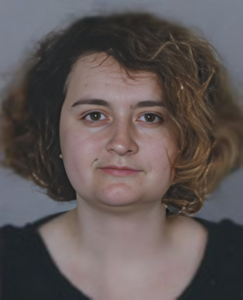
Ekateryna Todorova, PhD, is an Associate Professor at the Department of Health Care and Social Work, New Bulgarian University. She specializes in developmental dyslexia, speech therapy, and special educational needs. Her career spans over two decades in academic and clinical roles. Research Interests: Dyslexia diagnostics and therapy Articulation and phonological disorders Executive function in learning disabilities Educational technology for special needs Developmental language impairments Inclusive education practices Academic Contributions: She has authored multiple books and chapters on developmental dyslexia and articulation disorders, including Bulgarian adaptations of international diagnostic tools like DDE-2. Her recent research focuses on literacy training for children with physical disabilities using assistive technologies. Professional Roles: Former dean of the Bachelor's Faculty (2016-2020), former director of quality commission, and academic mentor in EU-funded projects like Erasmus+ and Human Resources Development Program.
Veronika Racheva is an Assistant Professor at the Department of Didactics, Faculty of Education, Sofia University “St. Kliment Ohridski”. Her work focuses on digital competencies, virtual learning environments, and pedagogical innovation in primary and higher education. Teaching: ICT in education, e-learning design, digital creativity, virtual classrooms Research: DIG4FUTURE project (2021–2023), blended learning models, digital inclusion Her publications emphasize adaptive teaching, synchronous learning, and inclusive education strategies. She collaborates with institutions like VEDAMO and Sofia University’s eLearning Centre.
Petko Staynov is an Assistant Professor at the New Bulgarian University (NBU) , affiliated with the Department of Informatics . His career spans academic roles in Bulgaria and France, with expertise in informatics, linguistics, and educational technology. Education : M.Sc. in Applied Information and Communication Technologies in Education and Learning, Louis Pasteur University, Strasbourg, France (2004) B.A. in Philology (Bulgarian Language and Literature), Sofia University "St. Clement of Ohrid" (1982) Dr. Staynov's research focuses on the intersection of computer science , linguistics , and multimedia technologies . His work explores ethnopragmatics , language-cognition relationships , and computer-assisted translation , while developing online courses and national information systems . Publications highlight his contributions to semantic theory , archaeological computing , and pedagogical resource sharing . At NBU, he teaches courses in French for Administration , Professional Correspondence , and Informatics . His professional experience includes directing master's programs (since 1998) and teaching multimedia and internet technologies (since 1997). Earlier roles in France involved new technologies management , advertising analysis , and multilingual engineering projects.
Rosen Pasarelski is a Professor in the Telecommunications Department at New Bulgarian University (NBU), where he has taught since 2003. His academic career includes roles as assistant professor (2003–2015) and current professor status since 2015. He has directed NBU's Telecommunications bachelor's program (2005–2015) and actively participates in departmental councils and seminars. Education : PhD in Radio Transmitter and Receiver Equipment (2009), Master's in Telecommunications Systems (2003), Bachelor's in Telecommunications Systems (2001), Specialist degree in Telecommunications (1999) His research focuses on radio communications , wireless networks , and WEB technologies , with recent publications exploring 5G network optimization, microwave antennas for space-based radar, IoT vehicle tracking, and femtocell technologies. He has contributed to projects including satellite studio development, WLAN network analysis, and electromagnetic field safety studies. Recent publications highlight trends in 5G network algorithms , radio wave attenuation modeling , and AI-driven cybersecurity . His work often intersects telecommunications engineering with practical applications in smart city infrastructure and educational technology . He teaches courses such as: Network Administration and Virtualization Applied Software for Telecommunications Mobile Communications WEB Services Installation Computer Hardware/Software Installation Technical expertise includes LINUX systems , cloud computing , VoIP security , and WiMAX protocol analysis . He holds advanced English and Russian language proficiency alongside native Bulgarian.
Milen Chipchanov is an Assistant Professor at New Bulgarian University (NBU) in the Department of Foreign Languages and Cultures. He has over 35 years of teaching experience in French language education, focusing on courses such as written and oral translation, phonetics, and the integration of multimedia and new technologies in foreign language instruction.
Milen Yordanov Petrov serves as Professor in the Department of Software Engineering at Sofia University's Faculty of Mathematics and Informatics. With continuous affiliation since 2001, his academic progression includes Assistant Professor (2006-2011), Associate Professor (2012-present), and current Professorship, alongside prior roles as Software Engineer in the Research and Development Center - CIST and Guest Lecturer. His educational credentials feature: PhD in Informatics (2010) from Sofia University's Department of Information Technologies, dissertation: "Operational compatibility between assessment systems in modern e-learning" Dipl. Eng. (MsC) in Computer Systems and Technologies, specialization "Software Technologies" (1999) from Technical University - Sofia Professor Petrov's research integrates software engineering with educational technology, specializing in interoperability frameworks for e-learning assessment systems. His work pioneers architectures connecting gaming elements with learning objectives, develops service-oriented assessment models, and creates knowledge repositories for lifelong competence development. Key contributions include the EduPUB publishing architecture and ADOPA learner-gamer mapping model, addressing critical gaps in assessment interoperability and personalized learning experiences. Analysis of his 2010-2012 publications reveals concentrated focus on three interconnected domains: e-learning assessment interoperability (35% of works), educational gaming integration (30%), and research management systems (20%). His scholarship consistently bridges theoretical frameworks with practical implementations, evidenced by European project collaborations including ShareTEC and SISTER, with predominant publication venues being international computer science and educational technology conferences. Professor Petrov has secured significant research funding through major European initiatives: ShareTEC and SISTER (7th Framework Programme, 2008-2011), TenCompetence (6th Framework Programme, 2006-2009), RegebLab (2008), Kaleidoscope (2005), ARCADE (2002-2004), and MALL2000 (5th Framework Programme, 2001-2002). His teaching portfolio spans Programming Fundamentals, Object-Oriented Programming, Data Structures, Java Server Technologies, and Network Programming. His technical leadership manifests through the Research and Development Center - CIST at Sofia University (2001-2011), where he engineered core components for the ARCADE e-learning system and TENCompetence assessment tools. Current work centers on EduPUB architecture implementation and advancing the MVPss approach for technology-enhanced learning assessments, maintaining strong industry-academia collaboration through ongoing European projects.
Boris Bankov is a software developer and academic professional currently serving as an Assistant Professor at the Department of Informatics in the University of Economics - Varna. His work combines web development expertise with educational innovation. PhD in Informatics and Computer Science Deputy Director at Center for Electronic and Distance Learning Laureate of John Atanasoff Award (2022) His research interests focus on web development, gamification in education, and the intersection between game design principles and enterprise web applications. He has extensive experience working with technologies including PHP Laravel, MySQL, Bootstrap, and Unity/C# game development. Key publication areas include: Learning Management Systems in higher education, Gamification frameworks for educational environments, Responsive web design solutions, and NFT technology analysis. His work has been published in various academic forums since 2017. John Atanasoff Award of the President of Bulgaria (2022)
Gergana Vasileva Stoilova is a Lecturer in the Department of Foreign Languages and Cultures at the National Bank University (NBU), Sofia. She has been with NBU since 2005, contributing to English language education. Previously, she taught at Faros Language Schools and a high school in Shumen. Stoilova holds a Master’s degree in English Philology from Sofia University (1997). Her professional development includes courses on language teaching methodologies, mentoring skills, and computer-assisted language learning. She designs e-learning materials and administers proficiency tests for NBU’s English programs. Her research interests focus on innovative pedagogical strategies, including technology integration in education and interactive testing. She published an article on applying haiku in English Language Teaching (ELT) in 2010. No scientific awards or grants are listed, but her work emphasizes practical educational methods and digital tools.
Boyka Bachvarova serves as an Assistant Professor in the Department of Bulgarian Studies at New Bulgarian University, teaching Semiotics of Media, History of Writing, Bulgarian Phonetics, and Bulgarian Language courses since 1999. Her career spans over four decades with continuous contributions to NBU's academic programs, including the 2024/2025 curriculum. Education: Master's Degree in Bulgarian Philology, Sofia University "St. Kliment Ohridski" (1979); thesis: "Stylistic replacements in the two editions of the novel 'Tobacco'" Postgraduate Course in Informatics for Philologists, Sofia University (1985-1986) Additional qualifications: English language diplomas (DEO Center), FrontPage/DreamWeaver courses (NBU) Research Focus: Integrates Linguistics, Semiotics, and Anthropology to analyze Bulgarian language structure, media communication, and historical writing systems. Pioneered computer-assisted language learning tools and standardized test development for Bulgarian as a foreign language. Current work examines semiotic analysis of media communication and 20th-century Bulgarian philological problems. Professional Experience: Developed language laboratories (Tandberg/Revox systems) and computer test banks at NBU's Assessment Center (1999-2005). Previously led the Laboratory of Applied, Mathematical & Sociolinguistics at Sofia's Institute for Foreign Languages (1980-1998). Contributed to HESP/MOE educational development projects and created educational TV content for "7 dni" and "ESET". Linguistic Expertise: Native Bulgarian; fluent English, French, Russian (excellent reading/writing/speaking); basic Spanish. Specializes in phonetic analysis and multilingual curriculum design for diverse learning environments.
Nevena Marinova is a Senior Lecturer at the National Sports Academy "V. Levski" Sofia since 1996. She holds a Master's degree in English Philology from Sofia University "St. Kliment Ohridski" (1989). Her academic roles include positions at Sofia University, "Democracy" Newspaper (International Department, 1990-1991), ICHS Sofia (English Language Instructor, 1991-1993), and currently at NSA. Born in Sofia on 31.10.1963 Phone: +359 2 4014 165 Email: nevena.marinova@nsa.bg Her research interests focus on: Error Theory in language learning Application of Artificial Intelligence in education Methodology of Foreign Language Teaching Marinova's publications (1994-2024) demonstrate interdisciplinary research combining: Language technology integration (1994-2024) Sports-related linguistic phenomena (2001-2002) Professional language teaching frameworks (2000-2003) Online educational material development (2022) Her work represents a unique intersection of linguistics, educational technology, and sports studies , with a particular emphasis on digital tools for language acquisition and specialized English applications in sports management and business contexts.
Milka Hadjikoteva is an Assistant Professor at the New Bulgarian University (NBU) in the Research Center for Computer and Applied Linguistics . She specializes in English as a Foreign Language (EFL) education, intercultural communication, conceptual metaphors, and language technologies. Her teaching focuses on courses like Text Analysis, Written and Oral Communication, and Specialized Translation. Education: PhD in Methodology for Didactic Studies (NBU, 2010-2012) MA in Philosophy, Semiotics, Culture (NBU, 2005-2009) MA in English and American Studies (Sofia University, 1991-1996) Research Interests include conceptual metaphors as tools for intercultural communication, language technologies in education, and innovative EFL methodologies . Her work bridges cognitive linguistics and practical language instruction, emphasizing real-life input and digital platforms. Key Publications highlight her expertise in FLSP pedagogy , mobile language learning apps , and transcreation . She contributed to the NBU Platform for Language Teaching (PLT) and explored flipped classroom models in EMI environments. Professional Activities involve Erasmus Visiting Lecturer roles (2017) and participation in conferences like BETA-IATEFL and FIPLV Congress. Her courses focus on academic communication, EU terminology resources, and practical grammar. Contact: mhadjikoteva@nbu.bg . Office hours: Tuesday 13:00-15:00; Wednesday 13:00-15:00; Thursday 14:30-15:00 and 10:15-11:15 in Room 309, II корпус.
Associate Professor Margarita Stankova is a faculty member in the Department of Healthcare and Social Work at New Bulgarian University's Faculty of Public Health. She holds dual expertise as a medical doctor (Sofia Medical University, 1997) and specialist in Communication Disorders (NBU, 2000), with additional qualifications in Psychiatry (2007). Her academic profile spans teaching 15+ specialized courses including Autism Spectrum Disorders , Fluency Disorders , and Clinical Psychology of Developmental Disorders . Education: Medicine, Sofia Medical University (1991-1997) Master's in Communication Disorders, New Bulgarian University (1997-2000) MD in Medicine (2006) Psychiatry Specialization (2007) Her research focuses on evidence-based interventions for communication disorders, particularly autism spectrum conditions and childhood behavioral/emotional disorders. Current work emphasizes digital therapeutic approaches including serious games and telepractice, with recent studies examining screen time impacts on ASD communication development and parent-mediated interventions. Her methodology integrates temperament profiling with neurocognitive assessment to develop individualized therapy protocols. Over the past decade, her publication trends reveal increasing specialization in ASD interventions (65% of recent work), digital health applications (25%), and cross-cultural assessment tools (10%). Key contributions include validating the Bulgarian FOCUS assessment and developing parent-administered digital screening tools. Research Leadership: Led 12+ EU-funded projects including "Early Intervention Program for Language Abilities" (Research Council of Norway) Principal investigator for "Integration of Children with Communication Disorders" (ESF) Coordinator of "Special Abilities and Talents" Erasmus intensive program Her clinical projects have established communication rehabilitation frameworks implemented across Bulgaria's day centers and specialized schools. Current work focuses on adapting evidence-based practices for post-pandemic therapeutic environments, with emphasis on parental support systems and digital integration. Laboratory & Field Work: Directs NBU's Communication Disorders Research Group conducting longitudinal studies on temperament profiles in developmental disorders. Field partnerships include specialized schools in Sofia, Stara Zagora, and Sandanski where therapeutic protocols are implemented and evaluated.
Stefan Volodev Vatev serves as Assistant Professor in the Department of Mathematical Logic and its Applications at the Faculty of Mathematics and Informatics, University of Sofia "St. Kliment Ohridski". His teaching portfolio includes core theoretical computer science courses: Languages, Automata, and Computability; Computability and Complexity; Semantics of Programming Languages; and Discrete Mathematics and Algorithms. His research centers on Mathematical Logic with specialized focus in Computability Theory and Computable Structure Theory. He investigates effective properties of mathematical structures, embeddings between structures, and algorithmic aspects of algebraic systems. Analysis of his 13 publications (2011-2024) reveals consistent exploration of computability in linear orders, cohesive powers, jump inversion phenomena, and structural embeddings. His work demonstrates strong collaborative patterns with researchers including Bazhenov, Soskova, and Harizanov, primarily published in top venues like Journal of Symbolic Logic and CiE proceedings. No scientific awards were documented in the source materials. Available information lacks details regarding student advising activities, research grants, or laboratory affiliations. No mention of future research directions or ongoing projects was provided.
Verjinia Velkova is a Lecturer of English at the Department of Foreign Languages and Cultures, New Bulgarian University (Sofia). She has held this position since September 2005. Her professional biography includes roles such as Senior Teacher of English at Burgas Free University (1992-2005) and Regional Leader for a project training staff for Bulgaria's National Border Police (2003-2005). She holds a degree in English Philology from St. Cyril and Methodius University (1985-1990). Her research focuses on language education methodologies, including TESOL, educational technology integration, and cross-cultural communication. She has presented at over 20 international conferences and published 12 works on topics ranging from political correctness in language teaching to digital tools in language learning. Organized international Grundtvig-funded workshops on language education Received scholarships for specialized training in Vietnam (2018), Iceland (2010), and Norway (2012) Coordinated Erasmus+ projects including the Silver Civic Education initiative (2017-2019) Her teaching responsibilities include courses like English B1.1 and B1.2 for undergraduate programs. Office hours are held weekly via online platforms.
Milen Ivanov Chipchanov serves as Assistant Professor at New Bulgarian University's Department of Foreign Languages and Cultures, where he has taught French language and translation since 1999 after previously working at the Institute for Foreign Students (1979-1999). His academic career spans over 45 years with expertise spanning French linguistics, translation studies, and educational technology integration. Bachelor's in French Philology, Sofia University 'St. Kliment Ohridski' (1979) Postgraduate Qualification in 'Computers in Language Teaching' (1987) Doctorate in 'Pedagogical Mediation through Personal Computers in Foreign Language Learning' (2013) Professor Chipchanov specializes in computer-assisted language learning, focusing on digital material development, multimedia integration, and translation technologies. His research bridges traditional linguistic pedagogy with modern technological solutions, particularly examining generational differences in digital learning adoption and strategies for authentic material implementation in language instruction. His methodology emphasizes practical application through audiovisual resources, computer systems, and interactive platforms. His publication portfolio demonstrates consistent evolution from foundational computer-assisted language learning concepts in the 1990s toward contemporary digital pedagogy frameworks, with recent work examining Z-generation learning behaviors and digital material development principles. The research trajectory reveals deepening specialization in digital language learning ecosystems while maintaining core focus on phonetics, translation, and multimedia integration. Professor Chipchanov has directed master's programs and participated in national educational projects including Ministry of Education initiatives for teacher qualification and student internships. His administrative experience includes coordinating language programs and developing digital learning frameworks through projects funded by the European Social Fund. His technical expertise encompasses HTML programming, multimedia content creation, and specialized translation software development. He has contributed to numerous educational projects including the creation of digital learning platforms, video-based instructional materials, and computer-assisted assessment systems for language learning.