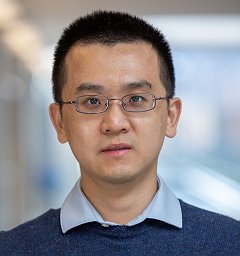
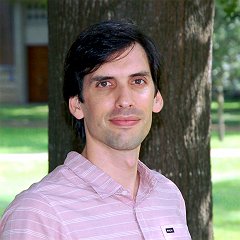
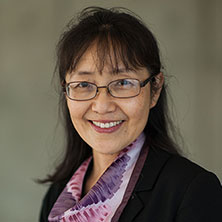
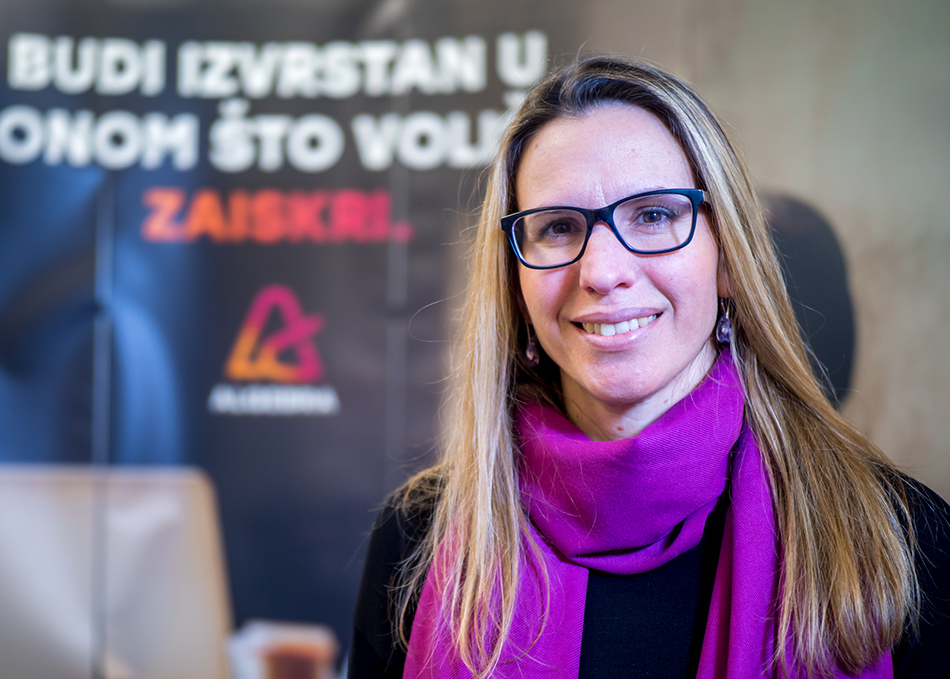
Dr. Johanna Klippel is currently a Teacher for Special Tasks in the Department of Language Acquisition and Language Didactics at Johannes Gutenberg University Mainz since October 2024. Previously, she served as a teacher of English, German, and German as a Second Language (DaZ) at Helene-Lange-Schule Wiesbaden (2018–2024), and as a research assistant at Technical University of Darmstadt (2012–2015). Her work includes authorship at Westermann publishing group (2020–2021). Her research focuses on language didactics , second language acquisition , and interdisciplinary teaching . Key areas include grammar didactics, language support in educational contexts, and competency-based learning strategies. She has contributed to studies on multilingualism in science education and pedagogical innovation. Dr. Klippel has presented at international conferences and workshops, addressing topics such as teacher leadership and competency-oriented assessment . Her work bridges theoretical frameworks and practical classroom applications, emphasizing educational equity and student-centered approaches. Contact: jklippel@uni-mainz.de .
Lecturer Dr. Erdal ÖZCAN is affiliated with the Department of Turkish and Social Sciences Education at the Faculty of Education, Sakarya University. He teaches undergraduate courses in Turkish language education, children's literature, drama in education, and teaching practice. His academic email is eozcan@sakarya.edu.tr. His research focuses on Turkish language education, particularly teaching Turkish as a foreign or second language. Key areas include digital technologies in language teaching, textbook analysis, teacher training, and language acquisition. He has published in journals and conference proceedings on topics such as gamification (e.g., ClassDojo), readability of textbooks, and academic Turkish for international students. His recent publications show a strong trend in integrating technology into language pedagogy, with studies on digital reality tools, online learning challenges, and use of apps in motivating foreign learners. He also examines curriculum design across countries and the linguistic challenges faced by bilingual Turkish students. Editor of Türkçenin Eğitimi-Öğretimi Üzerine Çalışmalar (2012) Editor of Türkçenin Eğitimi Öğretimi Üzerine Araştırmalar (2012) Editorial board member, Uluslararası Çocuk Edebiyatı ve Eğitim Araştırmaları Dergisi (2022) Dr. ÖZCAN has supervised teaching practice courses and coordinated academic programs such as the Farabi Exchange Program. He has organized academic events like the 'Dünya Dili Türkçe' symposium (2023) and led the Sakarya University Turkish Education Student Club. He has also contributed to national projects on online Turkish teaching for educators abroad. He is actively involved in curriculum development and teacher education, with no indication of part-time or retired status.
Xinyu Wang is an assistant professor in the Computer Science and Engineering Department at the University of Michigan, Ann Arbor. Their research focuses on program synthesis, formal methods, programming languages, and AI-assisted programming. They previously worked as a researcher at Microsoft and earned their PhD from the University of Texas at Austin. Current affiliation: University of Michigan (College of Engineering) Education: PhD in Computer Science from University of Texas at Austin Research interests center on AI-assisted programming and program synthesis, combining formal methods, programming languages, AI/ML, and human-centered computing. Key areas include optimizing database queries, neuro-symbolic automation, and synthesis-aided software systems for diverse domains. Recent publications span SQL optimization (2025–2024), web automation (2023–2022), and synthesis algorithms (2021–2020). Work addresses scalability, domain-specific insights, and formal reasoning techniques for complex workloads. Scientific awards include: Distinguished Paper Award at OOPSLA 2024 Best Paper Nomination at VLDB 2024 Best Paper Honorable Mention at UIST 2022 Distinguished Paper Award at OOPSLA 2020 Advises PhD students and postdoctoral fellows in program synthesis and AI-assisted systems. Serves on program committees for PLDI, POPL, and OOPSLA. Develops synthesis-aided tools for database optimization, web automation, and computational science.
Tiago Cogumbreiro is an Assistant Professor at the University of Massachusetts Boston, specializing in formal methods and high-performance computing. His research focuses on detecting concurrency errors like data-races and deadlocks in GPU programs, with a strong emphasis on static analysis and correctness proofs. PhD from University of Lisbon Postdoc at Georgia Tech and Rice University Research assistant at Imperial College London His work spans program analysis, GPU programming, and parallel computing, addressing challenges in concurrency verification and error localization. Key contributions include developing tools for static analysis of GPU kernels, formalizing automata theory in education, and creating frameworks for model checking hierarchical systems. Recent publications highlight trends in data-race detection via array projections, concurrency repair with resource cost analysis, and mechanized computational theory for educational purposes. His personal website details ongoing projects and affiliations with the Software Verification Lab .
Leona Colling is a Scientist and doctoral student at the Leibniz Institute for Knowledge Media (IWM) since January 2025, working in the Language and AI in Education Lab led by Prof. Dr. Detmar Meurers. Her research focuses on the AI2Teach project, developing the FeedBook intelligent tutoring system to enhance foreign language education through learning analytics and computational linguistics for K-12 classrooms. Her academic background includes a B.Sc. in Cognitive Science from the University of Tübingen and an M.Sc. in Artificial Intelligence from the University of Edinburgh. Prior to her doctoral studies, she gained industry experience at IBM in AI & Data Science. B.Sc. Cognitive Science, University of Tübingen M.Sc. Artificial Intelligence, University of Edinburgh Colling's research centers on user-centered dashboard design for language learning, investigating how computational linguistics and learning analytics can bridge teacher needs with student process data. Her work emphasizes task-oriented pedagogy and adaptivity in intelligent tutoring systems to improve educational outcomes. Her 2023-2024 publications reveal a consistent focus on dashboard effectiveness, with themes spanning criterion-referenced assessment, exercise performance analysis, and practical implementation challenges in real-world classrooms across multiple international conferences. No scientific awards or fellowships are documented in the available information. As a doctoral researcher in the AI2Teach project (2020-2026), Colling contributes to FeedBook's development but does not advise students. Her grant involvement centers on this multi-year initiative funded through IWM's research infrastructure. Within the Language and AI in Education Lab, she collaborates with a multidisciplinary team including computational linguists, learning scientists, and software developers to advance theory-informed educational technologies grounded in empirical classroom validation.
Dr. Dongdong Chen is a Professor of Asian Studies at Seton Hall University's Department of Languages Literatures and Cultures, affiliated with the College of Arts and Sciences. Since 2003, she has specialized in Chinese linguistics, language pedagogy, and technology integration in education. She currently directs the Chinese Program, emphasizing accessible and innovative language teaching methods. **Education**: PhD in Linguistics from McGill University, Canada. **Professional Roles**: Multiple terms as Director of the Graduate Program in Asian Studies (2006-2008; 2010-2016; 2019-2021). Active in professional organizations including the New Jersey Chinese Culture Studies Foundation (President 2011-2023) and Chinese Language Teachers Association of Greater New York. Research Focus**: Syntax, second language acquisition, and technology-enhanced language instruction. Key projects include hybrid teaching approaches, psych verbs syntax analysis, and historical case studies of Chinese language education in the US. Awards**: 2022 Excellence in Teaching Award (Seton Hall), DH Faculty Fellow (2017), and 2022 College of Arts & Sciences Faculty of the Year. Service**: Served as Referee for the Critical Language Scholarship Program (2012-2023) and contributes to curriculum development initiatives. Her work bridges theoretical linguistics with practical pedagogy, emphasizing cultural competence and digital innovation.
Ana Lokas Ćošković holds dual roles as a Lecturer in English Language Teaching and Head of the Department of General Courses at Algebra University College. She specializes in Business English, English for IT, and Computer-Assisted Language Learning (CALL). Her academic background includes a degree from the Faculty of Humanities and Social Sciences (University of Zagreb) and a Master's in Public Relations. Her research focuses on student attitudes toward technology integration in education, ESP methodologies, and regional higher education trends. Notable work includes analyses of AI adoption in writing pedagogy and netspeak patterns in student communication. Previously taught at institutions like Istanbul International Preschool and private language schools, she also contributes to curriculum development at Algebra d.o.o. where she prepares state exam materials.
Dr. Orhan KOCAMAN is an Associate Professor and Head of the English Language Teaching Program at İstanbul 29 Mayıs University. He holds a B.A. from Marmara University (1990), an M.A. from Sakarya University (2005), and a Ph.D. from Yeditepe University (2015). His career includes 10 years as an English teacher at Istanbul Private Marmara College and roles at Sakarya University before joining İstanbul 29 Mayıs University in 2020. Education: B.A., English Language Teaching, Marmara University (1990) M.A., Computer and Instructional Technologies Education, Sakarya University (2005) Ph.D., English Language Teaching, Yeditepe University (2015) Research Interests: Focuses on computer-assisted language learning, second language acquisition, vocabulary strategies, and teaching methodologies. Specializes in the integration of technology in ELT and understanding learner differences in language learning processes. Proficient in advanced English, Spanish, Georgian, and intermediate German. Articles Trends: Publishes extensively on corrective feedback strategies, technology-enhanced language learning, and learner motivation. Recent work examines individual differences in language learning and barriers in EFL contexts. Advising/Grants: No specific grants or advising programs mentioned in the provided text.
Asst. Prof. Dr. İLKAY GİLANLIOĞLU is a faculty member in the Department of Foreign Language Education at Eastern Mediterranean University's Faculty of Education. Her academic journey includes a PhD from the Institute of Education, University of London (2002), an MA in English Language Education from Middle East Technical University (1993), and a BA from Hacettepe University (1990). She holds a prominent role in supervising over 30 graduate theses, focusing on intercultural competence, EFL curriculum evaluation, digital literacy, and technology integration in language education. Education: PhD, Institute of Education, University of London (2002) MA, English Language Education, Middle East Technical University (1993) BA, English Language Education, Hacettepe University (1990) Her research explores language teaching methodologies, multicultural educational contexts, and the role of emerging technologies in enhancing language learning outcomes. Notable areas include intercultural sensitivity among academic English learners, the impact of CALL (Computer-Assisted Language Learning), and pedagogical approaches to pronunciation instruction in EFL settings. Prof. GİLANLIOĞLU has supervised 21 completed PhD and Master’s theses, with ongoing research addressing digital identity formation in teacher education and motivation dynamics in multilingual learning environments. Her work emphasizes evidence-based curriculum design and teacher professional development in diverse educational systems.
Abdulsamad Humaidan is a Lecturer in the Department of Linguistics at the University of Illinois Urbana-Champaign, specializing in TESOL and language education. He holds an MA in TESOL and is completing a Ph.D. in Language, Literacies, and Culture. His roles include teaching academic writing to international students and leading courses such as ESL 525 (Business Writing) and ESL 511 (Written/Oral Communication for Graduates). Formerly at Southern Illinois University Carbondale (SIUC), he taught Education and Linguistics courses including EDUC 319 and CI 360. Extensive experience in Yemen: Taught at Lebanese International University and University of Science and Technology, covering English composition, grammar, and specialized English courses (Business/Computer English). Research focuses on technology integration in language learning (VR), assessment methodologies, and teacher education. He has received prestigious awards including the Fulbright Scholarship (2012-2014), Outstanding Graduate Teacher Award (2022), and Title VI Award (2023). His work spans 20+ conference presentations and peer-reviewed publications in journals like Journal of Literacy Research and GATESOL Journal . Active in professional service: Serves as Associate Editor of GATESOL Journal, Trustee of English Language Testing Society, and member of TESOL’s Teacher Educator Interest Section. Engaged in curriculum development, program evaluation, and equity-focused initiatives in language education.
Tom Shohfi is an Associate Professor of Finance at the Mike Ilitch School of Business, Wayne State University. He previously served as a financial economist at the U.S. Securities and Exchange Commission’s Division of Economic and Risk Analysis and as an assistant professor at Rensselaer Polytechnic Institute’s Lally School of Management. His academic background combines computer science, mathematics, and finance, reflecting his interdisciplinary research approach. Education: Ph.D. in Finance, University of Pittsburgh—Katz Graduate School of Business M.B.A. in Investment Management and Entrepreneurship, University of North Carolina at Chapel Hill—Kenan-Flagler Business School B.A. in Computer Science and Mathematics, New York University—College of Arts and Sciences Tom Shohfi’s research centers on fraud, investor behavior, disclosure practices, and capital markets, with a growing emphasis on data analytics and artificial intelligence in finance. His work often explores ethical dimensions in financial decision-making, including self-dealing, honesty in markets, and the behavioral consequences of taxation and environmental policies. He utilizes advanced textual analysis and large-scale financial datasets to uncover patterns in market behavior and investor psychology. His recent publications span top journals in accounting and finance, revealing a consistent focus on information asymmetry, market transparency, and behavioral anomalies. Themes across his work include the role of public information (e.g., Wikipedia) in IPOs, the ethics of individual philanthropy among blockholders, and the illicit dynamics of restricted goods like bourbon. His integration of machine learning and AI in financial modeling is evident in his teaching and research trajectory. Professional Designations: Chartered Financial Analyst (CFA) Chartered Alternative Investment Analyst (CAIA) Financial Risk Manager (FRM) Tom Shohfi actively contributes to academic and regulatory discourse through his research and teaching. He has advised regulatory policy through his work at the SEC and continues to influence finance education through courses in financial statement modeling, data analytics, and AI in finance. His collaborations with scholars across disciplines highlight his integrative research style. He is affiliated with no explicitly named lab or research center, but his methodological focus suggests engagement with data-driven finance initiatives. His ongoing work likely extends into AI applications in financial forecasting and ethical behavior modeling in capital markets.
Kasper Sandal is an Assistant Professor at the University of Agder , affiliated with the Faculty of Technology and Science . His email contact is kasper.sandal@uia.no . Academic Rank: Assistant Professor Faculty: Faculty of Technology and Science University: University of Agder Research Interests : Focuses on pedagogical innovation through digital education , social robots , and transnational family communication , with particular attention to sensory engagement and material-semiotic interactions. His work explores how digitalization impacts teacher training, literacy education, and family dynamics. Scientific Contributions : Recent publications examine reading motivation in Nordic children, physical activity's impact on learning , and digital competence frameworks in post-pandemic education. Collaborative studies with Martín Bylund et al. investigate social robots in primary education, while work with Stenliden et al. analyzes sensory presence in online teacher training. Key Themes : Emergency remote teaching Posthumanist educational theory Material agency in learning Teacher-student relationships Family mealtime dynamics Transnational communication
Sébastien Dubreil is a Teaching Professor at Carnegie Mellon University's Dietrich College of Humanities and Social Sciences , specializing in French & Francophone Studies, Second Language Acquisition, and Technology-Enhanced Learning. He holds a Ph.D. in French and Educational Studies from Emory University and an M.A. in Economics and Business Administration from Université de Nantes. Education : Ph.D. (French and Educational Studies, Emory University); M.A. (Economics and Business Administration, Université de Nantes) His research focuses on designing technology-rich learning environments that extend beyond the classroom, utilizing tools such as games, multimedia, telecollaboration, and generative AI to promote active and collaborative language learning. He explores social pedagogies, linguistic landscapes, and ludic approaches through gameplay and game design, including projects like a board game archive and the online game Bonne Chance . His publications in journals like The Modern Language Journal and CALICO Journal emphasize innovative pedagogical practices. Recent projects highlight trends in place-based mobile learning , maker culture , and interdisciplinary collaboration . Scientific Awards : Generative AI in Teaching as Research (GAITAR) Fellow (2023-2024) Kenner Room Grant for 'Culture of Games and Gaming Culture' (2023) Kenner Room Grant for 'Interactive Webdocumentaries' (2023) Andrew W. Mellon Seed Grant (2016) Dubreil leads the LCAL Studio and Humanities Commons , serves on the Language Online Courses Advisory Board and the Applied Linguistics Press Editorial Board, and advocates for hands-on, community-connected language learning experiences.
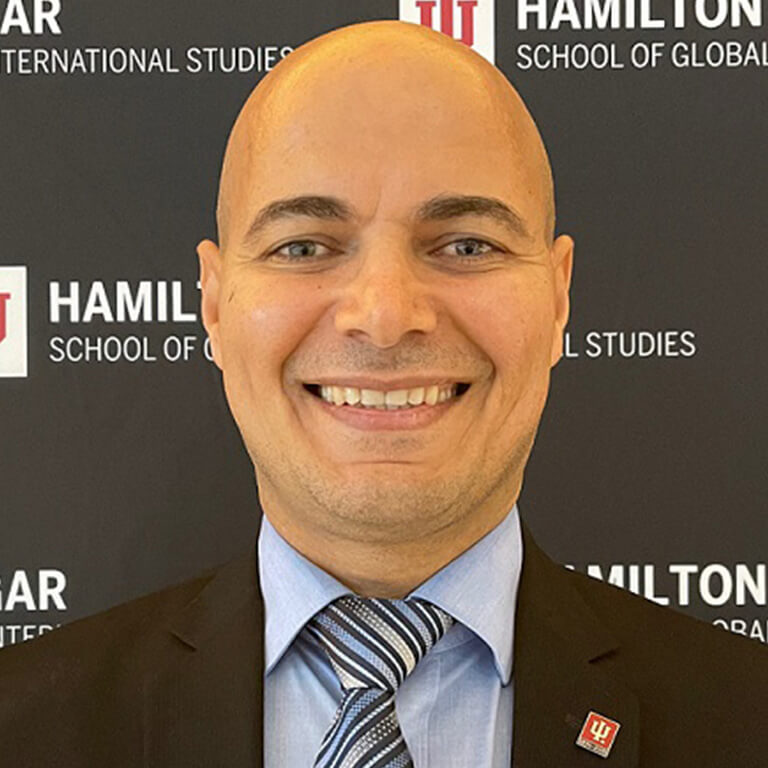
Attia Youseif is a Senior Lecturer in the Department of Middle Eastern Languages and Cultures at Indiana University, Bloomington, affiliated with the Hamilton Lugar School of Global and International Studies. He serves as Director of the Tutoring in Arabic Flagship Program, contributing to advanced Arabic language education. His academic base is in linguistics, with a strong focus on pedagogical innovation and cultural integration in language learning. Dr. Youseif earned his Ph.D. in Linguistics from Alexandria University. His scholarly background reflects deep engagement with both theoretical and applied aspects of language. His research interests span a broad spectrum of linguistic disciplines, including Sociolinguistics, Semantics, Dialectology, Discourse Analysis, Phonetics, Applied Linguistics, and Second Language Acquisition . He emphasizes the interplay between language, culture, and identity, advocating for modern pedagogical methods that reflect this relationship. His work often bridges academic research and practical teaching applications, particularly in the context of Arabic as a foreign language. The recent publications reflect a consistent trajectory in linguistic research with applications in education. Themes include cross-linguistic comparison (Arabic-Georgian, Arabic-Berber), semantic analysis in poetry and religious texts, Arabic phonological heritage, and innovative methods in teaching Arabic using literature and technology. These works demonstrate a commitment to both scholarly rigor and practical impact in language education. While no formal scientific awards are listed in the provided text, Dr. Youseif's extensive publication record and leadership in the Arabic Flagship Program underscore his contributions to the field. He has advised or mentored students in linguistics and Arabic studies, though specific names are not listed. There is no mention of external grants, but his role as Director of a Flagship Program suggests involvement in federally funded or institutional initiatives. His work likely involves collaboration with language educators, curriculum developers, and international academic partners. Although specific lab affiliations are not mentioned, his leadership in the Tutoring in Arabic Flagship Program indicates active involvement in a structured, high-level language training initiative that likely includes tutoring teams, instructional designers, and assessment specialists.
Paula Garrett-Rucks is a Professor in the Department of Foreign Languages Education at Georgia State University's College of Education & Human Development. Her research focuses on fostering intercultural competence in instructed language learning, computer-assisted language learning, and early language acquisition. Education: Ph.D. in Second Language Acquisition (University of Wisconsin-Madison, 2010), M.A. in Contemporary French Studies (University of California-Santa Barbara, 2004), M.Ed. in Educational Technology (National University, 2000), Teaching Credential in French and Biology (National University, 2000), B.S. in Zoology (Michigan State University, 1995). Her work examines cultural perception formation, affect in language learning, and identity issues in dual language immersion. She has contributed to journals such as the Modern Language Journal and Computer Assisted Language Instruction Consortium Journal , with recent articles addressing intercultural learning frameworks and multimedia pedagogy. Garrett-Rucks received the 2016 ACTFL Nelson Brooks Award for Excellence in the Teaching of Culture and serves as editor for Dimension , a peer-edited journal. She coordinates Georgia State’s foreign languages education program, specializing in early language teaching methods (Pre-K to Grade 8).