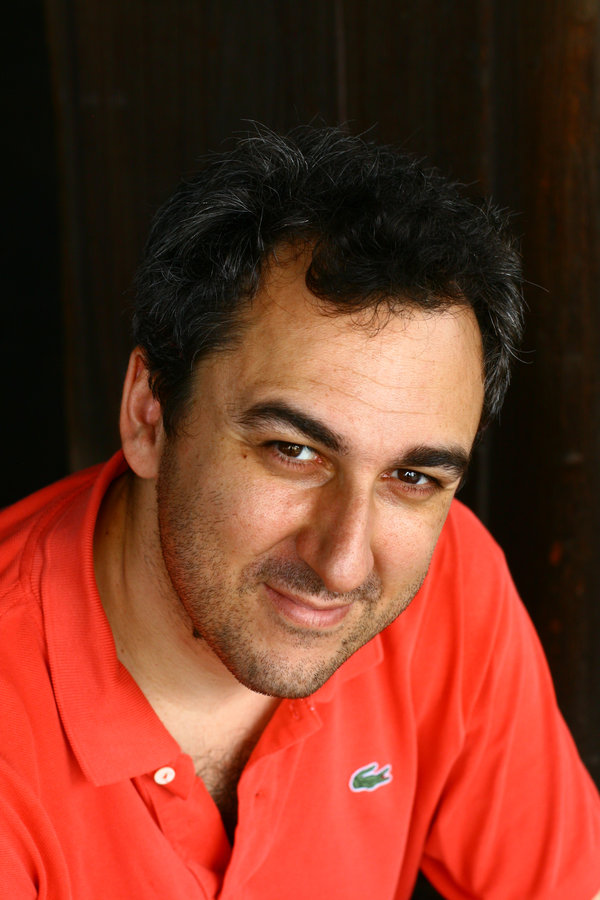
Leo Liberti is a CNRS Researcher and part-time professor at the Computer Science Laboratory (LIX, UMR 7161) , École Polytechnique, Palaiseau, France. His academic roles span research and teaching in theoretical computer science, operations research, and mathematical foundations. Research interests include Cryptography (classical and quantum), Logic , and History of Mathematics . He co-organized the Symposium on Experimental Algorithms 2023 and contributed to educational resources like tutorials on TCP/IP protocols. Scientific awards : IBM Faculty Award (2015). His academic website hosts publications, teaching materials, and projects related to distance geometry, combinatorics, and data science.
Elisardo Antelo Suarez is a researcher affiliated with the Department of Electronics and Computing at the Faculty of Physics, University of Santiago de Compostela. His work focuses on Computer Architecture and Technology , with expertise in high-speed processing and redundant arithmetic systems. He received his PhD from the University of Santiago de Compostela in 1995, completing a thesis titled "CORDIC algorithms and architectures with redundant arithmetic for high-speed processing" under the supervision of Dr. Javier Diaz Bruguera. Researcher in the period 1998-2023 Member of the ARQCOMP research group in Computer Architecture
Jordi Cortadella Fortuny serves as a Full Professor in the Department of Computer Science at the Faculty of Informatics of Barcelona (FIB), Polytechnic University of Catalonia (UPC), where he has maintained continuous academic service since 1985. He currently chairs the UPC Ethics Committee (2021-2025) and leads research within the ALBCOM group specializing in algorithms, bioinformatics, complexity, and formal methods. Education: M.S. in Computer Science, Universitat Politècnica de Catalunya, 1985 Ph.D. in Computer Science, Universitat Politècnica de Catalunya, 1987 Research Interests: Professor Cortadella's pioneering work centers on Electronic Design Automation (EDA) with deep specialization in asynchronous circuit design and concurrent systems . His research integrates formal methods and mathematical optimization to solve complex VLSI design challenges, particularly in logic synthesis and computer arithmetic. This interdisciplinary approach bridges theoretical computer science with practical semiconductor engineering, yielding significant industry impact through patented methodologies and industrial collaborations. Scientific Awards: Fellow of the IEEE (2015) Member of Academia Europaea (2013) Distinction for University Research Promotion by Catalan Government (2003) Five-time Best Paper Award recipient at premier conferences (2004-2020) Descartes Prize Finalist (2002) UPC Best Ph.D. Thesis Award (1992) National Computer Science Student Award (1986) Advising and Service: Cortadella has mentored numerous graduate students while serving on editorial boards for IEEE Transactions on CAD and SN Computer Science. His extensive service includes technical committee leadership at major international conferences and co-founding Elastix Corp. as Chief Scientist (2007-2010), where he directed Barcelona-based R&D for semiconductor verification tools. Research Infrastructure: As core member of the ALBCOM research group, he directs projects in algorithmic foundations of EDA, maintaining strong industry partnerships with Intel and semiconductor design firms through UPC's CITCEA laboratory facilities.
Zachary Kincaid is an Associate Professor at Princeton University, specializing in Programming Languages and Formal Methods . His work bridges Program Analysis , Static Analysis , and Concurrency , with a focus on compositional and robust methods. Email: zkincaid@cs.princeton.edu Office: 194 Nassau St, Room 230 (Second floor), Princeton, NJ 08540 His research in Algebraic Program Analysis and Robust Program Analysis explores scalable, predictable verification techniques. Recent work includes leveraging Vector Addition Systems for procedure summarization, Nonlinear Ranking Functions for termination, and Quantified Linear Arithmetic for satisfiability. Selected Trends : Compositional Analysis via Algebraic Structures Termination & Invariant Synthesis Concurrency Verification Network Relational Analysis Scientific Awards : NSF CAREER award 1942537 Students : Jake Silverman Nicolas Koh Nikhil Pimpalkhare
Denis Merigoux is a researcher at Inria specializing in the intersection of programming languages , formal verification , and computational law . As the lead of the Catala project, he focuses on translating legal texts into verifiable code to modernize tax and social welfare systems. His academic background includes a PhD in Computer Science from Université Paris Sciences et Lettres (2021) and a Master's thesis at École polytechnique.
Georg Zetzsche is a tenure-track faculty member at the Max Planck Institute for Software Systems (MPI-SWS) in Kaiserslautern, Germany, since November 2018. He leads the Models of Computation group , focusing on theoretical foundations of formal verification and synthesis for infinite-state systems. His work bridges decidability, computational complexity, and automata theory , with applications to program analysis and concurrent systems .
Jeremy G. Siek is a Professor at Indiana University Bloomington in the School of Informatics and Computing. His research spans programming language design, type systems, gradual typing, mechanized theorem proving, and optimizing compilers. Gradual typing integration in functional languages Co-inventor of the Boost Graph Library Former NSF CAREER award recipient Active in programming language foundations research Jeremy's research focuses on reconciling static and dynamic type checking through gradual typing, with current work on parametricity in polymorphic blame calculus, combining gradual typing with dependent types, and formal criteria for gradual type systems. He investigates high-performance implementations of gradual typing and its application to security enforcement. His recent publications examine verified nanopass compilers, gradual security guarantees, and parameterized cast calculi. He has received multiple distinguished visiting fellowships and maintains the Deduce proof assistant for educational use. NSF CAREER Award (2009) Distinguished Visiting Fellowships (2010, 2015) Jeremy leads the Center for Programming Systems at IU and advises Ph.D. students Tianyu Chen (gradual security) and Darshal Shetty (gradual dependent types). He teaches courses in compilers, data structures, and programming language foundations.
Aymeric Fromherz is a researcher at Inria Paris, focusing on formal methods for secure systems. He leads projects in Rust verification, high-assurance cryptography, and formalization of computational legal texts. Education includes a PhD from Carnegie Mellon University (co-advised by Bryan Parno and Corina Păsăreanu) and degrees from École Normale Supérieure. His research spans Rust verification (via Aeneas toolchain), verified cryptographic primitives , and computational law (through the Catala language). Recent publications address memory allocators, borrow-checking, and legal ambiguity detection. Major Scientific Awards : Distinguished Artifact Award (CAV 2025) Best Tool Paper Award (ESOP 2024) ACM SIGSAC Dissertation Award (2021) A.G. Milnes Dissertation Award (2021) He contributes to conferences like POPL, ICFP, and CPP, and participates in the Everest Project. The Prosecco Team at Inria Paris supports his research on formal methods and security.
Ana Belén Ramos Guajardo is a Professor in the Department of Statistics and Operations Research and Mathematics Education at the University of Oviedo. She is affiliated with the GRINAT Research Group (Grupo de Investigación en Riesgos Naturales) and holds a doctorate from the University of Oviedo with her thesis titled "Contrastes de hipótesis tratamiento de la variabilidad y la imprecisión" (2011), supervised by Dr. Gil González Rodríguez, Dr. María Angeles Gil Alvarez, and Dr. Ana María Colubi Cervero. Her research focuses on statistical methodologies for imprecise data, particularly fuzzy data analysis, random sets, interval data analysis, and hypothesis testing. She has developed innovative approaches for distance-based statistical analysis, fuzzy clustering, and regression models for random intervals. Her work bridges theoretical statistics with practical applications in environmental sciences and other domains requiring analysis of imprecise measurements. Her publications reveal a strong focus on developing statistical methods for non-standard data types, with particular emphasis on random fuzzy sets and interval-valued data. She has contributed significantly to hypothesis testing frameworks for fuzzy data, distance metrics for imprecise data analysis, and computational methods for implementing these techniques. Her most recent work continues to advance the theoretical foundations while exploring practical applications. Ramos Guajardo has collaborated extensively with researchers in the fuzzy data analysis community, particularly with Ana Colubi, Gil González-Rodríguez, and María Asunción Lubiano. Her work has been published in top statistical journals including International Journal of Approximate Reasoning, Fuzzy Sets and Systems, and Information Sciences. She has advised or collaborated with numerous researchers in the field, contributing to the development of statistical fuzzy data analysis as a specialized subfield. Her methodological contributions have applications in environmental risk assessment, particularly through her affiliation with the Natural Risks Research Group at the University of Oviedo.