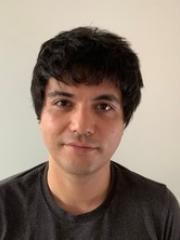
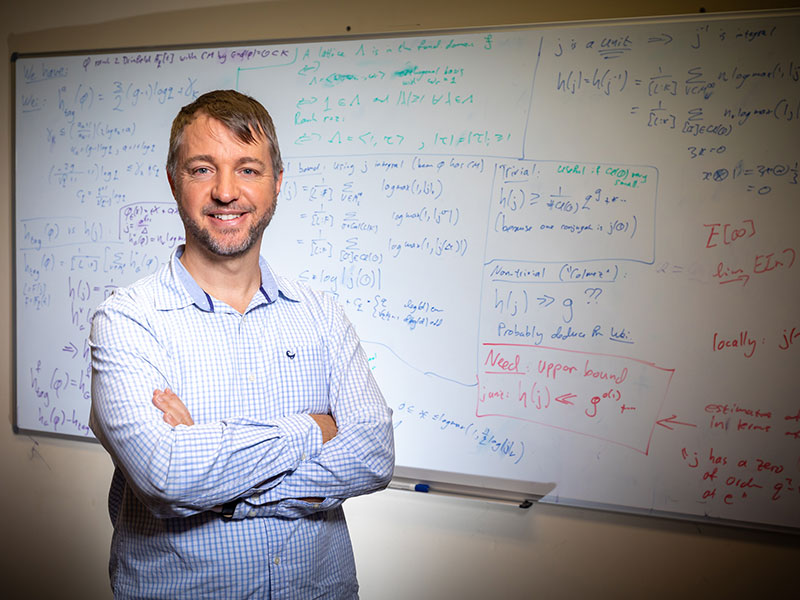
Associate Professor Erwin Chan is a faculty member at the University of Sydney's Faculty of Engineering and Information Technologies, specializing in fiber optics and photonics. A Senior Member of the IEEE, he has contributed over 100 technical publications and earned awards such as the University of Sydney Early Career Development Award and an Australian Research Council Postdoctoral Fellowship. His research focuses on microwave photonic signal processing, transcending traditional photonics transmission by enabling direct processing of high-bandwidth signals modulated on optical carriers. Key areas include optical communications, nonlinear fiber optics, optically-controlled phased arrays, and fiber optic sensors for structural monitoring, chemical/biological applications, and the oil and gas industry. Recent publications emphasize advancements in photonic systems for angle of arrival (AOA) measurements, Doppler frequency shift detection, and optoelectronic oscillators with low phase noise. His work integrates photonics with radar and communication systems, addressing challenges in signal integrity and system reconfigurability. Awards: University of Sydney Early Career Development Award Australian Research Council Postdoctoral Fellowship Supervision: PhD and Master’s by Research candidates in fiber optics and photonics are welcomed. Research opportunities span photonic signal processing, optically-controlled phased arrays, fiber optic sensors, and microwave photonic systems.
Karina Wilkie is an Associate Professor at Monash University's School of Curriculum Teaching & Inclusive Education. With over 20 years of teaching experience across primary and secondary levels in Australia and England, she specializes in mathematics education. She obtained her PhD from the University of Melbourne in 2011, focusing on academic continuity for mathematics students with chronic illness. At Monash, she teaches pre-service teachers and mathematics leaders while maintaining an active research program. Her research concentrates on: Algebra pedagogy across primary and secondary levels Teacher professional development processes Formative assessment using rich mathematical tasks Student motivation and engagement strategies Argumentation in mathematics classrooms Affective dimensions of mathematics learning Recent publications (2022-2025) demonstrate strong focus on algebraic reasoning, functional thinking, and teacher professional learning. Her work frequently examines how visual representations support mathematical understanding, relational thinking in arithmetic operations, and innovative pedagogical approaches. Emerging themes include problem-solving methodologies, emotional aspects of learning, and developmental teaching strategies. She currently leads the research project "ISET: Inspiring student engagement in school mathematics" (2024-2025) and supervises PhD candidates. Karina also provides professional learning consultations to schools through Independent Schools Victoria and Catholic Education Melbourne.
Dr. Yuval Rishu Sanders is a Senior Lecturer at the School of Computer Science within the Faculty of Engineering and Information Technology at the University of Technology Sydney (UTS). He is affiliated with the Centre for Quantum Software and Information (QSI), where he conducts cutting-edge research in quantum computing and quantum information theory. Dr. Sanders holds a PhD from the University of Waterloo, Canada, and has established himself as a prominent researcher in the quantum computing field with numerous high-impact publications. Dr. Sanders' academic journey began with a Bachelor of Science (First Class Honours) from the University of Calgary in 2008, followed by a Master of Science from the same institution in 2011. He completed his Doctor of Philosophy at the University of Waterloo in 2016. His career progression includes positions as a Research Associate at Macquarie University (2016-2021) and at UTS (2021-2022), before becoming a Permanent Faculty member at UTS in September 2022. Dr. Sanders' research focuses on the theoretical foundations of quantum computing, with particular expertise in quantum algorithms, quantum simulation, and quantum error correction. His work addresses fundamental questions about the computational advantages of quantum computers over classical systems, with a special emphasis on developing practical quantum algorithms for real-world applications. He is particularly interested in improving the efficiency and accuracy of quantum simulations, developing better methods for quantum state preparation, and establishing rigorous computational cost models for quantum algorithms. Dr. Sanders has made significant contributions to the field of quantum linear systems solvers, quantum measurement theory, and quantum resource theories. His research statement emphasizes the need for reliable computational cost analysis to determine when quantum computers will outperform classical computers for useful tasks. Analysis of Dr. Sanders' publication record reveals a consistent focus on advancing the theoretical underpinnings of quantum computing. His most recent work (2024-2025) centers on improving quantum simulation techniques through better product formulae, while his earlier work (2018-2022) demonstrates expertise across multiple quantum computing subfields including quantum algorithms for fermionic systems, quantum error characterization, and quantum measurement theory. A notable trend in his research is the development of more efficient quantum algorithms that reduce resource requirements while maintaining accuracy, which is crucial for near-term quantum applications. Dr. Sanders serves as an Associate Editor for the IEEE Transactions on Quantum Engineering since February 2023, demonstrating his standing in the quantum computing research community. His publication record includes articles in prestigious journals such as PRX Quantum, Physical Review Letters, and New Journal of Physics, with significant citation counts indicating the impact of his research. Dr. Sanders is actively involved in funded research projects that advance quantum computing theory and applications. His current projects include 'Building the Theoretical Foundation of Refinement Techniques for Quantum Programming' (2025-2027), 'The QB-suite: a framework for quantum algorithm design and benchmarking' (2024-2027), and 'Quarkov Decision Processes' (2023-2027). He has also contributed to significant projects such as 'Tools for fault-tolerant resource estimation' (2022-2025) and 'Defence acquisition optimisation using quantum algorithms' (2021-2024). His research vision includes developing software tools that can automate the analysis of quantum computations, potentially enabling a 100,000-fold speedup in the design iteration process for quantum applications. As a member of the Centre for Quantum Software and Information at UTS, Dr. Sanders collaborates with a multidisciplinary team of researchers working on various aspects of quantum computing. His research group focuses on developing theoretical frameworks and practical tools for quantum algorithm design, with particular emphasis on making quantum computing more accessible and efficient. Dr. Sanders' work bridges theoretical quantum computing with practical applications, contributing to the broader goal of realizing useful quantum advantage.
Dr Paul Vrbik is a Senior Lecturer at the School of Electrical Engineering and Computer Science, Faculty of Engineering, Architecture and Information Technology at The University of Queensland. He holds a Bachelor (Honours) in Mathematics from McMaster University, a Master of Science in Mathematics and Computer Science from Simon Fraser University, and a PhD in Computer Science from the University of Western Ontario. His research focuses on Cyber Security, Software Engineering, and broader areas including Mathematics (algorithms, stochastic processes) and Education in Computing (academic dishonesty, assessment methods). Notable contributions include novel proofs in linear algebra, studies on student perceptions of academic integrity, and algorithmic advancements in algebraic geometry. Recent work highlights include examining student understanding of academic dishonesty in computer science (2024), a systematic review of testing modalities in engineering education (2022), and contributions to determinant identities in mathematics (2023). His publications span journals like Mathematics Magazine and conferences such as SIGCSE and IEEE EDUCON. Dr Vrbik collaborates on interdisciplinary projects, blending theoretical computer science with practical educational research. His academic profile includes contributions to computational tools like the RegularChains library and advancements in symbolic computation algorithms.
Marcel Jackson is a Professor at La Trobe University, serving as Associate Dean for Research and Industry Engagement in the School of Computing, Engineering & Mathematical Sciences, and Director of Graduate Research. He holds a BSc (Hons) and PhD from the University of Tasmania. His research focuses on algebra, semigroups, universal algebra, and their intersections with logic, combinatorics, and theoretical computer science. He has led significant grants, including an ARC Future Fellowship and Discovery Project, and co-leads the Research Group in General Algebra and Its Applications. He has served as an editor for journals like Algebra Universalis and Semigroup Forum , and holds roles in professional organizations such as the ARC College of Experts and the Australian Algebra Group. His teaching spans undergraduate to postgraduate levels, including national summer schools. Notable achievements include organizing conferences like GAIA2013 and USMaC2016, and his work on semigroup theory and computational complexity. Key awards include the ARC Future Fellowship and Postdoctoral Research Fellowship. His research has explored topics like finite basis problems, decidability in semigroups, and natural dualities, with over 50 publications. Upcoming engagements include the 2024 Australian Algebra Conference and the Australasian Association for Logic Conference.
Dr. Matt Skerritt is a Lecturer in Applied Mathematics at the School of Science, RMIT University, located at City Campus, Australia. His research focuses on Applied Mathematics, Pure Mathematics, and Numerical and Computational Mathematics. He specializes in optimization algorithms, number theory, and computational methods, with notable contributions to the Douglas-Rachford method, Giuga’s primality conjecture, and algorithm extensions like the PSLQ algorithm. He also explores educational tools using software such as Mathematica and Maple, emphasizing computational learning and pedagogy. His work bridges theoretical mathematics with practical applications in computational science and education. Research interests include the dynamics of iterative methods, integer relations, and primality testing, alongside the development of educational resources for computational mathematics. His publications span topics like geometric algorithms, numerical analysis, and symbolic computation, reflecting a commitment to advancing both theoretical and applied mathematical research.
Nicole Sutherland is a researcher affiliated with the University of Sydney, focusing on computational algebra, number theory, and Galois theory. Her work spans global function fields, finite field extensions, and symbolic computation. Key Research Areas: Galois theory, finite fields, computational algebra, algebraic number theory Notable Collaborations: Co-authored publications with researchers like Claus Fieker, David Krumm, and Stephen Cohen. Recent Publications: 2023: Computing splitting fields using Galois theory ; 2021: Galois groups over rational function fields ; 2019: Primitive elements in finite fields . Contact: nicole.sutherland@sydney.edu.au | Phone: 93513049 | Office: Carslaw Building, University of Sydney.
Dr. Denis Kleyko is a Visiting Research Fellow at La Trobe University's Business Analytics department. His work focuses on neuromorphic computing, hyperdimensional computing, and neuro-inspired algorithms. He has contributed to frameworks like NeuroBench for benchmarking neuromorphic systems and authored comprehensive surveys on vector symbolic architectures. Key research interests include neuromorphic reservoir computing, sparse randomized embeddings, and cognitive mapping through neural circuits. His publications span journals such as Nature Communications and IEEE Transactions, emphasizing interdisciplinary approaches in machine learning and neuroscience. Collaborations include international teams addressing challenges in seizure prediction, compositional learning, and high-dimensional data processing. Notable outputs include foundational work on HyperSEED and efficient optimization using Ising machines.
Endre Szemerédi is the State of New Jersey Professor of Computer Science at Rutgers University and Professor Emeritus at the Alfréd Rényi Institute of Mathematics. A pioneer in discrete mathematics, he proved Szemerédi's theorem on arithmetic progressions and developed the Szemerédi regularity lemma. His work bridges combinatorics, computer science, and number theory. Education includes studies at Eötvös Loránd University and a Ph.D. from Moscow State University under Israel Gelfand. Szemerédi has held visiting positions at Stanford University, McGill University, University of South Carolina, and University of Chicago. Research fundamentally advanced extremal graph theory, combinatorial number theory, and randomized algorithms. Contributions include the Szemerédi-Trotter theorem and the Hajnal-Szemerédi theorem. Abel Prize (2012) for discrete mathematics contributions Rolf Schock Prize (2008) for work on arithmetic progressions Leroy P. Steele Prize (2008) for seminal research
Ryan Wu is a researcher specializing in machine learning and its applications in environmental modeling and energy systems. His work bridges artificial intelligence with practical challenges in coastal oceans, sediment transport, wind-speed forecasting, and electrical load prediction. Research Focus : Machine learning for environmental and energy applications Key Contributions : Physics-informed models, robust regression techniques, temporal LASSO regression, and novel optimization algorithms Recent Publications : Focused on computational intelligence for sediment concentration forecasting, wind-speed prediction, and electric load optimization. Subfields span predictive analytics, time series analysis, and environmental engineering.
Professor Florian Breuer is a mathematician at the University of Newcastle , Australia, affiliated with the Priority Research Centre for Computer-Assisted Research Mathematics and its Applications (CARMA) and the School of Information and Physical Sciences . PhD in Mathematics (2002) from Université Denis Diderot, Paris 7 D.E.A. (Masters) in Mathematics (1999) from Université Pierre et Marie Curie, Paris 6 His research focuses on Number Theory , particularly Elliptic Curves , Drinfeld Modules , and Drinfeld Modular Forms . He explores the interplay between number fields and function fields, with applications to Cryptography and Post-Quantum Cryptography . His work also spans Ducci Sequences and Finite Field Arithmetic . Recent publications highlight his contributions to modular polynomial coefficients, Drinfeld modular forms in higher rank, and the arithmetic of real quadratic fields. His research bridges abstract mathematical structures with practical cryptographic applications, emphasizing long-term technological impact. Scientific Awards Meiring-Naude Medal (2008, The Royal Society of South Africa) Alexander-von-Humboldt Fellowships (2009, 2019, 2024) Grants 2025: Bloom AI grant for tutoring platform refinement 2024: Alexander-von-Humboldt research stay 2023: AI for psychological well-being grant He actively supervises PhD and Masters students in topics like Drinfeld A-modules and modular forms. As director of CARMA, he fosters collaborative mathematical research and organizes international conferences, including the 2020 online Number Theory conference.
Mu-En Wu is an Assistant Professor in the Department of Mathematics at Soochow University (Taiwan) since February 2014. His academic career bridges cryptography, financial engineering, and data science, with significant contributions across both theoretical cryptography and practical financial applications. Previously, he served as a postdoctoral researcher at Academia Sinica's Institute of Information Science (2009-2013, 2013-2014) and as a researcher at the Industrial Technology Research Institute (2013). His educational background includes a PhD in Computer Science from National Tsing Hua University (2004-2009), an MS in Applied Mathematics from National Chiao Tung University (2002-2004), and a BS in Pure Mathematics from National Tsing Hua University (1998-2002). He was recognized with multiple academic honors including the Outstanding Paper Award at Xinmiao Combinatorial Mathematics Workshop (2004) and Best Paper Awards at Information Security conferences (2005, 2009). Wu's research spans two major domains: cryptographic theory (particularly RSA variants and security analysis) and financial data science (algorithmic trading, fund management, and prediction markets). His cryptographic work focuses on improving RSA security through novel factorization techniques and vulnerability analysis, while his financial research emphasizes practical applications of data science in trading strategies, volatility analysis, and risk management. He has developed innovative approaches connecting gambling theory with financial trading, notably through Kelly criterion applications. His publications show a clear evolution from pure cryptography (2005-2010) toward financial applications (2013-present), reflecting his unique interdisciplinary expertise. The most recent work integrates machine learning with financial time series analysis, demonstrating sophisticated approaches to futures market prediction and volatility skew analysis. Bronze Award in University Mathematics Proficiency Test (Calculus) 90 Academic Year Bronze Award in University Mathematics Proficiency Test (Calculus) 91 Academic Year Outstanding Paper Award at Xinmiao Combinatorial Mathematics Workshop 2004 Best Paper Award at Information Security Workshop 2005 NSC Thousand-Mile Horse Scholarship 2007 Honorable Mention Doctoral Dissertation Award 2009 Best Paper Award at Information Security Conference 2009 Wu maintains an active industry presence through his "Biquan Duoli Zhen Yingxiong" column at Coin Chart website since 2013 and extensive teaching engagements with financial institutions. He has delivered over 50 specialized lectures at universities and financial organizations across Taiwan, focusing on R language applications in financial data analysis. His industry collaborations include Taiwan Futures Exchange, Securities and Futures Market Development Foundation, and various commercial banks, where he develops practical trading algorithms and risk management frameworks.
Laurent Imbert is a CNRS Researcher at the LIRMM (Laboratoire d'Informatique, de Robotique, et de Microélectronique de Montpellier) in Montpellier, France, and holds an adjunct professor position at the University of Calgary, Canada. His primary affiliation is with Université Montpellier 2 under the ECO research team. His research focuses on arithmetic algorithms and complexity, computational number theory, elliptic curve cryptography, side-channel attack countermeasures, and foundational aspects of number systems. These interests intersect with applications in both theoretical and applied computer science. Contact details include an office at LIRMM (E.2.15) and a public GPG key for secure communication. No specific awards or grants are listed, though his work is published via the HAL repository.
Professor Andrew Greentree is a theoretical physicist at RMIT University, specializing in quantum physics, diamond-based technologies, and neurocognition in insects. He holds the position of Professor in the School of Science and is a Chief Investigator in the ARC Centre of Excellence for Nanoscale BioPhotonics. His roles include teaching, research coordination for Higher Degree Research (HDR) in Physics, and involvement in RMIT's ERA submission and Research Integrity Advisory Network. Research interests span quantum optics, quantum information, diamond magnetometry, and the cognitive abilities of bees. Notable achievements include pioneering the Jaynes-Cummings-Hubbard Model and spatial adiabatic passage, leading to novel quantum devices. Collaborations include work with Prof. Brant Gibson on diamond-glass hybrid materials and Prof. Adrian Dyer on bee numerical cognition. Greentree has developed advanced magnetometry techniques and contributed to understanding bees' ability to perform arithmetic, published in high-impact journals like Science . Awards: RMIT Award for Research Excellence (2019), ARC Future Fellow (2017), Fellow of the Institute of Physics (2012). Advising: Supervises PhD projects in quantum AI, diamond magnetometry applications, and bee cognition. Lab/Teams: ARC Centre of Excellence for Nanoscale BioPhotonics, Theoretical Chemical and Quantum Physics Group.
Kristin E. Lauter is a Senior Director of FAIR Labs North America at Meta AI (2022–present), based in Seattle. She also holds an Affiliate Professor position in the Department of Mathematics at the University of Washington (2008–present). Her research focuses on cryptography, particularly Elliptic Curve Cryptography, Homomorphic Encryption (via SEALcrypto.org), and the intersection of AI and cryptography (AI4Crypto/Private AI). Previously, she spent 22 years at Microsoft Research (1999–2021), where she led the Cryptography Group. She earned her BA, MS, and PhD in Mathematics from the University of Chicago (1990–1996). Her key contributions include work on Supersingular Isogeny Graphs, Homomorphic Encryption standards, and machine learning attacks on lattice-based cryptography. Awards include Fellowships from the AMS, SIAM, and AAAS, and honorary membership in the Royal Spanish Mathematical Society. Lauter has also served as President of the Association for Women in Mathematics (2015–2017). Research interests span both theoretical and applied cryptography, with emphasis on post-quantum systems and privacy-preserving AI. Recent work includes benchmarking cryptographic systems against ML-driven attacks and developing efficient lattice reduction algorithms.