
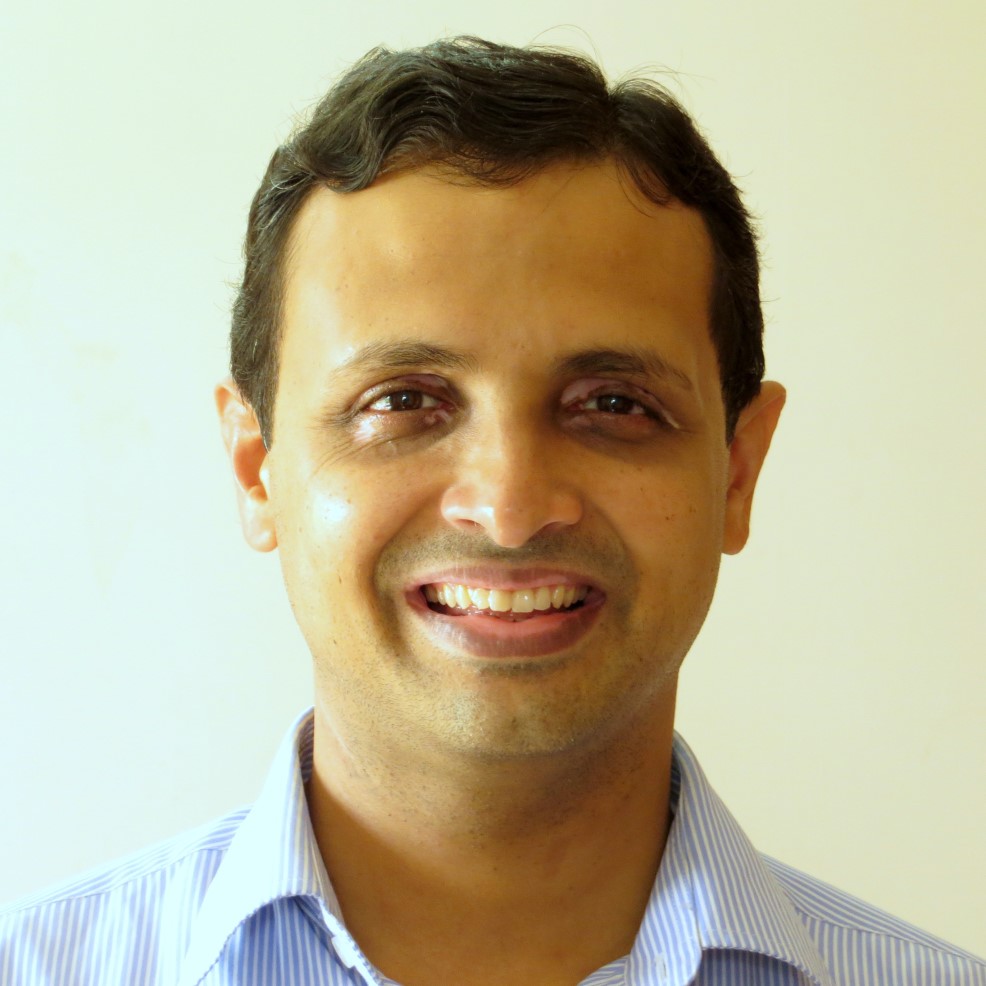
Vineeth N Balasubramanian is a Professor in the Department of Computer Science & Engineering at the Indian Institute of Technology Hyderabad, with affiliate faculty status in the Department of Artificial Intelligence. His research focuses on the intersection of deep learning, machine learning, and computer vision, emphasizing explainability, robustness, and real-world applications. He leads Lab 1055, which investigates problems such as Explainable and robust AI/ML systems Lifelong learning in evolving environments Multimodal vision-language models Applications in agriculture, autonomous navigation, and human behavior analysis His recent work includes causal reasoning in transformers, vision-language model capabilities, and drone-based object detection. Funded by organizations like Google, Microsoft, Intel, and DST, he has received multiple awards including the World's Top 2% Scientists (2022-23), INSA/INAE Fellowships, and Best Paper recognitions. Lab 1055 collaborates with institutions like CMU, UBC, and Monash University, contributing to cutting-edge advancements in AI.
Find Academic Supervisors
Find and connect with academic supervisors, professors, and scholars for your research journey.
Showing 1-15 of 53 supervisors
Profile data may be stale. It is sourced from public faculty pages.
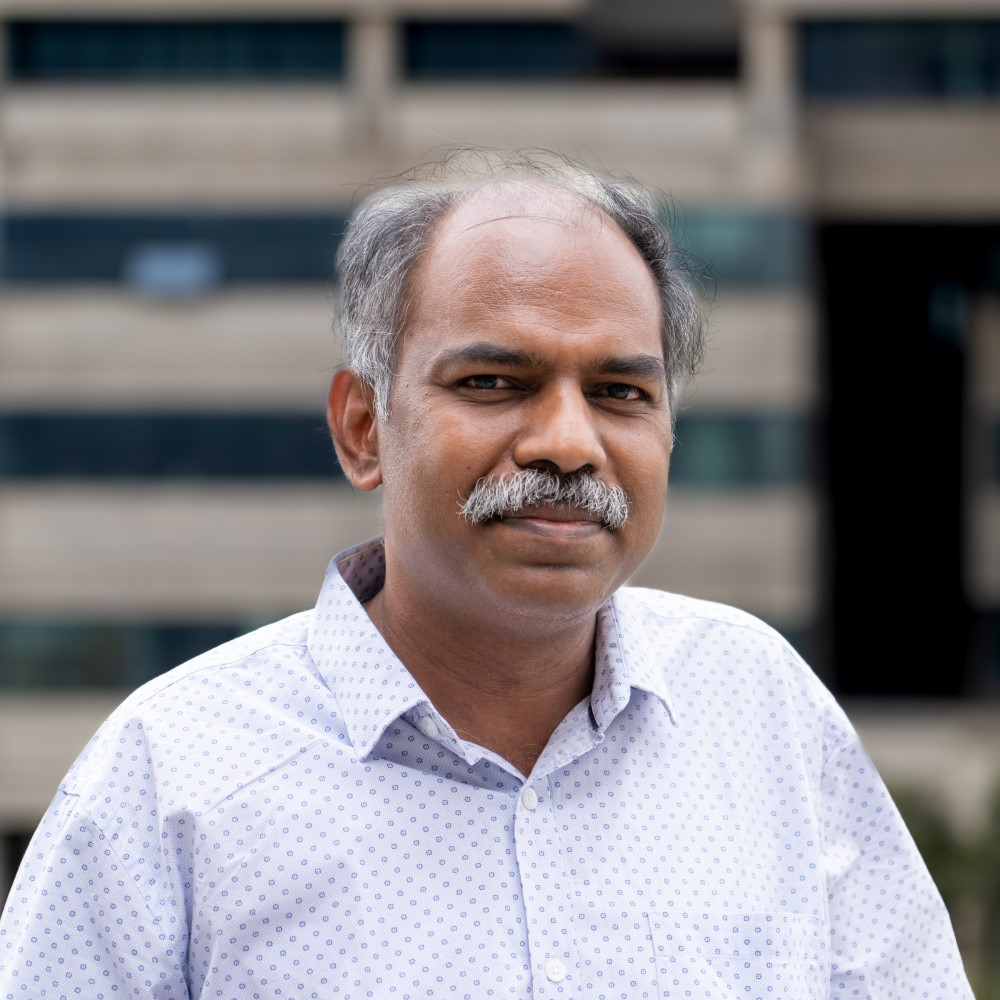
Antony FranklinView profile
Associate Professor
Antony Franklin is an Associate Professor and Head of the Department of Computer Science and Engineering at the Indian Institute of Technology Hyderabad (IITH), India. He leads the Networked Wireless Systems (NeWS) Lab and is actively involved in 5G research, wireless networks, and cybersecurity. He earned his Ph.D. from IIT Madras in 2010. Education: Ph.D. in Computer Science and Engineering, IIT Madras, 2010 Research Interests: His research spans wireless networks , 5G systems , mobile edge computing , low-latency transport protocols , and cybersecurity . He focuses on next-generation mobile systems, especially 5G, aiming to meet the demands of ultra-low latency, high data rates, and quality of experience for services like IoT, autonomous driving, and VR. He has been involved in developing testbeds and prototypes to validate real-world performance of 5G technologies, including network slicing, LTE-WiFi integration, and edge computing. Scientific Awards: Best Academic Demo Award, IEEE COMSNETS 2018 Second Best Paper Award, IEEE ANTS 2017 Grants & Projects: Network Slice Life-cycle Management for 5G Mobile Networks – SPARC, MHRD (2019–2021) DNS/IPv6 for IoT Security – NASSCOM (2018–2019) CCRAN: Energy Efficiency in Cloud RAN – Intel India (2018–2021) End-to-End 5G Test-Bed – DoT, GoI (2018–2021) M2SMART Smart Cities – SATREPS (2018–2023) Ultra-Reliable Low Latency Protocols – STINT, Sweden (2017–2018) Low Latency 5G Protocols – SERB ECR (2016–2019) Lab & Team: He leads the NeWS Lab (Networked Wireless Systems) at IITH, which focuses on 5G, wireless networks, and IoT systems. The lab is actively involved in developing real-world testbeds and publishing in top-tier conferences and journals.
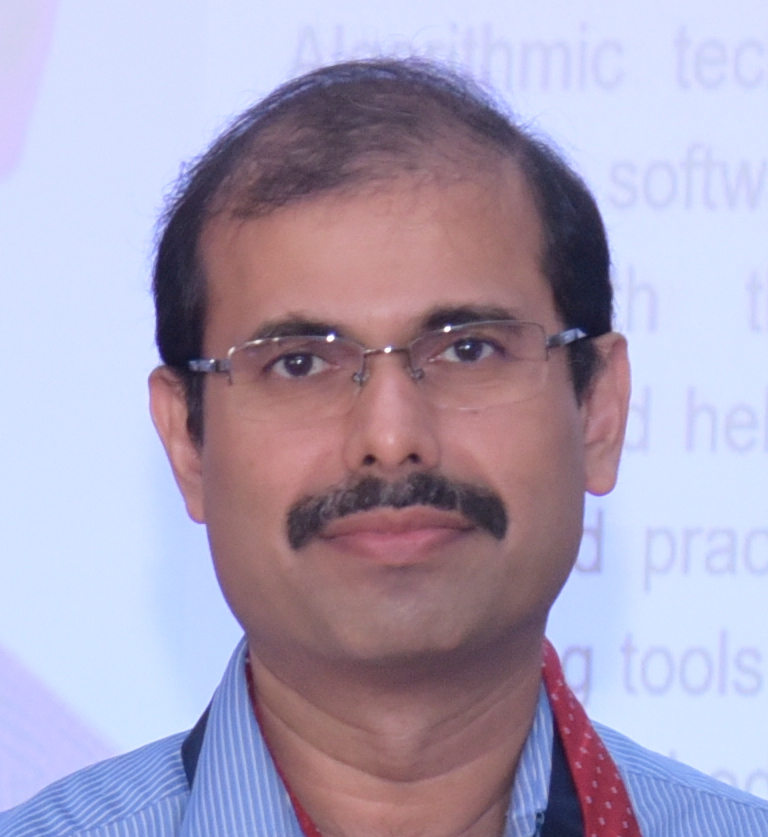
Supratik ChakrabortyView profile
Professor
Supratik Chakraborty serves as the Bajaj Group Chair Professor in the Department of Computer Science and Engineering at Indian Institute of Technology Bombay. He maintains dual affiliations with the Centre for Formal Design and Verification of Software and the Centre for Liberal Education at IIT Bombay, demonstrating his cross-disciplinary engagement. Professor Chakraborty's research spans formal methods with focus on formal verification, rigorous analysis of system models, and automated synthesis of systems from specifications. His work bridges theoretical foundations with practical applications, particularly in developing mathematically provable guarantees for increasingly complex hardware, software, and intelligent systems. Current research interests include constrained counting and sampling, scalable formal verification of software and hardware systems, automated synthesis of programs and circuits, and applications of automata, logic and finite model theory to practical verification challenges. His publication trajectory shows a significant evolution from traditional hardware and software verification toward addressing verification challenges in machine learning and AI systems. Recent work increasingly focuses on interpretability of black-box models, verification of neural networks, and synthesis techniques applicable to intelligent systems. The research demonstrates strong interdisciplinary connections between formal methods, programming languages, and artificial intelligence. IIT Bombay Excellence in Thesis (CSE) Award 2011 (for Bhargav Gulavani's thesis) IIT Bombay Excellence in Thesis (CSE) Award 2017 (for Abhisekh Sankaran's thesis) Best Paper in Algorithms and Architecture track at IEEE International Conference on Computer Design: VLSI in Computers and Processors, 1998 Professor Chakraborty has successfully supervised 11 doctoral students, with research spanning formal verification techniques, Boolean functional synthesis, constrained counting, and applications to hardware and software systems. His students have gone on to positions at major institutions including Microsoft Research, TCS Research, Georgia Tech, and BARC, reflecting the strong industry and academic impact of his mentorship. Current research directions show increasing emphasis on verification challenges posed by machine learning systems and AI. His research group at IIT Bombay, while not explicitly named in the materials, appears to focus on formal methods with strong connections to the Centre for Formal Design and Verification of Software. The group maintains active collaborations with international researchers including Moshe Y. Vardi at Rice University, and has made significant contributions to verification tools like VeriAbs that bridge theoretical advances with practical applications.
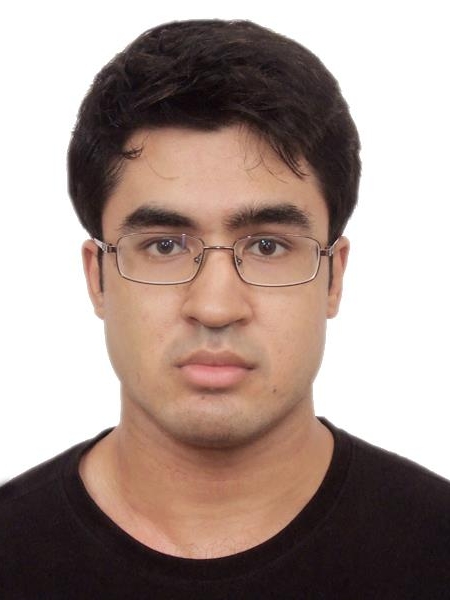
Roop Aparajita Subhra PurushottamView profile
Associate Professor
Roop Aparajita Subhra Purushottam is an Associate Professor in the Department of Computer Science and Engineering at the Indian Institute of Technology Kanpur. His research focuses on machine learning foundations and applications, particularly in extreme classification, optimization techniques, robust learning, and educational technology. He has developed scalable algorithms for web-scale applications and innovative teaching tools for programming education. His research interests span: Design and analysis of machine learning algorithms Statistical learning theory and online optimization Non-convex optimization for large-scale problems Robust learning against adversarial corruptions Applications in information retrieval, education, and environmental monitoring Recent publications demonstrate a strong focus on extreme classification techniques, efficient deep learning architectures, and educational technologies. His work consistently appears in top-tier conferences including KDD, ICML, NeurIPS, and CVPR, with innovations in scaling machine learning systems to handle millions of labels and users. Significant Awards: Gopal Das Bhandari Distinguished Teacher Award (2024) PK Kelkar Faculty Fellowship (2024-2027) Microsoft Bing Ads Greatness Award (2021) Computer Society of India Faculty Award (2018) Multiple best paper awards and nominations at major conferences He leads several research grants and consults for industry partners including Microsoft Research and Tower Research. His team develops open-source tools like Prutor for programming education and DEFRAG for efficient feature agglomeration in extreme classification. He has advised numerous PhD and Master's students who have received prestigious awards for their research contributions.
Chester RebeiroView profile
Associate Professor
Chester Rebeiro is an Associate Professor at the Department of Computer Science and Engineering within the Indian Institute of Technology Madras . His work spans hardware and software security with a focus on cryptographic implementations and microarchitectural vulnerabilities. Research interests include hardware security, applied cryptography, side channel analysis, and operating system security. He develops frameworks for automatic vulnerability detection and mitigation in cryptographic systems. Editorial Board: Associate Editor at Journal of Hardware and Systems Security (Springer, 2021-2024) Conference Leadership: General Co-Chair for SPACE 2024, Program Co-Chair for ATS 2024, and Program Co-Chair for INDOCRYPT 2023 Professional Activities: Organizer of e-CTF Embedded Capture The Flag and contributor to cybersecurity workshops across India and abroad Scientific contributions highlight two major awards: a Distinguished Paper Award at USENIX Security 2024 and a Best Paper Award at IEEE HOST 2020. His research focuses on practical security solutions for processors and cryptographic systems. Advising includes mentoring 11 PhD students and 7 MS by Research candidates, with notable co-guided projects in fault attack detection and side-channel mitigation. He actively contributes to educational initiatives through courses on Secure Processor Microarchitecture and Operating Systems.
Partha Sarathi MukherjeeView profile
Professor
Professor Partha Sarathi Mukherjee is a distinguished faculty member in the Department of Inorganic and Physical Chemistry at the Indian Institute of Science (IISc), Bangalore. With 28 years of research experience in inorganic chemistry and 22 years of teaching at honors/PG levels, he has established himself as a leading researcher in supramolecular chemistry and related fields. His work focuses on designing complex molecular architectures through coordination-driven self-assembly and exploring their applications in catalysis and molecular recognition. Educational Background: Doctor of Philosophy (Indian Association for the Cultivation of Science, Kolkata) MSc (Jadavpur University, Kolkata) BSc (Burdwan University) Professor Mukherjee's research interests center around supramolecular chemistry, catalysis in confined spaces, light-harvesting systems for photocatalysis, and organic materials for separation of isomers and enantiomers. His work demonstrates how subtle design modifications in molecular building blocks can yield complex supramolecular architectures with tailored properties for specific applications. He has made significant contributions to understanding how the geometry and functionality of molecular cavities influence host-guest chemistry and catalytic activity. His recent publications reveal a strong trend toward creating water-soluble coordination cages with precisely controlled geometries for applications in molecular recognition, selective catalysis, and separation science. The research shows how angular modulation of ligands can dramatically affect the orientation of functional groups within molecular cavities, thereby controlling their host-guest properties. Many of his recent papers focus on Pd(II) and Pt(II) based architectures with applications in photocatalysis, selective oxidation, and molecular separation. Professor Mukherjee has mentored 24 PhD students and 25 postdoctoral fellows, many of whom have gone on to become faculty members at leading institutions including NISER, IISER, IIT, NITs, and various universities. His research group has published 231 peer-reviewed articles and he has delivered over 280 lectures worldwide. His laboratory focuses on the self-assembly of complex molecular architectures, particularly metal-organic cages and barrels, and their applications in catalysis, molecular recognition, and separation science. The group employs a range of techniques including X-ray crystallography, NMR spectroscopy, mass spectrometry, and computational methods to characterize these systems and understand their properties.
Om P. DamaniView profile
Professor
Om P. Damani is a Professor in the Department of Computer Science and Engineering at Indian Institute of Technology Bombay. He serves as Faculty In-Charge of the Sustainable Development unit of the Center for Policy Studies and is also associated with the Centre for Technology Alternatives for Rural Areas (CTARA). His work bridges computer science with social development challenges, focusing on practical applications for rural communities. Dr. Damani's research interests span Technology for Development of the bottom 80%, System Dynamics: Modeling and Simulation for Social Development, System Architecture, and Data Science. His work demonstrates how computational approaches can address complex development challenges through projects like GramDrishti (for detecting rural infrastructure in satellite images), JalTantra (for optimizing water distribution networks), and FAI (Farm Assessment Index for holistic farming practice evaluation). His publications reveal a consistent focus on applying computer science to solve real-world problems in water management, agricultural systems, and rural infrastructure. His research has been recognized with significant awards including the IIT Bombay Industrial Impact Award 2010, IIT Bombay Impactful Research Award 2019, and Best Poster Award at Agriculture Science Congress 2017. Dr. Damani has successfully translated theoretical research into practical tools that address development challenges, particularly in water resource management and agricultural systems. As an educator, he has mentored numerous PhD students including Chintan Tundia, Shreenivas Kunte, Nikhil Hooda, Sivamuthu Prakash Murugan, Dipak L. Chaudhari, Prateek Kapadia, and Manoj K. Chinnakotla. His teaching portfolio includes courses on System Dynamics: Modeling and Simulation for Development (CS 752), Program Derivation (CS 420), and ICT for Development. Dr. Damani's educational background includes a Ph.D. in Computer Sciences from the University of Texas at Austin (1994-1999), B.Tech. in Computer Science and Engineering from IIT Kanpur (1990-1994), and prior professional experience at IBM T J Watson Research Lab and Akamai Technologies.

Dibakar GhosalView profile
Associate Professor
Dr. Dibakar Ghosal is an Associate Professor in the Department of Earth Sciences at the Indian Institute of Technology Kanpur (IIT Kanpur). He leads the Crustal Imaging Laboratory (CIL) which is equipped with state-of-the-art seismic data acquisition setup and processing software for both land and marine seismic datasets. His research spans exploration seismology, tectonic studies, and algorithm development for subsurface imaging across diverse geological settings. Dr. Ghosal's educational background includes: PhD in Geophysics (2008-2013) from Institut de Physique du Globe de Paris (IPGP), France M.Sc. in Geophysics (2004-2006) from Indian Institute of Technology Kharagpur, India B.Sc. in Geology, Mathematics and Physics (2001-2004) from Jadavpur University, India His research focuses on three major themes: (1) Tectonic studies across Himalaya, Sumatra-Andaman, and Bay of Bengal using high-resolution seismic datasets; (2) Development of algorithms for petrophysical parameter estimation of hydrocarbon and ore reserves; and (3) Ambient Noise and earthquake data analysis. His work integrates field data acquisition, computational modeling, and advanced algorithm development to address fundamental questions in Earth sciences, with particular emphasis on crustal architecture and resource exploration. His recent publications demonstrate expertise in crustal imaging techniques, tectonic analysis of subduction zones, and algorithm development for seismic data processing. The research spans diverse geographical regions including the Himalayas, Sumatra-Andaman region, Bay of Bengal, and Southern Indian Ocean, with applications to hydrocarbon exploration, tectonic studies, and crustal architecture analysis. Dr. Ghosal has received several prestigious fellowships and awards: 2023: Scientific High Level Visiting Fellowship (SSHN) from French Institute in India (IFI) 2022: INSA visiting scientist fellowship 2019: Visiting Faculty at IPG Paris, France 2019: Visiting Faculty at NTU Singapore 2014-2015: Postdoctoral fellowship, Geocentrum, Uppsala University, Sweden 2008-2012: PhD fellowship, IPG Paris, France Dr. Ghosal actively mentors students and has supervised numerous PhD, MTech, and BS-MS students. His research is supported by multiple sponsored projects from DST-SERB, MoES, ONGC, and other funding agencies. He has successfully completed projects on topics including seismic imaging of the Himalayan foothills, gas hydrate reservoir modeling, and petrophysical property estimation. He leads the Crustal Imaging Laboratory (CIL) at IIT Kanpur, which conducts field work across various regions of India including the Himalayas and offshore areas. The laboratory is equipped with RAUs, 3C Tromino sensors, seismic thumpers, and advanced processing servers. He collaborates with national institutions including NIO Goa, IISER Pune, and NGRI, as well as international institutions such as IPG Paris, Uppsala University, and Texas A&M University.
Nagamani Jaya BalilaView profile
Associate Professor
Dr. Nagamani Jaya Balila is an Associate Professor in the Department of Metallurgical Engineering and Materials Science at the Indian Institute of Technology Bombay (IIT Bombay), where she has been serving since October 2016. She was promoted to Associate Professor in May 2021, having previously held the position of Assistant Professor. She leads the Micro-Mechanics of Materials (MMM) Group, focusing on mechanical behavior at micro- and nano-scales. Her research interests center on the mechanical behavior of materials at small length scales, with emphasis on micro-mechanics , fracture of thin films and coatings , interface engineering , and damage tolerance in advanced steels and composites . Her work explores phenomena such as the 'smaller is stronger' effect and inverse Hall-Petch behavior in nanostructured systems. She develops in-situ micromechanical testing tools and employs finite element simulations to design damage-tolerant architectures. The selected publications reflect a strong trend in miniaturized mechanical testing , in-situ deformation studies , and fracture analysis across diverse materials including high entropy alloys, silicon, metallic glasses, and industrial steels. The research spans fundamental mechanics to industrial applications, particularly in energy and structural materials. Scientific Awards and Recognitions: Head of Max Planck Partner Group at IIT Bombay (2016) Acta Materialia Certificate of Excellence in Reviewing (2015) Max Planck Postdoctoral Scholarship (2013–2016) CSIR & IIM-SJEF Travel Grants for TMS-2013 Multiple Best Poster and Presentation Awards (2009–2011) All India Rank 2 in GATE Metallurgical Engineering (2007) She has secured significant research funding, including the Max-Planck India Partner Group Project and proposals under the DST-Ramanujan Fellowship and IIT-B Seed Grant , with industrial collaborations involving TATA Steel and TATA Global Steel Wires . These projects aim to tailor damage tolerance in brittle systems and study fracture in cold-drawn wires and solar cell materials. Dr. Balila leads the Micro-Mechanics of Materials (MMM) Group at IIT Bombay, which integrates experimental in-situ testing with computational modeling to understand deformation and fracture mechanisms at micro- and nano-scales. The group actively contributes to national and international conferences, including Techfest IIT Bombay, and maintains strong ties with Max Planck Institutes and industrial partners.

R.K. ShyamasundarView profile
Professor
R.K. Shyamasundar is a Professor at the Indian Institute of Technology Bombay , with a focus on Real-Time and Reactive Programming, Logic Programming, Pi-Calculus, and Parallel Programs. Research spans formal verification, concurrency, and distributed systems. Key contributions include RT-CDL semantics, Esterel language extensions, and hybrid system controller synthesis. Scientific awards include JC Bose National Fellow, Fellowships at Indian Academy of Sciences and Indian National Science Academy, and Senior Membership in IEEE. His work involves collaborations with institutions like TCS Group and researchers such as Basant Rajan, N. Raja, and Deepak Kapur.
Vishesh MishraView profile
Research Fellow
Vishesh Mishra is a Prime Minister's Research Fellow at the Department of Computer Science and Engineering, Indian Institute of Technology Kanpur. He concurrently serves as a Visiting Research Fellow at INRIA Centre, University of Rennes, France, and an External Research Collaborator at CANDLE LAB, IIT Roorkee. His research centers on hardware security vulnerabilities in approximate computing systems, with focus areas including hardware trojan detection in approximate circuits, energy-efficient error-resilient architectures, and side-channel attack mitigation. He develops novel methodologies for securing IoT devices and blockchain implementations through circuit-level innovations and floating-point approximation techniques. Analysis of his 15 most recent publications reveals dominant themes in approximate arithmetic unit design (adders/multipliers), hardware trojan countermeasures, and floating-point resilience. His work bridges theoretical security models with practical VLSI implementations, consistently targeting energy efficiency without compromising critical functionality in error-tolerant applications. Scientific recognition includes: Prime Minister's Research Fellowship (India's premier PhD fellowship) Collège doctoral de Bretagne international mobility grant (€9600 for 6-month INRIA research) His research is supported through competitive fellowships rather than traditional grants, with no student advising roles documented. Current collaborations span IIT Kanpur's C3i Center, IIT Roorkee's CANDLE LAB, and INRIA's Rennes research unit, focusing on cross-institutional hardware security projects.
Karthik P. N.View profile
Assistant Professor
Karthik P. N. is an Assistant Professor in the Department of Artificial Intelligence at the Indian Institute of Technology Hyderabad (IIT Hyderabad). He previously served as a Research Fellow at the Institute of Data Science, National University of Singapore (NUS), and completed his Ph.D. and Master of Science (Engineering) at the Department of Electrical Communication Engineering, Indian Institute of Science (IISc), Bengaluru, under the guidance of Prof. Rajesh Sundaresan. Earlier, he worked as a Project Assistant in Prof. Chandra R. Murthy's lab at IISc and earned a Bachelor of Engineering in Electronics and Communications from R V College of Engineering, Bengaluru. Ph.D., Electrical Communication Engineering, IISc Bengaluru M.Sc. (Engineering), IISc Bengaluru B.E., Electronics and Communications, R V College of Engineering His research focuses on Probability Theory, Detection and Estimation Theory, Markov Decision Processes , and Multi-armed Bandits , with applications in Federated Learning, Differential Privacy, Reinforcement Learning, Information Theory , and Statistics . Recent work explores optimal strategies for best arm identification in restless bandits and privacy-preserving machine learning. He has received high instructor ratings for courses like Stochastic Processes and Programming for AI , and was honored with the Faculty Teaching Excellence Award 2025 at IIT Hyderabad. His Google Scholar articles highlight advances in 3D point cloud security, railway accident prevention, and vision-language model robustness . Scientific awards include the Faculty Teaching Excellence Award 2025 and First place in the INAE Kanpur Chapter 100 Seconds Competition (2021) . He collaborates with researchers like Prof. Vincent Y. F. Tan and Prof. Yeow Meng Chee, and has served on technical program committees for conferences such as APWDSIT 2025 and ISIT 2025 . Teaching roles at IIT Hyderabad involve graduate-level courses on Probability and Stochastic Processes , cross-listed with Electrical Engineering.
Ketan P. DetrojaView profile
Associate Professor
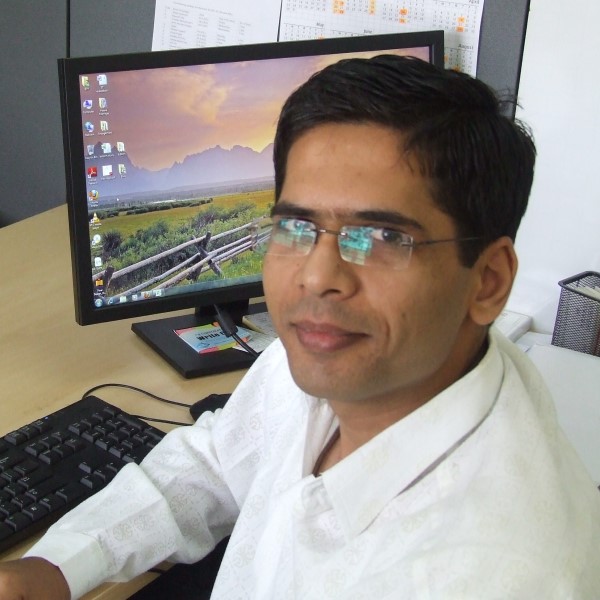
Ketan P. Detroja is an Associate Professor in the Department of Electrical Engineering at Indian Institute of Technology Hyderabad . With a Ph.D. from IIT Bombay (2006) and a specialization in Multivariable Control, Distributed State Estimation, and AI/ML for Control Applications , his research focuses on ensuring fault-tolerant and economical operation of microgrids , developing distributed Kalman filtering techniques , and applying machine learning to process monitoring and control . Education: B.E., D. D. Institute of Technology, Gujarat, India Ph.D., IIT Bombay, 2006 Research Interests span Advanced Process Control, Fault Detection and Diagnosis, Cooperative Control, Microgrid Optimization and Control , and Hardware-Software Design for Control Systems . His work addresses challenges in data-driven process monitoring , distributed state estimation , and machine learning-based controller design , particularly for large-scale systems. Scientific Contributions include innovative approaches to inverse-free Kalman filters , reinforcement learning-based PI controllers , and data reduction algorithms for fault diagnosis. His publications reflect a focus on control theory, optimization, and machine learning integration , with applications in power systems, wind energy, and fault diagnostics . Scientific Awards: Best Paper Award at ADCONIP - 2011 Best Paper Award at DYCOPS-2013 Advising has been a significant part of his career, with supervision of Ph.D. students working on topics like fault detection in induction motors , microgrid scheduling , and adaptive control using fuzzy logic . His M.Tech students have explored areas such as visual object tracking, battery SOC estimation, and wind farm control , many of whom are now in prominent roles across academia and industry.
Abhishek Kumar GuptaView profile
Associate Professor
Abhishek Kumar Gupta is an Associate Professor in the Department of Electrical Engineering at the Indian Institute of Technology Kanpur. His educational background includes: Ph.D. in Electrical and Computer Engineering from the University of Texas at Austin (2016) B.Tech.-M.Tech. dual degree in Electrical Engineering from IIT Kanpur (2010) Dr. Gupta specializes in Wireless communications , with research interests spanning 5G/6G Technologies including mmWave, THz, RIS, vehicular, and molecular communication, Quantum communications, and Stochastic geometry. His work focuses on advancing the theoretical foundations and practical implementations of next-generation wireless systems, particularly in the areas of millimeter wave communications, spectrum management, and network densification. His research has significant implications for the development of future wireless networks that can support the exponentially growing demand for mobile data. Analysis of Dr. Gupta's publications reveals a strong focus on millimeter wave cellular systems, with several papers examining modeling approaches, spectrum licensing strategies, and network analysis using stochastic geometry. His work bridges theoretical mathematics with practical wireless communication challenges, particularly addressing the fundamental limits of network densification and performance scaling in ultradense urban environments. The recurring themes in his research include spectrum efficiency, interference management, and novel approaches to wireless network architecture. Dr. Gupta has received notable recognition for his academic achievements: GE-FS Leadership Award by General Electric Foundation and Institute of International Education (2009) IITK Academic Excellence Award for four consecutive years (2006-2009) Prior to his academic career, Dr. Gupta gained valuable industry experience working with Samsung Research America as a Sr. Standards Engineer, as well as with Applied Microelectronics Circuit Corporation, FutureWei Technologies, and Nokia Networks. This industry experience informs his research approach, ensuring practical relevance alongside theoretical rigor.

Preethi SrivathsaView profile
Assistant Professor
Dr. Preethi Srivathsa is an Assistant Professor - Senior Scale in the School of Computer Engineering at Manipal Academy of Higher Education (MAHE), Bengaluru. She holds a B.Tech, M.Tech, and Ph.D. (awarded by Presidency University in 2022). Her academic career includes positions at Presidency University (2019-2023) and East Point College of Engineering (2008-2019). Her research focuses on: Computer architecture and low-power hardware design IoT applications and cyber-physical systems Cryptography and blockchain security Machine learning implementations in hardware FPGA-based accelerators and optimization techniques Her publication portfolio shows strong emphasis on hardware-efficient algorithms, cryptographic systems (especially elliptic curve applications in blockchain), and emerging IoT architectures. Recent work integrates machine learning with hardware acceleration for smart home systems and agricultural technology. Awards and recognitions: Best Paper Award at IEEE iSES-2021 for low-power sorter design Infosys Bronze Partner Faculty (2013) She has developed intellectual property including IoT-based monitoring systems and blockchain educational frameworks. Technical skills include Verilog, FPGA design, IoT platforms (Arduino/Raspberry Pi), and multiple programming languages.