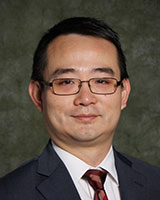
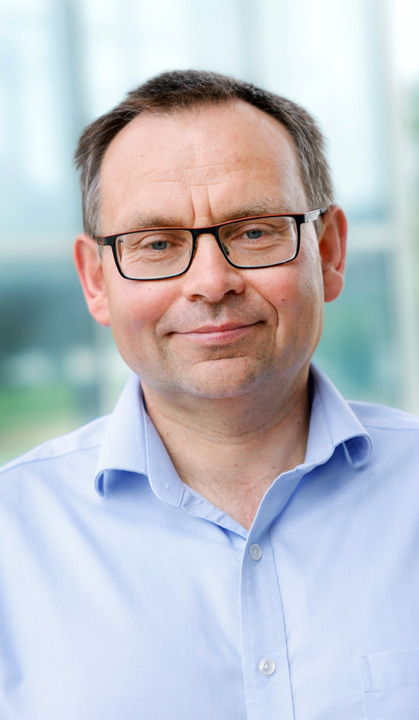
Xingye Qiao is a Professor and Chair in the Department of Mathematics and Statistics at Binghamton University, State University of New York . He serves as Chair of the Data Science Transdisciplinary Area of Excellence steering committee and has been affiliated with Binghamton since 2010. Education : Ph.D. in Statistics (2010), University of North Carolina at Chapel Hill M.S. in Statistics (2007), University of North Carolina at Chapel Hill B.S. in Mathematics and Applied Mathematics (2005), Fudan University His research focuses on Statistics, Machine Learning, and Causal Inference , with recent work exploring conformal prediction methods, treatment effect estimation, and set-valued classification techniques. His publications span journals like Transactions on Machine Learning Research , NeurIPS , and AAAI . His 15 most recent articles (2025-2020) demonstrate expertise in areas including: bandit feedback systems, treatment effect heterogeneity analysis, spectral clustering for neuroscience, and conformal prediction under distribution shifts. These works blend statistical theory with real-world applications in healthcare, ecology, and data science. He mentors Ph.D. students in mathematical sciences and has supervised research topics such as: machine learning in precision medicine, goodness-of-fit tests for spatial processes, and high-dimensional data analysis. Courses he teaches include Math 605: Theory of Machine Learning and Data 501: Predictive & Inferential Analytics .
Valeria Minucciani is an Associate Professor in the Department of Architecture and Design (DAD) at the Polytechnic University of Turin, where she has been a faculty member since 2001. She is a member of the Master's and Continuing Education School and serves as the Coordinator of the Level I Master's Program in Interior, Exhibit & Retail Design. Her academic and professional roles include leadership in research, teaching, and institutional governance, such as being an elected member of the Academic Senate and the Council of the Master's School. University: Polytechnic University of Turin School: School of Architecture Department: Department of Architecture and Design Position: Associate Professor Research Focus: Interior Architecture, Exhibition Design, Museography, Well-being in Interiors Her research interests revolve around the interplay between architecture and human experience, particularly in cultural and interior spaces. She investigates how museography can enhance cultural inclusion and how interior design impacts well-being. A significant focus is on the disciplinary contamination between architecture and neuroscience, especially in museum environments, examining emotional responses and spatial cognition. She also explores the musealization of religious and archaeological heritage and accessibility in cultural heritage. The recent publications reflect a strong trend toward integrating neuroscience and technology into architectural and museological practice. There is a clear emphasis on emotional engagement, inclusivity, and accessibility in museum and heritage settings, often using neuroaesthetic and human factors approaches. Her work increasingly employs digital tools like virtual reality and neuropsychological detection to study visitor behavior and design more inclusive spaces. Scientific Awards and Recognition: President of the Scientific Committee, APM National Association of Small Museums Scientific Director, APM (2022–present) European Commission Reviewer for Horizon 2020 and 7th Framework Program Member, Scientific Committee for the new Diocesan Museum of Fossano (2019) Coordinator, Master in Interior, Exhibit & Retail Design (2019–present) She actively mentors PhD students, including Daniel John Mangano and Gianluca D'Agostino, and leads major research projects such as META-MUSEUM and NEURO-MUSEUM, which are funded by competitive EU and national grants. Her collaborative work spans institutions and disciplines, reflecting a strong commitment to interdisciplinary research. She is involved in numerous research agreements with museums and municipalities, demonstrating applied impact. Her leadership in the Interuniversity Research Center on Heterotopia in Architecture (RHeA) underscores her role in fostering academic collaboration. Labs and Research Teams: Lead researcher in projects involving neuroaesthetics and spatial cognition Member of research groups focused on accessibility and inclusion in museums Scientific Director for collaborative agreements with the National Etruscan Museum of Villa Giulia and the Municipality of Chiomonte Coordinator of the RHeA - Centre of Research on Heterotopia and Architecture
Dr. George Fitzmaurice is a Research Fellow at Autodesk, leading the Human Computer Interaction and Visualization Research group. With over 120 publications and 95 patents, his work spans 25 years of innovation in interactive systems, focusing on technology-assisted learning , 3D visualization , and novel input techniques . His notable contributions include the Maya 1.0 UI and SketchBook Pro design, as well as pioneering Graspable UIs and Spatially-Aware Displays . Education : MIT (B.Sc. Math/CS), Brown (M.Sc. CS), Toronto (Ph.D. CS) His research explores immersive visualization and generative AI applications in design workflows, with recent work focusing on VR/AR tools like TimeTunnel for motion editing and WhatIF for AI-assisted narrative design. Current projects examine the intersection of large language models , 3D design systems , and collaborative environments . Key article themes include: Generative AI integration (3DALL-E, WorldSmith) Immersive motion analysis (AvatAR, VideoPoseVR) Creative workflow optimization (MoodCubes, Immersive Sampling) Privacy-aware VR systems (Vice VRsa) Scientific Recognition: 2019 - Inducted into ACM CHI Academy 2024 - Awarded ACM Fellow for computing contributions He has developed foundational interaction techniques like ViewCube™ and SteeringWheels™ , and his work continues to shape modern 3D UI paradigms and spatial computing approaches through projects like DreamSketch and Tesseract.
Chris Wojtan is a Professor at the Institute of Science and Technology Austria (ISTA) , leading the Visual Computing Group . His research focuses on geometric and numerical algorithms for computer animation and geometry processing , particularly in simulating solid and fluid dynamics , controlling physics simulations, and computing with 3D shapes. Research Interests : Computer Animation, Geometry Processing, Fluid Dynamics, Solid Mechanics, 3D Shape Processing. Notable Awards : ERC Consolidator Grant (2022) SIGGRAPH Significant New Researcher Award (2016) Eurographics Young Researcher Award (2015) ERC Starting Grant (2014) Education : PhD in Computer Science from Georgia Institute of Technology (2010). Funding : Recipient of NSF Graduate Research Fellowship (2005-2008), and principal investigator for ERC grants.
Henry Kang is an Associate Professor in the Department of Computer Science at the University of Missouri–St. Louis, College of Arts and Sciences. His expertise spans computer graphics, data visualization, and computational art, with extensive experience in full-stack web development and programming frameworks. Education: Ph.D. in Computer Science, Korea Advanced Institute of Science and Technology (2002) Research Interests: Kang's work focuses on computer graphics, non-photorealistic rendering, and data visualization. Key projects include coherence-enhancing filtering, stereoscopic 3D line drawing, and emotion-driven image recoloring. He integrates machine learning and GPU computing for real-time scene navigation and artistic effects. Publication Trends: His research emphasizes texture filtering, computational art, and perceptual modeling. Recent work includes Gaussian image binarization (2021) and coherence-enhancing GPU filtering (2018), while earlier contributions explore stereoscopic depth perception (2013) and directional stippling (2011). Contact: Email: kangh@umsl.edu Phone: (314) 516-5841 Office: 318 ESH
Professor Aideen Sullivan is Head of the Department of Anatomy and Neuroscience at University College Cork (UCC). With a career spanning over two decades at UCC, she leads research on neuroprotective therapies for Parkinson's disease, focusing on growth factors, stem cell applications, and epigenetic mechanisms. She established Ireland's first BSc in Neuroscience and co-developed the cross-College BSc in Medical and Health Sciences (CK707). BSc (First Class Honours) in Pharmacology, University College Dublin (1992) PhD in Neuropharmacology, University of Cambridge (1995) Her research program investigates Parkinson's disease through five key themes: viral vector delivery of neurotrophic factors, molecular mechanisms of neuroprotection, biomarker discovery, neuronal degeneration models, and stem cell-based treatments. She has secured significant grants from Health Research Board, Enterprise Ireland, and the Wellcome Trust. Recent publications (2022-2020) emphasize epigenetic regulation (HDAC inhibitors), microbiome-gut-brain axis interactions, and novel neurotrophic strategies. Articles highlight GDF5's neuroprotective effects, miRNA modulation, and molecular pathways like BMP-Smad and p38-MAPK. Scientific awards include: Postgraduate Certificate in Teaching and Learning (UCC, 2006) FETAC Certificate in Peer-Mentoring (2010) Leadership Foundation Aurora Programme Scholarship (2015) Over €2 million in research grants She mentors undergraduate and postgraduate students, chairs UCC's Athena SWAN 'Flexible Working' group, and serves as Editor-in-Chief of Neuronal Signaling . Her work spans laboratory research, public engagement, and educational innovation.
Hannah Spitzer is a Research Group Leader at the Institute for Stroke and Dementia Research (ISD) at Ludwig Maximilian University of Munich and an associated Research Group Leader at Helmholtz Munich's Computational Health Center. She leads the Spitzer Lab, focusing on computational analysis of multimodal brain datasets to advance understanding of neurovascular and neurodegenerative diseases. Her educational background includes: PhD in Computer Science from Heinrich-Heine University Düsseldorf and Research Center Jülich (2015-2020) Master's in Computer Science from RWTH Aachen (2013-2015) Bachelor's in Computer Science from RWTH Aachen (2009-2013) Dr. Spitzer's research integrates computational biology and machine learning to decode brain complexity, with emphasis on spatial omics analysis , interpretable image representation learning , and cross-modal data integration . Her group develops tools like squidpy and campa for spatial omics while applying graph neural networks to epilepsy lesion detection through the international MELD project, prioritizing biological interpretability in AI models. Recent publications reveal strong trends in leveraging graph neural networks for subtle brain lesion detection and creating computational frameworks for spatial omics integration. Her work consistently bridges advanced machine learning with clinical neuroscience to uncover disease mechanisms in neurodegeneration and vascular disorders. Dr. Spitzer actively mentors students including current PhD candidate Beatrice Guastella and alumni Deniz Fettahoglu (MSc) and Katia Berr (PhD). Her lab operates through major collaborations including the MELD epilepsy consortium and Helmholtz Imaging Project, with funding supporting computational pipeline development for small-vessel disease prediction and multimodal brain atlasing. The Spitzer Lab comprises postdoc Wasim Aftab and PhD student Beatrice Guastella, working on computational pipelines that integrate histology, spatial omics, and neuroimaging data to decode brain disease mechanisms through interpretable AI approaches.
James O'Connell McNamara is a Distinguished Professor in Neuroscience at Duke University School of Medicine, holding professorships in Neurobiology, Neurology, and Pharmacology and Cancer Biology. He serves as Director of the Center for Translational Neuroscience and is a Faculty Network Member of the Duke Institute for Brain Sciences. His research focuses on elucidating the cellular and molecular mechanisms underlying epileptogenesis, particularly temporal lobe epilepsy (TLE). McNamara's research interests center on understanding how episodes of status epilepticus lead to the development of temporal lobe epilepsy. His laboratory discovered that excessive activation of the BDNF receptor tyrosine kinase TrkB is required for epileptogenesis, and they developed a peptide (pY816) that uncouples TrkB from phospholipase Cγ1, which can prevent and potentially reverse epilepsy. His work has established a novel strategy targeting receptor tyrosine kinase signaling for epilepsy prevention and treatment. His recent publications demonstrate continued active research in TrkB signaling pathways, seizure detection methods, and therapeutic approaches for epilepsy. His work spans from basic molecular mechanisms to translational applications, with a clear focus on developing disease-modifying treatments for epilepsy rather than just symptom management. Dr. McNamara has received numerous prestigious awards including membership in the National Academy of Medicine (2005), the Freedom to Discover Award from Bristol-Myers Squibb Foundation (2001), and multiple Epilepsy Research Recognition Awards from professional societies. His sustained contributions to epilepsy research have been recognized with two Javits Neuroscience Investigator Awards from the National Institute of Neurological Disease and Stroke. McNamara earned his M.D. from the University of Michigan, Ann Arbor in 1968 and has maintained an active research program for decades, with publications spanning from the 1980s to the present day. His work has significantly advanced our understanding of the molecular mechanisms underlying epilepsy and has opened new therapeutic avenues for preventing and treating this neurological disorder.
Timothy J. Strauman is a Professor of Psychology and Neuroscience and Professor in Psychiatry and Behavioral Sciences at Duke University. He holds affiliations with the Duke Institute for Brain Sciences, Duke Initiative for Science & Society, and Center for Brain Imaging and Analysis. Ph.D., New York University (1987) M.A., University of Chicago (1979) B.A., Duquesne University (1978) His research focuses on self-regulation from psychological and neurobiological perspectives, exploring its role in depression, affect regulation, and immune reactivity. Key areas include brain motivational systems, treatment development for depression, socialization effects on self-regulation, and neuroimaging applications. Recent publications examine animal-assisted therapy in pediatric dentistry, peer support systems in college mental health, and neuroimaging for depression interventions. His grants span TBI transitional care , self-system therapy , and neurocognitive aging . Awarded Fellow by the Association for Psychological Science (2013) and multiple societies (2009), he has held leadership roles in clinical psychology training and research methodology. Courses taught include advanced clinical practicums and neuroimaging research.
Szymon Urbas is a Lecturer in Statistics at the Department of Mathematics and Statistics, Faculty of Science & Engineering, Maynooth University (2024–present). He previously worked as a Postdoctoral Researcher at University College Dublin (2022–2024). His academic background includes a PhD (2018–2022) and MRes (2017–2018) in Statistics from Lancaster University, and a BSc in Mathematical Science from the University of Galway (2013–2017). Research Interests Bayesian modeling with latent variables Computationally intensive methods (Hamiltonian Monte Carlo, particle filters) Applications in agri-food sector and clinical trial operations Variational inference in machine learning High-dimensional data with hierarchical correlations Recent publications focus on Bayesian regression for agricultural spectral data, path sampling algorithms, clinical trial recruitment prediction, and neuro-mimetic learning strategies. His work integrates probabilistic methods with real-world challenges in agriculture and healthcare. Contact: Szymon.Urbas@mu.ie
Professor George Streftaris is a faculty member at Heriot-Watt University within the Actuarial Mathematics and Statistics department under the School of Mathematical and Computer Sciences . His academic career spans over two decades, including roles as associate professor and lecturer at Heriot-Watt University (2004-2019) and post-doctoral positions at BioSS and Heriot-Watt (2001-2004). He serves on the Board of Examiners for the Institute and Faculty of Actuaries and acts as an external examiner for multiple institutions. Professional memberships include Fellow of the Royal Statistical Society , member of the International Society for Bayesian Analysis , and the Greek Statistical Institute . Education: PhD in Statistics (University of Edinburgh) MSc in Statistics and OR (University of Essex, Distinction) BSc in Statistics and Actuarial Science (University of Piraeus, Greece) Research Interests: Streftaris specializes in Bayesian stochastic modeling , inference, and assessment at the intersection of statistics, epidemiology, and actuarial science. His work addresses critical illness insurance, longevity risk, and health-related insurance through predictive modeling and statistical machine learning. Key themes include disease transmission dynamics, model diagnostics, and uncertainty quantification in epidemic systems. Collaborations extend to life and biomedical sciences. Recent Publications: Recent articles focus on COVID-19 pandemic impacts on breast cancer mortality using semi-Markov models, neural network approaches for admission rate prediction, and Bayesian modeling of epidemic systems. Notable projects involve machine learning for multi-asset strategies, model uncertainty in insurance pricing, and stochastic frameworks for disease spread. Research Projects: Centers of Actuarial Excellence (SOA, 2019-2023): Predictive modeling for medical morbidity risk SCOR Foundation of Science (2022-2024): Breast cancer life insurance impact ARC Project (IFoA, 2016-2022): Longevity and morbidity risk management The Data Lab (2017-2018): Machine learning for multi-asset strategies Advising: Supervises ongoing PhD students in Bayesian and neural network modeling in epidemiology, with completed students working on topics like critical illness insurance, disease transmission, and stochastic mortality. Collaborations include researchers in the UK, USA, and international institutions.
Dana Cobzas is an Associate Professor at the MacEwan University in the Department of Computer Science , with adjunct appointments at the University of Alberta. Her academic journey includes a PhD in Computer Science (University of Alberta, 2004) MSc in Mathematics (Babes-Bolyai University, 1998) BSc in Mathematics (Babes-Bolyai University, 1997) . Her research focuses on imaging and computer vision , particularly mathematical models for medical image processing . Key areas include Medical image segmentation and registration 3D modeling from uncalibrated images Sparse classification for population studies Dynamic vision (tracking and modeling) Medical applications in neuroimaging and oncology . She has developed advanced techniques like deep learning-integrated level set methods and FEM-based segmentation. Scientific recognition includes: NSERC Discovery Grant (2015, 2010) Best Vision Paper at IEEE ICRA 2005 Best Student Paper at Vision Interface 2003 . She is actively involved in teaching and mentoring , with experience supervising senior students’ independent studies and contributing to collaborative projects in robotics and biomedical engineering .
Daniel Hawiger is a Professor at the School of Medicine , Saint Louis University , specializing in the Department of Molecular Microbiology and Immunology . With a career spanning both clinical and basic science research, he has made seminal contributions to immunology through his work on dendritic cells, T cells, and immunomodulation strategies.
Jonathan Mamou is a Professor of Electrical Engineering in Radiology at Weill Cornell Medical College since 2024. His research focuses on quantitative ultrasound imaging, biomedical engineering, medical imaging, and acoustic microscopy. Ph.D., University of Illinois (2005) M.S., University of Illinois (2002) B.S., Telecom Paris (2000) His research bridges electrical engineering and radiology, developing advanced ultrasound techniques for medical diagnostics. Key areas include quantitative acoustic microscopy , biomechanical tissue analysis , and machine learning in ultrasound imaging . Recent work spans prostate cancer detection , placental microstructure characterization , and myopia-related scleral changes . His publications (2025–2023) highlight innovations in high-frequency ultrasound for ophthalmology, quantitative imaging for cancer diagnostics, and quantum-driven resolution enhancement in acoustic microscopy. Grants from the Melanoma Research Alliance , National Institute of Biomedical Imaging & Bioengineering , and Stand Up To Cancer support his work on pancreatic cancer screening , interstitial lung diseases , and radiotherapy toxicity assessment .
Stein Aerts is a full professor at the Faculty of Medicine of KU Leuven and head of the Laboratory for Computational Biology (VIB-KU Leuven). He is affiliated with multiple institutes including VIB.AI Center for AI & Computational Biology, the Leuven Brain Institute, Leuven.AI, LIMNI, LISCO, and the Leuven Cancer Institute. He also serves on the Faculty Council of Medicine and departmental boards. Research Focus: Regulatory genomics and gene regulatory networks Single-cell transcriptomics and epigenomics Deep learning for genomics and enhancer design Neurodevelopmental genomics and evolution Cancer genomics and synthetic biology Comparative genomics across species (Drosophila, octopus, mammals, birds) His recent work emphasizes using AI-driven approaches to decode enhancer logic, model cell-type-specific gene regulation, and understand brain evolution. He leads multiple large-scale projects funded through 2029–2030, including SpaceTimeOmics and enhancer-targeted glioblastoma modeling. Scientific Output: Aerts has a prolific publication record with over 15 high-impact papers in 2024–2025 alone, including in Science , Cell Genomics , Nature Reviews Bioengineering , and eLife . His work spans methodological advances (e.g., HyDrop, CREsted, GAME) and biological discoveries in enhancer function, cell-type evolution, and neurodegeneration models. Institutional Roles & Collaborations: Principal investigator in 10+ active grants (2024–2030) Founder and head of the Computational Biology Laboratory at VIB-KU Leuven Member of steering committees for HPC curriculum and bioinformatics POC Active collaborator across European and international consortia