Toni Susin is an Associate Professor of Applied Mathematics at UPC-BarcelonaTech. He leads the Dynamic Simulation Lab, part of the ViRVIG research group in Barcelona. His research focuses on numerical methods, physically-based simulation, and applications in computer graphics and biomechanics. Key research areas include Physically-Based Animation Surgical Simulation Biomechanical Applications Image-Based Modeling Fluid Animation Techniques His recent work spans microbiome data analysis, sports performance tracking, and biomedical simulations. While no scientific awards are listed, his career includes founding three tech companies and mentoring numerous PhD/Master's students in computational methods and simulation technologies.
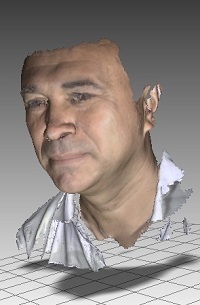
Adrian Hilton is a Professor of AI and Computer Vision at the University of Surrey, UK. He serves as the Founding Director of the Surrey Institute for People-Centred AI and Director of the Centre for Vision, Speech and Signal Processing. His research focuses on advanced fields such as 4D Vision, Computer Graphics, and AI-driven Digital Doubles. He holds prestigious fellowships including Fellow of the Royal Academy of Engineering, IET Fellow, and IAPR Fellow. His work spans interdisciplinary areas like Virtual/Augmented Reality, Light Fields, and Audio-Visual Signal Processing. No specific grants, students, or recent publications are detailed in the provided text, but his leadership roles highlight significant contributions to AI and computer vision research.
Daunis i Estadella, Pepus is an Associate Professor in the Department of Computer Science, Applied Mathematics and Statistics at the University of Girona, where he is also the Vice-Rector for Quality and Transparency since December 2017. He is a core member of the recognized research group GR-EADC (Research Group in Statistics and Compositional Data Analysis), supported by the Catalan government. His research interests include: Compositional Data Analysis Data Fusion Methods Multivariate Statistical Analysis Applications in Medical Imaging, Radiology, and Public Health Statistical Methodology in Geology and Archaeology The recent articles reflect a strong trend in applying advanced statistical techniques—particularly compositional data analysis and data fusion—to interdisciplinary domains such as healthcare, consumer behavior, geosciences, and archaeology. His work emphasizes methodological innovation and real-world application, especially in integrating heterogeneous data sources and improving multivariate analysis in medical and social contexts. Scientific contributions and recognitions include: Active publication in high-impact journals like Computational Statistics & Data Analysis and American Journal of Neuroradiology ORCID: 0000-0001-6134-9255 Researcher ID: B-9082-2011 Scopus Author ID: 14041287900 He has supervised various research projects and played key administrative roles, including former Coordinator of University Access Exams (PAU) and departmental secretary. He has contributed significantly to academic governance and statistical education. His work bridges theoretical statistics with practical applications across health, engineering, and social sciences. He is affiliated with the Grup de Recerca en Estadística i Anàlisi de Dades Composicionals (GR-EADC), a consolidated research team focused on advancing statistical methods for compositional and multivariate data.
Carlos Javier Porras Prieto is a researcher affiliated with the Universidad Politécnica de Madrid , actively engaged in multidisciplinary research with a focus on agriculture, renewable energy, sustainability, and energy engineering. Since joining the institution in December 2018, he has contributed to projects and teaching activities related to these fields.
Dr. Younes Smani is a Professor at Pablo de Olavide University , leading the Expresión Génica en Bacterias de Interés Medioambiental research group at the Andalusian Center of Developmental Biology (CABD) . His work focuses on Microbiology , particularly antimicrobial resistance mechanisms in Gram-negative bacilli like Acinetobacter baumannii , Pseudomonas aeruginosa , and Enterobacterales . Key Research Areas : Host-pathogen interactions, outer membrane protein targets (e.g., OmpA), and development of novel antibiotic classes targeting bacterial enzymes like enolase. Methodology : In vitro studies, animal models, proteomics, and computational approaches for drug discovery. Recent Publications highlight advancements in antimicrobial strategies , including AI-driven antibiotic discovery, enolase-targeting compounds, and repurposing drugs like tamoxifen metabolites. His team emphasizes combination therapies with existing antibiotics and anti-virulence approaches to combat resistance.
Federico Divina is a Professor in the Department of Sports and Computer Science at Universidad Pablo de Olavide, Spain. His research focuses on evolutionary computation, machine learning, and bioinformatics. PhD in Artificial Intelligence from Vrije Universiteit Amsterdam Former postdoc at University of Tilburg (NEWTIES EU project) Research Interests : Bioinformatics, Evolutionary Computation, Machine Learning, Big Data, and Soft Computing. He specializes in knowledge extraction from massive datasets through genetic algorithms and heuristic optimization. Recent Publications span time series forecasting, feature selection in high-dimensional data, and biomedical image analysis. His work combines evolutionary algorithms with practical applications in energy consumption prediction, ocular disease diagnosis, and genomic data analysis. Labs & Collaborations : Leads the DS&BD Data Science & Big Data Lab and has collaborated with groups like DATAi and DASE. His projects include Differential (multi-university energy analysis), GALICIAME (SMA genetic data analysis), and NEWTIES (artificial society modeling).
Dr. Lluís Barceló Coblijn is a Senior Lecturer at the University of the Balearic Islands (UIB), specializing in Catalan Philology and General Linguistics. He leads the Laboratori d'Investigació en Complexitat i de Lingüística Experimental (LICLE) , focusing on language evolution, syntax, and atypical language acquisition. His work combines Network Science with linguistic analysis, particularly exploring phylogeny (e.g., H. sapiens and H. neanderthalensis) and ontogeny (birth to adulthood). He also researches Balearic sign languages and clinical linguistics in disorders like Williams syndrome and dyslexia. Education: Bachelor's in Catalan Philology (UIB, 2006), with a year at Universität Paderborn Bachelor's in General Linguistics (UB, 2007), with a year at Vrije Universiteit Amsterdam Master's in Cognitive Science and Language (UB, 2008) Master's in Human Cognition and Evolution (UIB, 2010) PhD in Human Cognition and Evolution (UIB, 2012) Research Interests: Language evolution in hominins (e.g., Neanderthals) and its biological underpinnings Syntactic development analyzed via complex networks and graph theory Sign language sociolinguistics in Balearic islands Clinical linguistics in atypical populations (e.g., Williams syndrome, Down syndrome) Recent Work: His 2025 studies include exploring language acquisition in dyslexic students and syntactic patterns in Spanish speakers with Williams syndrome. He recently secured a grant for expanding the Descriptive Dictionary of Balearic Sign Languages (DDLSIB). Awards/Grants: Member of consolidated research groups (BEATLES, NRL) and recipient of a Menorcan Institute grant for sign language research. Currently coordinating an FPI grant application on Williams syndrome and syntax. Teaching: Teaches courses on Catalan grammar, language acquisition theories, and language evolution at the undergraduate and master's levels. Supervises thesis projects in linguistics and literary competence.
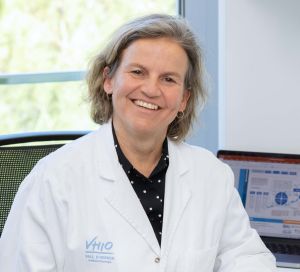
Lara Nonell is an Associate Professor in the Department of Biosciences at the University of Vic – Central University of Catalonia and Head of the Bioinformatics Unit. She holds a Doctorate in Biomedicine from Pompeu Fabra University (2019) and has expertise in bioinformatics, cancer diagnostics, and multiomics data analysis. Her research focuses on developing computational methods for biomarker identification and cancer progression modeling. Education Doctorate in Biomedicine, Pompeu Fabra University (2019) MSc in Information Technology Management, La Salle Ramon Llull University (2000) Bachelor’s in Mathematics, Autonomous University of Barcelona (1996) Research Interests Dr. Nonell’s work integrates machine learning, bioinformatics pipelines, and multiomics data to drive precision oncology. Key areas include: Biomarker development for cancer diagnostics Epithelial-mesenchymal transition mechanisms in metastasis Gene expression profiling in leukemias and lymphomas Systems biology approaches to comorbidities like diabetes and cancer Publications Her 20+ peer-reviewed articles (2019-2023) span oncology, immunology, and bioinformatics. Recent work includes: Epigenetic drivers of hepatoblastoma progression MYC-driven gene signatures in melanoma prognosis MicroRNA regulation in cutaneous lymphomas Grants & Labs Leads the Bioinformatics Unit supporting VHIO research. Collaborations include multi-institutional projects in Barcelona’s biomedical ecosystem. No specific grants mentioned in the text.
Josep Piñol Pascual is a Researcher at the Department of Animal Biology, Plant Biology and Ecology at the Universitat Autònoma de Barcelona. He holds a Ph.D. from the Universitat de Barcelona (1990). His work focuses on ecological interactions, agroecology, and molecular ecology, contributing to UN Sustainable Development Goals related to sustainable agriculture and biodiversity. He has led projects such as 'Interacciones multitróficas en la comunidad de artrópodos de un cultivo ecológico de cítricos' (2011-2013) and participates in advanced computing initiatives addressing societal challenges. Recent research emphasizes DNA metabarcoding, soil food webs, and pest management in citrus groves. His grants include funding from the Spanish Ministry of Science and the European Regional Development Fund. Though no awards are listed, his projects highlight significant contributions to agroecological sustainability and molecular methods in ecology. He has supervised 12 students but no names are provided. His work involves collaborations across departments and institutions, focusing on applied ecology and computational tools for biodiversity analysis.
Ana Acuña serves as a full-time Assistant Professor in the Department of Galician and Latin Philology at the Faculty of Education and Sport Sciences, University of Vigo, based at the Pontevedra campus. Her academic profile centers on Galician language and literary studies within the university's formal structure. She earned her Doctorate from the University of Santiago de Compostela in 2009 with the thesis Making Galician Literature in Madrid 1950-2000 , supervised by Dr. Dolores Vilavedra Fernández and Dr. Xesús Alonso Montero. This foundational work established her expertise in Galician literary production within Iberian cultural contexts. Dr. Acuña's research spans Galician Literature, Ecocriticism, Animal Studies, and Iberian Cultural Transfer, with notable emphasis on human-animal relationships in literary texts and environmental justice frameworks. Her scholarship critically examines Galician cultural production through posthumanist and ecocritical lenses, particularly focusing on marginalized voices and non-human perspectives within the literary canon. Analysis of her 2021-2024 publications reveals consistent thematic threads: ecocritical interpretations of Galician cultural movements (e.g., Nave Civitas), analyses of violence against children and animals during wartime, and recovery of women's literary contributions during the Francoist period. Her work demonstrates methodological innovation through interdisciplinary approaches blending literary analysis with environmental humanities. No scientific awards were documented in the available materials. Information regarding student supervision, grant funding, or formal advising roles was not provided in the source documentation. She actively contributes to the TALG (Technologies and Applications of the Galician Language) research group, which investigates computational linguistics applications for Galician language preservation and technological integration.
Irene Tadeo Cervera is an Adjunct Professor and Degree Coordinator for Veterinary Medicine at CEU Cardenal Herrera University, specializing in Animal Health, Public Health, and Food Technology. She holds a PhD in Biology from the University of Valencia with an International Mention and Extraordinary Doctoral Award. Research focuses on cancer biology, particularly neuroblastoma and triple-negative breast cancer, using digital imaging and extracellular matrix characterization. Teaching roles include Genetics in Veterinary Medicine, coordination of bilingual groups, and pedagogical innovation with AI and active methodologies. Accredited by ANECA as Full Professor, Associate Professor, and Assistant Professor. Her research spans competitive projects and collaborations in national/international centers, with over 20 indexed publications and conference contributions. She leads academic management for international students and contributes to curriculum development in veterinary education.
Daniel José Franco Ruiz is a Professor in the Department of Chemical Engineering at the Higher Technical School of Engineering, Universidade de Santiago de Compostela. His research focuses on food chemistry, biotechnology, and sustainable food systems with particular emphasis on meat science, proteomics, and bioactive compounds. He leads the TIBD Research Group (Technologies for the Development of Industrial Bioproducts). Franco Ruiz holds a doctoral degree from the same university (2002), with a thesis on oilseed processing and ethanol extraction. His educational background includes advanced studies in chemical engineering and food technology. Key research areas include proteomic analysis of meat quality, antioxidant properties of natural compounds (e.g., phlorotannins from seaweed), and development of novel food products through green technologies. He has pioneered tools like PhenoExam for gene-phenotype analysis and contributed to understanding pre-slaughter stress effects on meat proteins. Publications span food safety, animal welfare, and sustainable production systems. Notable work includes studies on Celta pig breed characteristics, lipid profiles in meat products, and proteomic innovations. Franco Ruiz collaborates extensively on projects like ACE-TICs and has explored digital strategies for education and animal husbandry practices. He is actively involved in industry-relevant research, bridging academic insights with practical food industry applications. His lab focuses on cutting-edge proteomic techniques (e.g., SWATH-MS) and bioinformatics tools, while addressing global challenges like functional food development and environmental sustainability in food processing. Franco Ruiz also advocates for improved animal welfare standards through scientific research.
Romualdo Satorras is a Professor at the Universitat Politècnica de Catalunya (UPC), affiliated with the Barcelona School of Informatics (FIB) and the Department of Physics. His primary research focuses on complex systems, statistical mechanics, and network theory. He leads the Condensed, Complex and Quantum Matter Group (CCQM) and has contributed extensively to understanding epidemic spreading, opinion dynamics, and collective behavior in social and biological systems. With an h-index of 44, his work bridges theoretical physics and applied computational modeling. Education: Holds a Doctorate in Physics (DOCTOR C. FÍSIQUES). Research interests include social dynamics, complex networks, and critical phenomena, with notable studies on pandemic modeling and collective decision-making mechanisms. His work integrates advanced mathematical methods with real-world data analysis. Recent research trends emphasize multidimensional opinion polarization, temporal network dynamics, and the interplay between risk perception and collective behavior in biological systems like fish schooling. His publications analyze both theoretical frameworks and empirical data from social media interactions and epidemiological systems. Scientific Awards: Not explicitly listed, but his h-index indicates significant scholarly impact. Advising and Grants: While specific grants are not detailed, his active research group suggests involvement in competitive funding. His work on activity-driven networks and epidemic thresholds has attracted international attention. Collaborates widely with institutions through networks analyzed in his studies. Labs/Teams: Member of the CCQM group, focusing on interdisciplinary research at the intersection of condensed matter physics and complex systems science.
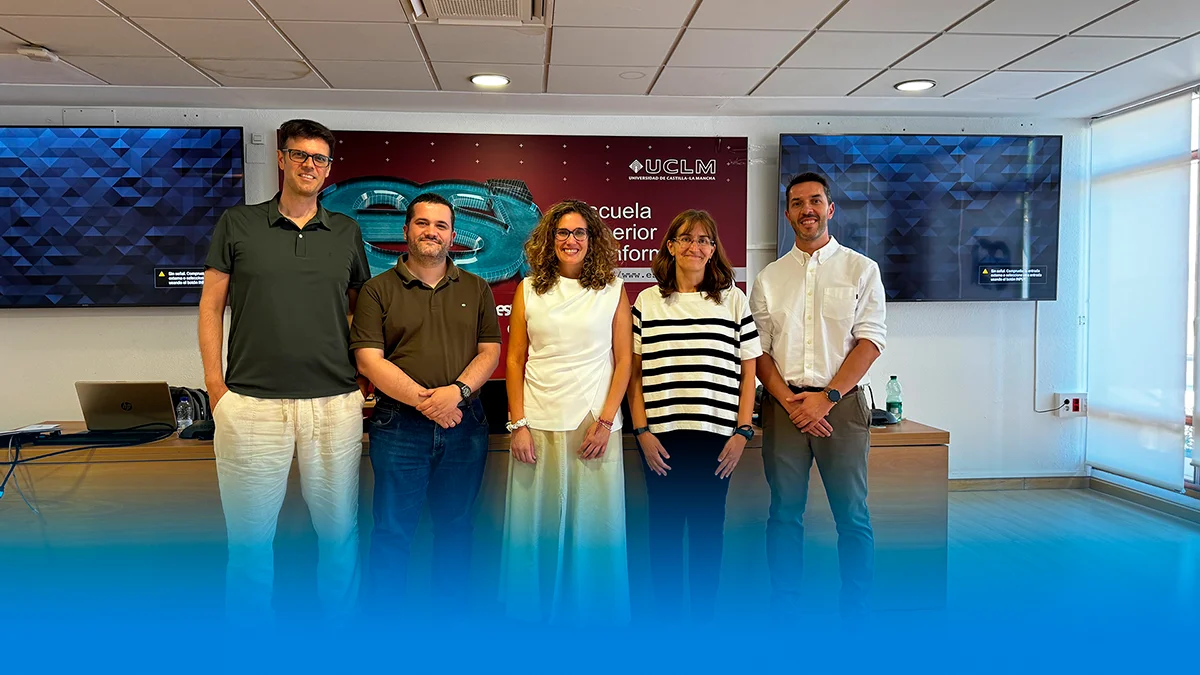
Vanesa Herrera Tirado is a researcher at the AIR group (Artificial Intelligence and Rendering) within the School of Computer Science at the University of Castilla-La Mancha. She recently defended her doctoral thesis on July 10, 2025, titled 'Safe, Adaptive, and Accessible Immersive Systems for Upper Extremity Rehabilitation in Patients with Spinal Cord Injury,' funded by the Ministry of Science, Innovation and Universities through the national Rehab-Immersive project. Her research focuses on developing adaptive virtual reality systems for spinal cord injury rehabilitation, featuring motor limitation detection, hands-free interaction mechanisms, and fatigue-based difficulty adjustment. These therapeutic serious games incorporate multisensory feedback and kinematic data tracking for objective progress analysis, developed in clinical collaboration with Toledo's National Paraplegic Hospital. She also extends her expertise to accessible computing through e-commerce applications, recently guiding students in building APASA animal shelter's public-facing website. Herrera's work is supported by the four-year Rehab-Immersive grant, demonstrating practical integration of computer science in healthcare and social causes. Her AIR research group specializes in merging artificial intelligence with rendering technologies for therapeutic rehabilitation solutions.
Emilio Iranzo García is a faculty member at the Universitat de València, Spain, affiliated with the Faculty of Geography and History in the Department of Geography. He holds the academic rank of Titular de Universidad, equivalent to Associate Professor, and specializes in Human Geography. His work is deeply connected to cultural heritage, landscape studies, and geographical education, with a strong emphasis on rural and Mediterranean environments. His research interests focus on the intersection of landscape, heritage, and education. Key areas include the analysis of traditional irrigation systems, territorial stewardship (Custodia del Territorio), the didactic potential of cultural landscapes, and the use of toponymy for landscape reconstruction. He actively promotes project-based learning (AbP) and service-learning (ApS) in geographical education, particularly through initiatives like the GEODIDACT RINCÓN project, which integrates community engagement with academic learning in rural Valencian territories. His recent publications reveal a strong thematic consistency in Mediterranean landscape dynamics, heritage conservation, and educational applications. Works span topics such as runoff systems in semi-arid regions, animal-powered waterwheels, and the integration of sustainable development goals (SDGs) into rural education. His output demonstrates a multidisciplinary approach combining geography, environmental science, history, and pedagogy. Emilio Iranzo García is actively involved in research and teaching, with no indication of retirement or former staff status. He supervises academic work and contributes to the ESTEPA research group (Studies of Territory, Landscape and Heritage). His email for contact is emilio.iranzo-garcia@uv.es.