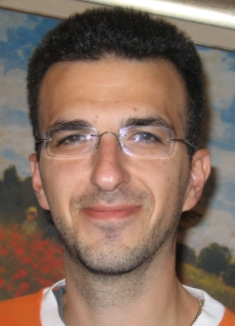
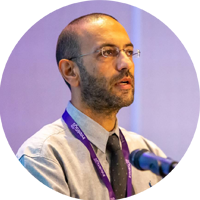
Ioannis Vogiatzis is a Professor and Chair of the Department of Computer Engineering at the University of West Attica . He serves as Director of the Computer and Embedded Systems, Internet of Things, and Optimization (CESIO) Laboratory. Education: B.A. in Computer Science (1990) MSc in Electronic Automation (1994) Ph.D. in Computer Science (1998) Research interests focus on dependability and security of digital systems , reconfigurable computing , and accelerator design for artificial intelligence. He also explores machine learning and AI algorithms , blockchain systems , Internet of Things (IoT) , and unmanned aerial vehicles (UAVs) . Grants & Projects: He has participated in multiple projects funded by the European Union and the Greek government. Labs & Teams: He leads the CESIO Laboratory, specializing in computer engineering, embedded systems, IoT, optimization, and AI-driven security solutions.
Dimitrios Magos is a Professor in the Department of Computer and Information Engineering at the School of Engineering, University of West Attica. His academic career spans decades, with a focus on theoretical and applied aspects of computer science and operations research. B.A. in Statistics and Informatics from the School of Economics and Business (1987) M.Sc. in Operations Research from the London School of Economics and Political Science (1988) PhD in Informatics from the Athens University of Economics (1993) His research interests include Algorithms , Discrete Optimization , Mathematical Programming , and Constraint Programming , with applications in computational efficiency and decision-making systems. Magos has published extensively in prestigious international journals and conference proceedings, contributing to advancements in algorithm design and optimization techniques. His office is located at K16.222, Campus 1, and his work remains accessible through his official web page.
Vasilios Mamalis is a Professor at the Department of Informatics and Computer Engineering, University of West Attica, and a member of the Collaborating Scientific Staff at the Hellenic Open University's Informatics program. His academic career spans decades with significant contributions to parallel and distributed computing, wireless sensor networks, and cloud technologies. Education: Diploma in Computer Engineering and Informatics, University of Patras (1993) PhD in Computer Engineering and Informatics, University of Patras (1998) Research Interests focus on parallel algorithms, distributed systems, wireless sensor networks, cloud computing, and information retrieval. His work addresses energy efficiency in ad-hoc networks, optimization techniques, and educational technology applications. Publication Trends show extensive work on WSN clustering, cloud task scheduling, parallel simplex methods, and fog computing applications in education and urban systems. He combines metaheuristics with infrastructure optimization in large-scale networks. Scientific Contributions include editorial roles in the Journal of Balkan Libraries Union and program committee memberships in international conferences. He actively reviews for journals and conferences in computing. Teaching Expertise covers operating systems, parallel computing, distributed systems, and cloud technologies at both undergraduate and postgraduate levels. His Research Leadership involves EU/Greek-funded projects on communication protocols, parallel content-based retrieval, and wireless sensor networks.
George Lentaris is an Assistant Professor at the Department of Computer Engineering, School of Engineering, University of West Attica. He is also a researcher at the National Technical University of Athens (associate, first level). Education: PhD in 'Parallel Architectures and Algorithms for Digital Signal and Image Processing' from National & Kapodistrian University of Athens Master's in 'Logic and Theory of Algorithms and Computation' Master's in 'Electronic Automation' Bachelor's in Physics from National & Kapodistrian University of Athens Research Interests: Design of hardware units and high-performance embedded systems FPGA and multi-core architectures HW/SW heterogeneity and optimization Acceleration of algorithms for space, telecommunications, and edge computing applications Professional Contributions: Participated in 18+ research projects funded by European Space Agency, Horizon, and NSRF Published 60+ scientific articles, including 21+ in journals like IEEE/ACM Transactions and 40+ in international conferences
Dimitrios Zoros holds the position of Lecturer at the Department of Mathematics of the National and Kapodistrian University of Athens (NKUA). His primary affiliations include NKUA and the MPLA (MPLA's formal English name?). He is actively involved in teaching courses such as Recursion Theory and Data Structures. His research focuses on Graph Theory, Parameterized Complexity, and related areas. Education: BSc in Mathematics from NKUA, MSc in Logic, Algorithms, and Computation from MPLA, and a PhD in Logic and Algorithms from NKUA under Prof. Dimitrios M. Thilikos. Research Interests: Graph Obstruction Sets, Graph Searching, Parameterized Complexity, Computability, Algorithms, Logic/Set Theory, and Discrete Mathematics. His work contributes to theoretical foundations of algorithms and graph theory applications.
Klonidis Dimitrios is a Lecturer at the Department of Informatics, University of Athens. His research interests span core areas of computer science, including algorithm design, data structures, and software development methodologies. Contact: dklonidis@di.uoa.gr .
Tzaferis Philippos is an Assistant Professor at the Department of Informatics , School of Sciences , National and Kapodistrian University of Athens (NKUA), with a career spanning since 1982. His primary academic roles include teaching and research in theoretical computer science, focusing on scientific calculations, parallel algorithms, and operational research. Education : Bachelor of Mathematics (1980), Master's in Informatics and Operations Research (1982), PhD in Computer Science (1994) from NKUA. Research Interests center on high-performance computing, numerical methods for linear systems, and algorithm optimization. His work bridges theoretical computer science with practical applications in parallel processing and mathematical modeling. Professional Career Highlights : Assistant Professor at NKUA Department of Informatics (2009–Present) Lecturer at NKUA Department of Informatics (1995–2009) Scientific Associate roles in Informatics and Mathematics departments (1986–1995)
Iliopoulos Georgios is a Professor and Department Chair at the Department of Statistics and Actuarial Science, School of Finance and Statistics, University of Piraeus. He has held this position since 2015, following his progression from Assistant Professor (2003-2010) to Associate Professor (2010-2015) at the same institution. Education: 1993: B.A. in Mathematics, Department of Mathematics, University of Patras 1999: PhD in Statistics, Department of Mathematics, University of Patras Iliopoulos specializes in statistical theory and methodology, with particular expertise in Markov chain Monte Carlo methods, Statistical Decision Theory, and Scale parameter estimation. His research focuses on accurate inference under censorship and constrained inference arrangement, addressing fundamental challenges in statistical analysis of complex data structures. His work bridges theoretical statistics with practical applications in reliability analysis and survival analysis. His publication record shows consistent contributions to exact statistical inference methods, particularly for censored data and complex distributions like Laplace and Gamma. His research demonstrates expertise in both parametric and semiparametric approaches, with significant work on variance reduction techniques in computational statistics and solutions to the label switching problem in Bayesian mixture models. Iliopoulos teaches undergraduate courses including Linear Algebra, Statistics II: Hypothesis Testing, and Special Topics in Statistics (Bayesian Statistics), as well as the postgraduate course Computational Statistical Techniques for the Master of Science in Applied Statistics.
George P. Kafentzis is a Lecturer in the Computer Science Department at the University of Crete, where he teaches Physics for Engineers (CS-112), Digital Signal Processing (CS-370), and Signals and Systems (CS-215). He is a core member of the Speech Signal Processing Lab within the Multimedia Informatics Labs, focusing on advanced signal processing methodologies. His educational background includes a Ph.D. in Signal Processing and Telecommunications from MATISSE Doctoral School (University of Rennes 1) and a Ph.D. in Computer Science and Engineering from the University of Crete (2014), a Master of Science in Computer Science (2010), and a Bachelor's degree in Computer Science (2008), all from the University of Crete. Research interests span speech, audio, and biosignal processing with emphasis on sinusoidal modeling, emotion recognition from speech, deep learning applications, pathological speech analysis, and music signal processing. His work bridges theoretical signal processing with clinical and engineering applications, particularly in non-invasive vocal fold pathology detection through glottal analysis. Recent publications demonstrate a strategic pivot toward cough sound analysis for respiratory diagnostics using AI, while maintaining core expertise in adaptive sinusoidal models for speech transformations. Publication trends reveal an evolution from fundamental speech modeling (2010-2016) toward applied health informatics (2021-present), with increasing focus on real-world diagnostic systems leveraging cough acoustics. Over 50% of recent work integrates deep learning with traditional signal processing for medical applications, particularly in low-resource settings. Graduate student Scholarship - Institute of Computer Science, FO.R.T.H. (2008-2010) Undergraduate Scholarship - Institute of Computer Science, FO.R.T.H. (2007-2008) As an active industry collaborator, Kafentzis has served as Signal Processing Engineer at Hyfe AI (2022-2025) and contractor for VoiceSignals and Toshiba Research Europe. His teaching portfolio includes a widely adopted textbook Continuous and Discrete Time Signal Processing (2019), which integrates MATLAB implementations with theoretical foundations. Current research leverages his signal processing expertise in cough monitoring systems validated through multicenter clinical trials. He leads projects in the Speech Signal Processing Lab including Novel Deep Learning Architectures for Automatic Speech Recognition and Speech Emotion Recognition and Visualization Techniques, with recent work extending to Greek-language pathological speech analysis and respiratory health monitoring systems.
Nikos Komodakis is a Professor in the Computer Science Department at the University of Crete, Greece, where he develops efficient, scalable and mathematically well-grounded algorithms for analyzing visual data including static natural images, video, and medical image data. His research spans deep learning, computer vision, machine learning, and artificial intelligence with significant contributions to self-supervised learning, few-shot learning, and knowledge distillation techniques. His work demonstrates a strong theoretical foundation combined with practical applications, particularly in medical imaging. Komodakis has published extensively in top-tier computer vision venues including CVPR, ICCV, ECCV, and IEEE Transactions on Image Processing. His recent publications (2022-2025) show a growing emphasis on medical image analysis applications while maintaining strong contributions to fundamental computer vision problems. Notable contributions include novel approaches for unsupervised representation learning that surpass state-of-the-art methods, effective techniques for knowledge distillation (such as the QUEST framework), and innovative frameworks for few-shot visual learning. Komodakis serves on the editorial boards of prestigious journals including the International Journal of Computer Vision, Computer Vision and Image Understanding Journal, and Computational Intelligence Journal. He has been a frequent area chair for major computer vision conferences including CVPR, ICCV, ECCV, and BMVC. Spyros Gidaris received the Ponts Foundation Best Thesis Prize and the University Paris-Est Best Thesis prize under Komodakis' supervision Sergey Zagoruyko received the AFRIF 2018 Thesis Prize for his PhD work supervised by Komodakis His research group has developed influential techniques including Online Bag-of-Visual-Words Generation for Unsupervised Representation Learning, which surpassed previous state-of-the-art methods. The group maintains active GitHub repositories for many of their publications, demonstrating commitment to reproducible research. Current research directions include advancing medical image analysis through deep learning, improving self-supervised learning frameworks, and developing more efficient neural network architectures.
Michael Plexousakis is an Assistant Professor in the Department of Mathematics & Applied Mathematics at the University of Crete. He received his PhD from the University of Tennessee, Knoxville and joined the University of Crete in 2010. He maintains research affiliations with the Institute of Applied and Computational Mathematics at the Foundation for Research and Technology, Hellas (FO.R.T.H.) and the Archimedes Center for Modeling, Analysis and Computations (ACMAC). His research focuses on: Numerical solution of partial differential equations with finite element and finite volume methods A posteriori error estimation and adaptivity Singular solutions of evolution equations Scientific computing and visualization Dr. Plexousakis has secured significant research funding including the SYNERGASIA program (2011-2013) studying extreme weather phenomena, the THALIS program (2012-2014) on optimal management of economic and environmental systems, and research on seismic protection of existing buildings. His teaching portfolio spans computational mathematics with courses including: Computer Programming II Design and Analysis of Algorithms Numerical Algorithms Numerical Analysis Numerical Solution of PDEs Mathematical Biology He has co-authored two textbooks: "Numerical Analysis" (2023) for postgraduate studies and "Numerical Solution of Partial Differential Equations" (2015) for undergraduate students, both published through Kallipos, Open Academic Editions. Dr. Plexousakis's publication record demonstrates expertise across multiple domains of computational mathematics, with particular emphasis on numerical methods for Helmholtz equations, Schrödinger equations, and parabolic equations. His work bridges theoretical numerical analysis with practical applications in atmospheric science, quantum mechanics, and materials science, showing consistent contributions to high-impact journals in applied mathematics.
Bouras Christos is a Professor in the Department of Computer Engineering at the University of Patras , focusing on advanced research and teaching in computer science and telecommunications. His work spans both theoretical foundations and practical applications. Network Performance Analysis 5G/6G Communication Systems Machine Learning for Network Optimization IoT and Telematics His recent research emphasizes 5G network optimization , with publications on beamforming techniques, resource allocation algorithms, and energy efficiency in MIMO and DUDe architectures. Key subtopics include: Deep learning for user allocation Game theory-based resource management IoT latency reduction Adaptive beamforming Network slicing optimization Techno-economic modeling He contributes to the academic community through leadership in the Division of Applications and Foundations of Computer Science, which includes laboratories focused on distributed systems, combinatorial algorithms, and machine learning applications.
Christos Kaklamanis is a Full Professor and Chair of the Department of Computer Engineering and Informatics at the University of Patras, Greece, with significant leadership roles including President of Computer Technology Institute & Press "Diophantus" (CTI) from 2016-2021. His academic career includes serving as Vice-Chair of the Department (2009-2011 and 2003-2005) and Director of the Division of Applications and Foundations of Computer Science (1997-2003). Dr. Kaklamanis earned his S.B. in Computer Science and Engineering from MIT (1986), followed by S.M. (1989) and Ph.D. (1992) from Harvard University. He completed postdoctoral work at DIMACS (Center for Discrete Mathematics and Theoretical Computer Science) and worked as a research consultant for NEC Research Institute, Princeton. His research spans theoretical and applied computer science with expertise in algorithm design, computational complexity, communication networks, parallel and distributed computing, and algorithmic game theory. He has made significant contributions to network algorithms, particularly in optical networks and wireless communication, with recent expansion into computational social choice and educational technology applications. His work bridges theoretical foundations with practical implementations, especially in developing educational tools that make complex algorithms accessible. Analysis of his publication history reveals an evolution from foundational algorithm research toward practical applications of theoretical concepts, particularly in educational technology and community-oriented computing solutions. His recent work focuses on creating web and mobile applications that address real-world challenges in campus management, cultural tourism, and community engagement while maintaining strong theoretical underpinnings. Elected member of EATCS council (2009-2021) Active in ACM, IEEE, SIAM, and Technical Chamber of Greece Program Committee Chair for WAOA (Workshop on Approximation and Online Algorithms) Conference co-chair for ICALP (International Colloquium on Automata, Languages and Programming) As an educator, Dr. Kaklamanis has taught core courses including Theory of Computation, Parallel Algorithms, Communication Algorithms, and Cryptography. He has led major research initiatives including EU-FET projects CRESCCO and AEOLUS (as coordinator), EU-ICT Project EULER, and the "DIGITAL SCHOOL" project focused on national educational platforms. His leadership extends to directing research laboratories in Combinatorial Algorithms, Distributed Systems and Telematics, and Pattern Recognition. His current work continues to bridge theoretical computer science with practical applications, particularly in educational technology, with numerous recent publications focused on developing interactive learning tools and platforms that leverage algorithmic principles for educational and community benefit.
Professor Michael Papoutsidakis is affiliated with the Department of Industrial Design and Production Engineering at the University of West Attica. His academic career spans research in industrial automation, mechatronics, and intelligent control systems, with a focus on applications in hydraulic/pneumatic systems, robotics, and Industry 4.0 technologies. PhD from Bristol Robotics Laboratory (2004) MSc in Automatic Control Systems from University of the West of England (2004) Graduated from TEI Piraeus Automation Engineering (2000) His research interests include: Modeling of fluid power systems AI-driven control algorithms Smart logistics and ERP systems Embedded systems for motion devices Autonomous robotic platforms Wireless sensor networks in industrial applications Recent publications highlight his work at the intersection of 3D printing, robotics, and Industry 4.0, including advancements in digital twins, biomimetic manufacturing, and drone technology. His research emphasizes practical implementations for industrial and educational contexts. 2005 Patent for robotic training base 2025 Digital Twin Systems research 2024 UAV fuzzy control systems Contact: mipapou@uniwa.gr
George Priniotakis is a Professor in the Department of Industrial Production Systems at the University of West Attica. He specializes in innovative textile technologies for multifunctional clothing, with a focus on medical and military applications, wearable sensors, and sustainable materials. His work bridges engineering, ergonomics, and environmental stewardship. University of Leeds – M.Sc. in Fiber Science and Technology (1992) University of Ghent – PhD in Conductive Textile Materials His research interests include: Smart systems using conductive textiles Risk management via wearable sensors Recyclable yarn development Innovative educational tools for engineering Professor Priniotakis has led numerous research projects as a scientific director and coordinator, participated in over 100 international conferences, and maintains an H-index of 12. He serves as President of the Organizing Committee for the biennial AITAE conference.