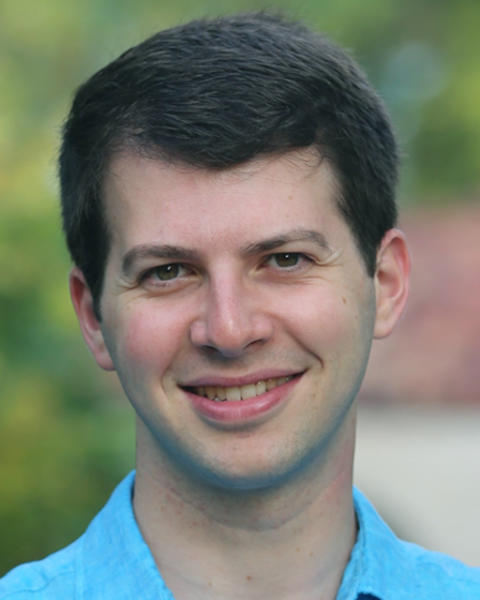
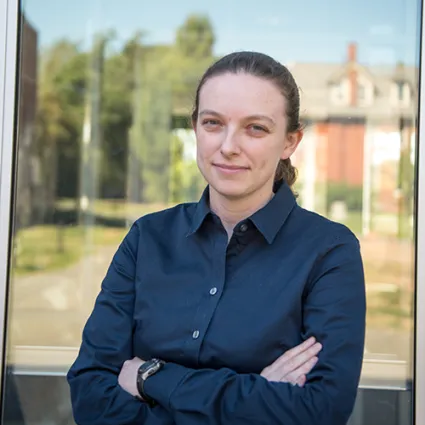
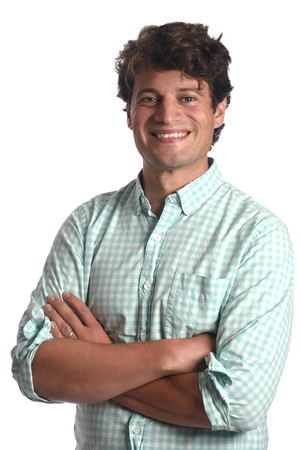
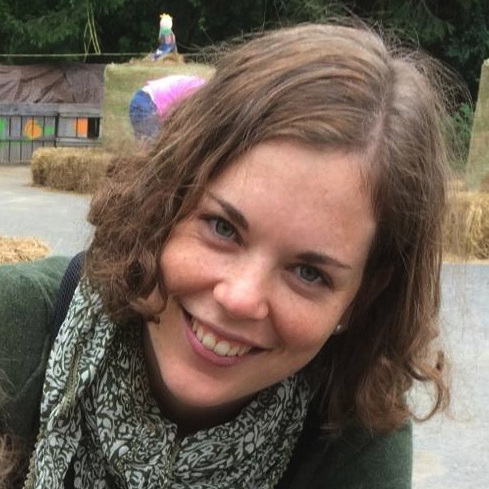
Jordan Cotler is an Assistant Professor of Physics at Harvard University, affiliated with the Department of Physics within the Faculty of Arts and Sciences. He holds a BS in physics and mathematics from MIT (2015) and a PhD in physics from Stanford University (2020). Before joining Harvard's faculty, he served as a Junior Fellow at the Harvard Society of Fellows from 2020 to 2024. His research focuses on the intersection of quantum information, computation, and spacetime physics. Key interests include quantum algorithms for analyzing many-body and quantum gravitational systems, information-theoretic frameworks for chaotic dynamics, and non-perturbative methods in quantum cosmology and field theory. Cotler's work has advanced quantum algorithm design for experimental platforms and contributed to understanding black hole microstructure and cosmological spacetimes. He has been recognized with prestigious early-career awards, including his Harvard Society of Fellows Junior Fellowship. His publications span foundational topics such as quantum gravity, holography, computational complexity, and quantum chaos, reflecting a multidisciplinary approach to theoretical physics.
Justin Campbell is a Dickson Instructor in the Department of Mathematics at the University of Chicago, specializing in geometric representation theory. His research explores connections between algebraic geometry and representation theory, with particular interest in the geometric Langlands program. Current investigations focus on categorical structures in representation theory and their applications to automorphic forms. His work bridges abstract mathematical theories with computational approaches to fundamental problems in algebra and geometry.
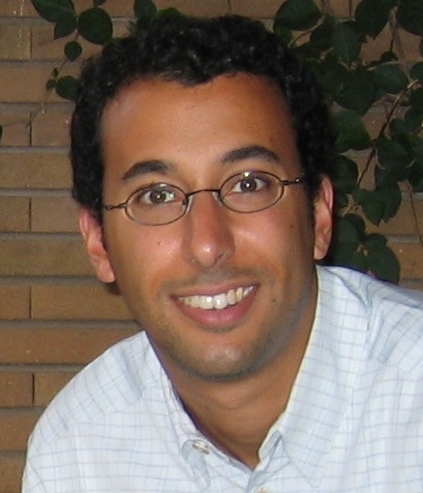
Youssef Marzouk is a Professor of Aeronautics and Astronautics at MIT, serving as co-director of the MIT Center for Computational Engineering and director of the Aerospace Computational Design Laboratory. His research focuses on integrating physical modeling with statistical inference, emphasizing Bayesian computation, uncertainty quantification, and optimal experimental design. He holds a SB, SM, and PhD from MIT and has been recognized with prestigious awards including the DOE Early Career Award and the Junior Bose Teaching Prize. Education: PhD in Aeronautics and Astronautics, MIT SM in Aeronautics and Astronautics, MIT SB in Aeronautics and Astronautics, MIT Research Interests: Uncertainty Quantification techniques for complex systems Bayesian computational methods and inverse problem solutions Optimal experimental design strategies Interdisciplinary applications in geophysics, environmental science, and engineering Awards: 2022: Report to the President, Center for Computational Science and Engineering 2021: Bayesian Inference Software Framework (hIPPYlib-MUQ) 2012: MIT School of Engineering Junior Bose Award 2010: DOE Early Career Research Award Labs & Leadership: Aerospace Computational Design Laboratory (Director) MIT Center for Computational Engineering (Co-Director) Editorial Board roles: SIAM Journal on Scientific Computing, Advances in Computational Mathematics
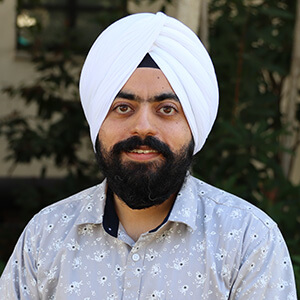
Dr. Amneet Bhalla serves as an Associate Professor in the Department of Mechanical Engineering within the College of Engineering at San Diego State University (SDSU). His primary contact email is asbhalla@sdsu.edu, with office located in Engineering Building Room 323-G, and phone number (619) 594-2043. Education: Ph.D., Mechanical Engineering, Northwestern University (2013) M.S., Mechanical Engineering, Indian Institute of Technology Kharagpur (2009) B.S., Mechanical Engineering, Indian Institute of Technology Kharagpur (2004-2008) Postdoctoral Training: University of North Carolina at Chapel Hill (Mathematics Department) and Lawrence Berkeley National Laboratory (Computational Research Division) Research Interests: Dr. Bhalla develops advanced numerical methods and high-performance computing techniques for computational fluid dynamics (CFD) and fluid-structure interaction (FSI) problems. His work spans aquatic locomotion, renewable energy device modeling, multiphase flows, vehicular aerodynamics, and bioengineering applications. He creates mathematical models to interrogate underlying flow physics for engineering design optimization, with emphasis on open-source software development through the IBAMR library. Publication Trends: Recent publications (2023-2025) focus on robust numerical frameworks for multiphase flows with phase change, acoustic streaming, and fluid-structure interaction. Key themes include mass conservation in level set methods, adaptive mesh refinement, and solvers for non-isothermal gas-liquid-solid systems. Applications range from aquatic locomotion and renewable energy devices to microfluidics and biomedical flows, demonstrating commitment to both theoretical advances and practical engineering solutions. Scientific Awards: No awards mentioned in the provided text Advising and Grants: Dr. Bhalla secured an NSF CAREER award (2023) for "Consistent Continuum Formulation and Robust Numerical Modeling of Non-Isothermal Phase Changing Multiphase Flows". As PI of the CFD Lab, he mentors graduate students in computational mechanics, leveraging prior industrial experience at ExxonMobil Upstream Research Company. His research integrates industrial practicality with academic rigor through collaborations with national laboratories. Laboratory and Team: The Computational Fluid Dynamics and Flow Physics Laboratory (CFD Lab) develops the open-source IBAMR software—a distributed-memory parallel implementation of the immersed boundary method with adaptive mesh refinement. The lab emphasizes transparency, community engagement, and reproducibility, establishing cross-institutional collaborations while advancing computational methods for complex flow phenomena in engineering and biological systems.
Claudius Zibrowius is a Professor of Low-Dimensional Topology at Ruhr-University Bochum's Faculty of Mathematics. He leads the Topology Group, focusing on categorified knot invariants like knot Floer homology and Khovanov homology, leveraging Fukaya categories of surfaces. His work bridges Heegaard Floer theories and quantum invariant categorifications. Current group members include postdoc Dr. Chen Zhang and PhD student Luca Marchiori. Research highlights include ERC Starting Grant (ERC-2024) and DFG funding, as well as contributions to topics like Gordian distances, Conway spheres, and mutation invariance. Notable collaborations involve Artem Kotelskiy and Liam Watson. Teaching activities include Algebraic Topology I and outreach lectures. He co-organizes conferences like 'Categorification in Low Dimensional Topology' (2025). Awards include DFG Individual Grant (2022) and ERC Starting Grant (2024). His lab engages in computational projects like kht++, a C++ program for Khovanov invariants. Beyond academia, he sings in choirs and advocates for Palestinian rights, publicly opposing Israeli-Palestinian conflict complicity.
Dr. HanQin Cai is the Paul N. Somerville Endowed Assistant Professor in the Department of Statistics and Data Science at the University of Central Florida (UCF), also serving as Director of the Data Science Lab. He holds a joint appointment with the Department of Computer Science. His research focuses on theoretical and algorithmic foundations of mathematical optimization, data science, and machine learning, with emphasis on non-convex algorithms, adversarial attacks, signal/image processing, and deep learning integration. He has secured NSF grants totaling over $2.6M, including a $121K single-PI grant and a $2.49M co-PI grant. His work has been recognized with the UCF OSCaR Award (2025) and IEEE Senior Member status (2024). Education: PhD in Applied Mathematical and Computational Sciences from University of Iowa (2018), with M.S. in Mathematics (2014) and M.C.S. in Computer Science (2017). Previously served as a Postdoc at UCLA Mathematics Department under Dr. Wotao Yin. Research highlights include: query-efficient zeroth-order optimization, robust signal processing with corrupted data, adversarial attacks on neural networks, and tensor-based methods for high-dimensional data analysis. His recent publications explore advanced techniques in matrix recovery, tensor decompositions, and explainable AI. Grants & Awards: NSF DMS-2304489 (2022–2025), NSF DUE-2321986 (2024–2029), UCF OSCaR Award, IEEE Senior Membership. Labs & Teams: Directs UCF's Data Science Lab, collaborates across disciplines in statistics, computer science, and engineering.
Guifang Li is a Professor of Optics and Electrical & Computer Engineering at the University of Central Florida (UCF), affiliated with CREOL, The College of Optics and Photonics. He holds the position of Editor-in-Chief of Advances in Optics and Photonics . His academic journey includes a Ph.D. from the University of Wisconsin-Madison and leadership roles such as Director of the NSF IGERT program in Optical Communications and Networking at UCF. Dr. Li's research focuses on optical communication and networking , RF photonics , and all-optical signal processing . His innovations include pioneering work on photonic computing architectures and high-capacity optical communication systems. He co-founded Optium, UCF's first venture startup, which became a public company (OPTM) in 2006 and later part of II-VI. His scientific contributions are recognized through prestigious awards, including the NSF CAREER Award, Office of Naval Research Young Investigator Award, and fellowships from IEEE, OSA, SPIE, and the National Academy of Inventors. He has advised over 20 Ph.D. students and leads a multidisciplinary research group involving postdoctoral scholars and graduate students. Recent research trends in his publications emphasize photonic computing (e.g., photonic matrix processors, floating-point arithmetic) and advanced optical systems (e.g., quantum cascade lasers, MPLC-based demultiplexers). His work bridges fundamental optics with practical applications in telecommunications and sensing. Labs/Teams: His research team specializes in optical communication systems, photonic integrated circuits, and computational optics.
Alex Gittens is an Assistant Professor in the Department of Computer Science at Rensselaer Polytechnic Institute (RPI), joined in 2017. His research focuses on algorithmic trade-offs between computational efficiency and accuracy in large-scale linear algebra and machine learning contexts. He has expertise in kernel methods, randomized numerical linear algebra, and low-rank approximation techniques. Education: PhD in Applied and Computational Mathematics, Caltech (2013) Industry Postdoc at eBay Research Labs (2013-2015) Postdoctoral Scholar at International Institute of Computer Science (2015-2016) His research explores scalable machine learning algorithms, nonlinear and multilinear sketching applications, and sampling for low-rank tensor/matrix approximation. Current technical interests include attention mechanisms for knowledge graph completion, federated learning trade-offs, and causal inference in adversarial settings. Recent publication trends show active contributions in federated learning (privacy-fairness optimization), causal information extraction (financial text analysis), and adversarial machine learning (robustness-security trade-offs). His work emphasizes trustworthy ML systems and computational efficiency in high-dimensional data processing. Teaching includes foundational discrete mathematics (CSCI 2200) and advanced machine learning courses (CSCI 6968/4968). He offers advising through Slack channels and via email, focusing on course selection, research opportunities, and graduate school preparation.
Jim Haglund is Professor of Mathematics at the University of Pennsylvania, specializing in algebraic and enumerative combinatorics. His research explores symmetric functions, Macdonald polynomials, combinatorial statistics, rook theory, and polynomial root behavior. He directs the CAGE seminar and IPAC seminar series, fostering collaboration in combinatorics. Dr. Haglund's work connects combinatorics with representation theory and special functions, particularly through Macdonald polynomial operators and the Delta Conjecture. His research employs both theoretical frameworks and computational experimentation. Analysis of recent publications reveals consistent focus on combinatorial structures underlying symmetric functions, with innovations in delta operators, chromatic quasisymmetric functions, and rook theory generalizations. His work frequently bridges combinatorics with algebraic geometry and representation theory. Awards & Recognition: Fellow of the American Mathematical Society Editorial boards: Journal of Combinatorics and Involve Advising & Collaboration: Mentored 16 PhD students and numerous postdoctoral researchers. Leads combinatorial research group exploring connections between Macdonald theory, diagonal harmonics, and algebraic geometry.
Harrison Huibin Zhou is the Henry Ford II Professor of Statistics and Data Science at Yale University. He has held leadership roles, including Department Chair of Statistics and Data Science (2018–present) and former Chair of Statistics (2012–2017). His academic career at Yale spans over two decades, with promotions from Assistant Professor (2004–2009) to Associate (2009–2010) and full Professor (2010–present). Research Interests: Dr. Zhou specializes in high-dimensional statistical theory, including nonparametric estimation, minimax theory, and applications in network analysis, machine learning, and functional data analysis. His work bridges theoretical foundations with computational methods, addressing challenges in modern statistical decision-making. Publications: His recent work focuses on spectral clustering, quantum state tomography, and optimal estimation in high-dimensional models. Notable contributions include theoretical guarantees for algorithms like the EM method in Gaussian mixtures and advancements in community detection in networks. Teaching: He teaches advanced courses such as Functional Data Analysis, Nonparametric Estimation, and Decision Theory, reflecting his expertise in statistical methodology and theory. Professional Service: Organized workshops on topics like Empirical Processes (2015) and High-Dimensional Data (2012), underscoring his role in fostering academic collaboration.
Patricia Cahn is Associate Professor of Mathematical Sciences and Codirector of the Postbaccalaureate Program at Smith College. Her research focuses on geometric and low-dimensional topology, including trisections of 4-manifolds, branched coverings of 3- and 4-manifolds, and contact topology. Supported by an NSF CAREER grant. Education: Ph.D. and M.A. in Mathematics, Dartmouth College A.B. in Mathematics, Smith College Research explores: Algebraic invariants for topological intersections Knot theory under geometric constraints Branched coverings and dihedral invariants Computational methods in topology Publications demonstrate consistent focus on knot invariants and manifolds, with recent work on trisected branched covers (2023) and dihedral linking invariants (2021). Computational projects include algorithms for topological invariants. Grants: Currently funded by NSF CAREER award for research on branched covers in dimensions three and four. Teaching: Courses include Multivariable Calculus (MTH 212) and Topology (MTH 370) for 2024-2025. Laboratory: Leads computational topology projects with code repositories available on GitHub.
John Voight is a Professor in the School of Mathematics and Statistics at the University of Sydney, where he is also a member of the Algebra and Computational Algebra groups. His research focuses on arithmetic algebraic geometry, modular forms, and computational number theory. He collaborates with the Magma computational algebra system development team and contributes to databases like the LMFDB. Affiliations: University of Sydney (2024–present), Dartmouth College (2007–2024), University of Vermont (2007–2013). Key research interests include modular curves, Shimura varieties, elliptic curves, and abelian varieties. He explores algorithmic methods for computing with algebraic structures, such as quaternion algebras and ideal class groups. Publications span over 90 articles, including works on Hilbert modular forms, Belyi maps, and paramodular varieties. Notable achievements include the Selfridge Prize (2010 and 2018) and Simons Foundation grants. He advises numerous PhD students and has contributed to major projects like the LMFDB, advancing computational tools for number theory.
Jesse Wolfson is an Associate Professor and Vice-Chair for Inclusive Excellence in the Department of Mathematics at the University of California, Irvine. His research focuses on the interplay of arithmetic, geometry, and topology, with notable contributions to arithmetic topology, resolvent degree, and algebraic geometry. He co-directs the Southern California Geometry and Topology Center (SCGTC), an NSF Research Training Group (RTG) program actively recruiting graduate students in geometry and topology. He holds a PhD and has expertise spanning algebraic structures, homological algebra, and interdisciplinary applications such as fractals in music. His work bridges pure mathematics with educational outreach, including public lectures and collaborations with institutions like St. John’s College, Santa Fe. His email is wolfson@uci.edu , and he maintains an active research blog detailing his projects and collaborations. Wolfson’s research emphasizes foundational questions in mathematics, including Hilbert’s 13th problem and the epistemic role of proofs in AI. His recent talks and articles explore topics like prismatic cohomology, modular functions, and geometric gauge theories, reflecting his commitment to advancing both theoretical and applied mathematical frontiers.
Dora Erdos is a Senior Lecturer and Director of Undergraduate Studies in the Department of Computer Science at Boston University. She specializes in algorithmic challenges, data mining, and combinatorial optimization with a focus on network-based problems. Her work bridges theoretical computer science and practical applications in education technology and network analysis. Education: PhD in Computer Science, Boston University (2015) MSc in Pure Mathematics, Eotvos University (Advisor: Andras Frank) Postdoctoral Research at Brown University's Raphael Lab (Advisor: Ben Raphael) Research Interests: Erdos investigates algorithms for network analysis, including centrality measures, graph reconstruction, and optimization problems in educational systems. She develops scalable methods for tensor factorization and content placement in navigational networks. Her work often integrates combinatorial approaches with real-world applications. Professional Roles: As Director of Undergraduate Studies, Erdos oversees academic advising and curriculum development. She emphasizes student accessibility, maintaining office hours and encouraging direct communication via email (edori@bu.edu). Recent Research Trends: Her publications (2011–2017) focus on network-centric problems such as centrality evaluation frameworks, boolean tensor decomposition, and team formation algorithms for educational scheduling. These contributions highlight her dual expertise in theoretical algorithm design and applied educational technology.
Jonathan Novak is an Associate Professor of Mathematics at the University of California San Diego (UCSD). His research focuses on the combinatorial structure and high-dimensional behavior of multivariate special functions in random matrix theory, representation theory, and mathematical physics. He serves on the editorial board of the open-access journal Algebraic Combinatorics . Key research interests include algebraic combinatorics, special functions, and their intersections with random matrices and mathematical physics. His work explores combinatorial structures in high-dimensional spaces, asymptotic analysis of integrals, and connections between probability theory and algebraic structures. Recent publications emphasize topics like Berezin-Karpelevich integrals, quasimodular asymptotics, and topological expansions in matrix models. These studies highlight advancements in understanding complex systems through combinatorial and probabilistic lenses. No scientific awards are explicitly mentioned in the provided information. His contributions extend to editorial work and advancing interdisciplinary research in algebraic combinatorics and mathematical physics.