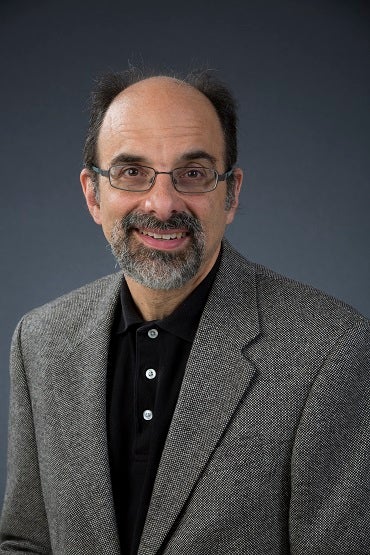
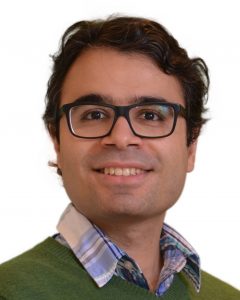
Yang P. Liu is an Assistant Professor at Carnegie Mellon University 's Department of Computer Science . He received his PhD from Stanford University under the supervision of Aaron Sidford and previously studied at MIT . Fields of Interest : Graph Algorithms, Optimization, High-Dimensional Geometry, Additive Combinatorics, Theoretical Computer Science. His research focuses on algorithmic design and analysis for graph problems, optimization, and combinatorics, with applications in machine learning and complexity theory. Recent work includes advancements in parallel repetition games , combinatorial lines , and dynamic graph algorithms . In 2024, his research spanned FOCS , STOC , and RANDOM conferences, addressing problems in k-CSPs , min-cost flow , and hypergraph sparsification . Earlier contributions (2023) included deterministic flow algorithms and spectral hypergraph techniques. Scientific Awards : NDSEG Fellowship (2018-2021), Google PhD Fellowship (2022-2023), FOCS Best Paper (2022), STOC Best Student Paper (2022), FOCS Best Student Paper (2021). He teaches CS 15-759 , a graduate course on convex optimization theory and applications, covering gradient descent, interior point methods, and algorithmic sparsification techniques.
Geoffrey Pleiss is an Assistant Professor in the Department of Statistics at the University of British Columbia's Faculty of Science. He is also a CIFAR AI Chair at the Vector Institute and an inaugural member of CAIDA's AIM-SI (AI Methods for Scientific Impact) cluster. His work bridges statistical theory, machine learning, and computational methods with applications across various scientific domains. Pleiss received his PhD from the Computer Science department at Cornell University in 2020, where he was advised by Kilian Weinberger and worked closely with Andrew Gordon Wilson. Prior to his faculty position at UBC, he was a postdoctoral researcher at Columbia University with John P. Cunningham. His research focuses on the intersection of deep learning and probabilistic modeling, particularly on developing heuristic and approximate notions of uncertainty from machine learning models. His work has significant implications for reliable and optimal decision-making in experimental design and scientific discovery. Major research thrusts include neural network uncertainty quantification, Bayesian optimization, Gaussian processes, and ensemble methods. Pleiss develops theoretical frameworks while maintaining strong connections to practical applications across scientific domains. An analysis of his recent publications reveals a strong focus on uncertainty quantification in deep learning models, with particular attention to the limitations and capabilities of ensemble methods in the era of overparameterized models. His work increasingly addresses practical challenges in Bayesian optimization for scientific discovery, especially in materials science. There's also a growing emphasis on computational efficiency in Gaussian process methods, reflecting his commitment to making advanced statistical techniques accessible for real-world applications. CIFAR AI Chair Pleiss currently advises several graduate students including Donney Fan (PhD, Computer Science), Tim G. Zhou (MSc, Computer Science), Zachary Lau (MSc, Statistics), Nathan Cantafio (BSc, Statistics), and Tristan Cinquin (Research Intern at Vector Institute). His research is supported by multiple funding sources including his CIFAR AI Chair position, which provides significant research resources for advancing machine learning methodologies with scientific impact. Pleiss co-created and maintains GPyTorch, a highly efficient and modular implementation of Gaussian processes in PyTorch designed for speed, modularity, and prototyping. He is also involved with CoLA (Compositional Linear Algebra), a library for structured linear algebra operations in JAX and PyTorch that enables fast linear algebra computations by automatically exploiting matrix structure.
Brent Pym is an Associate Professor in the Department of Mathematics and Statistics at McGill University. His research focuses on the intersection of differential, algebraic, and noncommutative geometry, with a particular emphasis on Poisson varieties and deformation quantization. He has held academic positions at the University of Edinburgh, University of Oxford, and was a Postdoctoral Fellow at McGill and the University of Toronto. Education: BScE in Engineering Physics, Queen's University (2007) MSc in Mathematics, University of Toronto (2008) PhD in Mathematics, University of Toronto (2013) Research Interests: Pym studies Poisson structures, their quantizations, and connections to mathematical physics. His work involves classical/derived algebraic geometry, D-modules, moduli spaces, the Stokes phenomenon, and multiple zeta values. Recent projects include holonomic Poisson manifolds, log symplectic structures, and software for symbolic calculations in deformation quantization. Awards: Lichnerowicz Prize (2018) Advising & Grants: Pym has openings for graduate students (admission 2026) and undergraduate projects (2026–27). He develops the Star Products software package for symbolic calculations in Poisson brackets and quantization. His work is supported by research collaborations and institutional grants. Labs & Teams: Pym collaborates with researchers in geometry and mathematical physics, contributing to projects in noncommutative algebra and geometric quantization. His software tools enhance symbolic computation in these fields.
Mark Crowley is an Associate Professor in the Department of Electrical and Computer Engineering at the University of Waterloo, with a cross-appointment in the Cheriton School of Computer Science. He is a member of the Waterloo Artificial Intelligence Institute (WAII) and the Waterloo Institute for Complexity and Innovation (WICI), and serves as National Secretary of the Canadian Artificial Intelligence Association (CAIAC). His educational background includes a Ph.D. and M.Sc. in Computer Science from the University of British Columbia, where he worked in the Laboratory for Computational Intelligence, and a B.A. in Computer Science from York University. He completed a postdoctoral fellowship at Oregon State University working with Tom Dietterich's machine learning group. Crowley's research focuses on developing dependable and transparent algorithms to augment human decision-making in complex domains with multiple agents, spatial structure, or uncertainty. His work spans Reinforcement Learning , Deep Learning , Ensemble Methods , and Manifold Learning . He frequently collaborates with researchers in applied fields including Computational Sustainability, Sustainable Forest Management, Autonomous Driving, Medical Imaging, and Material Design. His research is motivated by both theoretical opportunities and real-world challenges such as forest fire management, automotive applications, and medical imaging. His recent publications demonstrate a strong focus on addressing challenges in reinforcement learning, particularly around observation costs, multi-agent systems, and causal representation learning. His work on ChemGymRL provides a significant contribution to digital chemistry and material design through reinforcement learning frameworks. The textbook Elements of Dimensionality Reduction and Manifold Learning represents a major contribution to the theoretical foundations of machine learning. Crowley actively supervises graduate students, with recent thesis completions including Shayan Shirahmadi Gale Bagi (PhD, Feb 2025) and Oleksandra Nahorna (MASc, Dec 2024). His lab, UWECEML (Waterloo ECE Machine Learning Lab), focuses on developing new algorithms at the intersection of Machine Learning, Optimization, and Probabilistic Modeling. He teaches courses including ECE 457C (Reinforcement Learning), ECE 657A (Data & Knowledge Modelling & Analysis), and ECE 457B (Fundamentals of Computational Intelligence). His blog Computationally Thinking explores AI, machine learning, and the societal impact of these technologies.
Peter Selinger is a Professor in the Department of Mathematics and Statistics at Dalhousie University , with a cross-appointment in Computer Science. He specializes in mathematical methods in computer science, particularly quantum computing and combinatorial game theory . His work on quantum programming languages like Quipper and foundational research in category theory has garnered international recognition. Education : Ph.D. in Mathematics (University of Pennsylvania, 1997), undergraduate studies in Mathematics (Technische Universität Darmstadt). Research Interests span quantum computing, category theory, and combinatorial game theory. He has pioneered formalisms for quantum programming languages, developed categorical models for quantum mechanics, and analyzed game-theoretic structures in games like Hex. His recent work includes linear dependent type theory , quantum circuit synthesis , and combinatorial game classification . Publications demonstrate expertise in quantum programming languages, categorical semantics, and game theory. Key trends include Hamiltonian simulation , Clifford+T circuits , and monotone game realization . Scientific Honors include the Killam Professorship (2017–2022), Faculty of Science Award for Excellence in Teaching (2023), and fellowships from the Alfred P. Sloan Foundation and German National Scholarship Foundation . Students he has supervised include PhD graduates Xiaoning Bian , Francisco Rios , and Neil J. Ross , along with MSc students like Fahimeh Bayeh and Seth Greylyn . He has advised 16 postdoctoral researchers.
Dr. Angela Siegel is an Assistant Professor and Assistant Dean, Academic Outreach in the Faculty of Computer Science at Dalhousie University, Halifax, Canada. She is actively involved in both academic leadership and research. Education: Ph.D. in Mathematics (Combinatorial Game Theory), Dalhousie University, 2011 M.Sc. in Mathematics, Dalhousie University, 2005 B.Sc. in Mathematics & Marine Geophysics, 1997 Her research focuses on combinatorial game theory, graph theory, discrete mathematics, and number theory, with a strong emphasis on computer science education and inclusive teaching . She investigates the challenges students face when transitioning into computer science programs, aiming to improve pedagogical approaches and support systems. Her work bridges theoretical mathematics and practical educational innovation. The recent publications highlight a dual focus: theoretical contributions to combinatorial games (e.g., partizan games, placement games, geography variants) and applied research in computing education, particularly student transition and inclusive practices. Her interdisciplinary work spans mathematics, computer science, and educational theory. Scientific Awards: Dr. Siegel has supervised and collaborated with students and researchers on topics including student transition into higher education computing, LEGO-based pedagogy, and workplace readiness. While no specific grants are listed, her repeated presentations and publications suggest active research funding and scholarly engagement. She has contributed to major conference proceedings and book volumes such as Games of No Chance . She is associated with research teams focused on combinatorial games and computer science education innovation, often collaborating with scholars like Richard Nowakowski, Neil McKay, and Mark Zarb. Her work in inclusive teaching and student support reflects a commitment to building accessible and equitable learning environments in computing.
Jelle Hellings is an Assistant Professor in the Department of Computing and Software at McMaster University , Canada. His research focuses on high-performance large-scale data management systems with a strong theoretical and algorithmic component, including resilient systems (blockchains) , graph databases , and external-memory algorithms . He previously worked as a Postdoc Scholar at the University of California, Davis and earned his PhD from Hasselt University in Belgium. Education: Doctor of Sciences in Computer Science (2018), Hasselt University Master of Science in Computer Science and Engineering (2011), Eindhoven University of Technology His research interests include scalable resilient systems with Byzantine fault tolerance, database theory, graph query languages, constraints on graph data, and external-memory algorithms for large graph datasets. He has authored numerous high-impact publications on blockchain-based resilient systems, query optimization in graph databases, and theoretical advancements in relation algebra expressiveness. Hellings actively contributes to academic service through program committee memberships and tutorial organization, and he currently teaches courses on future resilient databases and foundational computer science topics.
Henry Yuen is the Srivani Family Associate Professor of Computer Science at Columbia University, with affiliations in the CS Theory group, Data Science Institute, and Columbia Quantum Initiative. His work bridges theoretical computer science and quantum information, focusing on the computational foundations of quantum systems. Yuen received his BA in Mathematics from the University of Southern California (2010) and PhD in Computer Science from MIT (2016). His research explores quantum complexity theory, quantum cryptography, and quantum information through both theoretical frameworks and practical applications. His recent publications reveal a strong focus on quantum pseudorandomness, quantum circuit complexity, and quantum cryptographic primitives. The research trajectory demonstrates increasing sophistication in connecting quantum computational models with fundamental questions in complexity theory, particularly through the lens of quantum interactive proofs and quantum state complexity. His work frequently intersects with operator algebras and quantum information theory, reflecting the interdisciplinary nature of modern quantum computing research. NSF CAREER award Sloan Fellowship Yuen actively mentors graduate students, with several PhD students having graduated to postdoctoral positions or faculty roles. His service includes co-organizing the Columbia CS Theory Seminar and serving on program committees for major conferences including QIP, STOC, and ITCS. He has organized multiple workshops on quantum computing challenges and cryptography. As a member of the Columbia Quantum Initiative, Yuen contributes to Columbia's growing quantum ecosystem, collaborating across departments to advance both theoretical foundations and potential applications of quantum information processing.
David Jao is a Professor in the Department of Combinatorics and Optimization at the University of Waterloo. His research focuses on post-quantum cryptography, particularly leveraging isogenies of supersingular elliptic curves for secure cryptographic protocols. He is renowned for co-developing the Supersingular Isogeny Key Encapsulation (SIKE) protocol, a leading candidate for post-quantum cryptography standards. His work spans theoretical foundations and practical implementations, including optimizing isogeny-based systems for embedded devices and ARM processors. Research interests include isogeny-based cryptosystems, elliptic curve cryptography, zero-knowledge proofs, and cryptographic security against quantum attacks. He explores applications of expander graphs and Ramanujan graphs in cryptography, alongside algorithmic improvements for cryptographic protocols such as SIDH (Supersingular Isogeny Diffie-Hellman). Key contributions include advancements in key compression techniques for SIKE, side-channel attack mitigation, and formalizing security models for post-quantum key exchange. His publications analyze cryptographic hardness assumptions, such as the discrete logarithm problem in finite groups and the semidirect product structure in isogeny-based systems. Jao’s work bridges theoretical mathematics and applied cryptography, with a focus on ensuring practical security in next-generation cryptographic systems. His research addresses challenges in quantum-resistant authentication, key establishment, and digital signatures, often emphasizing efficiency and resistance to both classical and quantum attacks.
Miao Zhengjie serves as an Assistant Professor in the School of Computing Science at Simon Fraser University (SFU), joining in October 2023 after a research scientist position at Megagon Labs. His work centers on enhancing data science pipelines through innovations in database systems and artificial intelligence. His academic foundation includes: Ph.D. in Computer Science from Duke University (2022) M.S. in Computer Science from Columbia University (2016) B.S. in Computer Science and Technology from Peking University (2015) Dr. Miao's research spans Database Systems , Data Management , Data Curation , and Data Provenance , with emphasis on AI-driven solutions for data pipeline efficiency. His methodology bridges theoretical database concepts with practical data science applications through novel algorithm development. Analysis of his 15 most recent publications reveals persistent focus areas: query explanation systems (35% of works), data augmentation frameworks (27%), and human-AI collaboration tools (20%). These contributions appear consistently in premier venues including SIGMOD, VLDB, and CHI, demonstrating methodological evolution from foundational query debugging (2019) to LLM-integrated annotation systems (2024). He actively participates in the SFU Data Science Research Group , contributing to interdisciplinary initiatives in large-scale data processing. Current information indicates no formal advisees or grant details are publicly documented in his institutional profile.
Henri Darmon is a Distinguished James McGill Professor in the Department of Mathematics and Statistics at McGill University, affiliated with the Centre Interuniversitaire en Calcul Mathématique Algébrique (CICMA) and the Centre de Recherches Mathématiques (CRM). He holds citizenships of Canada, France, and Switzerland. His research focuses on algebraic number theory, particularly elliptic curves, modular forms, and L-functions, with contributions to the Birch and Swinnerton-Dyer conjecture and Stark conjectures. Education: B.Sc. Mathematics & Computer Science, McGill University (1987) Ph.D. Mathematics, Harvard University (1991) Key Positions: Director of CICMA (1998–2024) Editorial roles at journals like Commentarii Mathematici Helvetici and Transactions of the AMS Organizer of major conferences including CNTA, ICM satellite events, and thematic programs at MSRI and CRM Research Interests: Stark-Heegner points and Euler systems p-adic L-functions and Iwasawa theory Arithmetic of modular curves and Shimura varieties His work bridges analytic and algebraic approaches to number theory, emphasizing computational and geometric methods.
Stephen A. Vavasis is a Professor in the Department of Combinatorics and Optimization at the University of Waterloo, part of the Faculty of Mathematics. He holds a PhD in Computer Science from Stanford University (1989) and has held academic positions at Cornell University (1989–2006) before joining Waterloo. His research focuses on continuous optimization, data science, first-order methods, scientific computing, and computational mechanics. Current teaching includes courses on convex optimization and portfolio optimization methods. He has served as Associate Dean of Computing (2017–2020) and Interim Director of Data Science graduate programs. His work is supported by NSERC grants. Notable awards include the Hertz Fellowship, Churchill Scholarship, and Guggenheim Fellowship. Vavasis's research emphasizes applications of optimization to clustering, machine learning, and fracture mechanics. His publications span convex optimization frameworks, algorithmic analysis of gradient methods, and numerical methods in mechanics. Recent work explores unifying analyses of first-order optimization algorithms and robust optimization techniques for high-dimensional data problems.
Aaron Smith is an Associate Professor in the Department of Mathematics and Statistics at the University of Ottawa, affiliated with the Faculty of Science. He holds a PhD from Stanford University. His research focuses on applied probability, computational statistics, Monte Carlo methods, and Markov chains, with an emphasis on advancing theoretical understanding and practical applications of these methodologies. Dr. Smith's work includes contributions to community detection algorithms, Markov chain mixing times, and synthetic health data generation. His recent publications explore topics such as nonstandard Dirichlet form representations, perturbation analysis of MCMC algorithms, and sparse Bayesian multidimensional scaling. He advises students in applied probability and has supervised postdoctoral researchers in related fields. His research interests span a wide range of topics, including stochastic processes, statistical inference, and algorithm design. He is particularly known for his analysis of convergence rates in Markov chains and the development of efficient sampling techniques for complex models. His interdisciplinary work bridges theoretical mathematics and practical computational challenges in data science and healthcare. Dr. Smith collaborates on projects involving synthetic data frameworks for privacy-preserving applications and has contributed to foundational work on mixing times and perturbation effects in stochastic systems.
Vasu Tewari is an Assistant Professor (CLTA) at the University of Toronto, working across both the Downtown Toronto (St. George) and Mississauga (UTM) campuses. Their office is located at HU1015 (215 Huron), and they can be reached at vasu.tewari@utoronto.ca. As a member of the Department of Mathematics within the Faculty of Arts and Science, Professor Tewari contributes to both teaching and research activities at the university. Professor Tewari's research focuses on advanced topics in algebraic combinatorics, with particular expertise in: Quasisymmetric functions and their geometric interpretations Schubert polynomial theory and related structures Representation theory of symmetric groups and related algebras Combinatorial aspects of algebraic geometry Enumerative combinatorics with connections to symmetric functions Algebraic structures arising from combinatorial objects Analysis of Professor Tewari's recent publications reveals a consistent focus on the interplay between combinatorial structures and algebraic frameworks. Their work often explores generalizations of classical symmetric function theory through the lens of quasisymmetric functions, providing new insights into Schubert calculus, permutation statistics, and geometric combinatorics. A notable trend in their research is the investigation of stability phenomena in combinatorial structures and the development of new algebraic tools for studying these phenomena. Professor Tewari has made significant contributions to understanding the geometry of combinatorial objects through algebraic methods, particularly in the areas of permutahedral varieties, zonotopal algebras, and quiver representations. Their work bridges pure mathematics with potential applications in theoretical physics and computer science.
Amir-massoud Farahmand is an Associate Professor at the Polytechnique Montréal (Department of Computer and Software Engineering) and a Status-Only Associate Professor at the University of Toronto (Department of Computer Science). He is also a Core Academic Member at Mila (Quebec AI Institute). His research focuses on computational and statistical mechanisms for designing efficient reinforcement learning (RL) agents and adaptive algorithms. Dr. Farahmand's research spans reinforcement learning, optimal transport, adversarial robustness, and model-based methods. He has extensively studied regularization in RL, distributional approaches, and algorithm design for stability and convergence. His textbook Lecture Notes on Reinforcement Learning (2021) emphasizes mathematical intuition over algorithmic collections. Recent publications highlight trends in high-update-ratio RL, distributional equivalence, and self-prediction for task understanding. He is actively involved in teaching, having previously instructed courses on machine learning, neural networks, and RL at the University of Toronto. Scientific Awards : Ontario Early Researcher Award (2024) for Accelerated Reinforcement Learning Algorithms Dr. Farahmand has mentored numerous students, including his first PhD graduate Yangchen Pan (now at Oxford) and MSc students like Allen Bao (AMD) and Farnam Mansouri (University of Waterloo). He is currently recruiting graduate students at Polytechnique Montréal and Mila for 2025 admissions.