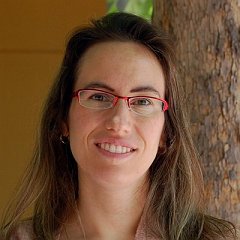
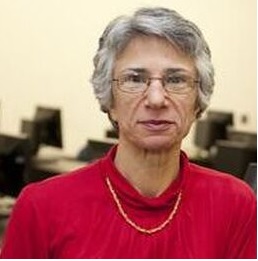
Dr. Huiwen Zhao is a Senior Lecturer in Games Design at Bournemouth University , with a focus on interactive storytelling, virtual reality (VR), and mass customization. Her work bridges user experience (UX) research with practical game design and VR applications. Contact: hzhao@bournemouth.ac.uk Education: PhD in Emotion-driven Interactive Storytelling (China Scholarship Council, 2012) Research Interests: Dr. Zhao’s research centers on creating immersive, emotion-aware digital experiences through games design and VR. Her work explores consumer behavior in mass customization, affective storytelling techniques, and innovative applications of VR for education and training. She also investigates how digital narratives can be optimized for user engagement and educational impact. Grants & Projects: She has led or contributed to projects funded by the EU Horizon 2020 MSCA, National Social Science Foundation of China, and Bournemouth University’s Centre for Excellence in Media Practice. Topics include affective storytelling, VR training simulators, and interactive video design. Collaborations: Dr. Zhao collaborates with researchers like Dr. L. McLoughlin, Prof. A. Pasko, and Dr. V. Hulusic. She co-developed the StoryPlaces Authoring Tool for locative storytelling and has published extensively on emotion-driven design and 3D customization toolkits.
Prof. Dr. Gregor Schiele is a Full Professor at the University of Duisburg-Essen , where he leads the Embedded Systems Department of Computer Science since 2014. His research focuses on self-organizing embedded systems in the Internet of Things (IoT), with emphasis on local embedded intelligence using deep learning and neural networks, as well as programming abstractions for adaptive systems . PhD in Computer Science (2007) from the University of Stuttgart Prior affiliations: Insight Centre for Data Analytics (Ireland), National University of Ireland, Galway, University of Mannheim Current research explores Embedded Machine Learning , FPGA-based AI Accelerators , and Energy-Efficient IoT Systems , with recent publications on quantization-aware training , configuration-aware power management , and medical signal processing . His 15 most recent articles highlight expertise in FPGA optimization , soft sensors , and adaptive architectures for time-series forecasting and fluid flow estimation . Key collaboration networks include the Elastic AI Ecosystem , ZaKI.D , and TransfAIr projects. He teaches courses like Programmieren in C , Internet of Things: Protocols and System Software , and Embedded Systems , while supervising research assistants and student teams in the IoT Garage initiative.
Аnđeliјa Mitrović is an Associate Professor in the Department of Mehatronics at the Faculty of Technical Sciences Čačak, University of Kragujevac, Serbia. Her office is located at 65 Svetog Save St. in Čačak (Office No. 136), and she can be contacted via phone (+381 32/302-792) or email (andjelija.mitrovic@ftn.kg.ac.rs). Education PhD in Mechanical Engineering (2016) from Faculty of Technical Sciences Novi Sad with dissertation: "Modeling of Cutting Processes" MSc in Information Technology (2010) from Technical Faculty Čačak with thesis: "Implementation of Virtual Environment in MOODLE LMS for Collaborative Learning of 3D Modeling" Diploma in Mechanical Engineering (1996) from Faculty of Mechanical Engineering Belgrade Diploma in Technique and Informatics (2006) from Technical Faculty Čačak Research Focus Her research spans mechanical engineering with emphasis on metal cutting processes, CAD/CAM systems, and manufacturing technology. She has significant expertise in finite element analysis of machining operations, thermal modeling in cutting processes, and the development of virtual learning environments for engineering education. Recent work integrates AI techniques for process optimization. Publication Trends Her 15 most recent publications (2014-2024) show strong focus on computational modeling of manufacturing processes, particularly thermal analysis in milling/turning operations using FEM. Since 2018, she has increasingly explored educational applications of virtual reality and 3D environments. Recent works incorporate machine learning for predictive modeling in machining. Professional Experience 2021-present: Associate Professor, Faculty of Technical Sciences Čačak 2017-2020: Professor of Vocational Studies 2014-2017: Lecturer 2011-2014: Assistant Professor 2006-2011: Professional Associate 2000-2003: Tool Design Engineer at Cutting Tools Factory Čačak 1997-2004: Mechanical Engineering Professor at various technical schools
Lindsey Kuper is an Assistant Professor in the Computer Science and Engineering Department at the Baskin School of Engineering, University of California, Santa Cruz. Her research focuses on programming languages, distributed systems, concurrency, parallelism, and software verification. Ph.D., Indiana University (2015) Research interests include: Programming-language-based approaches for concurrent/distributed systems Library-level choreographic programming (Haskell, Rust, TypeScript) Dependently-typed diagrams for inductive reasoning Causal message delivery with refinement types Key research projects: 2025: KameraBag (Kubernetes observability) 2024: Sender-side causal message protocol 2023: HasChor (Haskell choreographic programming) 2022: Liquid Haskell causal broadcast verification Scientific awards: NSF CAREER Award Stellar Development Foundation Grant Google Faculty Research Award Amazon Web Services gift Zulip in-kind sponsorship Teaching history includes courses on: Foundations of Programming Languages (CSE114A) Distributed Systems (CSE232/CSE138) SMT Solving and Solver-Aided Systems Programming Abstractions (Python) Service contributions: Co-founded !!Con and !!Con West Chaired: Choreographic Programming 2024, PLMW workshops, DSLDI, OBT ICFP/OOPSLA/PLDI program committee member Research group: CASL Group (Concurrency and Safety Lab) Languages, Systems, and Data (LSD) Lab Current members: 6 PhD students
Dr Gokula Vasantha is an Associate Professor at the School of Computing, Engineering and the Built Environment at Edinburgh Napier University. His research focuses on engineering design, interaction design, and sustainable manufacturing practices. Key research themes include patent management, crowdsourcing for innovation, and predictive design systems. He explores spatio-temporal dynamics in manufacturing safety and the role of cognitive factors in rural workforce optimization. His publications analyze design reuse metrics, affective patent interpretation, and facility layout optimization. Recent work emphasizes AI-driven trajectory prediction and serious games for industrial safety training. Funders include the Engineering and Physical Sciences Research Council and the British Council . He collaborates with researchers like Corney, Quigley, and Wodehouse. Current projects address circular business models, smart factory design, and predictive CAD systems. No scientific awards are mentioned, and no student advisees are listed. Lab affiliations include the Centre for Interaction Design and Engineering Research Group.
Jacek Cichosz is an academic researcher affiliated with the Faculty of Information and Communication Technology at Wrocław University of Science and Technology , specializing in the Department of Systems and Computer Networks . Holding a PhD, he focuses on system identification, biomedical engineering, and signal processing applications. University: Wrocław University of Science and Technology School: Faculty of Information and Communication Technology Department: Department of Systems and Computer Networks His research spans system identification , medical imaging analysis , and fuzzy logic applications in diagnostics , particularly for laryngeal pathology and ECG interpretation. He has developed educational tools like the CARDIO system and contributed to computer-aided diagnosis frameworks. Recent publications highlight trends in recursive identification , image analysis , and fuzzy rule-based diagnostic systems , with interdisciplinary applications in healthcare and computer science. Keywords include system identification , medical imaging , and biomedical signal processing . Contact: jacek.cichosz@pwr.edu.pl
Ponnusamy Vijayakumar is a researcher affiliated with SRM University in Kanchipuram, India, within the College of Engineering and Department of Electrical & Computer Engineering . His work spans interdisciplinary domains including Machine Learning , IoT Security , and Deep Learning , with additional expertise in Blockchain , Augmented Reality , and Cyber-Physical Systems . Research Interests : Vijayakumar focuses on applying advanced machine learning techniques to real-world problems such as energy sector optimization , food safety , and medical diagnostics . His recent work explores federated learning for secure IoT environments, predictive analysis using stochastic methods, and computer vision for rehabilitation and security applications. Article Trends : Over the past five years, he has contributed to IoT security through anomaly detection frameworks, augmented reality for plant disease detection, and blockchain for credentialing systems. His publications also address deep learning applications in agricultural quality analysis and medical imaging for musculoskeletal disorders. Collaborations : Vijayakumar has collaborated extensively with experts in Serbia, India, and Germany, particularly with researchers like Nemanja Zdravkovic , Aman Kumar Mishra , and Sowmya Natarajan , across conferences such as BISEC and journals like IEEE Access .
Max Rodgers serves as an Adjunct Instructor at the University of Colorado Boulder, where he contributes to mechanical engineering education through teaching-focused roles. His primary instructional responsibility includes MCEN 1025: CAD & Fabrication, a foundational course in design and manufacturing methodologies. His professional expertise centers on mechanical engineering applications with specialized focus on Computer-Aided Design systems and modern fabrication techniques. These research interests directly inform his pedagogical approach, emphasizing practical skill development in digital modeling and physical prototyping processes essential for engineering students. Professional recognition includes active participation in curriculum development for mechanical engineering programs. His teaching philosophy prioritizes hands-on learning experiences in design software and workshop environments. For academic correspondence, he utilizes the institutional email address: maxwell.rodgers@colorado.edu .
Dr. Jinan Fiaidhi is a Professor of Computer Science at Lakehead University, Canada since 2001. She served as Graduate Coordinator for the MSc and PhD programs in Computer Science and Biotechnology. She holds adjunct positions at the University of Western Ontario. Her academic journey includes degrees from Essex University (PgD, 1983) and Brunel University (PhD, 1986). She has held academic roles at institutions like Sultan Qaboos University and Philadelphia University prior to Lakehead. Her research focuses on Thick Data Analytics , Deep Learning , and Collaborative Learning , with applications in healthcare, medical imaging, and AI-driven diagnostics. She is a Professional Engineer (PEng) in Ontario and a Senior Member of IEEE. She chairs the IEEE Special Interest Group on Big and Thick Data for eHealth and founded the International Journal of Extreme Automation and Connectivity in Healthcare (IJEACH) as its Emeritus Editor-in-Chief. Her research is funded by NSERC and MITACS grants. Key projects include developing frameworks like QL4POMR for problem-oriented medical records and applying thick data analytics to Crohn’s disease, ulcerative colitis, and cataract severity analysis. Education: PhD in Computer Science, Brunel University (1986) PgD in Computer Science, Essex University (1983) Awards: None explicitly listed, but holds professional designations: PEng, IEEE Senior Member, ISP (CIPS), and MBCS (Chartered Computing). Grants: NSERC, MITACS (specific projects unspecified). Labs/Teams: Leads IEEE eHealth initiatives and collaborates on projects involving thick data analytics in healthcare interoperability and extreme automation.
Inge Tuitert serves as a Lecturer in the Health Innovation master's program and researcher at the Digital Innovations in Healthcare and Welfare research group at NHL Stenden University of Applied Sciences. She maintains a significant research collaboration with the Neurology Department of the University Medical Center Groningen (UMCG), where she contributes to projects improving hyperkinetic movement disorder diagnostics. Her academic foundation includes a PhD in Human Movement Sciences from a collaborative program between UMCG and Aix-Marseille University focused on arm motor control. Education PhD in Human Movement Sciences (collaborative program), University Medical Center Groningen and Aix-Marseille University Research Interests Dr. Tuitert's work centers on healthcare technology implementation and digital health literacy, with specialized focus on movement disorders and motor control mechanisms. She investigates socio-economic determinants of digital health adoption in regional populations and develops computational approaches for movement disorder diagnostics. Her research uniquely bridges clinical neurology, human movement science, and digital innovation to create accessible healthcare solutions. Research Trends Her publication record demonstrates a clear trajectory toward computational methods in movement neuroscience, with increasing emphasis on machine learning applications for clinical diagnostics. Recent work shows strong interdisciplinary collaboration between movement scientists, neurologists, and computer scientists, particularly in developing quantitative tools for hyperkinetic disorder classification. She consistently integrates fundamental motor control principles with practical healthcare technology implementation. Research Projects Healthcare Technology in Frisian Population : Collaborative project with Friesland Planning Agency examining healthcare technology adoption patterns and their relationship to socio-economic factors and digital health literacy NEMO (Next Move in Movement Disorders) : UMCG-based initiative developing computer-aided classification tools for hyperkinetic movement disorders using quantitative movement analysis Professional Affiliations Lecturer, Health Innovation Master's Program, NHL Stenden University of Applied Sciences Researcher, Digital Innovations in Healthcare and Welfare Research Group Collaborating Researcher, Neurology Department, University Medical Center Groningen Advising and Grants As a master's program lecturer, Dr. Tuitert mentors students in digital health innovation projects. She secures research funding through institutional partnerships, including the Friesland Planning Agency collaboration, and participates in grant-funded initiatives at UMCG focused on movement disorder diagnostics. Her work demonstrates consistent success in obtaining support for interdisciplinary health technology research. Research Environment Dr. Tuitert operates within the Lectorate Digital Innovation in Healthcare and Welfare, which drives translational research in digital health solutions. She collaborates with multidisciplinary teams including neurologists, movement scientists, computer engineers, and public health researchers across NHL Stenden and UMCG, creating a robust ecosystem for healthcare technology innovation.
John L. Hennessy is a renowned computer scientist and former President of Stanford University (2000–2016). As a professor of Electrical Engineering and Computer Science since 1977, he pioneered RISC architecture and co-founded MIPS Computer Systems and Atheros Communications. He currently serves as the Shriram Family Director of the Knight-Hennessy Scholars program and chairs Alphabet’s board. His leadership revitalized Stanford’s financial aid and arts programs, and his research contributions include seminal work in computer architecture and parallel processing. Education: Bachelor’s in Electrical Engineering from Villanova University (1973) Master’s and Ph.D. in Computer Science from Stony Brook University (1975–1977) Hennessy’s research interests span computer architecture, RISC technology, and high-performance computing. He co-authored landmark textbooks Computer Architecture: A Quantitative Approach and Computer Organization and Design , which are industry standards. His leadership roles include Dean of Engineering, Provost, and President at Stanford, and board memberships at Alphabet and the Gordon and Betty Moore Foundation. His articles and books focus on multiprocessor systems, cache coherence, and hardware-software co-design, reflecting his deep impact on both academia and industry. Key awards include the ACM Turing Prize (2017), IEEE Medal of Honor (2012), and the Vannevar Bush Award (2024). Grants & Leadership: Launched Knight-Hennessy Scholars, the world’s largest graduate fellowship program Directed Stanford’s growth in interdisciplinary research and accessibility initiatives Hennessy’s legacy combines technical innovation with transformative leadership in higher education.
Andreas J. Guelzow is a Professor in Mathematics & Information Technology at Concordia University of Edmonton, Faculty of Science. He serves as Deputy Provost, demonstrating leadership in academic administration. His research focuses on standards for office document formats, implementations of spreadsheet programs, and algebraic representations of Steiner triple/quadruple systems within combinatorics and universal algebra. Research Trends: His work bridges theoretical mathematics with applied software development, particularly in open-source projects like Gnumeric and ODF standardization. Mathematical publications emphasize nilpotent algebras, Steiner systems, and combinatorial designs. He has taught diverse courses including Elementary Calculus, Real Analysis, Game Theory, and Software Design, while contributing to graduate programs through thesis supervision and advanced topics instruction.
Alison Godwin is a Full Professor in the School of Kinesiology & Health Sciences at Laurentian University, located in Room B242 of the B.F. Avery Physical Education Centre. She can be contacted via email at agodwin@laurentian.ca or by phone at 705.675.1151 ext. 1079. Her educational background includes a BSc in Kinesiology (cum laude), an MSc in Human Development, and a PhD in Exercise Science. Dr. Godwin's research is centered on virtual ergonomics to mitigate musculoskeletal risks for workers and athletes. She conducts line-of-sight investigations for underground mining machinery and develops collision avoidance systems. Her work extends to ergonomic evaluations of industrial equipment using computer simulations, eye tracking studies in industrial locations, and three-dimensional kinematic and kinetic analysis of working postures. Additionally, she applies biomechanics to sports and validates ergonomic standards such as ISO 5006-1 in virtual environments. Her recent publications demonstrate a strong focus on line-of-sight analysis in industrial vehicles and the use of virtual reality for ergonomic interventions. The research consistently addresses occupational safety through human factors engineering, with practical applications in mining and material handling. Dr. Godwin has received the following award: OUA Nordic Skiing Coach of the Year (2012) Information regarding her advising activities and research grants was not provided in the source material. No specific laboratory or research team information was mentioned in the available text.
Agnieszka Ozimek is an Associate Professor at the Department of Landscape Architecture , Faculty of Architecture , Cracow University of Technology . Her work bridges architecture, urban planning, and digital landscape analysis, utilizing advanced computational methods for visual and spatial assessments. Education: BEng, PhD, DSc Arch Research Focus: Ozimek specializes in digital modeling, landscape metrics, and sustainable design. Her research includes viewshed analysis, fractal dimensions in landscape change, and integrating LiDAR/photogrammetry for architectural documentation. Publication Trends: Recent articles emphasize interdisciplinary approaches to transport hub design, digital landscape reconstruction, and climate resilience in cultural heritage. Key methodologies involve GIS, CAD, and algorithmic tools for objective visual analysis.