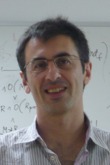
Gustau Camps-Valls is a Full Professor in Electrical Engineering at the University of Valencia and Group Leader of the Image and Signal Processing (ISP) group at the Image Processing Laboratory (IPL). His research focuses on advancing artificial intelligence (AI) and machine learning for Earth observation, climate science, and environmental applications. He has held prominent roles including IEEE Distinguished Lecturer (2017-2020) and IEEE Fellow (2018), and serves as an ELLIS Fellow and Program Coordinator. His work addresses challenges like climate risk prediction, drought detection, and sustainable development through interdisciplinary approaches combining causal inference and geospatial data analysis. Research interests span AI-driven climate modeling, causal discovery in environmental systems, and geoscience applications of deep learning. Notable contributions include developing frameworks for extreme weather prediction, soil organic carbon inference, and food insecurity modeling. His recent articles explore variational autoencoders for heatwave analysis, geospatial foundation models for sustainability, and robust machine learning for noisy Earth observation data. Awards: IEEE Fellow (2018), IEEE Distinguished Lecturer (2017-2020), ELLIS Fellow Labs/Teams: Image Processing Laboratory (IPL), Image and Signal Processing (ISP) group Grants and collaborations focus on bridging AI with Earth sciences, including projects on climate extremes, digital twins, and humanitarian aid impact analysis. His work emphasizes explainable AI and causal reasoning to ensure scientific rigor in environmental decision-making.
Veronika Pillwein is an Associate Professor at the Research Institute for Symbolic Computation (RISC) within Johannes Kepler University in Linz, Austria. Her research focuses on symbolic computation, high-order finite elements, special functions, and algorithmic combinatorics. She contributes to advancing computational methods for sequence analysis, recurrence relations, and polynomial systems, with applications in numerical analysis and engineering. Pillwein has authored/co-authored numerous publications in top-tier journals and conference proceedings, including work on C²-finite sequences, hp-FEM element matrices, and positivity proofs for rational functions. She serves as an editor for academic volumes and actively participates in computational mathematics research. Her work integrates symbolic computation techniques with numerical methods, addressing challenges in high-order finite element analysis and algorithm design. Recent research emphasizes generalizing holonomic sequences, optimizing sparse shape functions for finite elements, and developing automated tools for proving mathematical properties. Pillwein collaborates internationally, contributing to interdisciplinary projects in computational mathematics and computer algebra systems. Affiliations: RISC Faculty, Johannes Kepler University (JKU) Key Research Areas: Symbolic computation, finite element methods, combinatorial algorithms, polynomial analysis Technical Contributions: Development of C²-finite sequence theory, hp-FEM element matrix evaluation, algorithmic proofs for positivity
Nikolaj Popov is a Research Professor at the Research Institute for Symbolic Computation (RISC) of Johannes Kepler University, Linz, Austria. His work focuses on program verification, formal methods, and automated reasoning, particularly within the Theorema system. He specializes in verifying functional and recursive programs, combining symbolic computation with logical techniques to ensure correctness and termination. Education: PhD in Computer Science, RISC, Johannes Kepler University (2008) Research Interests: Popov’s research bridges theoretical computer science and practical applications, emphasizing automated theorem proving, program analysis, and formal verification. He develops methods for verifying complex program structures like mutual recursion and nested recursion, leveraging computer algebra systems. His work also explores the integration of formal methods into software engineering workflows. Key Contributions: Popov has co-authored foundational papers on verification condition generation, termination proofs, and automated debugging frameworks. His collaborations with Tudor Jebelean and others have advanced Theorema’s capabilities in handling functional programs and bridging logical and algebraic methodologies. Labs/Teams: Core member of RISC, contributing to its mission in symbolic computation and mathematical theory exploration.
Dr. Ian Graham is a Lecturer in Engineering Design at Loughborough University, part of the Wolfson School. He holds a BEng (Product Design) and PhD (Evolutionary Design) from Loughborough University. Prior to academia, he worked in automotive engineering (Toyota), portable electronics (GE), and architecture. He joined Loughborough in 2006 as a Research Associate in the School of Civil and Building Engineering, moved to the Design School in 2007 as Senior Research Associate and Enterprise Fellow, and transitioned to the Wolfson School in 2012. Education: BEng in Product Design, Loughborough University PhD in Evolutionary Design, Loughborough University Research Interests: Graham’s work focuses on Computer-Aided Design (CAD) , Evolutionary Algorithms , Additive Manufacturing , Remanufacturing , and Haptic Technologies . He explores applications in industrial efficiency, cultural heritage restoration, and product design innovation. His research bridges theoretical design optimization with practical industry challenges, including modular construction, artifact preservation, and sustainable manufacturing. Articles Trends: His publications emphasize CAD optimization (e.g., parametric model inefficiency analysis), evolutionary design systems, additive manufacturing for art/archaeology, and modular construction case studies. Recent work highlights cost estimation in remanufacturing and haptic sketching interfaces. Advising & Grants: No specific advisees or grant details are listed in the text, but his roles suggest involvement in research funding and collaborative projects. Labs/Teams: Founder of EvoShape , developing evolutionary design tools. Active in cross-disciplinary teams within Loughborough’s Wolfson School, focusing on CAD innovation and sustainable manufacturing.
Sarira Motaref is a Professor in Residence and Associate Director of Faculty Development at the Center for Excellence for Teaching and Learning, University of Connecticut. She is affiliated with the School of Civil and Environmental Engineering within the College of Engineering. Her Ph.D. in Civil Engineering was awarded by the University of Nevada, Reno (2011). Dr. Motaref's research focuses on innovating teaching methods in engineering education, particularly neuroinclusive and strength-based approaches, alongside advancing structural engineering through 3D imaging technologies, advanced materials for bridges, and earthquake-resistant designs. She has pioneered the use of augmented reality and flipped classrooms to enhance student engagement and visualization skills. Her work bridges educational innovation and structural resilience, emphasizing inclusive pedagogy and sustainable infrastructure solutions. She has contributed to bridge health monitoring systems and seismic design standards for precast and composite structures. Dr. Motaref’s teaching excellence initiatives include co-teaching strategies, experiential assessments, and pandemic-era remote learning adaptations. Her research has been published in over 30 peer-reviewed articles, reflecting a dual commitment to pedagogical innovation and structural engineering advancements.
Eva Navarro López is a Full Professor in Computing within the School of Interactive Games and Media at the Golisano College of Computing and Information Sciences at Rochester Institute of Technology (RIT). She previously served as Director of the School of Information (iSchool) at RIT and directs the Artificial intelligence and DAta science Research Lab (AiDAs). Navarro is a scientist of international standing with extensive contributions across multiple fields including hybrid dynamical systems, cyber-physical systems, and computational neuroscience. She has held significant positions including member of the Science and Methodology Committee at the International Panel on the Information Environment (IPIE) and affiliate at the Minderoo Centre for Technology and Democracy at University of Cambridge. Eva earned her Ph.D. from the Polytechnics University of Catalonia (Spain) and completed her MSc, BEng, and BSc at the University of Alicante (Spain). Her educational journey reflects her multidisciplinary approach, bridging computer science, mathematics, and engineering disciplines that would later define her research career. Her academic path has taken her through prestigious institutions across four countries: USA, UK, Mexico, and Spain, where she shadowed the footsteps of Alan Turing in Manchester and Santiago Ramón y Cajal in Madrid. Navarro's research interests defy easy compartmentalization, spanning hybrid dynamical systems, cyber-physical systems, network science, mathematical modelling, symbolic AI, control engineering, computational neuroscience, and collective intelligence. Her unique contribution lies in building bridges between traditionally separate fields , transferring ideas from one domain to another to create novel approaches. She approaches research as a 'scientist artist,' viewing both science and art as attempts to understand the world better. Her work on neuroplasticity and brain-inspired computing has led to innovative AI architectures that incorporate knowledge of astrocytes and other brain cells beyond just neurons. Analysis of Navarro's recent publications reveals a strong trend toward interdisciplinary applications of computational methods. Her work spans from fundamental theoretical contributions in hybrid systems and formal verification to practical applications in medical imaging, epidemic modeling, and gender equity in technology. A notable pattern is her consistent focus on nature-inspired models of computation across diverse domains, whether modeling brain function, urban structures, or information ecosystems. Her research increasingly addresses societal implications of technology, particularly regarding gender equity and ethical AI development. 100 Brilliant Women in AI Ethics - 2025 Distinguished Alumni Ambassador 2024 at University of Alicante Women Leader of the Business Ecosystem 2024 Recognized in Spain's Guide to Women Leaders of the Business Ecosystem Navarro has supervised an extensive research team across multiple institutions, mentoring numerous PhD students, postdocs, and research assistants from diverse backgrounds. Her mentoring philosophy emphasizes building communities and education as pathways to change the world. She co-founded ACM-Women Europe and the womENcourage conference series, creating spaces for women in computing. Her research has been supported by significant projects including the UK-funded 'Dynamically Driven Verification of Systems With Energy Considerations,' where she served as principal investigator for the first UK project dedicated to formal verification of nonlinear hybrid systems. As director of AiDAs (Artificial intelligence and DAta science Research Lab), Navarro leads a multidisciplinary team exploring nature-inspired models of computation, learning, and evolution for complex systems. The lab's work integrates insights from neuroscience, mathematics, and computer science to develop new paradigms in AI. Navarro also contributes to TechnoLatinas, a self-organized community focused on supporting technologists and scientists from Latin America, and serves on the Advisory Council for Gender Music Tech, demonstrating her commitment to creating inclusive technology ecosystems.
Tiphaine Colliot is an Associate Professor in Cognitive Psychology at the University of Poitiers, affiliated with the Center for Research on Cognition and Learning (CeRCA) and the School of Human and Social Sciences (MSHS). Her research focuses on educational psychology, particularly in written production, note-taking strategies, graphic organizers, and multimedia learning. Active member of the executive committee of the IPHD MA program at INSPE Niort Collaborates with É. Jamet on studies related to cognitive load and generative learning Her recent work explores the impact of digital tools on learning outcomes, including tablet-based geometry instruction, adaptive feedback mechanisms, and multitasking effects during video lectures. Collaborative research with É. Jamet investigates structured note-taking, self-generated graphic organizers, and the role of real-time feedback in educational technology. Despite significant contributions to cognitive load theory, no explicit scientific awards are documented in the provided materials. Colliot’s teaching responsibilities include academic methodology instruction, and she engages in developing interventions to enhance students’ self-regulation and writing efficacy.
Emily M. Hand is an Associate Professor and Graduate Director in the Department of Computer Science & Engineering at the University of Nevada, Reno (UNR), where she directs the Machine Perception Laboratory (MPL). Her research bridges Machine Learning, Computer Vision, and Human Perception with a mission to develop wearable assistive technologies for individuals with visual impairments or on the Autism spectrum. Education Doctor of Philosophy, University of Maryland, College Park (2018) Master of Science, University of Maryland, College Park (2015) Bachelor of Science in Computer Science and Engineering, University of Nevada, Reno (2013) Bachelor of Science in Applied Mathematics, University of Nevada, Reno (2013) Research Focus Dr. Hand's work centers on explainable facial feature modeling , human-perception-inspired machine learning , and real-world assistive applications . Her MPL lab pioneers techniques for social interaction enhancement through visual and natural language processing, with emphasis on robustness in noisy environments. Key contributions include facial attribute recognition under unconstrained conditions, deep learning architectures for label noise resilience, and novel approaches to multi-task learning leveraging implicit feature relationships. Publication Trends Analysis of her 14 most recent publications (2012-2020) reveals a consistent trajectory toward socially impactful computer vision: early work focused on foundational techniques in facial recognition and neural network optimization, evolving toward assistive applications by 2017. Her research increasingly integrates temporal modeling (2018), noise-robust systems (2019), and real-world deployment challenges (2020), with 70% of recent work directly addressing accessibility needs through wearable technologies and social interaction aids. Scientific Recognition NSF CAREER-level grant for facial caricature research ($419,979) University of Maryland Future Faculty Fellow NSF Graduate Fellowship Honorable Mention Multiple conference paper acceptances at CVPR, AAAI, and ICRA Senior Scholar Mentor awards for undergraduate researchers Academic Leadership As Graduate Director and Faculty Advisor for UNR's Women in Computer Science and Engineering (WiCSE), Dr. Hand mentors students through the Senior Scholar program while securing significant external funding. Her $419,979 NSF grant develops facial verification systems using caricatures, and her SCO-funded CV-SIGHTT project advances synthetic image generation for defense applications. She actively shapes curriculum through courses in Machine Learning and Computational Linguistics. Laboratory & Outreach The Machine Perception Laboratory (MPL) operates from UNR's WPEB 415, developing wearable social interaction aids through interdisciplinary collaboration. Dr. Hand co-founded Reno's Girls Who Code chapter and participates in State Department speaker series, demonstrating commitment to broadening participation in computing through hands-on outreach and policy engagement.
Nick Hu is a Doctoral Student (DPhil candidate) at Balliol College and a College Lecturer at St Catherine's College, both within the University of Oxford. He is affiliated with the Department of Computer Science, focusing on research in higher category theory and its applications to theoretical computer science. His work includes foundational contributions to the proof assistant homotopy.io and the study of diagrammatic methods in formal category theory. Education: He holds an undergraduate degree in Computer Science and an MSc in Mathematics and Foundations of Computer Science, both from St Catherine's College, Oxford. Currently, he pursues a DPhil in Computer Science at Balliol College. Teaching: He has served as a tutor for courses such as Algorithms and Data Structures , Categorical Quantum Mechanics , and Computer-Aided Formal Verification . He also conducts admissions interviews for undergraduate Computer Science programs. Research Interests: His primary focus includes higher category theory, traced monoidal categories, and their applications to quantum programming languages. He explores diagrammatic reasoning and formal methods within these domains.
Prof. Zhisheng Huang is a Visiting Professor at the Faculty of Science, Vrije Universiteit Amsterdam. His research focuses on AI-driven solutions for healthcare challenges, particularly leveraging knowledge graphs for mental health analysis, biomedical informatics, and social media monitoring. He actively contributes to UN Sustainable Development Goals related to health and well-being (SDG 3). Key Research Areas: Knowledge graphs for dietary nutrition and disease analysis Suicide risk detection via social media (e.g., "Tree Hole" project) Medical Q&A systems for geriatric diseases AI applications in mental health diagnostics His work integrates ontology engineering, machine learning, and big data analytics to address complex health issues. Notable projects include the KG4NH knowledge graph and hypertension early warning systems. Collaborations span international institutions, focusing on interdisciplinary health informatics solutions. Recent Focus: Exploring microbiota-gut-brain axis relationships, depression etiology, and family dynamics in postpartum mental health. His research bridges computational methods with clinical practice to improve healthcare outcomes.
Giovanni Montana is a Professor of Data Science at the University of Warwick, with joint appointments in the Departments of Statistics and Warwick Manufacturing Group (WMG). His research focuses on statistical and machine learning methods, particularly in sequential decision-making, reinforcement learning, and multi-agent systems. He has held academic roles at Imperial College London (2005–2013) and King’s College London (2013–2018), advancing interdisciplinary research in bioinformatics, neuroimaging, and healthcare. Supported by grants from EPSRC, MRC, and Wellcome Trust, his work bridges theoretical advancements and real-world applications. Education: PhD in Computational Statistics (University of Warwick), postdoctoral research at the University of Chicago, and industry experience at Bristol-Myers Squibb. His career spans statistical genetics, medical imaging, and AI-driven healthcare solutions. Research interests include deep reinforcement learning, multimodal biomedical data integration, and AI ethics. Notable achievements include developing biomarker discovery algorithms and AI models for chest X-ray analysis, showcased in media such as BBC and MIT Technology Review. Awards include Chartered Statistician and UKRI Turing AI Acceleration Fellowship. Labs/Teams: Leads the Data Science Research Group at Warwick, fostering collaborative projects in AI, robotics, and healthcare. Active in grant review panels for major funding bodies like EPSRC and the Royal Society.
Gilles Barthe is Research Professor (part-time) at IMDEA Software Institute and Director at Max Planck Institute for Security and Privacy. His research develops programming language techniques and verification methods for security applications, particularly cryptographic implementations and differentially private computations. Research focuses on formal methods for security proofs, including relational program verification, cryptographic protocol analysis, and privacy-enhancing technologies. Key areas include automated proofs for lattice-based cryptography, secure compilation techniques, and verifying constant-time properties against side-channel vulnerabilities. Barthe leads projects on formal verification of cryptographic standards including AES-GCM and SHA-3, and develops tools like EasyCrypt for computer-aided cryptographic proofs. Recent work addresses Spectre vulnerability mitigations and quantum program verification.
Warren Paul Seering is the Weber-Shaughness Professor of Mechanical Engineering at MIT and Co-Director of the System Design and Management (SDM) Program. His career spans over 40 years in mechanical engineering education and research, with leadership roles in MIT's Engineering Systems Division and the Skolkovo-MIT Partnership. His educational background includes: B.Sc. from University of Missouri-Columbia (1971) M.Sc. from University of Missouri-Columbia (1972) Ph.D. from Stanford University (1978) Seering's research centers on design theory, product development processes, and dynamic system modeling, extending to mechanics, control systems, and interdisciplinary fields like ocean engineering and nanotechnology. He pioneered methodologies in set-based thinking and risk management frameworks that bridge engineering design with organizational strategy. His publication trajectory reveals an evolution from foundational robotics and vibration control (1980s-1990s) to systemic product development challenges (2010s), emphasizing transparency in risk management, crowdfunding innovation, and waste reduction in corporate design processes. Notable awards include: Ralph R. Teetor Educational Award (1982) MIT Harold E. Edgerton Faculty Achievement Award (1983) ASME Design Theory and Methodology Award (2021) Design Society Fellow (2021) MIT Frank E. Perkins Award for Graduate Advising (2007) Seering's advisory excellence is recognized through MIT's Perkins Award, with leadership in SDM and Skolkovo-MIT programs shaping next-generation engineering education. His editorial roles across six journals reflect sustained scholarly influence. Key initiatives include co-founding the Nissan Cambridge Basic Research Center (1992-2001) and Convolve, Inc. (1992), alongside ongoing direction of MIT's System Design and Management program and Skolkovo-MIT Partnership.
Marc Zimmermann is a Lecturer and Campus Manager at Ludwigsburg University of Education. He holds a Master's degree in subject didactics (mathematics, physics) and has extensive experience in education and academic administration. His roles include serving as a Senate Elected Member and coordinating the introduction of HISinOne university management software. Zimmermann has held positions as a Research Associate and Lecturer at the Institute of Mathematics and Computer Science, with additional academic staff roles at the University of Economics and the Environment Nürtingen-Geislingen. Educational background includes a first state examination for teaching secondary schools (history, mathematics, physics) and advanced studies in mathematics and physics didactics. His research focuses on mathematics education innovation, including intelligent assessment tools, active learning strategies, and didactic frameworks for STEM subjects. Notable projects include the SAiL-M project addressing teaching methodologies and the development of the 'open math room' concept for active learning environments. Zimmermann’s work emphasizes bridging theory and practice in education through technology integration, such as e-learning tools and lecture recordings. His recent publications explore chemical reaction mechanisms, self-efficacy in mathematics learners, and conceptual understanding in STEM fields. He has contributed to curriculum development across multiple institutions and remains active in improving teaching quality through collaborative academic initiatives.
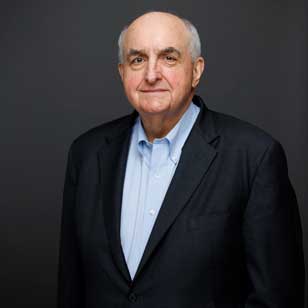
Michael A. McRobbie is University Professor and Chancellor at Indiana University, having served as its 18th president from 2007-2021. His leadership achievements include a 175% increase in student financial aid, doubled student diversity, establishment of the Grand Challenges Program, and oversight of $2.7 billion in campus construction projects. His research spans high-performance computing, artificial intelligence, automated reasoning, and logic. As a principal investigator, he secured over $100 million in grants and holds faculty appointments in computer science, philosophy, cognitive science, informatics, and computer technology. McRobbie earned his Ph.D. in Philosophy from Australian National University and holds six honorary doctorates from institutions worldwide. He has chaired boards of the Association of American Universities and Internet2.