Max Planck Institute for Plant Breeding ResearchGermany
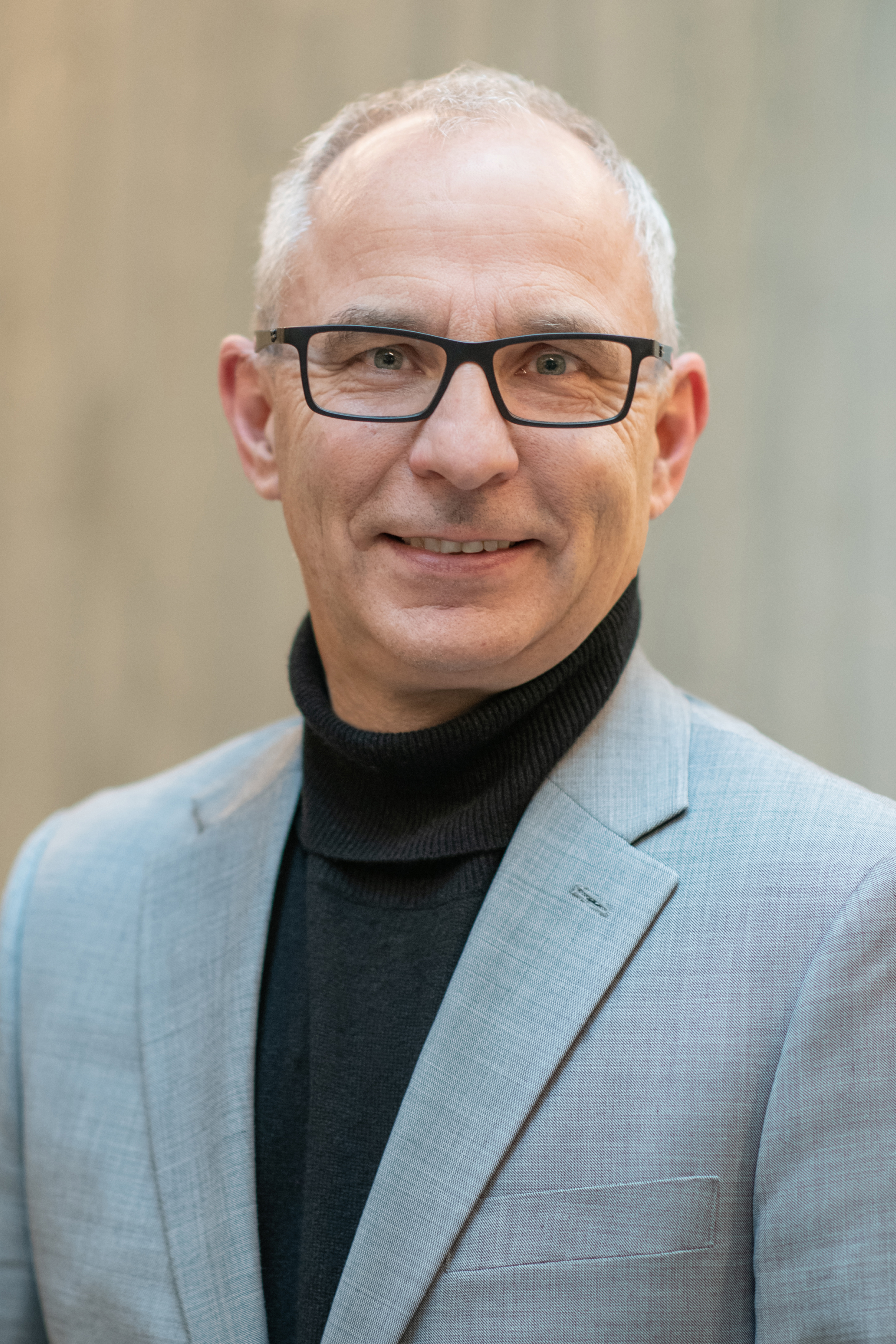
Adam Runions is a researcher in the Department of Computer Science at the University of Calgary, leading the MPG Partner Group in computational analysis of leaf development through collaborative work with Miltos Tsiantis. His group is embedded in the Graphics Cluster, focusing on interdisciplinary problems at the intersection of computer science and developmental biology. University of Calgary - Department of Computer Science MPG Partner Group (2022) Graphics Cluster affiliation His research explores computational modeling and analysis of plant form and development across multiple scales, integrating geometric modeling, physically-based simulation, and computer-aided design. Key themes include plant morphogenesis, self-organization of natural forms, and cross-disciplinary applications in computer graphics and animation. Recent publications emphasize plant development (leaf shape, bark patterning), mathematical modeling (auxin-driven patterning), and geometric techniques (subdivision surfaces, PUPs). Collaborations span institutions like the Max Planck Institute for Plant Breeding Research. Scientific Awards Marie Sklodowska-Curie Fellowship Best Paper Award (International Conference on Cyberworlds 2015) Best Student Paper Award (Computer Graphics International 2011) The group actively recruits BSc, MSc, and PhD students with backgrounds in computer science and mathematics for projects on plant form simulation and digital content creation. Research integrates evolutionary biology, biomechanical modeling, and computational techniques.
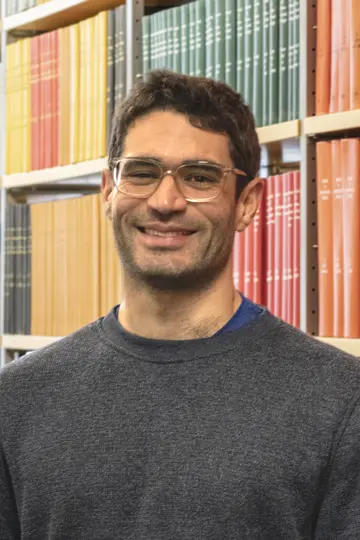
Assia Mahboubi is a tenured researcher ( directrice de recherche ) at INRIA in the Gallinette team, Nantes, France, and an endowed professor in the Algebra and Number Theory section of the Vrije Universiteit Amsterdam, Netherlands. Her work bridges theoretical computer science and formal mathematics, with significant contributions to proof assistants and formal verification. Her research focuses on the foundations and formalization of mathematics in type theory, particularly on the automated verification of mathematical proofs. She explores the interplay between computer algebra and formal proofs, and is a key contributor to the Rocq prover (formerly Coq) and the Mathematical Components libraries. Her work often examines how familiar mathematical objects can be optimally represented for computer-aided proof checking. Recent publications show a strong trend toward categorical reasoning, diagram chasing, and continuity properties in constructive type theory, with increasing focus on practical applications of formal methods in computational mathematics. Her work demonstrates the maturation of formal verification techniques from theoretical foundations to practical tools for mathematical research. ERC Consolidator grant for the FRESCO (Fast and Reliable Symbolic Computation) project Mahboubi actively supervises doctoral students including Vojtěch Štěpančík, Tomás Vallejos Parada, and Alain Chavarri Villarello. She has received significant research funding through her ERC Consolidator grant for the FRESCO project, which aims to develop fast and reliable symbolic computation techniques. She is deeply involved in the international research community, serving on program committees for major conferences including POPL, CPP, and ICFP. She leads research in the Gallinette team at INRIA, which focuses on the intersection of proof assistants, programming languages, and formal mathematics. Her work has helped establish formal verification as a practical tool for mathematical research, moving beyond theoretical foundations to real applications in computational mathematics.
Prof. Dr.-Ing. Lars Linsen is a full Professor of Computer Science at the Westfälische Wilhelms-Universität (WWU) Münster, leading the VISualization & graphIX (VISIX) group. His primary affiliation is the Institute of Computer Science within the Faculty of Mathematics and Computer Science. He holds adjunct professorships at Jacobs University, Bremen, and has held previous academic roles including Full Professor at Jacobs University (2012–2017) and Associate/Assistant Professor roles in Germany and the U.S. His research focuses on interactive visual analysis, medical visualization, and scientific visualization, with applications in life sciences and engineering. Education: PhD (Dr.-Ing.) in Computer Science from Universität Karlsruhe (2001), M.Sc. (Diplom) in Computer Science (1997), B.Sc. (Vordiplom) in Computer Science (1994). Awards: IEEE Visualization Design Contest Winner (2008, 2022, 2018), Preis des Fördervereins des Forschungszentrum Informatik (2002). Research Highlights: Develops visualization tools for medical imaging (e.g., mass spectrometry imaging, MRI data analysis) and physical simulations (e.g., wildfire spread analysis, asteroid impact modeling). Active in EU-funded projects like Pig-Pro-QuO (surface coatings) and cells-in-motion initiatives. Supervised over 20 PhD/MS advisees, including notable graduates in medical visualization and simulation ensemble analysis. Publications: Over 100 peer-reviewed articles in top venues like IEEE Transactions on Visualization and Computer Graphics, Computers & Graphics, and EuroVis. Key works include SciVis contest-winning wildfire analysis frameworks and medical visualization tools for stenosis detection. Teaching: Offers courses on visualization, computer graphics, and computational science. Actively involved in thesis supervision and curriculum development at both WWU Münster and Jacobs University. Grants & Collaborations: Principal investigator on DFG-funded projects (e.g., hemodynamics simulations, ensemble visualization) and industry collaborations (e.g., Tascon GmbH for coating quality analysis). Member of the Cells-in-Motion Interfaculty Centre and CDH board at WWU.
Joachim Weickert is a Professor of Mathematics and Computer Science at Saarland University where he heads the Mathematical Image Analysis Group since 2001. He received his diploma and Ph.D. in mathematics from the University of Kaiserslautern (1991, 1996), and a habilitation degree in computer science from the University of Mannheim (2001). Prior to his current position, he worked as a research assistant at the University of Kaiserslautern, as a post-doctoral researcher at the universities of Utrecht and Copenhagen, and as an assistant professor at the University of Mannheim. His research focuses on image processing, computer vision, and scientific computing, with special emphasis on techniques based on partial differential equations, variational principles, wavelets, morphological and nonlocal methods, as well as neuroexplicit approaches. He has developed mathematical models and efficient numerical algorithms for image restoration, enhancement, segmentation, compression, optic flow computation, stereo reconstruction, shape from shading, and signal processing methods for tensor fields. These ideas have been successfully applied in industry, biomedical image analysis, and other fields. Analysis of his recent publications reveals a strong trend toward combining traditional PDE-based methods with modern deep learning approaches, particularly in the areas of image inpainting and compression. His work increasingly explores the connections between numerical algorithms for partial differential equations and neural network architectures, demonstrating how mathematical foundations can inform cutting-edge AI techniques while maintaining strong theoretical guarantees. Gottfried Wilhelm Leibniz Prize (2010), considered the most important research award in Germany ERC Advanced Grant (2017) for "Inpainting-based Compression of Visual Data" Elected member of Academia Europaea - The Academy of Europe Jan Koenderink Prize for Fundamental Contributions in Computer Vision (2014) Multiple DAGM Prizes and Best Paper Awards throughout his career AAIA Fellow (2021) and Highly Ranked Scholar (2024) distinctions Professor Weickert has supervised over 250 bachelor's and master's theses and initiated the Master Programme in Visual Computing at Saarland University, the first of its kind in Germany taught in English. He has established numerous interdisciplinary collaborations with colleagues from medicine, bioinformatics, pharmacy, physics, mechatronics, and mechanical engineering. As Principal Investigator for Visual Computing within the Multimodal Computing and Interaction Cluster of Excellence, and former dean of the Faculty of Mathematics and Computer Science (2008-2010), he has played a significant leadership role in advancing visual computing research and education. He heads the Mathematical Image Analysis Group, which has been at the forefront of developing mathematical methods for image analysis. The group maintains strong connections with both theoretical mathematics and practical applications, bridging the gap between fundamental research and real-world implementation across various domains including medical imaging, industrial inspection, and multimedia processing.
Prof. Karsten Urban is a Full Professor of Numerical Mathematics at the University of Ulm, leading the Institute for Numerical Mathematics. He holds roles such as Dean of Studies in Computational Science and Engineering (CSE) and Deputy Spokesman for the Research Association for Scientific Computing in Baden-Württemberg. He is an active member of prestigious societies including the Deutsche Mathematikervereinigung (DMV) and SIAM. His academic journey includes a PhD from RWTH Aachen (1995), Habilitation (2001), and a full professorship at Ulm since 2005. Research focuses on numerical methods for PDEs, reduced basis techniques, multiscale simulations in fluid mechanics, biomechanics, quantum sciences, and financial mathematics. He has pioneered wavelet-based methods and collaborated with industries on ship propulsion and energy trading models. His work integrates mathematical rigor with real-world applications, emphasizing model reduction and computational efficiency. Editorial Roles: Managing Editor of Advances in Computational Mathematics , Editor of SN Partial Differential Equations and Applications . Awards: Teaching award of Baden-Württemberg (2005), Science-Economy Cooperation Awards (2004, 2008). Administrative Roles: Member of the University Council and ASIIN expert committee. Supervises doctoral students in numerical analysis, quantum simulations, and biomechanics. Active in interdisciplinary projects, including quantum systems (IQST) and fracture healing modeling in collaboration with biomechanics experts. His contributions bridge academia and industry, driving innovation in computational methods.
Tibor Szabó is a Professor in the Combinatorics and Graph Theory group at the Department of Mathematics, Freie Universität Berlin. He holds a PhD from The Ohio State University, advised by Ákos Seress. Prior to his current position, he held roles at McGill University, ETH Zürich, the Institute for Advanced Study (Princeton), and the University of Illinois (UIUC) as a J.L. Doob Research Assistant Professor. Research Interests: His work focuses on combinatorics and combinatorial optimization, including extremal problems, random structures and algorithms, pseudorandom graphs, positional games, and the combinatorics of linear programming. He explores tools from algebra, probability theory, and topology applied to combinatorics. Teaching: He teaches courses such as Algorithmic Combinatorics, Extremal Combinatorics, and runs the Combinatorics Seminar. His lecture notes include works on positional games and explicit constructions in extremal combinatorics. Students & Postdocs: Notable PhD advisees include Yamaan Attwa, Silas Rathke, Simona Boyadzhiyska, and Patrick Morris. Postdoctoral fellows include Olaf Parczyk and Anurag Bishnoi. His research has involved collaborations with over 50 co-authors. Funding & Grants: Supported by grants from the Swiss National Science Foundation (SNF) and German Research Foundation (DFG), focusing on topics like positional games and extremal graph theory.
Schloss Dagstuhl - Leibniz Center for InformaticsGermany
Ling Zhao is a distinguished Professor at the School of Management, Huazhong University of Science and Technology, China, with extensive research contributions spanning artificial intelligence, machine learning, information systems, and biomedical applications. With over 150 publications since 2008, Dr. Zhao has established herself as a leading researcher in multiple interdisciplinary domains, particularly in applying computational methods to solve complex real-world problems. Dr. Zhao's research interests encompass a broad spectrum of cutting-edge topics including artificial intelligence, machine learning, data mining, control systems, and information systems. Her work demonstrates exceptional versatility, bridging theoretical computer science with practical applications in healthcare, transportation, cybersecurity, and business management. Notably, she has made significant contributions to sentiment analysis, medical image processing, algorithmic management, and privacy-preserving data analysis. Her research methodology often combines deep learning approaches with domain-specific knowledge to develop innovative solutions. Analysis of Dr. Zhao's recent publications (2023-2025) reveals a strong focus on interdisciplinary applications of AI, with particular emphasis on healthcare informatics (medical image analysis, disease diagnosis), human-computer interaction (algorithmic management effects), and advanced machine learning techniques (graph neural networks, multimodal learning). Her work shows a consistent trend toward increasingly complex and integrated systems that address real-world challenges across multiple domains. Dr. Zhao has made substantial contributions to academic advising and research mentorship, though specific student names aren't detailed in the available publications. Her research has been supported by various grants enabling work in AI applications, biomedical engineering, and information systems. Dr. Zhao maintains active collaborations with researchers across China and internationally, as evidenced by her co-authorship patterns. While specific laboratory information isn't explicitly mentioned in the publication records, Dr. Zhao appears to lead or be significantly involved in research groups focusing on AI applications in management and healthcare. Her work on medical imaging, sentiment analysis, and control systems suggests involvement in multiple specialized research teams addressing different application domains through computational approaches.
Max Planck Institute for Intelligent SystemsGermany
James Reed Farre is a Researcher and Research Group Leader at the Max Planck Institute for Mathematics in the Sciences (MPI MiS) in Leipzig, leading the Geometry on Surfaces group since October 2023. Previously, he held roles including Juniorprofessor (W1/Assistant Professor) at Ruprecht-Karls-Universität Heidelberg (2022–2023), Gibbs Assistant Professor at Yale University (2021–2022), and an NSF Postdoctoral Fellow at Yale (2019–2020). He earned his PhD in Mathematics from the University of Utah in 2019 under Kenneth Bromberg. His research focuses on hyperbolic geometry, dynamics of earthquake flows, Teichmüller theory, and geometric group theory. Notable areas include affine laminations, hyperconvex representations of surface groups, and ergodic theory in geometric contexts. Farre has contributed to understanding minimal surfaces in hyperbolic 3-manifolds and has explored applications of bounded cohomology to discrete groups. Publications span topics like shear-shape cocycles, horocycle orbit closures, and Hamiltonian flows for pseudo-Anosov mapping classes. His work bridges pure geometry with computational methods, as seen in CAD algorithm development for rigid subsystems. Farre is actively involved in mentoring and has contributed to STEM education initiatives, including the Freshman Research Initiative.
Prof. Dr.-Ing. H. Siegfried Stiehl is a retired Senior Professor (until Sept 2021) at the Department of Informatics, University of Hamburg. He previously held roles including Dean of the Faculty of Mathematics, Computer Science, and Natural Sciences (2001–2006), Vice President for Research (2007–2013), and Head of the Image Processing Research Group. His academic journey includes a PhD from TU Berlin (1980) and a Habilitation in Computer Vision (1987). Education: 1973: Ing. Degree in Ingenieur-Informatik, Fachhochschule Furtwangen 1976: Diploma in Computer Science, TU Berlin 1980: Dr.-Ing. Dissertation on medical image processing, TU Berlin Research focuses on Computer Vision , Computational Neuroscience , and Cognitive Science , with contributions to medical image registration, 3D landmark detection, and biomechanical modeling. Key projects include the EU-funded 'COVIRA' consortium (1989–1995) and leadership in the SFB 950 'Manuscript Cultures' project (2015–2019). His 110+ publications span biomedical image registration, elastic deformation algorithms, and real-time signal processing. Notable collaborations include work with institutions like the University of Pennsylvania, University of Birmingham, and Philips Research. Leadership roles include organizing scientific events, serving on editorial boards (e.g., Biological Cybernetics), and founding the Interdisciplinary Nanoscience Center Hamburg (INCH) in 2001. His research has addressed challenges in neurosurgical interventions, VLSI implementation of neural networks, and interdisciplinary education.
Max Planck Institute for the Study of Religious and Ethnic DiversityGermany
Núria Agell Jané is a Full Professor at ESADE Business School , Universitat Ramon Llull, specializing in Artificial Intelligence and Decision-Making Systems. She leads the JUICE (Judgements and Decisions in the Market Place) research group and the ESADE D3 - Institute for Data-Driven Decisions . Doctorate in Applied Mathematics (Qualitative Reasoning Modelling), UPC-BarcelonaTech Bachelor's in Mathematics, University of Barcelona Her research focuses on Artificial Intelligence , Decision-Making Systems , and Fuzzy Logic , with applications in Business, Marketing, and Sustainability. Recent publications emphasize Hesitant Fuzzy Linguistic Term Sets , Consensus Modeling , and AI in Sustainable Development . She coordinates multiple publicly and privately funded projects applying AI to Business and Marketing challenges. As PhD Programme Director (2005-2013) and current Department Director of Operations, Innovation and Data Sciences , she has shaped academic and research strategies at ESADE. Her work spans collaborations with institutions like LAAS-CNRS (France) and University of Edinburgh Business School , with over 40 journal publications and 50 conference contributions. She has directly supervised 11 PhD students in AI and Decision Sciences.
Bjoern Menze is a Professor and Rudolf Mößbauer Tenure Track Chair at the Technical University of Munich (TUM), leading the Image-based Biomedical Modeling Group within the Munich School of Bioengineering. His research focuses on medical image computing, tumor growth modeling, and computational physiology, with applications in clinical neuroimaging and personalized radiotherapy design. He holds a Ph.D. in Computer Science from Heidelberg University and has held positions at ETH Zurich, INRIA Sophia Antipolis, MIT, and Harvard Medical School. His academic journey includes a postdoc at MIT’s CSAIL and Harvard Medical School, followed by roles at ETH Zurich and INRIA. His work bridges biomedical imaging with machine learning, emphasizing model-driven analysis of physiological processes. He has been a visiting professor at Maastricht University and contributes to initiatives like the Center for Translational Cancer Research at TUM. Key research areas include tumor growth modeling, quantitative imaging biomarkers, and integrating mathematical models with clinical data. His awards include the MICCAI Young Scientist Award (2014), Leopoldina Fellowship (2009), and DFG Research Fellowship (2008). He advises on medical AI, leads interdisciplinary projects, and publishes extensively in top journals like Nature Neuroscience and IEEE Transactions on Medical Imaging. His lab’s work spans applications such as glioblastoma radiotherapy optimization, whole-body bone lesion detection, and neural connectivity imaging. Collaborations include institutions like Harvard, MIT, and ETH Zurich. He emphasizes translating computational methods into clinical practice for personalized healthcare solutions.
Max Planck Institute for Mathematics in the SciencesGermany
James Reed Farre is a Researcher and Head of the Geometry Research Group at the Max Planck Institute for Mathematics in the Sciences. He holds a PhD in Mathematics from the University of Utah (2019), completed an NSF Postdoctoral Fellowship at Yale University (2019-2021), and served as a Juniorprofessor (W1/Assistant Professor) at Heidelberg University (2022-2023). His academic journey includes postdoctoral positions in Heidelberg’s research group under Beatrice Pozzetti and a Gibbs Assistant Professorship at Yale. Farre’s research focuses on hyperbolic geometry, Teichmüller theory, dynamical systems, and geometric group theory. Key areas include earthquake flows, character varieties, convex projective structures, and bounded cohomology. His work bridges low-dimensional topology with ergodic theory and geometric analysis. Publications (2016–2024) explore topics like affine laminations, hyperconvex representations, and minimal surfaces in hyperbolic 3-manifolds. Recent work addresses Mirzakhani’s twist torus conjecture and Hamiltonian flows for surface group representations. Farre frequently collaborates with leading mathematicians such as Yair Minsky, Beatrice Pozzetti, and Anna Wienhard. He has contributed to algorithmic CAD research and STEM education initiatives, including a chapter in *Directions for Mathematics Research Experience for Undergraduates* (2015). His current role involves leading a research group focused on geometry and dynamics at the Max Planck Institute.
Aggelos K. Katsaggelos is a Professor in the Department of Electrical Engineering and Computer Science at Northwestern University's McCormick School of Engineering. His research focuses on biomedical imaging, machine learning, and computer vision applications in healthcare. He has collaborated extensively with interdisciplinary teams, including clinicians and engineers, to develop advanced algorithms for medical diagnosis and image analysis. Key research interests include medical image processing, deep learning for diagnostics, and computational methods in cardiology. His work spans applications such as MRI and ultrasound analysis, automated pathology detection, and multimodal sensing for health monitoring. Recent articles highlight contributions to myocardial scar quantification, lung ultrasound scoring, and AI-driven cough detection. His methodologies often combine domain-specific physics with modern machine learning techniques to solve real-world clinical challenges. Notable collaborations include projects with institutions like the University of Chicago and international teams in astrophysics and cognitive science. His work emphasizes translating algorithmic advancements into practical clinical tools.
Prof. Dr.-Ing. Holger Blume serves as Vice President for Research and Transfer at Leibniz University Hannover while maintaining his academic position as Professor in the Architectures and Systems Section within the Faculty of Electrical Engineering and Computer Science. He holds multiple leadership positions including Chairperson of the Research Commission and Central Ethics Committee, Executive Board member of eNIFE (Leibniz Research Initiative for Neurosciences), and membership in both the Laboratory of Nano and Quantum Engineering and L3S Research Centre. His research interests span computer architecture, hardware design, signal processing, AI accelerators, hearing aid technology, and biomedical engineering. His work bridges theoretical computer science with practical applications in automotive systems, medical devices, and quantum engineering. Professor Blume's research demonstrates strong interdisciplinary connections between electrical engineering, computer science, and biomedical applications, with particular emphasis on hardware-oriented solutions for real-world problems. Analysis of his recent publications (2023-2025) reveals a strong focus on hardware acceleration for AI and signal processing applications, particularly in automotive radar/LiDAR systems and hearing aid technology. His work shows consistent innovation in RISC-V processor design, specialized hardware for mathematical functions, and biomedical applications of engineering principles. The research demonstrates a clear trajectory toward energy-efficient, specialized computing architectures for specific application domains. As Vice President for Research and Transfer, Professor Blume oversees significant research initiatives at Leibniz University Hannover, which hosts multiple Clusters of Excellence including PhoenixD (Photonics, Optics, and Engineering), QuantumFrontiers, and Hearing4all. The university participates in numerous collaborative research centers and junior research groups funded by DFG, BMBF, and EU programs. Professor Blume is actively involved in multiple research facilities including the Laboratory of Nano and Quantum Engineering and the L3S Research Centre. His work connects with Leibniz University's research focuses on optical technologies, quantum optics and gravitational physics, and biomedical research and technology. His leadership positions indicate strong involvement in shaping the research strategy and ethical framework of the university's scientific endeavors.
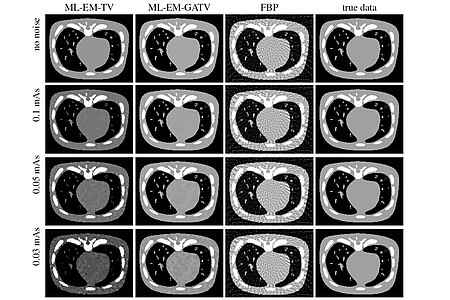
Jürgen Hesser is a Professor at the Mannheim Medical Faculty , Heidelberg University, specializing in Experimental Radiotherapy and Medical Imaging . His research focuses on solving inverse problems in imaging, particularly for CT reconstruction , brachytherapy planning , and low-dose imaging . Current affiliations: Clinic for Radiotherapy and Radiooncology, Mannheim University Hospital Collaborative ties: Interdisciplinary Center for Scientific Computing (IWR) and Center for Bioinformatics (ZITI) at Heidelberg University Research interests center on anisotropic total variation techniques for medical and industrial applications, including MR-guided interventions and real-time radiation therapy . His work has led to a 1000x speed improvement in brachytherapy planning algorithms. Recent publications highlight expertise in image reconstruction (CT/X-ray), noise optimization , machine learning for cancer classification, and big data management solutions. His methods are applied to both clinical and industrial imaging challenges. Additional contributions include scientific data infrastructure development and variance stabilization techniques for medical sensors. The research group maintains strong interdisciplinary links with Physics, Mathematics, and Computer Science faculties.