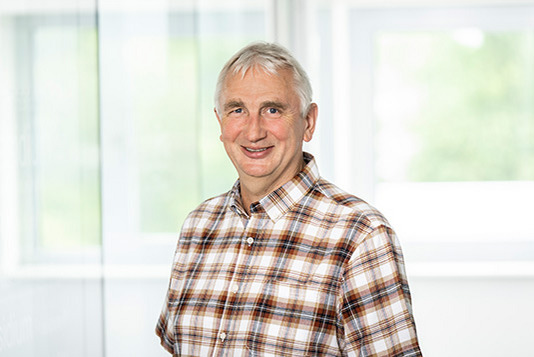
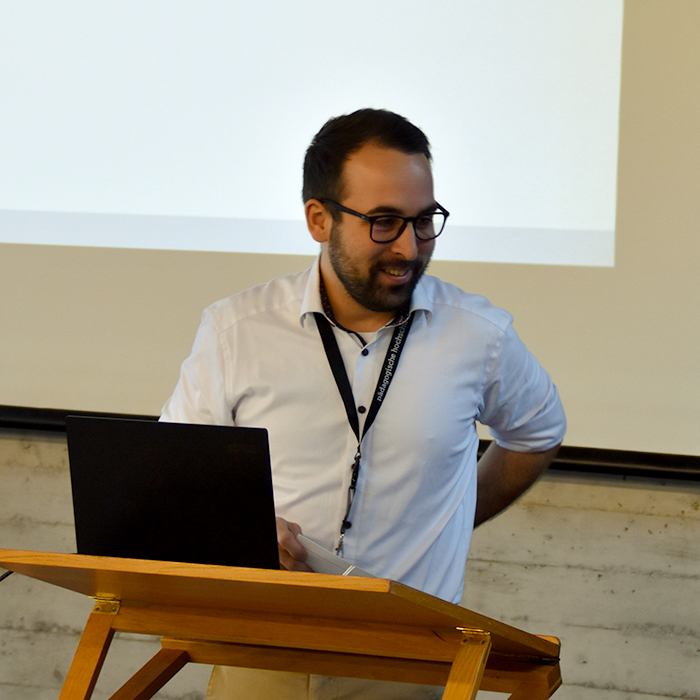
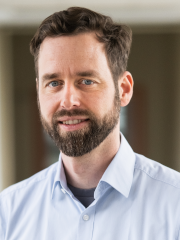
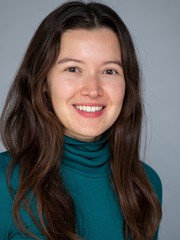
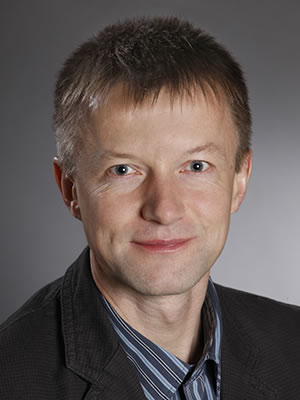
Siegmar Sommer is a Researcher at the Humboldt University of Berlin , affiliated with the Institute of Computer Science under the Faculty of Mathematics and Natural Sciences . He has worked at the university since 1986 in various technical and scientific roles. Dipl.-Ing. in Computer Engineering (1982) Dr.-Ing. in Computer Science (1986) Postgraduate studies in Higher Education (1990) His research focuses on networking , distributed systems , and network security , with historical contributions to optical information transmission , LAN protocols , and security-relevant systems . His work bridges hardware-software co-design and educational theory in technical disciplines. The 1980s-1990s articles highlight expertise in LAN architecture, optical communication, and security frameworks. Keywords span Networking , Operating Systems , and Education , with subfields like Fiber Optic Networks , CSMA/CD Protocols , and Higher Education Curriculum . He contributed to the Computer Engineering Group and holds a patent for " Bus Access Method for a Local Computer Network " (1986). His teaching legacy includes courses on programming languages (BASIC, PASCAL, PEARL), computer graphics, and modern topics like Wireless Communication Systems and Reliable Distributed Systems . Contact: Email: sommer@informatik.hu-berlin.de Phone: +49 30 2093-41256 Office: Room IV.303, Rudower Chaussee 25, Berlin-Adlershof
Karin Nachbagauer is a Professor of Applied Mathematics at the University of Applied Sciences Upper Austria, affiliated with the Faculty for Engineering's Mechanical Engineering Department. She holds a Hans Fischer Fellowship at the TUM Institute for Advanced Study (since 2020). Her research focuses on multibody system dynamics, numerical mathematics, optimal control, and inverse dynamics, with applications in mechanical engineering and robotics. She earned her PhD in Engineering Sciences (2012) and Diploma in Industrial Mathematics (2009) from Johannes Kepler University Linz. Notable awards include the 2020 Best Paper Award for optimal control research and 2019 Excellence in Teaching Award. Her work emphasizes adjoint gradient methods for optimization problems, parameter identification in multibody systems, and time-optimal control applications. Current projects include the VRoboCoop initiative for human-robot collaboration and IOMMS for innovative optimization in multibody systems. Publications span journals like Journal of Computational and Nonlinear Dynamics and Multibody System Dynamics , with over 80 peer-reviewed articles. She actively participates in international conferences and serves on editorial boards.
Prof. Dr.-Ing. Michael Wehmöller is a full Professor at the Faculty of Engineering and Computer Science, Osnabrück University of Applied Sciences. His career spans roles as a technical director in medical device companies and interdisciplinary research leadership in DFG/EU-funded programs, integrating CAD/CAM, additive manufacturing, and biomechanics. Research interests focus on dental technology , medical device innovation , biomechanics , biomaterials , and 3D printing . His work bridges engineering precision with clinical applications , particularly in craniofacial reconstruction and selective laser melting for implants. The 15 most recent publications highlight trends in computer-aided implant design biodegradable materials testing automated surgical planning with a strong emphasis on clinical translation of engineering solutions. Scientific recognition includes Innovationspreis NRW (1996) Innovationspreis Ruhrgebiet (2002) and ongoing membership in VDI medical technology panels . He leads the Digitale Dentale Technologien lab, focusing on next-generation implant systems.
Sangyoung Park is an Assistant Professor of Smart Mobility Systems at the Faculty of Mechanical Engineering and Transport Systems, Technical University of Berlin, and is co-affiliated with the Einstein Center for Digital Future. His research focuses on two main areas: enhancing vehicle safety through digitalization and connectivity, and advancing the electrification of the transport sector with emphasis on electric vehicle battery systems design and management. He leads the Chair of Smart Mobility Systems at TU Berlin, where his team investigates how vehicle connectivity can improve energy efficiency, traffic flow, and safety in autonomous vehicle systems. Dr. Park completed his PhD in Electrical Engineering and Computer Science at Seoul National University in Korea, where he focused on energy management techniques for hybrid energy storage systems in electric vehicles. Before joining TU Berlin in 2018, he conducted postdoctoral research at the Technical University of Munich, working on energy management for smartphones in collaboration with Google and studying battery aging processes. His research interests span smart mobility systems, electric vehicle battery management, energy consumption optimization, vehicle connectivity, and autonomous driving systems. Park's work bridges the gap between design engineers and software engineers, investigating how different energy storage components (fuel cells, supercapacitors, lithium-ion batteries) should be interconnected and managed together for maximum efficiency. His research also addresses the design of charging infrastructure for electric vehicles. Analysis of Dr. Park's recent publications reveals a strong focus on digital twin technology for teleoperated driving, battery management systems for electric vehicles, and vehicle connectivity for improved safety and efficiency. His research increasingly integrates cybersecurity aspects of connected vehicles and explores novel approaches to extend battery lifespan through advanced cell balancing techniques. The interdisciplinary nature of his work connects electrical engineering, computer science, transportation systems, and urban infrastructure planning. Dr. Park supervises multiple doctoral students, including Philipp Kremer, Ongun Türkçüoglu, Kil Young Lee, Maria Claudia Miguel de Priego, Muzaffer Citir, Andrea Reindl, Subhendu Bhadra, and Hueseyin Türkyilmaz. His research is supported by various funding sources including the ECDF grant, DAAD projects (ide3a), and government scholarships. He collaborates with institutions including OTH Regensburg and Siemens Mobility. His laboratory, the Smart Mobility Systems group, focuses on developing system-level approaches for measuring, analyzing, and balancing energy consumption in battery-powered mobile systems. The team investigates how direct communication among autonomous vehicles can enable control scenarios that improve energy efficiency, traffic flow, and safety beyond what human drivers or isolated autonomous vehicles can achieve.
Matthias Baitsch serves as Professor of Construction Informatics and Numerical Methods in the Department of Civil and Environmental Engineering at Bochum University of Applied Sciences, where he concurrently heads the BIM Institute. His academic trajectory includes research assistant and senior engineer roles at Ruhr-University Bochum (2000-2009), academic coordination at the Vietnamese-German University (2009-2012), and an acting professorship at the University of Kassel (2012-2014). His educational foundation comprises: Civil Engineering studies at the University of Dortmund (1991-1997) under the interdisciplinary "Dortmund Model" Doctorate from Ruhr-University Bochum (2003) on geometric imperfection-based optimization of compressive beam structures Professor Baitsch's research integrates computational mechanics with civil engineering practice, specializing in construction informatics, numerical optimization, and high-order finite element methods. His work pioneers distributed optimization frameworks, structural health monitoring for wind energy infrastructure, and BIM-based construction informatics. Key methodological contributions include hp-FEM implementations, parallel optimization algorithms, and mobile structural analysis tools. Analysis of his recent publications reveals three dominant research trajectories: (1) Advanced numerical methods for structural optimization under uncertainty, (2) Health monitoring-driven lifetime prediction for wind turbine systems, and (3) Computational modeling of tunnel environments using viscoacoustic inversion techniques. These threads demonstrate consistent focus on robust numerical implementations and real-world civil engineering applications. As Head of the BIM Institute, he leads institutional efforts in digital construction technologies, fostering industry-academia collaboration on building information modeling standards and applications. His teaching portfolio spans foundational mathematics, numerical methods, and computer science for civil engineering students, emphasizing practical computational skills.
Eduard A. Jorswieck is a University Professor of Communication Systems at the Institute of Communications Engineering , Technical University of Braunschweig, since 2019. He has previously held a professorship at TU Dresden (2008–2019) and has been a lecturer at TU Berlin (2005–2008). Currently, he serves as the Geschäftsführender Leiter (Managing Director) of the Institute of Communications Engineering. Education: Dipl.-Ing. in Computer Engineering (2000), Doctorate (2004) from TU Berlin. Research Interests: His work bridges information theory and wireless communications, focusing on physical layer security , energy efficiency , reconfigurable intelligent surfaces (RIS) , NOMA , MIMO systems , and machine learning for network optimization . He explores stochastic orders, game theory, and fractional programming for resource allocation in 5G/6G networks. Publications & Trends: Recent articles emphasize RIS-aided URLLC , STAR-RIS , 6G security , and AI-driven resource management . His studies span multi-antenna systems , terahertz ISAC , and multi-agent reinforcement learning for UAV networks. Awards: IEEE Signal Processing Society Best Paper Award (2006) IEEE Fellow (2020) Fellow of Industry Academy (AIIA, 2024) Best Paper Award at IEEE ICC 2024 Students & Collaborations: He has mentored researchers like K.-L. Besser, P.-H. Lin, and M. Mross. His lab collaborates on projects involving quantum communication , industrial IoT , and multi-agent systems .
Rupert Gehrlein is a Researcher at Goethe University Frankfurt's Faculty of Computer Science and Mathematics, working within the IDMI institute as part of the Computer Science Didactics Secondary Schools team. His role focuses on developing and researching innovative teaching methodologies for computer science education in secondary schools, particularly through the "Computer Science Unplugged" project which implements computational thinking concepts without digital devices. Education: General higher education entrance qualification, Leibnizschule, Offenbach am Main (2010) Completed training as biology laboratory technician, Sanofi Deutschland GmbH, Frankfurt am Main (2013) First state examination for teaching qualification in computer science and biology, Goethe University Frankfurt (2022) Research Focus: Gehrlein specializes in accessible computer science pedagogy, emphasizing unplugged methods to demystify complex concepts like blockchain and NFTs through physical tools and games. His work bridges theoretical computer science with classroom-ready implementations, targeting secondary education curricula while addressing ecological and economic dimensions of emerging technologies. Publication Trends: His 2022-2023 publications reveal a concentrated effort in adapting cutting-edge AI tools like ChatGPT for educational diagnostics, creating tangible learning aids for abstract concepts (e.g., NFT board games), and redesigning teacher training environments. These works collectively advance the field toward experiential, device-independent computer science instruction. Scientific Awards: No awards documented in available sources. Teaching & Advising: Gehrlein conducts seminars including "Computer Science Unplugged," "Didactics of the Digital World," and project-based coursework across multiple semesters (2022-2025). While actively shaping future educators' pedagogical approaches, no graduate student advisement or grant management is indicated in current records. Team Integration: As core member of the Computer Science Didactics Secondary Schools unit under Prof. Dr. Andreas Dengel, he collaborates with Linda Rustemeier, Daniel Unro, Jonas Maurer, and Sebastian Görlich to develop localized teaching resources and implement research findings in Frankfurt-area schools.
Jichun Li is a Professor in the Department of Mathematical Sciences at the University of Nevada Las Vegas, with a prolific research career spanning computational mathematics, image processing, and computer vision. His work bridges theoretical mathematics with practical applications in medical imaging, environmental science, and biometrics. Li's research interests center on computational mathematics with particular focus on partial differential equations and finite element methods, alongside significant contributions to image processing and computer vision. His work demonstrates a unique integration of mathematical theory with practical applications, particularly in medical imaging where his techniques enable improved early cancer diagnosis through advanced lesion segmentation. In environmental science, his research on land surface albedo dynamics provides critical insights into climate change impacts in sensitive regions like the Tibetan Plateau. His recent work on face recognition with synthetic data addresses contemporary challenges in biometric security systems. Analysis of Li's publication trends reveals a strategic evolution from foundational mathematical research toward interdisciplinary applications. While maintaining strong theoretical contributions in computational mathematics, particularly in PDEs and finite element methods, he has increasingly focused on medical imaging applications since 2020, developing novel techniques for cancer diagnosis and ultrasmall object detection in CT scans. His 2022-2025 publications show growing emphasis on synthetic data applications, particularly in face recognition challenges, demonstrating adaptability to emerging AI trends. Professor Li maintains an extensive collaborative network, with frequent co-authorship patterns suggesting mentorship relationships with researchers like Bo Yan, Weimin Tan, Guannan Chen, and Encai Zhang across multiple publications. His work appears in leading journals including IEEE Transactions on Neural Networks and Learning Systems, IEEE Transactions on Multimedia, and Computational Mathematics and Applications, reflecting both the theoretical depth and practical relevance of his research.
Thorsten Koch is a Professor for Software and Algorithms for Discrete Optimization at Technische Universität Berlin , with multiple leadership roles including Head of the Applied Algorithmic Intelligence Methods (A²IM) , Digital Data and Information for Society, Science, and Culture (D²IS²C) , Kooperativer Bibliotheksverbund Berlin-Brandenburg (KOBV) , and Forschungs- und Kompetenzzentrum Digitalisierung Berlin (digiS) . Based at Zuse Institute Berlin and affiliated with TU Berlin's Institute for Mathematics, he focuses on integrating mathematical optimization with high-performance computing and artificial intelligence to solve complex real-world problems. Research Pillars : Mathematical optimization algorithms Quantum computing applications AI/ML integration in decision systems Energy systems optimization Scientific software development Leadership Roles : Head of Applied Algorithmic Intelligence Methods (A²IM) Head of Digital Data & Information for Society, Science, and Culture (D²IS²C) Head of Kooperativer Bibliotheksverbund Berlin-Brandenburg (KOBV) Head of Forschungs- und Kompetenzzentrum Digitalisierung Berlin (digiS) Key Collaborations : Working with IBM Quantum on quantum optimization Collaborating across institutions for energy system modeling Developing open-source optimization tools like SCIP Contributing to digital library infrastructure Recent Research Trends : Quantum optimization benchmarking Machine learning-aided optimization Multi-objective decision frameworks Energy infrastructure optimization Adaptive algorithm design CO2 network modeling Impact : Advancing hybrid optimization methods Developing open-source tools for scientific computing Building digital infrastructures for libraries and research Exploring quantum-classical algorithm synergies
Prof. Timo Gerkmann is a Professor at the University of Hamburg's Department of Informatics, leading the Signal Processing Research Group. His research focuses on statistical signal processing and machine learning for speech and audio applications, including communication devices, hearing aids, audiovisual media, and human-machine interfaces. He previously held roles at Technicolor Research & Innovation, KTH Royal Institute of Technology, and Siemens Corporate Research. His work emphasizes generative models, diffusion-based approaches, and acoustic signal enhancement. He currently serves as Senior Area Editor of the IEEE/ACM Transactions on Audio, Speech, and Language Processing. Research Interests: Statistical Signal Processing for Speech and Audio Machine Learning Applications in Acoustic Environments Diffusion Models for Audio Restoration Audio-Visual Speech Enhancement Human-Machine Interaction Systems Acoustic Scene Analysis Publications Highlight Trends: Recent works focus on diffusion models for speech enhancement, generative approaches to dereverberation, and audiovisual multimodal analysis. He has pioneered frameworks like ReverbFX datasets and FlowDec codecs, emphasizing perceptual quality and unsupervised domain adaptation. Advising & Grants: While no specific students or grants are listed, his research group actively publishes in top venues, indicating sustained academic contributions. His work bridges theoretical signal processing with applied systems engineering. Labs/Teams: Leads the Signal Processing (SP) Research Group at UHH, specializing in cutting-edge audio technologies and human-centric signal processing solutions.
Sos S. Agaian is a Professor affiliated with City University of New York (CUNY), USA, with a former position at the University of Texas at San Antonio's Department of Electrical and Computer Engineering. His research focuses on advanced image and signal processing techniques, including thermal imaging, medical imaging, neural networks, and computer vision applications. He has authored numerous publications in top-tier journals and conferences, contributing to fields like adversarial attack defenses, solar panel segmentation, and quantum-inspired algorithms. His work emphasizes practical solutions for image enhancement, deblurring, and segmentation, with applications in healthcare, energy systems, and cybersecurity. Research Interests: Image Processing and Computer Vision Signal Processing and Machine Learning Medical and Thermal Imaging Neural Networks and Deep Learning Quantum Computing Applications in Imaging Recent Trends in Articles: Recent work highlights advancements in quaternion-based neural networks for weather removal, lightweight networks for solar panel fault detection, and novel entropy models for thermal imaging. Collaborations span medical diagnostics, cybersecurity, and energy systems, reflecting interdisciplinary impact. Grants and Collaborations: While specific grants are not detailed, his extensive publication record suggests active research funding in areas like computer vision and quantum information processing. Collaborators include institutions globally, emphasizing translational research. Labs/Teams: Not explicitly mentioned, but his work implies involvement in imaging and machine learning research groups focused on practical solutions for real-world challenges.
Joseph J. LaViola Jr. is a Professor at the University of Central Florida , specializing in Human-Computer Interaction , Virtual Reality , and 3D User Interface Design . With over two decades of research, his work bridges computer graphics and immersive technologies for applications in gaming, education, and engineering.
Diana Nicole Puerto Rueda is a Doctoral Researcher in the Plankton Ecology and Evolution group at the University of Hamburg, affiliated with the Faculty of Mathematics, Computer Science and Natural Sciences, Department of Biology, and the Institute of Marine Ecosystem and Fisheries Sciences (IMF). Her office is located at Olbersweg 24, Room 204, 22767 Hamburg, Germany. Her academic background includes: Bachelor of Science in Biology and Microbiology Master of Science in Marine Biology Ms. Puerto Rueda specializes in marine ecological dynamics, with primary research on phytoplankton-microzooplankton interactions under global change scenarios. She employs mesocosm experimental approaches to simulate warming conditions and investigate biota-mediated carbon cycling in estuarine ecosystems. Her current work is integral to Research Training Group 2530 (RTG2530) "Biota-mediated effects on Carbon cycling in Estuaries," which examines estuarine gradients, ecosystem linkages, and climate change impacts through systematic experimental frameworks. No scientific awards are documented in the available records. As an early-career researcher, she has no advisees. Her research is supported by the RTG2530 project grant and prior funding from the Leibniz Centre for Tropical Marine Research (ZMT), where she contributed to the Symbio-Aid project (foraminiferal culture maintenance) and TransTourism project (coastal ecosystem impact analysis in San Andrés Island). She operates within the Plankton Ecology laboratory group at IMF, which conducts controlled mesocosm experiments to quantify plankton community responses to environmental stressors, with emphasis on functional trait variability and trophic interactions under simulated climate conditions.
Georg Hoever serves as a Professor of Mathematics at Aachen University of Applied Sciences within the School of Electrical Engineering and Information Technology. His office is located in Room E 153 (Building E) at Eupener Str. 70, 52066 Aachen, with consultation hours by appointment via email. Professor Hoever specializes in mathematics education for engineering and computer science students. His research interests focus on foundational mathematics education, curriculum development for technical disciplines, and creating accessible mathematical learning materials that bridge the gap between secondary education and university-level technical studies. He has developed comprehensive teaching materials including daily lecture structures, exercise sheets with solutions, and visual aids using GeoGebra. His educational approach emphasizes practical application through individual exercise sessions followed by group discussions to reinforce learning. Professor Hoever actively organizes the Mathematics Preparatory Course (Vorkurs) for incoming students in Electrical Engineering, Computer Science, and Business Informatics, with the 2025 session scheduled from September 8-19. He also oversees exam admission processes for Mathematics 1 and provides tutoring sessions for exam preparation. He has established multiple communication channels for student support, including email contact (hoever@fh-aachen.de), telephone (+49.241.6009 52178), and physical office hours. His educational materials are accessible both in-person and online, with comprehensive resources available through the university library and digital platforms.
Prof. Dr.-Ing. Torsten Jeinsch is Professor and Chair of Control Engineering at the University of Rostock, Germany, where he also serves as Head of the Application Center for Control Engineering (AZR) within the Institute of Automation Technology. He is affiliated with the Interdisciplinary Faculty (INF), Department of Maritime Systems, and maintains a dual research focus on theoretical control systems and practical maritime applications. His research program spans theory-oriented work in digital control (optimization of sampling processes), adaptive systems, optimal control, and fault-tolerant systems, alongside application-oriented research in automotive systems, medical technology (including the Rostock Anesthesia Assistance System), maritime technology, and energy systems. The maritime research is particularly extensive, covering large-scale underwater monitoring, autonomous rescue systems, and integrated control for large ships. Professor Jeinsch's recent publications reveal a strong emphasis on sampled-data systems theory and maritime control applications, with consistent advancement in autonomous vessel navigation, collision avoidance algorithms, and parameter estimation for ship maneuvering models. His work bridges fundamental control theory with practical engineering challenges in multiple domains. Professional affiliations include: Board member of the Department of Maritime Systems (INF) Head of Application Center Control Engineering (AZR) IFAC Technical Committee Marine Systems IFAC Technical Committee SAFEPROCESS (Fault Detection) DAAD Selection committee for USA/Canada His teaching portfolio covers Fundamentals of Control Engineering, Selected Applications, Control Systems/Automation, Fault Diagnosis, Computer-Aided Controller Design, Modern Methods of Control Engineering, and Modeling and Simulation of Technical Systems, reflecting his broad expertise across theoretical and applied control engineering.