Muneer Abbas is an Associate Professor of Microbiology at Howard University's College of Medicine and a member of the Molecular Genetics Research Group at the Howard University Cancer Center/National Human Genome Center (NHGC). He holds additional roles as the Director of the NHGC Sickle Cell Disease Center Biorepository and the Molecular Genetics Director. His research focuses on immunogenetics, cancer disparities, and quantum biology applications in medicine. Abbas graduated with a Ph.D. in Microbiology/Immunogenetics from Howard University in 2008. Education: Ph.D., Microbiology/Immunogenetics, Howard University, 2008 M.S., Biology/Immunoparasitology, Yarmouk University, 1996 B.S., Biology, Yarmouk University, 1993 Research Interests: Abbas investigates polymorphisms in immune response genes, particularly their role in health disparities. His work spans immunogenetics, quantum phenomena in biological systems, sickle cell disease biorepositories, and the microbiome's role in cancer. Collaborations include quantum sensing projects with the Quantum Biology Lab and studies on serotonin receptor genes' links to HIV/AIDS and immune function. Grants & Funding: Co-PI on an NSF-funded quantum sensing initiative and NIH grants addressing violence exposure, HIV risks in African Americans, and prostate cancer. He secured funding for a pilot study on serotonin receptor 5-HT2A and immune markers. Awards: Special Unit Award (2018) Howard University Bridge Fund/Pilot Study Award (2015–2016) CRCHD Scholar-in-Training Award (2016) Labs/Teams: Directs the NHGC Biorepository and collaborates with the Quantum Biology Lab, focusing on quantum technologies for cancer research and quantum probe applications in biology.
Hua Fang is an Adjunct Professor in the Department of Population and Quantitative Health Sciences at UMass Chan Medical School and the T.H. Chan School of Medicine. She serves as Principal Investigator of the Computational Statistics and Data Science (CSDS) lab, which focuses on developing computational methods for health and behavior studies through the integration of statistics and computer science. Her educational background includes: BA in Business English from Sichuan International Studies University, China MA in Financial Economics from Ohio University, United States PhD in Statistics from Ohio University, United States Dr. Fang's research spans multiple domains at the intersection of computational statistics, data science, and healthcare. Her work primarily focuses on developing advanced methods for analyzing longitudinal data, particularly in the context of behavioral interventions and health monitoring. She has pioneered the Multiple-imputation based Fuzzy Clustering (MIFuzzy) approach for trajectory pattern recognition in incomplete longitudinal data, which has been applied across various health domains including substance use, dietary patterns, and mental health. Her research integrates statistical theory with computational approaches to address challenges in missing data, pattern recognition, and real-time monitoring through wearable biosensors. She leads multiple NIH and NSF-funded projects exploring computational methods for health applications, with a particular emphasis on digital health interventions and precision medicine. Her recent publications demonstrate a strong trend toward digital twin technology, federated learning approaches for healthcare data, and advanced neural network architectures for medical applications. There's a clear progression from traditional statistical methods to more sophisticated AI-driven approaches, with increasing focus on privacy-preserving techniques like federated learning for multi-site clinical data analysis. Her work bridges computational statistics with practical healthcare applications, particularly in substance use detection, dietary pattern analysis, and real-time health monitoring. Dr. Fang's scientific recognition includes: Patent "System and methods for trajectory pattern recognition" (US20160358040A1), issued June 1, 2021 Best Paper Award for "Deep Learning-based adaptive beam forming for 5G mmWave Wireless body area network" at GLOBECOM2020 Abstract Citation Award from the Society of Behavioral Medicine As an advisor, Dr. Fang has mentored numerous graduate students and researchers who have gone on to positions at prestigious institutions including Harvard, Stanford, MIT, and faculty positions at universities. Her research is supported by multiple NIH grants including R01, R56, and P30 awards, as well as NSF funding for projects related to wireless body area networks and connected vehicle technology. Current major projects include iPAT (NIH/NIDDK R01), VIP (NIH/NIDDK R56), and several NSF-funded initiatives in wireless communication and machine learning. The Computational Statistics and Data Science (CSDS) lab, led by Dr. Fang, collaborates with researchers across multiple disciplines including psychiatry, behavior medicine, emergency medicine, immunology, infectious diseases, and healthcare systems. The lab works closely with the IoT and Data Engineering Lab and the UConn Center for mHealth and Social Media, creating an interdisciplinary research environment that bridges computational methods with real-world health applications. Current research focuses on developing computational tools for adaptive interventions, pragmatic clinical trials, causal inference, and risk prediction using longitudinal data from diverse health domains.
Linus Ensel is a Doctoral Researcher at the Max Planck Institute for the Study of Crime, Security and Law since 2022, affiliated with the Department of Criminal Law. His research focuses on the rationalization of sentencing processes and the implications of reducing judicial discretion. Ensel holds a First State Exam in Law (2022) and a Law degree from the University of Hamburg (2016–2022), specializing in crime and crime control, with a focus on juvenile law. He leads the 'All Computer-Aided Rationalization of Sentencing' project, examining how algorithmic interventions could structure sentencing while addressing ethical and legal challenges. This work bridges legal theory and computational methods to explore systemic reforms in criminal justice. No scientific awards are listed, though his research contributes to interdisciplinary debates at the intersection of law, ethics, and technology.
Ștefan Teriș is a Lecturer at the Department of Motor Performance , Faculty of Physical Education and Mountain Sports , Transilvania University of Brașov . His work focuses on Sports Biomechanics and Football Training for youth athletes. Research Trends: His publications emphasize biomechanical optimization in football for ages 10–12, including coordination, balance, and speed development. He also explores ethical norms in physical education and cross-disciplinary interventions like chess for cognitive development. Grants & Affiliations: Affiliated with the Faculty of Physical Education and Mountain Sports, contributing to sports science literature without explicit mentions of grants or awards in available data.
Dhaval Solanki serves as an Assistant Professor in the Department of Electrical, Computer and Biomedical Engineering at the University of Rhode Island, where he co-directs the Wearable Biosensing Lab. His work bridges engineering innovation with healthcare applications, focusing on real-world implementation of accessible medical technologies. His academic foundation includes: Ph.D. in Electrical Engineering from Indian Institute of Technology Gandhinagar (2020) M.Tech. in Electrical Engineering from Indian Institute of Technology Gandhinagar (2015) B.E. in Electronics and Communication Engineering from Gujarat Technological University (2013) Solanki's research centers on wearable health technologies that transform medical electronics into practical solutions. He develops smart textiles, biosignal processing systems, and embedded devices for continuous health monitoring, with emphasis on shifting healthcare from reactive to proactive personalized care. His human-centered design approach integrates engineering precision with clinical needs across neurological rehabilitation and chronic disease management. Analysis of his 15 most recent publications reveals dominant trends in wearable biosensing for neurological disorders (Parkinson's, stroke, ADHD, epilepsy), with significant focus on textile-based physiological monitoring systems and virtual reality rehabilitation platforms. His work consistently addresses real-world challenges like motion artifacts in clinical settings and usability for diverse patient populations. As an educator, Solanki mentors students in the Wearable Biosensing Lab while teaching electrical and biomedical engineering courses. His research is supported by federal and foundation grants targeting healthcare technology innovation, with recent projects spanning neonatal monitoring, geriatric care, and digital interventions for substance use disorders.
Dr. Chi H. Lee is a Professor at the University of Missouri-Kansas City School of Pharmacy. His research program focuses on two primary areas: 1) Formulation development for preventing sexually transmitted diseases (including AIDS) and cancer onset through innovative transdermal/transmucosal drug delivery systems, and 2) Calcium-related regulation mechanisms in fertility control, cardiovascular diseases, and skin pathologies. His investigations examine drug transport phenomena, skin enzyme interactions, polymer base effects, and enhancer mechanisms for percutaneous drug absorption. He develops computational models and specialized cell lines to optimize therapeutic delivery systems for contraception, STD prevention, and cancer intervention strategies.
Gayle Prybutok is an Associate Professor in the Department of Rehabilitation and Health Services at the University of North Texas. She holds a BSN, MBA, and Ph.D. Her research focuses on health communication, healthcare quality improvement, and addressing health disparities through digital technologies. She has advised doctoral students Rifat Afrin and Renata Komalasari on numerous publications. Key research areas include the impact of social media on health behaviors, the role of technology in reducing social isolation among older adults, and chronic disease management strategies. Her work frequently examines healthcare access challenges faced by marginalized populations, particularly in Texas and border regions. Dr. Prybutok's recent publications explore AI applications in dementia care, social media's influence on dietary habits, and the portrayal of health issues in media. She emphasizes teaching doctoral students publishing skills through collaborative research. Her work demonstrates strong methodological rigor, combining quantitative analyses (e.g., GIS mapping for health disparities) with qualitative approaches (e.g., framing analysis of newspaper coverage). Ongoing projects include investigating COPD patient communities and post-pandemic telehealth adoption patterns.
Brett McKinney, Ph.D., is a Professor of Computer Science and Mathematics at The University of Tulsa, holding the Warren Foundation Chair in Bioinformatics and serving as Dean Fellow. He leads the McKinney Lab, focusing on machine learning applications in biomedical and physical sciences, including astrobiology and quantum mechanics. His research spans explainable AI models for biosignature detection, epidemiological modeling, and theoretical physics. Education: Summa cum laude B.S. in Mathematics and Physics from TU (1996), M.S. (1999) and Ph.D. in Theoretical Physics from OU (2003). Postdoctoral training in biomathematics at Vanderbilt University Medical Center preceded his faculty role at UAB School of Medicine before joining TU. His dual departmental appointment bridges Computer Science and Mathematics in the College of Engineering & Computer Science. Research emphasizes machine learning for gene-gene interactions, network feature selection, and astrobiology missions. Notable contributions include the GAGE model for depression, C-NPDR feature selection, and autonomous science systems for ocean world exploration. He collaborates with institutions globally on neuroscience, immunology, and geochemistry projects. Awards: Warren Foundation Chair in Bioinformatics Labs: McKinney Lab (AI/ML applications) Publications: Over 70 peer-reviewed articles on AI in biosciences, quantum mechanics, and epidemiology His work combines computational theory with real-world applications, advancing interdisciplinary research in health and space science.
Linqi Lu is a Lecturer and Ph.D. candidate in the School of Journalism and Mass Communication at the University of Wisconsin-Madison . She holds minors in Computer Science and Educational Psychology (Quantitative Methods) . Her research is interdisciplinary, focusing on the intersection of communication , artificial intelligence , and public health , with an emphasis on multimodal communication and health technology . She contributes to research groups such as SMAD, KEG, CAMER, HITS, MCRC, and the ML+X machine learning community. Her research explores topics like health warnings on cannabis edibles, visual framing in social protests, AI tools for communication analysis, and mHealth interventions for HIV management. She has published in journals like Journal of Health Communication , Preventive Medicine , and conference proceedings like HICSS. Recent work highlights include evaluating AI models like ChatGPT for content analysis, developing chatbots for health advice (e.g., Purrfessor), and examining metaphor framing in pandemic communication. Her articles also address LGBTQ+ narratives, vaccine communication, and consumer behavior in digital advertising. Lu has no listed scientific awards but actively engages in collaborative research across disciplines. She advises no students but is involved in teaching and mentoring at the undergraduate level. She participates in labs and teams focused on computational methods and health communication.
**Dr. Stefan Nehrer** is a **Professor and Dean of the Faculty of Health and Medicine** at the University for Continuing Education Krems. His research focuses on regenerative medicine, orthopedics, and the application of artificial intelligence (AI) in medical diagnostics. Key areas of expertise include cartilage repair, osteoarthritis therapy, and tissue engineering. He leads projects such as ‘Artificial Intelligence in Orthopedic Radiography Analysis’ and ‘Minced Cartilage in Regenerative Medicine.’ **Research Projects**: Assessing biomechanical biomarkers for knee osteoarthritis (2024–2027) Nutrition and movement for osteoarthritis self-efficacy (2022–2025) AI-driven analysis of radiographic images for knee and spinal conditions **Publications**: His work spans journals like *Biomacromolecules*, *Macromolecular Bioscience*, and *Journal of the Mechanical Behavior of Biomedical Materials*, with a focus on 3D bioprinting, biomaterials, and AI applications. Recent studies explore silk fibroin hydrogels for meniscus regeneration and deep learning for Cobb angle measurements. **Awards & Recognition**: While no specific awards are listed, his contributions to regenerative medicine and AI in healthcare highlight significant scholarly impact. **Grants & Funding**: Projects funded by Austrian federal programs and industry collaborations, such as ‘Additive Manufacturing for Partial Implants’ (2022–2024). **Labs/Teams**: His work integrates interdisciplinary teams in biomedical engineering, orthopedics, and AI, with a focus on translating research into clinical practice.
Hironao Okahana is an adjunct professor in the Higher Education Program at George Mason University (since 2015) and serves as vice president and executive director of the Education Futures Lab at the American Council on Education (ACE). He holds a PhD in Education and M.A. in Public Policy from UCLA, along with undergraduate degrees in Economics and Environmental Science from California State University, Long Beach. His work focuses on advancing postsecondary education as a public good through research, policy, and leadership development at the nexus of higher education, innovation, and social equity. He has held leadership roles including Board membership at the National Academies of Sciences, Engineering, and Medicine, and international affiliate fellowship at Japan’s National Institute of Science and Technology Policy. His teaching includes courses on higher education administration, policy, and independent studies. Recent research emphasizes graduate education challenges, STEM workforce diversity, and institutional responses during crises like the pandemic. Okahana’s publications address graduate enrollment trends, doctoral completion barriers, and policy reforms. He frequently contributes to national dialogues through media engagements and academic presentations, advocating for evidence-based institutional changes in higher education.
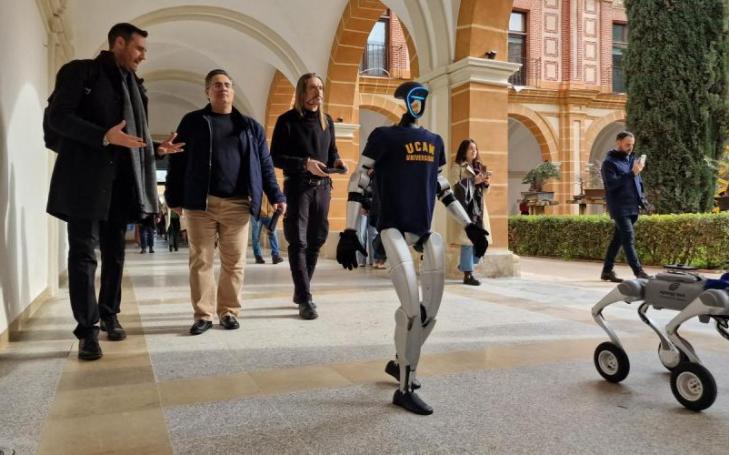
Manuel Pardo is a Professor and Vice-Dean at the Universidad Católica de Murcia (UCAM), affiliated with the Faculty of Health Sciences. His work focuses on integrating advanced technologies like virtual reality (VR) and artificial intelligence (AI) into medical education, particularly in cardiopulmonary resuscitation (CPR) training and emergency response protocols. He leads the New Technologies in Health Research Group, collaborating with organizations such as Synergy Tech and WorldProject NGO on projects like VR classrooms, CPR training apps, and humanitarian aid initiatives. Pardo’s research addresses biomechanical challenges in emergency rescue scenarios, disaster response (e.g., Türkiye earthquake relief), and pediatric health education. He has pioneered gamification and telesimulation methods to enhance healthcare training and patient safety. His work emphasizes ethical AI implementation and digital well-being in education. Pardo has coordinated international collaborations, including medical support in Uganda and Syria, reflecting UCAM’s commitment to global health equity. Education: While specific academic qualifications are not detailed, his roles as a professor and researcher indicate advanced training in health sciences, emergency medicine, or biomedical engineering. He has supervised graduate students like Miriam Mendoza, whose thesis developed a video game for CPR training under his mentorship. Research Interests: Virtual and augmented reality applications in medical training CPR and emergency response protocols Humanitarian disaster response Biomechanical analysis of rescue techniques Technology-driven healthcare education Grants & Collaborations: The Mapfre Foundation funded his CPR gamification project. UCAM supports initiatives like the Virtual Reality and Spatial Computing Classroom and the Ambulancia del Deseo España Foundation’s humanitarian efforts. He collaborates with NGOs such as WorldProject and Bomberos Unidos Sin Fronteras (BUSF). Labs/Teams: Director of the New Technologies in Health Research Group, contributing to innovations like the ODRPEEP oxygenation device for COVID-19 patients and the RCP.ucam.edu educational platform.
Eric Topol is Founder and Director of Scripps Research Translational Institute, Executive Vice President at Scripps Research, and holds the Gary and Mary West Endowed Chair of Innovative Medicine. A National Academy of Medicine member and top-cited researcher, he focuses on individualized medicine using genomic, digital and AI technologies. His research spans AI applications in healthcare, digital medicine, genomics, and translational science. Recent publications explore AI's role in clinical reasoning, medical imaging, and epidemic modeling, plus innovations in cardiology and Alzheimer's research. Topol leads major NIH initiatives including the All of Us Research Program and has authored influential books on medicine's digital future.
Prof. Dr. Norbert Palz is Professor for Digital and Experimental Design at Berlin University of Arts, where he served as President (2020-2025). His research explores digital fabrication processes, large-format additive manufacturing, and computational design methods. Education includes architecture studies at TU Berlin following a draftsman apprenticeship. Professional experience includes work with UN Studio, NOX Architects, and founding TARGADESIGN (art/architecture practice). Research contributions include EU Horizon 2020 projects on textile architectures and investigations into historical construction geometries for digital pedagogy. Current investigations focus on material behavior in large-scale 3D printing applications and computer art's architectural implications.
Shlomo Berkovsky is a Professor at Macquarie University's Australian Institute of Health Innovation (AIHI), leading research in AI for health and medical informatics. He is affiliated with multiple centers including the Data Horizons Research Centre and the Hearing Research Centre. His work focuses on AI-driven healthcare solutions, medical imaging analysis, and human-AI interaction. Key research areas include recommender systems, clinical decision support, and biomedical image processing. He leads collaborative projects like the Fujitsu Macquarie AI Research Lab, exploring next-generation behavior analysis and personalized AI coaching. Notable achievements include Best Paper Awards at ACM Conferences and the NSW iAward in Education. He serves on editorial boards for journals like ACM Transactions on Interactive Intelligent Systems and Frontiers in Robotics and AI . His research portfolio spans 228 publications and 14 active projects, with recent work on medical image classification, delirium-dementia links, and AI ethics in voice assistants. Collaborative projects emphasize industry partnerships and translational healthcare technologies.