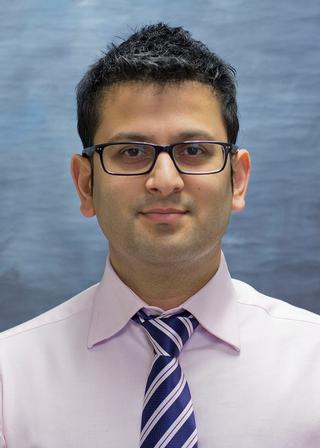
Sanjiv S. Virdee is an Associate Professor in the Department of Imaging Sciences at the University of Rochester Medical Center, School of Medicine and Dentistry. His clinical focus includes vascular and interventional radiology, with expertise in nuclear medicine and advanced imaging techniques like SPECT/CT and PET/CT. His research interests integrate Medical Imaging with Machine Learning for diagnostic applications in Breast Cancer and lymphatic systems. Key areas include SPECT/CT Sentinel Node Imaging , Metastatic Infiltration Prediction , and Hybrid Imaging Modalities . Publications highlight innovations in vascular intervention (e.g., Onyx embolization for aneurysms) and urological management (e.g., nephrostomy catheter complications). Collaborative work spans Diagnostic Radiology , Oncologic Imaging , and Functional Imaging .
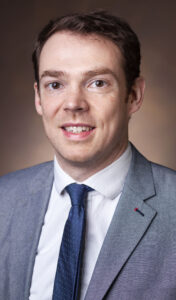
Alexander Tahk is an Associate Professor in the Department of Political Science at the University of Wisconsin–Madison , with additional affiliations at the University of Wisconsin Law School and as Director of the Tommy G. Thompson Center on Public Leadership . His work bridges Bayesian statistics , political methodology , and empirical legal research , focusing on American politics , public opinion , and judicial behavior . Ph.D. in Political Science (Stanford, 2010) M.S. in Statistics (Stanford, 2006) Dual S.B. in Mathematics and Political Science (MIT, 2002) His research explores ideal-point estimation , vote analysis , and time-series modeling , with a particular emphasis on nonparametric methods and multivariate statistical inference . He has led methodological conferences and developed open-source software like CARMAgeddon for continuous-time autoregression and npideal for nonparametric ideal-point modeling. Scientific awards include the MIT award for outstanding undergraduate thesis in political science . He has advised numerous Ph.D. students in political science and statistics, with placements at institutions such as Princeton University , Pew Research Center , and Harvard University . His publications span journals like Political Analysis , Journal of Medical Internet Research , and American Political Science Review , covering topics from judicial citations to mobile health interventions .
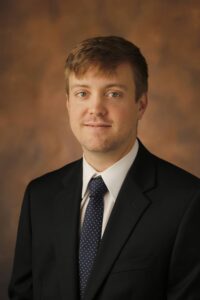
Nicholas Kavoussi, MD serves as an Assistant Professor in the Department of Urology at Vanderbilt University School of Medicine, specializing in minimally invasive surgical techniques through the Division of Endourology and Stone Disease. He is an active member of the Vanderbilt Institute of Surgery and Engineering (VISE), driving interdisciplinary collaboration between surgical innovation and engineering disciplines. His academic foundation includes: B.S. in Applied Mathematics, Columbia University School of Engineering and Applied Science (2008) M.D., State University of New York Downstate College of Medicine (2013) Residency in Urology, University of Texas Southwestern Medical Center (2018) Fellowship in Endourology and Minimally Invasive Surgery, Vanderbilt University Medical Center (2020) Dr. Kavoussi's research program centers on the integration of advanced technologies into urologic surgery, with particular emphasis on image-guided procedures and surgical innovation. His work bridges engineering principles with clinical urology to develop novel solutions for kidney stone disease, prostate conditions, and urologic cancers. He actively investigates real-time optical tracking systems, computer vision applications for tumor segmentation, and machine learning models for predicting stone disease complications. Analysis of his recent publications reveals a cohesive trajectory in surgical technology translation, consistently applying engineering methodologies to enhance precision in endoscopic and robotic procedures. His 2021-2024 work demonstrates progressive refinement of image-guided navigation systems, with increasing sophistication in artificial intelligence applications for intraoperative decision support and surgical outcome optimization across stone disease, prostate surgery, and kidney cancer interventions. No scientific awards or fellowships are documented in the provided materials. While student mentorship details are unavailable, Dr. Kavoussi's research is conducted within Vanderbilt's collaborative ecosystem, leveraging institutional resources for surgical innovation without explicit grant documentation in the source texts. As a core contributor to Vanderbilt's Robotic Surgery, Medical Devices, and Image-Guided Surgery research group within VISE, he participates in developing next-generation surgical tools and navigation systems, maintaining active partnerships with engineering faculty to advance the integration of real-time data analytics into the surgical workflow for complex urologic conditions.
Jack H. Noble is an Assistant Professor at Vanderbilt University, holding appointments in the departments of Electrical and Computer Engineering, Computer Science, Biomedical Engineering, and Head and Neck Surgery. He directs the Biomedical Image Analysis for Image-Guided Interventions Laboratory (BAGL) and co-chairs the VISE Symposium Series. His research focuses on medical image processing, particularly in computer-aided surgery and cochlear implant optimization. Assistant Professor, Electrical and Computer Engineering (Primary) Assistant Professor, Computer Science Assistant Professor, Biomedical Engineering Assistant Professor, Head and Neck Surgery Director of Graduate Student Recruitment, Vanderbilt School of Engineering Education: Ph.D., Electrical Engineering, Vanderbilt University (2011) M.S., Electrical Engineering, Vanderbilt University (2008) B.E., Electrical Engineering, Vanderbilt University (2007) Research Interests: Dr. Noble specializes in medical image analysis for surgical applications, combining deep learning, statistical shape models, graph search algorithms, and augmented reality to enhance precision in procedures like cochlear implantation. His work bridges engineering and clinical practice, emphasizing patient-specific modeling and real-time intra-operative guidance. Deep learning for medical imaging Statistical shape modeling of ear anatomy Augmented reality in surgery Image-guided cochlear implant programming Neural activation simulation Micro-CT to CT translation Article Trends: His publications (2011–2023) highlight advancements in automated segmentation, deep learning architectures (e.g., Cycle GANs, cGANs), and augmented reality systems. Key themes include cochlear implant optimization, auditory nerve health estimation, and surgical precision through image analysis. Advising & Grants: Dr. Noble mentors graduate students and postdocs, with alumni contributing to fields like medical imaging and surgical robotics. His work is funded by NIH grants R01DC014037 and R01DC022099, focusing on patient-specific cochlear implant models and augmented reality-guided surgery.
Chris Wymant is a Senior Researcher in Statistical Genetics and Pathogen Dynamics at the Big Data Institute, University of Oxford, and holds an honorary position as a Research Associate in the School of Public Health at Imperial College London. His primary affiliation is with the Pandemic Sciences Institute. He transitioned from theoretical particle physics to epidemiological and evolutionary virology, focusing on virus spread dynamics, genomic methods, and public health interventions. Education: PhD in theoretical particle physics, followed by postdoctoral research in infectious disease epidemiology at Imperial College (2014–2016). Research interests include HIV and SARS-CoV-2 epidemiology, viral evolution, computational modeling (e.g., digital contact tracing efficacy), and genomic tools like shiver and phyloscanner . Notable contributions include proposing digital contact tracing for SARS-CoV-2 (Science 2020), evaluating its epidemiological impact (Nature 2021), and discovering a highly virulent HIV-1 variant (Science 2022). He co-developed shiver for HIV genome assembly and phyloscanner for transmission inference. His work spans projects like BEEHIVE (HIV surveillance), PANGEA, and AMPHEUS. No scientific awards are explicitly listed. Labs/teams: Active in the Big Data Institute and Pandemic Sciences Institute, collaborating internationally on infectious disease modeling and genomic epidemiology.
Mark D. Dunlop is a Professor in the Department of Computer and Information Sciences within the Faculty of Science at the University of Strathclyde, UK. With a research career spanning over 30 years since his 1991 PhD on Multimedia Information Retrieval, he has established himself as a leading researcher in mobile human-computer interaction, particularly focusing on text entry systems and accessibility technologies. His research interests center on Mobile Human-Computer Interaction, Text Entry Systems, Accessibility for older adults and people with disabilities, Information Retrieval, Context-Aware Computing, and Assistive Technologies. Dunlop's work has evolved from early foundational research in information retrieval to contemporary applications in mobile health, with a growing emphasis on clinical applications particularly for kidney disease patients and individuals with intellectual disabilities. His research methodology often combines rigorous laboratory studies with real-world evaluations, as evidenced by his work comparing lab versus in-the-wild mobile text entry behavior. Dunlop has been particularly active in developing technologies for special populations, including older adults, people with intellectual disabilities, and clinical patients. His recent work demonstrates strong interdisciplinary collaboration with healthcare professionals, producing practical applications like tablet-based communication aids for primary care consultations and electronic patient portals for haemodialysis patients. His TEXT2030 initiative shows his forward-looking approach to anticipating future challenges in mobile text entry research. Dunlop has mentored several researchers who have become active contributors in the field, including Ryan Colin Gibson, Al Majed Khan, and Ramsay Meiklem. His work has been consistently published in top venues including CHI, MobileHCI, and ACM Transactions on Accessible Computing, demonstrating both academic rigor and practical impact.
Jonathan Frederik Carlsen serves as a Clinical Associate Professor at the Department of Clinical Medicine within the Faculty of Health and Medical Sciences at the University of Copenhagen. His academic work is centered in the Radiology section, with research conducted at facilities located at Blegdamsvej 9 in Copenhagen Ø and Blegdamsvej 3 in Copenhagen N. With 37 documented research outputs, Carlsen maintains an active research profile with significant contributions to medical imaging and radiology. Dr. Carlsen's research interests span multiple critical areas in modern medical imaging, with particular emphasis on the integration of artificial intelligence into clinical radiology practice. His work explores innovative applications of imaging technology across various medical specialties including oncology, neurology, and women's health. He investigates both technical aspects of imaging modalities and practical implementation challenges in diverse healthcare settings worldwide. His research demonstrates a strong commitment to improving diagnostic accuracy, treatment planning, and clinical decision-making through advanced imaging techniques. Analysis of Carlsen's recent publications reveals a clear trajectory toward AI-assisted medical imaging with particular focus on tumor delineation, stroke assessment, and diagnostic workflows. His work bridges technical innovation with clinical applicability, examining how AI tools can be adapted to different healthcare contexts globally. The publications show consistent collaboration with interdisciplinary teams, suggesting an integrative approach to medical imaging research that connects technical development with practical clinical implementation. With numerous publications appearing in high-impact journals including Diagnostics, Neuro-Oncology Advances, and Journal of Medical Screening, Carlsen's research has garnered significant attention in the medical imaging community. His work on AI applications in radiology has accumulated multiple citations and substantial readership across academic platforms, indicating growing influence in his field. While specific details about his mentorship activities aren't explicitly provided in the available information, Carlsen's extensive collaborative research network suggests active engagement with students and junior researchers. His work appears to be conducted within the radiology research environment at the University of Copenhagen, involving interdisciplinary teams comprising clinicians, researchers, and technologists working at the intersection of medical imaging and artificial intelligence.
Patrick Phillips is an Associate Professor and Co-Director of the UC TRAC Clinical & Population Health Science Core at the University of California, San Francisco (UCSF). His research focuses on optimizing clinical trials for tuberculosis (TB) treatments, particularly drug-sensitive and drug-resistant forms. He has led analyses of pivotal trials such as REMoxTB and RIFAQUIN, published in the New England Journal of Medicine. Phillips is a Senior Statistician for ongoing trials like STREAM for multidrug-resistant TB and has pioneered adaptive designs, including Multi-Arm Multi-Stage (MAMS) trials. His work extends to trials in Alzheimer’s and HIV, emphasizing global health significance. As part of the UCSF Center for Tuberculosis Leadership & Initiatives, he contributes to strategies like TB RAMP Mentorship and the SMART4TB program. Phillips collaborates with global consortia, advancing TB treatment through statistical rigor and innovative trial methodologies. His expertise in biostatistics and clinical trial design has shaped protocols for high-dose rifampicin and novel drug combinations. Key articles focus on treatment regimens, biomarker development (e.g., molecular bacterial load assays), and diagnostic accuracy studies using CRP and Xpert TB host response tests. He advocates for patient-centered approaches and has evaluated implementation strategies for preventive therapies like 3HP. Phillips’ work underscores optimizing treatment durations through risk-stratified approaches, aiming to balance efficacy and safety while addressing global TB challenges.
Jack Lipei Tang is a tenure-track Assistant Professor of Digital Communication at the University of Alabama’s College of Communication & Information Sciences. He holds a Ph.D. from the Annenberg School for Communication and Journalism at USC, and advanced degrees from The Chinese University of Hong Kong. His research focuses on advocacy communication, computational social science, and digital public spheres, employing both quantitative methods (e.g., network modeling, machine learning) and qualitative approaches (e.g., interviews, participatory observation). Key research areas include the strategic communication of nonprofits, political behaviors in digital spaces, and the impact of AI technologies like Large Language Models on society. He has published in top journals such as Computers in Human Behavior and International Journal of Cultural Studies , with recent work examining cross-cultural well-being in mobile gaming communities and toxicity dynamics in online gaming. His work bridges communication theory with applied social science, emphasizing computational methods. Dr. Tang actively presents at major conferences including the International Communication Association (ICA) and National Communication Association (NCA). His current projects explore the societal implications of AI in communication and the role of social media in public health crises. Despite no listed awards, his citation metrics highlight impactful contributions to fields like misinformation studies and digital epidemiology.
Lueder Kahrs is an Assistant Professor in the Department of Mathematical and Computational Sciences at the University of Toronto Mississauga (UTM), with a dual affiliation at the Institute of Biomedical Engineering at the University of Toronto (St. George). His research focuses on medical computer vision, robotics, and artificial intelligence applied to surgical interventions and medical diagnostics. He leads the Medical Computer Vision and Robotics Lab, collaborating with institutions like SickKids Hospital and the Advanced Micro and Nanosystems Laboratory. His work spans surgical robotics (e.g., da Vinci Research Kit integration), endoscopic vision systems, and AI-driven medical image analysis. Notable recent achievements include a 2022 IROS paper on sim-to-real robot transfer and a T-CAIREM scholarship awarded to student Charles Yuan for ultrasound guidance research. His team includes over 20 researchers across PhD, MSc, and volunteer roles. Key projects involve 3D endoscopic vision, OCT data processing, and vision-based robotic control. The lab’s interdisciplinary approach bridges computer science, engineering, and clinical medicine. Recent milestones include lab openings, surgical tracking competition wins, and publications in conferences like MICCAI and IEEE/RSJ IROS. Kahrs’ research emphasizes real-world clinical impact, with applications in minimally invasive surgery and robotic-assisted procedures.
Morgan Barense is an Associate Professor at the University of Toronto (since 2014) and Director of the Toronto Neuroimaging Facility. Her research focuses on understanding how the brain supports memory formation, aging-related cognitive decline, and neurological disorders through neuroimaging, neuropsychology, and cognitive psychology. She holds a B.A. from Harvard University and a Ph.D. from the University of Cambridge, followed by a postdoctoral fellowship at Peterhouse (Cambridge). Her expertise spans Perception and Cognition Cognitive Neuroscience Neuroimaging Techniques Memory Disorders She investigates neural mechanisms underlying episodic memory, autobiographical memory, and spatial navigation using fMRI, behavioral studies, and computational modeling. Her work has been recognized with prestigious awards such as the Canada Research Chair in Cognitive Neuroscience and the Young Investigator Award from the Cognitive Neuroscience Society. Her research explores applications like smartphone-based interventions to mitigate memory decline in aging populations and neuroimaging methods to assess cognitive functioning in acute stroke patients. She also studies how prediction errors and environmental boundaries influence episodic memory consolidation. Current projects include examining hippocampal function in dementia risk groups and developing frameworks for understanding memory across multiple temporal and spatial scales.
Suzanne Martin is a Full Professor of Occupational Therapy at the University of Ulster, affiliated with the School of Health Sciences and the Faculty of Life & Health Sciences. Her primary role is advancing healthcare innovation through assistive technologies, telehealth, and neurorehabilitation. She holds external positions as former Chief Allied Health Professions Officer (Northern Ireland Department of Health) and Senior Fellow at the Higher Education Academy. Research focuses on occupational therapy interventions, assistive technologies for disabilities, dementia care, and BCI systems for neurological rehabilitation. Notable contributions include studies on hand injury epidemiology in sports, seating solutions for elderly care homes, and telehealth self-management programs. Her work aligns with UN Sustainable Development Goals related to good health and well-being. Recent publications emphasize clinical outcomes in hand therapy, BCI home integration for ABI patients, and ergonomic seating efficacy. Her consultancy activities span healthcare innovation projects like TRI-AGE and Reablement tools. Supervised PhD researchers include Andrea Jones (pandemic clinical skills) and Mary McDonagh (nursing outcomes). Labs/Teams: Lead researcher in BackHome (BCI for disability inclusion), TRAIL Living Lab (user-centric innovation), and NOCTURNAL (dementia night care). Active in transdisciplinary collaborations across health tech, engineering, and policy sectors.
Ashutosh Khandha is an Assistant Professor in the Department of Biomedical Engineering at the University of Delaware. He holds a Ph.D. in Biomedical Engineering from the University of Delaware (2016), an MS in Bioengineering from the University of Toledo (2004), and a BS in Biomedical Engineering from the University of Mumbai (2000). His research focuses on translational engineering education and biomechanical studies, particularly in knee mechanics, ACL reconstruction outcomes, and osteoarthritis development post-injury. Key research interests include analyzing gait mechanics post-ACL surgery, muscle co-contraction dynamics, and the biomechanical implications of surgical interventions like PEEK spacers in spinal fusion. He has contributed to understanding how early postoperative loading asymmetries correlate with long-term cartilage health and osteoarthritis progression. His publications highlight advancements in ACL rehabilitation protocols, gender differences in recovery, and the role of meniscal treatments. While no formal awards are listed, his work bridges clinical practice and biomechanical engineering, emphasizing practical training in education. Dr. Khandha’s research also explores innovative educational approaches, such as integrating bio-inspired design and STEAM methodologies into computer-aided design courses, to enhance student learning outcomes.
Andrea Shepherd is a Senior Lecturer and Head of the School of Nursing and Paramedic Science at Ulster University, specializing in neuroscience nursing, biomimetics, and interprofessional education. She works at the Derry~Londonderry campus and contributes to the Institute of Nursing and Health Research. Role: Senior Lecturer, Head of School of Nursing and Paramedic Science Institution: Ulster University Location: Derry~Londonderry campus, Londonderry, United Kingdom Contact: a.shepherd@ulster.ac.uk, +44 28 7167 5197 Her research explores neurological assessment tools, such as the Glasgow Coma Scale, and biomimetic technologies for vital sign monitoring. She investigates brain-computer interfaces for disorders of consciousness and family experiences in critical care. Key trends in her recent publications include advancements in neuroscience nursing, interprofessional education models, wound care innovations, and tactile sensing technologies for clinical diagnostics. Collaborative international research features prominently. Notable Work: International standardization of neurological assessments Technologies: Biomimetic fingertip sensors for pulse and capillary refill time measurement Educational Contributions: COIL initiatives to enhance interprofessional learning She organizes academic events like the Interprofessional Education (IPE) Festival, fostering interdisciplinary collaboration. Her work aligns with UN Sustainable Development Goals in global health and education equity.
Tiphaine Colliot is an Associate Professor in Cognitive Psychology at the University of Poitiers, affiliated with the Center for Research on Cognition and Learning (CeRCA) and the School of Human and Social Sciences (MSHS). Her research focuses on educational psychology, particularly in written production, note-taking strategies, graphic organizers, and multimedia learning. Active member of the executive committee of the IPHD MA program at INSPE Niort Collaborates with É. Jamet on studies related to cognitive load and generative learning Her recent work explores the impact of digital tools on learning outcomes, including tablet-based geometry instruction, adaptive feedback mechanisms, and multitasking effects during video lectures. Collaborative research with É. Jamet investigates structured note-taking, self-generated graphic organizers, and the role of real-time feedback in educational technology. Despite significant contributions to cognitive load theory, no explicit scientific awards are documented in the provided materials. Colliot’s teaching responsibilities include academic methodology instruction, and she engages in developing interventions to enhance students’ self-regulation and writing efficacy.