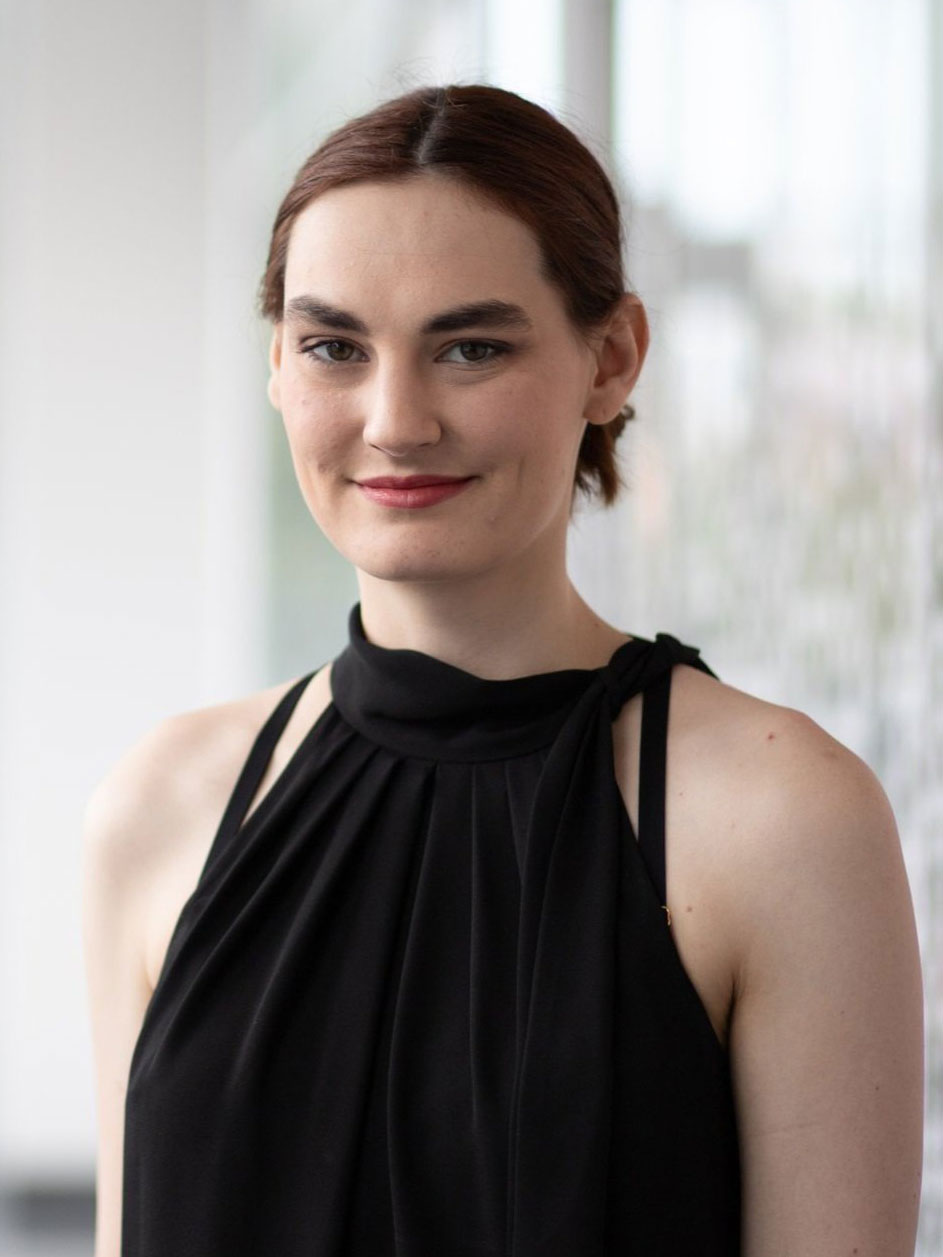
Dr. Arathy Kartha is a vision rehabilitation researcher with affiliations to the Wilmer Eye Institute at Johns Hopkins University School of Medicine. She holds a K99/R00 Pathway to Independence Grant from the National Eye Institute and specializes in multisensory rehabilitation for ultra-low vision. Education: BS and MPhil in Optometry from Elite School of Optometry (Chennai, India) PhD in Pediatric Vision Rehabilitation (Australia) Postdoctoral Fellowship at Wilmer Eye Institute (Johns Hopkins University) Her research focuses on integrating virtual reality, augmented reality, and neuroprosthetics to develop assistive technologies for visually impaired individuals. Recent work explores spatial localization, head rotation patterns, and AI-powered smart vision glasses. K99/R00 Pathway to Independence Grant - National Eye Institute
Tom Francart is a Professor at the Department of Neuroscience, Faculty of Medicine, KU Leuven. He leads research in auditory attention, EEG decoding, and speech processing, with affiliations to iSi Health, LBI (KU Leuven Brain Institute), and Leuven.AI. His research focuses on: Neural decoding of auditory attention using EEG Objective measures for aphasia and hearing impairment Brain-computer interfaces for hearing aids Audiovisual integration in speech perception Machine learning applications in auditory neuroscience Recent publications analyze neural tracking of speech in aphasia, transformer-based EEG decoding, and audiovisual context integration. He supervises projects on cochlear implants, attention decoding algorithms, and post-stroke recovery.
Megan Hofmann is an Assistant Professor holding dual roles at Northeastern University's Khoury College of Computer Sciences and the Department of Mechanical and Industrial Engineering (College of Engineering). She earned her PhD in Human-Computer Interaction from Carnegie Mellon University in 2022. Her research focuses on accessibility and digital fabrication, particularly in healthcare contexts, including automated machine knitting and medical making. She leads the Accessible Creative Technologies (ACT) Lab, which develops tools like Maptimizer (custom tactile maps), OPTIMISM (collaborative optimization frameworks), and KnitGIST (generative knitting design). Her work addresses challenges in assistive technology fabrication, such as creating accessible medical devices and optimizing rapid prototyping in healthcare. Recent projects include NSF-funded research on interactive smart textiles and studies on distributed manufacturing during the COVID-19 pandemic. Hofmann’s contributions span interdisciplinary domains, blending computer science, mechanical engineering, and healthcare innovation. Grants & Awards: Recipient of a $550,000 NSF grant for smart textile tools (2024). Labs: ACT Lab focuses on inclusive digital fabrication systems.
Mahanth Gowda is an Associate Professor in the Department of Computer Science and Engineering, leading a prolific research program at the intersection of mobile systems, wireless sensing, and human-computer interaction. His work has been continuously funded by the U.S. National Science Foundation since 2019, serving as Principal Investigator on four awards and Co-PI on two others, collectively spanning edge computing for XR, sign-language recognition, next-generation wireless networking, and healthcare-oriented wearables. Research Interests Millimetre-wave and ultra-wideband sensing for 3-D finger motion tracking and speech eavesdropping Edge-IoT platforms for real-time sign-language recognition and translation Neural-augmented game streaming and super-resolution on commodity mobile devices Open-source wearable systems for sports analytics and rehabilitative healthcare Security and privacy implications of motion sensors in smartphones and IoT devices Over the past five years his publication trajectory has concentrated on leveraging emerging radio modalities—especially millimetre-wave radar, Wi-Fi, and UWB—to extract fine-grained human-centric information such as finger gestures, facial micro-motions, and spoken content. A complementary thread develops edge-native machine-learning frameworks that push intelligence to resource-constrained devices, enabling immersive AR/VR experiences and assistive technologies for the Deaf and hard-of-hearing communities. Grants & Projects CAREER: Sign-to-Speech – NSF, $500k, 2021-2026; Edge-IoT platform for real-time ASL recognition. SHF: Medium: Next-Gen XR Edge Platform – NSF, $1.2M, 2022-2025; Co-PI with Das, Sivasubramaniam, Kandemir. CNS Core: IoTScope – NSF, $450k, 2020-2025; Sensing physical materials via low-cost IoT radios. CNS Core: Medium: ML-driven Next-G Wireless – NSF, $800k, 2020-2024; Co-PI with Yang and Mahdavi. I-Corps: Smart Ring for Healthcare Analytics – NSF, $50k, 2023-2025; Commercialization of finger-motion wearables. Labs & Teams Gowda directs a research group that operates at the confluence of wireless networking, embedded systems, and applied machine learning. The lab maintains active collaborations with faculty in computer architecture, augmented reality, and accessibility studies, and routinely mentors graduate researchers whose work appears in top-tier venues such as ACM MobiCom, IEEE INFOCOM, ISCA, and ACM IoTDI.
Cecily Heiner serves as an Associate Professor in the Department of Computer Systems Engineering at Oregon Institute of Technology's Klamath Falls campus, with office PV177 and contact number 541-885-1313. Her academic credentials include: PhD in Computer Science from University of Utah (2009) Master's in Computer Aided Language Learning from Carnegie Mellon University (2005) BS in Computer Science from Brigham Young University (2003) Her research focuses bridge theoretical computer science with practical applications, particularly in data-intensive systems and user-facing software development. Teaching portfolio reveals emphasis on foundational programming, database architecture, and emerging data science methodologies, suggesting applied research in educational technology and software design patterns. Prior industry experience at Microsoft's Speech Product Group informs her interest in human-computer interaction paradigms. Professional trajectory shows 8 years as Assistant Professor at Southern Utah University (2011-2019) followed by secondary computer science teaching certification (2009-2011). Current instructional responsibilities span Computer Programming I/II, GUI development, Database Systems, and Introduction to Data Science courses.
Douglass Scott is a Professor at Waseda University's School of Human Sciences in Tokyo, Japan, where he has made significant contributions to educational technology and intercultural communication research. His academic career spans over two decades with a particular focus on digital communication patterns, emotional expression in mobile media, and online education systems. He is closely associated with Waseda University's e-School, Japan's first complete undergraduate online degree program established in 2003. Dr. Scott earned his PhD in 1997 from the University of Michigan's School of Education with a specialization in Educational Foundations and Policy and Educational Technology. He also holds an MA in East Asian Studies (Japan) from the University of Michigan (1987) and a BS in Political Science from the University of Oregon (1985). His educational background includes a period at Waseda University's International Division during 1983-1984. His research primarily focuses on educational technology, information and communication technology, and intercultural communication, with special attention to how emotions are transmitted through digital channels. His work often compares Japanese and American communication patterns, particularly examining gender differences and cultural variations in mobile phone email usage. He has documented the development and implementation of Waseda University's pioneering e-School program across multiple publications. Analysis of his publication record reveals consistent scholarly contributions examining emotional expression in digital communication, with particular emphasis on how gender and cultural background influence emotional transmission through mobile devices. His research shows a clear trajectory from foundational work on educational telecommunications models to applied research on specific communication technologies in educational contexts. Dr. Scott maintains active research projects including comparative studies of mobile telephone use across countries and investigations into the role of social networks in cultural adjustment of exchange students. His work has been supported by Japan Society for the Promotion of Science Grants-in-Aid for Scientific Research. As an educator, he teaches across multiple programs at Waseda University including the Graduate School of Human Sciences and the School of Human Sciences Online Degree Program. His teaching portfolio encompasses Information and Communication Technology courses, Academic Writing, Intercultural Communication, and English language instruction.
Taha Mansouri is a Lecturer in Artificial Intelligence at the University of Salford's School of Science, Engineering & Environment. He leads the High Performance Computing facilities within the school and chairs the Salford AI Club, an inclusive community focused on AI applications in Higher Education. Mansouri holds dual PhDs - one in Artificial Intelligence and Deep Learning from the University of Salford and another in Information Technology Management from Allameh Tabataba'i University in Iran. His research interests span multiple critical areas in modern AI development, with particular emphasis on ethical considerations in AI systems. Mansouri actively investigates fairness, explainability, and transparency in AI algorithms, with specific focus on computer vision systems and large language models. His work addresses bias in facial emotion detection across age, gender, ethnicity, and cultural backgrounds, highlighting important concerns about equity in automated systems. Mansouri's recent publications demonstrate a strong trend toward practical applications of AI for social good, including detecting mold in social housing, ethical compliance in legal AI systems, and developing AI-resilient assessment tools for education. His research bridges theoretical AI development with real-world implementation challenges across healthcare, education, and industrial applications. Fellowship of the Higher Education Academy Senior Fellowship of the Higher Education Academy Mansouri actively supervises multiple PhD students working on diverse AI applications and leads significant research projects including the £500,000 Innovate UK Smart Grant-funded Expert Legal Intelligence (ELI) project. He serves on prestigious review panels including the EPSRC Peer Review College, the EDI Hub+ Flexible Fund Peer Review College, and the British Council's International Science Partnerships Fund Review College. His grant portfolio includes projects on ethical ASR models (£30,000 collaboration), WATCH-AI benchmarking tools, and inclusive AI emotion recognition systems. As leader of the High Performance Computing facilities, Mansouri supports interdisciplinary research across the university. He also chairs the Salford AI Club, fostering collaboration among individuals from diverse backgrounds interested in AI applications, particularly in Higher Education.
Stephen Dunn serves as a Lecturer within the Dental School at the University of Glasgow, actively contributing to dental education through innovative technology integration. His work focuses on modernizing dental curricula with digital workflows and CAD/CAM systems. His research interests center on digital dentistry education, particularly the implementation of CAD/CAM technology in pre-clinical training and curriculum development. Dunn pioneers staff-student partnerships to co-create e-learning resources and integrate digital workflows into professional dental programs, addressing challenges in technology adoption and conceptual understanding of removable partial denture design. Dunn's publication record demonstrates consistent exploration of digital dental education trends since 2019, with increasing emphasis on collaborative curriculum innovation and student-centered digital resource development. His recent 2024-2025 work highlights strategic approaches to digital workflow integration in professional degree programs. No scientific awards were documented in the provided materials Dunn frequently collaborates with Robert McKerlie and other dental education specialists on technology-enhanced learning initiatives. His work involves partnerships with students to develop educational resources and implement digital workflows, though specific grant details are not provided in the source material. His research activities are centered within the University of Glasgow Dental School's educational innovation ecosystem, focusing on practical implementation of digital dentistry tools within teaching environments through conference presentations and collaborative projects.
Tuna Saka serves as Associate Professor of Architecture at Pennsylvania College of Technology's School of Construction and Architecture since 1996, holding office in ACC Room 414 (contact: tsaka@pct.edu, 570.320.2400 ext. 7767). An Autodesk Certified Instructor since 1997, he trains through the Technology Transfer Center's AutoCAD Training Center and presents for the CADSS user group. His education includes: Master of Architecture, State University of New York, Buffalo Bachelor of Professional Studies in Architecture, State University of New York, Buffalo A.A.S. in Civil Engineering Technology, Hudson Valley Community College (1983) Extensive training in Architectural Applications of AutoCAD Research centers on integrating computer technology in architectural practice, focusing on CAD management and production systems within design firms. His expertise bridges software applications like AutoCAD with real-world architectural workflows, emphasizing efficiency in drafting and design processes. His seminal 2001 publication AutoCAD for Architecture demonstrates applied research in architectural software education, reflecting consistent contributions to CAD methodology in architecture education and professional practice. Award highlights: American Institute of Architects (AIA) Foundation Scholarship Award (1987) R. Buckminster Fuller Scholarship Award (1986) Professional service includes ACADIA membership, Business/Industry/Education Statewide Advisory Committee participation, Academic Standards & Issues Governance Committee service, and PCNow Faculty Liaison duties. His 13 years of AEC industry experience inform his productivity consulting for CAD departments. He actively contributes to the AutoCAD Training Center and CADSS workshops, fostering industry-academia collaboration in architectural technology.
Prof. Dr. Till Albert serves as Professor of Digitalization in the Department of Economics at the Faculty of Business, Flensburg University of Applied Sciences. He holds leadership roles including Professor FLAIR (Flensburg Artificial Intelligence Research), Spokesperson for Jackstädt-Zentrum Flensburg (JZF) HS Center, and Convention FB4 coordinator, driving initiatives in AI integration and entrepreneurship. Education: Industrial Engineering studies at Karlsruhe Doctor rerum politicarum (Dr. rer. pol.) His research spans the interdisciplinary landscape of digitalization, emphasizing Digital Transformation's impact across computer science, sociology, design, economics, business administration, and ethics. Albert focuses on developing digital business models, corporate information systems, and practical applications for small-to-medium enterprises through methods like future research and innovation management. His work bridges academic theory with industry needs, particularly in AI process integration and intrapreneurship frameworks. Albert teaches across Business Informatics, Business Administration, eHealth, and Business Management programs while leading the Workshop for Internal Entrepreneurship in Small and Medium-Sized Family Businesses. His international professional background includes futurology at Volkswagen, founding an IT consulting firm, and academic positions at University of Osnabrück (Lingen campus), with work experience in Berlin, Madrid, and Beijing. Fluent in Danish, he actively supports regional economic initiatives like the university's 2020 program aiding local shops.
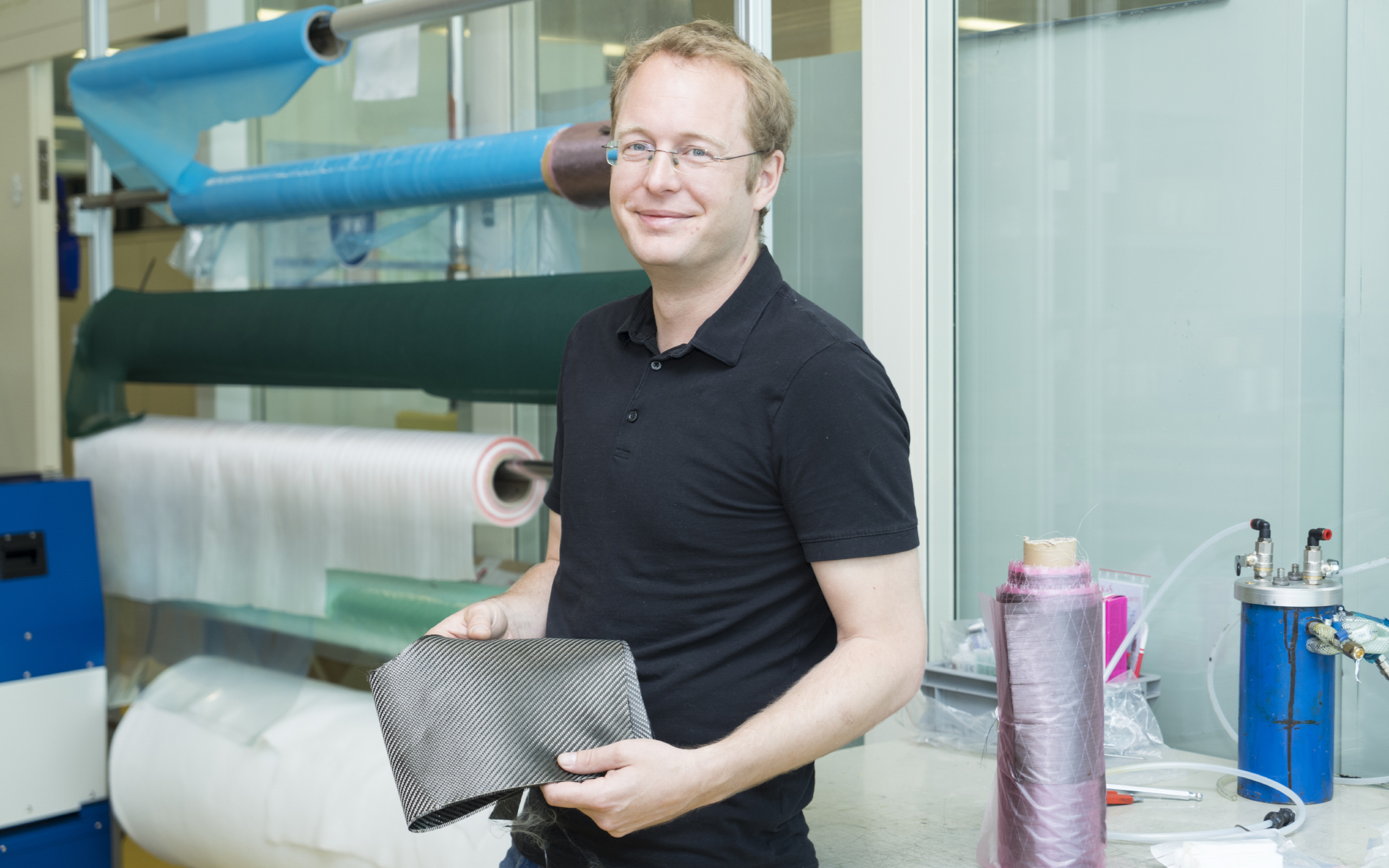
Prof. Dr. Christian Brauner serves as a Professor and Group Leader of the Structural Mechanics group (Lightweight Construction and Fiber Composite Technologies) at the Institute of Polymer Technology within the School of Engineering and the Environment at the University of Applied Sciences Northwestern Switzerland (FHNW). He has held this position since 2017 and concurrently serves as Chairman of the Board of Composite United Switzerland since 2018. His educational background includes a Diploma in Mechanical Engineering (Dipl.-Ing. FH) from Bielefeld University of Applied Sciences (1991-2005) and a Master’s degree (M.Sc.) in “Computer Aided Mechanical Engineering” from FH Flensburg (2006-2008). He completed his doctorate at the University of Bremen on numerical methods for manufacturing process modeling. Prof. Brauner's research focuses on fiber composite design methods, manufacturing simulation (draping, infusion, curing, warping), multiphysical modeling, and material development. He specializes in Production 4.0 integration—virtually mapping manufacturing processes with online monitoring systems. Current projects include infrared curing of thermoset composites, ultrasonic welding techniques, fatigue testing of dynamically loaded components, and high-temperature aerospace composites. His work spans automotive, marine, medical devices, and footwear applications, demonstrating cross-industry relevance of composite technologies. He leads multiple research initiatives including the EU project on high-temperature aviation composites, SuCoHS (sustainable composites), and Filapodo (patient-specific orthopedic filaments). As initiator of the NTN Innovation Booster Plastics for Zero Emission (since 2022), he drives sustainability in plastics engineering while teaching advanced composites courses across FHNW’s academic programs. Prof. Brauner heads the Structural Mechanics group at FHNW’s Institute of Polymer Technology, leveraging experience from building an eight-person department at Bremen’s Fiber Institute where he developed simulation methods to replace empirical industrial practices with knowledge-based manufacturing planning.
Christos Liaskos is an Assistant Professor at the Department of Computer Science and Engineering, University of Ioannina (UoI), Greece. He is also a researcher at the Foundation for Research and Technology-Hellas (FORTH). His expertise spans computer networks, wireless communication systems, and nanotechnology, with a focus on reconfigurable intelligent surfaces (RIS), metasurfaces, and their applications in 6G, IoT, and autonomous systems. He holds a PhD in Computer Networking from Aristotle University of Thessaloniki (AUTH) and has published extensively in IEEE venues. Education: Diploma in Electrical and Computer Engineering (AUTH, 2004) MSc in Medical Informatics (AUTH Medical School, 2008) PhD in Computer Networking (AUTH Informatics Department, 2014) Research Interests: Programmable wireless environments using software-defined metasurfaces RIS-assisted architectures for 5G/6G networks IoT and UAV communication systems Energy-efficient trajectory design for drones Beam steering and wavefront control in mmWave systems His recent work explores applications like RIS-based autonomous driving, optical wireless positioning, and fault-tolerant routing in metasurface networks. He contributes to open-source simulation frameworks (e.g., Cooperis) and collaborates on EU projects like VISORSURF, advancing the Internet-of-Materials concept.
Eduard Gröller is a Full Professor of Visualization at the Vienna University of Technology (TU Wien), leading the Research Unit of Computer Graphics and the Visualization Group within the Institute of Visual Computing & Human-Centered Technology (VC&HCT). He holds adjunct professorships at the University of Bergen, Norway, and chairs several academic committees. His academic journey began with a PhD in 1993 from TU Wien, followed by extensive contributions to visualization research. His research focuses on visual computing, scientific visualization, and medical imaging, with applications in energy modeling, climate analysis, and molecular biology. Gröller has pioneered methods like BEMTrace for BIM-based energy models and HORA 3D for flood risk visualization. He co-authored over 300 publications, including foundational work in IEEE Transactions on Visualization and Computer Graphics and Computer Graphics Forum . Gröller's awards include the IEEE VGTC Technical Achievement Award (2019), Eurographics 2015 Outstanding Technical Contributions Award, and Fellow of the Eurographics Association (2009). He actively contributes to conferences like EuroVis and IEEE Visualization as program chair and reviewer. His educational efforts span courses in visual computing, graphics, and data analysis, with a focus on immersive tools like ImNDT for material data exploration. Current projects include Climate-Sensitive Adaptive Planning for Resilient Cities, Visual Analytics in Radiation Therapy, and scalable web-based visualization techniques. He leads teams in VRVis, a research center for applied visualization, and collaborates internationally on medical imaging and environmental data challenges.
Dr. Peter Wolf is a Lecturer at the Department of Health Sciences and Technology (D-HEST) at ETH Zurich. His research focuses on robot-aided motor learning and sports engineering, particularly exploring concurrent feedback strategies for efficient motor task learning and applications in rowing and climbing. He advises students in the Medical Technology and Human Movement Science & Sport majors, emphasizing interdisciplinary approaches combining biomechanics, mechatronics, and coding. His research group develops tools to support athletes and rehabilitation patients, with a focus on exosuits, exoskeletons, and robotic feedback systems. Notable projects include optimizing gait parameters for adolescents with crouch gait and enhancing wearable robotic systems for daily mobility support. Dr. Wolf also contributes to curriculum design, recommending courses like Biomedical Engineering, Neural Control of Movement, and Machine Learning for Healthcare. His work bridges biomechanical analysis, robotics, and clinical applications, with recent innovations in vestibular stimulation for sleep disorders and thermal stress monitoring for occupational workers. Collaborations span sports science, rehabilitation engineering, and human-robot interaction, reflecting his commitment to applied and interdisciplinary research.
Tamás Lovas serves as Associate Professor at the Department of Photogrammetry and Geoinformatics, Faculty of Civil Engineering, Budapest University of Technology and Economics. He teaches advanced courses in Building Information Modeling, Laser Scanning, Remote Sensing, and Intelligent Transportation Systems while supervising diploma theses in Surveying and Geoinformatics Engineering. Education: 1994: High school graduation, Városmajor High School, Budapest 1999: Certified Surveyor and Geoinformatics Engineer, Budapest University of Technology, Faculty of Civil Engineering 2005: PhD (Earth Sciences), Budapest University of Technology and Economics, Faculty of Civil Engineering Research Interests: Dr. Lovas specializes in laser scanning technologies and geospatial data processing with emphasis on airborne and terrestrial point cloud analysis. His work bridges civil engineering applications and computational methods, particularly in infrastructure monitoring and digital representation. Processing, classification, and modeling of airborne laser scanned data Accuracy testing of terrestrial laser scanning Processing and modeling of terrestrial laser scanned data Comparative study of spatial data acquisition technologies His 2022-2025 publications demonstrate accelerating integration of artificial intelligence in point cloud processing, with significant contributions to road surface extraction, urban land cover classification, and BIM automation. Current research trends show strong focus on digital twin development for autonomous vehicles and infrastructure management. Scientific Awards: Republic Scholarship (1998-1999) Karlsruhe Chancellor's Scholarship (1999) ERASMUS scholarship (2000) Korányi Fellowship (2001-2002) János Bolyai Research Scholarship (2008-2011) OHV 1st place (2008) Dean's commendation for ERASMUS committee work (2014) For Students Award - Teaching Department (2017) Advising and Grants: Dr. Lovas mentors students through diploma theses and TDK research projects on topics including object survey with amateur sensors and hull modeling. His research funding includes the prestigious János Bolyai Research Scholarship and international fellowships supporting collaborations with institutions like The Ohio State University. Labs and Teams: As founding member and supervisory board member of the Hungarian BIM Association, he drives industry-academia collaboration. His leadership roles include Deputy Dean of Education at the Faculty of Civil Engineering and responsibility for English language training programs, facilitating international academic exchange.