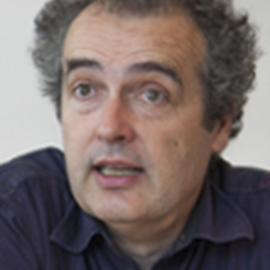
Massimo Mischi is a Full Professor at the Faculty of Electrical Engineering of the Eindhoven University of Technology (TU/e) and chairs the Signal Processing Systems (SPS) Division , the largest division at TU/e with over 250 researchers. He founded the Biomedical Diagnostics (BM/d) Lab in 2012, which now includes 180 researchers and clinical/industrial advisors, focusing on biomedical signal processing for diagnostics and monitoring.
Dr. Ed E. Moret is an Associate Professor of Computational Medicinal Chemistry at Utrecht University, where he serves as Managing Director of the Utrecht Institute for Pharmaceutical Sciences. He is a member of the Departmental Executive Board and Chair of the Board of Examiners of the School of Pharmacy. His academic career spans over three decades with significant contributions to pharmaceutical sciences. Utrecht University, Utrecht Institute for Pharmaceutical Sciences School of Pharmacy, Department of Chemical Biology and Drug Discovery Managing Director since January 2010 Dr. Moret's educational background includes completing Gymnasium-b at Gymnasium Camphusianum in Gorinchem in 1979, followed by pharmacy studies at Utrecht University until 1988. He earned his PhD in 1993 with research on calculations and simulations of DNA-alkylating cytostatics under supervision of Prof. L.H.M. Janssen and Prof. J.P.A.E. Tollenaere. He also conducted postdoctoral research at the Scripps Research Institute with Prof. A.J. Olson. His primary research interests focus on molecular recognition, particularly in auto-immune diseases, with expertise spanning computational medicinal chemistry, computer-aided drug discovery, cheminformatics, and bioinformatics. Dr. Moret's work bridges the gap between theoretical calculations and experimental validation in drug design. His research portfolio demonstrates a consistent trajectory from fundamental molecular interactions to applied drug discovery, with particular emphasis on enzyme inhibitors, carbohydrate-protein interactions, and molecular recognition processes. Analysis of his publication record reveals a strong focus on structure-based drug design, with significant contributions to the development of inhibitors for enzymes like β-glucocerebrosidase, NNMT, and neuraminidase. His work spans multiple therapeutic areas including lysosomal storage disorders, cancer metabolism, and infectious diseases. The interdisciplinary nature of his research is evident in the integration of computational approaches with experimental validation across biochemistry, pharmacology, and medicinal chemistry. Teacher of the Year (awarded three times by Pharmacy students) Member of editorial boards for Medicines and Conceptuur journals Secretary of Board of FIGON (2016) Secretary of Raad voor de Farmaceutische Wetenschappen (2024) Member of Board of Stichting Farmaceutische Erfgoed (2024) Dr. Moret has been actively involved in educational innovation, developing and coordinating the master's programme Drug Innovation, the profile Drug Regulatory Sciences, and the Honours programme Pharmaceutical Sciences. He has taught courses for pharmacy, chemistry, UCU and medical sciences students, as well as PhD courses in bioinformatics and computer-aided drug discovery. His educational contributions include developing an inquiry-based elective course on drug discovery, for which he published educational research. He holds BKO and SKO teaching qualifications and participated in the Centre of Excellence in University Teaching program. As Managing Director of the Utrecht Institute for Pharmaceutical Sciences, Dr. Moret leads research initiatives across chemical biology, drug discovery, and pharmaceutical sciences. His leadership extends to multiple advisory and editorial roles within the pharmaceutical research community, reflecting his significant contributions to both academic and professional spheres of pharmaceutical sciences.
Matthias Schlottbom is an Associate Professor specializing in Mathematics of Computational Science, with a focus on numerical methods and their applications in physics, biology, and engineering. His research integrates advanced computational techniques with interdisciplinary problems, including radiative transfer, photonic crystals, and chemotaxis modeling. Research Interests: Schlottbom’s work spans numerical analysis, finite element methods, and machine learning. He develops high-order discretization schemes, iterative solvers for anisotropic transport, and mathematical frameworks for biological network formation. Publications: Recent articles highlight his contributions to accelerating radiative transfer simulations, extending component mode synthesis for Helmholtz equations, and analyzing diffusion limits in kinetic models. His work often bridges computational mathematics with practical applications in photonics and multiscale systems. Collaborations: He actively collaborates on datasets for optical simulations, radiative transfer algorithms, and photonic crystal modeling, contributing to open-access repositories like 4TU.Centre and Zenodo. Activities: Schlottbom has organized workshops such as the Kinetic Theory Workshop in the Netherlands and delivered keynotes on residual minimization and data-driven methods for transport equations. Scientific Awards: No specific awards or fellowships are mentioned in the provided materials. Advising & Grants: Details about students, advising roles, or grant funding are not included in the available data.
Ivana Nikoloska is an Assistant Professor at the Department of Electrical Engineering, Eindhoven University of Technology (TU/e). She is affiliated with the Center for Quantum Materials and Technology Eindhoven and BIASlab (Bayesian Intelligence and Stochastic Agents Lab). Her academic career includes prior roles as a Research Associate at King’s College London and a Visiting Researcher at Aalborg University. PhD: Monash University, Australia (2023) MSc & Dipl.-Ing.: University of Ss. Cyril and Methodius, North Macedonia Research Interests span foundational and applied machine learning, quantum computing, and information/communication engineering. Her work focuses on integrating Bayesian inference, variational methods, and quantum technologies for tasks like signal processing, channel estimation, and power control optimization. Quantum Machine Learning Bayesian Simulation-Based Inference Meta-learning for Wireless Systems Hybrid Quantum-Classical Architectures Stochastic Signal Processing Quantum Sensing & Metrology Notable Trends in Publications include quantum recurrent neural networks with adaptive gating, Bayesian frameworks for quantum sensing, and meta-learning applications in communication systems. She explores variational inference for planning and robust algorithms for channel estimation under non-ideal conditions.
Prof. Iwan de Esch is a Full Professor in the Department of Chemistry and Pharmaceutical Sciences at VU University Amsterdam, leading the Drug Design & Synthesis division and serving as Head of Department. He holds dual appointments in the Faculty of Science and AIMMS (Amsterdam Institute for Molecular and Life Sciences). His research focuses on understanding molecular interactions for drug discovery, employing CADD and FBDD approaches. He co-founded three biotech companies (De Novo Pharmaceuticals, IOTA Pharmaceuticals, Griffin Discoveries) and coordinates the EU-funded FRAGNET network. PhD from VU University (1998) Postdoc at University of Cambridge (Drug Design Group) Recipient of the 2011 Galenus Research Prize Received grants from EU-FP7, IMI, and Dutch STW Research interests span fragment-based drug design, receptor-ligand interactions, and pre-clinical drug candidate development. His work impacts GPCRs, PDEs, kinases, and protein-protein interactions. He teaches courses on drug discovery methodologies and computational tools. Over 200 peer-reviewed publications and 8 datasets/software contributions highlight his impactful career.
Tom Verhoeff is an Assistant Professor at the Faculty of Mathematics and Computing Science of Eindhoven University of Technology (TU/e) , working within the Software Engineering & Technology group. His research focuses on Model-Driven Engineering (MDE) , Domain-Specific Languages (DSLs) , and the intersection of mathematics, computing, and the arts . He teaches courses in data analytics, programming, algorithms, theoretical computer science , and logic . Verhoeff earned both his MSc and PhD in Technical Science (Mathematics and Computer Science) from TU/e. He is actively involved in promoting mathematics and informatics through initiatives like the annual Bridges conference , and serves as board member and treasurer of the Dutch Mathematics Olympiad , as well as chair of the Koos Verhoeff MathArt foundation . He has also held roles as guest lecturer in Lithuania and Finals Director for the ACM International Collegiate Programming Contest . Research Interests: Verhoeff’s work spans Model-Driven Engineering , domain-specific language development , and 3D geometric modeling . His scholarship often explores symmetry, recursion, and mathematical visualization , particularly through computational art and algorithmic puzzles . Recent publications highlight 3D rotation methods , knot theory , and mathematical art using lattice paths and geometric transformations . Scientific Awards: ACM ICPC European Founders Award (2004) IOI Distinguished Service Award (2007) Second Place in the 2022 Wolfram Computational Art Contest Notable Collaborations and Affiliations: He is affiliated with the Esprit Working Group on Asynchronous Circuit Design (ACiD-WG) , WIRE (TUE Mathematics Alumni) , ACM (Senior Member) , CSTA , IEEE Computer Society , and Royal Dutch Mathematical Society (KWG) .
Kate Mancey is an Assistant Professor of Music and Media at Utrecht University's Department of Media and Culture Studies , affiliated with the Institute for Cultural Inquiry . Originally from the UK, she holds a BA and MA in Music from the University of Liverpool and a PhD in Music Theory from Harvard University. Research Interests: Her work explores intersections of music, technology, and society, combining computer-aided analysis with traditional musicology. Key projects include analyzing human-technology relationships through everyday sounds (smartphones, appliances), virtual reality music dynamics, and digital humanities datasets like CoSoD for popular music collaborations. Publications Trends: Recent work spans interdisciplinary topics from emergency medicine (music interventions for pain relief) to virtual reality audiovisual analysis and historical sound studies in commerce. Scientific Awards: Kennedy Memorial Trust Fellowship Harry and Majorie Ann Slim Memorial Fellowship Sandra Ohrn Dissertation Fellowship Funding & Collaboration: Supported by multiple fellowships for research in Tokyo, Osaka, and the Smithsonian Institute. Collaborator on projects like Boston Rock City (linked data) and music-related legal consultancy.
Peter Desain is a Professor and Principal Investigator at the Donders Institute for Brain, Cognition and Behaviour, Radboud University. His work focuses on developing advanced brain-computer interfaces (BCI) leveraging evoked potentials, particularly through code-modulated visual and auditory stimuli. He pioneers methods like noise-tagging and Bayesian dynamic stopping to enhance BCI efficiency and accessibility. His research spans neurotechnology, electrophysiological modeling, and clinical applications such as objective EEG audiometry and ALS communication aids. Recent studies emphasize gaze-independent systems, semantic decoding, and minimizing BCI calibration requirements. Key contributions include optimizing c-VEP code-books, real-time fMRI neurofeedback for memory contexts, and literature reviews on BCI design trends. Experimental pilot studies explore auditory attention and high-frequency SSVEP dynamics. No scientific awards are explicitly mentioned. His work integrates multidisciplinary approaches, bridging neuroscience, machine learning, and engineering to advance human-computer interaction and clinical tools.
Gesa van den Broek is an Assistant Professor at Utrecht University's Faculty of Social and Behavioural Sciences , specializing in Education and Learning: Development in Interaction . Her research focuses on instructional design, cognitive psychology, and memory studies, particularly in foreign language pedagogy and higher education research. Areas of Expertise: Instructional Design, Cognitive Psychology, Memory Studies, Foreign Language Pedagogy Research Themes: Dynamics of Youth (DoY), Game Research, Higher Education Research Her recent work investigates retrieval practice mechanisms, stepwise worked examples, and multimedia learning effects. She actively collaborates on educational technology tools like ET_cam_home and participates in public engagement activities, including media contributions to Dutch outlets like Volkskrant and Trouw.
Dr. Zhiming Zhao is an Associate Professor and Chair of the Multiscale Networked Systems (MNS) research group at the Informatics Institute (IvI), University of Amsterdam (UvA). He serves as the technical manager of the Virtual Lab and Innovation Center (VLIC) of LifeWatch ERIC, a European research infrastructure for ecology and biodiversity science. Zhao holds an IEEE Senior Member designation and is the Managing Editor of the Journal of Cloud Computing . He earned his Ph.D. in Computer Science from UvA in 2004. His research focuses on quality-critical distributed computing, data-intensive workflows, virtual research environments, and digital twins. He leads projects such as LTER-LIFE (Dutch research infrastructure for digital twins) and coordinates UvA contributions to EU initiatives like ENVRI-HUB Next , EVERSE , and BlueCloud-2026 . Zhao’s work spans technical development in EU projects (e.g., ENVRI-FAIR , ARTICONF , CLARIFY ) and leadership roles in international workshops and conferences. His team develops frameworks like NaaVRE (Jupyter-based collaborative environments) and CloudsStorm (dynamic infrastructure planning). Current research emphasizes trustworthy AI in cloud systems, federated learning, and edge-cloud resource optimization. Key achievements include over 150 peer-reviewed publications, supervision of numerous PhD students, and contributions to open science initiatives. His lab actively explores interdisciplinary applications in environmental science, medical imaging, and blockchain-based decentralized systems.
Sabine Oechsner is an Assistant Professor at the Faculty of Science , Computer Science Department of Vrije Universiteit Amsterdam, and a member of the Network Institute . Her research focuses on cryptographic protocols, secure multiparty computation (MPC), and formal verification of cryptographic systems. She specializes in designing secure computation frameworks with practical implementations against malicious adversaries. Her work emphasizes adaptive security , garbling schemes , and zero-knowledge proofs , with applications in privacy-preserving technologies and secure communication. Collaborations span global institutions, addressing challenges in cryptographic protocol efficiency and real-world security mitigations. She teaches Secure Programming (2024–2025) and has published 12 peer-reviewed articles since 2018, including foundational work on SPDZ implementations and time-lock puzzles . Her research bridges theoretical cryptography with practical, deployable solutions.
Dr. Leanne Nagels is a researcher at the University of Groningen and University Medical Center Groningen (UMCG), affiliated with both the Faculty of Medical Sciences' Department of Otorhinolaryngology and the Semantics and Cognition research group at the Center of Language and Cognition Groningen (CLCG). Her PhD project, supervised by Professors Petra Hendriks and Deniz Başkent, investigates the perception of indexical voice cues (e.g., gender, emotion) in children and adults with cochlear implants. This interdisciplinary work bridges linguistics and audiology, addressing challenges in speech perception and cognitive processing among hearing-impaired populations. Her research focuses on how degraded acoustic signals from cochlear implants affect voice perception, vocal emotion recognition, and speech comprehension in noisy environments. Key contributions include developing the EmoHI test to assess emotional voice perception in hearing-impaired children and identifying dissociated developmental trajectories for gender and emotion perception in pediatric cochlear implant users. She has published extensively in journals like Scientific Reports , PeerJ , and Trends in Hearing , and received the PeerJ VIHAR workshop Best Proceedings Paper Award (2019). Education: PhD candidate in Linguistics/Audiology, University of Groningen (2017–present); Master’s thesis on contextual and lexical processing in cochlear implant users (supervised by Dr. Anita Wagner). Affiliations: Research School of Behavioural and Cognitive Neurosciences Groningen (BCN); Center of Language and Cognition Groningen (CLCG). Her work highlights how early auditory deprivation impacts voice perception abilities and advocates for tailored rehabilitation strategies to improve quality of life for cochlear implant users.
John M. Carroll is a Professor at The Pennsylvania State University , affiliated with the College of Information Sciences and Technology . He co-directs the Collaboration and Innovation Laboratory and leads the Center for Human-Computer Interaction . Secondary appointments span Computer Science and Engineering , Learning, Design and Technology , and Psychology . Education : Mathematics and Information Science (undergraduate), Experimental Psychology (Ph.D.) Research Focus : Human-Computer Interaction (HCI), community informatics, scenario-based design, and minimalist instructional models. Key Projects : Mobile timebanking systems, smart city initiatives, community data analytics, and accessibility technologies for visually impaired users. Scientific Awards include lifetime honors from ACM, IEEE, and AAAS. He has led NSF-funded projects on collaborative sensemaking, educational technology, and disaster response systems. His work bridges social theory, design practice, and computational innovation.
Varvara G. Kouznetsova is an Associate Professor in Multi-scale Mechanics of Solids at the Department of Mechanical Engineering of Eindhoven University of Technology (TU/e). Her roles include leading the Mechanics of Materials group and teaching courses such as Advanced Computational Continuum Mechanics and Material Models. She holds a PhD in Mechanical Engineering from TU/e and a degree in Applied Mathematics from Perm State Technical University, Russia. Prior to her current position, she was a Research Fellow at NIMR and M2i institutes and an Assistant Professor at TU/e from 2006 to 2018. Her research focuses on developing multi-scale techniques for materials ranging from advanced steels to metamaterials, emphasizing emergent phenomena across scales. Key interests include computational homogenization, wave propagation, and fracture mechanics. She has supervised 54 academic works and contributed to 160+ research outputs, including influential studies on metamaterials and multiscale analysis. Her recent articles explore topics like reduced-order modeling for elastomeric metamaterials, multiscale FEM-MD coupling for nanocrystalline metals, and acoustic metamaterial transient analysis. She collaborates internationally and maintains datasets on platforms like 4TU.Centre for Research Data. Courses taught include Computer-Aided Engineering and Composite Materials Design.
Dr. Ioanna Lykourentzou is an Associate Professor in the Software Technology for Learning and Teaching department at Utrecht University's Faculty of Science. She leads the Collaborative Technologies Lab and coordinates the Computing Science Master's and Information Sciences Honors Bachelor's programs. Additionally, she serves as a Fair Data and Software fellow within the Open Science Team of the Faculty of Science and as a member of the Ethics Review Board for the Faculties of Science and Geosciences. Her research focuses on collaborative and crowd systems, developing methods that help people work together, coordinate efforts, and innovate at scale, both online and in physical spaces. Her interdisciplinary approach combines computational science (machine learning, agent-based modeling, mathematical optimization) with social sciences (personality testing, team building). Her expertise spans Human-Computer Interaction, Algorithms, Agent-Based Modelling, Telecollaboration, Creativity, and Innovation. Her recent publications (2021-2025) demonstrate a strong focus on human-AI interaction, generative models, and applications in cultural heritage and education. She examines how technology can facilitate collaboration, with particular attention to team formation, personality factors, and digital nudging techniques. Her work bridges theoretical research with practical applications in digital humanities, cultural heritage, and computing education. Dr. Lykourentzou has received significant recognition for her research, with multiple publications garnering substantial citations and reader attention across platforms like Mendeley and social media. Her work on personality-based team formation (2016) has been particularly influential with over 90 citations. Prior to joining Utrecht University, she worked as a Senior Researcher at the Luxembourg Institute of Science and Technology (LIST), where she coordinated the European H2020 project CROSSCULT. She has also collaborated with the Human-Computer Interaction Institute of Carnegie Mellon University as a visiting researcher and with INRIA Nancy-Grand Est and the Public Research Center Henri Tudor as a postdoctoral fellow.