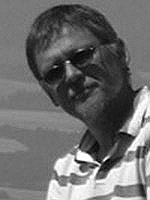
Wladek Fuchs is Professor of Architecture and Community Development at the University of Detroit Mercy, where he directs International Programs. His expertise spans traditional drawing techniques and digital design tools. He explores how sketching and computer-aided design (CAD) synergize in architectural ideation, emphasizing CAD's role in creating comprehensive 3D prototypes for dynamic analysis. His pedagogical approach focuses on enhancing observational skills through drawing and leveraging technology for precision.
Barbara REGGIANI is an Associate Professor at the University of Modena and Reggio Emilia, affiliated with the Department of Engineering Sciences and Methods. Her research focuses on advanced manufacturing processes, particularly extrusion of aluminum alloys, FEM simulation of material behavior, and optimization of industrial processes. She teaches courses in Management Engineering, including Manufacturing Processes and Methods for Product Development and Industrial Technologies and Plants . Her research interests include die design optimization, nitrogen cooling strategies for extrusion dies, and polymer processing. She has extensively studied grain structure evolution, recrystallization modeling, and defect prediction (e.g., PCG formation, charge welds) using FEM tools like Qform and Moldflow. Recent work addresses material characterization (e.g., AA6082/6063 alloys) and surface functionalization for biomedical applications. Dr. REGGIANI collaborates on projects involving additive manufacturing for die cooling channels and laser-based surface treatments. Her work bridges experimental methods (hot torsion tests, micro-CT analysis) with numerical modeling to enhance process efficiency and material performance.
Ana Piquer Vicent is an Associate Professor in the Department of Mechanical Engineering and Construction at Universitat Jaume I. She teaches courses in Engineering Graphics, Computer-Aided Design, and Engineering Projects. Her office is located in despacho TC 2319 DD. Her research specializes in: 3D reconstruction from 2D sketches Geometric modeling algorithms Computer vision for engineering design Optimization techniques in CAD Sketch-based interfaces She leads research in the REGEO group focusing on 3D reconstruction of line drawings. Her doctoral thesis addressed artificial perception of line drawings, developing novel methods for converting 2D sketches into 3D models using optimization techniques and symmetry detection.
Dr. Onat Halis TOTUK is an Assistant Professor at Çankaya University's Faculty of Engineering, Department of Mechatronics Engineering. He holds a PhD from İskenderun Technical University (2019-2023) and earlier degrees from Middle East Technical University (BSc 1982-1987, MSc 1987-1989). His academic career includes roles as a Lecturer and Assistant Professor, with part-time status from 2012-2018 before transitioning to full-time positions. Research Interests : Focus on Additive Manufacturing, Soft Robotics, and Computer-Aided Design. Key areas include 3D printed materials for robotics, SCAMPER methodology in design education, and sustainable engineering solutions aligned with UN SDGs. Recent work explores biomimetic manufacturing and adaptive robotic systems. Recent Trends in Publications : Recent articles emphasize soft robotics actuators, 3D printing applications in biomedical engineering, and innovative design methodologies. Earlier work includes studies on solar collector optimization and machining processes. Grants & Projects : Lead or contributed to projects like 'EBOT Pharmacy Robot Automation' (2021-2022) and 'Waste-to-Active Carbon Conversion' (2023-2024). Active in developing pharmacy automation systems and smart storage solutions. Advising : Supervised 5 master's students focusing on topics like robotic systems for additive manufacturing, tool wear analysis, and AI-driven ERP systems. Courses taught include Additive Manufacturing, Computer-Aided Design, and Mechatronics fundamentals.
Prof. Dr. Norbert Palz is Professor for Digital and Experimental Design at Berlin University of Arts, where he served as President (2020-2025). His research explores digital fabrication processes, large-format additive manufacturing, and computational design methods. Education includes architecture studies at TU Berlin following a draftsman apprenticeship. Professional experience includes work with UN Studio, NOX Architects, and founding TARGADESIGN (art/architecture practice). Research contributions include EU Horizon 2020 projects on textile architectures and investigations into historical construction geometries for digital pedagogy. Current investigations focus on material behavior in large-scale 3D printing applications and computer art's architectural implications.
Elise Geneviève Hautecoeur is a Lecturer in the School of Architecture, Civil and Environmental Engineering (ENAC) at EPFL, specializing in teaching and research-adjacent roles. She also serves as an Assistant in the Laboratory of Arts for Sciences - Archives of the Imagination. Her expertise focuses on advanced computer-aided design (CAD), integrated DIM modeling, and Building Information Modeling (BIM), emphasizing interdisciplinary collaboration and digital tools in architectural education. Her teaching portfolio includes courses such as 'Advanced CAD and Integrated DIM Modeling' and 'Introduction to BIM,' which emphasize practical skills and software transitions. She contributes to curricula that bridge theoretical concepts with real-world applications in construction and engineering. No scientific awards or research articles are explicitly listed in the provided materials, suggesting her contributions may be primarily pedagogical or administrative. She is affiliated with the Laboratory of Arts for Sciences, which likely explores intersections between artistic and scientific communication in technical fields.
Bertrand Lacour is a Lecturer at the School of Engineering (STI) at EPFL, holding positions in the PAT-GE, SMT-ENS, and SGM-ENS units. He specializes in Mechanical Engineering education, focusing on design, technical communication, and CAD software (CATIA V5). His roles include teaching core courses such as Mechanical Construction I/II and Introduction to Mechanical Design for both Mechanical Engineering (ME) and Microengineering (MT) students. Education: Master of Mechanical Engineering (Dynamique de la Locomotion) from INSA-Lyon (1993-1998). Research interests align with his teaching, emphasizing practical applications of mechanical design and technical communication standards in engineering education. His courses integrate theoretical foundations with hands-on projects to develop students' technical skills.
Dr. Jing Ren is affiliated with the Department of Computer Science at ETH Zürich, holding a role within the Professorship for Computer Science. Their research focuses on computational geometry, 3D reconstruction, and computer graphics, with notable contributions to shape analysis, non-rigid matching, and fabric modeling. Dr. Ren’s work bridges theoretical advancements with practical applications in textile design, architectural modeling, and medical imaging. They collaborate extensively on projects involving functional maps, optimization algorithms, and geometric morphometrics. Key research interests include: Non-rigid shape correspondence and matching Computational modeling of woven fabrics and textiles 3D face and building reconstruction techniques Efficient spectral and discrete optimization methods Recent publications (2022–2024) emphasize innovations in fabric parameterization, Gaussian noise distribution, and rethinking 3D face reconstruction benchmarks. Their work often employs machine learning and functional map frameworks to solve geometric problems across disciplines. Laboratory and team affiliations are not explicitly detailed in the provided materials, but their research aligns with ETH Zürich’s broader initiatives in computer science and engineering. No grants or advising activities are specified in the current data.
Faik Başkaya is an Assistant Professor in the Department of Electrical Engineering at Bogazici University. He is a full-time faculty member affiliated with the Faculty of Engineering. His research focuses on CAD tools, analog/digital VLSI design methodologies, and rapid prototyping techniques. His work bridges theoretical electrical engineering principles with practical microelectronic system implementation. Research interests emphasize: Computer-Aided Design (CAD) frameworks for VLSI systems Analog/digital mixed-signal integrated circuit design Accelerated prototyping workflows for electronics No specific academic awards or recent publications were explicitly listed in the provided information. His professional activities appear centered around core engineering design and implementation challenges in the semiconductor field.
Jens Ekengren is a Senior Lecturer in Mechanical Engineering at Örebro University since 2013, affiliated with the School of Science and Technology and Department of Natural Sciences and Technology. His research focuses on materials engineering, additive manufacturing, and statistical evaluation of defects in steels. He teaches courses in mechanics, materials engineering, and computational methods like FEA/CFD. Education includes a Doctoral Dissertation (2011) on extreme value analysis of steel defects and a Licentiate Thesis (2008) on inclusion content in steels. Key research projects include ATOAM (Additive Manufacturing tooling) and NASCA (agricultural systems). Research interests span statistical defect evaluation (rooted in his PhD work), electrical agricultural vehicles, and additive manufacturing applications in tooling and structural design. Recent publications emphasize 3D printing process optimization, tool cooling design via AM, and material property analysis using computed tomography. No scientific awards explicitly stated. Advising and grants details not provided in text. Active in the Mechanics and Materials research group. Current projects involve data-driven engineering design and agricultural automation.
Sören Hilmerby is a Senior Lecturer at the School of Science and Technology , Örebro University , specializing in Mechanical Engineering . He serves as Program Director for the MSc in Industrial Engineering & Management , integrating industrial expertise into academic frameworks. Research Focus: Digitalized development of sustainable products and production systems Teaching Areas: CAD (Computer-Aided Design), PDM (Product Data Management), project courses His work emphasizes strengthening the synergy between education and research in mechanical engineering. A notable publication (2016) explores curriculum innovation through the CDIO framework in engineering education. Currently affiliated with the Department of Natural Sciences and Technology , he bridges industrial practices with academic advancements, particularly in product design and operational sustainability.
Hampus Åström is a doctoral student at the Faculty of Engineering (LTH) , Lund University , working within the Department of Computer Science and the ELLIIT initiative on IT and mobile communication. Research Focus: Self-supervised learning in robotics, leveraging synthetic data for pose estimation and intrinsic goal selection in reinforcement learning. Projects: Principal Investigator for 'Simulation for Reinforcement Learning and Curiosity Driven Exploration for Robotics', active member of 'Cognitive Robots for Manufacturing' (WASP initiative), and contributor to 'Robotics and Semantic Systems'. Collaborations: Collaborates with researchers across disciplines, including Victor Krueger, Elin Anna Topp, and Tobias Moeslund. Research Themes: Explores methods to reduce data acquisition costs in robotics through synthetic data-driven pose estimation and intrinsic exploration in reinforcement learning. His work combines autoencoder architectures, CAD models, and multi-view optimization to address sparse rewards and local minima in SO(3)-space. Network & Outreach: Active in educational outreach (Robotics Week for Schools 2023) and presented at the NAC Young Researchers Workshop 2023.
Francesco GHERARDINI is an Associate Professor at the Department of Engineering 'Enzo Ferrari', University of Modena and Reggio Emilia. His research focuses on CAD-based design methods, sustainable manufacturing, additive manufacturing, and cultural heritage preservation. He teaches courses in integrated design, CAD laboratory, and vehicle engineering at both undergraduate and graduate levels. Research Interests: His work spans mechanical design, automotive systems optimization, composite materials, tolerance analysis, and digital heritage applications. He has led projects on 3D reconstruction of historical artifacts, AR-enhanced cultural tourism, and carbon footprint reduction in aerospace/automotive components. Recent Contributions: Recent work includes scalable living lab frameworks for autonomous vehicles (MASA project), design archetypes for mechanical transmissions, and co-design methodologies for assistive devices using AM. He actively collaborates with industries and museums, integrating CAD/CAE tools for real-world applications. Labs/Teams: Part of the LaPIS Lab (Laboratory for Product Innovation and Sustainable Design), focusing on interdisciplinary engineering solutions. Engaged in EU-funded initiatives and international conferences like Florence Heri-Tech and ADM.
Aidan Lucas is a Technical Demonstrator in the 3D Making & CAD/CAM unit within the School of the Arts at York St John University. His role focuses on technical support and instruction in advanced manufacturing technologies, including computer-aided design (CAD) and computer-aided manufacturing (CAM). He is based at the York campus and can be reached via email at a.lucas@yorksj.ac.uk or by phone at 01904 876 727.
Frédéric Demoly is an Associate Professor at the University of Bourgogne Franche-Comté (UBFC) and affiliated with the Université de Technologie de Belfort-Montbéliard (UTBM) in France. He is based at the Laboratoire Interdisciplinaire Carnot de Bourgogne (ICB UMR CNRS 6303) and leads a research group focused on formalism, methods, and tools for proactive design of adaptable and transformable products. His role involves advanced research and teaching in mechanical design and additive manufacturing.