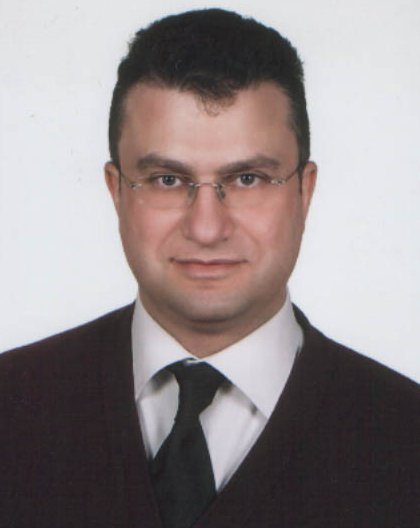
Professor Serdar Özoğuz is a full faculty member at the Department of Electronics and Communication Engineering , Istanbul Technical University . Holding a Ph.D. from ITU (2000) and a M.Sc. from ITU (1993) , he has taught courses like Active Network Synthesis , Basics of Electrical Circuits , and Scientific Research Ethics since 2014. His research focuses on Active RC filters Nonlinear electronic circuits Analog integrated circuit design Network synthesis . His recent publications emphasize machine learning applications in RF/microwave design , quantum computing for CAD tools , and emerging memory devices . The department's Devreler ve Sistemler Laboratuvarı Çok Geniş Ölçekli Tümdevre (VLSI) Tasarımı Laboratuvarı likely support his work. Despite no explicit awards listed, his 15+ recent articles in high-impact journals underscore his technical contributions.
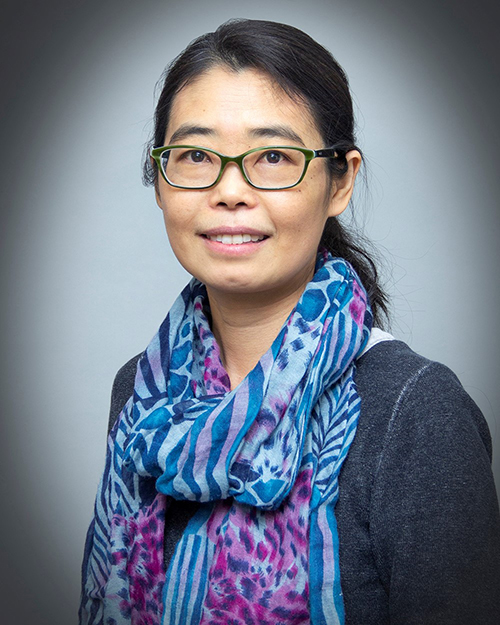
Dr. Yongjie Jessica Zhang is a Professor at Carnegie Mellon University, holding appointments in both the Department of Mechanical Engineering and the Department of Biomedical Engineering . She received her B.S. and M.S. in Engineering Mechanics from Tsinghua University, followed by an M.S. in Aerospace Engineering and a Ph.D. in Computational Engineering and Sciences from the University of Texas at Austin. After a postdoctoral fellowship at ICES, she joined CMU in 2007, advancing from assistant to full professor by 2016. Research Interests : Image-based geometric modeling, mesh generation, finite element analysis (FEA), isogeometric analysis, and applications in computational biomedicine, materials science, and computer-assisted surgery. Leadership Roles : Chair of Solid Modeling Association (2019-2020), USACM Executive Committee Member-at-Large (2017-2021), and ELATE Fellow (2017-2018). Her work addresses the critical challenge of automating high-fidelity geometric modeling and mesh generation for complex domains (e.g., human anatomy), which traditionally consumes ~80% of FEA time. Her group develops AI-driven methods for multiscale modeling (molecular to organ), with applications in neuroscience , biomechanics , and 4D printing . Notable awards include the Presidential Early Career Award (PECASE) , NSF CAREER Award , and ASME Van C. Mow Medal (2025) . Dr. Zhang’s publications span over 170 peer-reviewed articles, focusing on truncated hierarchical B-splines , polycube meshing , and neurite transport modeling . She has advised more than 40 students, including PhD candidates and postdoctoral fellows. Her editorial roles include Associate Editor of Computer Aided Geometric Design and editorial board memberships in Computer-Aided Design and Engineering with Computers .
Giovanni De Micheli is a Professor of Electrical Engineering and Computer Science at EPF Lausanne, Switzerland. He also serves as Director of the Integrated Systems Centre and the Institute of Electrical Engineering at EPFL, and chairs the Scientific Committee of CSEM in Neuchatel. Previously, he held academic roles at Stanford University for 18 years, including Full Professor, Associate Professor, and Assistant Professor in the Department of Electrical Engineering. His research spans synthesis of digital circuits, hardware/software co-design, low-power design, and Networks on Chip (NoC) technology. 2003: IEEE Emanuel Piore Award 2000: Golden Jubilee Medal of the IEEE CAS Society 2000: ACM Fellow 1994: IEEE Fellow 1990: IEEE/CS Distinguished Service Award 1988: NSF Presidential Young Investigator Award His seminal contributions include pioneering C-based synthesis and Boolean matching algorithms for digital circuits, foundational work in dynamic power management using stochastic control, and the development of Network-on-Chip (NoC) technology. His publications, such as "Networks on Chips: A New SoC Paradigm" and "Dynamic Power Management for Portable Systems" , have shaped modern SoC design practices. With over 400 technical articles, 9 books, and an H-index of 56, his work remains highly influential.
Prof. Juin J. Liou serves as the UCF Pegasus Distinguished Professor and Lockheed Martin St. Laurent Professor of Engineering in the Department of Electrical and Computer Engineering at the University of Central Florida, where he has held faculty positions since 1987. Education: B.S. (Honors) in Electrical Engineering, University of Florida, 1982 M.S. in Electrical Engineering, University of Florida, 1983 Ph.D. in Electrical Engineering, University of Florida, 1987 Research Focus: Prof. Liou specializes in Electrostatic Discharge (ESD) protection systems critical for integrated circuit reliability, semiconductor device modeling, and RF circuit design. His pioneering work addresses ESD challenges in next-generation technologies including silicon nanowire, organic semiconductors, and gallium nitride (GaN) devices, where miniaturization intensifies vulnerability to electrostatic damage. His research bridges theoretical modeling with practical implementation to solve industry-critical protection failures. Awards and Leadership: Ten teaching/research excellence awards from University of Central Florida Six major awards from IEEE IEEE-EDS Distinguished Lecturer Multiple honorary professorships Research Impact: Secured over $14.5 million in funding from NSF, DARPA, NASA, NIST, and semiconductor industry leaders including Intel, Texas Instruments, and Analog Devices. Authored 10 books, 270+ journal papers (18 invited reviews), and 220+ conference papers while holding 8 U.S. patents (4 pending). Served as IEEE EDS Vice-President, Treasurer, and Board of Governors member, plus editorial roles for Microelectronics Reliability and IEEE journals.
Georges Gielen is Full Professor in the Department of Electrical Engineering (ESAT) at KU Leuven, Belgium, and part-time Research Director at imec. He has held multiple leadership roles including Chair of ESAT Department (2012-2013, 2020-2024) and Vice-Rector for Science, Engineering & Technology (2013-2017). His academic career spans over 30 years at KU Leuven, progressing from Assistant to Full Professor. His research focuses on analog and mixed-signal integrated circuit design automation , with expertise in CAD tools, design optimization, sensor interfaces, and neuromorphic systems. His work bridges hardware design with machine learning, particularly in hardware-efficient AI implementations and biomedical applications. He has pioneered techniques for automated analog circuit sizing, topology synthesis, and reliability-aware design in nanometer CMOS. Gielen has received numerous accolades including the IEEE CAS Mac Van Valkenburg Award (2015), IEEE CAS Charles Desoer Award (2020), and EDAA Achievement Award (2021). He holds an ERC Advanced Grant AnalogCreate and is an IEEE Fellow since 2002. As a prolific scholar, he has chaired major conferences including DATE (2006), ICCAD (2007), and ESSCIRC (2017). He has graduated over 55 PhD students through the MICAS research group at KU Leuven, currently supervising 13 doctoral candidates. His research team collaborates extensively with imec and industry partners on cutting-edge projects in carbon-aware AI accelerators, uncertainty-aware design, and neuromorphic sensor interfaces.
Prof. Dr.-Ing. Udo Fiedler is a faculty member at the Technical University of Central Hesse (THM), Department of Business Administration and Economics, where he serves as Head of the Production Engineering Laboratory and Member of the Senate. His academic work focuses on manufacturing engineering with specialization in high-speed machining, production processes, and machine tools. His research interests include: High-Speed Machining (HSC) and precision manufacturing Green machining of sintered parts in the green state Process optimization using statistical experimental design Machine tool technology and NC programming Industry 4.0 applications in manufacturing education Process monitoring and control for increased manufacturing safety Prof. Fiedler's publication record demonstrates an evolution from fundamental machining processes toward integrating AI with traditional manufacturing. His recent work shows strong emphasis on applying artificial intelligence to quality prediction, optimizing green machining processes, and implementing Industry 4.0 concepts through learning factory approaches, bridging traditional manufacturing engineering with modern digital technologies. His significant scientific contributions include: Development of methods for NC programming of complex workpieces Research on stability lobe diagrams for milling processes Studies comparing different production methods including HSC, EDM, and generative processes Work on mechatronic tool holders for process monitoring Applications in the ophthalmic industry for precision machining of spectacle lenses Prof. Fiedler teaches multiple courses at THM including Factory Planning/Ergonomics, Handling and Assembly Technology, Innovative Manufacturing Processes, and Machine Tools at the bachelor's level, and Learning Factory 1 and 2 at the master's level. He leads current research projects including Klag-Robotics (2023-2025), Loewe Project OST (2018-2021), and GrünSpan (2014-2015), demonstrating sustained research activity across multiple manufacturing domains.
Daniel Cardoso Llach is an Associate Professor at Carnegie Mellon University's School of Architecture , where he chairs the Master of Science in Computational Design program and co-directs the CoDe Lab . His scholarship merges history, science and technology studies (STS), and computational design , focusing on the cultural and socio-technical dimensions of design automation. Education: PhD and MS in Architecture: Design and Computation from MIT , BArch from Universidad de los Andes Research Grants: Supported by the Graham Foundation for historical CAD exhibitions and by the Alexander Von Humboldt Foundation for postwar computational design research in Germany His work interrogates the politics of software, the materiality of computational systems , and the ethical implications of AI/robotics in architectural practice. Recent projects include reconstructing early CAD systems and analyzing data-driven urban technologies. Scientific awards include: Alexander Von Humboldt Fellowship (2024–2025) ACM CSCW Methods Mention for emulation-based software research (2021)
Travis J. Fuerst is an Assistant Professor of Practice at the School of Engineering Technology within the Purdue Polytechnic Institute at Purdue University, West Lafayette. He has held this position since 2022, previously serving in the Department of Computer Graphics Technology from 2016 to 2022. Before returning to academia, he accumulated over 13 years of industry experience at The Boeing Company as an Engineering Workplace Coach, IT Project Manager, and Continuous Improvement Leader, complemented by 21 years of military service in the U.S. Army Reserves where he retired as a Major from USTRANSCOM in 2017. His academic credentials include: Master of Science in Technology (Product Lifecycle Management) from Purdue University (2002) Bachelor of Science in Computer Graphics Technology from Purdue University (2000) with a minor in Organizational Leadership and Supervision Professor Fuerst specializes in Product Lifecycle Management (PLM), Project Management, Continuous Improvement, and Configuration Management, integrating Lean Manufacturing and Six Sigma methodologies into both industrial applications and educational frameworks. His instruction emphasizes practical skill development for industry readiness, leveraging extensive real-world experience to bridge theoretical concepts with professional practice in engineering technology fields. His publication portfolio demonstrates a clear trajectory toward integrating Product Data Management systems into engineering education, with emphasis on digital enterprise solutions and pedagogical innovation. Key themes include parametric solid modeling applications, collaborative project-based learning frameworks, and curriculum development for PLM implementation across undergraduate programs, reflecting his dual focus on technological advancement and educational transformation. His recognition includes: Purdue Polytechnic 2013 Early Career Award Professor Fuerst actively mentors undergraduate and graduate students through project-based design learning that cultivates higher-order thinking skills, directly applying his industry expertise in risk analysis, resource allocation, and cross-functional team leadership. His curriculum development work demonstrates sustained commitment to advancing engineering education practices through practical, industry-aligned methodologies. His leadership experience spans Boeing's continuous improvement initiatives and U.S. Army cyber operations, providing a robust foundation for developing team-based project management approaches that emphasize operational efficiency and strategic problem-solving in academic settings.
Christophe Danjou is an Associate Professor in the Department of Mathematical and Industrial Engineering at Polytechnique Montréal . He joined as a professor in January 2018 and serves as Scientific Director of the Poly-Industries 4.0 Laboratory since June 2021. His expertise spans Industrial Engineering , Industry 4.0/5.0 , Manufacturing Systems , and Blockchain . His research focuses on solving interoperability challenges in digital transformation through ontological approaches (OntoSTEP-NC) and blockchain technology. Key themes include strategic positioning frameworks for Industry 4.0/5.0, knowledge management , and smart manufacturing . Recent work explores digital twins for system-of-systems resilience , data integrity in IoT , and AI-driven food processing optimization . He teaches courses like Industry 4.0 and Manufacturing Processes . Under his supervision, 7 PhD and 6 Master’s students are advancing research in areas such as blockchain-based smart maintenance , distributed manufacturing , and carbon emission traceability . He is affiliated with institutions including IVADO (Member), CIRRELT (Member), and Data Intelligence Lab (Member). His publications highlight contributions to digital transformation across construction, agri-food, and SMEs, with 83 total publications (15+ recent articles shown).
Antti Martikkala is a Postdoctoral Researcher at Tampere University's Department of Automation Technology and Mechanical Engineering. His research focuses on integrating data-driven and model-driven methods for digital-twin engineering, low-cost IoT development, and Industry 4.0 applications. Education: Master of Science (Technology) in Automation Engineering (2012). Research interests include Internet of Things (IoT), Digital Twins, Generative AI in CAD, and Laser-Wire Direct Energy Deposition (LWDED). His recent work explores interoperability of IoT platforms, dynamic route optimization for waste collection, and real-time manufacturing process optimization using AI. Key trends in his publications (2025–2012) span IoT (100% focus), Industry 4.0, CAD, and sustainable manufacturing. Notable collaborations involve A. Daareyni, A. Ylä-Autio, H. Mokhtarian, and I.F. Ituarte. He employs open-source tools and low-cost technologies to democratize IoT systems, with expertise in Arduino-based sensor development, multilayer height detection, and smart textile waste collection optimization.
Hannes Hick is a Professor at Graz University of Technology , affiliated with the Institute of Machine Elements and Development Methodology . His research focuses on mechanical development, tribology, and systems engineering for automotive and industrial applications. He actively contributes to engineering education and methodology standardization. Research Interests Hydrogen internal combustion engines System modeling and digital twins Tribology in electric drivetrains Sustainable engineering practices MBSE (Model-Based Systems Engineering) Friction and wear analysis Article Trends His recent work emphasizes hydrogen propulsion systems, model-based approaches for interdisciplinary engineering challenges, tribological optimization for sustainable mobility, and integrating AI with mechanical design workflows. Labs and Teams He leads research at the Institute of Machine Elements, focusing on mechanical validation and development methodologies for advanced powertrain systems.
Luca Sterpone is a Full Professor at the Department of Control and Computer Science (DAUIN), Politecnico di Torino. He serves as Head of the Control and Computer Engineering Department (2023-2027), coordinates the Aerospace and Safety Computing Lab, and is a member of the Academic Senate and Power Electronics Innovation Center (PEIC). His research spans reconfigurable computing, fault tolerance, and radiation effects analysis in electronic systems. Professor since 2021 Department Head (DAUIN) since 2023 Coordinates international collaborations with ESA, AMD Xilinx, NVIDIA, and Thales Alenia Space Develops radiation-hardened FPGA tools (SETA, VERI-Place, PyXEL) 2007 EDAA Outstanding Dissertation Award and 2005 IEEE Best Paper Award Research Focus : Designing radiation-tolerant systems for aerospace, including fault-tolerant AI accelerators, FPGA reliability, and software-based error mitigation. He investigates soft error propagation in nanoscale circuits and develops tools for radiation sensitivity analysis in VLSI. His work integrates hardware-software co-design for mission-critical applications. Awards : EDAA Outstanding Dissertation Award (2007) IEEE European Test Symposium Best Paper (2005) SMACD Best EDA Tool Award (2018) ARC Best Paper candidate (2018) Teaching : He leads courses in Reconfigurable Computing (PhD level), GPU Programming , and Operating Systems . He has formal responsibility for teaching roles across 9 bachelor's and 7 master's years, and mentors multiple PhD students. Collaborations : Coordinates with the European Space Agency (ESA), University of Bielefeld, Universidad de Sevilla, and industrial partners like AMD Xilinx, NVIDIA, and General Motors. He leads projects such as RESCHIP4EU, VEGAS, and TERRAC for radiation-hardened computing solutions.
Gary Grewal is an Associate Professor at the School of Computer Science , University of Guelph. His research focuses on developing intelligent Computer-Aided Design (CAD) tools for Field Programmable Gate Arrays (FPGAs) , integrating classical optimization techniques with machine learning and deep learning to address challenges in placement and routing for heterogeneous devices. He has received the Michal Servit Award (2017, 2018) for outstanding FPGA research and the University of Guelph Faculty Association Distinguished Professor Award for Excellence in Teaching (2017) . Grewal has held NSERC Discovery Grants annually from 1999 to 2023. Co-founder of the Guelph FPGA CAD Group Key collaborator with institutions like Ryerson University , University of Toronto , and University of British Columbia His work extends to health technology through the IronTracker mobile app , developed with Andrew Hamilton-Wright and students (A. D'Angelo, J. Carter, F. Liu, R. Pattison) to manage Hereditary Hemochromatosis (HHC) . The app, available in four languages and adopted in 100+ countries, was recognized at Parliament Hill and the Ontario Legislature. Scientific Awards : Michal Servit Award (2018) Michal Servit Award (2017) Distinguished Professor Award for Teaching (2017) NSERC Discovery Grants (1999-2023) His recent publications highlight trends in machine learning for FPGA CAD , including reinforcement learning for partitioning, deep learning for congestion estimation, and adaptive algorithms for placement. Grewal remains active in teaching courses like Discrete Optimization (CIS*6070) and Digital Systems I (CIS*3120).
Bedrich Benes is a Professor and Associate Department Head in the Department of Computer Science at Purdue University. He holds a Ph.D. and M.S. in Computer Science from Czech Technical University in Prague (1998 and 1991, respectively). His research focuses on generative methods for geometry synthesis, procedural modeling, simulation of natural phenomena, and additive manufacturing. He has published over 200 research papers and secured grants from organizations like the NSF, NASA, and DOE. Editor-in-Chief of Elsevier's Graphical Models Senior Member of ACM and IEEE Fellow of Eurographics Association Research interests include graphics, visualization, geometric modeling, and computational biology. He leads projects on tree digital twins, urban forestry modeling, and immersive VR/XR education. Advised students include Bosheng Li and Xiaochen Zhou, who recently defended their Ph.D. theses. Notable contributions include neural ranking algorithms for forest reconstruction and tools like Tree-D Fusion for tree dataset generation. His work bridges computer graphics with environmental science and agriculture.
Binil Starly is an Adjunct Professor at North Carolina State University's Edward P. Fitts Department of Industrial and Systems Engineering, part of the College of Engineering. He leads the Data Intensive Manufacturing Laboratory (DIME Lab), focusing on digital-physical integration in manufacturing, additive manufacturing, and biofabrication. His work emphasizes democratizing manufacturing access through machine learning and smart systems. Starly holds a B.S. in Mechanical Engineering from the University of Kerala (2001) and a Ph.D. from Drexel University (2006). He previously worked at the University of Oklahoma on tissue engineering platforms. His research spans digital factories, smart manufacturing, and biometrology, with over 45 journal publications. His awards include the NSF CAREER Award (2009), SME Young Manufacturing Engineer Award (2011), and multiple teaching/research recognitions at NC State. He teaches courses on product development, additive manufacturing, and Python for industrial engineers. Starly’s research trends emphasize blockchain in manufacturing ecosystems, cybersecurity for IoT devices, and knowledge graphs for service discovery. He co-leads the Functional Tissue Engineering (FTE) Program, integrating regenerative medicine with scalable manufacturing processes. His grants focus on smart manufacturing innovation, blockchain platforms, and real-time bioprinting monitoring. He advises 7 graduate and 3 undergraduate students, having guided 22 M.S. and 6 Ph.D. students. His outreach includes online courses on smart manufacturing and Python programming through NC State’s Wolfware Outreach. The DIME Lab develops advanced manufacturing technologies, including digital twins for industrial metaverse applications and machine authentication systems. Collaborations span academia, industry, and government to advance personalized manufacturing solutions.