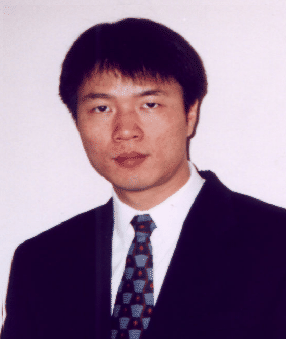
Anthony McGarryView profile
Senior Lecturer
Dr. Anthony McGarry is a Senior Teaching Fellow in Biomedical Engineering at the University of Strathclyde's Faculty of Engineering. With over 50 research outputs spanning two decades, his work focuses on prosthetics, orthotics, biomechanics, and rehabilitation engineering. His research has significantly contributed to understanding prosthetic socket design, gait analysis, measurement reliability, and physical activity in amputees. His research interests encompass a wide range of topics including prosthetics and orthotics, biomechanics, gait analysis, CAD/CAM systems, measurement reliability, physical activity in amputees, rehabilitation engineering, lower limb amputation, microprocessor prosthetics, and 3D printing applications. His work often bridges clinical practice with engineering solutions, focusing on improving patient outcomes through technological innovation. Dr. McGarry's recent publications (2023-2025) demonstrate continued innovation in the field, with work on 3D-printed cranial helmets, vision-based motion capture for gait analysis, and service quality assessment in prosthetics and orthotics. His research shows a consistent trend toward improving measurement techniques, enhancing prosthetic design, and understanding patient experiences. His scientific achievements include: Converge Challenge Competition runner up (2024) PCAD Prosthetic CAD shape capture in a weight bearing environment award (2022) FIA Foundation Research Award Dr. McGarry has been actively involved in research projects including the PCAD project (2023-2025) focusing on prosthetic CAD shape capture in weight-bearing environments, and has supervised three research students. His work on the reliability of measurement systems, particularly goniometers and activity monitors, has been widely cited and has influenced clinical practice. His research group at Strathclyde focuses on developing innovative solutions for prosthetic and orthotic challenges, with particular emphasis on measurement systems, CAD/CAM applications, and patient-centered outcomes. Current projects are exploring how weight-bearing environments affect prosthetic socket design and how emerging technologies can improve clinical outcomes.