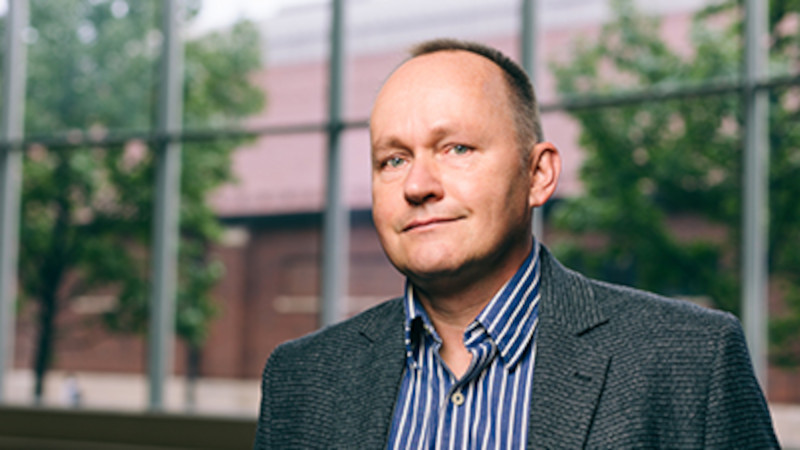
Hannes Hick is a Professor at Graz University of Technology , affiliated with the Institute of Machine Elements and Development Methodology . His research focuses on mechanical development, tribology, and systems engineering for automotive and industrial applications. He actively contributes to engineering education and methodology standardization. Research Interests Hydrogen internal combustion engines System modeling and digital twins Tribology in electric drivetrains Sustainable engineering practices MBSE (Model-Based Systems Engineering) Friction and wear analysis Article Trends His recent work emphasizes hydrogen propulsion systems, model-based approaches for interdisciplinary engineering challenges, tribological optimization for sustainable mobility, and integrating AI with mechanical design workflows. Labs and Teams He leads research at the Institute of Machine Elements, focusing on mechanical validation and development methodologies for advanced powertrain systems.
Luca Sterpone is a Full Professor at the Department of Control and Computer Science (DAUIN), Politecnico di Torino. He serves as Head of the Control and Computer Engineering Department (2023-2027), coordinates the Aerospace and Safety Computing Lab, and is a member of the Academic Senate and Power Electronics Innovation Center (PEIC). His research spans reconfigurable computing, fault tolerance, and radiation effects analysis in electronic systems. Professor since 2021 Department Head (DAUIN) since 2023 Coordinates international collaborations with ESA, AMD Xilinx, NVIDIA, and Thales Alenia Space Develops radiation-hardened FPGA tools (SETA, VERI-Place, PyXEL) 2007 EDAA Outstanding Dissertation Award and 2005 IEEE Best Paper Award Research Focus : Designing radiation-tolerant systems for aerospace, including fault-tolerant AI accelerators, FPGA reliability, and software-based error mitigation. He investigates soft error propagation in nanoscale circuits and develops tools for radiation sensitivity analysis in VLSI. His work integrates hardware-software co-design for mission-critical applications. Awards : EDAA Outstanding Dissertation Award (2007) IEEE European Test Symposium Best Paper (2005) SMACD Best EDA Tool Award (2018) ARC Best Paper candidate (2018) Teaching : He leads courses in Reconfigurable Computing (PhD level), GPU Programming , and Operating Systems . He has formal responsibility for teaching roles across 9 bachelor's and 7 master's years, and mentors multiple PhD students. Collaborations : Coordinates with the European Space Agency (ESA), University of Bielefeld, Universidad de Sevilla, and industrial partners like AMD Xilinx, NVIDIA, and General Motors. He leads projects such as RESCHIP4EU, VEGAS, and TERRAC for radiation-hardened computing solutions.
Gary Grewal is an Associate Professor at the School of Computer Science , University of Guelph. His research focuses on developing intelligent Computer-Aided Design (CAD) tools for Field Programmable Gate Arrays (FPGAs) , integrating classical optimization techniques with machine learning and deep learning to address challenges in placement and routing for heterogeneous devices. He has received the Michal Servit Award (2017, 2018) for outstanding FPGA research and the University of Guelph Faculty Association Distinguished Professor Award for Excellence in Teaching (2017) . Grewal has held NSERC Discovery Grants annually from 1999 to 2023. Co-founder of the Guelph FPGA CAD Group Key collaborator with institutions like Ryerson University , University of Toronto , and University of British Columbia His work extends to health technology through the IronTracker mobile app , developed with Andrew Hamilton-Wright and students (A. D'Angelo, J. Carter, F. Liu, R. Pattison) to manage Hereditary Hemochromatosis (HHC) . The app, available in four languages and adopted in 100+ countries, was recognized at Parliament Hill and the Ontario Legislature. Scientific Awards : Michal Servit Award (2018) Michal Servit Award (2017) Distinguished Professor Award for Teaching (2017) NSERC Discovery Grants (1999-2023) His recent publications highlight trends in machine learning for FPGA CAD , including reinforcement learning for partitioning, deep learning for congestion estimation, and adaptive algorithms for placement. Grewal remains active in teaching courses like Discrete Optimization (CIS*6070) and Digital Systems I (CIS*3120).
Bedrich Benes is a Professor and Associate Department Head in the Department of Computer Science at Purdue University. He holds a Ph.D. and M.S. in Computer Science from Czech Technical University in Prague (1998 and 1991, respectively). His research focuses on generative methods for geometry synthesis, procedural modeling, simulation of natural phenomena, and additive manufacturing. He has published over 200 research papers and secured grants from organizations like the NSF, NASA, and DOE. Editor-in-Chief of Elsevier's Graphical Models Senior Member of ACM and IEEE Fellow of Eurographics Association Research interests include graphics, visualization, geometric modeling, and computational biology. He leads projects on tree digital twins, urban forestry modeling, and immersive VR/XR education. Advised students include Bosheng Li and Xiaochen Zhou, who recently defended their Ph.D. theses. Notable contributions include neural ranking algorithms for forest reconstruction and tools like Tree-D Fusion for tree dataset generation. His work bridges computer graphics with environmental science and agriculture.
Zachary Tatlock is an Associate Professor at the Paul G. Allen School of Computer Science & Engineering at the University of Washington, where he leads the Programming Languages & Software Engineering Group (PLSE) and the SAMPL Group. His research spans programming languages, formal verification, compilers, and computational fabrication. He is also an Amazon Scholar with AWS's Automated Reasoning Group and previously advised OctoML. Tatlock's work bridges theoretical foundations with practical systems, focusing on making it easier to write tricky code while ensuring correctness through rigorous proofs and measurements. PhD in Computer Science & Engineering, University of California, San Diego (2014) Thesis: Reducing the Costs of Proof Assistant Based Formal Verification Advisor: Sorin Lerner BS in Computer Science (Honors) and Mathematics, Purdue University (2007) Professor Tatlock's research focuses on the intersection of programming languages, formal methods, and systems. His work in compilers and formal verification aims to make it easier to write tricky code while ensuring correctness through rigorous proofs. He explores computational fabrication techniques that bridge digital design with physical manufacturing. His recent work on equality saturation (via the egg framework) has transformed program optimization and synthesis. Tatlock also investigates floating-point numerics, distributed systems verification, and hardware/software co-design, always seeking to balance theoretical rigor with practical implementation. Tatlock's recent publications demonstrate a strong focus on equality saturation techniques (egg framework), computational fabrication, and verified systems. His work increasingly integrates machine learning with program analysis and synthesis. There's a clear trajectory toward more practical applications of formal methods in real-world systems, particularly in numerical computing and fabrication. His research group has made significant contributions to e-graph technology, floating-point accuracy, and the verification of distributed systems. Distinguished Paper Award for Rewrite Rule Inference Using Equality Saturation (OOPSLA 2021) Spotlight Paper Award for Dynamic Tensor Rematerialization (ICLR 2021) Distinguished Paper Award for egg: Fast and Extensible Equality Saturation (POPL 2021) Faculty Appreciation for Career Education & Training (FACET) Award (2020) NSF CAREER Award: Verifying Distributed System Implementations (2017) Distinguished Paper Award for Automatically Improving Accuracy for Floating Point Expressions (PLDI 2015) Distinguished Teaching Award Nomination (2015) Professor Tatlock has advised numerous doctoral, master's, and undergraduate students who have gone on to prominent positions in academia and industry, including faculty positions at the University of Utah and Brown University, and leadership roles at companies like OctoML and Certora. His research is supported by significant funding from NSF, DARPA, DOE, and industry partners, totaling millions of dollars. Current grants include projects on computer-aided reasoning, formal verification, computational fabrication, and machine learning systems. He has served on numerous program committees and organized workshops including FPTalks, EGRAPHS, and PNW PLSE. As co-leader of the Programming Languages & Software Engineering (PLSE) research group and affiliate of the SAMPL Group at the University of Washington, Tatlock has developed influential tools including egg (an equality saturation toolkit), Carpentry Compiler, and Odyssey. His group actively collaborates with industry partners including Amazon Web Services, where he serves as an Amazon Scholar. The group has made significant contributions to equality saturation, floating-point accuracy, program synthesis, and computational fabrication, with applications ranging from compiler optimization to 3D printing.
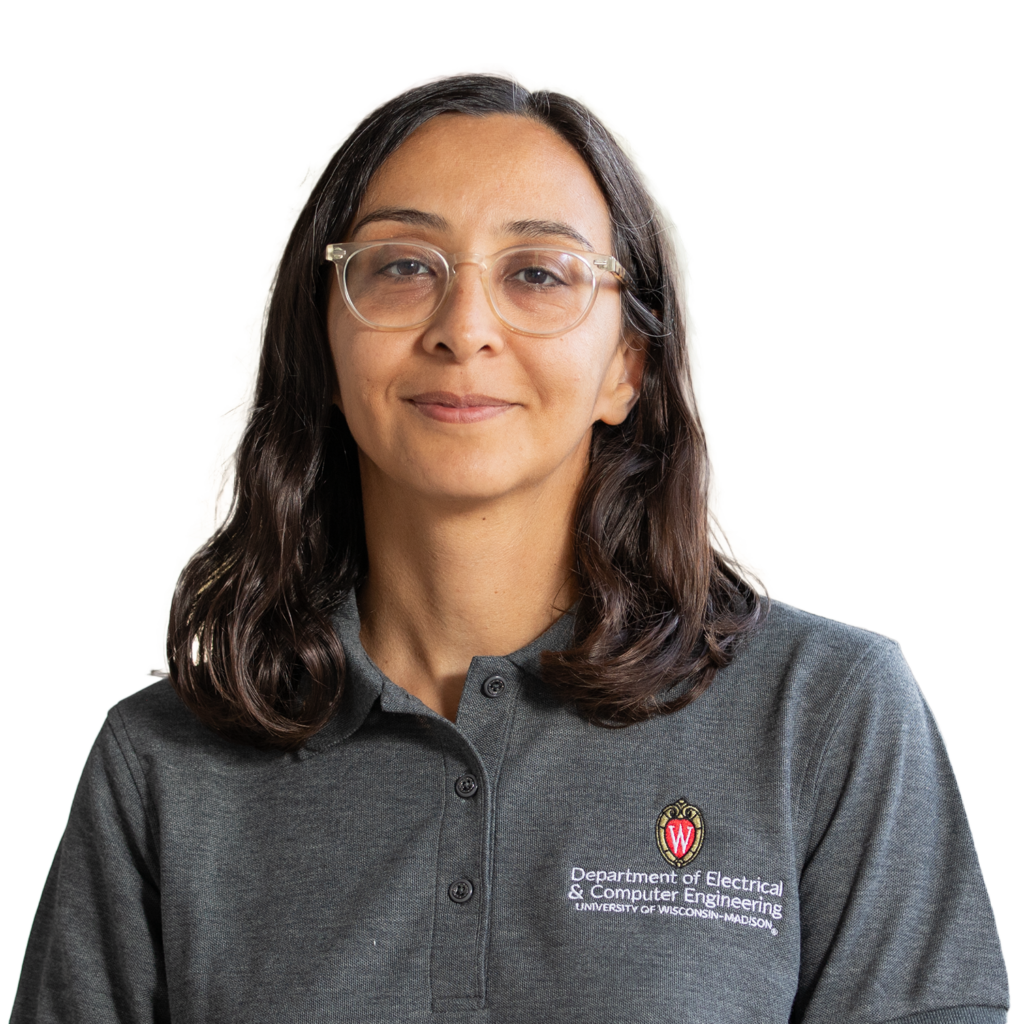
Azadeh Davoodi is a Vilas Distinguished Achievement Professor and Associate Chair of Undergraduate Studies in the Department of Electrical and Computer Engineering at the University of Wisconsin-Madison. Her research focuses on Electronic Design Automation (EDA), integrated circuit debug, and machine learning applications in VLSI design. She holds editorial roles in journals like IEEE TCAD and ACM TRETS, and has chaired major conferences such as ISPD 2015 and served on technical program committees for DAC, ICCAD, and others. Education: PhD in Electrical Engineering, University of Maryland-College Park (2006) Research Interests: Machine learning for VLSI chip design VLSI design automation for machine learning IC-CAD for emerging nanotechnologies Hardware security Recent Research Trends: Her work bridges machine learning and hardware design, with publications on neural network optimization, distributed inference, and explainable AI for circuit design. She emphasizes energy-efficient CNNs, latency reduction in edge computing, and security in split manufacturing. Awards: 2025 DATE Best Paper Candidate 2024 Vilas Distinguished Achievement Professor 2015 ACM Best Paper Award 2011 NSF CAREER Award Service and Grants: Leads NSF-funded projects on explainable ML for CAD and holds grants for distributed neural network synthesis. Her service includes roles as IEEE HKN member and editorial board positions. Labs/Teams: Engages in interdisciplinary research teams at UW-Madison, focusing on EDA innovation and hardware-software co-design.
Professor Ola Isaksson is a faculty member in Product Development at Chalmers University of Technology, where he leads the Systems Engineering Design research group. With over 40 research projects nationally and internationally, his work bridges academic research and industrial application, particularly in aviation and transport-related manufacturing sectors. His expertise spans digitalization, sustainability, and advanced manufacturing methods in product development. Ola Isaksson received his PhD in Computer Aided Machine Design from Luleå University of Technology in 1999. Prior to his academic career, he had a specialist career at GKN Aerospace Engine Systems (formerly Volvo Aero) in Trollhättan, focusing on design and product development until 2015. Professor Isaksson's research focuses on developing new product development capabilities to address societal and industrial needs through digitalization and advanced manufacturing. His primary interests include platform-based development, Set Based Engineering, multidisciplinary engineering methods, Value-driven development, and knowledge-intensive system support. He has particular expertise in additive manufacturing integration, design space exploration, and sustainability transition in product development. Analysis of Professor Isaksson's recent publications reveals a strong focus on integrating digital technologies with sustainable manufacturing practices. His work demonstrates a progression from traditional design methodologies toward AI-assisted design, digital twins, and advanced data analytics. Key thematic areas include additive manufacturing implementation, design margin management, sustainability integration, and aerospace component optimization, reflecting his commitment to bridging theoretical research with industrial applications. Professor Isaksson is one of the founders of the Swedish Product Development Academy and maintains active membership in the Design Society, ASME, and SIG PM, reflecting his significant contributions to the field of engineering design. With over 100 scientific publications and leadership in more than 40 research projects, Professor Isaksson has established himself as a leading figure in product development research. His work frequently involves close collaboration with industry partners, particularly in the aviation sector, securing substantial research funding for projects addressing digitalization, sustainability, and advanced manufacturing challenges. Professor Isaksson leads the Systems Engineering Design research group at Chalmers University of Technology. His team focuses on developing methodologies for complex product development, with particular emphasis on digital tools, sustainability integration, and manufacturing innovation. The group maintains strong industry connections, especially with aerospace manufacturers, facilitating the translation of research into practical applications.
Peter Bui is a Teaching Professor in the Computer Science and Engineering department at the University of Notre Dame , located within the College of Engineering. He teaches courses such as Data Structures, Systems Programming, and Ethical and Professional Issues, while also managing the core Elements of Computing programming sequence for the Computing & Digital Technologies minor. Education: Ph.D. in Computer Science and Engineering from University of Notre Dame (2012) His research interests span systems programming, operating systems, parallel computing, cloud computing, distributed computing, programming languages, compilers, and web services . He actively integrates these domains into his teaching and extracurricular work with the Linux Users Group. Recent publications highlight his work in distributed computing frameworks , including the development of tools like WorkQueue and Madeup for scalable scientific workflows and 3D printing integration. Projects such as ROARS and Weaver demonstrate his focus on robust data management and workflow automation. Outside academia, he stewards the Linux Users Group , engages with open-source communities, and balances personal interests like gaming in RuneScape with family time.
Pascal Sasdrich is a Researcher at Ruhr University Bochum, Germany, affiliated with the Faculty of Computer Science and the Security Engineering department. He holds a PhD in IT-Security/Information Technology from the same university (2018), following M.Sc. (2015) and B.Sc. (2012) degrees in the same field. His research focuses on Hardware Security, Secure Processor Design, Computer-Aided Security, and Security by Design. He has extensive experience in cryptographic hardware implementations, including countermeasures against side-channel and fault attacks. Teaching includes courses on Processor Security and Implementation of Cryptographic Schemes. His work bridges theoretical security models with practical hardware implementations, emphasizing automated tools and formal verification for secure embedded systems. Key projects include contributions to Project HEP (open-source hardware security chip design) and development of methodologies like EASIMASK for automated masking in hardware. Publications span cryptographic hardware implementations, fault and side-channel countermeasures, and formal security verification. Notable works include combined threshold implementations, secure processor extensions, and automated generation of masked hardware circuits. Current research emphasizes securing embedded systems through holistic design approaches, including ISA extensions and automated EDA tools.
Dr. Daniel Berio is a researcher at Goldsmiths, University of London, specializing in computational models for human-like movement in digital art and robotics. His work bridges computer graphics, cognitive psychology, and robotic manipulation, focusing on stylized stroke generation, graffiti analysis, and kinematic modeling. He collaborates with Frederic Fol Leymarie and Rejean Plamondon, utilizing the Sigma Lognormal model to simulate human handwriting dynamics. Education : Doctoral thesis on AutoGraff (2021), exploring computational understanding of graffiti and calligraphy. Research Themes : Human-like motion in digital art, kinematic reconstruction from static traces, robotic graffiti generation, and perceptual fluency in aesthetic evaluation. Publications : 15+ works since 2015, spanning ACM Transactions on Graphics, British Journal of Psychology, and conferences like MOCO and IROS. Applications : Font stylization tools, synthetic graffiti generation, compliant robot control, and semantic typography systems.
Prof. Songlin Ding is a Professor of Manufacturing Engineering at RMIT University's School of Engineering. He joined RMIT in 2005 as a Lecturer, progressing to Senior Lecturer (2009), Associate Professor (2015), and Professor (2020). He currently manages the Master of Engineering (Manufacturing) program. His research focuses on advanced manufacturing technologies, including CAD/CAM, geometric modeling, and machining of difficult materials like synthetic diamonds and titanium alloys using CNC and non-traditional methods. He pioneered the 'adaptive iso-planar' machining strategy, now widely adopted in CAD/CAM software. His work on high-speed machining of ultra-hard materials and additive manufacturing has been supported by ARC, CRCs, Victorian Government, and industry. Teaching interests include advanced manufacturing technologies and supervision of projects in areas like electrical discharge machining, additive manufacturing, and robotic applications. He coordinates over 20 courses and has published >100 papers in manufacturing, mechanical, and control engineering. Key contributions include developing post-processing techniques for additive manufacturing biomedical components and creating novel cutting tools for robotic bone tumor excision. His research emphasizes industry impact, particularly in aerospace and medical applications.
Sarah Azimi is a fixed-term researcher at the Department of Control and Computer Science (DAUIN) within the College of Computer, Film and Mechatronics Engineering at Politecnico di Torino. She actively contributes to research and teaching in the domains of reliable computing, reconfigurable systems, and AI applications for space and smart city security. Research Interests: Reliability and fault tolerance in safety-critical and space systems RISC-V and FPGA-based architectures High-performance computing (HPC) and reconfigurable computing AI resilience and real-time gesture recognition for public safety Radiation effects and hardening techniques for aerospace applications Publication Trends: Her recent publications focus on RISC-V reliability, radiation effects in space missions, AI resilience in reconfigurable platforms, and smart city security through gesture recognition. Her work spans both journal and conference venues, emphasizing practical and mission-tailored solutions in embedded and aerospace computing. Scientific Awards: No awards explicitly mentioned in the provided text. Advising and Grants: Sarah Azimi supervises multiple PhD students including Federico Buccellato, Aobo Cui, and Giorgio Cora. She leads the competitive research project Safe Smart City: Detecting Violence and Requests for Help in Real Time Through Video Surveillance Devices (2024). She is also a member of the RAMSES CubeSat-1 Development project (2025–2026) and led the commercial research project on the Rempro fault-tolerant processor (2022–2023). Labs and Teams: She is a key member of the CAD - Electronic CAD & Reliability Group (DAUIN) at Politecnico di Torino, contributing to cutting-edge research in electronic design automation and system reliability for aerospace and terrestrial applications.
Jorge Camba is an Associate Professor at the School of Engineering Technology and holds a courtesy appointment in the Department of Computer Graphics Technology at Purdue University . He also serves as a Senior Research Scientist (by courtesy) in the Department of Industrial Engineering at the University of Naples Federico II , Italy. PhD in Systems and Engineering Management (Universidad Politécnica de Valencia, Spain) MSc in Digital Media (East Tennessee State University) MSc in Computer Science (Universidad de Vigo, Spain) His research explores intelligent CAD systems , digital manufacturing , and mixed reality environments , focusing on model quality assurance , design intent communication , and collaborative design tools . Recent work investigates spatial cognition in CAD education , geometric variability analysis , and annotation-driven knowledge management . Key trends in his publications include parametric modeling strategies , 3D annotation systems , and XR applications in design evaluation. Awards include the Purdue Faculty Scholar (2021) and I3B Fellow (2021). He has presented at conferences on topics like Industry 4.0 , space habitat design , and digital product quality .
Niels Henrik Mortensen is a Professor and Head of Section in the Department of Civil and Mechanical Engineering at the Technical University of Denmark (DTU). His research focuses on engineering design and manufacturing systems, with emphasis on product architecture, modularization, maintenance performance, and AI-driven design solutions. He leads initiatives in engineer-to-order systems, lifecycle costing, and digital transformation in manufacturing. Key research interests include optimizing product architectures for modular systems, enhancing maintenance strategies through data analytics, and applying AI to improve CAD design reuse. His work aligns with UN Sustainable Development Goals related to innovation and infrastructure, and sustainable energy systems. Supervisor for 5 active PhD projects focused on modular architectures, logistics services, and configuration systems Published 175+ peer-reviewed articles, including work on AI-based maintenance frameworks and configurator development Recipient of industry collaboration projects with offshore energy and manufacturing sectors Notable contributions include frameworks for maintenance performance diagnostics and adaptable configuration models. His team operates through MEK and CONSTRUCT research groups at DTU.
Dr Adelaide Marzano is a Lecturer at the School of Computing Engineering and the Built Environment, Edinburgh Napier University, and a Visiting Professor at Pentecost University, Ghana. Her research focuses on manufacturing systems, CAD integration, tolerance analysis, and educational technology. She actively contributes to the Centre for Engineering and Mathematical Modelling, examining topics such as digital twin simulations for industrial ergonomics and e-learning efficacy. She serves as a PhD External Examiner and is a member of the Institution of Mechanical Engineers. Affiliations: Edinburgh Napier University (Primary), Pentecost University (Visiting) Key Roles: PhD Examiner, Research Group Member (Centre for Engineering and Mathematical Modelling) Her research spans manufacturing processes, including tolerance-aware product development and virtual reality applications in aerospace training. Recent work includes optimizing distillery operations via digital twin frameworks and investigating student preferences for e-learning tools across UK and Portuguese institutions. She also collaborates with industries like COMAU on ergonomic work cell design. Her current PhD project supervision involves machining optimization of additively manufactured medical components, emphasizing interdisciplinary approaches to advance manufacturing precision and efficiency.