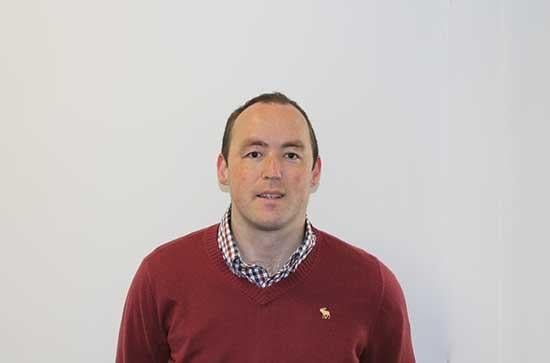
Harry Nguyen (Hoang D. Nguyen) is a Lecturer and Programme Director for the MSc in Computing Science at University College Cork. Affiliated with the SFI Research Centre for Data Analytics, he leads research in reliable AI systems for healthcare and sustainability. Research Focus: Develops robust ML models integrating graph networks and multimodal learning, with applications in medical diagnosis (e.g., COVID-19 detection via cough analysis) and environmental monitoring. Directs the Reliable Machine Intelligence research group. Advising: Mentors 15+ graduate students on projects spanning federated learning, sound-based diagnostics, and conversational AI for diabetes care. Secured funding from Science Foundation Ireland for CRT-AI initiatives.
Kashif Naseer Qureshi is an Associate Professor in the Department of Electronic and Computer Engineering at the Faculty of Science and Engineering, University of Limerick, Ireland. His research focuses on the intersection of artificial intelligence, healthcare systems, blockchain technology, and wireless communication networks. His recent work explores: AI-driven healthcare architectures (tri-tier models, distributed networks) Blockchain applications in medical and smart city systems Advanced machine learning techniques for data imbalance problems Edge computing security and privacy frameworks Next-generation AI language models with ethical considerations Publications demonstrate a strong emphasis on practical implementations across IoT, cybersecurity, and smart infrastructure domains. His email contact is KashifNaseer.Qureshi@ul.ie .
Jennifer Hyndman is a Lecturer in the Department of Computing at Atlantic Technological University, Ireland. Her work bridges academic teaching and cutting-edge research, with a focus on integrating technology into education and advancing computational methodologies. Education : PhD in Computing (2008), supervised by Dr. Tom Lunney and Prof. Paul Mc Kevitt at the University of Ulster, Magee, Derry. Research Interests Jennifer's research spans Data Analytics , STEM , Technology Enhanced Learning , and IoT . Her work explores applications of Artificial Intelligence and Machine Learning in educational contexts, robotics, and ambient intelligent systems. Publication Trends Her publications (2008–2024) demonstrate a trajectory from foundational work in ambient learning environments for children to advanced studies in swarm robotics and deep learning applications. Recent contributions focus on tertiary education pedagogy, cloud computing , and autonomous systems . Teaching Contributions She has taught diverse subjects including Mathematics for Computing , Python Scripting , Data Analytics , and Legal, Ethical, and Social Issues in Computing .
Jacqueline Humphries is a Lecturer in the Department of Information Technology at the Faculty of Applied Sciences and Technology. Her research focuses on Industry 4.0, robotics safety, computer vision, and quality management systems. She has contributed to over 10 peer-reviewed publications between 2019-2024, with a particular emphasis on human-robot collaboration safety, manufacturing error reduction, and sustainable production frameworks. Key research themes include optimizing human-robot interaction through computer vision fusion, enhancing quality 4.0 standards, and designing effective industry-academia partnerships for technology adoption. Her work aligns with UN Sustainable Development Goals related to sustainable industry and innovation. Recent studies explore topics like protective separation distance in collaborative robotics, lighting conditions' impact on object detection accuracy, and taxonomy development for human augmentation technologies in manufacturing. No formal awards are listed, though her h-index of 20 reflects significant citation activity.
Martin Hayes is a Professor in the Department of Electronics & Computer Engineering at the University of Limerick and a Professor at Lero – the Irish Software Research Centre. He currently serves as Academic lead for the HCI UL@Work project and previously held the Head of Department position from 2017 to 2021, with continuous faculty service since 1995. Education: PhD in Engineering from Dublin City University (1997) M.Eng (1992) B.Eng (1989) His research expertise spans Systems Science, Computer based Control, Machine Learning, and Artificial Intelligence, with significant contributions to Smart Manufacturing, Wireless Networks, and Robust Control. He integrates advanced control theory with AI methodologies to address challenges in manufacturing optimization, power management, and biomedical systems, emphasizing practical industrial applications and system reliability. Recent publications (2024-2025) demonstrate a concentrated focus on AI-driven industrial solutions, particularly deep learning for defect detection in remanufacturing, real-time failure prediction in additive manufacturing, and secure IoT access control systems. These works highlight his commitment to enhancing manufacturing efficiency through computational innovation and robust security frameworks. Scientific Awards: Community Service Award UL (1999) Visiting Research Fellow, University of Leicester (1999) As a core member of Lero, Hayes leads national software research initiatives including the HCI UL@Work project, developing human-centered computing solutions for workplace environments. His research directly supports UN Sustainable Development Goal 9 (Industry, Innovation and Infrastructure) through advancements in smart manufacturing and resilient systems engineering.
John Dooley is an Assistant Professor in the Department of Electronic Engineering at Maynooth University , Ireland. He also serves as the Programme Director for the BE/ME Electronic Engineering program. He is a Principal Investigator on the ORCHESTRA-6G project, funded by Science Foundation Ireland (SFI), and a Funded Investigator in the SFI CONNECT Centre for Telecommunications and the SFI ADVANCE Centre for Research Training . Education: Ph.D. in Electronic Engineering, University College Dublin, 2008 Research Focus: Dr. Dooley’s research spans digital signal processing , spectrally efficient modulation schemes , and applications to high-frequency circuits . His work has significantly impacted power efficiency optimization in wireless communication devices and networks, particularly in digital compensation techniques for mmWave terrestrial and satellite systems . His recent focus includes 6G wireless technologies and next-generation modulation techniques . Publications Trends: His research output reflects a strong emphasis on nonlinear system modeling , power amplifier linearization , and digital predistortion techniques . The articles span from RF circuit design to system-level optimization in wireless communications, with a clear trajectory toward 5G and 6G applications . Grants & Affiliations: Principal Investigator, ORCHESTRA-6G , SFI Frontiers for the Future Grant Funded Investigator, SFI CONNECT Centre for Telecommunications Funded Investigator, SFI ADVANCE Centre for Research Training Labs & Teams: Dr. Dooley is affiliated with the Hamilton Institute at Maynooth University, a multidisciplinary research institute focused on applied mathematics and communications systems. His work also intersects with the Radiospace research group, which explores advanced wireless technologies.
Dr. Richard Bolger is a Lecturer in the Department of Sport and Exercise Science at South East Technological University (SETU), where he has worked since 2005. His roles include teaching across undergraduate and postgraduate programs, supervising PhD students, and conducting research in biomechanics, strength and conditioning, and AI applications in sports. He holds a PhD from the University of Limerick (2017), an MSc in Sports Psychology/Physiology from Ithaca College (2004), and a BSc in Recreation & Sport Management (2004). His research focuses on strength training, movement analysis, and AI-driven performance assessment. Current projects include investigating plyometrics in female Gaelic Athletic Association (GAA) athletes and machine learning applications in GAA performance. He supervises PhD students in areas like combat sports performance, endurance athlete strength training, and AI in sports analytics. Dr. Bolger is an external examiner for multiple sports science programs at GMIT, SETU Carlow, and IT Tralee. He serves on professional bodies including the International Society of Biomechanics in Sports (ISBS) and the National Strength & Conditioning Association (NSCA). He received the 2024 Best Student Paper Award (co-recipient) at icSPORTS for work on machine learning in sports technique analysis. His funded projects include a TU Rise-funded study on plyometric effects in GAA athletes and an IRC-funded project on endurance athlete strength training. He collaborates on mixed-methods research in Olympic combat sports and has published widely in journals like Journal of Strength & Conditioning Research and International Journal of Computer Science in Sport .
Professor Mohand Tahar Kechadi is a Full Professor at the School of Computer Science, University College Dublin (UCD), where he has been since 1999. His research focuses on Data Mining, Distributed Systems, Digital Forensics, and Healthcare Informatics. He has published over 260 articles and serves on editorial boards of journals like Future Generation Computer Systems and IST Transactions . He also holds roles in academic leadership, including directing UCD’s international BSc program in Sri Lanka and previously serving as Head of Teaching and Learning (2007–2012). Education: PhD and DEA (MSc) in Computer Science from the University of Lille, France; HDip in University Teaching & Learning from UCD. Research: Explores challenges in big data processing, including distributed data mining, cloud computing, and privacy-preserving techniques. Recent work addresses applications in healthcare (e.g., wearable devices, medical imaging), agriculture (precision farming), and cybersecurity (blockchain, IoT trust management). Grants: Led a grant on evaluating sugar-sweetened beverage taxes (2018–2019). Collaborates on projects like BigO, a public health decision support system for pediatric obesity. Teaching: Coordinates modules in Cloud Computing, Data Mining, and Distributed Systems. Developed a code-free cloud service for biomedical signal processing and advocates inclusive assessment strategies. Awards: None explicitly stated. Recognized for contributions to interdisciplinary research and education.
Dr. Mohamed Saadeldin is an Assistant Professor at the School of Computer Science, University College Dublin (UCD). He holds a B.Sc. (Honours) in Electrical & Electronic Engineering from the University of Khartoum (2005) and a Ph.D. in Computer Science from UCD (2013). His research spans generative AI, computer vision, and foundation models, with applications in healthcare, biomedicine, robotics, and energy. Recently, he has focused on AI-driven solutions for healthcare disparities, such as automated breast cancer screening using low-cost ultrasounds, and multimodal foundation models for precision medicine. He also explores LLM-driven UAV navigation and energy grid management using transformer models. Education: B.Sc. (Honours) in Electrical & Electronic Engineering, University of Khartoum, 2005 Ph.D. in Computer Science, University College Dublin, 2013 Teaching: Coordinates modules in Computer Graphics, Data Structures and Algorithms, and Mobile Computing at UCD’s joint college in China (BDIC). His research interests include generative AI for healthcare, computer vision in robotics, and deep learning for agricultural optimization. Notable projects include vision foundation models for medical imaging, collaboration with Systems Biology Ireland on multimodal models for drug repurposing, and energy grid management via smart meter data analysis. He has authored/co-authored over 30 publications, including IEEE transactions and book chapters. Grants and collaborations involve industry partnerships on load disaggregation and academic projects like VistaMilk for dairy sector applications. His early work on ultrasonic systems for indoor localization and gesture control demonstrates his long-standing expertise in signal processing and human-AI interaction.
Dr. Mark Scanlon is an Associate Professor in the School of Computer Science at University College Dublin (UCD), where he also serves as Founding Director of the UCD Forensics and Security Research Group and Programme Director of the MSc in Forensic Computing and Cybercrime Investigation. He holds a PhD in Remote Digital Forensic Evidence Acquisition and Analysis from UCD and is a Fulbright Scholar in Cybersecurity. His research focuses on digital forensics, cybersecurity, and IoT device analysis, with notable contributions in electromagnetic side-channel analysis, AI-driven forensic tools, and password cracking methodologies. Education: BA, University College Dublin MSc and PhD in Remote Digital Forensic Evidence Acquisition and Analysis, University College Dublin Professional Diploma in University Teaching & Learning, UCD Affiliations: Principal Investigator at CeADAR (National Centre for Applied AI) Senior Editor, Forensic Science International: Digital Investigation Scanlon’s research interests span digital forensics, cybersecurity, and AI applications in investigation. He has pioneered work in electromagnetic side-channel analysis for IoT devices, non-invasive cryptographic analysis, and leveraging LLMs for forensic efficiency. His work addresses challenges such as data deduplication, password cracking optimization, and improving practitioner workflows through automated tools like TraceGen and EMvidence frameworks. His articles highlight trends in AI integration (e.g., LLMs for evidence analysis), IoT forensic readiness, and practitioner challenges (via the DFPulse survey). Scanlon has secured grants including a Fulbright award for collaborative research and led initiatives in forensic education and ethical hacking training. His contributions bridge academic research and real-world forensic practices, emphasizing ethical considerations and tool development. Scientific Awards: Fulbright Scholar in Cybersecurity and Cybercrime Investigation In teaching, he coordinates modules such as Advanced Computer Forensics, Ethical Hacking, and OSINT Analysis, reflecting his commitment to advancing forensic education and cybersecurity training.
Dr. Anh Vu Vo is an Assistant Professor at University College Dublin's School of Computer Science, specializing in high-scalability algorithms for LiDAR and urban spatial datasets. He holds a PhD from UCD, a Master's from the University of Melbourne, and a Bachelor's from HCMC University of Architecture. Roles : Lecturer/Assistant Professor since 2024, Postdoctoral Research Fellow (2019–2022), Research Scientist at NYU (2018–2019). Research Interests : LiDAR, Urban Science, Spatial Data Management, Distributed Computing, and Big Data. Key projects include CAMEO (Earth Observation platform), UrbanARK (flood risk assessment), and AIMVIE (mangrove mapping). He has authored over 30 peer-reviewed publications and secured grants such as the SFI Future Innovator Prize. Awards : 2022 EODisrupt Winner, 2015 IEEE GRSS Data Fusion Contest First Prize, Australian Endeavour Award. Teaching : Spatial Information Systems, Urban Sensing, and graduate-level courses. His work focuses on integrating LiDAR data with advanced computing frameworks to address urban challenges like flood risk and infrastructure planning.
Dr. Jufan Zhang is an Assistant Professor at the School of Mechanical and Materials Engineering, University College Dublin, Ireland. He is also a member of the UCD Centre of Micro/Nano Manufacturing Technology and the SFI I-Form Advanced Manufacturing Research Centre. His research focuses on advanced manufacturing technologies including nanopore arrays, microneedle devices, geometrical waveguide AR displays, and atomic-scale manufacturing. He holds a PhD from Harbin Institute of Technology, China. Education: B.E., M.E., and Ph.D. in Mechanical Engineering from Harbin Institute of Technology, China Professional Roles: Faculty member, Lab Manager, and funded investigator in multiple research centers Research Interests: Manufacturing of large-scale solid-state nanopore arrays for biomedical and renewable energy applications Design of microneedle drug delivery systems Optical waveguide innovations for ultra-thin AR displays Surface texturing for improved joint tribology Atomic-scale manufacturing processes Recent articles highlight advancements in nanopore array applications, laser shock peening for additive manufacturing, and AR display technologies. His work bridges fundamental research with industrial applications through collaborations with companies like Watson Biotech and Changan University. Awards include the Career Development Award (UCD), International Science and Technology Cooperation Base recognitions (Shaanxi and Xi’an provinces), and top downloaded article honors. He actively participates in global conferences and serves on editorial and review boards for journals like Small and International Journal of Advanced Manufacturing Technology . Teaching responsibilities include coordinating modules like Automotive Design and Thermodynamics, with recent teaching awards for curriculum reform. He supervises PhD students and manages over 30 grants totaling €multi-million, including EU and industry partnerships. Lab affiliations include the UCD AI Healthcare Hub and the Una Europa Self-Steering Committee on Future Materials, advancing interdisciplinary research in manufacturing and healthcare.
Soumyabrata Dev is an Assistant Professor in the School of Computer Science at University College Dublin (UCD), where he leads the THEIA lab focusing on interdisciplinary research in computer vision, machine learning, and remote sensing. His work addresses challenges in climate science, environmental monitoring, solar forecasting, and healthcare. He holds a PhD from Nanyang Technological University (Singapore) and has held postdoctoral roles at Trinity College Dublin and ADAPT SFI Research Centre. His education includes a B.Tech. (summa cum laude) from National Institute of Technology Silchar, India, and a visiting doctoral experience at École Polytechnique Fédérale de Lausanne (EPFL), Switzerland. Prior to academia, he worked as a network engineer at Ericsson India (2010–2012). Research interests span image processing, environmental data analytics (e.g., air/water quality), solar energy forecasting, and AI-driven solutions for sustainable development. He collaborates globally with institutions in academia, industry, and government, aligning with UCD’s strategic goals for impactful innovation. He is an SFI Funded Investigator at ADAPT SFI and a UCD Climate Fellow (2024–2026). His scientific awards include the 2024 Stanford/Elsevier Top 2% Scientists List. He advises numerous PhD/MSc students on topics like coastal monitoring, air quality modeling, and AI for sustainability. THEIA Lab’s projects include solar irradiance forecasting, knowledge graph-based climate data platforms, and blockchain-enhanced healthcare systems. He teaches modules on Operating Systems, Wireless Sensor Networks, and Augmented/Virtual Reality. His work bridges theory and application, emphasizing real-world impact in climate action and renewable energy.
Lizy Abraham is the Head of Division at the Walton Institute for Information and Communications Systems Science, part of Southeast Technological University (SETU). She holds a PhD in Electronics & Communication Engineering from the University of Kerala (2015) and completed postdoctoral research in Wireless Sensor Networks at Tyndall National Institute, University College Cork. Her research focuses on Computer Vision, Internet-of-Things, Machine Learning, and Embedded Systems. Notable projects include developing AI-driven solutions for medical diagnostics (e.g., congenital heart disease detection, cardiomegaly classification) and smart industrial IoT applications. Her academic contributions span over 47 research outputs, including peer-reviewed articles and conference contributions. Media highlights include securing €556,070 in funding for heart disease research and leading AI initiatives at SETU. She founded Liz Intelligent Solutions , a startup developing embedded systems for smart technologies. Lizy is also actively supervising PhD students and contributing to interdisciplinary projects. Education: PhD in Image-Signal Processing, University of Kerala (2011–2015) Masters in Communication Systems, Anna University (2004–2006) Bachelors in Electronics & Communication Engineering, Mahatma Gandhi University (2000–2004) Grants & Funding: €556,070 for AI-based heart disease research (2024) State-funded projects in medical AI and IoT Labs/Teams: Leads the Walton Institute’s AI & IoT research cluster and directs Liz Intelligent Solutions’ R&D team.
Dr. Jennifer Foster is an Associate Professor and Associate Dean for Teaching and Learning in the Faculty of Engineering and Computing at Dublin City University. She specializes in Natural Language Processing (NLP) and AI, with a focus on language parsing, sentiment analysis, and Irish language technology. She leads projects funded by Science Foundation Ireland (SFI) and other agencies, supervising 11 PhD students to completion and currently mentoring four more. Her research spans NLP applications including grammar checking, question answering, and neural language model evaluation. She teaches NLP courses for Data Science and Computing programs, as well as introductory Python programming. Foster has authored over 100 peer-reviewed publications and serves on conference program committees, including the Association for Computational Linguistics executive board (2016-2019). Recent work includes developing gaBERT, an Irish language model, and exploring machine-generated story coherence. Her contributions to resources like the Irish Universal Dependencies Treebank and the GenERRate error-generation tool highlight her commitment to advancing NLP for under-resourced languages.