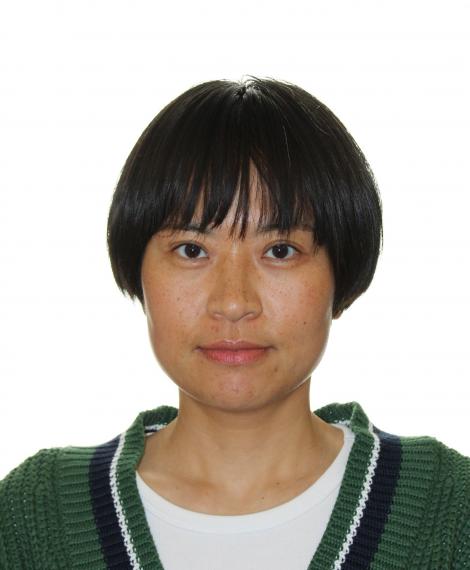
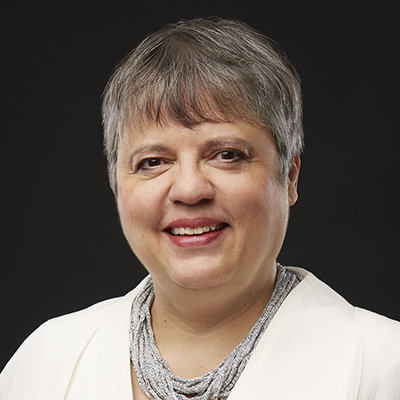
Dr. Wenjing Zhang is an Assistant Professor in the School of Computer Science at the University of Guelph, Canada. She holds a Ph.D. in Computer Science from the University of Guelph (2024) and was a visiting research scholar at the University of Arizona's Department of Electrical and Computer Engineering (2016–2018). Her research focuses on cybersecurity in AI/ML, including security threats to models, privacy-preserving techniques, and data privacy in generative AI. She leads projects on robust defenses against adversarial attacks, secure federated learning, and privacy-preserving prompt engineering for LLMs. Dr. Zhang’s research areas include: Security in AI/ML (e.g., poisoning, evasion, prompt injection attacks) Model Privacy (protection of internal parameters) Data Privacy (synthetic data generation, privacy-preserving prompt engineering) She has secured a five-year NSERC Discovery Grant (2025–2030) for her research on enhancing security, privacy, and fairness in generative AI. Her work has been published in top-tier venues such as NeurIPS, IEEE Transactions on Information Forensics and Security, and IEEE Transactions on Communications. She is a recipient of the 2022 Westin Scholar Award and serves on technical committees for IEEE conferences including CNS 2025 and ICC 2025. Her team collaborates on interdisciplinary projects involving federated learning, information theory, and reinforcement learning. She actively seeks partnerships in security, privacy, and generative AI applications.
Dr. Jia Zhang is the Inaugural Robert H. Dedman Jr. Endowed Department Chair and Professor of Computer Science at Southern Methodist University (SMU Lyle School of Engineering). She holds the Cruse C. and Marjorie F. Calahan Centennial Chair in Engineering and has a courtesy appointment in the Department of Operations Research and Engineering Management. Her research focuses on applying machine learning, natural language processing, and information retrieval to data science infrastructure, particularly scientific workflows, provenance mining, software discovery, knowledge graphs, cloud computing, immune AI, and applications in earth science and healthcare. Education: Ph.D. in Computer Science, University of Illinois at Chicago M.S. in Computer Science, Nanjing University B.S. in Computer Science, Nanjing University Dr. Zhang's work emphasizes data science infrastructure and machine learning for scientific workflows and knowledge graphs. Her recent publications highlight deep learning , graph neural networks , and optimization algorithms in cloud computing, cybersecurity, and environmental applications. Key trends include spatiotemporal modeling , hybrid neural architectures , and AI-driven service ecosystems . Scientific Awards: Best Paper Awards IEEE SCC (2011, 2017) Best Student Paper Awards IEEE ICWS (2014, 2018), IEEE ICCC (2018) Distinguished Paper Award ICSOC (2023) First Outstanding Service Award IEEE Technical Committee on Services Computing (2016) She has secured over $5 million in federal grants (as PI) and $11 million as PI/Co-PI from NSF, NASA, NIH, UTSW, Ericsson, SAP, and Google. Her lab (Caruth Hall 308) actively recruits research assistants. She previously served as a faculty member at Carnegie Mellon University, Northern Illinois University, and Nanjing University, and worked in industry as a software architect.
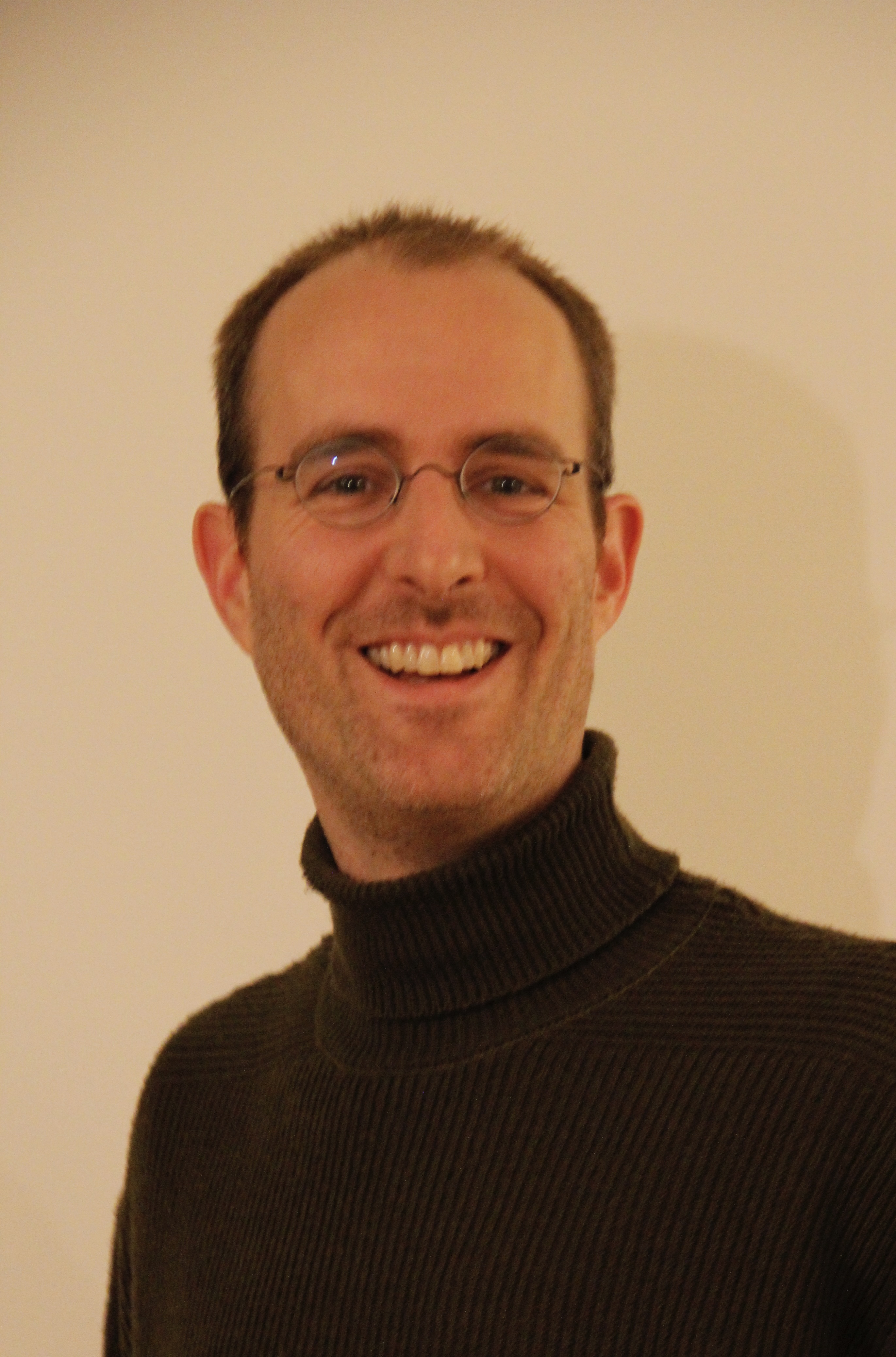
Thomas Demeester is an Associate Professor at the Internet Technology and Data Science Lab (IDLab), Ghent University - imec, Belgium. Appointed as Assistant Professor in 2019, he leads an AI research group focused on health applications and drug design, co-directing the Text-to-Knowledge research cluster with Prof. Chris Develder. His educational background includes: M.Sc. in Electrical Engineering from Ghent University (2005), completed with thesis work at ETH Zurich Ph.D. in Computational Electromagnetics from Ghent University (2009), funded by Research Foundation - Flanders (FWO) Demeester's research spans artificial intelligence with emphasis on deep learning and neuro-symbolic methods. Current tracks include energy-based models (Hopfield Networks, Deep Equilibrium Models), diffusion models for drug design, and clinical reasoning systems. His work bridges NLP, healthcare informatics, and generative AI with strong industry partnerships. Recent publications (2023-2025) reveal strategic expansion from NLP into health-centric AI: BioLORD biomedical encoders (2023), synthetic medical data frameworks (UAI/NeurIPS 2024), and novel diffusion model guidance (ICLR 2025). This evolution demonstrates convergence of generative modeling, clinical data analysis, and protein design. He actively mentors 24 PhD students across diverse AI domains: Current Research: Conversational agents, emotion analysis, clinical reasoning, antibody design, and diffusion model optimization Recent Graduates: Interpretable language models, biomedical semantics, task-oriented dialogue, and social media knowledge extraction Research is supported by imec funding and collaborations with Flemish biotech companies, building on his post-doctoral experience securing media-sector projects. Within IDLab, he co-leads the Text-to-Knowledge cluster driving NLP innovations for healthcare, legal, and economic applications.
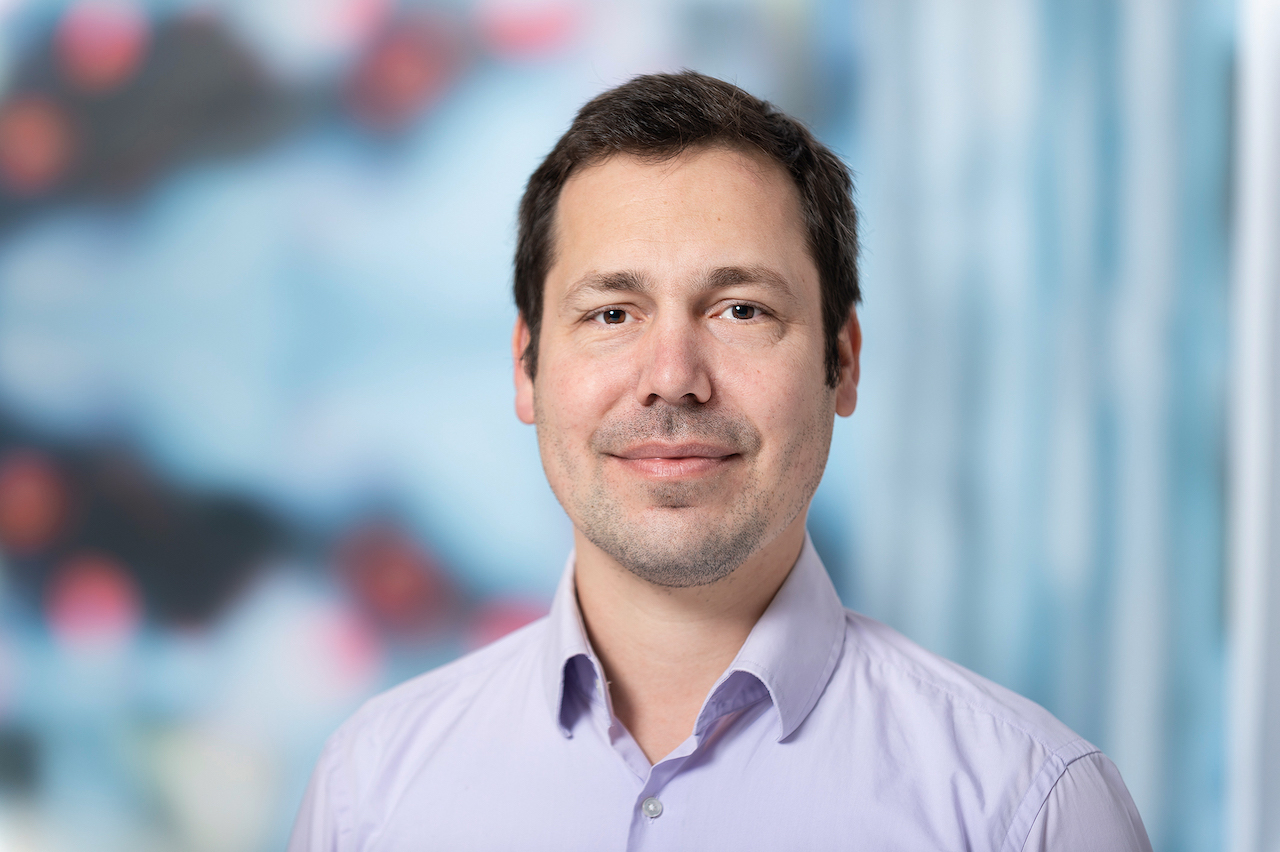
Dr. Karim El-Basyouny is a Killam Laureate Professor and City of Edmonton Urban Traffic Safety Research Chair at the University of Alberta's Faculty of Engineering, where he serves as Associate Dean (Research Infrastructure and Innovation) in the Civil and Environmental Engineering Department. A licensed Professional Engineer in Alberta, he holds advanced degrees in Transportation Engineering from the University of British Columbia and has dedicated his career to advancing road safety through data-driven management frameworks. His academic credentials include: Doctor of Philosophy, Civil Engineering, University of British Columbia, 2011 Engineering Management Sub-specialization, Civil Engineering, University of British Columbia, 2010 Master of Applied Science, Civil Engineering, University of British Columbia, 2006 Bachelor's degree (ABET Equivalent), Civil & Environmental Engineering, United Arab Emirates University, 2003 El-Basyouny's research pioneers the integration of remote sensing, machine learning, and statistical modeling to enhance transportation safety. His work develops automated tools for infrastructure digitization, collision prediction, and speed management, treating safety as a systemic product requiring management frameworks. Key contributions include LiDAR-based road feature extraction, network-level safety evaluations, and frameworks for vision-zero outcomes that address both human-driven and autonomous vehicle contexts. His recent publications demonstrate a cohesive research trajectory centered on leveraging point cloud data and computational intelligence for safety management. Over 15 major publications since 2021 focus on automated infrastructure assessment (light pole detection, clear zone mapping, vertical clearance evaluation), weather-impact modeling, and enforcement resource optimization. This body of work bridges transportation engineering with computer vision and operations research to create scalable safety solutions. His scientific contributions have been recognized with prestigious honors including: 2024 Killam Annual Professorship Award 2024 Road Safety Achievement Award from TAC 2023 Donald Stanley Award for environmental engineering 2022 Faculty of Engineering Graduate Teaching Award 2021 Daniel B. Fambro Student Paper Award As an academic leader, El-Basyouny actively mentors graduate students and secures significant research funding through his endowed chair position. He currently recruits fully-funded PhD and postdoctoral candidates specializing in remote sensing applications, machine learning, and geomatics for road digitization projects. His research group collaborates with national safety committees and municipal agencies to translate findings into policy, while he serves on editorial boards for Transportation Research Record and Analytic Methods in Accident Research. The research group operates at the intersection of transportation engineering and computational science, developing automated frameworks that merge sensor technologies with data processing tools. Current projects focus on semantic segmentation of 3D point clouds, safety implications of infrastructure digitization, and machine learning applications for road feature extraction in both urban and rural environments.
Professor Thomas Lukasiewicz is a Full Professor and Head of the Artificial Intelligence Techniques research group at the Faculty of Informatics, Vienna University of Technology (TU Wien). His research focuses on enabling machines to mimic human-like intelligence through techniques spanning deep learning, symbolic reasoning, and predictive coding. Key areas include explainable AI, hybrid neurosymbolic systems, and applications in healthcare and law. He teaches courses such as Deep Learning for Natural Language Processing, Scientific Research and Writing, and multiple seminars in artificial intelligence and knowledge representation. His research projects include Explainable AI in Healthcare (2023–2027) and foundational work on predictive coding networks. His publications (15+ recent articles) address medical image segmentation, neurosymbolic frameworks, and language model evaluation in mathematics. Notable work includes neurosymbolic hybrid models (CCN⁺), reinforcement learning for medical report generation, and theoretical foundations of predictive coding networks.
Jean-Pierre Fouque is a Professor in the Department of Statistics and Applied Probability (PSTAT) at the University of California, Santa Barbara. His research focuses on stochastic processes, financial mathematics, systemic risk, and reinforcement learning, with a particular emphasis on mean field games and multi-scale stochastic models. He explores applications in portfolio optimization, risk management, and algorithmic finance. His work combines theoretical advancements in stochastic analysis with practical applications in economics and finance. Notable contributions include developing models for systemic risk in financial networks, analyzing reinforcement learning algorithms in mean-field frameworks, and studying stochastic volatility effects in derivatives pricing. Recent research trends include integrating deep learning techniques for systemic risk quantification, advancing multi-scale asymptotic methods for portfolio optimization, and investigating strategic interactions in financial systems using game-theoretic approaches. His publications frequently address topics such as stochastic volatility calibration, optimal investment strategies under uncertainty, and the dynamics of financial markets under stress scenarios. Dr. Fouque has contributed to foundational textbooks and edited volumes on systemic risk and mean field games. His interdisciplinary work bridges probability theory, mathematical finance, and computational methods, impacting both academic research and practical risk management practices.
Max Lau is an Assistant Professor in the Department of Biostatistics and Bioinformatics and the Department of Epidemiology at Emory University. His research focuses on integrating machine learning and computational methods with epidemiological and genomic data to study infectious disease dynamics. He teaches courses such as BIOS 790R (Advanced Seminar in Biostatistics) and DATA 534 (Applied Machine Learning). Dr. Lau's work emphasizes scalable Bayesian inference, graph neural networks, and stochastic modeling to address challenges in disease transmission, outbreak control, and pathogen evolution. His recent research includes developing tools like ScITree and Epilearn, and he has contributed to understanding measles dynamics, tuberculosis treatment, and livestock disease management. His academic contributions span over 30 publications since 2010, with a particular focus on phylodynamics, epidemic modeling, and vaccine strategy evaluation. His interdisciplinary approach bridges computational methods with public health applications, aiming to enhance disease prediction and intervention efficacy.
Oussama Damen is a Professor at the University of Waterloo's Department of Electrical and Computer Engineering. His research focuses on advanced wireless communication systems, particularly in MIMO (Multiple-Input Multiple-Output) systems, signal processing, and machine learning applications in telecommunications. He is actively involved in developing innovative solutions for beamforming, hybrid precoding, and distributed decoding in massive MIMO and millimeter-wave networks. Damen's work also extends to optical fiber communication, federated learning in wireless systems, and optimization of resource allocation in next-generation networks like 5G/6G. His research interests include wireless communication theory, antenna system design, channel modeling, and algorithm development for improving spectral and energy efficiency. He has contributed extensively to the theoretical foundations of MIMO detection, lattice reduction techniques, and statistical signal processing methods. Notable trends in his publications emphasize bridging theoretical performance limits with practical implementations, particularly in scenarios involving channel impairments, limited backhaul capacity, and multi-core fiber transmission. His work often addresses fairness and optimization in distributed systems, including federated learning frameworks and hybrid beamforming architectures. No scientific awards or grants are explicitly mentioned in the provided information. Damen has advised no listed students, and no specific lab affiliations are noted.
Katy Börner is a Professor affiliated with Indiana University, Bloomington, USA. Her research focuses on data visualization, scientometrics, and the science of science, with contributions to tools like Network Workbench (NWB) and Sci2. She leads interdisciplinary projects such as the Human Reference Atlas and explores visualization literacy in education and public health. Her work spans virtual reality applications, biomedical knowledge networks, and AI-driven scientific discovery. Key research interests include mapping scientific collaboration networks, analyzing scholarly publications, and developing visualization frameworks for big data. She collaborates widely with institutions like NIH and VIVO, advancing open science and interdisciplinary research. Her projects often bridge computational methods with human-centric design, enhancing understanding of complex systems in health, technology, and social sciences. Publications highlight innovations in interactive visualization tools (e.g., opioid crisis research networks), data integration (Human Reference Atlas), and AI applications in biomedical research. She emphasizes translating data into actionable insights through visual analytics, impacting policy, education, and healthcare.
Laura Albert is a Professor of Industrial & Systems Engineering at the University of Wisconsin-Madison and former David H. Gustafson Department Chair (2021-24). She serves as a Fellow of AAAS and IISE, and previously held the INFORMS presidency. Her research focuses on optimizing public-sector systems, with applications in critical infrastructure protection, emergency response, and cybersecurity. She advocates for public engagement through op-eds and blogs like 'Punk Rock Operations Research.' Education: PhD in Industrial Engineering, University of Illinois at Urbana-Champaign (2006) MS in Industrial Engineering, University of Illinois at Urbana-Champaign (2001) BS in Industrial Engineering, University of Illinois at Urbana-Champaign (2000) Research Interests: Dr. Albert’s work bridges operations research and public policy, addressing challenges in emergency medical services, voting system security, law enforcement strategies, and opioid treatment diversion programs. She employs mathematical optimization, game theory, and stochastic modeling to design resilient systems. Awards: INFORMS Impact Prize (2018) NSF CAREER Award (2011) Fulbright Award (2020) AAAS Fellow (2020) Advising & Grants: While explicit student names aren’t listed, her research has been supported by grants from the NSF, Army Research Office, and other agencies. She advises on interdisciplinary projects involving public health, cybersecurity, and disaster management. Labs/Teams: Engaged in collaborative efforts across the College of Engineering, including affiliations with the Electrical & Computer Engineering department. Leads initiatives on resilient infrastructure and emergency response systems.
Dongwoo Kim is a researcher affiliated with Hanyang University, ERICA Campus (Department of Electronics and Communication Engineering) and has previously collaborated with institutions like POSTECH , Chungnam National University , and Microsoft . His work spans interdisciplinary domains in Computer Science and Engineering . Hanyang University, ERICA Campus - Department of Electronics and Communication Engineering POSTECH - Power Analog Electronics & Semiconductor Devices Lab Microsoft Chungnam National University Kim's research focuses on formal verification of automotive control software, deep learning applications in environmental monitoring, 3D modeling for indoor positioning, and machine learning for signal processing. His recent publications highlight advancements in graph neural networks (GNNs), including analyzing oversmoothing and gradient dynamics, as well as developing geometric vision-language models with domain-agnostic encoders. His 15 most recent articles (2023-2025) address topics like: Optimizing hybrid electric vehicle engine performance 3D modeling for indoor localization GNN training stability UAV-based environmental monitoring Algorithm difficulty prediction for programming problems Millimeter-wave antenna design Kim collaborates with researchers in software engineering , signal processing , and environmental science domains. His work intersects formal methods , applied machine learning , and embedded systems research.
Jan Dirk Wegner is an Associate Professor at the University of Zurich, holding the chair in 'Data Science for Sciences' and leading the EcoVision Lab. He previously served as a Postdoc (2012–2016) and senior scientist (2017–2020) at ETH Zurich's Photogrammetry and Remote Sensing Group, following his PhD (with distinction) from Leibniz University Hannover (2011). His research bridges machine learning, computer vision, and remote sensing to address environmental and geoscience challenges, focusing on large-scale environmental data analysis, vegetation monitoring, and climate change mitigation. Education: PhD (with distinction) in Geodesy, Leibniz University Hannover (2011) Postdoc, ETH Zurich (2012–2016) Senior Scientist, ETH Zurich (2017–2020) Research Interests: Machine Learning, Computer Vision, Remote Sensing, Environmental Science, Climate Science, Geosciences, Explainable AI, Uncertainty Quantification, and Applications in Sustainability. The EcoVision Lab develops data-driven methods for global-scale environmental monitoring, including vegetation parameter mapping, flood prediction, forest degradation detection, and AI-driven ecological modeling. Awards: ETH Postdoctoral Fellowship (2012–2016) Science Prize of the German Geodetic Commission WEF Young Scientist Class 2020 (Top 25 globally under 40) Advising & Leadership: Director of the University of Zurich's Doctoral School in Data Science, leading the EcoVision Lab, and coordinating the CVPR EarthVision Workshops. His roles include Vice President of ISPRS Technical Commission II, member of the ETH AI Center, ELLIS, and UN-ETH Partnership. Labs/Teams: EcoVision Lab focuses on interdisciplinary AI applications for environmental challenges, collaborating with NGOs, governments, and industry to translate research into societal impact.
Dr. Sotirios Stathakis is Chief of Physics at the Mary Bird Perkins Cancer Center (2023–Present) and Associate Director of the Medical Physics Division at the University of Texas Health Science Center San Antonio (2017–2022). He holds an Adjunct Professor position at Louisiana State University's Department of Physics and Astronomy (2023–Present). His expertise lies in radiation oncology and medical physics, with a focus on patient-specific quality assurance, dose verification, and advanced treatment techniques like adaptive radiation therapy and SBRT. Education: Ph.D., Medical Physics, University of Patras (2005) M.S., Medical Physics, University of Aberdeen (1997) B.S., Physics (minor in Mathematics and Computer Science), University of Waterloo (1995) Research Interests: Patient-specific quality assurance Daily dose verification Treatment planning techniques Adaptive radiation therapy Stereotactic body radiation therapy (SBRT) Automation and workflow optimization in radiation oncology Publications: Over 20 peer-reviewed articles since 2020, focusing on topics like Monte Carlo simulations, AI-driven beam analysis, and AAPM task group recommendations for IMRT verification. Key themes include improving dose accuracy, equipment validation, and clinical implementation of advanced radiation technologies. Grants & Awards: Not explicitly listed in provided text. Labs/Teams: Collaborates with institutions like Fox Chase Cancer Center, South Texas Veterans Health Administration, and LSU on medical physics research and clinical applications.
Vera Liao is a Principal Researcher at Microsoft Research, where she is part of the FATE (Fairness, Accountability, Transparency, and Ethics of AI) group. She will join the University of Michigan Computer Science and Engineering department as an Associate Professor in fall 2025. Her work focuses on human-AI interaction, explainable AI, and responsible computing. Liao has made significant contributions to IBM products such as AI Explainability 360 and Uncertainty Quantification 360 during her time at IBM T.J. Watson Research Center. Dr. Liao received her education from the University of Illinois at Urbana-Champaign and Tsinghua University. Her academic journey has positioned her at the intersection of human-computer interaction and artificial intelligence, with a strong emphasis on creating AI systems that are transparent, accountable, and user-centered. Vera Liao's research primarily centers around human-centered AI explainability and transparency. She investigates how to design AI systems that effectively communicate their capabilities, limitations, and decision-making processes to users. Her work examines the intersection of AI transparency with trust, control, and user experience. Liao has pioneered approaches to bridging the socio-technical gap in AI evaluation and has developed frameworks for contextualized evaluation of explainable AI systems. Her research spans multiple domains including conversational interfaces, data storytelling, and creative work with generative AI. Liao's publications reveal a clear trend toward addressing the challenges of large language models and their impact on human-AI interaction. Her recent work focuses on understanding how uncertainty communication affects user trust, how to design for appropriate reliance on AI systems, and how to create authentic co-creation experiences with generative models. She has been examining the risks in AI-infused information ecosystems and developing methods for human-centered evaluation of language technologies. Her scientific contributions have been recognized with multiple honors: Best Paper Award, Honorable Mention at CHI 2025 (two papers) Best Paper Award at CHI 2024 Best Paper Award, Honorable Mention at FAccT 2023 Best Paper Award, Honorable Mention at HCOMP 2022 Best Paper Award, Honorable Mention at CHI 2021 Best Paper Award, Honorable Mention at CHI 2014 Outstanding Paper Award at IUI 2019 Dr. Liao is an active mentor, having guided numerous research interns from top universities including Cornell, Princeton, CMU, Stanford, and MIT. She serves in editorial roles as Co-Editor-in-Chief of the Springer Human-Computer Interaction Book Series and as an Editor for ACM CSCW. Liao has secured research funding through her work at Microsoft Research and previously at IBM, focusing on projects related to AI explainability, transparency, and responsible AI development. As part of Microsoft Research's FATE group, Liao collaborates with a multidisciplinary team of researchers focused on the ethical implications of AI technologies. Her work bridges the gap between technical AI development and human-centered design principles, ensuring that AI systems are developed with user needs and societal impacts in mind.
Yasmin Kafai is a Professor at the University of Pennsylvania's Graduate School of Education (GSE), Department of Learning Sciences. Her research focuses on computational thinking, AI education, and equitable K-12 computing pedagogy. She has pioneered work on integrating electronic textiles (e-textiles) and participatory design into STEM education to engage youth in critical perspectives of technology. Kafai's recent work emphasizes algorithmic literacy, youth-led auditing of machine learning systems, and bridging technical and societal dimensions of computing. Key research areas include: computational empowerment, AI ethics in education, youth agency in technology design, and culturally responsive computing curricula. Her projects often involve hands-on making activities, such as constructing generative AI models or debugging e-textile systems, to foster both technical and critical understandings. Publications from 2024-2025 highlight trends in youth engagement with generative AI, algorithm auditing frameworks, and the intersection of physical computing with growth mindset practices. She has also explored the role of storytelling methodologies in reimagining computing narratives for marginalized groups. Kafai collaborates extensively with teachers to develop scalable professional development programs addressing equity in CS education. Her work frequently appears in learning sciences and computing education journals, with a focus on practical classroom implementations and systemic educational reforms. Ongoing efforts include designing 'Hour of Code' activities that integrate critical AI literacy and fostering youth as co-designers of ethical technology solutions.