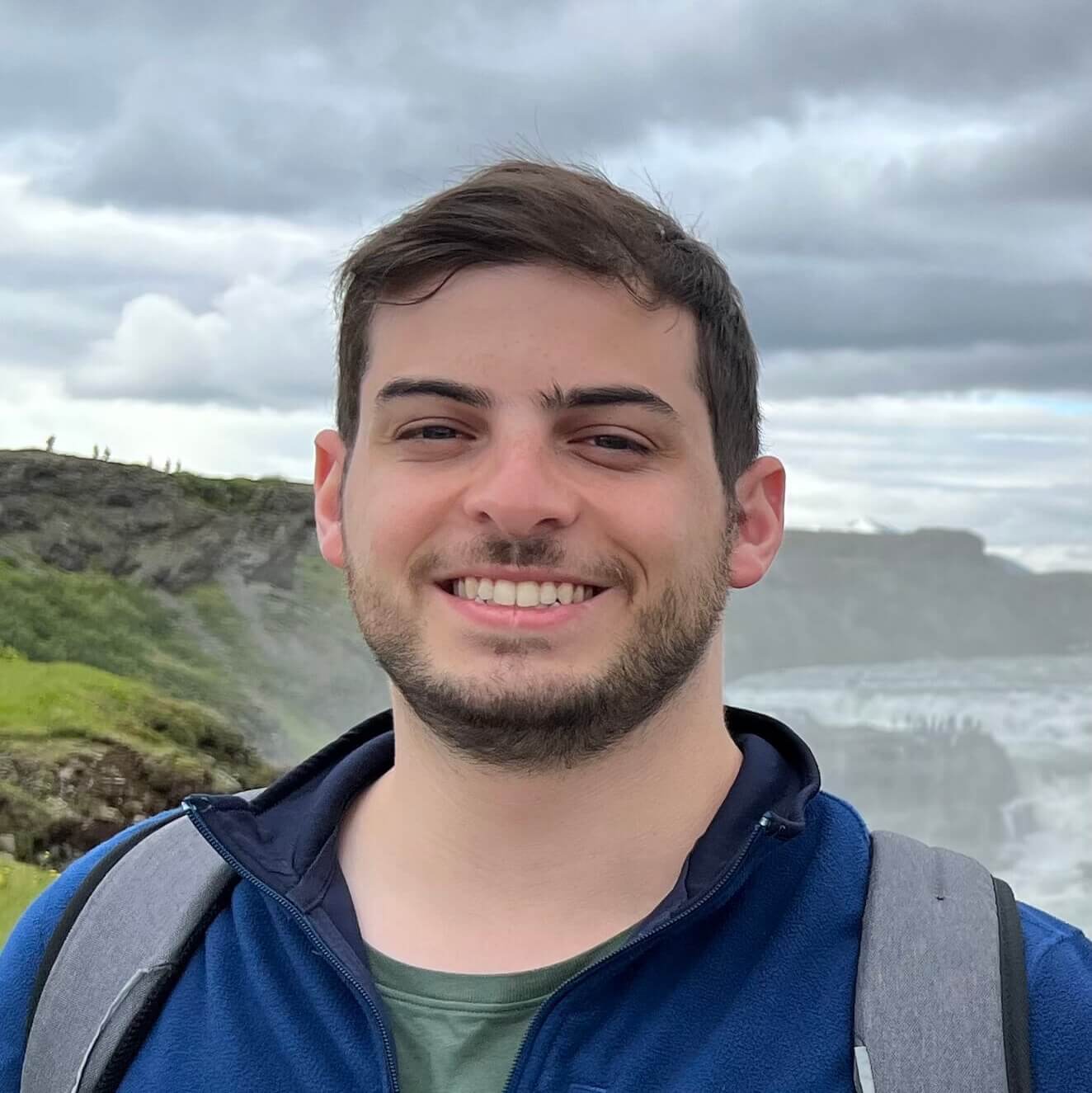
Jonathan Kahana is a Researcher in the Computer Science department at the Hebrew University of Jerusalem . His research spans Machine Learning and Computer Vision , focusing on Weight Space Learning , Representation Learning , and Zero-Shot Model Search . He develops methods for probing neural network weights to extract information, including ProbeGen and Spectral DeTuning . His recent work includes mapping model weights into shared embedding spaces (ProbeX), recovering pre-fine-tuning weights of generative models, and improving zero-shot labeling with distribution priors. He contributes to open-source implementations, such as the ProbeGen GitHub repository. Research trends from his publications emphasize: Weight space analysis (ProbeGen, DSiRe) Model retrieval and classification (ProbeLog, Model Atlas) Disentanglement and invariance (Contrastive Objective, Red PANDA) Efficiency in probing (30-1,000x FLOPs reduction in ProbeGen) His work has been accepted at top-tier conferences including ICML , ICLR , and ECCV , with arXiv preprints covering topics like dataset size recovery and model tree analysis.
Ido Dagan is a Professor at the Department of Computer Science at Bar-Ilan University , Israel, and founder of the Natural Language Processing (NLP) Lab . He is a Fellow of the Association for Computational Linguistics and served as ACL President (2010) and Executive Committee member (2008–2011), leading the establishment of Transactions of the Association for Computational Linguistics . Dagan’s research focuses on applied semantic processing , including textual entailment , natural semantic representation , multi-text information consolidation , and interactive text summarization . His recent work addresses attributable text generation , summary-source alignment , and cross-sentence argument detection , with applications to fact verification and hallucination detection. Key trends in his publications include cross-document coreference resolution , question-answering systems , semantic parsing , and interactive summarization . Notable collaborative projects involve UI trajectory analysis and long-context QA with Arman Cohan and Jacob Goldberger. Scientific Awards Fellow, Association for Computational Linguistics (ACL) President, ACL (2010) Executive Committee, ACL (2008–2011) Advising & Collaborations Dagan has supervised numerous PhD, MSc, and postdoctoral students since 1997, including Shachar Mirkin and Shmuel Amar . He collaborates with researchers like Ori Ernst , Avi Caciularu , and Aviv Slobodkin , with grants from institutions like IBM Haifa Scientific Center and AT&T Bell Laboratories .
Oren Weimann is a Professor in the Department of Computer Science at the University of Haifa, Faculty of Natural Sciences. His research lies at the intersection of theoretical computer science, algorithm design, and data structures, with a strong focus on planar graphs, combinatorial pattern matching, and fine-grained complexity. He has published extensively in top-tier venues such as STOC, SODA, ICALP, PODC, and ESA. Education: Ph.D., Massachusetts Institute of Technology (MIT), 2005–2009. Advisor: Erik Demaine. Dissertation: "Accelerating Dynamic Programming" Postdoc, Weizmann Institute of Science, 2009–2011. Host: David Peleg M.Sc., University of Haifa, 2004–2005. Advisor: Gad Landau. Dissertation: "Using PQ trees for Comparative Genomics" B.A., Technion – Israel Institute of Technology, 1999–2002 Oren Weimann's research centers on the design and analysis of efficient algorithms, particularly for planar and structured graphs. His work explores fundamental problems such as shortest paths, distance oracles, fault tolerance, edit distance, and pattern matching. He investigates both upper and lower bounds, often pushing the limits of what is computationally feasible under fine-grained complexity assumptions. His contributions include optimal labeling schemes, compressed data structures, and breakthroughs in dynamic and distributed graph algorithms. His recent publications reveal a consistent trend in developing highly efficient algorithms for planar graphs, with a focus on distance computation, fault tolerance, and compression. Keywords across these works include planar graphs, dynamic programming, string matching, and conditional lower bounds, reflecting a deep integration of algorithmic techniques and complexity theory. He frequently collaborates with leading researchers such as Shay Mozes, Paweł Gawrychowski, and Philip Bille. Scientific Awards: Best Paper Award, CPM 2007 Best Paper Award, ICALP 2020 (mentioned in context of work) Oren Weimann has advised numerous PhD and Master’s students, including Yaseen Abd-Elhaleem, Nathan Wallheimer, Aviv Bar-natan, and Shon Feller, whose dissertations have led to publications in major conferences. He has also mentored several postdoctoral researchers such as Shay Golan, Itai Boneh, and Panagiotis Charalampopoulos. His work has been supported by competitive research grants, though specific grant titles are not listed in the text. He has served on the program committees of key conferences including SODA, ICALP, CPM, ESA, and SPIRE, demonstrating active leadership in the theoretical computer science community. He is associated with a vibrant research group focused on algorithms and data structures, likely involving collaboration with students and postdocs on projects related to graph algorithms, string processing, and complexity. While no formal lab name is mentioned, his collaborative output suggests a strong, productive research team at the University of Haifa.
Dr. Benjamin Wilck is a postdoctoral Research Fellow at the Mandel School for Advanced Studies in the Humanities, Hebrew University of Jerusalem, and a graduate of the Humboldt-Universität zu Berlin (PhD 2022) and Princeton University. His work bridges ancient Greek philosophy, history/philosophy of mathematics, and digital medical humanities, with a focus on schizophrenia research through computational linguistics. He collaborates with Charité Medical University Berlin. His research explores the philosophical underpinnings of Euclid’s Elements , dialectical methods in Aristotle, and linguistic markers in psychiatric conditions. Recent work analyzes Robert Walser’s texts to identify schizophrenia through lexical diversity and syntactic complexity. Scientific Awards: De Gruyter Trends in Classics Poster Prize (2019) Finalist for the bologna.lab Teaching Award (2021) Karl-Max-Schneider Foundation Award (2014) His publications span metaphysical analysis of mathematical objects, Pyrrhonian scepticism, and interdisciplinary psychiatry. He co-organizes international conferences on mathematical cultures and science communication.
Dr. Renana Keydar is an Associate Professor of Law and Digital Humanities at The Hebrew University of Jerusalem, where she serves as Academic Director of the Center for Digital Humanities (DH@HU) and heads the Alfred Landecker Lab for Computational Analysis of Holocaust Testimonies. She holds additional affiliations as a 2024-25 Fellow at Brandeis University's Institute for Advanced Israel Studies and is a core member of Edut 710, Israel's largest civil initiative documenting survivor testimonies of the October 7, 2023 attacks. Her academic credentials include a PhD in Comparative Literature from Stanford University (2015), and magna cum laude degrees in Law and Political Science from Tel Aviv University (2003). Prior to academia, she served as an advocate in Israel's State Attorney's Office - High Court of Justice Department. Keydar's pioneering research bridges computational methods with humanities scholarship, focusing on: Developing AI models for analyzing mass atrocity testimonies using NLP and machine learning Creating trauma-informed digital archives for Holocaust and contemporary crisis documentation Computational analysis of legal narratives in human rights law and international courts Ethical frameworks for applying AI to sensitive historical materials Her scholarly output demonstrates consistent focus on computational jurisprudence, with recent works examining algorithmic analysis of UN human rights recommendations, judicial attitudes toward sexual violence victims, and computational models for Holocaust testimony. Keydar has received the prestigious Alon Fellowship for outstanding young researchers and leads multiple major initiatives: Designing Edut 710's AI-powered testimony platform documenting 1,600+ accounts from October 7 attacks Developing 'distant listening' computational methods for Holocaust testimonies Directing the Future of the Past research group funded by Israel's Ministry of Science
Eran Amsalem is a tenured Senior Lecturer in the Department of Communication and Journalism at the Hebrew University of Jerusalem. His research examines how mass and interpersonal communication influence political attitudes, alongside analyzing the communication patterns, decision-making processes, and personality traits of political elites. He employs experimental designs, elite and general population surveys, meta-analyses, and computational text analysis in his studies. Ph.D. in Communication and Journalism (joint degree), Hebrew University of Jerusalem & University of Antwerp, 2019 Visiting Postdoctoral Scholar, Stanford University's Department of Political Science (2018–2019) His methodological toolkit spans quantitative approaches, including experimental designs, meta-analyses, and computational text analysis techniques applied to both elite and public political discourse.
Oren Tsur is an Assistant Professor in the Department of Software & Information Systems Engineering (SISE) at Ben Gurion University of the Negev, where he heads the NLP and Social Dynamics Lab (NAS-LAB) and directs the Center for the Study of Digital Politics and Strategy (DPS@BGU). He joined the university in September 2017 and teaches core courses including Natural Language Processing, Social Network Analysis, and Introduction to NLP at both undergraduate and graduate levels. His research focuses on computational modeling of social dynamics through language and network analysis. Key interests include social contagion, language evolution, political network analysis, and sentiment analysis. He employs methodologies from exponential random graph models (ERGM), machine learning, and natural language processing to study how language shapes and is shaped by social interactions, particularly in political contexts and online communities. His publication trends reveal strong interdisciplinary work spanning computational linguistics, political science, and social network analysis. Recent research emphasizes hate speech detection in platforms like Parler, suicide risk identification in counseling services, and modeling semantic drift in emoji usage. His work consistently bridges technical NLP innovations with real-world social applications, particularly in political discourse and community dynamics. NSF Political Network Fellowship (2014, 2015, 2016) TIME Magazine's 50 Best Inventions of 2010 for sarcasm detection research Work featured in Science Magazine, BBC, The Atlantic, CNET, and Politico Best Paper award at HICSS 2020 Tsur actively mentors prospective students through his lab, emphasizing excellence in candidates through academic transcripts and research interest statements. His grants include multiple NSF Political Network Fellowships supporting computational social science research. He serves as Director of BGU's Cyber Politics and Policy Research Center and organizes major NLP workshops including the Natural Language Processing and Computational Social Science series at top conferences. His NAS-LAB focuses on data-driven modeling of social coordination and influence, with applications in sentiment analysis, dialogue systems, and digital forensics. The lab maintains strong industry connections through past collaborations with IBM Research (Watson Debater project), Yahoo! Research, and startup consulting.
Associate Professor Tamir Hazan is a faculty member at Technion - Israel Institute of Technology, where he joined in 2015. His research focuses on theoretical and practical aspects of machine learning, with applications spanning computer vision, natural language processing, and computational biology. His work bridges mathematical foundations with real-world problem solving in complex systems. Professor Hazan received his Ph.D. from the Hebrew University in 2009. His academic trajectory has established him as a leading researcher in machine learning theory and its applications, with a particular emphasis on developing mathematically rigorous approaches to modern AI challenges. Professor Hazan's research centers on mathematically founded solutions to problems demonstrating non-traditional statistical behavior. His work encompasses perturbation models for efficient learning of high-dimensional statistics, deep learning of infinite networks, and primal-dual optimization for high-dimensional inference problems. His research program spans three major interconnected areas: attention models that improve prediction interpretability, perturbation frameworks that integrate optimization and sampling through extreme value statistics, and convex duality approaches to message-passing in graphical models. His work demonstrates both theoretical depth and practical relevance across multiple domains. Analysis of Professor Hazan's recent publications reveals an evolving research trajectory with increasing emphasis on interpretable machine learning, causal modeling, and applications in medical imaging and behavioral science. His work consistently bridges theoretical foundations with practical implementations, with recent publications showing strong connections between perturbation theory, attention mechanisms, and optimization frameworks. The interdisciplinary nature of his research is evident in applications ranging from pedestrian navigation using smartphone sensors to video-text matching systems and medical image analysis. Professor Hazan has mentored numerous students throughout his career, including: Alex Schwing, now Assistant Professor at UIUC Alon Cohen, now Associate Professor at Tel Aviv University Idan Schwartz, currently Postdoc at Tel Aviv University Current Ph.D. students: Guy Lorberbom, Itai Gat, and Hedda Cohen Multiple M.Sc. students including Adi Manos, Ram Yazdi, and others Professor Hazan's research group maintains an active program with several key focus areas: Attention models for interpretable and improved prediction processes in visual question answering and multimodal applications Perturbation models that enable efficient statistical reasoning in complex systems with exponential configuration spaces Markov random fields, convex duality, and message-passing algorithms for structured prediction and distributed computing
Ely Porat is an Associate Professor at the Department of Computer Science, Bar-Ilan University, where he has been since 2000. He holds visiting professorships at the University of Michigan and Tel Aviv University, and has worked at Google (Mountain View in 2007 and Tel Aviv in 2011). His academic contributions include redefining the BSc degree in Computer Science at Bar-Ilan University and significant involvement in teaching committees. Research Interests: Algorithms and Data Structures Streaming Algorithms Pattern Matching Coding Theory Compressed Sensing His work focuses on advancing efficient algorithms for data processing, with applications in information retrieval, signal processing, and bioinformatics. He has organized multiple conferences including Stringology (2009–2011), ICALP2011GT, and UM Coding. He has served on program committees for CPM, SPIRE, and ESA. Advising & Collaboration: Current advisees include Ariel Shiftan, Guy Feigenblat, and others. Former students include Ohad Lipsky and Klim Efremenko. He hosts short-term researchers from abroad and collaborates with institutions like Google and Weizmann Institute. Publications span FOCS , STOC , ICALP , and other top venues, emphasizing theoretical foundations and practical algorithmic solutions.
Amihood Amir is a Professor of Computer Science at the Department of Computer Science within the Faculty of Exact Sciences at Bar-Ilan University, Israel. His research focuses on algorithm design, pattern matching, knowledge discovery, real-time systems, and computational biology. He has served on program committees for conferences including STOC, CPM, WABI, and SPIRE, among others. Education: No explicit educational details provided in the text. His research interests emphasize advanced algorithmic techniques with applications in multidimensional pattern matching and computational biology. He has contributed to knowledge discovery algorithms and real-time system optimizations. Teaching responsibilities include courses such as Pattern Matching Algorithms (CS 663), Algorithms II (89-332), Data Structures (89-120), and Analysis of Algorithms (89-974-01). He has also presented invited addresses at conferences and maintained active participation in academic committees. No specific grants or lab affiliations are detailed in the provided texts.
Noam Nisan is a Full Professor at the School of Computer Science and Engineering at the Hebrew University of Jerusalem, Israel. He is a member of the Center for the Study of Rationality and the Israeli Academy of Sciences and Humanities. He also serves on the Board of Directors of the National Library of Israel and chairs its Digital Strategy Subcommittee. Additionally, he is a Principal Researcher at Starkware, focusing on blockchain technologies. His research bridges Computer Science, Game Theory, and Economics, particularly in algorithmic game theory and electronic markets. Education: Ph.D. in Computer Science, University of California, Berkeley (1988), advised by Richard Karp B.Sc. summa cum laude in Mathematics and Computer Science, Hebrew University (1984) Research Interests: Algorithmic Game Theory, Economics and Computation, Electronic Markets, Auction Design, and Mechanism Design . His work explores strategic interactions in computational systems, including market equilibria, fair division, and decentralized resource allocation. Key Contributions: Co-authored foundational texts like Algorithmic Game Theory and Elements of Computing Systems Pioneered work on pseudorandom generators, communication complexity, and secure multi-party computation Grants & Awards: Holder of major grants (e.g., ERC, Binational Science Foundation) and honors including the Gödel Prize (2012), Knuth Award (2015), and STOC Test of Time Award (2022). Service: Extensive editorial roles (e.g., Games and Economic Behavior ), program committee leadership (EC, FOCS), and academic governance (Dean of School of Computer Science, 2018-2021). Co-founded the Algorithmic Game Theory Blog (Turing’s Invisible Hand). Labs/Teams: Active in Starkware’s research on zero-knowledge proofs and blockchain scalability, and collaborates with the Center for Rationality on behavioral algorithmic mechanisms.
Prof. Yonatan Loewenstein is a Professor in the Department of Neurobiology at the Hebrew University of Jerusalem. His research focuses on computational neuroscience and cognition, particularly the neural mechanisms underlying decision-making, reinforcement learning, and sensory processing. He leads an interdisciplinary laboratory exploring how learning principles govern behaviors in both biological and artificial systems. Key contributions include studies on somatosensory cortex organization, neuronal homeostasis, and human-machine synergy in decision-making. He co-authored the book Computational Models in Cognition , blending theoretical frameworks with empirical findings. Education details are not explicitly provided in the text, but his affiliations suggest advanced training in neurobiology and computational sciences. Research interests span decision-making biases, reinforcement learning dynamics, and the interplay between brain structure and function. His recent work addresses topics like idiosyncratic choice stability, value modulation in impulsivity, and abstract reasoning in neural networks. Publications highlight collaborations in fields ranging from cognitive dissonance to schizophrenia diagnostics. While no specific awards are listed, his involvement in high-impact journals and interdisciplinary projects underscores his academic contributions. The lab’s work is housed in the Goodman Faculty building, with active group members and experimental facilities.