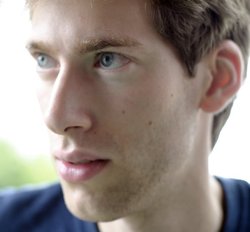
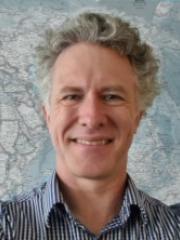
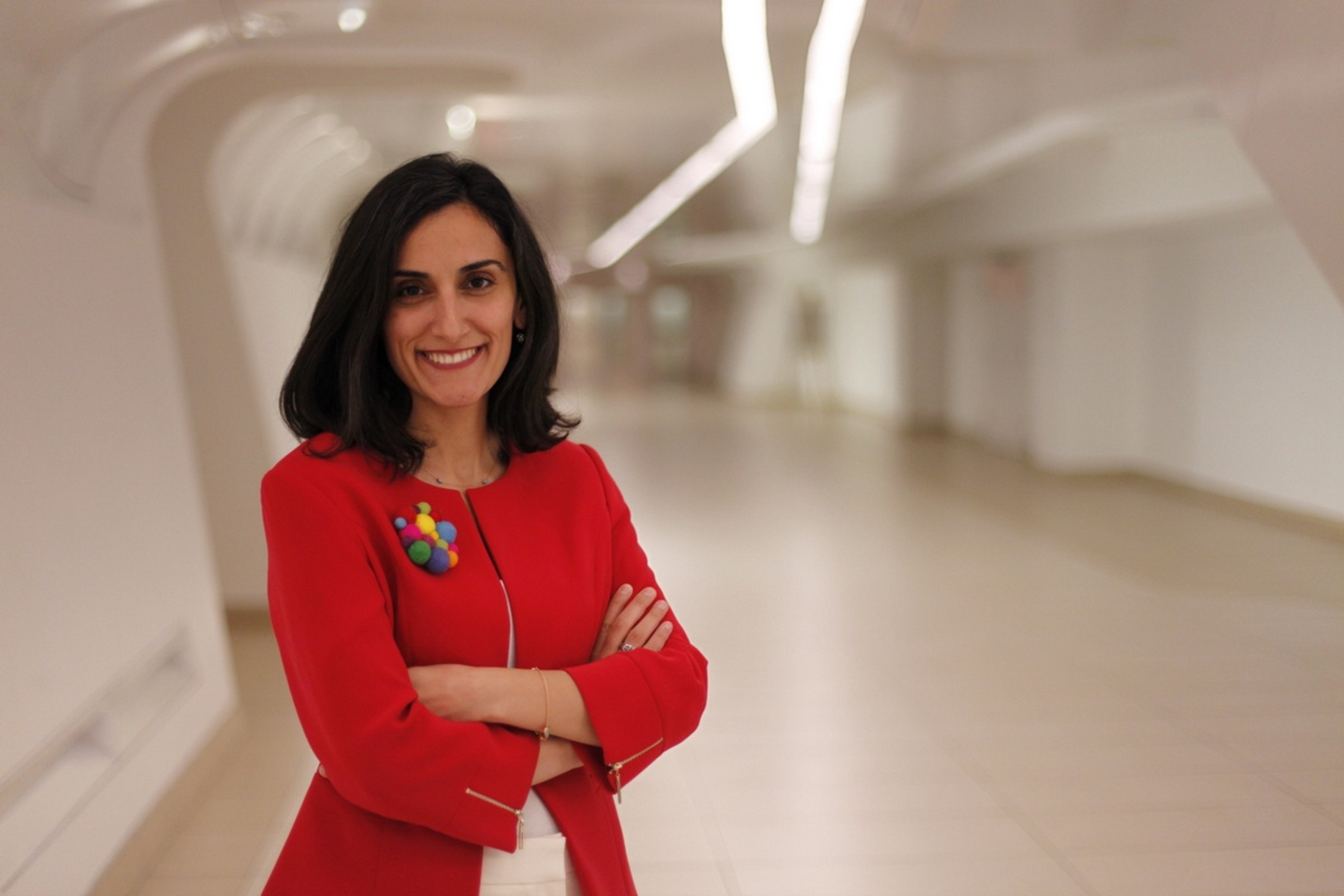
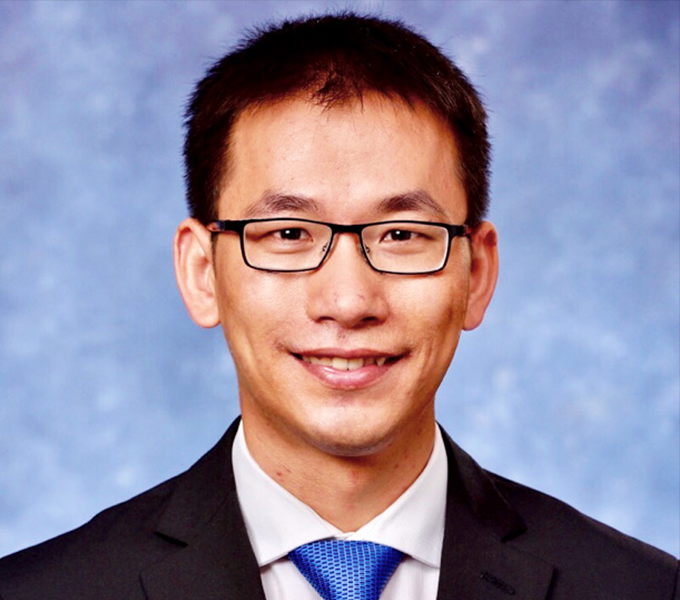
David Martens is a Professor of Data Science at the University of Antwerp , where he directs the Applied Data Mining Research Group within the Faculty of Business and Economics . He also serves as Chair of the Department of Engineering Management and Director of the Antwerp Center on Responsible AI . His academic work spans data mining , interpretable machine learning , and the societal impact of AI . PhD in Applied Economic Sciences (KU Leuven, 2008) Director, Antwerp Center on Responsible AI Chair, Department of Engineering Management Martens' research focuses on responsible AI and data ethics , with applications in finance, public policy, and behavioral analysis. His recent publications emphasize counterfactual explanations , LLM interpretability , and privacy implications in AI systems. His articles reveal trends in Explainable AI (XAI) , including narrative-driven explanations , graph neural networks , and ethical challenges like monetization risks and algorithmic bias. Keywords span Computer Science , Artificial Intelligence , and Behavioral Data . Martens is a leading voice in data science ethics , authoring the book Data Science Ethics: Concepts, Techniques, and Cautionary Tales (Oxford University Press, 2022). He combines academic rigor with industry experience, having consulted for banks, telecom firms, and startups in fraud detection and digital advertising .
Mohamed Amara is a full-time Professor at the University of Pau and the Pays de l'Adour (UPPA) since 1996, affiliated with the Laboratory of Mathematics and their Applications (CNRS-UMR 5142). He served as its director (1999-2007), Director of the Doctoral School of Exact Sciences (ED211, 2007-2008), and UPPA's Scientific Council Vice-President (2008-2012). He has been UPPA's President since 2012 (re-elected until 2020). Education: Mathematics from University of Algiers (1973), Pierre and Marie Curie University (DEA 1974, Doctorate 1978, State Doctorate 1983) Academic Roles: Research Associate at Ecole Polytechnique (1978-1982), Algerian Electricity and Gas Company (1983-1992), Professor in Algiers (1988-1994), Tunis (1994-1995), and Associate Professor at Paris 6 (1995-1996) His research focuses on numerical simulation of partial differential equations for environmental/energy applications, including mechanics in porous media (petroleum engineering, geoscience), fluid mechanics (aerodynamics, estuarine hydrodynamics), non-Newtonian flows, and wave propagation. Articles highlight expertise in discontinuous Galerkin methods, Helmholtz problems, finite element discretization, and multiphysics systems. He managed 20 doctoral theses and led national mathematics programs at ANR (2007-2011). He chairs the Cocktail association for higher education IT systems and collaborates with INRIA's Magique 3D team (since 2006).
Professor Daniel Rueckert is a leading academic in Artificial Intelligence and Medical Imaging, holding dual positions at Imperial College London (as Professor of Visual Information Processing) and Technical University of Munich (Alexander von Humboldt Professor for AI in Medicine and Healthcare). He obtained his MSc from Technical University Berlin (1993) and PhD from Imperial College London (1997), followed by postdoctoral work at King’s College London. At Imperial, he led the Department of Computing (2016–2020) and founded the Biomedical Image Analysis group. His research focuses on AI-driven medical image analysis, including algorithms for image reconstruction, registration, and clinical decision support. His research interests span AI applications in healthcare, machine learning for medical imaging, and computational methods for clinical diagnostics. Notable contributions include over 500 publications and 60+ PhD graduates, with key works in federated learning, cardiac motion analysis, and biomarker development. Awards include the Leibniz Prize (2025), Royal Academy of Engineering Fellowship (2015), and multiple ERC grants. He leads the BioMedIA research group and is an editorial board member of Medical Image Analysis . Recent publications highlight advancements in AI-driven medical imaging, such as secure federated learning frameworks and deep learning models for disease prediction. His work bridges academic and industrial sectors through initiatives like IXICO, an Imperial spin-out. Current affiliations include roles at both Imperial and TUM, emphasizing interdisciplinary collaboration in healthcare technology. Advising and grants: Supervised over 60 PhD students and 40 post-docs. Secured grants including ERC Synergy (2013) and ERC Advanced (2020). Active in labs focused on biomedical image computing and AI in healthcare systems. Collaborative efforts include the BioMedIA group and TUM’s AI initiatives. Labs/teams: Leads the Biomedical Image Analysis group at Imperial and the TUM AI in Medicine team. Collaborates extensively on projects like cardiac imaging analysis and federated learning for healthcare.
Elaine Shi is a Professor with a joint appointment in the Department of Computer Science (CSD) and the Department of Electrical and Computer Engineering (ECE) at Carnegie Mellon University (CMU). She is also an Adjunct Professor of Computer Science at the University of Maryland. Her research focuses on cryptography, security, mechanism design, algorithms, blockchains, and programming languages. Shi co-founded Oblivious Labs, Inc., and her work on Oblivious RAM and differentially private algorithms has been adopted by major companies like Signal, Meta, and Google. Affiliations: CMU’s Crypto Group CMU’s Cylab Crypto Seminar Series (co-founder) Research Interests: Cryptography and Security: Focused on oblivious computation, private information retrieval, and secure protocols. Blockchain Technology: Including consensus mechanisms, transaction fee design, and decentralized systems. Privacy-Preserving Algorithms: Such as differential privacy and secure multi-party computation. Algorithm Design: With applications to parallel computing and efficient data structures. Awards: Packard Fellow Sloan Fellow ACM Fellow IACR Fellow Advising & Grants: Current advisees include PhD students like Benjamin Chan, Yanyi Liu, Mingxun Zhou, and Nikhil Vanjani. Past students have taken academic roles at institutions like UVA, University of Michigan, and Duke University. Grants supported research in secure computation, blockchain mechanisms, and privacy-preserving technologies. Labs & Teams: Co-founder of Oblivious Labs, Inc. Leading CMU’s Crypto Group and Cylab Crypto Seminar Series.
Aram Harrow is a Professor of Physics at the Massachusetts Institute of Technology (MIT) , affiliated with the MIT Center for Theoretical Physics and MIT Center for Quantum Engineering . He focuses on quantum information science and quantum algorithms , with additional interests in representation theory and optimization . His recent work explores quantum computing applications in chemical physics and statistical mechanics . Undergraduate and graduate degrees in Physics at MIT Faculty positions: MIT (2013-present), University of Washington (2010-12), University of Bristol (2005-10) Research Interests: His work bridges quantum information theory and many-body physics , including: Quantum algorithm design for chemistry and optimization Quantum circuit complexity and t-designs Entanglement dynamics in quantum systems Quantum-classical hybrid computing models Key Publications: Recent articles demonstrate quantum speedups for biomolecular free energy calculations , Hamiltonian simulation , and jet clustering algorithms . His research combines quantum complexity theory with practical implementations on near-term quantum devices. Scientific Awards: 2023 Simons Investigator 2018 APS Bennett Award 2017 IEEE Best Paper Award 2016 Kavli Frontiers Fellow Mentorship: He advises current PhD students Shankar Balasubramanian , Angus Lowe , and Norah Tan , with 12 former advisees including Anand Natarajan and Saeed Mehraban . His 2026 recruitment seeks one new graduate student.
Henrik Boström is a Professor of Computer Science specializing in Data Science Systems at the Division of Software and Computer Systems, KTH Royal Institute of Technology. His research focuses on trustworthy machine learning , with emphasis on conformal prediction (for confidence-calibrated predictions) and explainable AI . He is the developer of Python packages crepes (conformal classifiers/regressors) and xrf (explainable random forests). His primary research domains include: Developing robust methods for uncertainty quantification in predictive models Creating interpretable machine learning frameworks Optimizing ensemble techniques for high-dimensional data Applying ML to healthcare informatics and industrial diagnostics Analysis of his recent publications reveals strong emphasis on: (1) advancing conformal prediction theory for trustworthy AI, (2) enhancing interpretability of complex models like random forests and GNNs, and (3) developing efficient algorithms for uncertainty-aware learning in domains including healthcare, graph data, and high-dimensional regression. He serves as examiner for multiple degree projects and teaches courses including Programming for Data Science (ID2214) and Research Methodology and Scientific Writing (II2202) . He leads development of open-source tools for conformal prediction and model interpretation.
Roghayeh (Leila) Barmaki is an Assistant Professor in the Department of Computer & Information Sciences at the University of Delaware, where she leads the Human-Computer Interaction Lab (HCI@UD) and is affiliated with the Data Science Institute. Her research centers on Human-Centered Computing with applications in healthcare and medical education. Education: Postdoctoral Fellowship (2018): Johns Hopkins University, Laboratory for Computational Sensing and Robotics, Whiting School of Engineering PhD (2016): University of Central Florida, Computer Science MSc (2012): Iran University of Science and Technology, Artificial Intelligence BSc: Kharazmi University, Software Engineering Her research spans Multimodal Machine Learning, Virtual and Augmented Reality, and Embodied Interface Design, focusing on innovative applications in healthcare delivery and science education. She teaches core courses including Introduction to Human-Computer Interaction (CISC 482/682) and Introduction to Data Mining (CISC 483/683), emphasizing hands-on project development and theoretical foundations. Dr. Barmaki directs the HCI@UD laboratory, which develops cutting-edge interfaces for medical training and patient care through interdisciplinary collaboration between computer science, engineering, and healthcare domains.
Roberto Manduchi is a Professor of Computer Science and Engineering at the University of California, Santa Cruz, within the Baskin School of Engineering. His primary affiliation is with the Computer Science and Engineering department where he leads research in assistive technology for visual impairments. He holds a Dottorato di ricerca in Electrical Engineering from the University of Padova, Italy, and previously worked at Apple and NASA JPL before joining UCSC in 2001. His research focuses on mobile computer vision, inertial sensors, and location-aware systems to enhance spatial awareness and information access for blind and low-vision individuals. Key research areas include indoor navigation systems, screen magnification for low-vision readers, obstacle detection using augmented reality, and text accessibility assessment through specialized OCR pipelines. His work bridges computer vision, human-computer interaction, and accessibility design. Analysis of his recent publications (2022-2025) reveals strong emphasis on inertial-based indoor navigation (e.g., PALMS localization system, backtracking algorithms), screen magnification usability studies, and novel approaches to scene text access for blind users. His research consistently targets practical applications for visual impairment, with significant contributions to pedestrian dead reckoning, magnetic signature localization, and gaze-contingent interfaces. Manduchi serves on the scientific advisory board of Aira and is a board member of the Vista Center for the Blind and Visually Impaired. He leads the UCSC Computer Vision Lab where his team develops accessible computing solutions. His work includes both theoretical contributions to computer vision and tangible assistive applications, with recent projects focusing on smartphone-based inertial odometry, multi-scale tactile maps, and real-time obstacle cueing systems.
James Glass is a Senior Research Scientist at the Massachusetts Institute of Technology (MIT) and heads the Spoken Language Systems Group within MIT's Computer Science and Artificial Intelligence Laboratory (CSAIL). He is also affiliated with the Harvard-MIT Division of Health Sciences and Technology. His research spans automatic speech recognition, multimodal learning, and spoken language understanding, with applications in healthcare and video analysis. Education: SM and PhD in Electrical Engineering and Computer Science from MIT His work focuses on paralinguistic speech analysis, health markers in speech, and the intersection of speech and natural language processing. Recent trends emphasize audio-visual alignment, recursive reasoning, and AI applications in cognitive disorder diagnosis. Scientific awards include IEEE Fellow, ISCA Fellow, and Associate Editor for IEEE Transactions on Pattern Analysis and Machine Intelligence. His group explores unsupervised learning, speaker verification, and social text analysis. James leads the Spoken Language Systems Group at CSAIL, collaborating with institutions like IBM and Harvard-MIT Division of Health Sciences and Technology. His research integrates vision-language models, neural audio codecs, and self-supervised frameworks.
Prof. Dr.-Ing. Rüdiger Daub serves as Professor and Chair of Production Engineering and Energy Storage Systems at the Technical University of Munich (TUM), operating within the Department of Mechanical Engineering. His leadership encompasses research direction, academic supervision, and strategic development of battery production technologies at TUM's Garching campus (Boltzmannstr. 15), with active industry collaborations driving innovation in sustainable manufacturing. Daub's research program pioneers advanced production methodologies for lithium-ion and solid-state batteries, focusing on electrode manufacturing, electrolyte filling, and cell assembly processes. His work investigates critical parameter interdependencies affecting battery safety and performance, developing inline monitoring systems and digital twin technologies for real-time process optimization. Key contributions include moisture control in electrode production, electrochemo-mechanical characterization of solid-state systems, and robotics solutions for deformable object assembly, all integrated with machine learning for quality assurance in industrial settings. Analysis of his 2023-2025 publications reveals a dominant research trajectory toward solving production bottlenecks in next-generation energy storage. The work demonstrates increasing integration of computational modeling with empirical validation, particularly in solid-state battery manufacturing and high-voltage electrolyte systems. A notable trend is the cross-pollination of robotics, computer vision, and uncertainty quantification techniques to address complex assembly challenges and distribution shifts in quality monitoring, reflecting industry's urgent need for adaptable, data-driven production systems. Leading TUM's specialized laboratories for battery cell production, Daub's team maintains comprehensive facilities for electrode calendering, electrolyte filling, and cell assembly with integrated tracking and tracing capabilities. The research infrastructure supports collaborative projects with automotive OEMs and battery manufacturers to develop scalable production processes, emphasizing environmental sustainability through water-based electrode production and footprint optimization. Current initiatives focus on digital factory modeling and prelithiation technologies for next-generation battery systems.
Professor Guy Wallis is a Professor and Director of Research at the School of Human Movement and Nutrition Sciences, Faculty of Health, Medicine and Behavioural Sciences at the University of Queensland. He is also an Affiliate of the Centre for Sensorimotor Performance. His work bridges visual neuroscience, computational modeling, and applied human factors research, with significant contributions to understanding visual recognition and visuomotor behavior. Education: Bachelor (Honours) of Engineering in Electrical and Electronic Engineering from Imperial College London PhD in Visual Neuroscience from University of Oxford, UK Prof. Wallis's research program combines computational modeling with behavioral studies, many conducted in computer-controlled virtual environments. His work spans visual neuroscience, object recognition, visuomotor control, and simulator-based training. He has made significant theoretical contributions to understanding how visual recognition is achieved in biological systems and how everyday visuomotor tasks are regulated, challenging existing paradigms and offering new insights. His recent publications reveal a strong focus on virtual reality applications, visual-motor integration challenges, and cross-species cognitive studies. There's a clear trend toward investigating how virtual environments can be optimized for training and assessment, with particular attention to visual perception limitations and how humans adapt to these environments across diverse contexts from surgical training to aviation. Scientific Awards and Recognitions: Elected Fellow of the Queensland Academy of Arts and Sciences (2022) ARC Medical Research Advisory Group (2022-2024) ARC College of Experts (2019-2021) CSIRO CSS Human Research Ethics Committee member (2020-2022) UQ Health and Behavioural Sciences Faculty, HDR Supervision Award (2018) ARC Future Fellowship (2011-2014) ARC QEII Fellowship (2003-2007) UQ Postdoctoral Fellowship (2001-2003) Prof. Wallis has successfully secured funding from major organizations including the Australian Research Council, the Human Frontier Science Program, and the Wellcome Trust. His industry partnerships span diverse sectors such as construction training, mining, healthcare, and aerospace. His research has led to the development of novel training programs for health professionals, impacted the design of man-machine interfaces for mining equipment, and informed the design parameters for pilot training systems. As Director of Research, he oversees the research direction of the School of Human Movement and Nutrition Sciences, fostering interdisciplinary collaborations and supporting early-career researchers through his leadership in the Centre for Sensorimotor Performance.
Dr. Md Manjurul Ahsan serves as a Research Assistant Professor in the Department of Industrial & Systems Engineering at the University of Oklahoma, where he develops AI-driven solutions for healthcare diagnostics and advanced manufacturing optimization. His work bridges theoretical AI advancements with practical industrial and medical applications. Education: Ph.D. in Industrial and Systems Engineering, University of Oklahoma M.S. in Industrial Engineering, Lamar University B.S. in Industrial and Production Engineering, Shahjalal University of Science and Technology Research Focus: Dr. Ahsan specializes in Artificial Intelligence with technical depth in Machine Learning , Deep Learning , and Computer Vision to solve critical challenges in healthcare diagnostics and additive manufacturing . His research emphasizes Explainable AI to enhance model trustworthiness and deployment efficiency across Cyber-Physical-Social Systems, with significant contributions to Aerospace and Defense applications. Publication Trends: Recent work (2023-2025) reveals a strategic expansion from core manufacturing applications into medical AI (diffusion models for diagnostics), cultural preservation (NLP for Dravidian languages), and geopolitical AI analysis. His publications consistently address data imbalance challenges while advancing digital twin integration in quality control systems. Scientific Recognition: GCOE Dissertation Excellence Award (2023) International Student Scholarship (2022) Outstanding Academic Achievement in Engineering (2022) IEEE IEMCON Best Paper Award (2020) Netti Vincent Boggs Engineering Excellence Award (2020) Research Leadership: As director of the Sooner Additive Manufacturing Laboratory , Dr. Ahsan leads cross-disciplinary teams developing real-time monitoring systems using FARO arms and CMM metrology. His postdoctoral work at Northwestern University (2023-2024) advanced AI deployment frameworks, resulting in 60+ peer-reviewed publications with multiple papers ranking in engineering's top 1% for citations.
Dr. Canan Dagdeviren is an Associate Professor and LG Career Development Professor of Media Arts and Sciences at the Massachusetts Institute of Technology, where she directs the Conformable Decoders research group at the MIT Media Lab. She joined the MIT faculty in January 2017 and has established herself as a leading innovator in conformable biomedical devices. Education: Ph.D. in Materials Science and Engineering, University of Illinois at Urbana-Champaign M.Sc. in Materials Science and Engineering, Sabanci University, Istanbul, Turkey B.Sc. in Physics Engineering, Hacettepe University, Ankara, Turkey Dr. Dagdeviren's research focuses on creating mechanically adaptive electromechanical systems that can intimately integrate with biological surfaces for sensing, actuation, and energy harvesting. She believes vital information from nature and the human body is 'coded' in various physical patterns, and her work develops 'conformable decoders' to translate these patterns into beneficial signals and energy. Her research spans wearable and implantable medical devices, with particular emphasis on piezoelectric systems that can be twisted, folded, stretched, wrapped, and implanted onto curvilinear surfaces of the human body without damage or significant alteration in performance. Analysis of her recent publications reveals a strong focus on medical applications of conformable electronics, particularly in ultrasound technology for breast cancer detection, deep brain stimulation, and bladder monitoring. Her work consistently bridges materials science, electrical engineering, and medical applications, with increasing emphasis on practical healthcare solutions that can be deployed outside clinical settings. Major Scientific Awards: NSF CAREER Award (2021) 3M Non-Tenured Faculty Award (2021) MIT Technology Review's Top 35 Innovators Under 35 (2015) Forbes' Top 30 Under 30 in Science (2015) National Academy of Engineering US Frontiers of Engineering Symposium participant (2019) Frank E. Perkins Award for Excellence in Graduate Advising Aziz Sancar Science Award Dr. Dagdeviren actively mentors graduate students and has received recognition for her advising excellence. Her research is supported by significant grants including the NSF CAREER award and has resulted in numerous patents and commercialization opportunities. She has developed innovative cleanroom-based courses at MIT that train students in microfabrication techniques for biomedical devices. The Conformable Decoders research group operates a specialized cleanroom facility at the MIT Media Lab, enabling the development and fabrication of novel conformable electronic systems. The group's work has attracted attention from major media outlets including BBC, CNN, and Nature, and has potential applications across multiple medical specialties including neurology, oncology, and urology.
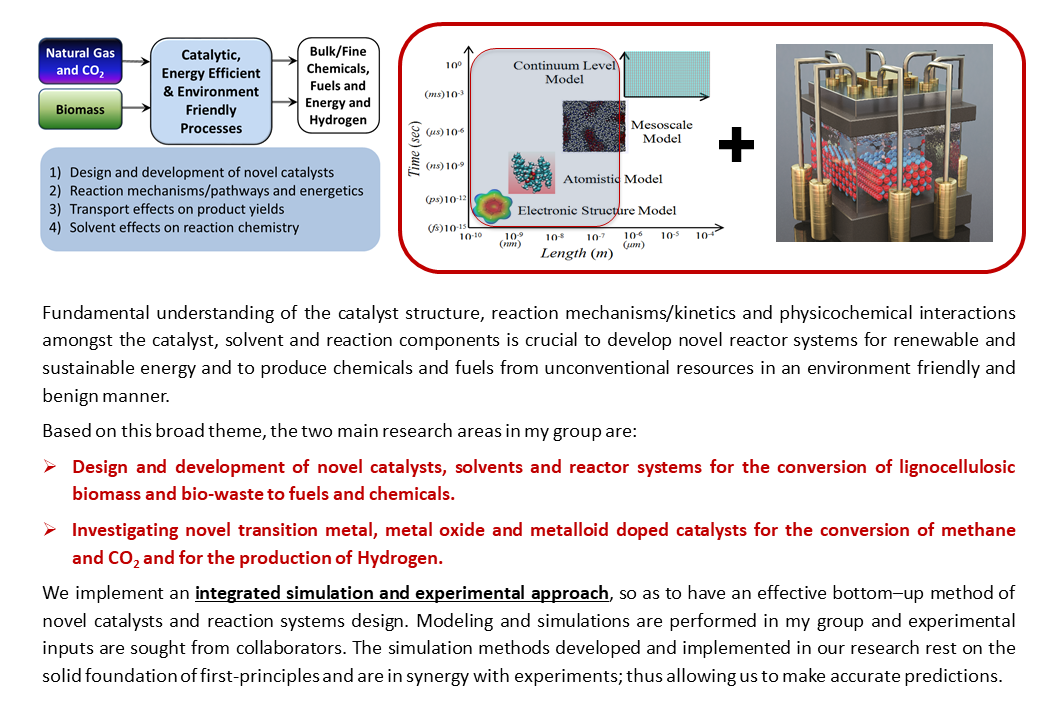
Dr. Samir H. Mushrif is a Professor in the Department of Chemical and Materials Engineering at the University of Alberta . Prior to this role, he served as faculty at the School of Chemical and Biomedical Engineering at Nanyang Technological University (NTU), Singapore . He holds a PhD in Chemical Engineering from McGill University and completed postdoctoral research at the University of Delaware, USA . Education : PhD (Chemical Engineering, McGill University), Postdoc (University of Delaware) His research focuses on computational catalysis , molecular modeling , and reaction engineering for biomass conversion and CO2 reduction . He develops novel catalysts, solvents, and reactor systems using integrated quantum mechanical and classical molecular simulations , synergized with experimental data to enable sustainable energy and chemical production . Recent publications highlight trends in condensed phase chemistry for biomass reactions, machine learning applications in solvent configuration prediction, and mechanistic studies of lignin-carbohydrate complex deconstruction. His work bridges methane activation on metal oxides, hydrodeoxygenation of bio-oil compounds, and polymerization pathways in lignin structures. Scientific Awards include: NSERC Doctoral and Post-doctoral Fellowships Discovery International Award 2017 (Australian Research Council) NANYANG EDUCATION AWARD 2016 (Singapore) SCBE Teaching Excellence Awards (Silver 2015, Gold 2016) Bharat Gaurav (Pride of India) Award 2014 Dr. Mushrif's NSERC Discovery Grant (2018), CFI John R. Evans Leaders Fund Grant (2022), and AcRF Tier-2 Grant (Singapore, 2015) have advanced his work. Current PhD and Master's students include José Carlos Velasco Calderón , Arul Mozhi Devan Padmanathan , and Sagar Bathla , among others. The CARES Lab (Catalysis Research for Sustainability) under his leadership combines ab initio molecular dynamics , machine learning potentials , and Density Functional Theory to design materials for renewable energy . Collaborations span institutions in France , Canada , India , and the UK .
Jingtong Hu is an Associate Professor at the Swanson School of Engineering, University of Pittsburgh, where he also holds the William Kepler Whiteford Faculty Fellowship. His research focuses on Cyber-Physical Systems and Infrastructure Security, with significant contributions to embedded systems, non-volatile memory architectures, and hardware/software co-design for energy-constrained environments. Dr. Hu received his PhD from the University of Texas at Dallas (2007-2013) and his Bachelor of Engineering from Shandong University (2003-2007). His research spans multiple interdisciplinary areas including energy harvesting systems, non-volatile processors, FPGA acceleration, and machine learning at the edge. His recent publications demonstrate a strong focus on algorithm-hardware co-design, particularly for vision transformers, federated learning, and non-volatile memory systems. His work often addresses the challenges of implementing AI on resource-constrained edge devices, with emphasis on energy efficiency, reliability, and performance optimization. The trend in his publications shows increasing focus on sustainable AI processing, heterogeneous computing architectures, and personalized machine learning for IoT applications. Selected Awards: IEEE Transactions on Computer-Aided Design Donald O. Pederson Best Paper Award (2021) ACM SIGDA Meritorious Service Award (2019) Multiple Best Paper Award nominations at top conferences including DAC, ASP-DAC, and CODES+ISSS Dr. Hu's research has been supported by multiple grants focusing on energy-efficient computing, non-volatile memory systems, and hardware acceleration for machine learning. His collaborative work spans numerous institutions and involves interdisciplinary teams working at the intersection of computer architecture, embedded systems, and artificial intelligence. His publications show extensive collaboration with researchers at the University of Pittsburgh, particularly with Albert K. Jones and Yiyu Shi. His laboratory work focuses on implementing practical systems for energy harvesting powered devices, non-volatile processors, and hardware accelerators for machine learning applications. Current projects appear to emphasize sustainable AI processing at the edge, heterogeneous FPGA acceleration, and personalized federated learning for health monitoring applications.