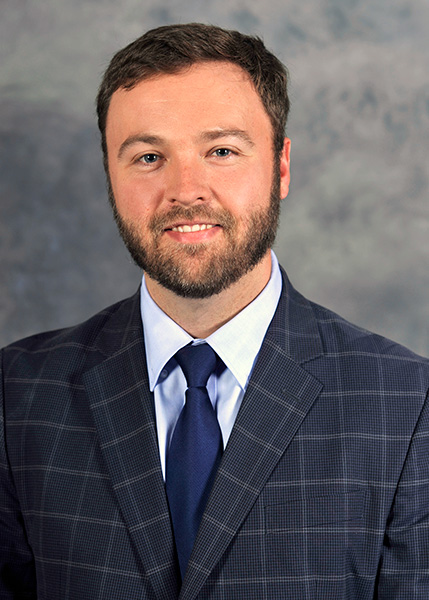
Howard W. French is a Professor at the Columbia University Graduate School of Journalism and a columnist at Foreign Policy. His expertise spans international relations, geopolitical analysis, and African history. He is the author of Born in Blackness: Africa, Africans and the Making of the Modern World, 1471 to the Second World War , which explores Africa’s pivotal role in global history. His research interests include modern global power dynamics, U.S. foreign policy, China's geopolitical influence, and the intersection of race and politics. French has written extensively on topics such as Trump administration policies, Sino-American relations, and African socio-political developments. Recent articles focus on analyzing Trump’s foreign policy strategies, the implications of U.S.-Iran tensions, and the evolving global order. His work frequently critiques political leadership behaviors and their societal impacts.
Dr. Sarah Sargent is a Reader in Law at the University of Buckingham’s School of Law, within the Faculty of Computing, Law and Psychology. Her expertise lies in international law, particularly focusing on indigenous rights, children’s rights, and cultural heritage. She holds a BA from Kansas State University, a Juris Doctor from the University of Denver, an LLM from the University of Leicester, and a PhD from De Montfort University. A qualified U.S. lawyer with inactive licenses in Colorado, Maryland, and Kansas, she previously worked with non-profits as a Managing Attorney and Director of Legal Services, co-founding the Kansas Association of Counsel for Children. Her research explores transnational legal theory, indigenous rights intersections, and intangible cultural heritage preservation. She has spoken globally, including at Stanford University, and published extensively in journals like Cheiron and International Journal of Cultural Property . Dr. Sargent also contributes to poetry, with works reflecting her Kansas heritage and cross-cultural experiences. Education: BA (cum laude), Kansas State University, USA Juris Doctor, University of Denver, USA LLM (Distinction), University of Leicester PhD, De Montfort University Research Interests: Dr. Sargent’s work bridges law and culture, emphasizing indigenous rights within international frameworks, children’s legal protections, and the preservation of intangible cultural heritage. Her recent focus includes the legal dimensions of horse culture among American Indigenous communities and the role of cultural heritage in soft power dynamics. Publications & Speaking: Her publications explore topics ranging from UNDRIP’s impact on land claims to the socio-legal dimensions of horsemanship traditions. She has delivered keynotes on heritage preservation, transnational law, and indigenous rights at venues like the Stanford Archaeology Centre and the Socio-Legal Studies Association conferences. Advising & Grants: Though no formal advisees are listed, her legal and academic roles involve mentoring through non-profits and university initiatives. Her research collaborations include projects on medical legal issues and indigenous self-determination. Labs/Teams: Active in interdisciplinary networks, she contributes to the University of Buckingham’s Press and collaborates with institutions like De Montfort University and the Royal Hospital for Neuro-disability.
Quinn Burke is an Adjunct Professor at the University of San Francisco with a dual role as Senior Director of Computational Thinking and Learning Pathways at Digital Promise, a national education non-profit. His work bridges academic research with practical K-12 implementation through LinkedIn connections. Focuses on computational thinking (CT) integration in core curricula Conducts research supported by federal grants Active in developing educator credentialing frameworks Research Expertise : Specializes in computer science education research , research practice partnerships (RPPs) , and design-based research methods . His work spans multimedia & digital literacies and organizational behavior in educational technology implementation. Grants & Appointments : Currently serves on: DataScience4Everyone: K-12 Data Science & Literacy Learning Progressions (2024) NSF-funded Reimagining Computer Science Pathways (2023-24) TeachAI Advisory Board (2023-Present) EcoSystemOne SBIR grant (#2052404) (2020-21) Awards : Recipient of multiple federal grants from: National Science Foundation US Department of Education Publications & Books : Co-authored two books on K-12 coding and digital gaming through MIT Press. Key publications include: 2022: Microcredential frameworks for CT instruction 2020: Adaptive expertise in CS education 2016: CT literacy integration
Antonella Napolitano is a Professor in the Department of Law, Economics, Management and MET.QUANT at the Università degli Studi del Sannio (Unisannio). Her work bridges Critical Discourse Analysis (CDA) , Corpus Linguistics , and Political Communication , with a focus on European identity , gender in advertising , and language dynamics in institutional contexts . Research Themes : Napolitano explores how political and institutional discourses construct identity, power, and ideology. Her studies include the European Union's communication strategies , populist rhetoric in the Trump administration , and gender stereotypes in cosmetic advertising . Methodological Approach : She integrates corpus-assisted CDA and multimodal analysis to dissect textual and visual narratives. Her 2018 monograph Love is in the (H)Air critically examines hair product ads in the UK and Italy. Recent Publications : Notable works include analyzing adversarial learning in cancer research (2024) and online educational platforms like EdX (2020) .
Sean Silver is an Associate Professor and Director of Undergraduate Studies at Rutgers University. His research focuses on the intersection of literature, material culture, and cognitive studies, with a specialization in eighteenth-century British and European literature. He leads courses in literature, museum studies, and digital humanities, emphasizing hands-on 'critical making' practices such as letterpress printing and artisanal craft. Education: Ph.D. in English Literature from UCLA (2008), B.A. in Literature from Claremont McKenna College (1994). Prior to academia, he worked as a furniture maker ('joiner'). Key research projects include The Mind Is a Collection (a digital museum exploring cognitive models) and The Motley Emblem (a study of global trade and craft history via Laurence Sterne's Tristram Shandy ). His work bridges literary analysis with material and global histories, often involving interdisciplinary collaborations. Publications span studies on eighteenth-century literature, cognitive models, and material culture, with recent work exploring computational criticism and digital humanities methodologies. Awards include the Oscar Kenshur Prize (2016) and a shortlist for the BSLS Book Prize (2016). Teaching and advising emphasize hands-on learning through projects like the letterpress studio. Current initiatives include reconstructing historical paper-making techniques to explore global maritime empires' impact on artisanal practices.
Geoffrey Brewer serves as an Assistant Professor in the Department of English within Saint Louis University's College of Arts and Sciences. His teaching portfolio spans composition, rhetoric, professional writing, and literature courses examining social justice, faith, film, and cultural studies. Education: Ph.D. in English, Saint Louis University, 2022 M.A. in English, Saint Louis University, 2015 B.A. in English and Spanish, Westminster College, 2012 Research Focus: Brewer specializes in early modern English literary forgery with concentrated work on Shakespearean apocrypha, particularly William-Henry Ireland's 18th-century forgeries. His scholarship bridges traditional hermeneutics with computational analysis to examine reception history, adaptation patterns, and textual authenticity in pre-modern literature. Current projects investigate digital methodologies for quantifying forgery characteristics in historical texts. Scientific Awards: No awards documented in source materials. Academic Guidance: Teaching responsibilities include mentoring undergraduate researchers in literary analysis and composition theory, though formal graduate student advisement isn't specified. No grant funding details appear in available records. Research Infrastructure: Affiliated with Saint Louis University's digital humanities initiatives through conference presentations at institutional forums like the Textual Revolutions Lecture Series, though no dedicated laboratory or formal research team is referenced.
Dr. Maxigas Dunajcsik is an Assistant Professor of Computational Methods for Media and Culture Studies at Utrecht University's Faculty of Humanities, within the Department of Media and Performance Studies. He co-leads the Critical Infrastructure Lab and focuses on researching infrastructural ideologies, digital materialities, and programmable infrastructures like 5G networks. His work intersects hacker cultures, informational capitalism, and the governance of digital societies. Research interests include applied data science, contesting governance frameworks, and open cities initiatives. He co-authored the monograph Resistance to the Current: The Dialectics of Hacking , examining the political dimensions of hacking cultures. Current projects explore standards and protocols governing digital infrastructures, as seen in collaborations like Antennas and Us with the Weise7 group. Teaching responsibilities include courses on Digital Methods, Research Methods for Media and Culture Studies, and Rhetorics of Data Visualization. Dunajcsik is affiliated with the Institute for Cultural Inquiry and actively contributes to interdisciplinary research teams addressing the societal impacts of technological systems.
Jennifer Jahner is a Professor of English and Dean of Undergraduate Students at California Institute of Technology (Caltech), where she has been affiliated since 2012. She holds a B.A. from Western Washington University (1998), an M.A. from the University of Colorado at Boulder (2005), and a Ph.D. from the University of Pennsylvania (2012). Her academic career includes roles as Assistant Professor (2012-19) and Professor (2019-present), alongside her administrative position as Dean (2023-). Jahner is also the Fletcher Jones Foundation Distinguished Fellow at The Huntington Library, Art Museum, and Botanical Gardens. B.A., Western Washington University, 1998 M.A., University of Colorado at Boulder, 2005 Ph.D., University of Pennsylvania, 2012 Jahner’s research sits at the intersection of medieval literature, law, natural philosophy, and gender studies . She investigates how premodern concepts of rhetoric and evidence inform contemporary understandings of justice, forecasting, and uncertainty. Her work often bridges humanities and computational thinking, examining predictive models in medieval manuscripts alongside modern AI-driven systems. Current projects include her book Arts of Conjecture: The Medieval Origins of Modern Prediction , which explores how historical practices like astrology relate to today’s algorithmic forecasting. Her publications span topics such as medieval legal texts , experimental knowledge in manuscripts , and Chaucer’s poetic structures . Jahner’s research has been supported by prestigious fellowships, including the American Council of Learned Societies (ACLS) Fellowship and Borchard Foundation Grant. She has also received multiple teaching awards, such as the Associated Students of Caltech (ASCIT) Teaching Award and Caltech’s Brass Award for Teaching Excellence. American Council of Learned Societies Fellow (2019–2020) Graves/ACLS Award in the Humanities (2018–2019) Borchard Foundation Grant (2018) Brass Award for Teaching (2015–2016) ASCIT Teaching Award (2012–2013) Jahner’s recent work connects medieval predictive technologies to modern data science, analyzing figures like Claudius Ptolemy’s Almagest and Tetrabiblos alongside 21st-century mortality prediction algorithms. Her lecture series at The Huntington and Caltech’s Watson Lectures highlight these interdisciplinary links, emphasizing how historical struggles with uncertainty inform present-day debates about risk, ethics, and algorithmic governance. She contributes to the Caltech-Huntington Program in Visual Culture and serves as Book Review Editor for Studies in the Age of Chaucer . Her teaching covers courses like Sinners, Saints, and Sexuality in Premodern Literature and Poetry and the Project of Justice , reflecting her commitment to integrating historical analysis with contemporary societal challenges.
Menna El-Assady is an Assistant Professor at ETH Zurich's Department of Computer Science , leading the Interactive Visualization and Intelligence Augmentation Lab (IVIA) . She works at the intersection of data analysis, visualization, computational linguistics, and explainable AI , focusing on combining machine learning with visual analytics for text data. Current affiliations: ETH Zurich (Department of Computer Science, AI Center) Previous roles: Research Fellow at ETH AI Center, Research Associate at University of Konstanz, Doctoral Student at OntarioTech University Research Interests El-Assady's work focuses on human-AI collaboration , particularly through: Interactive systems for topic model refinement and language model explainability Visual analytics frameworks for argumentation analysis and digital humanities Explainable AI solutions for medical decision support and political deliberation Trust calibration mechanisms in generative AI and recommender systems Scientific Contributions Developed explAIner - a visual analytics framework for explainable machine learning Created LingVis - integrating computational linguistics with visual analytics Designed VALIDA and VisArgue for analyzing political debates and rhetoric Co-organized workshops: ArgVis , Vis4DH , VisLR , and VISxAI Academic Recognition Best Paper Award: Honorable Mention (IEEE Trans. on Visualization and Computer Graphics, 2018) 2024 VGTC Visualization Significant New Researcher Award
Swen Hutter is a Lichtenberg Professor of Political Sociology at Freie Universität Berlin and Director of the Center for Civil Society Research, a joint initiative with the WZB Berlin Social Science Center. His research bridges European politics and comparative political sociology, focusing on political conflict dynamics, civil society roles, and societal divides in European democracies. He holds a doctoral degree from Ludwig-Maximilians-Universität München (2011), recognized with the Munich University Society’s best dissertation prize for his comparative study of Western European protest politics. Education: B.A./M.A. in Political Science, Communication Science, and International Law from University of Zurich; Ph.D. in Political Science from University of Munich. Previous roles include Max Weber Fellow at European University Institute (Florence) and research associate at University of Munich. Research emphasizes Europe’s evolving protest landscapes, migration policy contentiousness, and the interplay between civil society and political parties. His work combines quantitative methods with experimental designs to analyze crisis responses, polarization, and social cohesion. Recent projects explore empathy during refugee movements, personality traits influencing social support, and the politicization of EU integration via referendums. Key Awards: Munich University Society’s Best Dissertation Prize (2011) His interdisciplinary approach integrates civil society engagement with academic research, reflected in collaborative projects on educational organizations and grassroots mobilization. Current institutional leadership includes directing research centers focused on civic engagement and European governance challenges.
Allison Koh is a Research Fellow in Natural Language Processing at the University of Birmingham’s Centre for Artificial Intelligence in Government. She holds a PhD from the Hertie School in Berlin, where her dissertation focused on authoritarian adaptations in foreign social media spaces. Her work bridges international relations, political communication, and computational methods, with an emphasis on digital authoritarianism and AI-driven human rights monitoring. Education: PhD in Political Science (Hertie School, Berlin); Fulbright English Teaching Assistantship in Malaysia; Gilman Scholarship for study in China. Research interests include the geopolitics of digital platforms, vulnerabilities in social media transparency policies, and the intersection of AI with governance. Her current projects involve converting her doctoral research into journal articles and exploring computational methods for analyzing political manifestos and diaspora activism. Grants: Funded by NYU’s Center for Social Media and Politics for dissertation work. Active collaborations include the Global Network on Extremism and Technology (GNET). Labs/Teams: Collaborates with the Centre for Artificial Intelligence in Government team. Engages in open-source coding projects and pedagogical initiatives to teach technical skills.
Porter Olsen Olsen is a Lecturer in the Department of English at the University of Maryland's College of Arts and Humanities. With educational backgrounds in English Literature (B.S., Utah Valley State College) and English and Rhetoric (M.A., University of Utah), Olsen specializes in digital curation, forensic approaches to archival practice, and born-digital preservation. His research examines the intersection of technology and cultural heritage, particularly focusing on legacy media recovery, digital forensics workflows, and the theoretical implications of technologies like write-blockers in archival contexts. Olsen's work emphasizes the preservation of digital artifacts through both practical tool development (such as BitCurator workshops) and critical analysis of archival silences in digital environments. He has conducted extensive workshops at institutions globally, including Harvard, the British Library, and the Smithsonian, building capacity for digital preservation methodologies.
Ioannis Melanitis is an Associate Professor at the C’ Sculpt.Studio , Athens School of Fine Arts, and serves as Vice-Rector for International Relations and Director of the Master in Digital Arts. His work bridges art, science, and technology , focusing on transgenic organisms (e.g., Leda Melanitis Transgenica ), AI-driven installations, and performance art. Melanitis explores themes like biomimicry, information as conceptualization, and the intersection of art and philosophy. Key roles include academic leadership, curatorial work, and international exhibitions (Ars Electronica, MACRO Museum Rome, Museu Nacional Brazil). His research spans bioart, robotics, and AI ethics, with a PhD thesis on Biological Dynamics in Art at NTUA’s School of Architecture. Notable works include Random Rhetoric (2020), an AI dialogue system, and installations like Kryologia (2012), merging science and art. Melanitis has lectured globally, including at Nanjing University of Arts and conferences in China and Europe.
Patrik Lundell is a Professor of History at Örebro University, specializing in media history and political history. He previously held professorships at Mid Sweden University (2016–2018) and earned his PhD in History of Sciences and Ideas from Lund University in 2002. His research focuses on the evolution of print media, including their marketing strategies and public discourse dynamics, with particular attention to parallels between historical media phenomena and modern social media. Lundell also explores right-wing extremist advocacy in interwar Europe and WWII, analyzing how intellectual elites engaged with Nazi Germany. He emphasizes historical perspectives to critically evaluate contemporary media environments. Key research areas include the transformation of media systems from the 18th century to present, the role of media in shaping public opinion, and the intersection of media with political movements. His work challenges simplistic narratives about media progress, advocating for nuanced historical analysis to understand modern media dynamics. Lundell has developed databases tracking textual migrations between Sweden and Finland, and his methodologies incorporate digital humanities tools for computational history analysis. His academic trajectory includes a Docent title from Lund University (2009), and his research has been disseminated through numerous articles, books, and collaborative projects. While no specific grants or awards are listed, his contributions to media historiography and critical analysis of far-right media rhetoric have positioned him as a leading scholar in these fields.
Jonathan L. Bradshaw is an Assistant Professor of English and director of the Writing, Rhetoric, & Critical Studies (WRCS) Program at Western Carolina University. He holds a Ph.D. in Composition & Rhetoric from Miami University, an MA from Appalachian State University, and a BA from Campbell University. His research focuses on civic rhetorics, Appalachian cultural rhetorics, and the digital circulation of ideas, including concepts like 'slow circulation' as an alternative to viral models. He has analyzed rhetorical strategies in heritage-based advocacy and Russian tactics targeting Black voters in the 2016 election. His work appears in Rhetoric Society Quarterly , Rhetoric Review , and Computers & Composition , alongside public platforms like The Daily Yonder . Teaching interests include first-year writing, rhetorical theory, and writing pedagogy. He leads the WRCS program, fostering interdisciplinary approaches to rhetoric and writing studies.