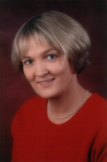
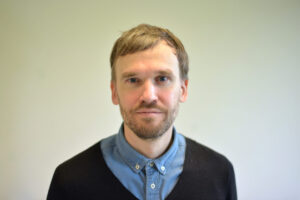
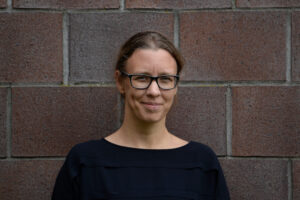
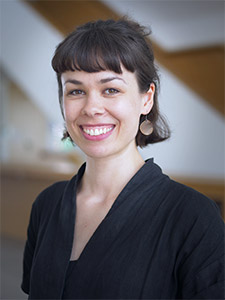
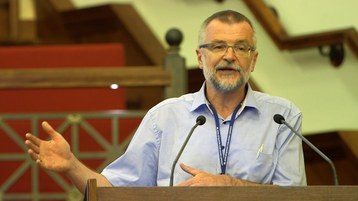
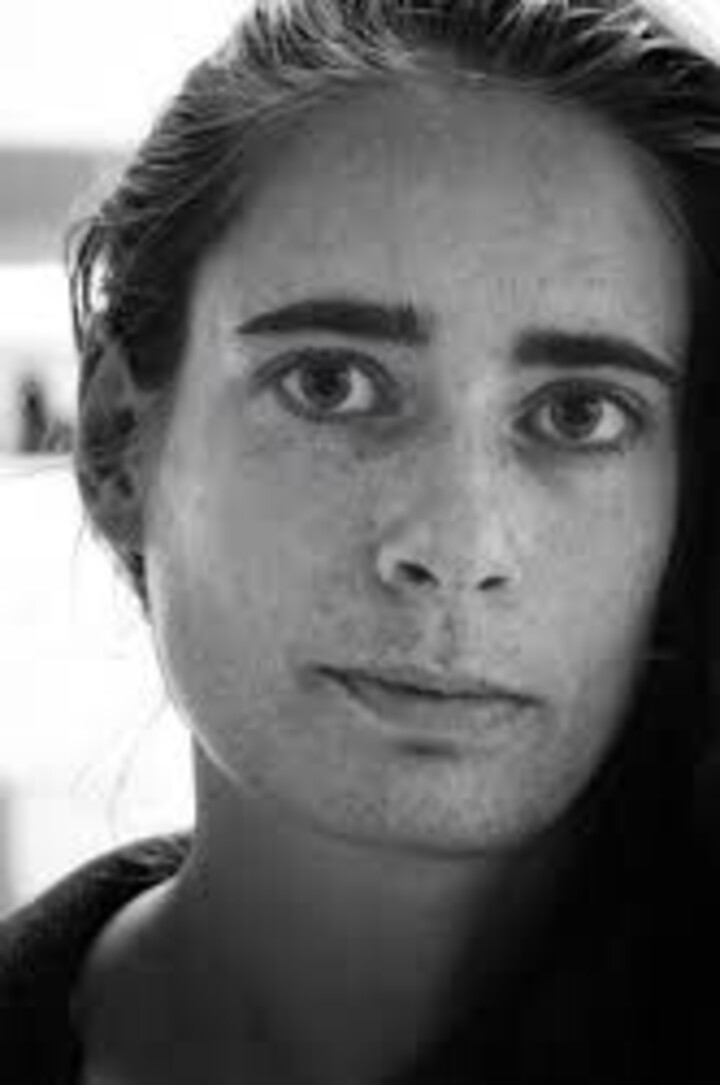
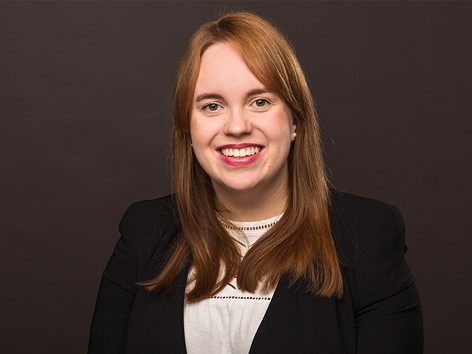
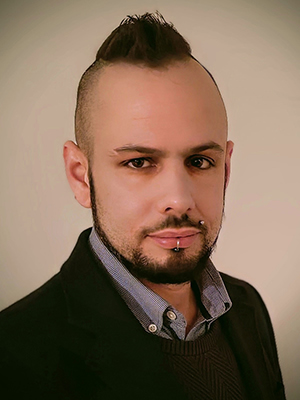
Joakim Nivre is a Professor at Uppsala University's Department of Linguistics and Philology. He is a leading researcher in computational linguistics, with a focus on dependency parsing, Universal Dependencies (UD) framework development, and multilingual NLP applications. His recent work explores LLMs in climate change discourse analysis, pharmacovigilance explainability, and historical text processing. Key research areas: Dependency parsing theory, Universal Dependencies standardization, LLM evaluation Collaborations: SweSAT-1.0 benchmark development, ClimateEval project, PARSEME integration His 2025-2023 publications demonstrate expertise in explainable AI for healthcare, synthetic data generation for idioms, and multilingual benchmark design. Notably, he co-developed SweSAT-1.0 to evaluate Swedish LLMs and contributed to typology-informed UD revisions. Despite extensive work in NLP, no scientific awards are mentioned in available texts.
Slava Jankin is a Professor of Data Science and Government at the University of Birmingham’s School of Government, where he also serves as Deputy Director of the Institute for Data and AI and Founding Director of the Centre for Artificial Intelligence in Government. He is concurrently a Fellow and Founding Director of the Data Science Lab at the Hertie School in Berlin. Previously, he held a Professorship at the University of Essex and has worked at University College London (UCL) and the London School of Economics (LSE). His research bridges computational methods, governance, and climate policy, with a focus on AI applications in public institutions, climate-health surveillance, and misinformation resilience. Jankin earned a PhD in Political Science from Trinity College Dublin (2009), a Postgraduate Diploma in Statistics (2006), and a BSc from Belarus State Economic University (2002). **Education**: • PhD in Political Science, Trinity College Dublin (2009) • Postgraduate Diploma in Statistics, Trinity College Dublin (2006) • BSc Econ with Distinction, Belarus State Economic University (2002) **Research Interests**: Jankin’s work integrates AI and computational methods with governance challenges, including climate policy, health surveillance, and institutional effectiveness. He leads initiatives like the Lancet Countdown’s climate-health monitoring and the CATALYSE project on climate impacts. His research also explores digital twins for governance systems and the role of cultural diversity in societal resilience against misinformation. **Grants & Collaborations**: He advises the UN and EU on AI and data science, co-leads the Lancet Countdown, and collaborates with institutions like the Alan Turing Institute. His applied work includes developing AI tools for public service optimization and policy simulations. **Labs & Teams**: Directs the Centre for AI in Government (University of Birmingham) and the Hertie School’s Data Science Lab, fostering interdisciplinary teams to advance computational methods in public policy.
Prof. Dr. Simone Winko holds the Chair for Modern German Literature and Literary Theory at the University of Göttingen since 2003. Her research spans literary theory, canonization, praxeology of literary studies, and the intersection of emotions with German poetry around 1900 and digital humanities. Academic Roles: Chair at Göttingen (2003–), DFG Priority Programme 2207 leadership (2017–), Courant Center collaboration (2009–) Key Projects: DFG projects on literary change (2023–), computational literary history (2020–2023), and argumentation practices in interpretations (2018–2020) Her recent work focuses on emotions in German-language poetry , using computational methods to model text similarity and analyze historical shifts between Realism and Modernism. She explores how emotional codes and narrative strategies are embedded in lyrical structures, particularly through projects like Anthologien zeitgenössischer deutschsprachiger Lyrik (2022). Scientific Awards : 2010: 1st prize for best doctoral supervision (KissWin, BMBF-funded) Teaching & Collaboration : Supervises B.A., M.A., and Ph.D. theses; co-edits the Journal of Literary Theory and Revisionen book series. Collaborates with Fotis Jannidis, Gerhard Lauer, and Matías Martínez on computational approaches to literary studies.
Cornelius Puschmann is a Professor of Communication and Media Studies at the University of Bremen's ZeMKI, leading the Digital Communication and Information Diversity (DCID) Lab. He has held affiliations with institutions including Zeppelin University, the Alexander von Humboldt Institute for Internet and Society, and the Leibniz Institute for Media Research / Hans Bredow Institute. His research focuses on computational communication, digital media usage, hate speech, and algorithmic impacts on digital communication. Current projects: Informed by Influencers? (INDI), Political Polarization and Individualized Online Information Environments (POLTRACK) Member of Deutsche Gesellschaft für Publizistik- und Kommunikationswissenschaft (DGPuK), European Communication Research and Education Association (ECREA), and International Communication Association (ICA) His recent publications explore topics such as alternative news consumption, political polarization, and communicative AI. He has also contributed to open-source methodologies like the RPC-Lex dictionary for analyzing right-wing populist discourse. Notable affiliations include visiting scholar roles at the Oxford Internet Institute, Berkman Klein Center for Internet and Society, and University of Amsterdam's Department of Media Studies.
Lisa Zehnter is a Researcher at the Center for Civil Society Research within the WZB Berlin Social Science Center, where she contributes to the Manifesto Project—an international initiative analyzing election manifestos from over 60 countries to map party positions and preferences. Her role centers on political communication research using computational text analysis methodologies. Her academic background includes: Doctorate in Populist Political Communication, Humboldt University Berlin Master's Degree in Social Sciences, Humboldt University Berlin Bachelor's Degree in German Literature and Social Sciences, Humboldt University Berlin (with a semester abroad at the University of Gothenburg) Zehnter specializes in the intersection of populism, political discourse, and computational social science. Her work employs advanced text analysis to dissect election manifestos and political communication strategies, particularly examining populist rhetoric, gender-fair language usage, and crisis responses like the pandemic. She develops hybrid methodologies combining manual and automated coding to enhance analytical precision in large-scale textual datasets. Her 2021-2025 publications reveal a concentrated focus on German politics—especially the Alternative for Germany (AfD) party—and cross-national manifesto analysis through the Manifesto Project. Key trends include methodological innovations in text analysis, scrutiny of populist communication during crises, and longitudinal studies of party positioning in European democracies. No scientific awards were documented in the source material. No information regarding student advising or research grants was provided in the available text. She actively participates in the Manifesto Project (MARPOR), the Observatory of Political Texts in European Democracies (OPTED), and a collaborative initiative on hybrid text analysis coding techniques, working within international research teams to advance political text analysis frameworks.
Kerstin Radde-Antweiler is a full Professor of Religious Studies at the University of Bremen , where she has held a chair in Media and Religion since 2018. She serves as Deputy Spokeswoman of ZeMKI (Center for Media, Communication and Information Research) and Chairwoman of the Tenure Boards at the university. Her research focuses on deep mediatization of religious practices, digital gaming cultures , and media appropriation in religious contexts . Radde-Antweiler leads international projects such as ReCov19 (funded by the Trans-Atlantic Platform ) and Video Game Development in Asia (funded by Beethoven 2 ). She founded the International Academy of the Study of Gaming and Religion and chairs the Network of German-speaking Researchers on Religion and Culture in Times of Deep Mediatization (GeNet-ISMRC). She also contributes to the University of Zürich's Digital Religion(s) research group . Her recent publications analyze digital gaming as a transformative religious space , media settlers in mediatized religion, and value formations in gamevironments . She emphasizes interdisciplinary approaches combining religious studies, media theory, and computational analysis. Her work appears in journals like Religion , Media and Communication , and Gamevironments .
Prof. Dr. Torsten-Oliver Salge is a University Professor and Co-Director of the Institute for Technology and Innovation Management (TIM) at RWTH Aachen University, where he heads the Innovation, Strategy and Organisation (ISO) Group since April 2013. He also serves as a Fellow of Cambridge Digital Innovation at the University of Cambridge, maintaining strong international academic connections. His work bridges theoretical organizational research with practical applications across multiple sectors. Salge completed his business administration studies across multiple European countries including Germany, France, Italy, and England. He earned both his Ph.D. and M.Phil. degrees from the University of Cambridge. His academic journey includes positions as interim professor at the University of Duisburg-Essen (2012-2013), junior professor at the Ruhr-University Bochum (2009-2012), and post-doctoral research associate at Cambridge (2009). His research focuses on organizational behavior in innovation contexts , particularly examining collaboration across disciplinary, organizational, and institutional boundaries. He investigates how organizations learn from performance feedback, approach problem-solving, and implement strategic HRM practices that enhance employee well-being. A distinctive feature of his work is the examination of technology legitimation, adoption processes, and payoff realization in complex organizational settings. His research combines behavioral and institutional perspectives to understand innovation processes. Analysis of Salge's publication record reveals a strong emphasis on healthcare innovation management, with numerous studies examining hospital information systems, infection control, and healthcare service improvement. His work often applies dynamic capabilities theory to innovation processes and demonstrates methodological sophistication through both quantitative and qualitative approaches. The publications show consistent contributions to top-tier management journals including Academy of Management Review , MIS Quarterly , and Journal of Product Innovation Management . Scientific Recognition: Nominated for European Research Paper of the Year 2016 (CIONET) Multiple Best Paper awards at Academy of Management conferences across various divisions Shortlisted for Strategic Management Society (SMS) Best Conference Paper Awards Recipient of prestigious scholarships including ESRC, DAAD, and Cambridge European Trust funding Recognized with the Knut Holt Best Paper Award from ISPIM Throughout his career, Salge has maintained active collaborations with organizations across healthcare, central government, and financial services sectors. His international scholarly network is evidenced by visiting appointments at universities in Auckland, Buenos Aires, Cambridge, Oxford, and Philadelphia. At RWTH Aachen, he leads an interdisciplinary team within the TIME Research Area, which comprises over 100 senior and junior researchers working at the intersection of innovation, technology management, marketing, and entrepreneurship. As Co-Director of the RWTH TIM institute, Salge oversees a research unit with approximately 30 doctoral candidates, 5 postdocs, and more than 20 student researchers. The institute maintains strong industry connections and focuses on strategic technology management, open innovation, innovation culture, organizational change, business model development, and customer-oriented value creation.
Dr. Julia Winkler is a Researcher at the Chair of Communication Psychology and New Media at the University of Würzburg , Germany. She earned her doctorate in 2023 with the dissertation topic "The experience of emotional shifts as a narrative process." Her research focuses on narrative psychology , media effects on emotional states , and climate change communication , particularly through fictional narratives. She has extensively published on emotional shifts in stories, narrative transportation, and strategies to counter extremist online content. Education: MA and BA in Media and Communication Studies (University of Mannheim) Her recent publications analyze emotional responses to media stimuli (2024), event-congruent emotions in narrative persuasion (2023), and radicalization prevention through media literacy education (2020–2017). She actively contributes to understanding how narrative structures influence affective experiences and decision-making, with a special interest in climate communication strategies. Her work appears in journals like Frontiers in Psychology , Media Psychology , and Discourse Processes , as well as edited volumes on extremist propaganda prevention.
Professor Christian Mair is Chair of English Linguistics at the University of Freiburg, Germany, with a distinguished career spanning decades in linguistic research. He holds a prominent position in the Department of English Linguistics within the Faculty of Humanities and maintains an active research profile with regular publications and supervisory responsibilities. Professor Mair's scholarly work centers on corpus-based approaches to understanding language variation and change, with particular expertise in: World Englishes and their global development Corpus linguistics methodology and application Historical and contemporary grammatical changes in English Sociolinguistic aspects of language contact and variation Pidgin and creole languages in diaspora contexts English as a Lingua Franca in non-traditional English-speaking environments His recent research demonstrates sustained engagement with contemporary linguistic issues, particularly examining English in German-speaking contexts, migration's impact on language variation, and digital methodologies in linguistic analysis. Professor Mair frequently collaborates with international scholars on projects investigating English in diverse sociolinguistic settings across the globe. Professor Mair has received significant academic recognition: Member of the Heidelberg Academy of Sciences Corresponding Member of the Austrian Academy of Sciences in Vienna He leads multiple research initiatives including the DFG project "West African Englishes on the Move" and research on "New Forms of English as a Lingua Franca (ELF) in Germany." His research team comprises several associates and assistants working on various aspects of English linguistics, with regular visiting scholars from international institutions. Professor Mair maintains active collaborations worldwide, hosting researchers such as Dr. Azizeh Chalak and Dr. Hossein Heidari Tabrizi from Iran. His work bridges theoretical linguistics with practical applications in understanding how English functions in increasingly globalized and multilingual contexts, with particular attention to non-colonial English language environments.
Christine S. Sing is a linguist and educator affiliated with the Department of English Studies at the University of Siegen, Germany. She holds a PhD from the University of Regensburg, focusing on American presidential rhetoric and ideological discourse. Her research integrates discourse analysis, corpus linguistics, and cognitive linguistics, with specialization in ESP (English for Specific Purposes), second language writing, and business communication. She has taught at multiple institutions, including the Universities of Vienna, Giessen, and Heidelberg, as well as the Vienna University of Economics and Business. Her ongoing post-doctoral project examines technicality in L2 student writing through corpus and qualitative analysis. Key research areas include Systemic Functional Linguistics (SFL), critical discourse analysis (CDA), and the role of English as an international lingua franca (ELF). She actively publishes on topics such as multimodal discourse analysis, academic writing pedagogy, and the intersection of business communication and multilingualism. Education: PhD in Linguistics, University of Regensburg Masters in General Linguistics, University of Poitiers Undergraduate Studies in English/French/German, University of Heidelberg Her teaching spans courses on corpus linguistics, discourse analysis, business English, and academic writing. She has contributed to interdisciplinary research projects, including the DFG-funded 'Cultures of Lying' at the University of Regensburg.
Dr. Anne Lauscher is a Researcher at the Data and Web Science Group, University of Mannheim, School of Business Informatics and Mathematics. Her work focuses on neural methods for natural language understanding, particularly in Argument Mining, Scientific Publication Mining (scitorics), and ethical considerations in NLP. She investigates language representations, bias detection in models, and fair AI. She has been involved in projects like the Linked Open Citation Database (LOC-DB) and contributes to conferences like ACL and EMNLP. She has taught courses on Text Analytics, Machine Learning, and Ethics in NLP, and supervised theses on topics like detecting unfairness in Arabic text representations and hyperpartisan news detection. Her research bridges computational linguistics with societal ethics, aiming to improve fairness and interpretability in AI systems. Her research interests span Argumentation Mining, Scientific Publication Mining, scitorics, Transfer Learning, Representation Learning, and Ethics in NLP. She explores how to inject knowledge into language models and analyze biases in text representations. Her work on 'scitorics' involves analyzing rhetorical aspects of scientific writing to understand argumentation structures. Publications highlight contributions to bias mitigation (e.g., DebIE platform), specialized language models, and multilingual datasets like Multi2WOZ. Her work appears in top venues such as EMNLP, ACL, and COLING. She actively contributes to the academic community through roles like Publication Co-Chair for EurNLP 2020 and PC member for multiple conferences. Her advising includes guiding students on thesis projects addressing fairness, argumentation, and NLP applications. She collaborates with institutions like Stuttgart Media University and the Data and Web Science Group to advance research in ethical AI and NLP.
Prof. Dr. Nikolai Grube is a University Professor in the Department of Ancient American Studies & Ethnology at the Institute of Archaeology and Cultural Anthropology, University of Bonn. He has held this position since 2004 and is a leading expert in Maya archaeology, epigraphy, and cultural anthropology. His research spans Mesoamerica, with a focus on the Maya Lowlands, political anthropology, state formation, writing systems, and cultural heritage. Research Interests: His work integrates archaeology, historical linguistics, and digital humanities to study Classic Maya writing, literacy, and political structures. He investigates the evolution of hegemonic rule through fieldwork at Uxul, Mexico, and leads the Text Database and Dictionary of Classic Maya project. His research bridges epigraphic analysis with broader cultural and historical contexts. Recent Publications Trends: His recent scholarly output emphasizes digital epigraphy, glyph decipherment, ceramic inscriptions, and collaborative international research. Themes include lunar astronomy, punctuation in writing, animated logographs, and the sociopolitical rhetoric of Terminal Classic inscriptions, reflecting a deep integration of linguistic, archaeological, and computational methods. Scientific Awards and Honors: Doctor honoris causa, Instituto Politécnico Nacional, Mexico (2016) Benedictus Polonius Prize, University of Warsaw (2015) Honorary Citizenship of Guatemala City (2007) Full member, German Archaeological Institute Full member, North Rhine-Westphalian Academy of Sciences Heisenberg Professorship (DFG, 1999) Advising and Grants: While specific students are not listed, Grube leads major collaborative projects funded by international bodies and has served as an expert reviewer for NWO, FNRS, CNRS, and NEH. He has organized academic symposia, curated exhibitions, and held editorial roles, demonstrating extensive mentorship and academic leadership in the field of Mesoamerican studies. Labs and Teams: He is central to the Text Database and Dictionary of Classic Maya team at the University of Bonn, promoting digital epigraphy and open-access research. His work involves interdisciplinary collaboration with linguists, archaeologists, and computer scientists to advance the understanding of Maya writing and culture.
Dr. Marieke Einfeldt is a postdoctoral researcher at the University of Konstanz's Department of Linguistics, focusing on the phonology-phonetics interface. Her work investigates topics such as trilingual first language acquisition (Standard German, Swiss German, and Italian), prosodic features of rhetorical questions, and bilingual language development. She is affiliated with Prof. Dr. Nicole Dehé's research group and previously contributed to Project 6 of the Questions at the Interfaces research unit, examining prosody in rhetorical questions. Her research spans phonological development in multilingual children, the interplay of discourse markers and prosody, and methodological advancements in psycholinguistic experiments using Active Learning systems. She holds a dissertation on trilingual consonant inventory acquisition, supervised by Prof. Dr. Tanja Kupisch, Dr. Mechtild Tronnier, and Prof. Dr. Bettina Braun. Key research interests include bilingualism, prosody, language acquisition, and sociolinguistics. Her studies address topics like tonal transfer effects in L2 learning, geminate production in heritage speakers, and cross-linguistic comparisons of speech styles. She is based in Office G223 at the University of Konstanz.
Dr. Niklas Schrape is a Researcher at Leuphana University of Lüneburg, specializing in digital media and interactive technologies. His work bridges game studies, simulation design, and media rhetoric, with a focus on how digital environments shape human experience. Research Focus: Schrape investigates gamification strategies, the epistemology of simulation, and rhetorical frameworks in digital media. His projects examine: Affective technologies and emotional self-regulation Validation mechanisms in simulation games Cultural histories of computational media Achievements: Awarded the Friedrich-Ebert-Stiftung Graduate Scholarship (2008) for his contributions to media research. Leads projects on emergent psychotechnologies and epistemic game design under the DFG-funded MECS initiative.
Stefan Bruckner is a Professor at the University of Rostock , leading the Chair of Visual Analytics within the Institute of Visual and Analytic Computing. His work bridges Visual Analytics , Biomedical Visualization , and Interactive Systems , with a focus on translating complex datasets into actionable insights. Role: Chair of Visual Analytics Key Affiliations: Eurographics Executive Committee, IEEE VGTC Editorial Leadership: Associate Editor, IEEE Transactions on Visualization and Computer Graphics Research spans Medical Visualization , Immersive Analytics , and Proteogenomic Data Exploration . Recent work includes: ProHap Explorer for haplotype analysis Line Harp sonification techniques Narrative visualization frameworks His publications reveal trends in interactive data exploration , multi-omics visualization , and user behavior analysis within medical contexts. Awards include contributions to the Dirk Bartz Prize in 2019. He actively collaborates with international institutions and maintains memberships in ACM, IEEE, and GI.