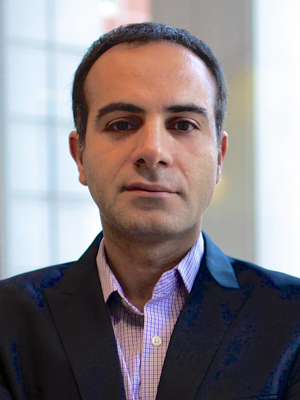
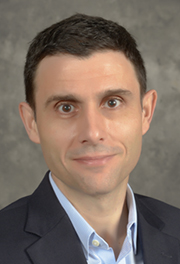
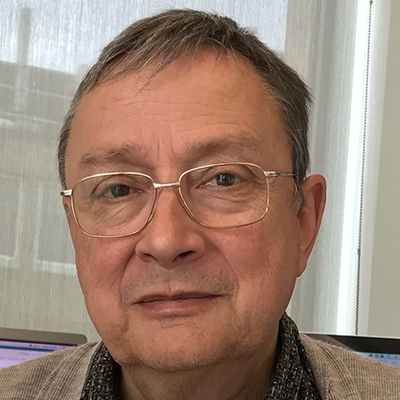
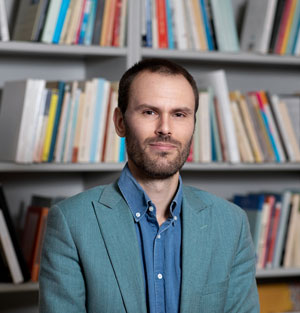
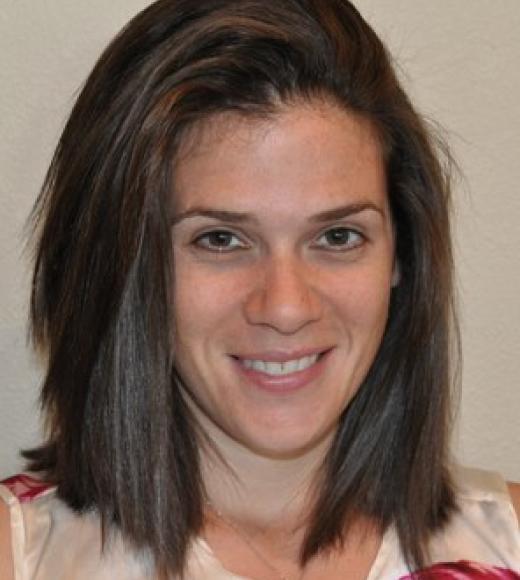
Jiwon Yun is an Associate Professor in the Department of Linguistics at Stony Brook University. She holds a Ph.D. in Linguistics from Cornell University (2013) and a B.S.E. in Computer Science & Engineering from Seoul National University (cum laude with honors). Her research focuses on speech prosody, syntax-semantics interfaces, and computational modeling of sentence processing, with special attention to East Asian languages like Korean, Mandarin, and Japanese. Dr. Yun teaches undergraduate and graduate courses in computational linguistics, semantics, pragmatics, and experimental phonetics. Her work bridges theoretical linguistics and experimental methods, examining how prosody interacts with syntactic and semantic structures. Recent publications investigate prosodic disambiguation of syntactic ambiguities, computational models of relative clause processing, and intonation patterns in Korean and Mandarin. She has developed tools for automated speech corpus analysis and maintains a Hangul-Yale Romanization Converter for linguistic research. Her research has been published in journals like Humanities and Social Sciences Communications , Linguistic Inquiry , and Journal of East Asian Linguistics . Teaching responsibilities include courses such as LIN 335 (Computational Linguistics) and LIN 627 (Computational Semantics).
Nima Mesgarani is an Associate Professor of Electrical Engineering at Columbia Engineering, Columbia University, affiliated with the Sense, Collect and Move Data Committee. His research bridges engineering and neuroscience through reverse-engineering neural signal processing mechanisms, leading to advancements in brain-machine interfaces, neural prosthetics, and speech processing algorithms. He received his PhD in Electrical Engineering from the University of Maryland and completed postdoctoral training at Johns Hopkins University's Center for Language and Speech Processing and UC San Francisco's Neurosurgery Department. Research Focus Professor Mesgarani's lab integrates computational neuroscience and engineering to study acoustic signal processing. Key areas include: Neural decoding of speech and auditory attention in multi-talker environments Development of brain-controlled hearing technologies Novel speech separation and synthesis algorithms inspired by cortical processing Cross-modal learning between auditory and visual systems Applications of large language models in neural signal interpretation Publication Trends Analysis of his 15 most recent articles (2025) reveals dominant themes: neural decoding techniques using intracranial EEG, brain-inspired speech separation models (e.g., Mamba architectures), applications of large language models in auditory neuroscience, cross-modal distillation methods, and clinical translation of audio processing algorithms. A strong emphasis emerges on real-time brain-computer interfaces and noise-robust speech processing. Laboratory and Collaborations Mesgarani directs an interdisciplinary lab developing neurotechnology for hearing restoration. His team collaborates with neurosurgery departments and speech processing centers, focusing on translating theoretical models into clinical brain-machine interfaces. The lab's work has yielded patents for brain-informed speech separation systems and attention-decoding frameworks.
Emily A. Gasser is an Associate Professor in the Linguistics Department at Swarthmore College , specializing in Austronesian languages , Wallacea & northwest New Guinea , and language documentation . Her research spans phonology, morphology, typology , and language contact , with a focus on endangered languages and computational phylogenetics . She is currently on sabbatical for the 2025-26 academic year, conducting fieldwork in Manokwari, writing a Wamesa grammar, and developing new courses. Research Interests include: Language documentation and fieldwork in Austronesian and Papuan-speaking regions Phonological variation and vowel harmony systems Typological surveys of adnominal possession and morphological structures Interaction between prosodic features in media speech and socio-phonetics Computational tools for historical linguistics and classifier system analysis Recent publications focus on vowel harmony , prosodic perception , and possessive constructions across Wallacea and Northwest New Guinea. She edits volumes on Austronesian-Papuan language contact and contributes to open-access research initiatives.
Ricardo Gutierrez-Osuna is a Professor in the Department of Computer Science and Engineering at Texas A&M University, part of the College of Engineering. He leads the PSI Lab and focuses on machine learning, speech processing, and digital health applications. His research spans topics like wearable sensors, foreign accent conversion, and physiological monitoring. Education: Ph.D. (Computer Engineering, NC State, 1998), M.S. (Computer Engineering, NC State, 1995), B.S. (Electrical Engineering, Universidad Politécnica de Madrid, 1992). Research interests include intelligent sensors, speech processing, machine learning, neuromorphic computation, and mobile robotics. His work bridges computer science and biomedical engineering, with applications in health monitoring and human-computer interaction. Awards: NSF CAREER Award (2002) Ramón y Cajal Award (2005-2010) Texas A&M Barbara and Ralph Cox Fellow (2009) Multiple teaching awards (2009-2010) His lab develops innovative technologies like stress-detecting wearables, biofeedback games, and systems for non-native speech improvement. He collaborates on projects involving voice conversion, glucose prediction algorithms, and multi-modal sensing devices.
Bistra Andreeva is a full Professor of Phonetics and Phonology at Saarland University, Department of Language Science and Technology. She is also a principal investigator of the DFG-funded project “Judeo-Spanish in Bulgaria: a contact language between archaism and innovation” (2022-2025) and leads or co-leads several other externally funded projects on prosody, information structure, and language contact. She teaches and has taught at Saarland University, Sofia University “St. Kliment Ohridski”, and other European universities. Education & Academic Background Habilitation (kumulative Habilitationsschrift): “Contrastive Prosody: Bulgarian vs. German”, Saarland University, 2016. PhD (Dr. phil.): “Zur Phonetik und Phonologie der Intonation der Sofioter-Varietät des Bulgarischen”, Saarland University, 2007. Research Interests Andreeva’s research focuses on the phonetics and phonology of intonation and rhythm, cross-language and individual differences in the production and perception of syllabic prominence, the relation between intonation and information structure, minority languages (especially Judeo-Spanish in Bulgaria), and the interaction between information density and prosodic structure. Her methodological expertise includes experimental phonetics, corpus-based studies, and acoustic analysis. Major Projects SFB 1102 C1: “Information Density and the Predictability of Phonetic Structure” (DFG, 2014-2026) JuSpa: “Judeo-Spanish in Bulgaria: a contact language between archaism and innovation” (DFG, 2022-2025) Prosodic aspects of Bulgarian compared to other languages with lexical stress (Bulgarian National Science Fund, 2019-2024) Prosodic manifestations of focus in French and English from a Bulgarian point of view (DAAD & Sofia University, 2021-2023) Scientific Awards & Recognition While no major named prizes are listed, Andreeva’s work has been continuously supported by competitive grants from the German Research Foundation (DFG), DAAD, and Bulgarian National Science Fund. Her publications appear in top-tier journals and conference proceedings (Journal of the Acoustical Society of America, Interspeech, Speech Prosody, International Congress of Phonetic Sciences). Teaching & Supervision She offers a broad spectrum of courses including Experimental Phonetics, Prosody, Phonetics & Phonology of Slavic Languages, Introduction to Instrumental Phonetics, and seminars on language contact. She has supervised numerous BA, MA, and PhD theses and regularly teaches at the PhD School of Sofia University. Labs & Teams She is affiliated with the Phonetics Laboratory at Saarland University and collaborates closely with the Institute for Bulgarian Language (Bulgarian Academy of Sciences), working in interdisciplinary teams involving phoneticians, computational linguists, and field linguists.
Andrew Ollett is an Associate Professor and Director of Graduate Studies in the Department of South Asian Languages and Civilizations at the University of Chicago , where he has taught since 2019. His research focuses on the literary and intellectual traditions of South and Southeast Asia, particularly through works in Sanskrit, Prakrit, Apabhramsha, and Kannada from the first millennium CE. Co-founder and editor of NESAR (New Explorations in South Asia Research) Director of NEH-funded edition/translation of the Kavirājamārga (earliest Kannada literary manual) Expert in Prakrit and Kannada literary traditions His work explores the 'question of language'—examining how language choice shaped cultural production and change in premodern India. Current projects include a monograph on context-sensitivity in Indian language theories and a study of manuscript technology's impact on early South Asian knowledge communities. He has authored The Mirror of Ornaments (Naples: Unior Press, 2025) and Language of the Snakes (UC Press, 2017), and co-authored Lilavai (Harvard, 2021). Recent publications include interdisciplinary studies on: Sanskrit-Prakrit campū genre reevaluation Pragmatics in Mīmāṁsā interpretive concepts Manuscript literacy's influence on literary forms Historical linguistics of Middle Indic syllable reduction Philosophy of language in Śālikanātha and Kumārila Bhaṭṭa Awarded the NEH 'Scholarly Editions and Translations' grant , he teaches classical South Asian literature courses covering Sanskrit, Prakrit, and Tamil traditions. He maintains digital resources including a Prakrit Digital Texts Project and Mīmāṁsādigdarśinī digital text repository, and actively contributes to open-access scholarship.
Max Planck Institute of Colloids and InterfacesGermany
Shrikanth (Shri) Narayanan is University Professor and Niki & C. L. Max Nikias Chair in Engineering at the University of Southern California (USC), with appointments spanning Electrical & Computer Engineering, Computer Science, Linguistics, Psychology, Neuroscience, Pediatrics, and Otolaryngology-Head & Neck Surgery. He serves as Research Director of the Information Sciences Institute and Director of the Ming Hsieh Institute. PhD in Electrical Engineering (UCLA, 1995) Engineer and MS in Electrical Engineering (UCLA, 1992 and 1990) BE in Electrical Engineering (Anna University, India, 1988) His interdisciplinary research focuses on human-centered signal processing and machine intelligence , addressing societal challenges in health, education, defense, and media arts. Key areas include: Behavioral signal processing Affective computing Multimodal signal processing Computational speech science Biomedical applications Scientific Awards : IEEE James L. Flanagan Speech and Audio Processing Award (2025) Edward J. McCluskey Technical Achievement Award (2024) ISCA Medal for Scientific Achievement (2023) Claude Shannon-Harry Nyquist Technical Achievement Award (2023) ACM ICMI Sustained Accomplishment Award (2020) USC Distinguished Faculty Service Award With over 1,000 publications and 19 patents , his work has been commercialized through startups like Behavioral Signals Technologies and Lyssn . He leads transformative university initiatives and has served in editorial roles for top journals including Computer Speech and Language and IEEE Transactions on Affective Computing .
Mark Steedman is Professor of Cognitive Science at the University of Edinburgh's School of Informatics, with adjunct appointment at University of Pennsylvania. His research spans computational linguistics, AI, and cognitive science, focusing on Combinatory Categorial Grammar (CCG) and its applications. His research examines: Combinatory Categorial Grammar parsing and semantics Language model capabilities and limitations Cross-linguistic semantic inference Brain modeling of language processing Recent publications analyze hallucination sources in large language models, cross-linguistic entailment graphs, and brain-computer parallels in structure-building. He develops computational models integrating symbolic and distributional approaches to semantics. Honors include ACL Lifetime Achievement Award (2018) and George E. Davis Medal (2001). He serves on editorial boards of major linguistics journals and has authored influential books including 'The Syntactic Process' and 'Taking Scope'.
Dr. Ewan Jones is Associate Professor in Nineteenth-Century Literature at the University of Cambridge's Faculty of English and a Fellow at Downing College, where he serves as Director of Studies for Part II. He completed his BA, MPhil, and PhD at King's College, Cambridge, and was previously Thole Research Fellow at Trinity Hall. His educational background includes comprehensive training in English literature at Cambridge, with specialization in nineteenth-century literary studies. His academic journey reflects deep engagement with both traditional literary scholarship and innovative computational approaches to textual analysis. Dr. Jones's research concentrates on poetics, embodied cognition, and computational approaches to intellectual history. His work fundamentally questions how we understand 'close reading' not as interpretation but as a specific cognitive practice. He explores how aesthetic phenomenology can illuminate historical reading communities, develops pedagogical routines to de-habituate standard attention modes, and seeks constructive engagement between computational analysis and traditional reading practices. His scholarship bridges literary studies with cognitive science, demonstrating how rhythm, attention, and cognition intersect in literary form. His research trajectory shows increasing focus on attentional practices in reading, with recent work examining group attention practices and rhythm in Victorian poetry. The computational dimension of his work has grown steadily, moving from individual textual analysis to large-scale corpus studies through projects like the Concept Lab. Fulbright Scholar Leverhulme Research Fellowship (2021/22) on 'Close Reading as Attentional Practice' Residential fellow at the Swedish Collegium of Advanced Study Visiting fellow at Ludwig Maximilian Universität Visiting fellow at Pomona College Dr. Jones supervises doctoral work on diverse topics including 'radical conservatism' in Victorian poetry, queer theory and historical poetics, Wagner reception in Anglophone poetry, morphogenetic conceptions of form, and metre and exact measurement. His interdisciplinary collaborations include work with Phyllis Weliver on digitizing Tennyson manuscripts and with Peter de Bolla on computational concept analysis projects that have secured significant research funding. He has developed innovative teaching approaches that integrate cognitive science with literary analysis. He co-founded and participates in the Concept Lab, an interdisciplinary project developing open-source computational resources for historical dataset analysis. This initiative has fostered collaborations across humanities and computer science disciplines, creating tools that bridge traditional literary scholarship with digital methods. His work with the Princeton Prosody Archive demonstrates his commitment to building scholarly infrastructure for rhythm and meter studies.
Georgia Zellou is an Associate Professor in the Department of Linguistics at the University of California, Davis, where she co-directs the Phonetics Lab and conducts award-winning research at the intersection of phonetics, speech perception, and human-AI interaction. Her work investigates how phonetic detail is cognitively represented through variations in speech production, with significant contributions to understanding speech alignment with voice assistants, face-masked speech intelligibility, and cross-linguistic perception of synthetic voices. Her academic credentials include a Ph.D. in Linguistics from the University of Colorado at Boulder (2012), an M.A. in Linguistics from Stony Brook University (2007), and a B.A. in Linguistics & Anthropology from the University of Florida (2005, Cum Laude, Phi Beta Kappa). Ph.D., Linguistics, University of Colorado at Boulder (2012) M.A., Linguistics, Stony Brook University (2007) B.A., Linguistics & Anthropology, University of Florida (2005) Professor Zellou's research program centers on laboratory phonology approaches to real-world communication challenges, examining how acoustic-phonetic details influence speech perception across contexts. Her studies span speech alignment with voice-AI systems (e.g., Amazon Alexa), sociophonetic variation in bilingual speech, and the cognitive mechanisms underlying perceptual compensation for coarticulation. She employs experimental methods including eye-tracking, acoustic analysis, and perceptual testing to uncover how phonetic variation functions pragmatically in human communication and human-machine interaction. Analysis of her 15 most recent publications (2023-2025) reveals three dominant research trajectories: (1) human-AI voice interaction dynamics, including prosodic alignment and social evaluation of TTS voices; (2) intelligibility optimization in challenging contexts (face masks, clear speech for diverse listeners); and (3) cross-linguistic phonetic variation in vowelless words and consonant clusters. These works consistently bridge theoretical phonology with applied speech technology, demonstrating how fine-grained phonetic detail influences communication effectiveness in both human-human and human-machine contexts. Her scientific recognition includes: Fulbright Scholar (2022) for research in France Chancellor’s Award for Excellence in Undergraduate Mentoring (2019) Fellow of the Linguistic Society of America (2020) Amazon Faculty Research Award (2019) for Alexa-related speech studies Dean’s Fellow designation at UC Davis (2020-2023) Professor Zellou maintains an active mentoring practice recognized with the Chancellor’s Award, supervising undergraduate researchers in the Phonetics Lab while teaching core linguistics courses from introductory to advanced graduate levels. Her research program is supported by competitive grants including NSF funding, Amazon Research Awards, and UC Davis internal grants (Hellman Foundation, ISS Junior Faculty Grant), reflecting the translational value of her work for speech technology development. She has co-directed major initiatives including the 2019 LSA Linguistic Institute. The Phonetics Lab she co-leads serves as a hub for experimental phonetics research, focusing on speech production-perception relationships through projects investigating vocal accommodation to voice assistants, nasal coarticulation dynamics, and cross-linguistic prosody. Current collaborations with industry partners aim to implement human speech adaptation principles into voice assistant design to enhance naturalness and engagement.
Berrak Sisman is an Assistant Professor in the Department of Electrical and Computer Engineering at Johns Hopkins University, affiliated with the Data Science and AI Institute and the Center for Language and Speech Processing (CLSP). She leads the Speech & Machine Learning Lab (SmILe Lab), focusing on AI-driven speech technologies. She received her PhD from the National University of Singapore in 2020 and was previously a tenure-track faculty member at the University of Texas at Dallas (2022–2024). Research Interests: Her work spans artificial intelligence, speech synthesis, voice conversion, emotion analysis in speech, medical speech applications, and secure speech technology. She develops neural models for expressive and adaptive speech processing. Publications: Her recent articles (2024–2025) emphasize speech emotion recognition, zero-shot prosody control, accent conversion, and disentangled representations in TTS, reflecting a focus on cross-modal learning, robustness, and real-world applications. Awards & Grants: NSF CAREER Award (2024) Amazon Faculty Research Award (2022) Singapore Ministry of Education Award (2021) A*STAR Singapore International Graduate Award (2016–2020) Leadership: She directs the SmILe Lab, recruiting PhD/Master’s students for projects in neural speech modeling. Her grants include NSF and Amazon funding for voice conversion and emotion synthesis research.
Rochester Institute of Technology (RIT)United States
Cecilia O. Alm is a Professor in the Department of Psychology within the College of Liberal Arts at Rochester Institute of Technology (RIT), where she serves as the Artificial Intelligence Program Director. She holds multiple leadership roles including Director of the Center for Human-aware AI and Director of the Computational Linguistics and Speech Processing Lab (CLaSP). Her institutional affiliations span the School of Information, Ph.D. Programs in Cognitive Science and Computing and Information Sciences, Department of Computer Science, and MS in Data Science program. Dr. Alm earned her Ph.D. from the University of Illinois at Urbana-Champaign. Her research focuses on human-centered artificial intelligence with particular emphasis on linguistic and multimodal sensing, affective computing, and natural language processing. She investigates how AI systems can better understand and respond to human communication through multimodal dialogue processing, with applications in accessibility, education, and healthcare. Her recent publications demonstrate a strong trend toward developing inclusive AI systems, particularly through projects addressing Deaf community needs (MULTICOLLAB-ASL), subtle emotion recognition (FUSE corpus), and bias mitigation in NLP. The work consistently integrates multimodal data streams (speech, gaze, gesture) to create more responsive human-AI interaction frameworks. Current research directions emphasize diversity in AI education, visual prosody in sign languages, and human-in-the-loop AI development. Dr. Alm leads several significant NSF-funded initiatives including the AWARE-AI program, IRES AI-PROWIL international research experience, and collaborative projects with Gallaudet University focused on Deaf scientist-centered AI research. She has secured over $2.5 million in external funding for her work on human-aware AI systems. She directs the CLaSP lab which provides research opportunities for PhD, MS, and undergraduate students, with graduates employed at major technology companies including Amazon, Apple, Microsoft, and Facebook. The lab focuses on real-world AI applications in accessibility, human-robot interaction, and multimodal communication systems.
Professor Aditi Lahiri is a Research Professor of Linguistics at the University of Oxford's Faculty of Linguistics, Philology and Phonetics. She holds positions in the Centre for Linguistics and Philology and directs the Language and Brain Laboratory. Her research focuses on phonology, phonetics, historical linguistics, psycholinguistics, and neurolinguistics, with special expertise in metrical theory, feature theory, and morphological complexity. Education : BA (Mathematics, Economics) from University of Calcutta (1971); MA (Comparative Philology) from University of Calcutta (1973); DPhil (Comparative Philology and Linguistics) from University of Calcutta (1979); PhD (Linguistics) from Brown University (1982). Research Interests : Her work spans experimental and theoretical linguistics, including prosodic phrasing, lexical representation, language change, and neural correlates of phonological processing. Key areas include: Metrical phonology and historical sound change Cognitive representation of speech sounds Morphological complexity in the mental lexicon Speech perception and production mechanisms Recent Research Trends : Over the past decade, her publications emphasize cross-disciplinary approaches, integrating experimental psycholinguistics with computational modeling (e.g., ERC-funded projects on morphophonological alternations). Recent work explores language processing in multilingual speakers and the neural basis of phonological features. Awards : Recipient of prestigious awards including the Leibniz Prize (2000), Max Planck Research Prize (1994), and Fellow of the British Academy (2010). She serves as Vice President of the British Academy and President of the Philological Society. Grants & Leadership : Secured over €8 million in research funding, including ERC Advanced Grants (e.g., MORPHON, WORDS). Directed the DFG-funded Sonderforschungsbereich 471 (2006-2008). Established key partnerships in India through endowed scholarships and academic outreach initiatives. Labs & Collaborations : Leads the Language & Brain Laboratory, collaborating internationally on projects combining neurolinguistic methods with historical and experimental linguistics. Supervised numerous PhD students who have become leading academics globally.
Dr. Andrew Hines is a Researcher at the School of Computer Science, University College Dublin, specializing in machine learning applications for signal processing in speech, audio, and video domains. His work focuses on Quality of Experience (QoE) modeling, speech quality assessment, and immersive media analysis. He has held leadership roles in European COST Actions like Qualinet and CryptoAction, and previously worked in industry as a Director of Engineering. University: University College Dublin Role: Director of Research, Innovation and Impact Key Collaborations: IEEE (Senior Member), Audio Engineering Society (Ireland) Research interests center on machine learning for QoE optimization, audio-visual integration, and healthcare applications like heart sound classification and stroke rehabilitation. His recent publications explore self-supervised learning, neural speech codecs, and contextual factors in speech/audio quality assessment. Scientific contributions include awards like IEEE Senior Membership, and his work spans both academic research and industrial engineering in finance and aviation sectors. He leads the QxLab research team at UCD and develops open-source platforms such as WARP-Q and AQP for quality metrics.
Sarah Ita Levitan is an Assistant Professor in the Department of Computer Science at Hunter College, CUNY, and a member of the doctoral faculty in both Computer Science and Linguistics PhD programs at the CUNY Graduate Center. She previously served as a Postdoctoral Research Scientist at Columbia University, where she completed her PhD in Computer Science in 2019 under Dr. Julia Hirschberg. Research Focus: Spoken Language Processing Natural Language Processing Paralinguistic Analysis Trustworthiness and Deception Detection Acoustic-Procedic and Lexical Feature Extraction Online Radicalization and Misinformation Recent Publications demonstrate expertise in analyzing speech and text for trust cues, deception detection, and mental health prediction. Her awards include grants from NSF, Google, and Columbia University fellowships. She leads the Hunter Speech Lab , mentoring PhD, MS, and undergraduate students in computational linguistics research. Scientific Awards and Grants: NSF EAGER Grant (2023) Google Cyber NYC Grant (2023) NSF AI Institute Grant (2023) Air Force Office of Scientific Research Grant (2020) Brown Institute Seed Grant (2020) Knight News Innovation Fellowship (2018) Teaching: Courses include Natural Language Processing (undergraduate/graduate), Computational Linguistics, Computer Theory, and advanced topics in spoken language processing at both Hunter College and Columbia University.