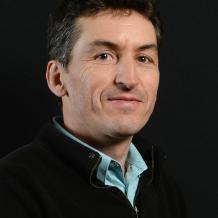
Laurent Mydlarski is a Professor in the Department of Mechanical Engineering at McGill University, affiliated with the Faculty of Engineering. His research focuses on experimental fluid mechanics, particularly turbulent flows and scalar mixing. He holds a Ph.D. from Cornell University and B.A.Sc. from the University of Waterloo. Research interests include turbulence statistics, scalar dispersion, differential diffusion, and industrial cooling applications such as hydroelectric generators and microelectronics. His work combines experimental methods like hot-wire anemometry, laser-induced fluorescence, and particle-tracking velocimetry. Key contributions include studies on multi-scalar mixing in jets, wall shear stress in turbulent flows, and thermal anemometry probe design. His Mydlarski Lab at McGill explores both fundamental fluid dynamics and practical engineering solutions. Recent publications (2023-2025) address multi-scalar mixing metrics, electronic cooling innovations, and drag reduction on porous cylinders. Collaborations with industry focus on applying fluid mechanics principles to real-world thermal management challenges.
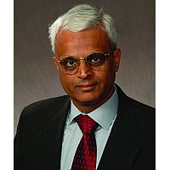
Soumya Dutta is an Assistant Professor in the Department of Computer Science and Engineering at the Indian Institute of Technology Kanpur (IITK), where he leads the INSIGHT: Intelligent Scientific and Visual Computing of Big Data Research Group. He joined IIT Kanpur in October 2022 after working as a Scientist II at Los Alamos National Laboratory (LANL) from July 2019 to August 2022, and previously as a Postdoctoral Research Associate at LANL from June 2018 to July 2019. His educational background includes a Ph.D. and M.S. in Computer Science and Engineering from The Ohio State University (2011-2018), where he was part of the GRAVITY research group, and a B.Tech. in Electronics and Communication Engineering from West Bengal University of Technology, India (2005-2009). Research Interests: Dr. Dutta's research focuses on the intersection of machine learning, visual computing, big data, and high-performance computing. His primary research areas include Machine Learning for Visual Computing and Image Analysis, Big Data Visualization and Analytics, Data Science and HPC, Machine Learning for Scientific Computing, and Explainability and Interpretability of AI Models. His work addresses various big data characteristics including the 5 Vs: Volume, Velocity, Variety, Veracity, and Value. He develops techniques that make complex machine learning models more interpretable and explainable, enabling their effective adoption in real-life applications across scientific domains, social media, IoT, healthcare, and industry applications. Dr. Dutta's research group has secured multiple funded projects including: DAVi: An Intelligent Data Analytics and Visualization Framework (funded by ISRO), Intelligent Visual Computing of Extreme-scale Data for Accelerating Scientific Discovery (IIT Kanpur Initiation Grant), Enabling Interactive Big Data Analytics and Visualization at Exascale (SERB), Development of AI-Enabled National Portal for Efficient Search of Missing People (C3iHub), and Proactive and Generalized Deepfake Defense Mechanisms (C3iHub). Best Reviewer, Honorary Mention Award for IEEE Transactions on Visualization & Computer Graphics (TVCG), 2021 Best Paper Award at ISAV 2021, co-located with Supercomputing (SC) LAAP Award at Los Alamos National Laboratory, 2021 Best Paper Award at TopoInVis 2019 Best Paper Award at ISAV 2018, co-located with Supercomputing (SC) Best Poster Award in 12th Annual CSE Student Poster Exhibition, The Ohio State University, 2018 Best Poster Award in 11th Annual CSE Student Poster Exhibition, The Ohio State University, 2017 Best Paper Honorable Mention Award at IEEE Visualization Conference (IEEE VIS) 2016 Dr. Dutta actively mentors a large group of students including Ph.D., M.Tech., and B.Tech. students. His current Ph.D. students include Shanu Saklani, Sankhadeep Bhowmick, Ananya Chaturvedi, Arpita Santra, Anubhav Dixit (co-supervised), and Robin Shah. He has supervised numerous M.Tech. students with thesis topics ranging from uncertainty-aware neural networks to deepfake detection. Dr. Dutta currently teaches courses including CS360 - Introduction to Computer Graphics and CS661 - Big Data Visual Analytics. The INSIGHT research group collaborates internationally with researchers from Meta, Oak Ridge National Laboratory, and National Taiwan Normal University. The group's work focuses on building machine learning and data science-based solutions to analyze large-scale multifaceted data in a scalable way, enabling interactive and interpretable analytics of complex data from scientific simulations, social media, IoT, healthcare, and other application domains.
James F. Drake is a Distinguished University Professor in the Department of Physics at the University of Maryland, College Park, with affiliations at the Institute for Physical Science and Technology (IPST) and the Institute for Research in Electronics and Applied Physics (IREAP). He holds a B.S., M.S., and Ph.D. in Physics from UCLA (1975). His research focuses on theoretical plasma physics, particularly magnetic reconnection and plasma turbulence, with applications to space physics, solar flares, and magnetic fusion. Key contributions include elucidating the role of whistler waves in reconnection dynamics and advancing understanding of energy release mechanisms in plasmas. Dr. Drake’s awards include the American Physical Society Fellowship and the Humboldt Senior Scientist Research Award. He teaches advanced physics courses (e.g., Physics 604, 611, 761-762) and has pioneered computational models to study reconnection, turbulence, and particle acceleration. Recent work leverages Parker Solar Probe data to explore solar wind dynamics and reconnection in near-Sun environments. Education: UCLA (B.S., M.S., Ph.D. in Physics, 1975) Research Themes: Magnetic Reconnection, Plasma Turbulence, Space Plasma Dynamics Notable Achievements: Leader in reconnection theory; developer of kinetic simulation frameworks; contributor to NASA missions
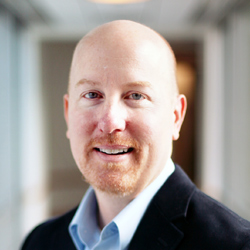
Joey W Huston is a Professor at the Department of Physics & Astronomy, Michigan State University, and a Visiting Professor at the Institute for Particle Physics Phenomenology, Durham University. He has over 600 publications with >30,000 citations, including 9 papers with >500 cites each. Positions: MSU Research Foundation Professor (1998-present), Visiting Professor at Durham (2003-present) Education: Ph.D. (1983) and B.S. (1976) from University of Rochester and Carnegie-Mellon University His research focuses on Quantum Chromodynamics (QCD) , Parton Distribution Functions , and Jet Physics . He contributes to Higgs Boson studies, Supersymmetry , and Dark Matter Searches via the ATLAS experiment at the LHC. Recent articles (2025) highlight advancements in Jet Flavour Tagging , Top-Quark Mass Measurement , and Exotic Higgs Decays , alongside computational innovations like Neural Simulation-Based Inference and Cloud Resource Optimization . Scientific Awards: APS Fellow (2025), Distinguished Visitor by Scottish Universities Physics Alliance (SUPA) Prof. Huston has co-spoken for the CTEQ collaboration and organized workshops at Les Houches, Kavli Institute, and Fermilab. He authored the Handbook on Perturbative QCD and is writing a book on QCD at the LHC for Oxford University Press.
Prof. Dr. Barbara Kraus is the Chair of Quantum Algorithms and Applications at the Technical University of Munich (TUM), affiliated with the TUM School of Natural Sciences. She previously held academic positions at the University of Innsbruck, where she founded her research group in 2010. Education : Physics and Mathematics at the University of Innsbruck; Post-doctoral work at MPI for Quantum Optics and University of Geneva. Her research focuses on foundational problems in quantum information theory, particularly entanglement in multipartite systems, quantum simulation, and verification of quantum processors. She develops theoretical tools for quantum many-body systems and explores applications in quantum computing, emphasizing error characterization and experimental validation. Recent publications highlight advancements in Hamiltonian learning, symmetry-resolved entanglement detection, and multipartite state transformations. Her work bridges theoretical quantum physics with practical implementations, including Rydberg platforms and quantum metrology. Key Awards : START Prize (2010), Ignaz L. Lieben Award (2013), Boltzmann Prize (2011), Südtiroler Sparkasse Research Prize (2019). She supervises doctoral students and postdocs in quantum information theory, with a focus on stabilizer states, quantum networks, and entanglement measures. Her courses at TUM include Quantum Information , Quantum Algorithms , and workshops on entanglement manipulation.
Yali Tang is an Assistant Professor in the Department of Mechanical Engineering at Eindhoven University of Technology (TU/e), specializing in fluid dynamics and transport phenomena within multiphase flows and physicochemical conversions . Her work targets Iron Power technology , green steel production , and alkaline water electrolysis for hydrogen generation, combining advanced computational models with experimental validation . Education: Master's in Chemical Engineering from Sichuan University (2011) PhD in Mechanical Engineering at TU/e (2015) with Prof. Hans Kuipers Research Interests: She focuses on interphase interactions , interfacial transport mechanisms , and high-resolution simulations (down to 40 nm mesh) to predict bubble coalescence and film dynamics. Her studies on hydrogen bubble growth , dendritic iron formation , and gas distribution in electrolyzers aim to refine reactor design and industrial processes. Collaborations with industrial partners ensure practical applicability of her computational models. Recent Publications: Her 2025 work includes dimensional analysis of liquid film formation, solutal Marangoni effects in electrolysis, and X-ray validation of gas distribution models. Earlier studies (2020–2023) cover defluidization behavior of iron fines, CFD-DEM modeling of raceways, and acoustic field applications in particle dynamics. Labs & Collaborations: She leads computational efforts within the Power & Flow group under Prof. Niels Deen, contributing to the EIRES Research cluster. Her work bridges academic research with industrial innovation in fluid dynamics and energy transition technologies.
James B. Rawlings is the Mellichamp Process Control Chair in the Department of Chemical Engineering at the University of California, Santa Barbara, and holds the rank of Professor. His research focuses on chemical process control, reaction engineering at the molecular level, and computational modeling with tools like Octave. He has held prominent roles, including the Paul A. Elfers Chair at UW Madison and the Steenbock Professor of Engineering. Education: PhD in Chemical Engineering from the University of Wisconsin-Madison (1985), BS in Chemical Engineering from The University of Texas at Austin. Postdoctoral training at the Institute for System Dynamics and Process Control, University of Stuttgart (1985-1986). Research interests include nonlinear systems, model predictive control (MPC), moving horizon estimation (MHE), and stochastic reaction engineering. His work bridges theory and industrial applications, emphasizing robustness and practical implementation. Awards: Elected Fellow of the National Academy of Engineering (2016), IFAC (2016), and IEEE (2012). Recipient of the Process Automation Hall of Fame (2016), Vilas Distinguished Achievement Professor (2015), and numerous AIChE awards. Honorary doctorate from Technical University of Denmark (2011). Grants & Leadership: Led NSF-funded projects on MPC and control systems. Developed Octave, a widely used computational tool. Active in academic leadership and curriculum development, recognized with teaching awards including the Chancellor’s Distinguished Teaching Award (2013). Labs & Teams: Directs research groups focused on control theory, computational tools, and industrial process optimization. Collaborates with industry on MPC implementation and disturbance modeling.
Christophe Ancey is an Associate Professor at the École Polytechnique Fédérale de Lausanne (EPFL), where he serves in the School of Architecture, Civil and Environmental Engineering (ENAC), specifically in the Institute of Civil Engineering (IIC) and the Environmental Hydraulics Laboratory (LHE). He also holds teaching appointments in SGC-Teaching and EDME-Teaching departments at EPFL. His office is located at GC A1 401, Station 18, 1015 Lausanne, Switzerland. Dr. Ancey holds both a PhD and engineering degree from Ecole Centrale de Paris and Grenoble National Polytechnic Institute. After completing his doctoral work (1994-1997) on rheology of granular flows under Pierre Evesque, he worked as a researcher at Cemagref before joining EPFL in 2004. He directs the Environmental Hydraulics Laboratory and serves as associate editor for Water Resources Research, a leading journal in hydrology. Dr. Ancey's research spans fluid dynamics, rheology, and hydraulics with emphasis on geophysical flows and natural hazards. His work focuses on three interconnected themes: rheology of concentrated suspensions (particularly granular flows in avalanches and mudflows), inverse problems in rheology (determining microscopic behavior from macroscopic measurements), and particle entrainment in turbulent suspensions (erosion and sediment transport processes). His recent publications (2022-2025) demonstrate continued innovation in sediment transport modeling, experimental techniques like PIV for complex flows, and integration of machine learning approaches. The research shows progression from fundamental fluid mechanics to practical applications in natural hazard assessment and river engineering, with particular attention to granular segregation, avalanche-obstacle interactions, and river morphodynamics. Associate Editor, Water Resources Research Co-founder of Toraval, an engineering consulting firm specializing in avalanche risk management Dr. Ancey teaches courses on Fluid Mechanics, Flood and Dam Break Waves, Hydrological Risks and Structures, and Similarity and Transport Phenomena in Fluids. He has supervised numerous PhD students whose work spans environmental hydraulics, granular flows, and sediment transport, with current students including Chen Yanan, Farazande Sofi, and Giboulot Axel Loïc among others.
Naresh N. Thadhani is a Professor and Chair of Materials Science and Engineering at Georgia Tech, with an adjunct role in the Woodruff School of Mechanical Engineering. His research focuses on shock-induced material changes, high-strain-rate mechanics, and dynamic compaction of powders. He leads a lab equipped with advanced facilities like gas guns and laser-accelerated systems for studying impacts up to 1200 m/s. Education: Ph.D., New Mexico Institute of Mining and Technology (1984); M.S., South Dakota School of Mines and Technology (1981); B.E., University of Rajasthan, India (1980). Research interests include shock compression of metals/ceramics, phase transformations in metallic glasses, and structural energetic materials. His work combines experimental diagnostics (e.g., VISAR, photonic Doppler velocimetry) with computational modeling (CTH/ALE3D codes). Key awards: APS Fellow (2007), ASM International Fellow (2000). Editorial roles include Associate Editor of Shock Waves and Key Reader for Metallurgical and Materials Transactions . Lab & Group: A team of 1 postdoctoral fellow, 11 PhD students, and 3 undergraduates. Over 30 graduates to date. Active in advisory roles for national/international conferences and industrial consultancies. Future work emphasizes nanocomposite magnets and meso-scale modeling of heterogeneous materials under shock.
Freddy Bouchet is a Directeur de Recherche at CNRS and a Professeur attaché at École Normale Supérieure de Paris (ENS-PSL). His work bridges mathematical physics, climate science, data science, and statistical mechanics , focusing on turbulent flows, climate extremes, and large deviation theory . He will lead the Laboratoire de Météorologie Dynamique (LMD) starting 2025. Research Themes : Statistical mechanics of geophysical flows (Jupiter's jets, ocean currents). Large deviation theory for rare events in turbulence and climate. Non-equilibrium phase transitions in atmospheric/oceanic systems. Ensemble inequivalence in systems with long-range interactions. Scientific Awards : Three Physicists Prize Collaborations : Tapio Schneider, Antoine Venaille, J. Laurie, O. Zaboronski, B. Dubrulle, A. Venaille. Labs & Teams : Climate and Statistical Mechanics group at ENS de Lyon Future director of Laboratoire de Météorologie Dynamique (LMD/IPSL) Publications span climate dynamics, turbulence, statistical mechanics, and large deviation theory , with applications to Jupiter's atmosphere, ocean vortices, and non-equilibrium systems . His work often challenges paradigms like Tsallis non-extensive statistics.
R. Edwin García is a Professor at the School of Materials Engineering at Purdue University, where he has been faculty since 2005. He holds appointments in the Materials Engineering department within Purdue's College of Engineering, specifically in the School of Materials Engineering located in the Neil Armstrong Hall of Engineering at Purdue's West Lafayette campus. His educational background includes: B.S. in Physics from the National University of Mexico (1996) M.S. in Materials Science and Engineering from Massachusetts Institute of Technology (2000) Ph.D. in Materials Science and Engineering with a minor in Applied Mathematics from Massachusetts Institute of Technology (2003) Professor García's research focuses on the design of materials and devices through the development of a fundamental understanding of the solid state physics of individual phases, their short and long range interactions, and associated microstructural properties and time evolution. His current research emphasizes establishing relationships between material properties and resultant performance and degradation in electrochemical systems. He integrates computational approaches ranging from kinetic Monte Carlo, phase field and level set methods, to finite elements, finite volumes, and symbolic computing. His work particularly addresses microstructure design, crystallographic texture, and grain boundary science and engineering to control the topology of underlying phases and establish practical relations between processing, microstructure, and material properties. His recent publications demonstrate a strong focus on lithium-ion battery technology, ferroelectric materials, and computational modeling of material behaviors. The research trends show increasing integration of machine learning with traditional computational methods, exploration of novel sintering techniques like flash sintering, and deeper investigation into the fundamental mechanisms of material degradation in energy storage systems. His work spans multiple length scales from atomistic to continuum modeling, reflecting a comprehensive approach to materials design and analysis. Professor García teaches several courses including MSE 230 (Structure and Properties of Materials), MSE 350 (Thermodynamics of Materials), MSE 597G (Modeling and Simulation of Materials), MSE 597I (Introduction to Computational Materials), and MSE 597N (Physical Properties of Crystals). He mentors graduate students in areas related to computational materials science, battery technology, and microstructural evolution. His research group, the Laboratory of Computational Microstructures, focuses on developing home-grown analytical theories and algorithms to resolve relevant time and length scales in materials systems. The group's work has significant implications for portable power sources, including rechargeable batteries and fuel cells, as well as for ferroelectric ceramic applications.
N.K. Anand is a Distinguished Professor of Mechanical Engineering at Texas A&M University, holding the James J. Cain III Regents Professorship. He leads research in advanced computational methods and thermal-hydraulic systems, with affiliations to Multidisciplinary Engineering and Nuclear Engineering programs. His work focuses on physics-informed machine learning, finite volume methods, and aerosol transport in nuclear reactor contexts. Education: PhD (Mechanical Engineering, Purdue University, 1983), M.S. (Kansas State University, 1979), and B.E. (Bangalore University, 1978). Awards include the ASME James Harry Potter Gold Medal (2020) and multiple teaching/administrative excellence awards from Texas A&M. Research emphasizes fluid dynamics modeling (e.g., PINNs for periodic flows, turbulent deposition studies), heat pipe systems, and nuclear reactor thermal-hydraulics. His Versatile Test Reactor (VTR) contributions include cartridge loop designs and aerosol transport experiments. Active in high-temperature reactor safety, with facilities studying pebble beds, helical coil exchangers, and HTGR upper plenum dynamics. Publications span physics-informed ML applications, finite volume techniques, and nuclear thermal systems. Grants supported development of advanced CFD tools and reactor safety infrastructure. His lab collaborates on international nuclear energy projects and emerging AI-driven simulation methodologies.
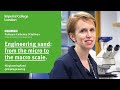
Prof. Catherine O'Sullivan is a Professor of Particulate Soil Mechanics at Imperial College London's Department of Civil and Environmental Engineering, part of the Faculty of Engineering. She leads the Geotechnics Section and serves as Editor-in-Chief of the ASCE Journal of Geotechnical and Geoenvironmental Engineering. Her research focuses on particulate soil mechanics, employing Discrete Element Modelling (DEM) and micro-CT imaging to study sand behavior, reservoir sandstones, and internal erosion. Notable recognitions include the 2016 Shamsher Prakash Research Award and the 2021 President’s Teaching Innovation Award. Education : PhD in Civil Engineering, University of California, Berkeley (2002) MEngSc in Civil Engineering, University College Cork (Ireland) BEng (Civil Engineering), University College Cork (Ireland) Research Interests : Prof. O'Sullivan's work integrates computational and experimental methods to explore granular material behavior. Key areas include DEM validation, μCT analysis, and pore network modeling. Her group collaborates across disciplines, involving physicists and mechanical engineers alongside civil engineers. Awards & Recognition : 2015 Geotechnique Lecture Student Choice Supervision Award (nominated twice) 2023 Alert Geomechanics Special Lecture Advising & Grants : She supports PhD and postdoctoral researchers through Imperial scholarships and fellowships. Her students often explore particulate soil behavior, with many securing prestigious awards. Labs & Teams : Leads the Geotechnics Section at Imperial, fostering interdisciplinary research in geomechanics and computational modeling.
Assoc Prof Ng Teng Yong is an Associate Professor at the School of Mechanical & Aerospace Engineering (NTU), specializing in numerical modeling and simulation. With a background as Research Manager at A*STAR Institute of High Performance Computing, his work spans materials science, nanotechnology, and aerospace engineering. Current focus on graphene-based desalination membranes Expertise in molecular dynamics simulations Investigates nanoscale fluid mechanics and structural dynamics Recent publications highlight advancements in energy-efficient electrodialysis, smart robotics, and nonlinear vibration analysis. His interdisciplinary approach integrates computational methods with experimental validation in additive manufacturing and soft material mechanics.
Dr. Christopher M. Wolverton is a Professor of Materials Science and Engineering at Northwestern University , where he leads the Wolverton Research Group . His work focuses on computational materials science with applications in energy sustainability , particularly in batteries , hydrogen storage , and thermoelectrics . PhD in Physics from University of California, Berkeley BS in Physics (summa cum laude) from University of Texas, Austin His research leverages first-principles quantum mechanical simulations and machine learning to enable virtual materials synthesis before laboratory testing. The group specializes in hybrid computational methods integrating Density Functional Theory (DFT) , Monte Carlo simulations , and phase-field microstructural models . The article portfolio shows leadership in energy storage materials , with recent work on data-driven nanoparticle facet control , mixed-anion semiconductors , and machine learning-accelerated discovery . Publications span top journals including Nature Energy , Nature Materials , and Science . 2006 Ford Motor Company Technical Achievement Award 2005 Ford Patent & Publication Awards 2003 Ford Environmental/Physical Sciences Recognition As advisor to PhD candidates Zhenpeng Yao , Shiqiang Hao , and Shane Patel , he fosters interdisciplinary research connecting materials informatics with experimental validation . The group maintains active collaborations with Argonne National Lab and MIT/Harvard teams.