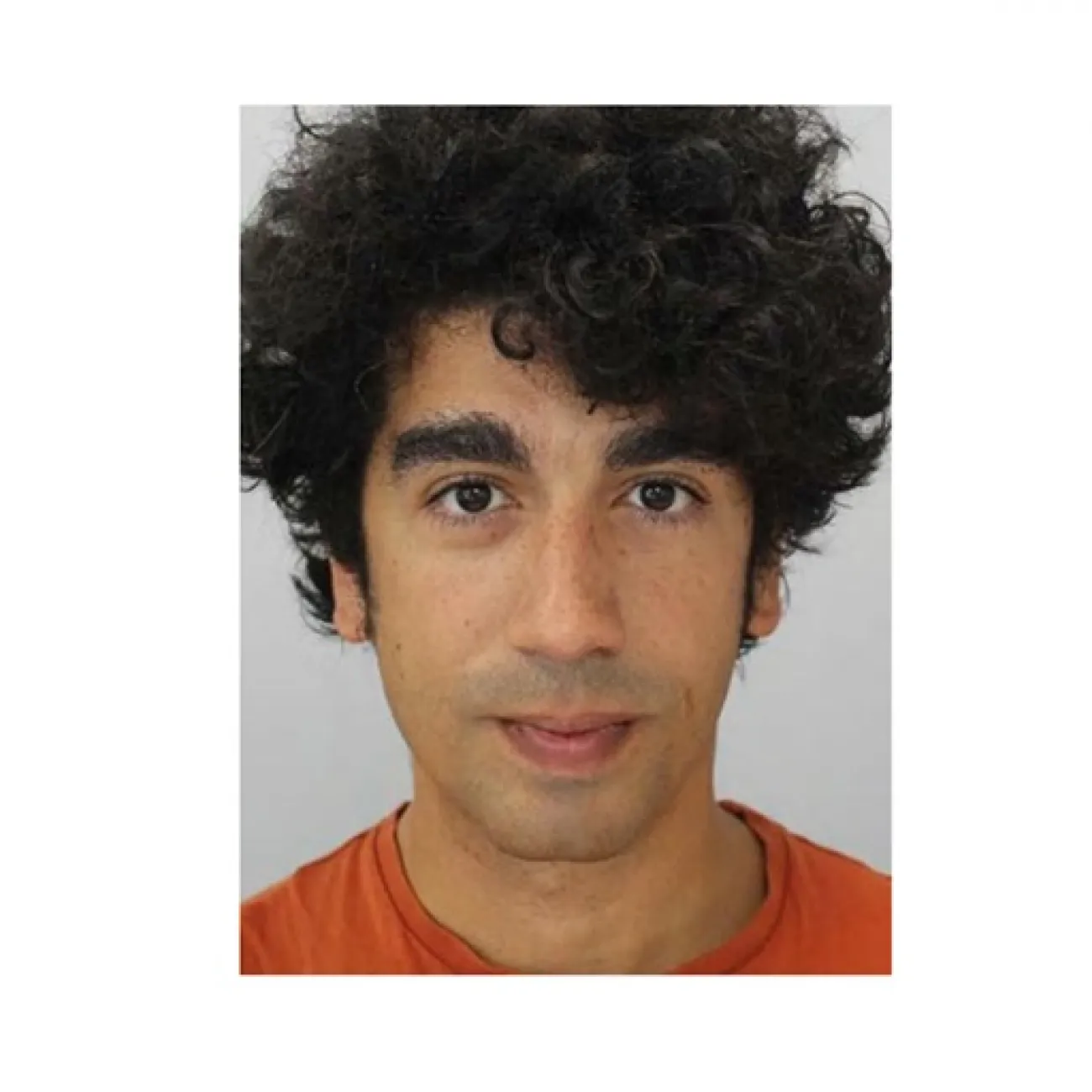
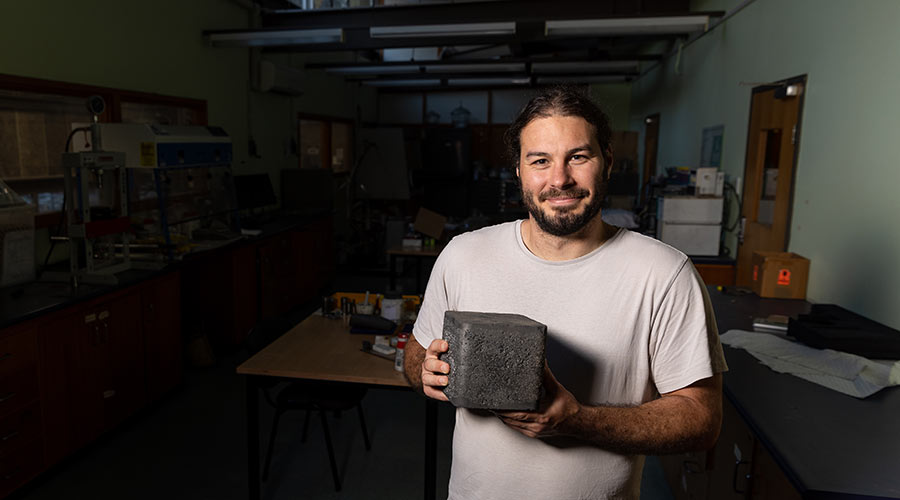
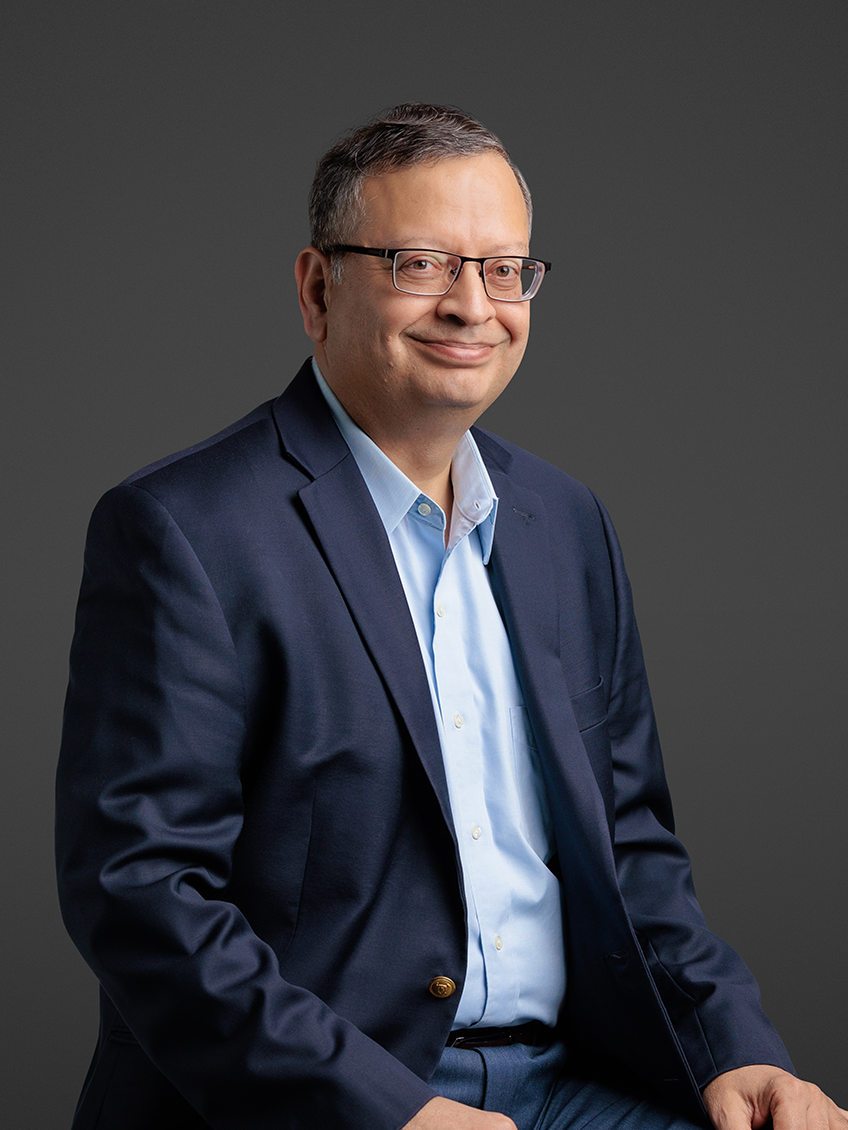
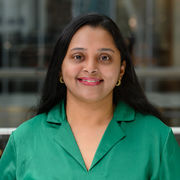
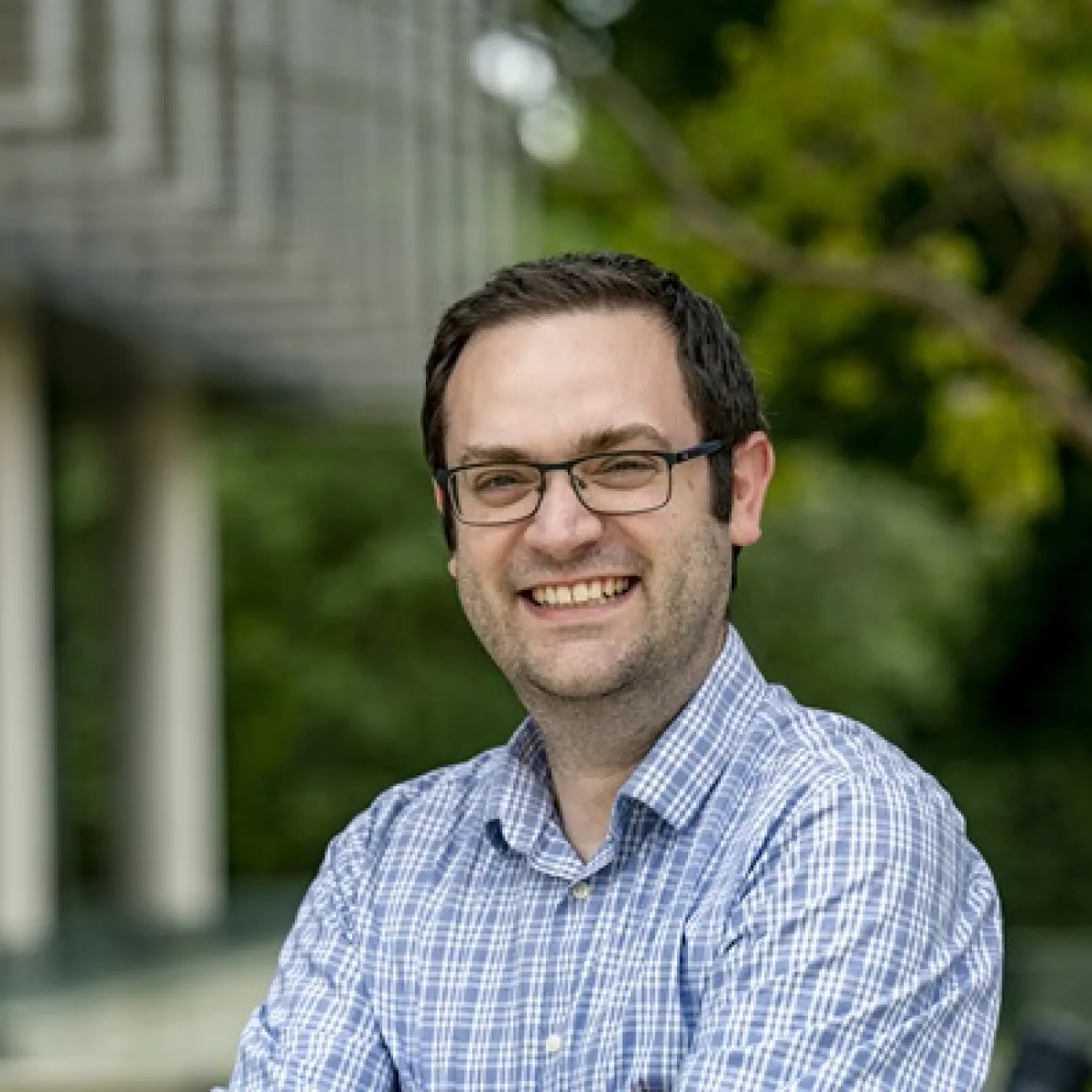
Dr Leok Lee is a Lecturer in the School of Electrical and Mechanical Engineering at the University of Adelaide . He is also an active member of the Centre for Energy Technology , contributing to cutting-edge research in renewable energy systems. Research Interests: Renewable energy systems, with a focus on solar thermal energy and energy storage. System integration and optimisation of complex transient energy systems. Computational fluid dynamics (CFD) and experimental design for energy applications. Decarbonisation of heavy industry through clean energy technologies. His research spans from fundamental studies in heat transfer and fluid mechanics to applied engineering solutions for decarbonising industrial processes. He has led and contributed to projects funded by ARENA and HILT CRC, targeting the integration of concentrated solar thermal energy into industrial applications such as the Bayer Alumina process. Supervision & Mentorship: Dr Lee is eligible to supervise Masters and PhD students and actively mentors undergraduate, Masters, and PhD candidates. He encourages prospective students to contact him via email to discuss research opportunities. Contact: Email: leok.lee@adelaide.edu.au Location: Room 3, Engineering South, North Terrace Campus
Dr. Katherine Fish is a Research Fellow in Water Systems Microbiology at the School of Mechanical, Aerospace and Civil Engineering, University of Sheffield. She holds a PhD in Civil and Structural Engineering (2013) and an MSc in Biological Science (2009) from the same institution. PhD: The impact of hydraulic regime upon biofilms in drinking water distribution systems , University of Sheffield. MSc: First-Class Honours in Biological Science, Department of Animal and Plant Sciences, University of Sheffield. Her research focuses on applied environmental microbiology, particularly the microbial ecology of natural and engineered environments. Key areas include: Biofilm formation, mobilisation, and stability in drinking water systems Interdisciplinary approaches to biofilm management and water quality Microbial community responses to disinfection practices Impacts of hydraulic regimes and chemical treatments on biofilms Public health implications of biofilm dynamics She collaborates with industry partners such as AkzoNobel, Dŵr Cymru Welsh Water, and South Staffs Water on projects like Managing Aquatic Biofilms via Surface Manipulation (funded by NBIC, BBSRC) and Biomonitoring . Her work also contributes to EPSRC-funded initiatives including TWENTY65, Sheffield Water Centre, PODDS, Pipe Dreams, and Pennine Water Group. Her publications span topics like Pseudomonas aeruginosa interactions in biofilms, disinfection residual behaviour, microplastic contamination in aquatic systems, and climate change impacts on water infrastructure. These studies integrate biological, chemical, and physical analyses to enhance water system management. Contact: k.fish@sheffield.ac.uk | ORCID | LinkedIn
Anders C. Hansen is Professor of Mathematics at the University of Cambridge (Faculty of Mathematics, Department of Applied Mathematics and Theoretical Physics) and Professor II at the University of Oslo. He leads the Applied Functional and Harmonic Analysis group and holds a Royal Society University Research Fellowship. His research bridges pure mathematics and cutting-edge applications in AI, computational harmonic analysis, inverse problems, and compressed sensing. Education: PhD from the University of Cambridge, MA from UC Berkeley, and BA from the Norwegian University of Science and Technology. Research Interests: Hansen's work centers on foundational challenges in computational mathematics, including the Solvability Complexity Index hierarchy for classifying computational problems, instability phenomena in deep learning, and theoretical advances in compressed sensing. His group develops rigorous frameworks for high-dimensional data analysis, medical imaging, and AI safety, often exposing paradoxes in algorithmic reliability. Publication Trends: Recent articles focus on the limits of deep learning (e.g., Smale's 18th problem, instability in image reconstruction), mathematical foundations of AI (trustworthiness, feature selection, LLMs), and advanced compressed sensing (asymptotic incoherence, spectral computations). His work consistently intersects functional analysis with computational feasibility. Awards: PROSE Award Finalist (2022) Whitehead Prize (2019) IMA Prize in Mathematics and Applications (2018) Leverhulme Prize (2017) Royal Society University Research Fellow (2012) Advising & Leadership: Hansen has supervised 17 PhD students and 8 postdocs. He leads the Applied Functional and Harmonic Analysis group, coordinating interdisciplinary projects in mathematical data science. His editorial roles include SIAM Journal on Imaging Sciences and Proceedings of the Royal Society A .
Professor Nicholas Warren is a Chair in Sustainable Materials at the School of Chemical, Materials and Biological Engineering at the University of Sheffield. With a PhD from Sheffield and academic experience at Leeds University (2016-2024), his research integrates polymer chemistry with automation technologies. Education: University of Bristol (2005), University of Sheffield (PhD) Academic Positions: Postdoc at Sheffield (2005-2016), University Academic Fellow at Leeds (2016-2024), Associate Professor (2021-2024) Current Role: Chair in Sustainable Materials (2024-present) Research focuses on polymer science with flow chemistry , online monitoring , and artificial intelligence to advance sustainable materials. Key article trends include self-driving laboratories , multi-objective optimization , and nanostructured polymer systems . Scientific recognitions include: 2022 Macro Group UK Young Researchers Medal 2023 RSC Reaction Chemistry & Engineering Outstanding Early Career Paper Award Advisees span current and alumni PhD students like Dr Stephen Knox , Anna Morrell , and Dr Charlotte Pugsley . His team employs self-driving lab platforms that combine robotics, AI, and online analytics for accelerated materials discovery.
Sonja Wogrin is a University Professor (Univ.-Prof.) at Graz University of Technology (TU Graz), where she has been heading the Institute for Electricity Economics and Energy Innovation since August 2021. She holds a Dipl.-Ing. in Technical Mathematics from TU Graz (2008), a Master of Science in Computation for Design and Optimization from MIT (2008), and a doctorate in Electricity Systems from Universidad Pontificia Comillas (2013). Her educational background includes: Doctorate in Electricity Systems, Universidad Pontificia de Comillas (June 2013) Dipl.-Ing. in Technical Mathematics, Graz University of Technology (October 2008) Master of Science in Computation for Design and Optimization, MIT (June 2008) Professor Wogrin's research focuses on decision support systems in the energy sector, optimization methodologies, and particularly the problem of generation capacity expansion. Her work spans several key areas including bilevel programming, capacity expansion planning, energy storage systems, and time series aggregation for energy system optimization. She has made significant contributions to understanding how to integrate renewable energy sources into power systems while maintaining economic efficiency and grid stability. Her research often addresses the challenges of decarbonizing electricity systems through advanced mathematical modeling and optimization techniques. Her recent publications demonstrate a strong focus on improving the computational efficiency of energy system models while maintaining accuracy, with particular attention to the integration of renewable energy sources, energy storage systems, and the development of resilient energy communities. She has pioneered work on time series aggregation methods that balance computational tractability with model accuracy, which is crucial for long-term energy planning under uncertainty. Professor Wogrin has received several prestigious awards and fellowships including: 4th EASE Student Award for "Co-Optimisation of energy storage technologies in tactical and strategic planning models" (2019) Beca de movilidad para investigadores "NILS Ciencia y Sostenibilidad" (2015) Beca Erasmus "Personal Docente/Investigador" de formación (2016) Beca Iberdrola de ayuda a la investigación en energía y medio ambiente (2020) She leads multiple significant research projects including EU - NetZero-Opt, RINGs, iKlimET, V2G-QUESTS, and CIDEAL, which focus on optimizing energy systems for net-zero emissions, resilient energy networks, climate and energy system modeling, vehicle-to-grid integration, and industrial decarbonization. Her work has substantial practical implications for energy policy and grid operations in Austria and beyond. Professor Wogrin collaborates extensively with industry partners including Austrian Power Grid AG, KELAG, and Netz Niederösterreich, ensuring her research addresses real-world energy challenges. Professor Wogrin leads the research group at the Institute for Electricity Economics and Energy Innovation, which develops advanced optimization models for energy systems. Her team has created the LEGO (Low-carbon Expansion Generation Optimization) model, an open-source tool for energy system optimization that has gained international recognition. The group's work spans from fundamental optimization methods to practical applications in energy system planning and operation, with a strong emphasis on computational efficiency and model accuracy.
Dr Zhiyuan (Thomas) Tan is an Associate Professor at Edinburgh Napier University’s School of Computing, Engineering and the Built Environment . He is internationally recognised for his cybersecurity research and has been listed among Stanford University’s Top 2% Scientists for 2021–2023. Education BEng (2005) with high distinction – North-eastern University, China MEng (2008) – Beijing University of Technology, China PhD in Computer Systems (2014) – University of Technology Sydney, Australia Research Interests Dr Tan’s research integrates cybersecurity with machine learning and data analytics. His core areas include: Intrusion detection and defence of critical service systems Adversarial machine learning for malware and anomaly detection Virtualisation security through non-parametric behaviour modelling IoT and vehicular network security—cloud/edge/cloudlet frameworks Privacy-preserving AI and federated machine unlearning Smart-city digital forensics and cyber-physical system resilience Research Output Trends His recent articles (2020–2025) reveal a strong focus on federated learning, edge & mobile computing, UAV coordination, and AI-driven security. Topics span advanced steganography, metamorphic malware, graph injection attacks, and trustworthiness in vehicular platoons, all anchored in real-world IoT and transportation applications. Awards & Distinctions Stanford University Top 2% Scientists List (2021, 2022, 2023) National Research Award 2017 – Research Council of the Sultanate of Oman Best Paper Awards (three instances) Kaspersky Lab Student Cyber Security Conference – Finalist Award SICSA Supervisor of the Year 2019 – Honourable Mention Grants & Leadership Dr Tan has attracted over £200k in external funding including: Carnegie Trust (£73,564) – Federated Machine Unlearning ENU Development Trust (£29,998) – Machine Unlearning Royal Society (£12,000) – VANET Security & Privacy SICSA & other awards for MemoryCrypt, AI Secrets, behaviour biometrics, and visiting-fellow schemes. Supervision & Mentoring Since 2013 he has supervised or co-supervised 16 doctoral candidates and several master’s students; six PhDs have successfully graduated. Roles range from Director of Studies to additional supervisor across diverse topics from malware evolution to VR olfactory interfaces. Research Groups & Collaboration He is affiliated with the Centre for Artificial Intelligence and Robotics , the Centre for Distributed Computing, Networking and Security , and the Centre for Cybersecurity, IoT and Cyber-physical Systems at ENU, fostering interdisciplinary collaboration with national and international partners.
Dr. Siul Ruiz is a Lecturer at the University of Southampton, affiliated with the Bioengineering Group. His research focuses on physical processes in soils and biological systems, including solid/fluid mechanics, mass/energy transport, and imaging techniques like X-ray computed tomography (XCT) and neutron radiography. He develops mathematical models to study soil biomechanics, biofilm dynamics in plants, and the impact of fertilisers on crop nutrition. Current projects include quantifying soil biomechanics via X-ray diffraction and modeling olive tree resistance to Xylella fastidiosa. Funded by the Royal Society and BBSRC, his work bridges applied mathematics, mechanical engineering, and environmental science. Education: MSc in applied mathematics and mechanical engineering (focus on soft robotics). Research Interests: Soil-plant interactions, biofilm modeling, and biophysical constraints in ecological systems. His recent publications explore topics like phosphate removal mechanisms in soil, Xylella fastidiosa biofilm spread in olive trees, and high-throughput analysis of plant stem structures. He supervises two PhD students in Engineering and the Environment. Dr. Ruiz aims to extend biomechanical quantification techniques for broader applications, leveraging interdisciplinary approaches.
Dr Dylan Cuskelly is a Lecturer in the School of Engineering at the University of Newcastle, Australia. His research focuses on advanced materials development for energy storage and sustainable manufacturing, alongside STEM education innovation. He co-founded MGA Thermal, a company commercializing thermal energy storage materials derived from miscibility gap alloys (MGAs). Education: PhD in Mechanical Engineering (University of Newcastle, 2015) Bachelor of Engineering (Mechanical) (Hons) (University of Newcastle, 2009) Research Interests: Development of novel materials for energy storage applications Synthesis of MAX/MAB phase ceramics and metal alloys Economical material production processes Integration of renewable energy storage solutions STEM education pedagogy and curriculum design Grants & Awards: 2022: iSTEM Zero to Hero grant (Google Australia, $11,863) 2019: Optimisation of Thermal Energy Storage grant (MGA Thermal, $192,000) 2017: Excellence in Teaching and Learning Award (University of Newcastle) Collaborations: Active partnerships with industry (MGA Thermal, Sunburnt Space Co), academia (University of Melbourne), and international research networks. Labs/Teams: Leads the Advanced Materials Group at Newcastle, focusing on thermal energy storage materials and sustainable manufacturing processes.
Andrea Meilán-Vila is an Assistant Professor in the Department of Statistics at Universidad Carlos III de Madrid since 2021, holding a Juan de la Cierva Fellowship since 2023. She earned her PhD in Statistics from Universidade da Coruña (2021) and previously served as a Postdoctoral Fellow at Universidade de Santiago de Compostela's Department of Statistics, Mathematical Analysis and Optimisation. Her research focuses on nonparametric methods for analyzing complex data types, including directional, spatial, and functional data. Key areas include kernel smoothing techniques, goodness-of-fit testing for regression models, and spatial trend estimation. She serves as an Associate Editor for the Journal of Nonparametric Statistics . Recent work emphasizes applications in climate science (temperature curve modeling), fluid dynamics (wake flow control), and biomedical imaging (hippocampus shape analysis). Her methodologies address challenges like sparse data estimation and spatial correlation in regression frameworks. Key Projects: STENED (Stein-based goodness-of-fit tests for non-Euclidean data) Awards: Juan de la Cierva Fellowship (2023) Publications span journals like Journal of Fluid Mechanics , Statistical Papers , and TEST , with a focus on methodological advancements in statistical modeling and computational validation.
Professor Ronny Pini is a Professor of Multiphase Systems at Imperial College London's Department of Chemical Engineering within the Faculty of Engineering. His research focuses on sustainable industrial processes, particularly carbon capture and storage (CCS), porous media dynamics, and imaging-based process design. He holds a PhD in Mechanical and Process Engineering from ETH Zurich and has held academic positions including Senior Lecturer and Reader at Imperial College since 2015. His educational background includes a Postdoctoral fellowship at Stanford University (2010-2013) and prior roles at the Colorado School of Mines. Research interests span multiphase flow mechanics, adsorption science, and environmental engineering applications. Key projects include the InFUSE Prosperity Partnership and Digital Rocks Lab, leveraging X-ray tomography, positron emission tomography, and computational models to study subsurface CO2 storage and sustainable materials. Professor Pini's work integrates chemical engineering with material science and earth sciences, addressing global challenges like industrial decarbonisation. He collaborates on developing advanced imaging techniques to characterise porous media behavior and optimise processes for energy transition. Current focus areas include direct air capture technologies and enhancing oil recovery via CO2 utilisation. His research outputs include over 150 peer-reviewed articles, with recent emphasis on adsorption-based CO2 capture systems, pore-scale transport phenomena, and sustainable process design frameworks. He is actively involved in training early-career researchers through Imperial College's Chemical Engineering programs and international collaborations.
Rakesh Nagi is a Professor and Head of the Engineering Systems and Design Pillar at Singapore University of Technology and Design (SUTD), where he joined in August 2023. He concurrently holds the Donald Biggar Willett Professorship at the University of Illinois, Urbana-Champaign (UIUC), on leave. His academic leadership includes serving as Department Head of Industrial and Enterprise Systems Engineering at UIUC (2013–2019) and as Interim Director of the Illinois Applied Research Institute (2016–2018). Previously, he was Chair of Industrial and Systems Engineering at the University at Buffalo (SUNY) from 2006 to 2012. Education: PhD (1991) and MS (1989) in Mechanical Engineering from the University of Maryland, College Park, with work at the Institute for Systems Research and INRIA, France. BE (1987) in Mechanical Engineering from the University of Roorkee (now IIT Roorkee), India. Research focuses on Data Science, Machine Learning, Operations Research, GPU-accelerated computing, and military applications. Key areas include Big Graphs, High-level Information Fusion, Production Systems, and Multi-Agent Systems. His work often leverages parallel computing and optimization techniques. Recipient of prestigious awards: IISE David F. Baker Award (2022), INFORMS Koopman Award (2021, 2018), and multiple DARPA Graph Challenge recognitions. Contributions span over 100 peer-reviewed articles in top journals (e.g., Operations Research, IEEE Transactions) and conferences. Research projects include Hybrid AI/ML-Optimization for cloud workflows, GPU-accelerated algorithms for multi-target tracking, and interventions against illicit supply chains. Active collaborations with IBM-Illinois and NSF-funded initiatives address strategic resource allocation and network analysis. Labs/Teams: Leads the Engineering Systems and Design Pillar at SUTD and coordinates interdisciplinary projects at UIUC’s Coordinated Science Laboratory.
Farooq Azam is a Research Fellow at the Department of Mechanical Engineering , University College London , focusing on Modelling and Optimisation of Sustainable and Smart Technical Textiles . He works in the Roberts Engineering Building, London, United Kingdom (WC1E 7JE). Research Interests: Architected materials, Metamaterials, Additive manufacturing, Structural Imaging, Structural optimisation, AI/Machine Learning, Applied Mechanics, Mechanics of Materials Email: farooq.azam.20@ucl.ac.uk Recent Research Trends : His work spans additive manufacturing applications in biomedical components, structural optimization of architected materials, turbulence modeling in engines, and machine learning-driven metamaterial design. Key areas include Ti6Al4V scaffolds, hexagonal honeycomb configurations, and carbon microlattices. Scientific Awards : FHEA (Fellowship of the Higher Education Academy), 2024 Teaching : He has taught modules such as Group Manufacturing Challenges (MECH0099) , Micro/Nano Architected Composite Materials (MECH0096) , and Elasticity and Plasticity (MECH0026) at UCL.
Dr Smitha Gopinath is a Lecturer in the School of Chemical, Materials and Biological Engineering at the University of Sheffield , where she leads research in sustainable engineering systems within the Sustainable Design Laboratory (SDL) . Education & Career Path PhD in Chemical Engineering, Imperial College London Post-doctoral researcher, Applied Mathematics and Plasma Physics Group, Los Alamos National Laboratory Research Focus Dr Gopinath’s interdisciplinary work centres on the design, calibration and operation of sustainable engineering systems . She develops high-fidelity models and large-scale optimisation algorithms tailored to energy and materials challenges. Core interests include: Thermo-mechanical energy conversion devices (heat pumps, organic Rankine cycles) Carbon-capture utilisation and storage (CCUS) via novel solvents and separation systems Power-grid expansion and operation for renewable integration and decarbonisation Methodologically, she integrates Integrated Molecular and Process Synthesis (IMPS) with Optimisation Accelerated by domain Knowledge (OAK) to co-design molecules, materials and flowsheets that meet stringent energy and environmental targets. Publication Landscape Across 2015–2025 her publications reveal a clear trajectory from fundamental thermodynamic measurements and molecular design toward rigorous optimisation of large-scale energy systems. Early work concentrated on CO₂ solubility and carbonation kinetics of steel slag, providing essential data for carbon-sequestration schemes. Subsequent papers introduced advanced optimisation frameworks—outer-approximation algorithms, exact reformulations and feasibility-based methods—applied to solvent-based CO₂ capture, organic Rankine cycle working-fluid selection and AC optimal power flow (ACOPF). Recent contributions benchmark global optimality certificates for ACOPF problems, underscoring her drive to bridge chemical process systems engineering with electrical power systems optimisation. Teaching & Mentoring Dr Gopinath teaches undergraduate modules: CPE440 (Particle Technology) CPE170 (Particle Technology) She actively invites prospective PhD students to join the Sustainable Design Laboratory, offering supervision on projects spanning sustainable process design, renewable energy systems and algorithmic optimisation. Laboratory & Collaborative Networks She directs the Sustainable Design Laboratory (SDL), a multidisciplinary team leveraging systems engineering, multi-scale modelling, process simulation and optimisation to re-imagine a sustainable chemical and energy industry. The SDL collaborates with international partners, including Los Alamos National Laboratory and leading researchers in applied mathematics and power systems engineering.
Dr. David Toal is an Associate Professor at the University of Southampton, specializing in the application of machine learning techniques to aerospace system design optimization. His research focuses on automated geometry creation, prediction of simulation outputs, and fundamental machine learning advancements. He is affiliated with the Computational Engineering and Design Group and the Institute for Life Sciences. His teaching interests include engineering design methods, optimization, reliability, and CAD integration. He supervises multiple PhD students in areas such as aerodynamic geometry generation and structural design automation. Dr. Toal has led projects funded by the European Union and EPSRC, including E-Break (FP7) and equipment grants for advanced computational tools. His work emphasizes multidisciplinary collaboration, leveraging CAD systems and deep learning for applications in advanced aerial mobility and turbine optimization. Recent publications highlight advancements in Kriging models, adversarial auto-encoders, and semantic segmentation for engineering design. Dr. Toal's research bridges computational methods with practical aerospace challenges, aiming to accelerate design processes through data-driven and AI-enhanced approaches.
Dr. Tracey Sletten is an Associate Professor (Research) in Psychology at Monash University's Turner Institute for Brain & Mental Health. She specializes in sleep and circadian rhythm research, particularly focusing on shift work impacts, fatigue management, and light-based interventions. Her work contributes to UN Sustainable Development Goals related to health and well-being. Dr. Sletten holds a PhD from the University of South Australia and has held postdoctoral roles at the University of Surrey and Harvard Medical School. She has led major projects on sleep interventions for shift workers, including the 'Zest' digital app and studies on Antarctic expeditioners' circadian rhythms. Education: PhD, University of South Australia (2000s) Postdoctoral Fellowships: University of Surrey (UK), University of Zurich (Switzerland), Harvard Medical School Research Interests: Impact of circadian misalignment on neurobehavioral performance Shift work disorder treatment and prevention Light's role in alertness and mental health Personalized sleep management strategies Key Projects: Principal Investigator for 'Optimising sleep, alertness and safety in shift work industries' (2024–2027) Chief Investigator in international task forces on sleep and youth mental health (2024–2029) Co-developer of the Zest app for shift worker sleep management Honors: 2023 Australian Research Council Industry Fellowship 2012 Australasian Sleep Association Helen Bearpark Scholarship 2005 European Union Marie Curie Fellowship Media & Outreach: Active in public engagement through podcasts (e.g., Talklink ), radio (ABC, BBC), and media features on shift work solutions.