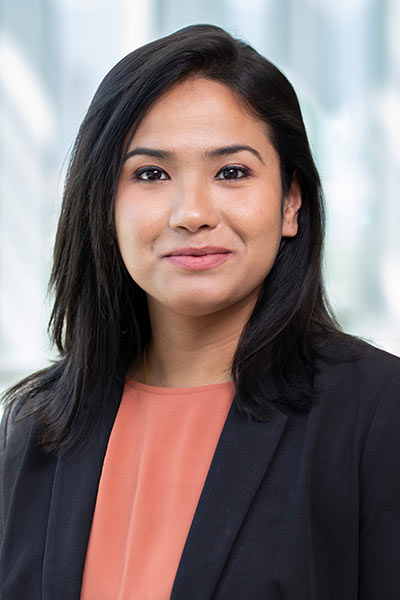
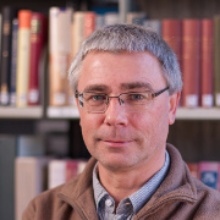
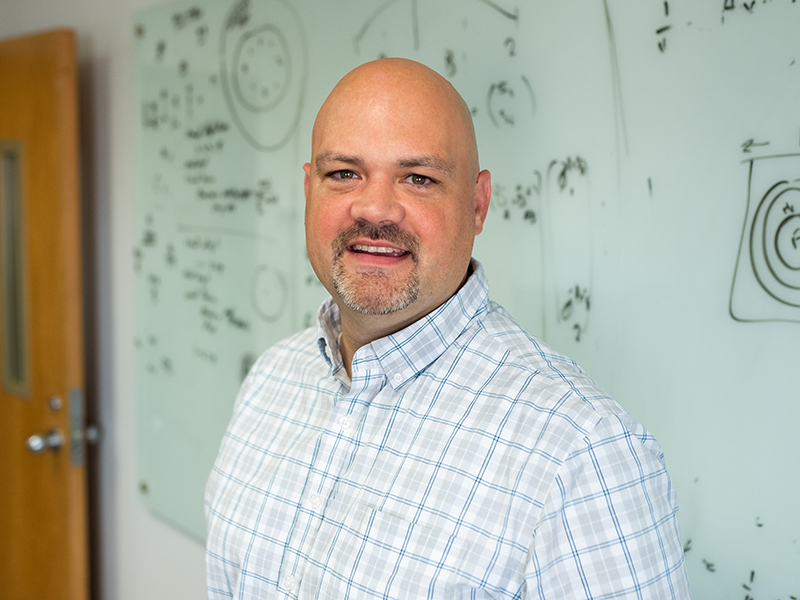
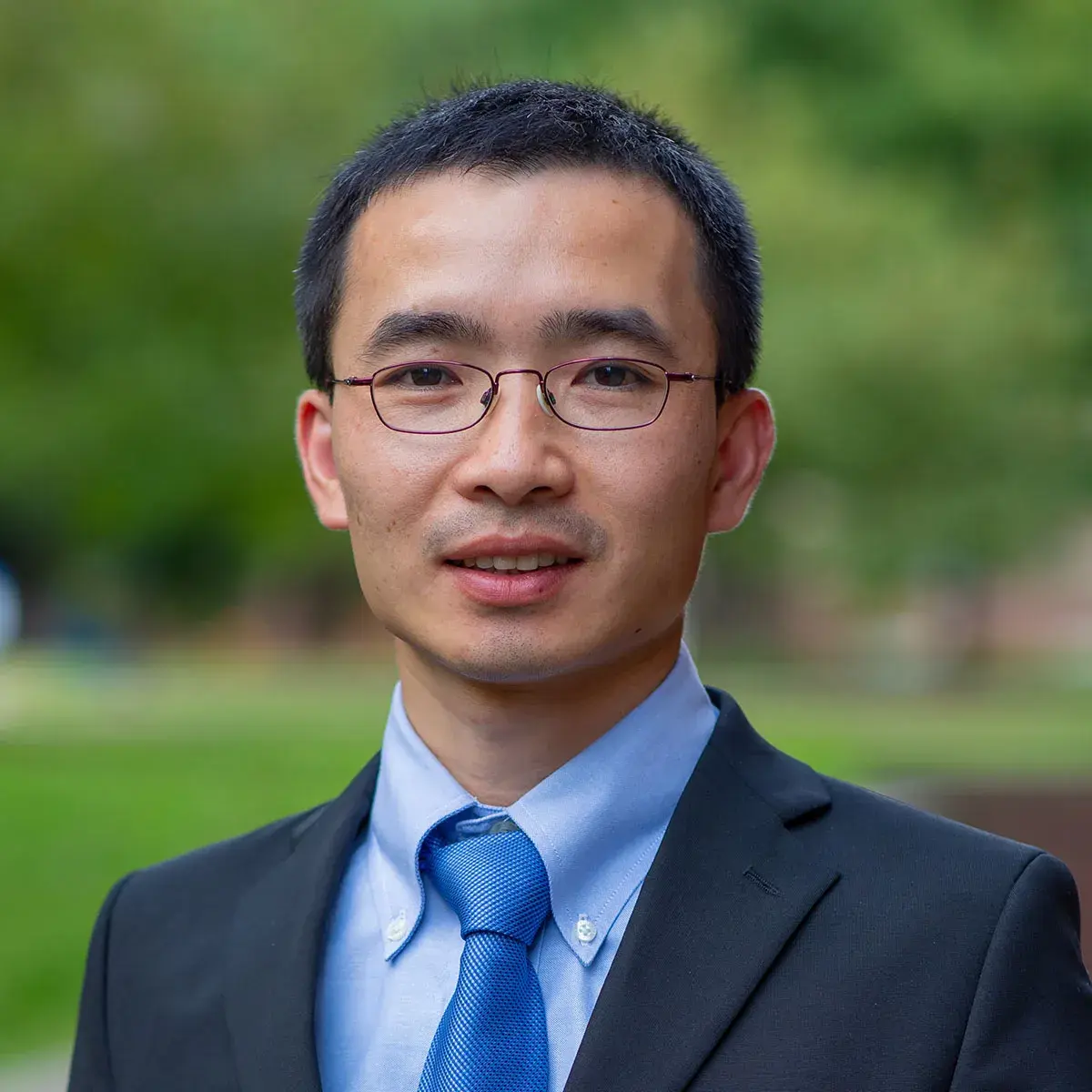
Dr. Xinying Liu is a Researcher at the University of Sydney's School of Chemical and Biomolecular Engineering, specializing in Computational Fluid Dynamics (CFD), Fluid-Structure Interaction (FSI), and biomedical engineering applications. She is a member of the University of Sydney Nano Institute and holds a PhD (2023) and bachelor's degree (2017) from the same institution. Education: Bachelor's Degree: The University of Sydney (2017) PhD in Chemical and Biomolecular Engineering: The University of Sydney (2023) Research Focus: Dr. Liu's work addresses biomedical challenges through advanced modeling techniques, including cardiovascular hydrodynamics, gastric flow systems, and bioinspired polymeric heart valve design. She bridges engineering and medicine to develop personalized healthcare solutions and non-thermal plasma technologies for PFAS remediation. Her projects emphasize multiphysics simulation and interdisciplinary collaboration. Current Projects: Polymeric heart valve replacements with growth capability Non-Thermal Plasma applications for PFAS remediation Advising & Collaborations: Dr. Liu advises Parham VATANKHAH on flow dynamics in human aortas. Her collaborations span computational modeling, experimental validation, and industry partnerships for healthcare innovation. Labs & Affiliations: Member of the University of Sydney Nano Institute, actively contributing to bioengineering and materials science research.
Christopher Bailey is a Professor of Advanced Semiconductor Packaging and Director of the Centre for Advanced Semiconductor Packaging at Arizona State University (ASU). He previously served as Professor of Computational Mechanics & Reliability and Associate Dean for Research at the University of Greenwich, UK. At ASU, he leads research on advanced semiconductor packaging, including roles as Principal Investigator (PI) and Co-Investigator (Co-I) on major projects such as the SRC-funded Thermo-Mechanical Modelling and US Chips Act initiatives (e.g., SWAP-Hub, SHIELD, ITSI). His research focuses on semiconductor packaging reliability, thermal management, co-design methodologies, and multiphysics modeling. Education: MBA (Technology Management), Open University, UK PhD, Thames Polytechnic, UK Research Interests: Advanced Semiconductor Packaging Thermal Management Solutions Co-Design and Multiphysics Modeling Reliability of Electronic Components His work integrates computational mechanics, materials science, and engineering to address challenges in high-reliability electronics. Recent projects emphasize predictive modeling for semiconductor packaging failures under thermal-mechanical stress. Awards: IEEE Region 8 Europe Award (2024) IEEE David Feldman Award (2022) Visiting Professorships at IIT Kharagpur (2018/2022) and Hong Kong (2018) Service & Leadership: Former President of IEEE Electronics Packaging Society (2020–2021) Associate Editor for IEEE Transactions on Components, Packaging, and Manufacturing Technology Conference Leadership (e.g., Program Chair for IEEE PAINE 2024) He has secured over $40M in research funding and authored 400+ archival papers, with expertise spanning industry collaborations (e.g., BAe Systems, Rolls Royce) and government advisory roles (EPSRC Peer Review College, UK Research Excellence Framework).
Taco Niet is an Associate Professor in the School of Sustainable Energy Engineering at Simon Fraser University. His research focuses on energy systems modelling, energy storage technologies, and climate change mitigation strategies. He holds a Ph.D. (2018), M.A.Sc. (2002), and B.Eng. (1998) in Mechanical Engineering from the University of Victoria. His work bridges technical innovation with societal implications, particularly in renewable energy integration and policy design. Teaching specialties include instrumentation systems, control systems, and the intersection of technology and society. Courses taught span undergraduate and graduate levels, including energy policy frameworks and engineering laboratory practices. He actively contributes to open-source energy modelling tools like OSeMOSYS and CLEWs Global, emphasizing transparency and interdisciplinary collaboration. Recent research emphasizes grid flexibility, decarbonization pathways, and equity in energy transitions. Notable projects include analyzing Canadian consumer preferences for zero-emission vehicles and evaluating hydrogen's role in energy storage. His work often involves international collaboration, addressing challenges in both developed and developing regions. Professional affiliations include leadership roles in sustainable energy education and engagement with industry partners. The Delta-E Research Group under his direction focuses on applied energy solutions. Current initiatives explore multiphysics energy systems and policy impacts on land-use patterns.
Rainald Loehner is a Distinguished Professor of Fluid Dynamics at George Mason University's Center for Computational Fluid Dynamics. Since 2003, he has led the Center for Computational Fluid Dynamics at George Mason University. He is currently a Hans Fischer Senior Fellow at the Technical University of Munich's Institute for Advanced Study (TUM-IAS) for 2023, hosted by Professors Kai-Uwe Bletzinger and Roland Wüchner in the 'Adjoint-Based System Identification of Large-Scale Structures' Focus Group. Loehner received his Diplom Ingenieur (Maschinenbau) degree from the Technical University of Braunschweig, and his PhD and a DSc in civil engineering from the University College of Swansea, Wales. After teaching at Swansea for a year, he worked at the Naval Research Laboratory in Washington, DC, followed by a research professorship at George Washington University. He joined George Mason University as an associate professor and was promoted to full professor in 1995 and distinguished professor in 2004. With over 35 years of experience, Professor Loehner's research spans the complete pipeline of numerical solvers and simulation tools. His expertise includes pre-processing, grid generation, numerical methods, field solvers, parallel computing, adaptive mesh refinement, fluid-structure interaction, shape optimization, system identification, and computational crowd dynamics. His current work focuses on developing advanced field solvers for compressible and incompressible flows, acoustics, electromagnetic wave propagation, heat and mass transfer, structural mechanics, and fluid-structure interaction. Key application areas include blast mitigation, ship hydrodynamics, blood flow, contaminant transport, and pedestrian safety. Loehner's recent research output (2020-2024) shows a strong trend toward digital twin technology and adjoint-based methods for structural analysis and optimization. His publications focus on high-fidelity digital twins for detecting structural weaknesses, risk assessment in engineering systems, and optimization of sensor placement. His work bridges computational mechanics with machine learning approaches, particularly in system identification and inverse problems, demonstrating how computational methods can solve complex real-world engineering challenges. 2020: Ranked #15119 in the Stanford List of Most Influential Scientists of the World; #8 in Aerospace and Aeronautics 2010: Distinguished International Career Award, Argentine Association of Computational Mechanics 2008: Fellow, International Association for Computational Mechanics 2006: Associate Fellow, AIAA 2005: Honorary Professor, University of Wales Swansea 2005: Advisory Professor, Shanghai Jiao Tong University 2004: Distinguished Professor of Fluid Dynamics, George Mason University 1999: Computational Mechanics Achievements Award, Japan Society of Mechanical Engineering 1993: Doctor of Science in Civil Engineering, University College of Swansea 1979-1983: Studienstiftung des Deutschen Volkes (Top 1% of German Students) Professor Loehner has mentored numerous students through his work at George Mason University and has supervised research in computational fluid dynamics, structural mechanics, and related fields. His research has been supported by various grants from government agencies and industry partners, enabling the development of advanced simulation tools applied in aerodynamics, hydrodynamics, shock-structure interaction, and medical applications. His codes and methods have been widely adopted in industry and academia for applications ranging from aircraft and ship design to medical simulations and urban pathogen transmission modeling. Loehner leads the Center for Computational Fluid Dynamics at George Mason University, which focuses on developing cutting-edge computational methods for fluid dynamics and related multiphysics problems. The center works on strategic application areas including blast mitigation, ship hydrodynamics, blood flow simulation, and pedestrian movement modeling. As a TUM-IAS Fellow, he collaborates with the Chair of Computational Modeling and Simulation at TUM on adjoint-based system identification of large-scale structures, bringing together expertise in computational mechanics and digital twin technology to address complex engineering challenges.
Domenico Ferrero is a Fixed-term Tenure-track Assistant Professor at the Department of Energy (DENERG), Politecnico di Torino. His primary role involves advancing research in renewable energy systems, particularly focusing on hydrogen technologies, energy storage, and thermochemical cycles. He contributes to the College of Electrical and Energy Engineering, teaching courses such as Hydrogen Laboratory and Sistemi di accumulo dell'energia elettrica . His research emphasizes experimental and modeling studies on hydrogen production via electrolysis, solar-driven thermochemical cycles, and CO₂ utilization. Key projects include H2SHIFT, HyAcademy.EU, and IMAGHyNE, funded by EU initiatives. Ferrero collaborates internationally on material characterization for protonic ceramic electrolysis cells and sealant development. He supervises multiple PhD students in energy systems and leads the M3ES research group. Publications highlight innovations in solar fuels, redox cycles, and hydrogen-battery hybrid systems. His work bridges fundamental science with applied engineering, targeting sustainable energy solutions for remote and urban environments.
Dr. Markus Piro is an Associate Professor in the Department of Engineering Physics at McMaster University, specializing in Nuclear Engineering and Energy Systems. He teaches ENG PHYS 3D04, focusing on fission/fusion energy systems, reactor design, and radiation interactions. His research emphasizes thermodynamic modeling of nuclear fuels, computational fluid dynamics (CFD), and severe accident analysis in reactors like CANDU and molten salt systems. Key projects include phase equilibrium studies of advanced fuels, corrosion mechanisms, and coupling CFD with thermodynamic simulations for reactor safety. He leads the Nuclear Fuels And Materials Group, developing tools like Thermochimica and collaborating on fuel design, cladding interactions, and accident mitigation strategies. Recent work includes investigations into Nd-C/Ce-C TRISO coatings, molten salt reactor chemistry, and FeCrAl cladding behavior under accident conditions. Dr. Piro’s computational expertise spans reactor hydraulics, thermal-hydraulic modeling, and material compatibility studies. He actively contributes to international initiatives like the TAF-ID database and engages in experimental validation of corium behavior. Current activities include accepting graduate students and advancing multiphysics simulation frameworks for next-gen reactors.
Dr. Srishti Banerji is an Assistant Professor in the Department of Civil and Environmental Engineering at Utah State University and Director of the Systems, Materials, and Structural Health (SMASH) Lab. She leads research on advanced construction materials, structural resilience under extreme loads (particularly fire), sustainable infrastructure, and structural health monitoring. Her group focuses on experimental testing, numerical simulations, and developing design solutions for civil infrastructure. Education: PhD in Civil (Structural) Engineering, Michigan State University (2021) MS in Civil (Structural) Engineering, Concordia University (2016) BS in Civil Engineering, National Institute of Technology Silchar (2013) Research Focus: Her work spans: 1) Characterization of high-performance/sustainable materials (e.g., UHPC, recycled glass pozzolan), 2) Structural behavior under fire exposure, 3) Integration of electric charging systems in concrete pavements, 4) Non-destructive testing and structural health monitoring, and 5) Retrofitting techniques for infrastructure strengthening. She employs machine learning, thermo-mechanical modeling, and full-scale experimentation. Publication Trends: Her 13+ journal articles primarily analyze fire resistance of concrete/timber structures, UHPC material properties at high temperatures, sensor-based infrastructure monitoring, and sustainable material development. Recent works increasingly incorporate machine learning and electrification concepts. Awards & Honors: Teacher of the Year (USU, 2025) ASCE ExCEEd Faculty Teaching Fellowship (2023) Top Cited Article Award, Fire and Materials Journal (2023) SHMII-11 Early Career Grant (2022) NSERC Scholarship (2015) Best Conference Paper (SEC 2016) Current Projects & Teams: She leads 5+ funded projects including fire performance of polymer concrete, self-healing concrete for bridges, and Utah-sourced UHPC development. Mentees include 3 PhD students (Abdullah Al Sarfin, Mehrnoosh Nazari, Mahmoud Ali) and alumni working on sustainable materials and additive manufacturing.
Professor Ahmed F. Ghoniem is the Ronald C. Crane (1972) Professor of Mechanical Engineering at MIT, directing the Center for Energy and Propulsion Research and the Reacting Gas Dynamics Laboratory. He holds a B.Sc. and M.Sc. from Cairo University and a Ph.D. from the University of California, Berkeley. His research focuses on computational methods in fluid-thermal sciences, turbulent combustion, energy conversion systems, and CO2 capture technologies. He has authored over 500 publications and mentored over 100 students, many of whom are leaders in academia and industry. His research interests include multiscale simulations of turbulent reactive flows, clean energy systems, and advanced combustion technologies. He has pioneered work on oxy-fuel combustion, gasification processes, and ion transport membrane reactors. Ghoniem’s contributions span fundamental science and applied engineering, addressing challenges in sustainable energy and environmental sustainability. Honors: ASME James Harry Potter Gold Medal (2015), AIAA Propellant and Combustion Award (2016), Fellowships from ASME, APS, and The Combustion Institute. Service: Leadership roles in MIT’s Energy initiatives, KAUST collaborations, and advisory boards for energy research centers. Extensive contributions to curriculum development and graduate education in mechanical engineering. Labs/Teams: Directs the Reacting Gas Dynamics Lab and leads the Center for Energy and Propulsion Research, focusing on integrated energy systems and CO2 capture innovations.
Dr. Xinyu Huang researches mechanics and durability of functional composites in energy systems at University of South Carolina. Work focuses on PEM/SOFC materials, structural composites, and coatings using experimental and modeling approaches.
Prof Nikolaos Nikiforakis is a Professor at the University of Cambridge, leading the Laboratory for Scientific Computing at the Cavendish Laboratory. He holds roles including Director for Academic Programmes of the Centre for Scientific Computing, Course Director of the MPhil in Scientific Computing, and Deputy Director of the EPSRC Centre for Doctoral Training in Computational Methods for Materials Science. He is also a Fellow and Director of Studies in Mathematics at Selwyn College, Cambridge. He directs The Gianna Angelopoulos Programme for Science Technology and Innovation. He holds a BSc in Aeronautical Engineering from the University of Manchester, followed by an MSc in Aerospace Propulsion and a PhD in 'Evolution of Detonation Waves' from Cranfield Institute of Technology. His postdoctoral research at the University of Cambridge’s Department of Chemistry focused on computational models for stratospheric ozone depletion. He later founded the Laboratory of Computational Dynamics at the Department of Applied Mathematics and Theoretical Physics before joining the Cavendish Laboratory in 2008. His research focuses on numerical algorithms and High Performance Computing for multi-physics simulations involving complex systems of nonlinear PDEs. Applications span detonation dynamics, plasma physics, and materials science, with industry collaborations for software development. His work addresses multi-scale, multi-physics problems previously deemed intractable, with practical applications in aerospace, energy, and environmental fields. He leads academic programmes in scientific computing and supervises doctoral research through the EPSRC CDT. His contributions bridge fundamental science and industrial innovation, emphasizing computational methods for materials and fluid dynamics.
Prof. C. Armando Duarte is the Nathan M. Newmark Distinguished Professor in Civil and Environmental Engineering at the University of Illinois at Urbana-Champaign (UIUC). He holds affiliations with the Computational Science and Engineering Program and the National Center for Supercomputing Applications (NCSA). His research focuses on computational mechanics, particularly the Generalized Finite Element Method (GFEM/XFEM), multiscale modeling, fracture mechanics, and hydraulic fracturing. He has authored/co-authored over 100 publications and co-edited books on computational methods. Education: Ph.D. (1996) and M.Sc. (1991) in Engineering Mechanics from the University of Texas at Austin and Federal University of Santa Catarina, respectively, and a B.Sc. in Mechanical Engineering from the Federal University of Pernambuco. Professional Roles: Professor at UIUC since 2015, previously at the University of Alberta and visiting roles at institutions in Brazil, Portugal, and the Netherlands. He serves on editorial boards of computational mechanics journals and chairs committees for professional societies like USACM and ASCE. Research Interests: Multiscale problems, computational fracture mechanics, meshfree methods, and multiphysics simulations. His work emphasizes 3D fracture analysis, hydraulic fracturing, and thermal gradient modeling. Awards: Recognitions include the Nathan Newmark Professorship, USACM Fellowship, and multiple best paper awards. His work has been cited over 9,000 times, with papers featured in top journals like Computer Methods in Applied Mechanics and Engineering . Teaching: Renowned for excellence in courses like Finite Element Methods, Structural Analysis, and Computational Plates and Shells. His teaching accolades span over two decades at UIUC.
Jens von Wolfersdorf is a Professor at the University of Stuttgart's Faculty of Engineering, Department of Mechanical Engineering. His research focuses on advanced thermal management systems for high-speed aerospace applications, particularly in the areas of heat transfer, fluid dynamics, and combustion. He specializes in experimental and numerical methods for analyzing complex flows in rotating and stationary cooling channels, transpiration cooling for rocket engines, and turbulence modeling. His work integrates cutting-edge techniques such as thermochromic liquid crystal (TLC) measurements, particle image velocimetry (PIV), and computational fluid dynamics (CFD) to validate novel cooling configurations. Key projects include the COOREFLEX-Turbo initiative and contributions to the European ATLLAS-II program for high-speed vehicle materials. Recent studies emphasize rotational heat transfer effects in two-pass cooling channels, additive manufacturing of ribbed cooling structures, and validation of coupled FEM-CFD frameworks. His research addresses challenges in aerospace thermal protection, turbine blade cooling, and scramjet combustor efficiency. Publications span over 15 years, with a focus on transient heat transfer, flow visualization, and material characterization for transpiration-cooled systems. Collaborations involve experimental facilities for high-speed flows and advanced thermal measurement systems.
Kevin Clarno is a tenured Associate Professor in the Department of Nuclear and Radiation Engineering at the University of Texas at Austin, holding the Charlotte Maer Patton Centennial Fellowship in Engineering. His research focuses on computational nuclear energy, multiphysics reactor simulation, and high-performance computing (HPC). Previously, he spent 15 years at Oak Ridge National Laboratory (ORNL), where he led major initiatives such as the Consortium for Advanced Simulation of Light Water Reactors (CASL) and contributed to the development of software tools like SCALE, CTF, and VERA. Education and Career: Assistant Professor at University of Tennessee-Knoxville (2010–2016) Senior Research Scientist at ORNL (2006–2021) Research Interests: Multiphysics coupling methods for reactor simulation Multiscale neutronics and thermal-hydraulics modeling Advanced reactor design (e.g., molten salt reactors) HPC-driven software integration for nuclear analysis Uncertainty quantification in coupled simulations Grants and Projects: Lead of CASL’s Physics Integration Focus Area Development of the Advanced Multi-Physics (AMP) fuel code ORNL-led strategic research projects in reactor simulation Labs and Tools: VERA: Virtual Environment for Reactor Applications CTF: Thermal-hydraulic solver for PWR analysis MPACT: Neutronics simulation tool within SCALE
Hailong Chen is an Associate Professor in the Department of Mechanical and Aerospace Engineering within the Stanley and Karen Pigman College of Engineering at the University of Kentucky. His academic journey includes a Ph.D. in Mechanical Engineering from Arizona State University (2015) and an M.S. in Mechanical Engineering from the University of Florida (2012). Dr. Chen's research focuses on Computational Mechanics & Materials, with expertise spanning meshfree methods, multi-scale multi-physics modeling, mechanics of stochastic heterogeneous microstructures, and pervasive fracture and impact modeling. His work bridges theoretical developments with practical engineering applications through the CM 3 (Computational Mechanics and Methods) research group, which develops advanced computational techniques for real-world mechanics problems. The CM 3 group specializes in multi-scale multi-physics modeling of solid materials, damage and failure analysis under extreme conditions, mechanics of stochastic heterogeneous microstructures (composites, polycrystals), and computational materials engineering. Recent publications demonstrate strong activity in peridynamics, lattice particle methods, and computational homogenization techniques for fibrous and porous materials. Dr. Chen's research has resulted in numerous publications in top journals including Computer Methods in Applied Mechanics and Engineering and Mechanics Research Communications, with recent work focusing on generalized peridynamic formulations, micro-CT-based property computation, and fluid-structure interaction frameworks for hypersonic applications. His academic progression shows steady advancement from Postdoctoral Computational Scientist at Idaho National Laboratory (2015-2018) to Assistant Professor (2018-2024) and currently Associate Professor (2024-present) at the University of Kentucky.
Robrecht Abts is a researcher at KU Leuven’s Manufacturing Processes and Systems (MaPS) group, affiliated with the De Nayer Campus. His work bridges electromechanics, materials science, and advanced manufacturing techniques. His research focuses on structure, behavior, and sustainability of materials , with particular emphasis on thermal analysis in additive manufacturing processes like fused filament fabrication (FFF). This includes leveraging deep learning for real-time thermal data interpretation and optimizing electrical discharge machining (EDM) through adaptive pulse classification. Recent publications highlight his expertise in Threshold-free machine learning pipelines Thermal modeling in 3D printing COMSOL simulations for manufacturing processes