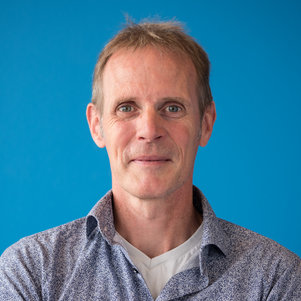
Leo Lukasse is a researcher at Wageningen University & Research , specializing in Post Harvest Technology . With over 108 research outputs and 7 activities documented, his work focuses on optimizing refrigerated transport systems for perishable goods.
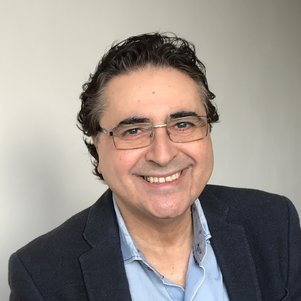
Elena A. Lomonova is Full Professor and Chair of Electromechanics, Power Electronics and Motion Systems at Eindhoven University of Technology. Her research spans advanced mechatronics, electromechanical energy conversion, and high-precision motion systems. She develops innovative electromagnetic actuators, superconducting linear motors, and computational methods for magnetic material characterization. Key research areas: High-precision electromagnetic actuators Superconducting motor technologies Physics-informed machine learning for electromagnetics Multiphysics system optimization Honors include the Nagamori Award (2016) and Lifetime Contributions to Magnetics (2019). Current projects investigate hysteresis modeling using neural networks, high-temperature superconducting motors, and planar motor design optimization.
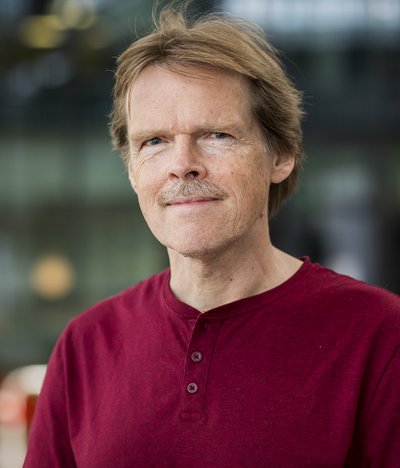
Thijs Defraeye is a Professor and External employee at Wageningen University & Research, specializing in the Food Quality and Design department. His work focuses on interdisciplinary research at the intersection of food science, engineering, and sustainable development, with particular emphasis on reducing food loss and improving food preservation techniques for global food security applications. Dr. Defraeye's research interests center on food quality preservation, refrigeration engineering, and postharvest technology development. His expertise spans multiphysics modeling of food storage systems, evaporative cooling technologies, and cold chain optimization, with special attention to solutions for low- and middle-income countries where food loss represents a critical challenge. His work integrates engineering principles with food science to develop practical, sustainable interventions for perishable goods throughout the supply chain. Analysis of Dr. Defraeye's recent publication record reveals a strong emphasis on practical, engineering-based solutions for food preservation challenges in resource-constrained settings. His research consistently addresses technical aspects of food storage while considering environmental and socioeconomic contexts, with a notable trend toward data-driven optimization of food supply chains and innovative cooling technologies. The interdisciplinary nature of his work bridges food science, thermal engineering, and computational modeling to create sustainable approaches for reducing postharvest losses globally. Dr. Defraeye serves as Promotor (PhD supervisor) for multiple doctoral candidates working on cutting-edge food technology projects. His current supervised research includes optimizing strawberry quality through non-thermal processing and packaging, reducing food loss in strawberry transport through data upcycling, and developing physics-based digital twins of refrigerated trailers for fresh fruit supply chains. These projects demonstrate his commitment to translating research into practical applications that address real-world food system challenges. His research has garnered media attention, with professional coverage highlighting his 'Model to improve fruit transport' in January 2023. The work has been picked up by multiple news outlets and shared across academic platforms, indicating its relevance and impact within both academic and industry circles focused on food security and supply chain optimization.
Oriol Colomes Gene serves as Assistant Professor in the Offshore Engineering section within the Faculty of Civil Engineering and Geosciences at Delft University of Technology. He leads the Computational Multiphysics in Offshore Engineering research group, focusing on advanced numerical methods for offshore renewable energy applications. His teaching responsibilities include the “Floating and Submerged Structures” module for Civil Engineering master’s students and “Introduction to Computational Dynamics of Offshore Structures” in the Offshore and Dredging Engineering master’s program. His educational background includes a combined Bachelor’s/Master’s degree in Civil Engineering (2011) and a PhD in Civil Engineering (2016) from Universitat Politècnica de Catalunya, followed by postdoctoral research at Duke University (2016-2020). Colomes Gene’s research centers on computational multiphysics with emphasis on: Development of efficient Finite Element solvers for turbulent flows, free-surface flows, and visco-elasto-plastic solids Fluid-structure interaction in complex geometries Numerical methods for multi-phase and multi-material systems Applications in offshore wind, wave energy, and floating photovoltaics His recent work demonstrates strong integration of theoretical numerical methods with practical offshore renewable energy challenges, particularly in hydroelastic analysis of floating structures and optimization of energy capture systems. His scientific recognition includes: NWO Open Technologieprogramma subsidy for the RAPID-Wind project (2025) Colomes Gene actively supervises research within his Computational Multiphysics group and contributes to major collaborative projects including SPARKLES (2024-2030), which investigates nature-positive floating solar solutions. His research is supported by significant grants targeting offshore renewable energy innovation and computational methodology advancement. His laboratory work focuses on high-performance computing for multiphysics simulations, with particular expertise in developing and validating numerical frameworks for: Free-surface flows interacting with structures Vortex-induced vibrations Complex geometry hydrodynamics Hydroelastic response of very large floating structures
Dr. Anne-Catherine A.A.M. Dieudonné is an Assistant Professor in Geotechnical Field Testing and Monitoring at Delft University of Technology's Faculty of Civil Engineering and Geosciences. She holds a Ph.D. in Structural, Seismic, and Geotechnical Engineering from Politecnico di Milano, where she previously worked as a doctoral researcher and assistant professor until joining TU Delft in 2022. Her research focuses on experimental, numerical, and theoretical analysis of soil-structure interaction problems, including foundations, tunnels, embankments, and slope retaining systems. Key interests include developing simplified models for infrastructure design, improving sustainability and reliability of structures, and understanding time-dependent material responses. Her work spans geotechnical monitoring with fiber optics, constitutive modeling of geomaterials (e.g., cement-bentonite mixtures), and energy geotechnics. Notable contributions include studies on tunnel face stability, pile-supported embankments, and bio-cemented soils. Publications emphasize THM modeling for geothermal systems, fracture mechanics, and nuclear waste repository optimization. She collaborates internationally, contributing to advanced multiphysics approaches in geomechanics.
Mark Bakker is a Professor in the Water Management Department within the Civil Engineering and Geosciences faculty at Delft University of Technology. He obtained his engineering degree from the Civil Engineering Department in Delft in 1989 and his Ph.D. from the Department of Civil Engineering of the University of Minnesota in 1994. His research focuses on advanced groundwater modeling techniques and hydrological processes. His research interests include modeling groundwater dynamics with impulse response functions, analytic element modeling of multi-aquifer flow, seawater intrusion modeling, analytic element modeling of unsaturated flow, groundwater whirls, and transient groundwater flow in aquifers with periodic boundary conditions. He has developed computational tools like TimML for analytic computation of heads and velocities in aquifer systems. His recent publications reveal a strong focus on practical applications of groundwater modeling, including arsenic removal systems in Bangladesh, coastal aquifer management, and innovative measurement techniques using fiber optic cables. His work bridges theoretical hydrogeology with real-world water management challenges, particularly in developing regions and coastal environments. Groundwater modeling techniques Seawater intrusion processes Analytic element method applications Time series analysis for aquifer characterization Multi-aquifer system dynamics Unsaturated zone hydrology Professor Bakker has made significant contributions to groundwater science through both theoretical developments and practical applications, with his work appearing in leading journals such as Water Resources Research, Ground Water, and Advances in Water Resources. His research has important implications for water resource management in coastal regions and developing countries.
Rafid Al-Khoury is a Senior Researcher at the Faculty of Civil Engineering and Geosciences, Delft University of Technology. His work focuses on computational poromechanics, geothermal systems, and CO2 geosequestration, utilizing advanced finite element and spectral methods. He leads the Computational Mechanics chair within the Applied Mechanics section. Education: Ph.D. (Cum Laude) in Computational Mechanics, M.Sc. (Distinction) in Civil Engineering, and B.Sc. in Civil Engineering. Research: Specializes in mesh-independent finite element schemes, inverse problems, and spectral analysis for geothermal and CO2 storage applications. His publications address transient heat flow, fracturing porous media, and energy pile dynamics. Key contributions include books on Computational Modeling of Shallow Geothermal Systems (2012) and Computational Models for CO2 Geo-sequestration & Compressed Air Energy Storage (2014). He has chaired program committees for major conferences like InterPore.
Josselin Ouf is a researcher at Delft University of Technology (TU Delft), specializing in geomechanics and numerical modeling of subsurface processes. His work focuses on fracture reactivation, reservoir cooling, and injection-induced permeability changes in geothermal systems. Primary Affiliation: Delft University of Technology Research Interests: His research explores the interplay between fluid flow and mechanical deformation in fractured geological formations, with applications to geothermal energy systems. Key areas include: Numerical multi-physics analysis of fractures Fault reactivation mechanisms Hydro-mechanical coupling in reservoirs Cold water injection impacts Micro- to macro-scale modeling transitions Publication Trends: Recent work emphasizes computational verification of fracturing processes, field validation through hydraulic testing at the Grimsel Test Site, and analytical methods for predicting fracture permeability evolution under thermal and hydraulic stresses.
Anne-Catherine A.M. Dieudonné, holding the title Dr.ir., is a faculty researcher at the Faculty of Civil Engineering and Geosciences, Delft University of Technology , within the Section of Geo-Engineering . Her work bridges fundamental geomechanics with pressing energy and environmental challenges, focusing on clays, bentonites, bio-cemented sands, geothermal systems, nuclear waste disposal, and CO₂ geological storage. Education & Training: Doctor of Engineering (Dr.ir.) – advanced doctoral degree in civil engineering/geosciences, exact institution and dates not stated in the source. Research Interests: Anne-Catherine’s research is organised around four pillars: Energy Geotechnics: thermo-hydro-mechanical (THM) modelling of geothermal systems in deep mines, cold-water injection-induced fracturing, optimisation under uncertainty. Environmental Geotechnics: long-term performance of clay barriers for nuclear waste repositories, gas and fluid transport in saturated clays, self-healing of rock-salt fractures. Bio-mediated Ground Improvement: micro-scale mechanics of bio-cemented sands, influence of carbonate distribution on stiffness and strength, DEM and experimental characterisation. Advanced Experimental & Numerical Techniques: development of novel visualisation devices for fluid-driven cracks, constitutive modelling of expansive clays, zero-thickness interface elements for fracture simulation. Publication Trends: Since 2020 she has authored or co-authored more than 25 peer-reviewed articles and conference contributions. The 2025 corpus shows a strong emphasis on geothermal reservoir engineering , bio-cemented geomaterials , and deep geological disposal , with methodological advances in coupled THM modelling, discrete-element simulation, and experimental validation. Scientific Awards & Honours: ABTUS Scientific Prize – Belgian Association for Underground Techniques and Urbanism (2012) C.B.R. Heidelberg Prize (2011) Bright Spark Lecture Award (2025) Ioannis Vardoulakis PhD Prize (2017) NWO Veni Grant (2019) Supervision & Grants: Anne-Catherine has supervised at least one doctoral student, A. Zhang , on bio-cemented sands. She is principal investigator on the NWO Veni project focusing on clay fracture mechanics and participates in the European EURAD consortium for radioactive waste management research. Laboratory & Teams: She is affiliated with the Geo-Engineering Section laboratories at TU Delft, which host advanced triaxial, oedometer, and bespoke visualisation rigs for clay and sand testing. Collaborative networks span TU Delft, KU Leuven, University of Liège, and multiple European institutions within EURAD.
Arris Tijsseling is an Associate Professor at Eindhoven University of Technology (TU/e), affiliated with the Department of Mathematics and Computer Science. His research focuses on fluid transients, computational fluid dynamics, and multiphase flow modeling with applications in pipeline systems. He has contributed to advanced numerical methods like smoothed particle hydrodynamics (SPH) and fluid-structure interaction (FSI) analysis. Notable work includes Lagrangian particle models for transient pipe flows and studies on manhole cover dynamics. His teaching responsibilities include courses on computational science and calculus. Key research themes involve transient flow analysis in pipelines with moving boundaries, cavitation effects in pumps, and structural responses under fluid-induced loads. His work bridges theoretical fluid dynamics with experimental validation, as seen in large-scale pipeline filling/emptying experiments. Collaborative efforts span international teams, addressing challenges in pipeline safety and computational efficiency. Publications highlight innovations in SPH for multiphase flows, hybrid numerical schemes for transient flows, and historical contributions to fluid mechanics. His research often emphasizes practical engineering applications, such as improving pump models and understanding wavefront behavior in fluid systems.
Stefan Eijsvogel is a Postdoc researcher at the Electromagnetic and MultiPhysics Modeling and Computation (EMPMC) Lab within the Department of Electrical Engineering at Eindhoven University of Technology. He holds a Bachelor's and Master's degree in Electrical Engineering from the same institution, with his Master's thesis focusing on wireless power transfer for medical applications and nanosatellite clock synchronization. From 2019 to 2023, he completed his Ph.D., extending the spatial spectral Maxwell solver for soft x-ray wafer metrology applications. His research interests include Gabor frame expansions, parallel computing in multi-layered media, and noise-robust inverse-scattering algorithms. He is a core member of the Sub-wavelength resolution Lensless Imaging Algorithms and Tests project (2018–2024), contributing to advanced imaging techniques. His work bridges computational electromagnetics and optics, with applications in high-resolution metrology and scattering analysis. Notable contributions include developing efficient algorithms for Gabor coefficients and parallel 3D electromagnetic scattering methods. Stefan has published extensively in peer-reviewed journals and conferences, with recent works focusing on phaseless inverse scattering and parametrized volume integral equations. His research emphasizes both theoretical advancements and practical implementations in soft x-ray regimes.
Jacques M.R.J. Huyghe is an Associate Professor in the Energy Technology Department at Eindhoven University of Technology (TU/e), affiliated with the Mechanical Engineering School. He also serves as Chair of Biomedical Engineering at the University of Limerick, Ireland. His research focuses on porous media mechanics, biomechanics, and prosthesis design, with applications in petroleum engineering and biological tissues. He holds a PhD from TU/e (1986) and an MSc in Civil Engineering from Ghent University (1979). His key research interests include multiphysics phenomena in swelling media, continuum descriptions of blood perfusion, and fracture mechanics in porous materials. He leads a group developing poromechanical finite element models for biological systems and explores diffusiophoresis applications. Experimental work includes lens-free imaging and optical tweezing. Notable awards include the Procter & Gamble InterPore Award (2013) and a Royal Netherlands Academy of Arts and Sciences fellowship (1996–2001). He collaborates with Procter & Gamble, Dassault Systèmes, and Boston Scientific. Editorial roles include membership in Biorheology and Transport in Porous Media .
Stein Stoter is an Assistant Professor at the Mechanical Engineering department of Eindhoven University of Technology (TU/e), affiliated with the Power & Flow research group. He holds additional roles as EAISI Assistant Professor and EIRES Assistant Professor. His research focuses on computational fluid mechanics, turbulence modeling, and finite element analysis, with applications in multiphase flows, phase-field modeling, and biomedical engineering. Academically, Stoter earned his PhD in computational mechanics from the University of Minnesota, preceded by a master's in Mathematics (University of Minnesota) and a master's in Aerospace Engineering (Delft University of Technology). Before his current position since 2023, he was a postdoctoral researcher at TU/e and Leibniz Universität Hannover. His research interests emphasize numerical methods for complex fluid systems, including immersed isogeometric analysis, variational multiscale techniques, and reduced-order modeling. His work addresses challenges in multiphysics coupling, interface modeling, and high-fidelity simulations of environmental and biomedical systems. Stoter has received notable recognitions, including the Melosh medal (2020) and TU/e Postdoc Best Paper Award (2022). His publications span fluid dynamics, materials science, and biomedical engineering, with a focus on advancing numerical methods for real-world applications. He teaches advanced courses on discretization techniques and machine learning for multi-physics modeling. Supervision of 12 graduate students and active collaborations with institutions like the Leibniz Universität Hannover highlight his academic leadership roles.
Mirchele Spanjaards is an Assistant Professor in the Microsystems group within the Mechanical Engineering department at Eindhoven University of Technology (TU/e). Her research focuses on numerical methods for bioinspired microsystems design, emphasizing rheological behavior of soft materials in biomedical and microfluidic contexts. She holds a PhD (2022) and MSc (2017) from TU/e, followed by industry experience as a Research Scientist at Philips in Multiphysics Modeling. Her work integrates computational modeling with experimental collaboration to address challenges in non-Newtonian fluid mechanics, fluid-structure interaction, and uncertainty quantification. Education: MSc Mechanical Engineering (TU/e, 2017) PhD in Polymer Technology (TU/e, 2022) Research Interests: Bioinspired microsystem design Numerical modeling of soft materials Non-Newtonian fluid dynamics Uncertainty quantification in simulations Recent Work Trends: Focus on extrusion processes and polymer rheology Integration of computational fluid dynamics with medical applications Material behavior under complex flow conditions Professional Background: Former Research Scientist at Philips (Multiphysics Models of Devices group) Active collaborations in academia and industry
Payam Poorsolhjouy is an Assistant Professor in the Applied Mechanics group at the Department of the Built Environment, Eindhoven University of Technology (TU/e). His research focuses on material modeling and design, particularly the formation, evolution, and consolidation of microstructures in granular/particulate materials and fiber-reinforced composites, with applications in 3D concrete printing and pharmaceutical tablet manufacturing. BSc in Civil Engineering, Iran University of Science and Technology (2007) MSc in Structural Engineering, Sharif University of Technology (2010) PhD in Civil Engineering, University of Kansas (2016), with special honors His work involves multiscale modeling of mechanical and multiphysics behavior, microstructural optimization for multifunctional materials, and topology design using advanced manufacturing frameworks. Key research areas include granular micromechanics, strain-gradient continuum models, and computational efficiency in multiscale simulations. Recent publications analyze fiber-reinforced concrete, carbon nanotube-cementitious nanocomposites, and granular material behavior under triaxial loading. Articles emphasize multiscale modeling, finite element analysis, and microstructural design. Outstanding Graduate, School of Engineering, University of Kansas Poorsolhjouy teaches courses such as "Statics of structures" and "Bouwkundewinkel" (practical assignments), and collaborates extensively on granular mechanics and continuum modeling.