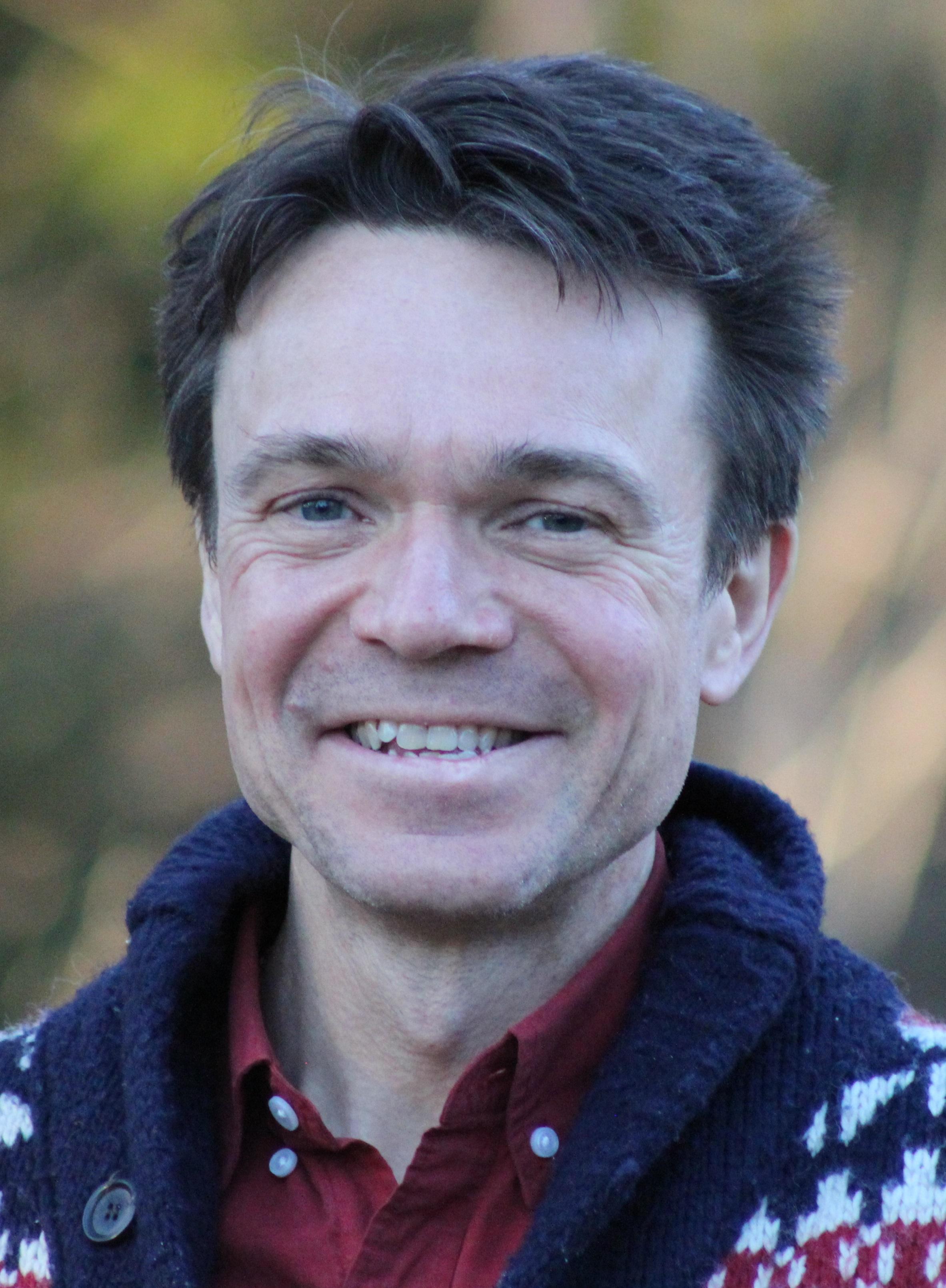
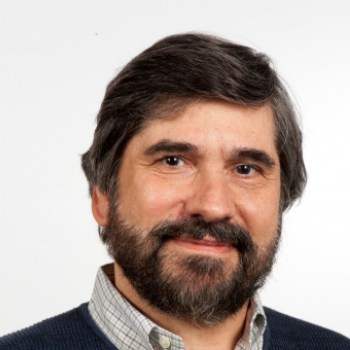
Fulvio Domini is a Professor in the Department of Cognitive, Linguistic and Psychological Sciences at Brown University. He joined Brown in 1999 after completing his MSc in Electrical Engineering and PhD in Experimental Psychology at the University of Trieste, Italy. His research focuses on how the human visual system processes 3D information to enable interaction with the environment, combining computational modeling with behavioral experiments. Key areas include perception-action coupling, depth cue integration, and visuomotor adaptation. Education: Masters in Electrical Engineering, University of Trieste, Italy PhD in Experimental Psychology, University of Trieste, Italy Research Interests: 3D vision and depth perception Integration of stereo and motion cues Perception-action link in grasping movements Computational modeling of visual processing Funded Research: Multiple NSF grants including BCS #1827550 ($523,550, 2018) Investigates temporal integration of visual cues and affine shape representations Teaching: Courses include Computational Vision, Perception, and immersive reality simulations. Recent courses: CLPS 1591 (Vision for Action/Perception), CLPS 0540 (Simulating Reality). Lab: Active research on visuomotor control and perception mechanisms, with a focus on dynamic environments and adaptive systems.
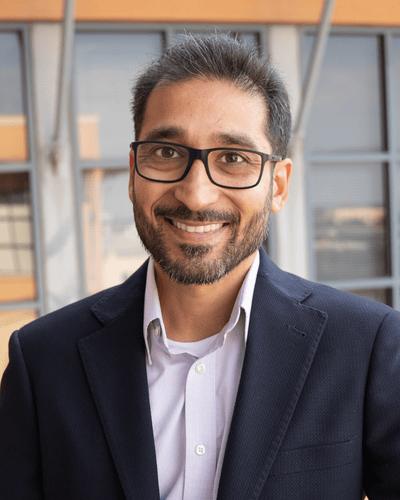
Indrani Bhattacharya, PhD, is an Assistant Professor in the Department of Biomedical Data Science and the Center for Precision Health and Artificial Intelligence (CPHAI) at Dartmouth College's Geisel School of Medicine. Her research focuses on developing human-centered AI systems for healthcare, particularly in multimodal medical imaging and behavioral health analytics. She holds a BS in Electrical Engineering from Jadavpur University (India), and MS/PhD from Rensselaer Polytechnic Institute (USA). Postdoctoral training at Stanford University's Department of Radiology further specialized her in biomedical imaging informatics. Research interests include: Integrating imaging and non-imaging data for precision medicine AI-driven prostate cancer detection/classification Multimodal behavior estimation for doctor-patient interactions Privacy-preserving sensor systems for group interaction analysis Her work bridges computer vision, medicine, and social science, with recent breakthroughs in MRI-ultrasound fusion AI outperforming radiologist interpretations in multi-center studies. Active in AI ethics and translational research, she leads teams developing clinical decision support tools for oncology and behavioral health. Key career milestones include: Postdoctoral scholar at Stanford University School of Medicine (2016-2021) Academic research staff at Stanford Radiology (2021-2022) Founding member of Dartmouth CPHAI precision health initiatives Labs/Teams: Leads the Biomedical AI for Healthcare group at Dartmouth, collaborating with Stanford and industry partners on AI-driven diagnostic systems.
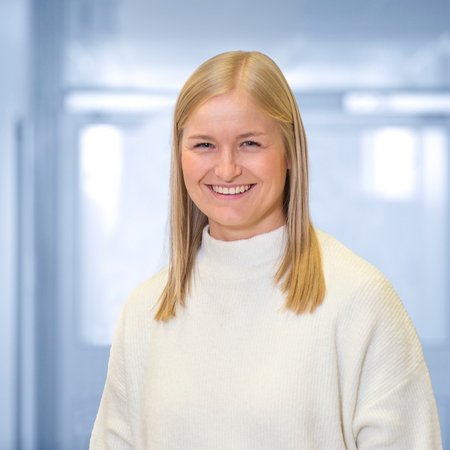
Dr Glenda Cooper is Reader in Journalism Studies and Head of the Department of Journalism at City St George's, University of London , where she leads a team of 25 staff, 50 visiting lecturers, and over 500 students from 53 countries. She holds a PhD in Journalism from City and an MA in English Language and Literature from Oxford, and has played a pivotal role in elevating the BA Journalism programme to 1st place nationally in the Guardian and Complete University Guide (2023), as well as 1st for Graduate Prospects (Sunday Times 2022). Education: MA in Academic Practice, City, University of London (2022) PhD in Journalism, City, University of London MA in Creative Writing, City, University of London BA (Hons) English Language and Literature, St Hilda's College, University of Oxford PG Diploma in Newspaper Journalism, City University of London Glenda's research focuses on crisis and humanitarian reporting , journalism ethics , live journalism , and the intersection of media and politics, particularly through the legacy of Alistair Cooke’s Letter from America . She has led major funded projects with the British Academy, ESRC, Google Digital News Initiative, and HEIF. Her current research explores AI’s impact on journalism through the DMINR project and innovative storytelling formats via the News on Stage initiative and the Contemporary Narratives Lab . Her recent publications span topics such as AI in newsrooms, humanitarian scandals (#AidToo), refugee representation, and digital narrative innovation. These works reflect a strong interdisciplinary trend, combining journalism studies with media technology, ethics, performance, and political communication. The articles indicate a growing focus on digital transformation, ethical challenges in sourcing, and the evolving role of journalists in public discourse. Scientific Awards and Recognition: Laurence Stern Fellow at the Post (2001) Guardian Research Fellow at Nuffield College, Oxford (2006–2007) AURORA Role Model for Future Women Leaders in Academia (2018) Glenda has supervised PhD students on topics ranging from political communication in Istanbul to the manosphere's influence on journalism. She has been instrumental in curriculum development, notably designing a core ethics module for final-year journalism students. She also serves as Reviews Editor for Journalism: Theory, Practice and Criticism , UK Director of the European Journalism Observatory, and Board Member of The Conversation UK . She co-founded and co-presented the Knowhow podcast, bridging academia and media. She co-directs the Contemporary Narratives Lab and co-founded the News on Stage project, which merges journalism with theatre through live events such as News Cabaret and News on the Street . Her play Aid Memoir , based on her PhD research, was performed at the Pleasance Theatre and featured in the ESRC Festival of Social Science.
Carlo A. Furia is an Associate Professor at the Software Institute within the Faculty of Informatics at Università della Svizzera italiana (USI). He leads the ATOM research group and is actively involved in advancing formal methods in software engineering. His work bridges theoretical rigor with practical applicability, particularly in verification, automated repair, and empirical analysis of software systems. PhD in Computer Science, Politecnico di Milano Master of Science in Computer Science, University of Illinois at Chicago Laurea in Computer Science and Engineering, Politecnico di Milano His research focuses on making formal methods practical through automation, combining diverse techniques, and conducting thorough empirical evaluations. He is particularly interested in using Bayesian data analysis to assess software engineering data. His work spans program verification (e.g., AutoProof), contract inference, API usability, and multilingual program analysis. His recent publications highlight trends in automated program repair, JVM bytecode analysis, Android security, and empirical methodologies. These works reflect a consistent emphasis on correctness, reliability, and empirical validation in software development. Scientific service includes: Associate Editor, Empirical Software Engineering (EMSE) journal Program Committee member, FM 2026, FormaliSE 2026, ASE 2025, iFM 2025 He has advised students and leads the ATOM group, which develops tools for software analysis. He teaches courses such as Software Analysis, Programming Fundamentals, and Software Design & Modeling. Current research directions include improving empirical evaluation rigor and enhancing verification at lower code levels like bytecode.
Rohit Valecha is an Associate Professor in the Department of Information Systems and Cyber Security at The University of Texas at San Antonio (UTSA), holding the Cloud Technology Endowed Fellowship. He joined UTSA in 2016 and holds a Ph.D. from the University at Buffalo in Management Science and Systems, alongside a B.S. in Electrical Engineering and an M.S. in Computer Science from the same institution. His research focuses on social media's role in crisis response, emergency management, and information security/privacy. He employs methodologies like NLP, text mining, social network analysis, and machine learning. Key areas include understanding societal disruptions via social, psychological, and design theories, with notable work on misinformation harms during crises and digital inclusion in disaster resilience. Dr. Valecha has authored/co-authored over 75 technical papers in top journals such as MISQ, JAIS, and IEEE Transactions. His work has garnered awards including the Dean's Distinguished Research Award and best paper recognitions at AMCIS, DESRIST, and other conferences. He serves on editorial boards for Information Systems Research and Journal of Strategic Information Systems , and as Coordinating Editor for Information Systems Frontiers . He has secured over $1 million in grants, including NSF and DHS funding for projects on disaster resilience, vaccine misinformation, and digital inclusion for older adults. His grants emphasize collaborative research on cyber threats, emergency management, and crisis informatics.
Luís B. Elvas is an Assistant Professor at ISCTE-University Institute of Lisbon's Department of Social and Business Sciences (SINTRA) and a Research Assistant at ISTAR-Iscte Research Center. He holds qualifications including a Technical Specialization in TensorFlow for AI (Coursera, 2021) and certifications in IoT/Blockchain from ISCTE and cybersecurity from Palo Alto Networks. His research spans artificial intelligence, healthcare informatics, smart cities, and blockchain, with applied work in medical imaging, data sharing, and urban analytics. Research interests include: Healthcare AI : Developing deep learning models for cardiac diagnostics, medical imaging analysis, and blockchain-based health data systems Smart Cities : Implementing IoT solutions for urban mobility optimization, disaster management, and sustainable transportation Data Science : Creating predictive analytics frameworks for clinical decision support and urban planning His publications demonstrate a strong focus on AI-driven healthcare solutions (67% of recent works) and smart city technologies (33%), with emerging interests in blockchain and NLP. Research consistently targets real-world applications in clinical settings and urban environments. Awards: Award for best internship, Order of Engineers (2022) Distinction for best internship, Order of Engineers (2021) He leads/contributes to multiple EU research consortia including AMR-EDUCare (antimicrobial resistance education), NEEM (e-health in Nepal), and Blockchain.PT. Coordinates the IEEE Computational Intelligence Society Student Branch Chapter at ISCTE and developed the ManagiDiTH master's program in digital health transformation.
Roozbeh Mottaghi is a Senior AI Research Scientist Manager at Meta's Fundamental AI Research (FAIR) division and an Affiliate Associate Professor at the Paul G. Allen School of Computer Science & Engineering, University of Washington. His career spans roles as Research Manager at the Allen Institute for AI and Postdoctoral Researcher at Stanford University. He holds a Ph.D. in Computer Science from UCLA, advised by Alan Yuille, and advanced degrees from Simon Fraser University, Georgia Tech, and a B.Sc. from Sharif University of Technology. Ph.D., Computer Science, UCLA (2016) M.Sc., Computer Science, Simon Fraser University M.Sc., Electrical Engineering, Georgia Institute of Technology B.Sc., Computer Engineering, Sharif University of Technology His research focuses on Embodied AI, Robotics, Computer Vision, and Multimodal Learning, with key contributions to human-robot collaboration benchmarks (PARTNR), 3D scene understanding, and adaptive navigation systems. Recent work explores zero-shot manipulation via video tracking (Track2Act) and lifelong navigation benchmarks (GOAT-Bench). Publications span 3D vision, reinforcement learning, and visual reasoning, including NeurIPS 2022 Outstanding Paper Award for "Ask4Help" and leadership in organizing challenges at CVPR and ICCV workshops. He advises students and interns who have transitioned to leading institutions like AI2, Stanford, and Brown University.
Dr. Charles Rougé is a Senior Lecturer in Water Resilience at the Department of Civil and Structural Engineering, School of Mechanical, Aerospace and Civil Engineering, University of Sheffield. He holds an MSc and PhD, and his career spans top institutions in France, the US, Canada, and the UK. 2018–present: University of Sheffield (Lecturer → Senior Lecturer) 2023–2026: Principal Investigator, EPSRC-funded project on water-energy systems under climate change and energy transition Research Focus: Modelling complex water resource systems to enhance resilience against climate change, with a growing emphasis on water-energy nexus challenges. His work integrates hydrology, power systems engineering, economics, and decision theory. Key Trends: 15 most recent articles span climate-perturbed hydrological models, water-energy system coupling, socio-hydrology applications, and transboundary water governance. Many showcase interdisciplinary approaches to water infrastructure flexibility and uncertainty quantification. Scientific Awards: 2019 Quentin Martin Best Practice Award (JWRPM) 2015 Editor's Citation for Excellence (WRR) Grants: EPSRC grant (UKRI) for 'Flexible design and operation of water resource systems' (2023–2026) Team Leadership: Leads the 'Water resilience' research group at Sheffield, mentoring early-career researchers in water system sustainability and low-carbon energy transition.
Rachel Hess, MD, MS is Professor of Population Health Sciences and Internal Medicine and Associate Vice President for Research-Health Sciences at the University of Utah Schools of the Health Sciences. She co-directs the Utah Clinical and Translational Science Institute and was founding Chief of the Division of Health System Innovation and Research (2014-2022). A board-certified General Internist and internationally recognized health-services researcher, she focuses on translating evidence into practice through health-information technology and patient-centered outcomes. Education & Training MD – University of New Mexico School of Medicine MS Clinical Research – University of Pittsburgh Fellowship – General Internal Medicine & Women’s Health, University of Pittsburgh / VA Pittsburgh Medical Center Chief Residency – Internal Medicine, Western Pennsylvania Hospital Residency – Internal Medicine, Temple University Hospital BA Mathematics – Washington University in St. Louis Research Focus Dr Hess’s program is dedicated to improving patient-centered outcomes by leveraging implementation science, health-information technology, and patient-reported measures. Her work spans: Design and nationwide deployment of EHR-integrated clinical decision support for cancer genetics, lung-cancer screening, heart-failure management, and antibiotic stewardship. Large multi-site pragmatic trials (ADAPTABLE, RECOVER, BRIDGE, MAINTAIN) examining effectiveness, equity, and scalability of digital-health interventions. Women’s health across the lifespan, including studies on menopause, sexual function, and post-COVID sequelae. Advanced analytics linking patient-reported outcomes (PROs) with healthcare utilization and cost. Scientific Awards & Recognition Board Certification, American Board of Internal Medicine (Internal Medicine) Leadership of NIH RECOVER Consortium adult cohort—one of the largest studies of Long COVID worldwide Principal investigator on >$50 million in federal and foundation funding (PCORI, NHLBI, NCI, AHRQ, CDC) Leadership & Service As Associate Vice President for Research she sets strategic priorities for the Schools of Medicine, Nursing, Pharmacy, Dentistry, and Health. She co-chairs the Utah Clinical and Translational Science Institute, oversees campus-wide clinical-trials infrastructure, and mentors interdisciplinary teams spanning informatics, behavioral science, epidemiology, and clinical medicine. Laboratories & Teams Dr Hess leads the Health System Innovation and Research (HSIR) group—an interdisciplinary unit of data scientists, implementation researchers, clinicians, and patient partners—dedicated to rapid-cycle testing and national scale-up of digital-health solutions.
Dr. Carolin Vollenberg serves as a Post-Doctoral Researcher at the Chair of Information Systems & Transformation Management within the Faculty of Computer Science at the University of Duisburg-Essen (UDE). Her academic journey includes a PhD from the University of Muenster (2021-2025), an M.Sc. in Technical Consulting and Management from Hochschule Hamm-Lippstadt (2018-2020), and a B.Eng. in Biomedical Technology from the same institution (2014-2018). Prior to her current position, she worked as a Research Assistant at South Westphalia University of Applied Sciences and gained industry experience at Zapp Systems GmbH. PhD in Business Informatics (2021-2025), University of Muenster M.Sc. Technical Consulting and Management (2018-2020), Hochschule Hamm-Lippstadt B.Eng. Biomedical Technology (2014-2018), Hochschule Hamm-Lippstadt Research Focus: Vollenberg specializes in the governance of lightweight IT systems, digital transformation in public and healthcare sectors, and process mining applications. Her work bridges technical implementation with organizational behavior, particularly examining resistance to automation in sensitive domains like healthcare. She investigates how organizations navigate unintended consequences of technology adoption, with emphasis on RPA (Robotic Process Automation), omnichannel transformation, and data-driven process optimization. Her research methodology combines ethnographic field studies with quantitative process analysis. Publication Trends: Analysis of her 16 publications (2020-2025) reveals strong focus on healthcare IT (45% of works), public sector digitalization (30%), and foundational process management (25%). Recent output shows increasing emphasis on ethical dimensions of process mining and sustainability applications. Her collaborative work spans multiple European institutions with consistent publication in top IS conferences (ICIS, ECIS, HICSS). Best Paper nomination at HICSS-55 (2022) Associate Editor for General Track at Internationale Tagung Wirtschaftsinformatik (WI) 2025 Professional Engagement: Vollenberg actively contributes to academic discourse through editorial roles and peer review. Her industry collaborations with healthcare providers and public sector entities demonstrate applied research impact. Current projects examine virtual nursing transformations and crisis-responsive RPA implementations, reflecting her commitment to solving real-world operational challenges through information systems innovation.
Paulo E. Arratia is a Professor in the Department of Chemical and Biomolecular Engineering and Mechanical Engineering and Applied Mechanics. His research spans soft matter physics, complex fluids, and biomechanics, with a focus on non-Newtonian fluid dynamics, bacterial suspensions, and microfluidics. He serves as the Faculty Director of Undergraduate Research and leads a research group based in Towne M60, exploring phenomena such as viscoelastic flow instabilities and the physics of baseball mud. Departments: Chemical and Biomolecular Engineering, Mechanical Engineering and Applied Mechanics Honors: Eduardo D. Glandt Distinguished Scholar, Fellow of the Society of Rheology (2025), APS DFD Fellow (2022) His recent work highlights the interplay between biological systems and fluid mechanics, including studies on bacterial rheotaxis, sedimentation dynamics, and the rheology of human blood plasma. Collaborations with Dr. Jerolmack on mudslide physics and contributions to understanding elastic turbulence and chaotic transport further underscore his interdisciplinary approach. Scientific awards include: Fellow, Society of Rheology (2025) APS DFD Fellow (2022) for experimental discoveries in complex and biological fluid mechanics He has advised PhD students Bryan Torres Maldonado, Ranjiangshang Ran, and Larry Galloway, all of whom successfully defended their theses. His lab’s recent publications analyze soft matter mechanics, granular creep, and viscoelastic swimmers, reflecting ongoing trends in active matter and material failure.
Christos G. Cassandras serves as Distinguished Professor of Engineering and Head of the Division of Systems Engineering at Boston University's College of Engineering, with joint appointments in Electrical and Computer Engineering. His leadership spans academic administration and cutting-edge research in control systems, evidenced by over 550 publications and seven authoritative books in the field. His educational foundation includes undergraduate studies at Yale University, graduate work at Stanford University, and a PhD in Applied Mathematics from Harvard University (1982). This multidisciplinary background underpins his research approach. Dr. Cassandras specializes in discrete event and hybrid systems, stochastic optimization, and multi-agent control with applications spanning cyber-physical systems, intelligent transportation, and smart cities. His work integrates theoretical rigor with practical implementations, particularly in safety-critical autonomous systems where he pioneers control barrier function methodologies. Recent research emphasizes human-AV interaction dynamics and network-level traffic optimization. Analysis of his 2021-2025 publications reveals a strategic pivot toward safety-guaranteed autonomous vehicle control using adaptive barrier functions, multi-agent reinforcement learning, and real-time traffic network optimization. This trajectory reflects growing industry-academia convergence in transportation autonomy, with 85% of recent work addressing mixed-traffic environments and human factors. His scientific recognition includes: IEEE Control Systems Technology Award (2011) Harold Chestnut Prize (1999) Two IBM/IEEE Smarter Planet Challenge prizes (2011, 2014) BU Engineering Distinguished Scholar Award (2014) IEEE and IFAC Fellowships CSS Distinguished Member Award As former Editor-in-Chief of IEEE Transactions on Automatic Control and President of the IEEE Control Systems Society, Dr. Cassandras has shaped global research directions. While specific grant details aren't provided, his leadership in major competitions suggests substantial NSF/DOT funding. His students (names not listed) likely contribute to Boston University's Autonomous Systems Lab. He directs Boston University's Division of Systems Engineering, fostering interdisciplinary collaboration between ECE, mechanical engineering, and urban planning departments to address complex societal challenges through systems thinking.
Daniel Hershcovich is a Tenure Track Assistant Professor at the Department of Computer Science (Faculty of Science, University of Copenhagen) specializing in Natural Language Processing and Machine Learning . His research focuses on cross-cultural adaptation of language models, integrating human values into AI, and analyzing food-related cultural narratives for sustainable diets. Education: Ph.D. in Computational Neuroscience from Hebrew University of Jerusalem B.Sc. in Mathematics and Computer Science from Open University of Israel Recent publications highlight his work on multimodal models (haptic captioning, visual assistants for the blind), historical text analysis (Danish/Norwegian literature, euphemism detection), and cross-cultural NLP (recipe adaptation, cultural value alignment, climate awareness). His projects frequently combine AI ethics with domain-specific applications like food studies, historical linguistics, and accessibility research. Key collaborative networks include institutions in Denmark, Israel, and international partnerships through conferences like ACL, EMNLP, and workshops on cross-cultural NLP. The NLP section at DIKU serves as his primary affiliation for these efforts.
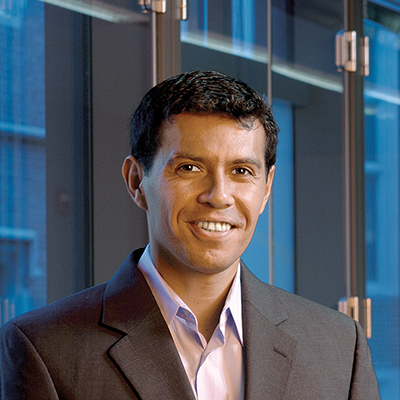
Roberto Martinez-Maldonado is an Associate Professor in the Department of Human Centred Computing at Monash University's Faculty of Information Technology. He holds a PhD in Human-Computer Interaction and Educational Data Mining from the University of Sydney. His research focuses on Learning Analytics, Artificial Intelligence in Education, and Collaborative Learning, with applications in healthcare and classroom settings. Prior to Monash, he worked at the Connected Intelligence Centre (CIC) and as a lecturer at the University of Technology, Sydney. His academic journey includes a Master's in Information Technology from Universidad Tecmilenio and a Bachelor's in Computer Systems Engineering from Instituto Tecnológico de Mérida. Key research projects include developing analytics dashboards for healthcare simulations, teamwork analytics for professional education, and AI-driven tools for reflective practice. His innovations include the HuCETA framework and the Data Storytelling editor, which enhance educational data visualization and teacher-student interaction. He has received multiple awards, including the 2022 Best Student Paper and 2020 Best Paper Award. His work contributes to UN Sustainable Development Goals related to quality education. He supervises PhD students in Multimodal Teamwork and Classroom Analytics. Roberto is actively involved in academic conferences, serving on program committees for LAK and AIED. Media engagements include ABC Radio interviews discussing classroom design and AI in education.
David Lydon-Staley is an Associate Professor at the Annenberg School for Communication, University of Pennsylvania, where he serves as Principal Investigator of the Addiction, Health, & Adolescence (AHA!) Lab. His research integrates neuroscience with communication science to examine substance use, media effects, and curiosity using fMRI, ecological momentary assessment, and network analysis. Education includes a Ph.D. in Human Development & Family Studies from The Pennsylvania State University, an M.S. from Penn State, an M.F.A. in Creative Writing from Drexel University (2025), and a B.A. in Psychology and English Literature from Trinity College Dublin. Research focuses on three interconnected areas: curiosity in media environments and health communication, media engagement in emotion dynamics, and substance use through dynamic network perspectives. Work emphasizes intensive longitudinal measurement of brain-behavior interactions during daily life. Recent publications (2023-2025) predominantly explore tobacco behavior, neural mechanisms of addiction, curiosity modulation, and social media's emotional impacts. Articles demonstrate consistent themes: fMRI analysis of inhibitory control, real-time geospatial tracking of smoking triggers, curiosity-based health messaging, and emotion regulation networks. Research has been supported by the National Institute on Drug Abuse, Jacobs Foundation, International Society for Behavioral Development, Center for Curiosity, and Brain & Behavior Research Foundation. Leads the Addiction, Health, & Adolescence (AHA!) Lab investigating substance use through network science approaches. Collaborates with the Complex Systems Lab at Penn's Department of Bioengineering.