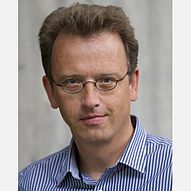
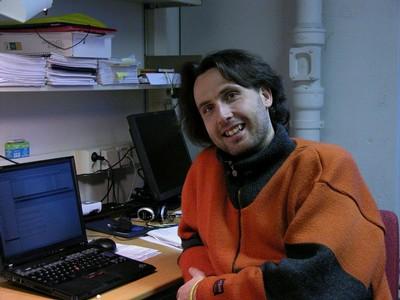
Prof. Dr. Stefan Huber is a Full Professor (W3) at the Faculty of Chemistry and Biochemistry , Ruhr-Universität Bochum , Germany. His research focuses on non-covalent interactions in organocatalysis , particularly halogen bonding , chalcogen bonding , and cyclopropenium derivatives for applications in molecular recognition , crystal engineering , and radical stabilization . Full Professor since 01/2022 Associate Professor (W2) 2014-2021 Independent Researcher at TU Munich 2009-2013 Research Interests include: Design of halogen/chalcogen bond donors for catalysis Supramolecular chemistry in solution and solid phases Quantum chemical modeling of transition states and binding strengths His work bridges experimental synthesis (NMR, X-ray, ITC) with computational methods , supported by the ERC Starting Grant (2015-2020) and collaborations within the RESOLV Cluster . Scientific Awards : Hoechst Dozentenpreis (2016) Robert-Sauer-Preis (2014) Hans-Fischer-Gedächtnispreis (2013) Ernst-Otto-Fischer-Lehrpreis (2012) Thieme Chemistry Journals Award (2010) Students : Over 20 Ph.D. and Master’s students, including Dominik Reinhard, Tim Steinke, Raffaella Papagna, and Julian Stoesser. The group maintains modern synthesis labs and collaborates with institutions like the University of Geneva and TU Munich .
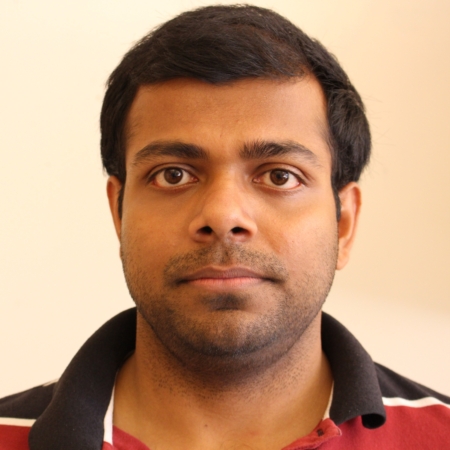
Souvik Paul is an Assistant Professor in the School of Physics at Indian Institute of Science Education and Research Thiruvananthapuram, where he leads the Computational Materials Science (CMS) Laboratory established in 2023. His research employs advanced computational techniques to investigate fundamental properties of magnetic materials and topological phenomena. Education: Ph.D. (2015), Indian Institute of Technology Guwahati, India M.Sc. (2008), Presidency College, Kolkata, India B.Sc. (2006), University of Calcutta, India Dr. Paul's research focuses on computational materials science with particular emphasis on magnetism in two and three dimensions, topological magnetic quasiparticles like skyrmions, surface physics, strongly correlated systems, and multifunctional materials including Heusler alloys. His work primarily utilizes Density Functional Theory (DFT) to predict and explain material properties at the atomic scale, bridging computational predictions with experimental observations through international collaborations. His publication record reveals a consistent trajectory in magnetic skyrmions research, transition metal systems, and Heusler alloys, with significant contributions to understanding spin interactions, stability mechanisms, and electronic properties. His work frequently appears in high-impact journals including Physical Review Letters, Nature Communications, and npj Computational Materials, demonstrating both theoretical depth and practical relevance to materials design. Scientific Awards: Prime Minister Early Career Research Grant (2025) from Anusandhan National Research Foundation Departmental Postdoctoral Fellowship (2015), Uppsala University Doctoral fellowship (2009), IIT Guwahati Graduate Aptitude Test in Engineering (GATE) (2009), MHRD, India Dr. Paul actively mentors graduate students including Moinak Ghosh and Bipin Babu. Through the International PhD Program, he has established formal collaborations with Prof. Stefan Heinze at CAU Kiel, Germany, providing students with international research opportunities, access to high-performance computing facilities, and extended research stays at partner institutions. His recently awarded Prime Minister Early Career Research Grant supports innovative work on antiferromagnetic skyrmions. The Computational Materials Science Laboratory employs Density Functional Theory to investigate structural, electronic, magnetic, and optical properties of materials at the atomic level. The lab maintains strong international collaborations with research groups at CAU Kiel and Forschungszentrum Jülich in Germany, focusing on discovering novel materials, explaining fundamental material behaviors, and developing predictive materials theory with applications in electronics and energy technologies.
Irith Pomeranz is the Cadence Professor of Electrical and Computer Engineering at Purdue University's College of Engineering. Her research focuses on advanced testing methodologies for VLSI circuits, including functional test compaction, fault diagnosis, and built-in self-test (BIST) techniques. She is affiliated with the Department of Electrical and Computer Engineering and has contributed extensively to improving test efficiency and fault coverage in digital circuits. Her work addresses challenges such as aging effects, transition faults, and path delay faults, with a particular emphasis on practical implementations for industrial applications. Key areas of interest include modular test sequences, configuration-based compaction, and dynamic testing strategies for in-field environments. She has developed algorithms for dual-target diagnostic testing and synchronization mechanisms for online fault detection in logic blocks. Research Trends in her publications emphasize innovations like storage-based BIST schemes, adaptive test scheduling, and shared test data architectures. These advancements aim to reduce test data volume, improve fault coverage, and enhance reliability in modern integrated circuits. Her work often bridges theoretical foundations and practical hardware implementations. Grants & Advising : While specific grants or student advisees are not listed, her prolific publication record indicates active involvement in research projects and graduate supervision within Purdue's ECE department. Labs & Teams : Her contributions are likely tied to Purdue's VLSI and testing research groups, though specific lab affiliations are not detailed in the provided text.
Prof. Dr. Ferdinand Evers is a Chair of Computational Condensed Matter Theory at the Institute of Theoretical Physics , University of Regensburg. His research spans quantum transport , spintronics , molecular electronics , and many-body localization , with a focus on ab initio and DFT-based modeling of nanostructures and low-dimensional systems . Key Research Areas: Quantum transport in molecular junctions Spin-orbit coupling and chiral effects Multifractality at quantum phase transitions Electronic structure of topological materials Ultrafast laser-driven electron dynamics Anderson localization and disorder Recent Article Trends (2021–2024): High-harmonic generation in topological insulators Spin-selective transport in chiral systems Mechanical torque in molecular rotors Self-consistent GW methods for molecular electronics Quantum interference in graphene nanoribbons Teaching: Lecturer for Theoretical Physics I-IV , Advanced Quantum Mechanics , and Scientific Perspectives courses at the University of Regensburg Focus on statistical mechanics , quantum transport , and computational nanoscience
Yang Yang is an Assistant Professor of Chemistry at the University of Wisconsin-Madison , focusing on electronic structure theory and nuclear quantum effects in molecular systems. He leads the Yang Group , a theoretical and computational team specializing in the Constrained Nuclear-Electronic Orbital (CNEO) framework for accurate quantum simulations. B.S. in Chemistry and Physics, Peking University (2011) Ph.D., Duke University (2016) Postdoctoral Associate, University of Illinois at Urbana-Champaign and Yale University (2016–2019) His research spans method development in multicomponent quantum theory , excited states theory , and practical quantum chemistry calculations . Recent work includes landmark papers in Journal of Chemical Theory and Computation on CNEO-based reaction rate calculations and quantum computation applications. The Yang Group has secured NSF funding (2024) for CNEO integration into computational software. Publications emphasize nuclear quantum delocalization effects , vibrational spectra modeling , and nonadiabatic dynamics . NSF Grant (2024) for CNEO software integration Awards at 2024 ACS Fall Meeting Current advisees include graduate students Haoran Chen , Lin Han , Zhe Liu , Yiwen Wang , and Yuzhe Zhang . The group also collaborates with postdoctoral researchers like Zehua Chen and Tanner Culpitt .
Dr. Tuquabo Tesfamichael is a Senior Lecturer at the School of Mechanical, Medical and Process Engineering (MMPE), Faculty of Engineering at Queensland University of Technology (QUT). He obtained his Ph.D. from Uppsala University (Sweden) in 2000 followed by a 2-year postdoctoral fellowship at QUT. Dr. Tesfamichael serves as the Subject Area Coordinator for undergraduate Mechanical Engineering (EN01) and Course Coordinator for postgraduate Advanced Materials (EN54). Dr. Tesfamichael's research spans multiple cutting-edge areas in materials science and engineering. His primary interests include thin film technology, nanostructured materials and nanotechnology, metal oxide thin film gas sensors, perovskite solar cells, and nanostuctured metallic glasses thin films for biomedical applications. His work bridges fundamental materials science with practical applications in energy, sensing, and biomedical fields. Analysis of his recent publications reveals a strong focus on thermoelectric materials, metallic glasses for biomedical applications, and advanced sensor technologies. His research consistently explores the intersection of nanotechnology, materials engineering, and practical applications, with significant contributions to flexible electronics, energy harvesting, and biomedical device development. The work demonstrates a progression toward increasingly sophisticated material systems with multifunctional properties. Dr. Tesfamichael has secured over $1.3 million in research grants and awards from prestigious sources including Defense Science Technology, ARC Discovery Grants, and Japanese Society for Promotion of Science Fellowships. His research collaborations span international institutions including Hokkaido University in Japan and Uppsala University in Sweden. Defense Science Technology - DST (2021-22) National and International Research Alliances Program (2010-12) AINSE Research Grants (2003-2013) ARC Discovery Grant (2006-08) Japanese Society for Promotion of Science Fellowships (2007, 2013) With over 70 journal articles, more than 3000 citations, and an h-index of 31, Dr. Tesfamichael has established himself as a significant contributor to materials science. He has supervised 13 PhD students to completion in the last decade and currently mentors 5 additional PhD candidates. His research leadership extends to membership on the Board of Directors for the UNI Doctoral Program in Sciences and active participation in the Centre for Materials Science and Centre for Biomedical Technologies at QUT.
Dr Matthew J Palframan is a Lecturer in Pharmaceutical Chemistry at the School of Pharmacy, University of Wolverhampton, United Kingdom. He joined the institution in September 2019 and holds a PhD in Organic Chemistry from the University of York (2010), following an MChem degree from Oxford University (2006). His research focuses on synthetic organic chemistry, particularly the synthesis of natural products and development of new chemical reactions involving reactive intermediates such as radicals, carbenes, and arynes, with applications in photochemistry, photoredox, and electrochemistry. Education: MChem, University of Oxford (2002-2006) PhD, University of York (2010) His recent publications span topics like biomimetic cycloadditions, pheromone chemistry, and marine natural product synthesis. He is an Associate Fellow of the Higher Education Academy and a member of the Royal Society of Chemistry. Palframan teaches courses including Organic Chemistry and Drug Development at both undergraduate and postgraduate levels, with a focus on medicinal chemistry. Scientific Awards: Associate Fellowship of the Higher Education Academy (2019) Member of the Royal Society of Chemistry (2015)
Dr. Andrew Logsdail is a Reader in Catalytic and Computational Chemistry at Cardiff University’s School of Chemistry, part of the Cardiff Catalysis Institute (CCI). He holds a PhD in Chemistry (University of Birmingham), an MRes in Materials and Nanochemistry, and a BSc in Natural Sciences. His research focuses on computational modeling of catalytic materials, software development (e.g., ChemShell), and heterogeneous catalysis with applications in energy and sustainability. He is a Fellow of the Higher Education Authority and a Chartered Chemist with the Royal Society of Chemistry. Key roles include UKRI Future Leaders Fellow (2020–2024) and leadership in international organizations like the IUPAC Division II. His work is funded by UKRI, EPSRC, and industry partners like BP and Johnson Matthey. Research interests span computational catalysis, nanomaterials, and data-driven materials discovery. Notable projects include QM/MM simulations for catalytic systems, development of the ChemShell software, and studies on zeolites, palladium catalysts, and CO₂ reduction. He supervises PhD students and contributes to teaching at undergraduate and postgraduate levels. Dr. Logsdail’s achievements include over 100 peer-reviewed publications and significant contributions to software development in computational chemistry. His awards include the UKRI Future Leaders Fellowship and leadership roles in national and international scientific committees. He actively engages in outreach, promoting chemistry education and catalysis research.
Gillian Ruth Goward is a Professor and Chair of the Department of Chemistry and Chemical Biology at McMaster University, where she also serves as Associate Dean of the Faculty of Science. She holds a prestigious McMaster Faculty of Science Research Chair in Magnetic Resonance of Materials for Energy Storage. Her research focuses on advanced energy materials, particularly lithium-ion batteries, fuel cells, and alternative energy systems, utilizing magnetic resonance spectroscopy and imaging. She is a Senior Editor for the Journal of Physical Chemistry and contributes to the Canadian and international Magnetic Resonance and Materials Chemistry communities. Her team employs state-of-the-art magnetic resonance tools to study electrolyte-electrode interfaces and ion dynamics in solid/solution phases. Education: Ph.D. in Chemistry, University of Waterloo (1995-1999) Certificate in University Teaching, University of Waterloo (1997-1998) Honours Bachelor of Science in Chemistry, McMaster University (1991-1995) Her research interests span atomic/molecular spectroscopy, electrochemistry, and chemical characterization of materials, with a focus on improving energy storage technologies. Recent work emphasizes sodium-ion batteries, solid-state electrolytes, and operando NMR techniques to track ion dynamics during battery operation. Her studies often integrate experimental methods like solid-state NMR with computational approaches (e.g., DFT) and advanced imaging (MRI). She has secured significant grants, including a $4.2M award to advance critical minerals research in collaboration with industry leaders. Her contributions include developing polymer-rich composite solid-state electrolytes and plastic inorganic electrolytes for safer batteries. Scientific Awards: McMaster Faculty of Science Research Chair in Magnetic Resonance of Materials for Energy Storage Her teaching activities include Spectroscopy (CHEM 776) and Sustainable Chemistry: Natural Resources and Energy (CHEM 3SC3) . She leads a research group engaged in collaborative projects, as evidenced by her 111 scholarly activities in the last decade. Her lab specializes in air-sensitive studies and has developed innovative RF probes for battery analysis.
Malin Selleby is a Professor at KTH Royal Institute of Technology, affiliated with the Digital Futures research center and the UNIT STRUCTURES unit. She holds the role of Head of Unit within her department. Her research focuses on computational materials science, thermodynamics, and alloy design, with a particular emphasis on phase equilibria, Calphad modeling, and high-entropy alloys. She teaches courses such as Thermodynamic Modeling and supervises degree projects in materials and process design. Research Interests: Materials Science, Thermodynamics, Metallurgy, Computational Modeling. Key Projects: Third-generation Calphad databases, phase stability analysis, machine learning applications in materials research. Her work bridges fundamental material science with industrial applications, addressing challenges in sustainable materials and alloy development. Over 100 peer-reviewed publications highlight her contributions to thermodynamic modeling, phase equilibria studies, and material characterization. Collaborations span academia and industry, including RISE Research Institutes of Sweden and Stockholm University through Digital Futures. Labs/Teams: Active in the Digital Futures interdisciplinary center and leads research groups focused on computational thermodynamics and advanced materials innovation.
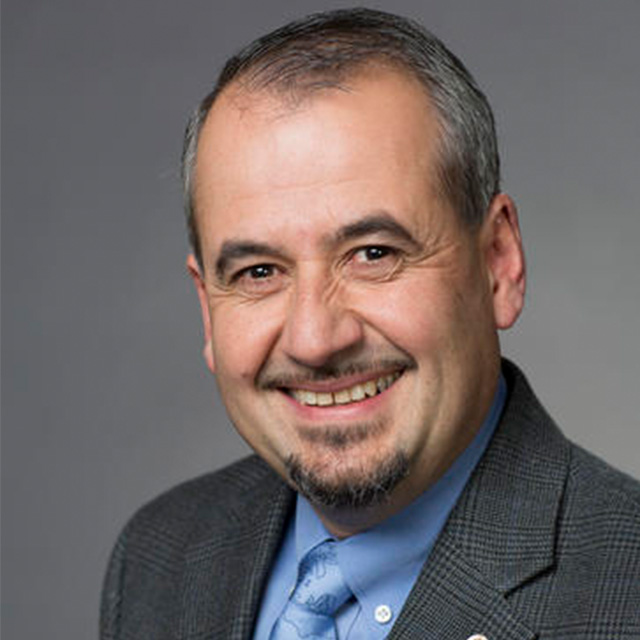
Victor Vasquez is a Professor and Chair of the Chemical and Materials Engineering Department at the University of Nevada, Reno (UNR). He holds a PhD in Chemical Engineering from UNR (1999) and focuses on thermodynamics, atomistic modeling, and process systems engineering for extreme materials. Key projects include Metal hexaboride research for neutron detection Reverse micellar systems for nanoparticle synthesis Lithium and cobalt supply chain analysis via complex networks Geothermal energy life cycle analysis Thermal pretreatment of lignocellulosic biomass Research keywords include: Materials Science Thermodynamic Modeling Molecular Dynamics Machine Learning Environmental Engineering Supply Chain Optimization Scientific awards: DELTA New Department Leaders Institute (2023) Faculty Academic Leadership Program (2019) He mentors graduate and undergraduate students, particularly from diverse backgrounds, and serves as adviser for UNR's AIChE and SHPE student chapters. Collaborations span UC San Diego, Alfred University, and Latin American institutions. Leadership roles include AIChE NORCAL section director (2010-2017) and ABET symposium participation (2021).
Professor Markku Kulmala (University of Helsinki) is a leading expert in atmospheric and environmental physics. As Academician of Finland and double ERC Advanced Grant holder, he leads the Institute for Atmospheric and Earth System Research (INAR) and ACCC Flagship. With ~1200 publications and a WoS H-index of 124, his work focuses on atmospheric aerosols, climate interactions, and air quality. Academy of Finland grants (2004-2009, 2011-2015) ERC Advanced Grant (2×) ISI Highly Cited Researcher His research team has published 4 groundbreaking studies in Nature and Science , including: Aerosol formation mechanisms Aerosol-cloud-climate interactions Atmosphere-land surface relationships Climate-air quality feedbacks With over 20 PhD/Master's students supervised, recent work includes Arctic aerosol studies ( Elementa 2025), Beijing air quality analysis ( Nature Communications 2025), and climate modeling applications. He has received multiple international awards including the Fuchs Memorial Award and honors from Stockholm and Tartu universities.
Alyssa Hensley is an Assistant Professor at the Charles V. Schaefer, Jr. School of Engineering and Science, Stevens Institute of Technology, affiliated with the Department of Chemical Engineering and Materials Science. She holds a PhD in Chemical Engineering from Washington State University (2015) and a BS in Chemical Engineering from New Mexico Institute of Technology (2012). Education: PhD (2015) and BS (2012) in Chemical Engineering Experience: Postdoctoral Fellow (University of Toronto, 2018-2021) and Postdoctoral Research Assistant (Washington State University, 2016-2018) Teaching: Courses include Chemical Engineering Thermodynamics I (CHE 233) and Reactor Design (CHE 650) Her research focuses on heterogeneous catalysis for energy and sustainability, addressing fundamental challenges in connecting nanoscale catalyst surface dynamics to chemical bond activation. Key areas include computational modeling of multi-component catalysts, machine learning applications, and reaction mechanism analysis for biomass/plastic waste conversion and CO₂ capture. Recent work explores configurational space sampling, transition state identification, and catalyst design using density functional theory and data science. Publications highlight reactions involving Pt, Fe, and PdFe surfaces with applications in CO oxidation, guaiacol hydrogenolysis, and hydrodeoxygenation. Professional service includes editorial roles (Scientific Reports, Nature Communications), NSF and DOE proposal review, and conference organization (AIChE, ACS meetings). She contributes to institutional committees including Research Computing and Curriculum Development.
Luca Frediani is a Professor in Theoretical and Computational Chemistry at the Hylleraas Center, Department of Chemistry, UiT The Arctic University of Norway. His research focuses on advanced quantum chemistry methods, including density functional theory, multiwavelet basis sets, and solvation modeling. He actively develops computational tools like MRChem and VAMPyR for molecular electronic structure calculations. Current affiliation: UiT The Arctic University of Norway Research group: Theoretical and Computational Chemistry Teaching: KJE-2001 Theoretical Chemistry and Spectroscopy His work spans relativistic quantum chemistry, numerical methods for response properties, and benchmarking of basis set limits. Publications emphasize eliminating basis set errors, multiwavelet applications, and polarizable continuum models for solvation. He collaborates extensively on software development for quantum chemistry. Recent articles highlight multiwavelet-based DFT at the basis set limit, noise-tolerant force calculations, and relativistic effects in electronic structure. Sub-fields include scalar relativity, cavity-free solvation, and metal-ligand interaction accuracy.
Dr. Greis Julieth Kim Reyes serves as Assistant Professor of Physics in the Department of Physics and Astronomy at SUNY New Paltz, where she conducts computational research on semiconductor materials and defects. Her work bridges theoretical physics and practical materials design for energy applications. Her educational journey includes a Ph.D. in Physics from University at Buffalo (2024), Master's in Physics from Universidad Nacional de Colombia (2014), and Bachelor's in Physics-Education from Universidad Distrital Francisco José de Caldas (2010). This international background informs her interdisciplinary approach to materials science. Dr. Reyes specializes in computational exploration of intermediate band semiconductors, defect engineering, and magnetic materials using density functional theory (DFT) and machine learning. Her research reveals how atomic-scale defects create novel electronic properties, particularly in 2D materials like C 3 N/C 3 B bilayers and perovskite oxides. She employs iterative Kohn-Sham methods to simulate electronic behavior and optical responses, with recent work focusing on excitonic effects for solar energy applications. Analysis of her 15 most recent publications shows consistent emphasis on computational discovery of materials with tailored optical and electronic properties. Key trends include defect-enabled photocatalysis, interlayer exciton engineering in van der Waals heterostructures, and Jahn-Teller effects in doped semiconductors - all targeting next-generation energy technologies. Her scholarly recognition includes: Bahethi Scholarship (SUNY Buffalo, 2022) Silvestro Scholarship (SUNY Buffalo, 2022) Marshall Plan Foundation grant (Johannes Keppler Universität, 2018) As an educator, Dr. Reyes develops interactive quantum mechanics curricula using Mathematica simulations, as evidenced by her GitHub repository. She teaches General Physics and Quantum Physics courses while integrating computational tools to build student intuition for quantum materials. Though specific research students aren't listed, her teaching philosophy emphasizes critical thinking through problem-solving sessions and real-world applications. Her computational laboratory work focuses on first-principles simulations of materials, with active development of educational resources for quantum mechanics instruction. Current projects explore machine learning pipelines for materials discovery and defect-property relationships in emerging semiconductor systems.