Alfredo Pasquarello is a Full Professor at the Chair of Atomic Scale Simulation within the Condensed Matter Theory Laboratory (CSEA) at the Ecole Polytechnique Fédérale de Lausanne (EPFL) . He teaches courses such as Computer Simulation of Physical Systems I and General Physics: Quanta . Education: Physics at Scuola Normale Superiore of Pisa (1986), University of Pisa (1986), PhD at EPFL (1991). Research: Focuses on atomic-scale simulations using density functional theory (DFT) and many-body perturbation to study defects in oxides , oxide-semiconductor interfaces , and energy materials like perovskites and photocatalysts. Recent Publications: 15 most recent articles (2022–2024) address band gaps, polarons, water splitting, and defect engineering in materials for photovoltaics and electrochemistry. Awards: Recipient of the EPFL Latsis Prize (1998) . Students: Supervised PhD/Master's students including Stefano Falletta, Thomas Bischoff, Patrick Gono, and Zhendong Guo. Labs: Leads the Chair of Atomic Scale Simulation at EPFL SB IPHYS CSEA.
Scott Geyer is an Associate Teaching Professor of Chemistry at Wake Forest University, located in Winston-Salem, NC. He holds a B.S. (2005) from the University of Virginia and a Ph.D. (2010) from the Massachusetts Institute of Technology, followed by postdoctoral research at Stanford University. Research Focus : Dr. Geyer’s research bridges chemical education and materials science. In pedagogy, he emphasizes laboratory course design to enhance student decision-making and scientific communication skills, particularly for graduate program applications. His materials research explores nanocrystal-based catalytic systems for energy applications, including water splitting, CO2 reduction, and photocatalytic processes. Key Contributions : His work includes developing trifunctional electrocatalysts for water splitting, lead-free perovskite alternatives for CO2 reduction, and scalable H2O2 electrosynthesis. His studies often combine computational modeling (e.g., DFT simulations) with experimental synthesis of nanomaterials. Awards & Recognition : No specific awards listed, though his publications reflect sustained contributions to catalysis and nanomaterial research. Advising & Grants : While no advisees are listed, his teaching role likely involves mentoring undergraduate and graduate students in laboratory practices and research methodologies. His work is supported by grants focused on sustainable energy materials. Labs & Teams : Engaged with Wake Forest’s chemistry department labs, contributing to interdisciplinary efforts in nanomaterials and sustainable chemistry.
William A. Goddard, III is the Charles and Mary Ferkel Professor of Chemistry, Materials Science, and Applied Physics at the California Institute of Technology. With a career spanning over five decades, he has held positions from Noyes Research Fellow (1964–66) to his current professorship since 2001. His educational background includes a B.S. from UCLA (1960) and a Ph.D. from Caltech (1965). Quantum chemistry and first-principles simulations Multiscale modeling (QM→MD→mesoscale) Catalysis and protein structure prediction Nanotechnology and bionanotechnology Energy storage (batteries, supercapacitors) Recent publications emphasize applications in metal-organic frameworks , electrocatalysis , and space manufacturing , reflecting his interdisciplinary approach. His work on G-protein coupled receptors and Li-S batteries demonstrates methodological innovation through quantum mechanics and machine learning . Horizon Prize , Royal Society of Chemistry Over 1548 total publications (1967–2022) As Director of Caltech's Material and Process Simulation Center , he leads development of software like ReaxFF for reactive dynamics. He teaches Ch 120 ab (Nature of the Chemical Bond) and Ch 121 ab (Atomic-Level Simulations), emphasizing hands-on computational applications for experimentalists and theorists.
Mette Gaarde is the Les and Dot Broussard Alumni Professor of Physics at Louisiana State University (LSU), Department of Physics & Astronomy. She holds a Ph.D. from the University of Copenhagen (1997). Her research focuses on ultrafast atomic, molecular, and optical physics theory, particularly probing laser-matter interactions using attosecond and femtosecond pulses. She leads the LSU ultrafast AMO theory group, addressing dynamics in transparent solids, attosecond transient absorption, charge migration, and mid-infrared filamentation. Education: Ph.D., University of Copenhagen, Denmark (1997) Research Interests: Dr. Gaarde’s work bridges ultrafast AMO science and nonlinear optics. Key areas include high-harmonic generation (HHG) in solids, attosecond transient absorption spectroscopy (ATA), and charge migration in organic molecules. Her group employs time-dependent Schrödinger equation, density functional theory, and semiconductor Bloch equations to model quantum-classical interactions. Recent studies explore HHG in monolayer MoS₂, particle-like charge migration, and resonant XUV propagation. Selected Research Trends: Publications highlight advancements in HHG theory, charge migration control via strong-field ionization, and filamentation of mid-infrared laser pulses. Collaborations with experimental groups at SLAC, Ohio State University, and European institutions have advanced applications in solid-state spectroscopy and molecular dynamics. Awards: Les and Dot Broussard Alumni Professor of Physics (LSU) Advising & Collaborations: Her research involves postdocs and graduate students in interdisciplinary projects. Ongoing collaborations focus on high-harmonic spectroscopy, attosecond solitons, and nonlinear fiber optics. Labs/Teams: Leads the LSU ultrafast AMO theory group, affiliated with the Hearne Institute for Theoretical Physics.
Professor Peter Wells is an Associate Professor at the University of Southampton, with a joint appointment at Diamond Light Source. His research focuses on operando spectroscopy, heterogeneous catalysis, and nanoparticle design. He coordinates the CHEM3054 module on Inorganic Materials Chemistry and holds a Fellow accreditation from the Higher Education Academy. Education: MChem in Chemistry (University of Surrey, 2003) PhD in tailored metal nanoparticle preparation and characterization (University of Southampton, 2007) His research integrates advanced X-ray techniques (e.g., X-ray absorption spectroscopy) with computational methods like DFT simulations to study catalyst dynamics. Key areas include stabilizing structural changes in palladium nanoparticles and designing nanoparticle catalysts for sustainable chemical production from waste biomass. He collaborates with the UK Catalysis Hub and serves on peer-review panels for Diamond Light Source and the Swiss Light Source. Active Research Projects (EPSRC): Core Equipment 2024 (£1.26M, PI) Nitridic and Carbidic Pd Nanoparticles for Directed Catalysis Peter supervises multiple PhD students in Chemistry and actively mentors researchers through collaborative grants. His work bridges experimental and theoretical approaches to catalysis, emphasizing real-time structural analysis under operational conditions.
Associate Professor Judy Hart is a materials scientist at the School of Materials Science & Engineering, UNSW Sydney , specializing in the development of semiconducting materials for renewable energy applications. Her work integrates computational (DFT) and experimental approaches to understand composition-property relationships in systems like solid solutions , heterostructures , and doped materials for photocatalysis and solar cells . She leads projects funded by ARC Discovery and Linkage grants , including work on photo-electro-catalysis systems and stabilizing ceramic materials . Education: PhD in Materials Engineering (Monash University, 2007), BEng (Materials) (Monash, 2002) Professional Experience: Senior Lecturer (UNSW, 2017–), Lecturer (UNSW, 2013–2017), University of Bristol (2007–2012) Research Interests Her research focuses on designing materials for renewable energy , particularly photoelectrochemical water splitting and organic oxidation reactions . Key areas include Density Functional Theory (DFT) , defect engineering , band gap tuning , and nanostructured materials . She investigates ferroelectric polarization effects , metal oxide heterostructures , and stability of battery components , with applications in hydrogen production , CO2 conversion , and advanced battery materials . Scientific Awards Ramsay Memorial Fellowship (University of Bristol, 2007–2009) Teaching Contributions She is co-author of the 1st Australian & New Zealand edition of "Materials Science and Engineering: An Introduction" , and teaches courses on computational materials science , corrosion-resistant surfaces , mechanical behavior of metals , and materials design .
Said Hamdioui serves as a full Professor in the Department of Computer Engineering within the Faculty of Electrical Engineering, Mathematics and Computer Science at Delft University of Technology. His research focuses on cutting-edge hardware architectures for neuromorphic computing and energy-efficient AI acceleration, with particular emphasis on memristor-based systems, emerging memory technologies, and fault-tolerant designs for edge applications. His research interests span Neuromorphic Computing , Memristor-Based Architectures , and Energy-Efficient AI Hardware , addressing critical challenges in hardware security, computation-in-memory, and reliable edge AI deployment. Recent work demonstrates significant advancements in RRAM/FeFET testing methodologies, spiking neural network implementations, and spin wave computing alternatives to traditional CMOS. His publications reveal strong trends toward real-world deployment of brain-inspired hardware with practical constraints like power efficiency, testability, and security. Award highlights include: DATE'20 Best Paper Award DFT'21 Outstanding Student Paper ETS 2021 Best Paper Award LATS 2018 & 2022 Best Paper Awards Professor Hamdioui actively contributes to the research community through editorial roles at IEEE Transactions on VLSI Systems , IEEE Design & Test , and Journal of Electronic Testing from 2017-2018. His leadership in multi-partner projects like CONVOLVE and NEUROKIT2E demonstrates strong industry-academia collaboration for edge AI solutions. Current work shows increasing focus on practical deployment challenges including in-field fault monitoring, security vulnerabilities in neuromorphic systems, and realistic brain simulation frameworks.
Professor Kenneth Ruud is a leading expert in theoretical and computational chemistry at UiT The Arctic University of Norway. He serves as Director General of the Norwegian Defence Research Establishment and leads the Hylleraas Centre for Quantum Molecular Sciences. His research focuses on relativistic quantum chemistry, developing advanced ab initio methods for molecular property calculations, and integrating QM/MM and continuum solvent models. Education: PhD from University of Oslo (1998, supervised by Trygve Helgaker) Postdoc: University of San Diego with Peter Taylor (1998-2000) His work spans relativistic effects in molecular properties, vibronic coupling, and X-ray spectroscopy. He contributes to software development through programs like Dalton, Dirac, ReSpect, and OpenRSP. Recent publications highlight applications in spin-vibronic dynamics, heavy metal L/M-edge XAS, and topological materials. Key scientific contributions include relativistic DFT for nuclear spin-rotation constants, polarizable embedding models for vibrational spectra, and quantum dynamics frameworks. Awards recognize his impact through the Dirac Medal (2008) and multiple academy memberships. Elected to Norwegian Academy of Science and Letters Fellow of American Association for the Advancement of Science (AAAS) Foreign member of Finnish Academy of Science and Letters He actively participates in open science initiatives and serves on boards including Norges Forskningsråd and CAROS center for subsea robotics. Current projects involve quantum molecular science in extreme environments and computational protocol development.
Ambarish Kulkarni is an Assistant Professor in the Department of Chemical Engineering at the University of California, Davis. His research focuses on multi-scale molecular modeling, data science for materials discovery, catalysis, and separations. He combines quantum chemistry methods (e.g., wave function theory, density functional theory) with classical simulations and machine learning to design novel materials for applications in catalysis, energy storage, and environmental remediation. Specific areas of interest include methane activation, CO 2 capture, and heterogeneous electrocatalysis. His work bridges theory and experiment, collaborating with experimental groups to validate computational findings. Notable projects include: Developing catalysts with atomically dispersed metals for enhanced reactivity Designing zeolite materials for selective chemical transformations Creating machine learning workflows to accelerate material discovery Recent research highlights the role of water in CO 2 adsorption mechanisms, the dynamic behavior of confined nanoparticles, and redox-cycling phenomena in zeolite-embedded catalysts. His computational tools like the Multiscale Atomic Zeolite Simulation Environment (MAZE) enable detailed analysis of complex material behaviors. No scientific awards are explicitly listed in the provided information. His advising activities and grants are not detailed in the current data, but his extensive publication record indicates active research collaboration and funding support.
Nick Gys is a Research Fellow in the Department of Materials and Chemistry at Vrije Universiteit Brussel (VUB), Brussels, Belgium, specializing in surface modification of materials and sustainable engineering applications. His work bridges experimental and computational approaches to address challenges in materials science and environmental remediation. Dr. Gys's research centers on the surface chemistry of metal oxides, particularly titanium dioxide functionalized with organophosphonic acids. He investigates how molecular parameters like chain length and pH influence binding modes, photooxidation stability, and metal recovery efficiency. His methodology integrates spectroscopic techniques (XPS, IR, EPR) with density functional theory (DFT) simulations to elucidate structure-property relationships at molecular interfaces. Key application areas include selective palladium recovery from industrial waste streams and designing photo-stable functional coatings. His 2022-2023 publications reveal a cohesive research trajectory focused on organophosphonate-grafted surfaces, with increasing emphasis on computational validation of experimental findings. The work demonstrates how molecular engineering of surface modifiers directly impacts performance in environmental applications, particularly in metal adsorption and photochemical degradation processes. No scientific awards were documented in the source material. Collaborative Framework: Works within VUB's Materials and Chemistry research ecosystem alongside Prof. Meynen, Prof. Adriaensens, and Prof. Hauffman Project Scope: Leads interdisciplinary efforts in sustainable materials engineering, including TiO 2 functionalization for metal recovery and photooxidation studies Dr. Gys operates within VUB's Sustainable Materials Engineering initiative, contributing to laboratory-based experimental work and computational modeling teams focused on advancing surface modification technologies for circular economy applications.
Jason H. Hafner is a Professor of Physics and Astronomy and of Chemistry at Rice University, affiliated with the Rice Space Institute. His research bridges fundamental physics with biological applications through nanoscale phenomena, focusing on light-matter interactions at molecular interfaces. Education: 1993: BS in Physics, Trinity University 1996: MA in Physics, Rice University 1998: PhD in Physics, Rice University (advisor: Richard Smalley) Hafner's work centers on nanophotonics and interfacial biophysics , utilizing Surface Enhanced Raman Scattering (SERS) as a primary tool. His lab pioneers structural analysis of lipid membranes, gold nanoparticle surface chemistry, and vibrational spectroscopy of bioactive compounds including anthraquinones in lichens and flavonoids. Current projects integrate computational modeling with experimental SERS to decode cholesterol structure and analyze environmental particulates from aerospace events. Publications since 2015 reveal a trajectory from foundational nanomaterial studies toward complex biological systems, increasingly combining DFT simulations with experimental Raman data. His work spans astrobiology-relevant molecules to spacecraft-related environmental analysis, demonstrating consistent methodological innovation in vibrational spectroscopy. Major recognitions include: Beckman Young Investigator Award (2002) Norman Hackerman Award for Chemical Research from Welch Foundation (2011) Hafner has mentored multiple PhD students including Aobo (gold nanoparticle surface chemistry) and Mathieu (lipid membrane structure via SERS), while teaching undergraduate physics for nearly a decade. His editorial role at ACS Nano (2010-2017) reflects standing in the nanoscience community. The Hafner Lab maintains an agile, interdisciplinary approach—recently collaborating with planetary scientist Phil Metzger to analyze SpaceX launch debris using Raman spectroscopy, demonstrating real-world application of fundamental research techniques to emerging aerospace challenges.
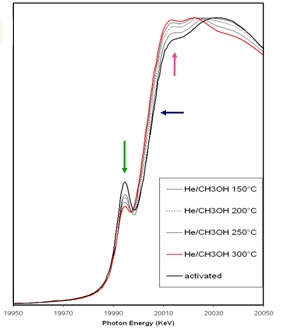
Sylvain Cristol is a Professor at the University of Lille within the Heterogeneous Catalysis department and the Modeling and Spectroscopy (MODSPEC) group. He teaches quantum chemistry, chemical bonding, statistical physics , and X-ray absorption spectroscopy at the university’s European Master’s program. PhD in Molecular and Organic Chemistry (1997-2000, Université de Provence) Postdoctoral work at Davy-Faraday Research Lab, Royal Institution of Great Britain (2000-2002) His research focuses on modeling hydrodesulfurization and hydrodeoxygenation catalysts for biomass valorization, supported by ANR-PNRB project ECOHDOC (with Caen, Poitiers, and TOTAL). He pioneered operando X-ray absorption spectroscopy for characterizing supported oxides (Mo/Re on alumina/anatase) via the ANR SAXO project (Paris VI, Grenoble, SOLEIL). Collaborative work with Francesco Mauri (Paris VI) advanced NMR parameter modeling in solids. Publications span DFT studies , XANES spectroscopy , and solid-state NMR applied to catalysis. Scientific awards include the UCCS Thesis Prize (highest honors) for his work on dibenzothiophene reactivity on molybdenum sulfide.
Dr. Anna Baldycheva is a Senior Lecturer in Electronic Engineering at the University of Exeter, within the College of Engineering, Mathematics and Physical Sciences. She leads the interdisciplinary STEMM Laboratory, focusing on applied R&D in smart materials, photonics, AI, and IoT. With prior research experience at MIT, Trinity College Dublin, and Tyndall National Institute, she has established herself as an internationally recognized innovator and entrepreneur in emerging technologies. PhD in Electronic and Electrical Engineering, Trinity College Dublin (2008–2012) BSc (Hons) in Physics, St. Petersburg State University (2003–2008) Postgraduate Certificate in Academic Practice, University of Exeter (2016–2017) Postgraduate Certificate in Technology Management, Smurfit Business School (2009–2010) Her research spans Nano-Engineering, Opto-Electronics, Photonics, AI, and IoT , with a strong emphasis on real-world applications. She pioneers work in fluid opto-electronics , graphene nanocoatings , and AI-driven emotion recognition and early cancer detection . Her lab develops smart composite materials for flexible electronics, e-textiles, and structural applications, integrating machine learning into healthcare, education, and communications systems. The recent publications highlight a strong trend toward applied interdisciplinary innovation , combining materials science with AI and photonics for healthcare diagnostics, energy-efficient computing, and educational technology. Her work frequently bridges fundamental physics with commercialization potential, as seen in spin-out technologies like GSurf and the Electronic-Nose for lung cancer detection. Fellow, Royal Microscopical Society (RMS) Fellow, Higher Education Academy (FHEA) Expert, Future and Emerging Technologies, European Commission Featured in Forbes and Forbes Tech Council Editor-in-Chief, InSTEMM Journal Associate Editor, Nature Scientific Reports and Discover Nano Trustee, Royal Microscopical Society Founder, STEMM Global Scientific Society Founder, It’s Her! Women in STEMM Initiative Dr. Baldycheva actively supervises PhD students and has secured industrial collaborations with organizations such as Qinetiq and Lumentum. She leads multiple outreach initiatives, including STEMM Junior for underprivileged children, and serves on the committee for the Jocelyn Bell Brunel PhD Scholarship. She has raised significant research funding through national and international grants, though specific grant names are not listed. She leads the STEMM Laboratory , a multidisciplinary research group with divisions in Smart Composite Materials, Machine Learning & AI, and Opto-Electronics & Photonics. The lab emphasizes industry collaboration and technology transfer, having produced a university spin-out (GSurf) and multiple media-highlighted innovations.
Dr. Seung Soon Jang is a Professor in the School of Materials Science and Engineering at Georgia Institute of Technology, joining in 2007. His research focuses on computational and theoretical approaches to design nanoscale systems, particularly in molecular electronics, fuel cells, and biotechnology. He holds fellowships from the American Chemical Society (ACS), American Physical Society (APS), American Society for Metals International (ASM Inter.), and Electrochemical Society (ECS). His research spans energy storage, environmental materials, and nanotechnology, with a strong emphasis on molecular simulations and DFT modeling. Education & Awards: Fellowships in ACS, APS, ASM Inter., and ECS. Research Interests: Biomolecular-solids, ceramics, nanomaterials, polymers, and energy/environmental applications. Dr. Jang advises three students and leads the CNBT Lab, exploring advanced materials for energy conversion and wearable technologies. His work integrates computational methods with experimental validation, addressing challenges in fuel cells, solar cells, and CO₂ reduction. Key achievements include developing durable electrocatalysts and novel membrane technologies.
Gábor Magyarfalvi is an Assistant Professor and Lecturer at Eötvös Loránd University, affiliated with both the Institute of Chemistry and the Department of Inorganic Chemistry. His office is located at 1117 Budapest, Pázmány Péter sétány 1/a. (Room 542), and he can be contacted via email at gmagyarf@elte.hu or phone extension 6587. His research focuses on physical and inorganic chemistry, with specialization in spectroscopy, astrochemistry, and computational methods. Key areas include matrix isolation techniques for studying interstellar molecule formation (e.g., H 2 catalysis via polyaromatic hydrocarbons), photochemical generation of reactive intermediates, and conformational dynamics of biomolecules. His work extensively employs low-temperature matrix isolation coupled with laser spectroscopy and quantum chemical calculations. Magyarfalvi's publications demonstrate consistent themes: 60% focus on low-temperature photochemistry and spectroscopy of small molecules (e.g., nitrogen/sulfur compounds, amino acids), 30% on peptide/protein conformational analysis using vibrational circular dichroism (VCD) and NMR, and 10% on methodological developments in computational chemistry. Recent works increasingly explore astrochemistry and quantum tunneling phenomena.