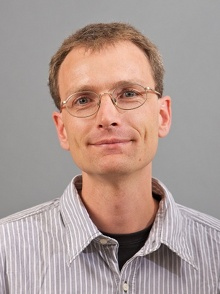
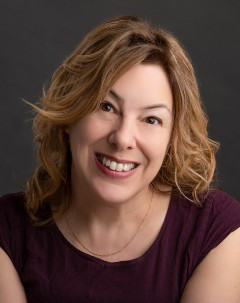
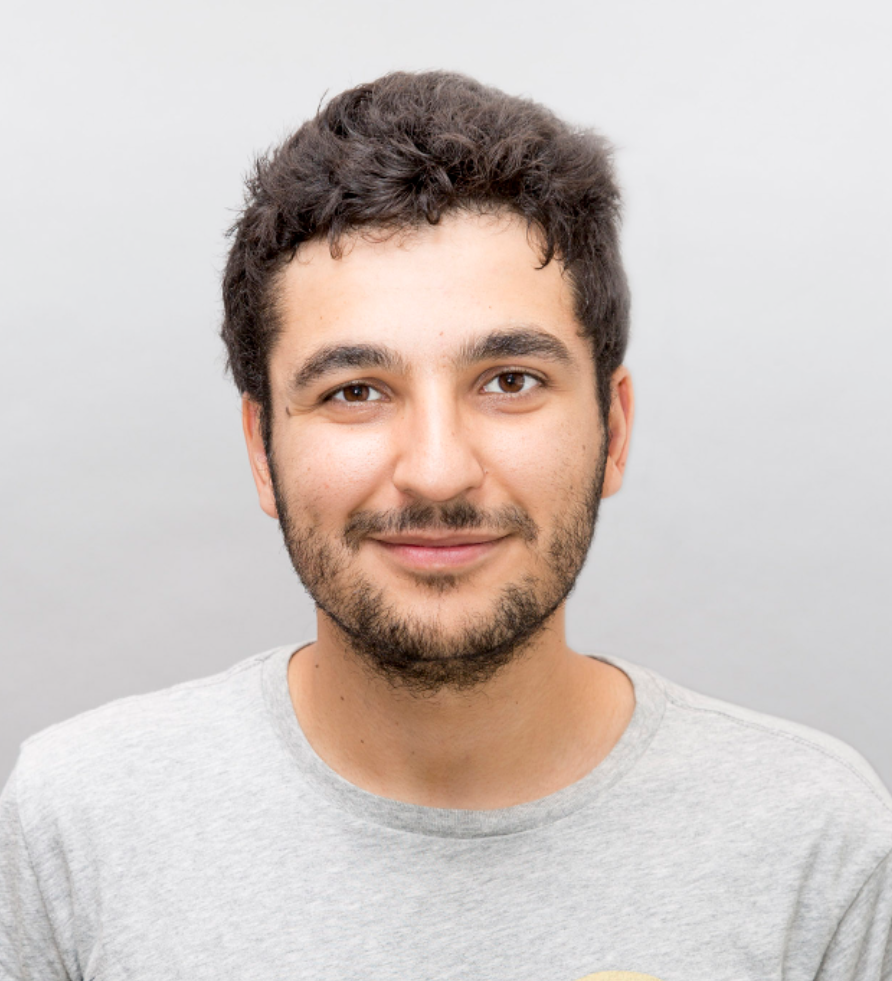
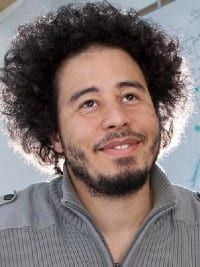
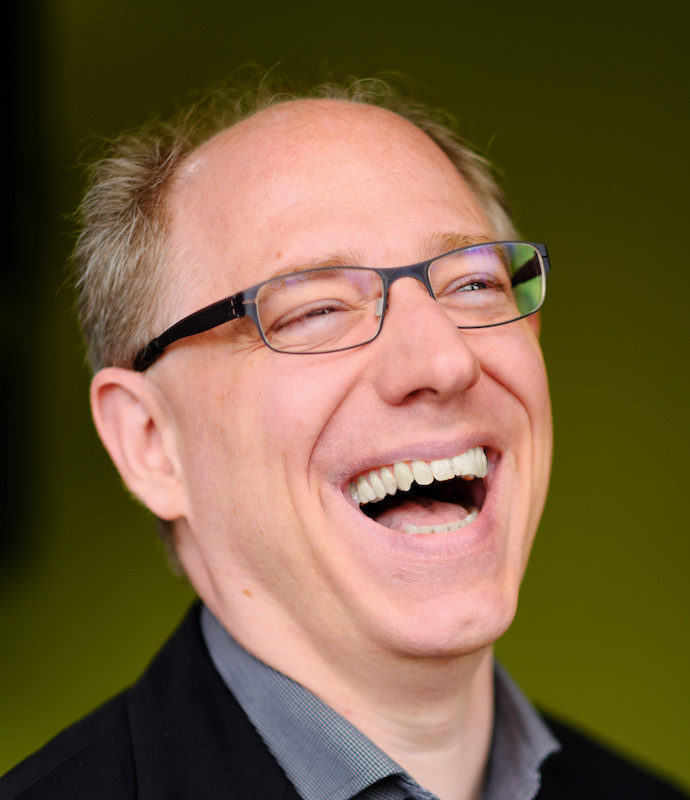
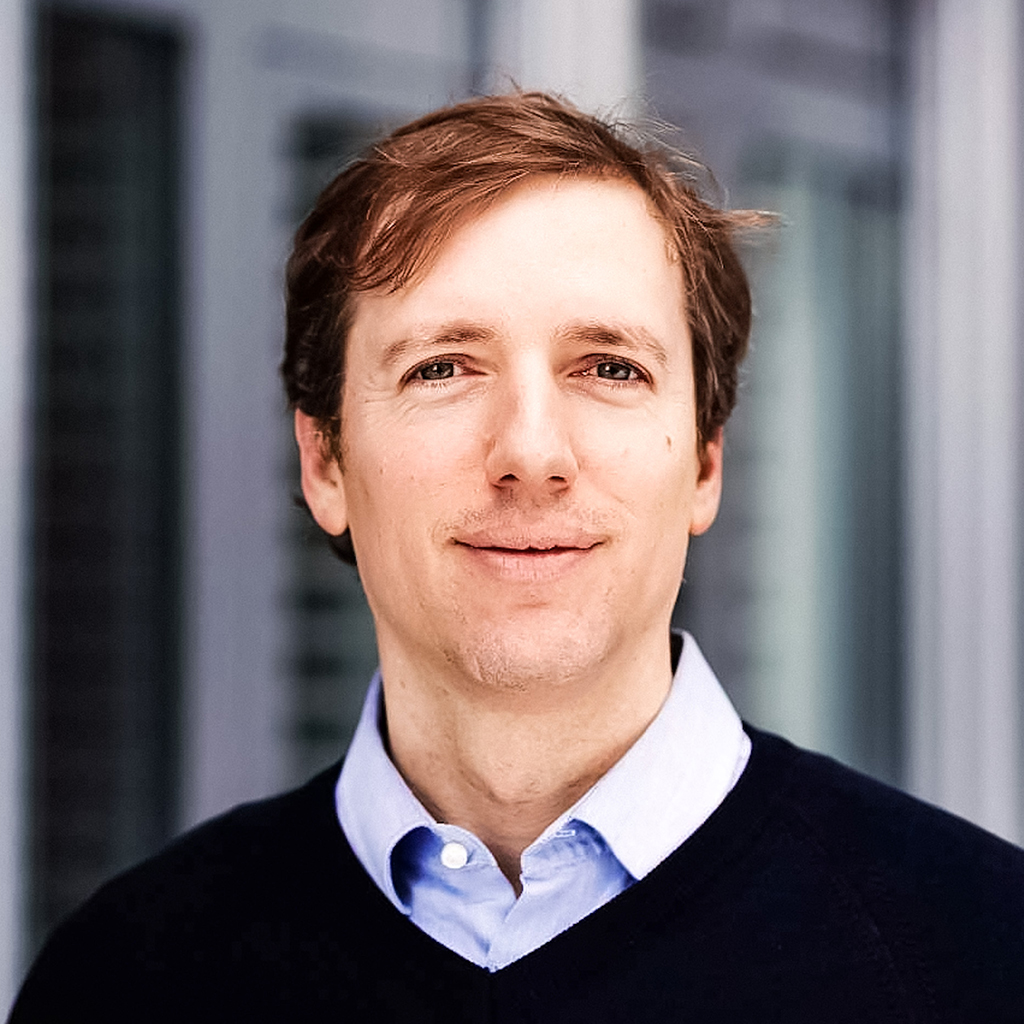
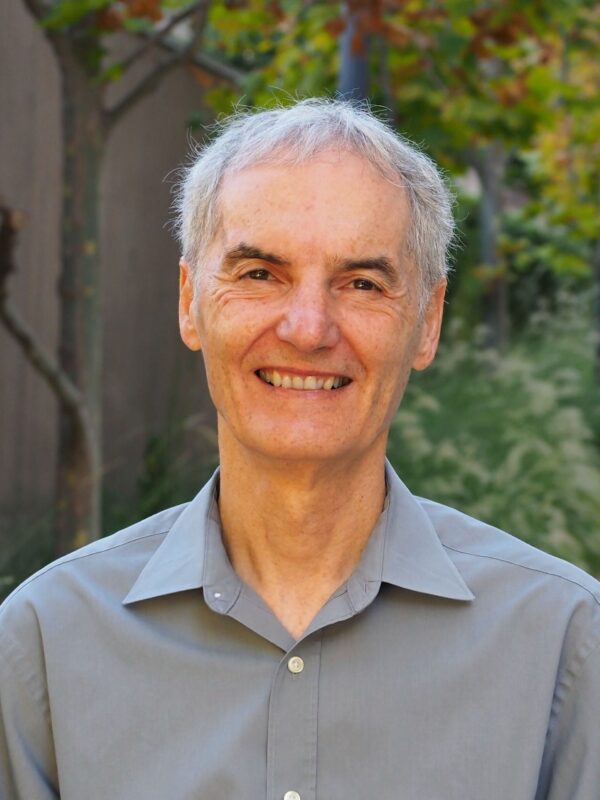
Olaf Ronneberger is an associate professor at the Albert-Ludwigs-Universität Freiburg and works at Google DeepMind . His research focuses on deep learning architectures , AI applications to scientific problems , and protein structure prediction . He leads seminars on deep learning and 3D image analysis, emphasizing vision-language integration and generative models. His publications include foundational work on U-Net architectures for biomedical image segmentation, AlphaFold 3 for biomolecular interaction prediction, and Gemini models for multimodal AI systems. Key subfields span medical imaging , protein folding , and vision-language models . Co-developer of U-Net , a widely used biomedical image segmentation framework. Contributor to AlphaFold 3 for structural biology. Research on Gemini 1.5/2.5 models for multimodal reasoning.
Noam Berger Steiger is a Professor of Stochastic Processes at the Technical University of Munich (TUM), within the School of Computation, Information and Technology and the Department of Mathematics. His office is located at Parkring 11, Garching bei München, and he can be contacted at noam.berger@tum.de. His research focuses on stochastic processes in random environments, percolation theory, and random walks. Key contributions include asymptotic analysis of preferential attachment graphs, quenched invariance principles for non-elliptic random walks, and slowdown phenomena in ballistic random motion. His work bridges theoretical probability with applications in complex systems. Analysis of his 2012-2014 publications reveals consistent focus on random walk dynamics in disordered media, with significant results on ballisticity conditions, trail detection in random scenery, and distributional limits. His research employs advanced probabilistic techniques published in top-tier journals including Annals of Probability and Probability Theory and Related Fields . Professor Berger has supervised 11 theses: 5 bachelor's theses at TUM covering Brownian motion properties and investment strategies for risk-averse investors, and 6 master's theses (3 at TUM, 3 at Hebrew University) on topics including return times for random walks, mass transport principles, and spin-glass percolation. His current teaching includes Markov Chains, Probability on Graphs, and Brownian Motion seminars. He is an active member of TUM's Probability Theory research group, which participates in the TUM-ICL Mathematical Sciences Hub and Exzellenzcluster MCQST. The group collaborates on quantum science initiatives while maintaining strong foundations in classical probability theory and stochastic analysis.
Dr. April Nowell is a Professor of Anthropology in the Department of Anthropology at the University of Victoria's Faculty of Social Sciences, specializing in Paleolithic archaeology, cognitive archaeology, and the archaeology of children. Currently on leave, she leads internationally recognized research projects across Europe, the Levant, Australia, and Africa while actively accepting graduate students. She earned her PhD from the University of Pennsylvania and has developed expertise in Neanderthal lifeways, Paleolithic art, and hominin life histories. Her academic journey reflects deep engagement with both theoretical frameworks and fieldwork across diverse geographical contexts. Nowell's research examines how prehistoric societies structured knowledge transmission, childhood development, and symbolic expression. Her groundbreaking work on finger flutings in Australian caves reveals children's roles in Paleolithic storytelling traditions, while her analysis of Levantine wetland ecosystems demonstrates how Pleistocene humans adapted to environmental shifts. She challenges conventional narratives about Neanderthal cognition and has pioneered methodologies for reconstructing prehistoric childhood experiences through skeletal and material evidence. Her recent publications show consistent innovation in archaeological methodology, particularly in digital documentation of rock art and interdisciplinary approaches to human development. Key trends include integrating bioarchaeological data with cognitive models, examining material culture as evidence of social learning, and analyzing environmental archives to understand human dispersal patterns. Her scientific recognition includes: 2023 EAA Book Prize for Growing Up in the Ice Age: Fossil and Archaeological Evidence of the Lived Lives of Plio-Pleistocene Children Nowell secures major research funding including Social Sciences and Humanities Research Council grants supporting her Azraq Basin project in Jordan and Koonalda Cave research in Australia. She mentors graduate students in Paleolithic theory while collaborating with Indigenous communities and international scholars on field projects spanning five continents. Her work bridges academic research and public engagement through TEDx talks and media appearances examining science communication. She directs field programs at Jordan's Azraq Basin wetlands and Australia's Koonalda Cave, working with multidisciplinary teams including geochronologists, bioarchaeologists, and Traditional Owners to investigate Pleistocene human adaptation and cultural transmission.
Salem Lahlou is an Assistant Professor in the Machine Learning Department at the Mohamed bin Zayed University of Artificial Intelligence (MBZUAI), having joined in September 2024. He previously served as a Senior Researcher at the Technology Innovation Institute (TII) in 2024. His academic background includes a PhD from Mila and Université de Montréal (UdeM) under Yoshua Bengio (2023), with prior studies in applied mathematics at École Polytechnique and statistical learning at École Normale Supérieure Paris-Saclay. His research focuses on developing more capable and reliable AI systems through three interconnected pillars: Novel Method Development : Core contributions to Generative Flow Networks (GFlowNets), uncertainty estimation techniques (DEUP), and curriculum learning frameworks Large Language Model Advancement : Enhancing reasoning capabilities and alignment through preference optimization and trace-based learning Community Tooling : Creation of torchgfn library for GFlowNets and benchmarks including BabyAI, FinChain, and LLM-BabyBench Core research areas span Machine Learning, GFlowNets, Uncertainty Estimation, LLM Reasoning, Reinforcement Learning, and AI for Science. Recent publications (2023-2025) demonstrate strong emphasis on GFlowNet theory/improvements (8+ papers), LLM reasoning evaluation (FinChain, LLM-BabyBench), uncertainty quantification, and societal AI impacts. Key application domains include mathematical reasoning, financial systems, privacy preservation, and cognitive science. He currently advises graduate students including Junyi (privacy risks in SNNs) and Abhijith (LLM reasoning). His group collaborates with MBZUAI faculty (Nils Lukas, Alham Fikri, Mingming Gong, Martin Takac) and industry partners on projects involving Conversational AI, Personalization, and Affective AI.
Iain Murray is Professor of Machine Learning and Inference at the School of Informatics, University of Edinburgh. His research focuses on developing flexible probabilistic models applicable across diverse domains including cosmology, neuroscience, perception, speech, sports, and text. Program Chair for ICLR (2018) Publications Chair for ICML (2017, 2018) Area Chair for AISTATS, ICLR, ICML, NeurIPS, and UAI Amazon Scholar (2018-2024), first appointed in Europe Murray's research interests center on probabilistic reasoning using machine learning, with specific expertise in density estimation and Markov chain Monte Carlo methods. His work spans theoretical foundations and practical applications, with significant contributions to neural autoregressive distribution estimation (NADE), real-valued NADE (RNADE), and pseudo-marginal slice sampling techniques. His research has enabled advances in flexible probabilistic modeling across multiple domains. His publications show consistent focus on advancing probabilistic modeling techniques, with recent work emphasizing neural autoregressive models, density estimation methods, and efficient sampling algorithms. The research trajectory demonstrates progression from foundational work on NADE to increasingly sophisticated deep learning approaches for density estimation and inference. Notable Paper Award for NADE work Amazon Scholar (2018-2024) Murray has supervised numerous PhD students who have gone on to prominent positions at Google DeepMind, NYU, stability.ai, and other leading institutions. His teaching responsibilities include the Machine Learning and Pattern Recognition course and project supervision. His research group focuses on developing tractable probabilistic models with applications across multiple scientific domains.
Maurice Smith serves as the Gordon McKay Professor of Bioengineering at Harvard University's School of Engineering and Applied Sciences (SEAS), where he leads the Neuromotor Control Lab. His primary appointment resides within the Department of Bioengineering, focusing on the computational and neural mechanisms underlying human movement control. Smith's research centers on sensorimotor learning , motor adaptation , and neuromotor control systems . He investigates how the brain forms and retains motor memories, particularly examining cerebellar contributions to long-term sensorimotor memory and the dissociation between implicit and explicit learning pathways. His work frequently employs computational modeling to dissect neural tuning properties and motor variability regulation. Analysis of his recent publications reveals a strong emphasis on temporal dynamics in motor learning , cerebellar function in memory consolidation , and Bayesian frameworks for understanding sensorimotor adaptation . His research demonstrates consistent focus on how error processing, uncertainty, and neural plasticity shape motor memory formation across multiple timescales. Smith maintains active collaborations with researchers including Wilsaan M. Joiner, Yohsuke R. Miyamoto, and Nathan Sandholtz, as evidenced by frequent co-authorship patterns. His laboratory investigates fundamental questions in motor control with implications for neurorehabilitation and adaptive robotics.
Louis Du Plessis is a Lecturer at ETH Zürich's Department of Biosystems Science and Engineering in Basel, Switzerland. His research focuses on computational evolution with particular emphasis on infectious disease dynamics and genomic analysis. He maintains an active research profile with numerous high-impact publications in top-tier journals. Dr. Du Plessis completed his doctoral studies at ETH Zürich in 2016 with a thesis titled 'Understanding the spread and adaptation of infectious diseases using genomic sequencing data,' building upon his 2011 Master's work on evolutionary rate variation. His current research sits at the intersection of computational biology, epidemiology, and evolutionary genetics. His research interests span computational epidemiology, phylodynamics, viral evolution, and infectious disease modeling. He has made significant contributions to understanding pandemic dynamics, particularly regarding influenza and SARS-CoV-2, using genomic and epidemiological data integration. His methodological work includes developing computational approaches for estimating epidemic dynamics and viral transmission patterns. Analysis of his recent publications reveals a strong focus on how pandemics disrupt normal viral circulation patterns, with particular attention to influenza evolution during the 2009 H1N1 and COVID-19 pandemics. His work often combines phylogenetic analysis with epidemiological modeling to extract maximum information from genomic and case count data. Dr. Du Plessis has received research funding from European Commission projects including 'From Foundations of Phylodynamics to new applications in Cell Biology' (grant 101001077) and 'MOnitoring Outbreak events for Disease surveillance in a data science context' (grant 874850). He is actively involved in developing computational tools for analyzing pathogen genomic data and has contributed to several software packages used in the field. His work has significant implications for public health surveillance and pandemic preparedness.
Professor Alexander Koller is a leading academic in Computational Linguistics at Saarland University's Department of Language Science and Technology. He holds a courtesy appointment in Computer Science and contributes to the Saarland Informatics Campus - one of Europe's premier computer science research centers. He leads the Computational Linguistics group and serves as speaker for the DFG-funded Research Training Group 'Neuroexplicit Models of Language, Vision, and Action'. PhD in Computer Science (Saarland University) Former positions: University of Potsdam, Columbia University, University of Edinburgh Sabbatical experiences: Meta AI (Paris), Allen Institute for AI (Seattle) His research focuses on computational modeling of meaning and reasoning in NLP, combining neural and symbolic approaches. Key contributions include semantic parsing systems like the AM parser and Alto, neurosymbolic models, and the GIVE Challenge for NLG evaluation. His recent work explores LLMs' limitations in problem-solving and compositional generalization. Recent publications highlight diverse applications across semantic parsing, dialogue systems, and LLM evaluation. Awards include ACL 2020 Best Theme Paper and multiple Outstanding Paper recognitions at ACL conferences. 2025 - AI Action Summit keynote speaker 2023 - ACL Outstanding Paper Awards 2022 - ELLIS Faculty appointment He maintains the DialogOS system for spoken dialogue development and teaches advanced computational linguistics topics. His group includes multiple postdocs and PhD students working across LLMs, dialogue systems, and semantic modeling.
Esa Ollila serves as Associate Professor in the Department of Signal Processing and Acoustics at Aalto University, Finland, and holds an adjunct professorship in Statistics at the University of Oulu. His academic appointments include Academy of Finland Research Fellow (2010-2015) and prior senior research/lecturing roles at both institutions. His educational background features: M.Sc. in Mathematics, University of Oulu (1998) Ph.D. in Statistics (with honors), University of Jyväskylä (2002) D.Sc.(Tech) in Signal Processing (with honors), Aalto University (2010) Professor Ollila's research centers on statistical signal processing and robust statistical methodologies , with significant contributions to array processing, high-dimensional data analysis, and covariance matrix estimation. His work bridges theoretical statistics with practical applications in radar systems, wireless communications, and big data analytics, emphasizing robustness against outliers and computational efficiency in modern data-intensive environments. Current focus areas include compressed sensing, sparse approximation, and blind source separation techniques. Analysis of his 15 most recent publications (2024-2025) reveals three dominant trends: (1) robust covariance learning for massive random access systems, (2) integrated sensing and communications (ISAC) for 6G networks using advanced beamforming, and (3) geometric approaches to elliptical distributions in statistical inference. His work increasingly incorporates deep learning (GANs, graph neural networks) while maintaining strong foundations in classical signal processing theory. Key recognitions include: Academy of Finland Postdoctoral Fellowship (2004-2007) Academy of Finland Research Fellowship (2010-2015) His research has been supported through prestigious Academy of Finland grants totaling over a decade of continuous funding. Professor Ollila currently leads an active research group at Aalto University, supervising doctoral candidates and collaborating internationally with institutions including Princeton University (where he served as Visiting Post-doctoral Research Associate during 2010-2011). He maintains strong ties with the University of Oulu through his adjunct professorship and has contributed to EURASIP's Special Area Team on Theoretical and Methodological Trends in Signal Processing. The Esa Ollila Research Group focuses on cutting-edge challenges in statistical signal processing, with current projects spanning robust DOA estimation under non-Gaussian noise, covariance matrix learning for massive MIMO systems, and machine learning-enhanced radar-communication integration. The group actively develops open-source tools like the fitHeavyTail R package for heavy-tailed distribution modeling and maintains collaborations with industry partners in wireless communications.
Associate Professor LIN Zhenhua serves as a Presidential Young Professor in the Department of Statistics and Data Science at the National University of Singapore (NUS), with additional affiliation at the Institute of Data Science since 2021. His research develops cutting-edge statistical methodologies for complex data structures across multiple domains. Dr. LIN completed his Ph.D. at the University of Toronto in 2017 under Fang Yao's supervision, following M.Sc. degrees from Simon Fraser University (2013, 2010) and a B.Sc. from Fudan University (2008). Ph.D., University of Toronto, 2017 (Advisor: Fang Yao) M.Sc., Simon Fraser University, 2013, 2010 B.Sc., Fudan University, 2008 His research program spans functional data analysis (developing techniques for curves and surfaces), non-Euclidean data analysis (statistical methods on manifolds), high-dimensional statistics (p > n problems), and constrained statistical modeling. LIN's work bridges theoretical statistics with practical applications through rigorous mathematical frameworks and computational implementations. Recent publications reveal strong emphasis on bootstrap methods for high-dimensional inference, Riemannian geometry approaches for manifold-valued data, and innovative functional data techniques. His research shows consistent output with multiple 2025 publications in top journals including Biometrika, Bernoulli, and Journal of the American Statistical Association. Professional Recognition Presidential Young Professor, NUS (2019-present) Associate Editor, Bernoulli (2022-2024) Associate Editor, Statistics (2023-present) Young Researchers Committee, Bernoulli Society (2020-2024) Professor LIN actively mentors graduate students as evidenced by numerous collaborative publications with trainees. He teaches advanced courses including ST5215 Advanced Statistical Theory, DSA4211 High-dimensional Statistical Analysis, and ST5223 Statistical Models across multiple academic years. His research group develops specialized software packages including hdanova, matrix-manifold, synfd, mcfda, and iRFDA, making advanced statistical methods accessible to practitioners.
Dominik Hangartner is a Professor of Political Analysis at ETH Zurich and co-director of the Stanford-Zurich Immigration Policy Lab. His research combines fieldwork and statistical analysis to evaluate migration policies and political institutions. Education: Doctorate in Social Sciences, University of Bern (2011) Research Interests focus on: Immigrant integration Effects of direct democracy Discrimination monitoring Refugee policy evaluation Political economy of migration Publications span Science , Nature , and American Political Science Review , with recent work analyzing refugee return dynamics, welfare migration, and media effects during crises like the Syrian refugee influx and the pandemic. Scientific Awards: Philip Leverhulme Prize National Latsis Prize ERC Starting Grant Grants & Projects include EU and Swiss National Science Foundation funding for immigration policy experiments. He collaborates with the Immigration Policy Lab on algorithmic integration strategies and field experiments.
Mark S. Handcock is a Distinguished Professor in the Department of Statistics and Data Science at the University of California, Los Angeles (UCLA), where he leads research at the intersection of statistical methodology and applied problems in social sciences, epidemiology, and environmental science. His work bridges theoretical statistics with real-world challenges through innovative methodological development. His primary research interests encompass statistical models for social networks, network inference, methodology for hard-to-reach population surveys, spatial processes, demography, and environmetrics. Handcock has pioneered advances in exponential-family random graph models (ERGMs) and developed foundational R packages like ergm and tergm within the statnet suite, enabling sophisticated network analysis across disciplines. Analysis of his recent publications (2023-2025) reveals three dominant research thrusts: (1) Antarctic sea ice modeling using Bayesian reconstruction and temporal variability analysis, (2) epidemiological modeling of infectious disease transmission dynamics (particularly COVID-19), and (3) methodological innovations in network inference and causal analysis over stochastic networks. His work consistently integrates advanced computational statistics with domain-specific applications in climate science, public health, and social systems.
Sudin Bhattacharya is an Associate Professor at the BioMolecular Science Gateway, Michigan State University, with affiliations in the Genetics & Genome Sciences Program and Cell & Molecular Biology Program. His research bridges computational biology and toxicology to understand complex biological systems. Email: sbhattac@msu.edu Research Interests Dr. Bhattacharya specializes in systems toxicology, focusing on computational modeling of gene regulatory networks, single-cell transcriptomics, and molecular dynamics in response to environmental toxicants. His work examines how chemical exposures disrupt cellular pathways and contribute to disease mechanisms. Article Trends His recent publications emphasize: Single-cell and single-nucleus RNA sequencing for toxicological profiling Computational models of circadian rhythms and intercellular communication Dose-dependent responses to environmental chemicals like TCDD and heavy metals Mechanistic studies of adipose tissue remodeling and hypertension Applications of machine learning in chemical risk assessment Integrative approaches to liver metabolism and disease modeling Scientific Contributions Dr. Bhattacharya has pioneered multiscale modeling of biological systems, particularly in hepatic and vascular contexts. His work on the aryl hydrocarbon receptor and PPARα signaling networks has advanced predictive toxicology frameworks.
Yevgeny Seldin is a Professor in the Department of Computer Science at the University of Copenhagen, specializing in Machine Learning Theory . He leads the Machine Learning Section and is a member of the DeLTA Lab . Education : PhD in Computer Science at The Hebrew University of Jerusalem under supervision of Prof. Naftali Tishby His research focuses on Machine Learning , particularly Online Learning and PAC-Bayesian Analysis , with applications to Bandit Algorithms , Reinforcement Learning , and Information Theory . Recent work includes optimal algorithms for delayed feedback, stochastic-adversarial trade-offs, and feedback graphs. Positions Available : PhD and Postdoc positions in Theoretical Machine Learning or energy sector applications Labs & Collaborations : Head of Machine Learning Section Member of DeLTA Lab
HaoYu Wang is an Assistant Professor of Computer Science at SUNY Albany. His research focuses on parameter-efficient and data-efficient deep learning, particularly in natural language processing and machine learning, aiming to democratize AI access. He holds a Ph.D. from Purdue University's School of Electrical and Computer Engineering, a B.Eng. from the University of Electronic Science and Technology of China, and an MS from SUNY Buffalo. His work includes innovations like RoseLoRA (sparse low-rank adaptation for knowledge editing), LightLT (lightweight quantization for long-tail data), and FedKC (federated knowledge composition for multilingual NLU). He has received awards such as the Future Leaders in Data Science (2024) and Bilsland Dissertation Fellowship. Key research areas include parameter efficiency, cross-lingual NLU, and model fairness. Recent publications span topics like federated learning optimization, robust retrieval-augmented generation, and mitigating token overfitting in LLMs. He advises students on Ph.D. and intern roles, emphasizing CVs and research interests in applications.